Egypt is a true bucket list destination for many. We’ve always been curious about it yet experiencing it far exceeded our expectations. Our Gate 1 tour led by our 4 year university trained Egyptologist took us on a journey into one of the oldest civilizations on earth. So many western historical threads started with the ancient Egyptians. And they were extraordinarily meticulous about recording and preserving it all. There are many UNESCO World Heritage Sites. We hope our story inspires you!
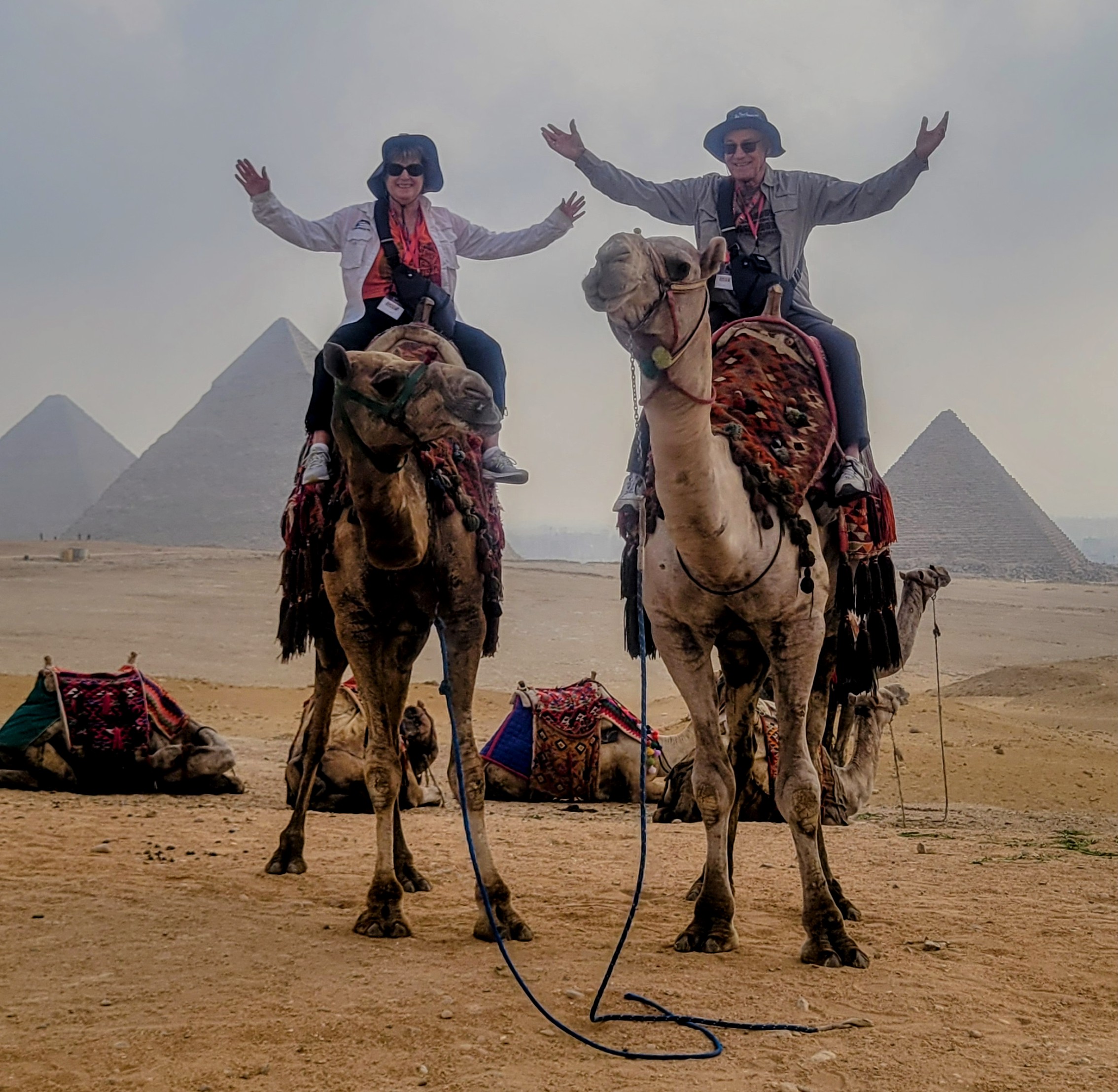
Us in a calm moment aboard wild camels
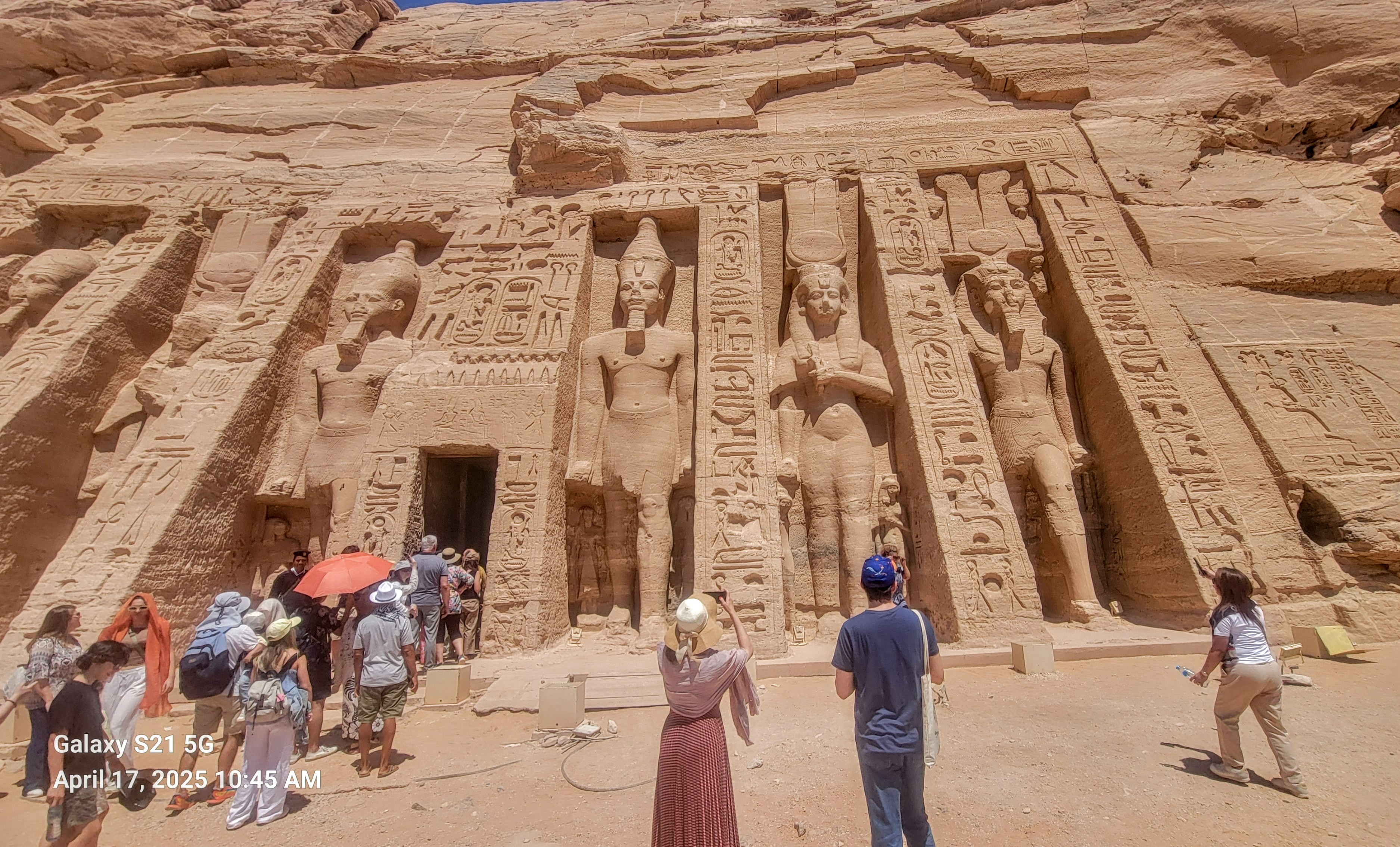
The colossal monument of Ramses II at Abu Simbel is a 4 hour one way bus ride or short flight from Aswan – get there early, its hot and crowded!
Our trip began with a flight from New York’s JFK to Cairo on EgyptAir. The Gate 1 team in Cairo welcomed our group of 24 warmly to their chaotic city of over 20 million. Don’t even think about driving in Cairo! Our hotel was the Marriott built around a gorgeous 1865 palace built to celebrte the opening of the Suez Canal. The breakfast buffet was a spectacular blend of Egyptian and western foods.
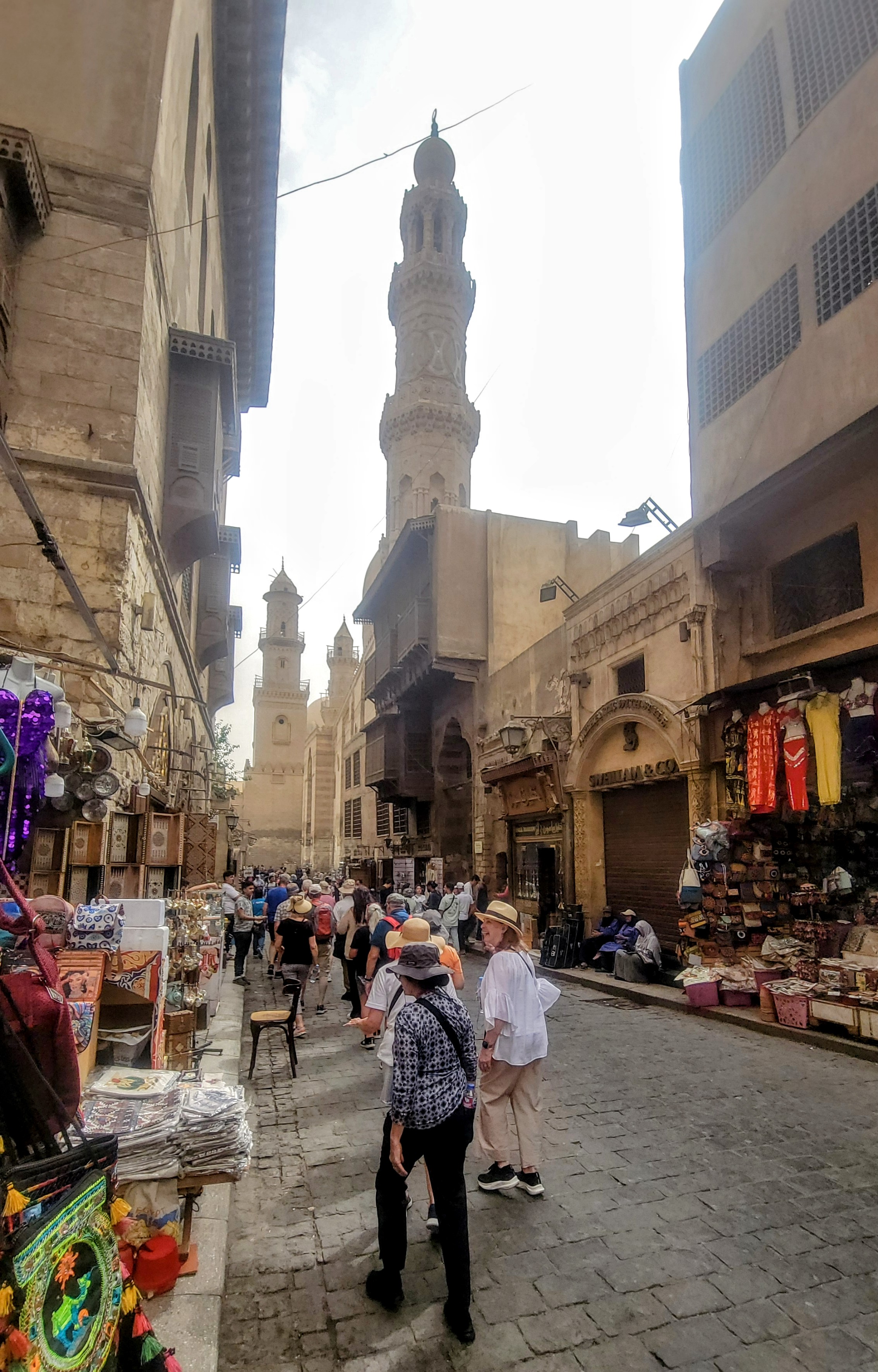
Cairo Marriott surrounds the 1865 palace built to welcome the world to the Suez CanalWe walked the oldest stret in Cairo and visited the Khan el-Kalili bazaar
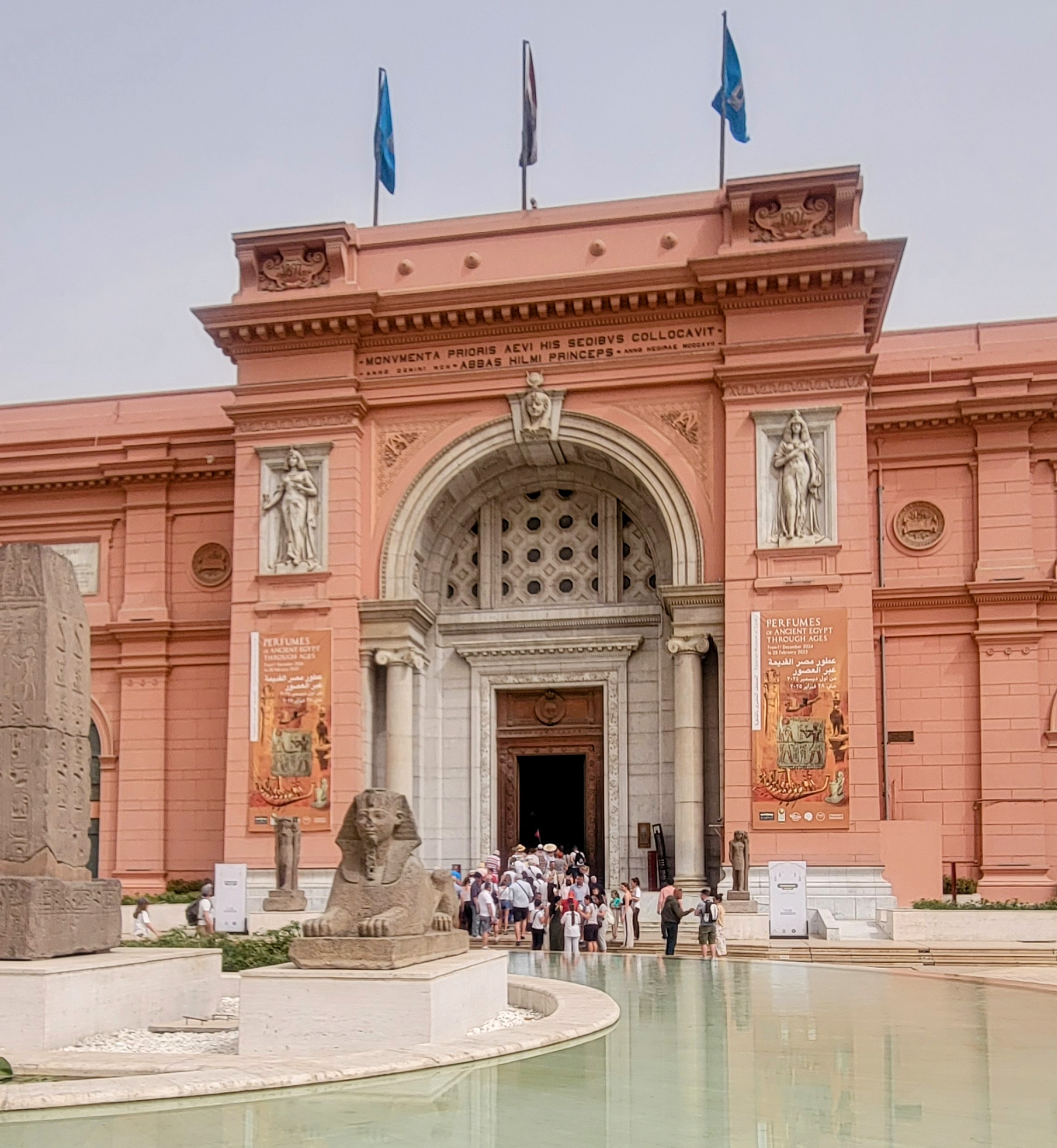
Our first tour was of the now Old Egyptian museum where we saw many treasures including the mummy and 22 pound gold death mask of King Tut (no pics allowed). As everywhere in the country security was tight with scanners at every sight. Also Gate 1 quietly posted an armed security agent on every bus and tour. Tourism is very important to Egypt and they do their best to keep it safe. We never felt unsafe even in markets with some of the most aggressive sellers we’ve ever seen. The Khan el-Khalili market in old Cairo dates from the early years of Arabian Cairo.
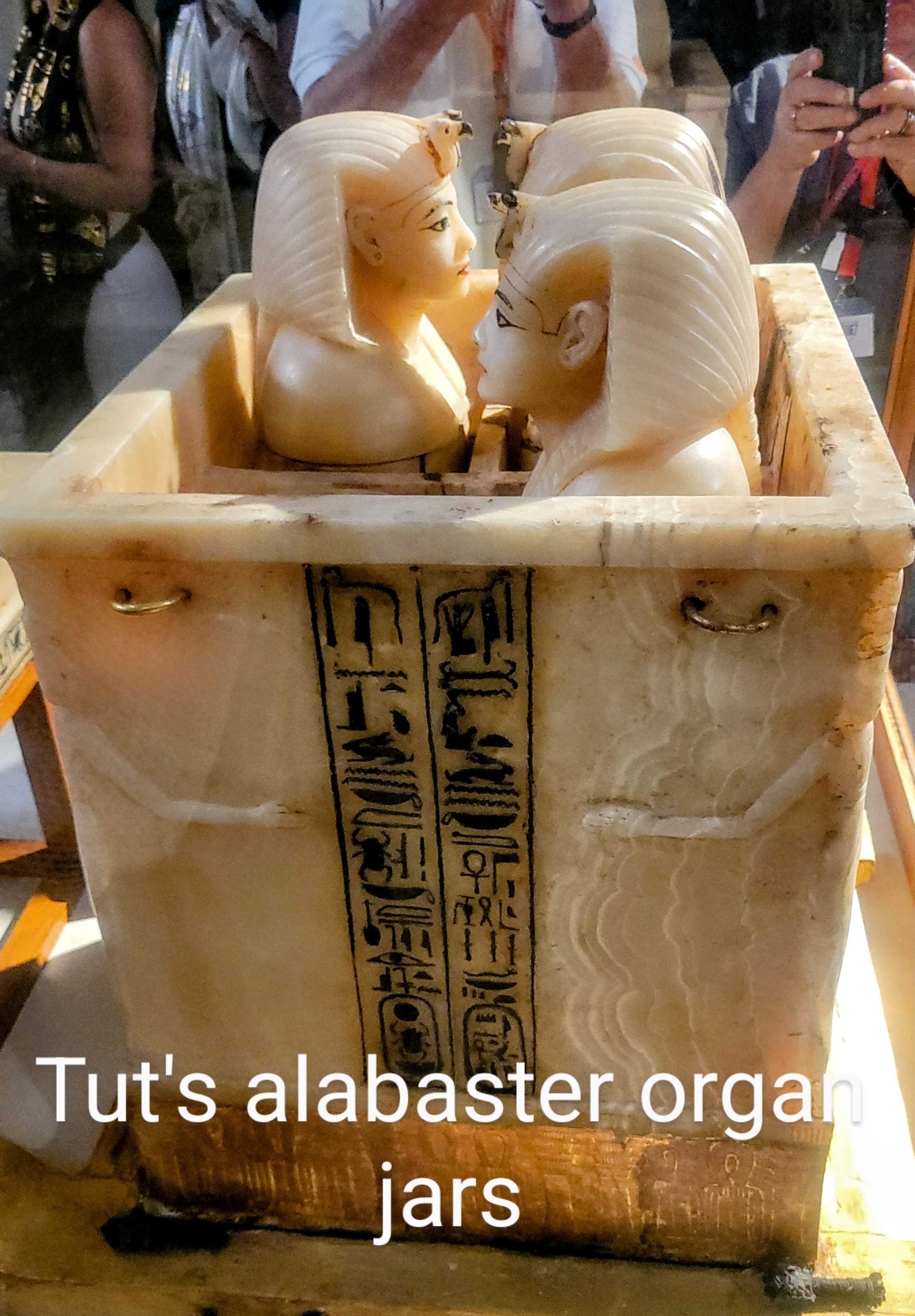
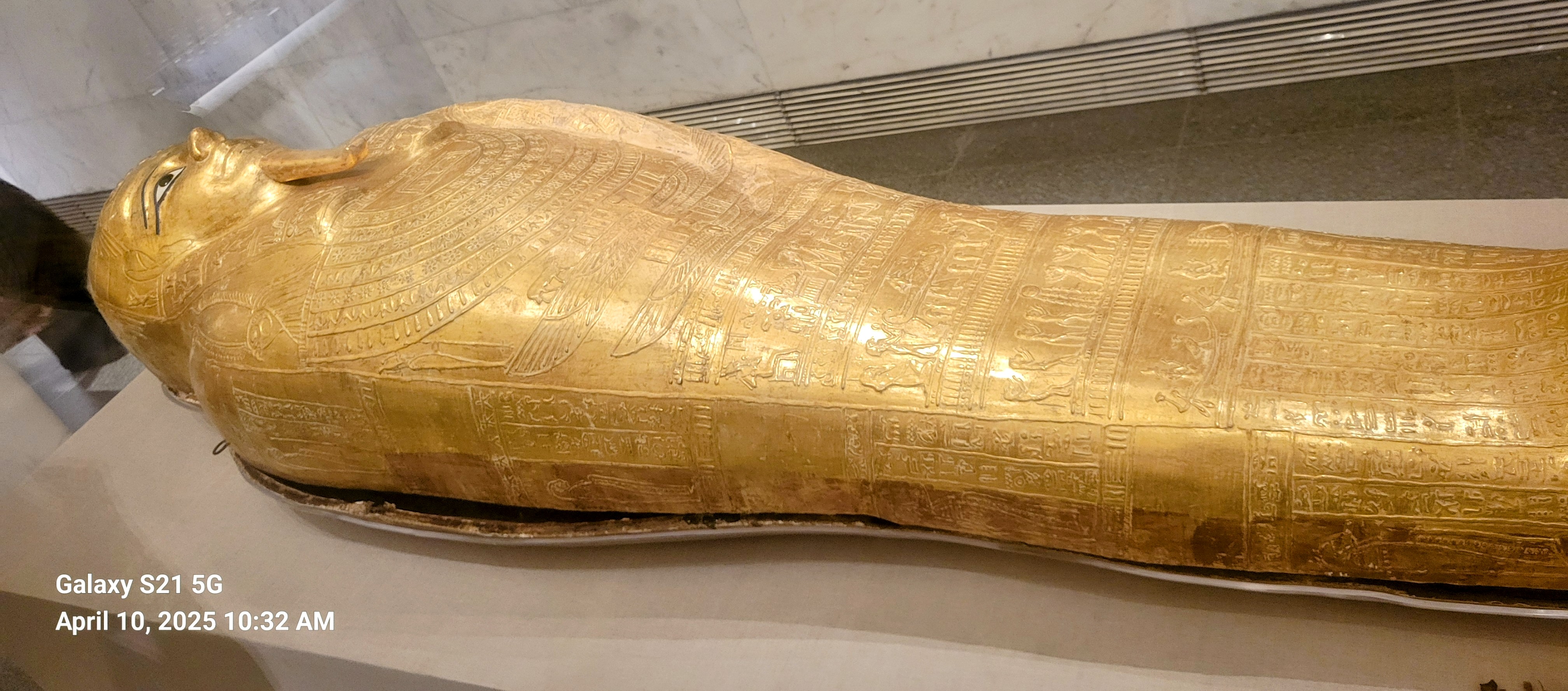
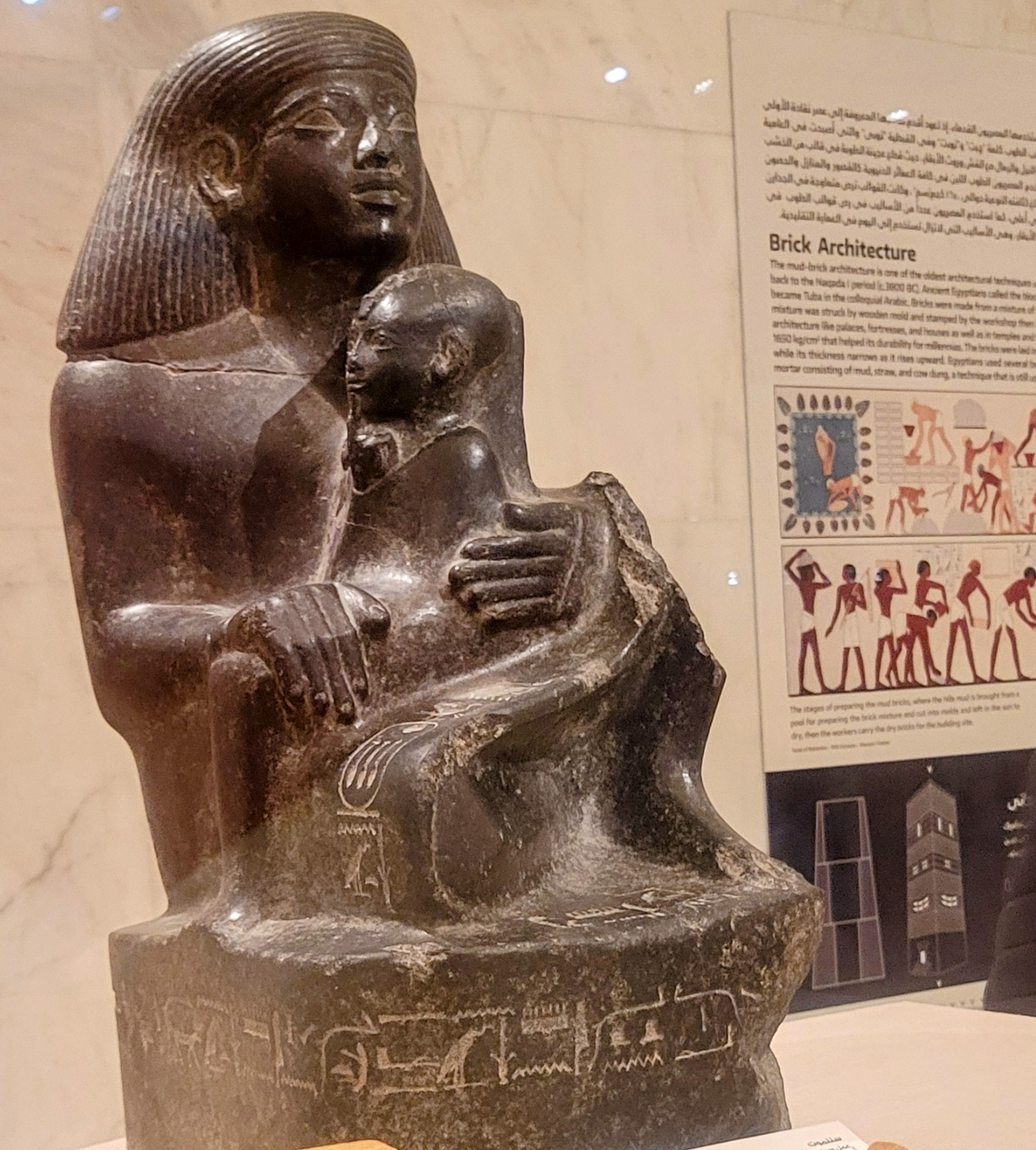
The now Old Egyptian Museum still housed the 3300 year old King Tut during our visitKing Tut’s3300 year old throne- no photos allowed of his mummy and death mask. His was the only tomb found entirely intact with all its treasuresTut’s canopic jars contained his mummified organsJust one decorated coffin in the museum.Unique carving at the National Museum of Egyptian CiviiizationThe ancients skill in carving stone is exceptional
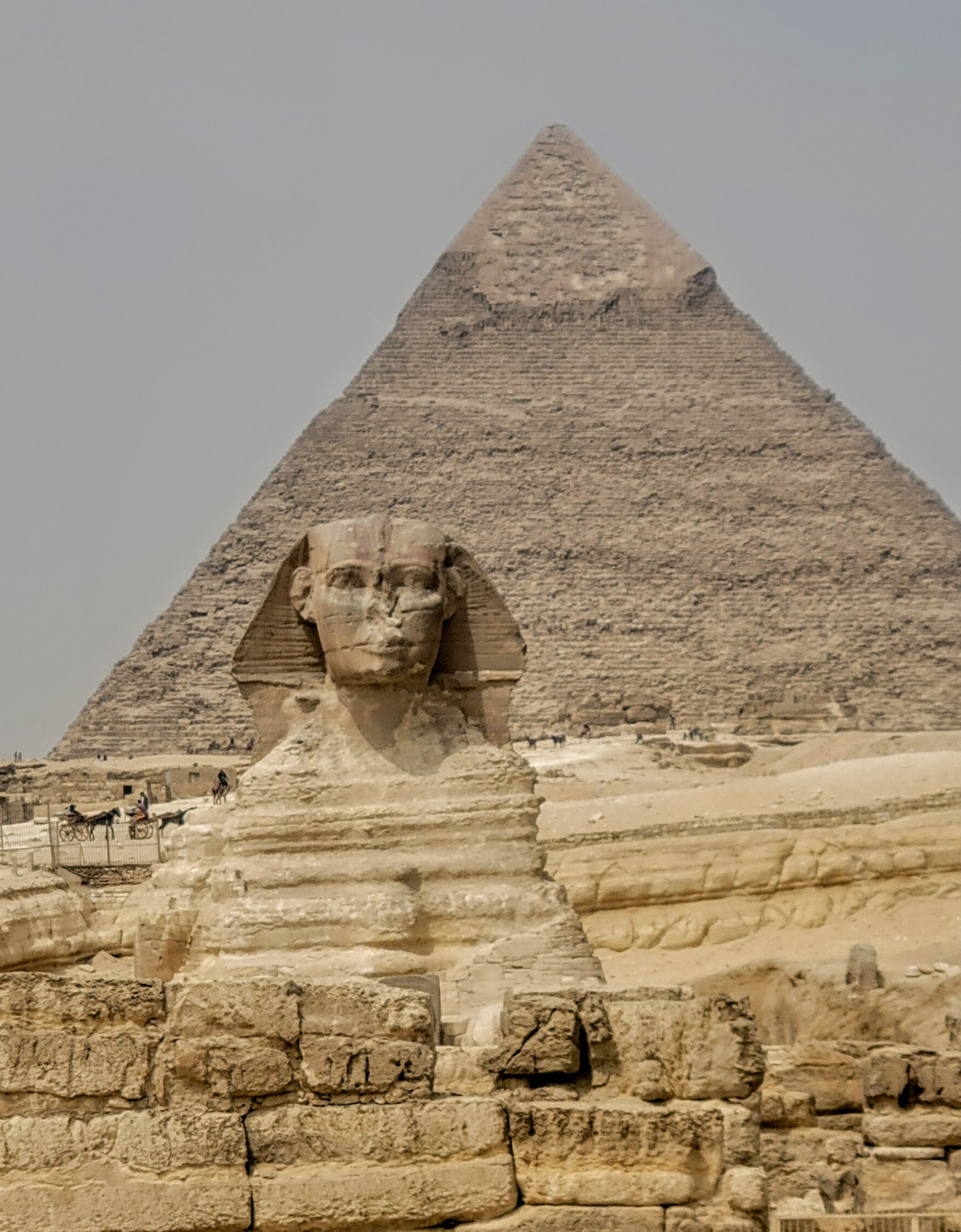
Next day the Great Pyramids and Sphinx of Giza did not disappoint. Of the Seven Wonders of the Ancient World only these survive. No one knows exactly how they were built around 2600BC. Everywhere there were throngs of tourists yet moving along pretty well. We went on a short ride on camels after a rough start on these unpredictable beasts that could have hurt somebody. Holding on for dear life we decided we don’t need to do that again. The Sphinx sits right nearby for some great pics. Later we visited the Step Pyramid at Sakkarra built by pharoah Djoser in 2610 BC. It was the first tomb in this design and led to all the rest. Their was much experimenting before the great pyramids were perfected. Over time though pyramids were out of favor since they pointed the way for tomb robbers to find the treasures. This tour also included the obligatory shopping stop at a carpet school which taught skills to teenagers so they could have some options.
The famous Sphinx at Giza which is the site of the original city of Memphis
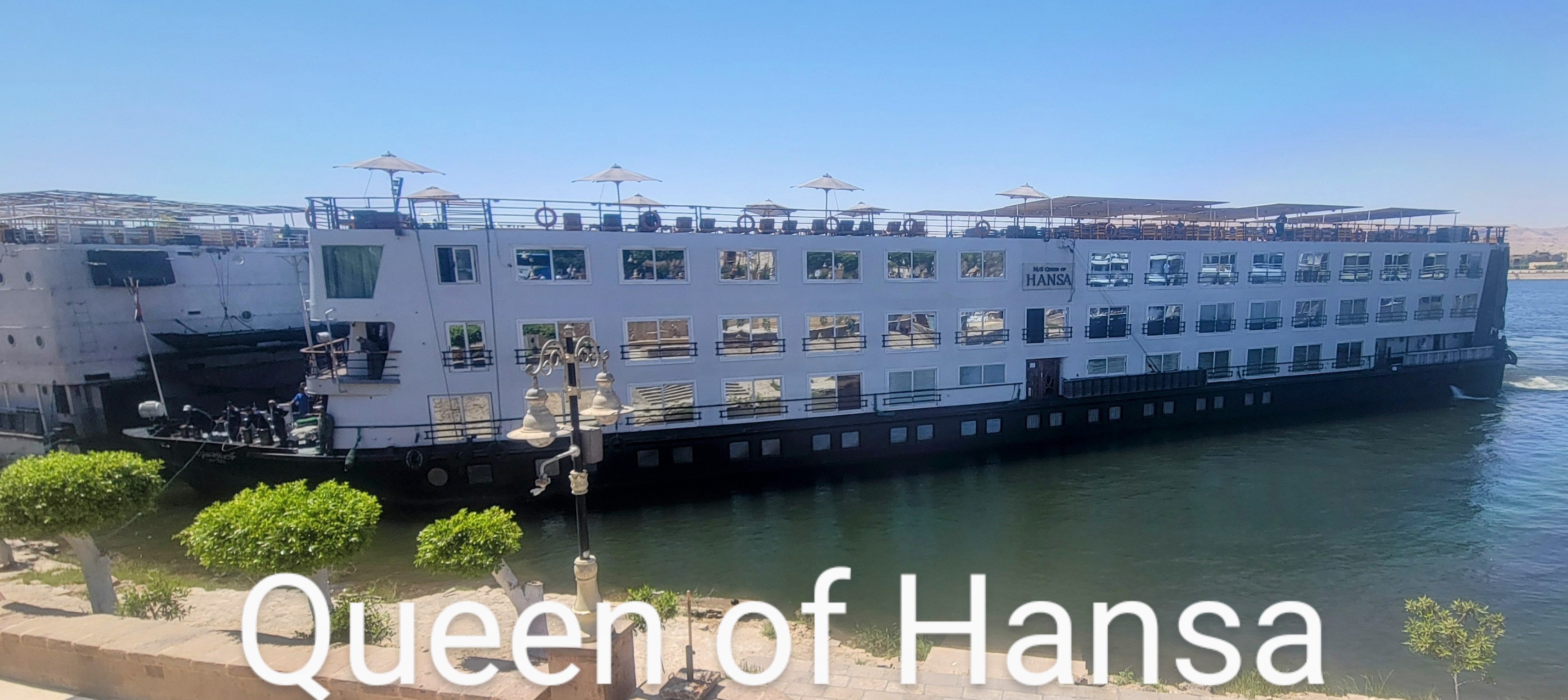
A flight to Aswan took us to our Nile Cruise riverboat. There are literally hundreds of these boats on the Nile all basically offering the same cruise. Ours was a 7 day cruise which we realized was the best option as the tours are back to back to back and any shortened cruise would be exhausting. The Nile is the longest river in the world at over 4100 miles. It originates at Lake Victoria and Ethiopia. Everything about Egypt revolves around the Nile. There would be no Egypt without the Nile. Spring floods were historically epic and led to many dams before the construction of the High Dam in the 60s. Now the river is very controlled but at a cost. The Nubians are an ancient indigenous people of Upper Egypt and their towns and villages were inundated. Many were relocated Also there are many ancient sites now below lake Nasser although several including famously Abu Simbel and Philae Temple were relocated to high ground. Crocodiles are no longer found below the dam. Our cruise allowed us to access many sites from both Aswan and Luxor. Each site had a unique story which our tour manager shared magnificently. The Egyptians were mad for preserving their story in hieroglyphics, cartouches, paintings and carvings. Their artistic skill is incredible. We had to constantly remind ourselves that what we were seeing was 2000 to 5000 years old.
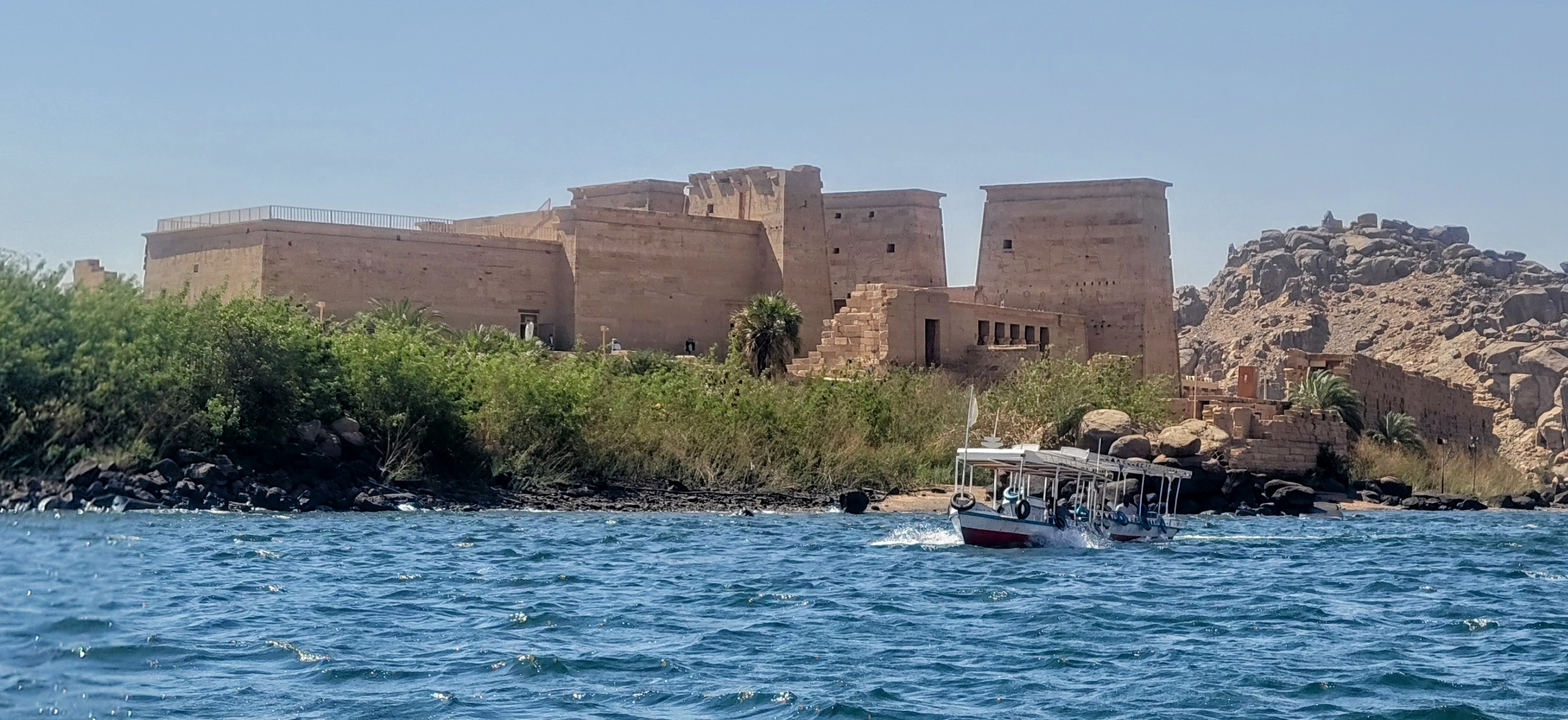
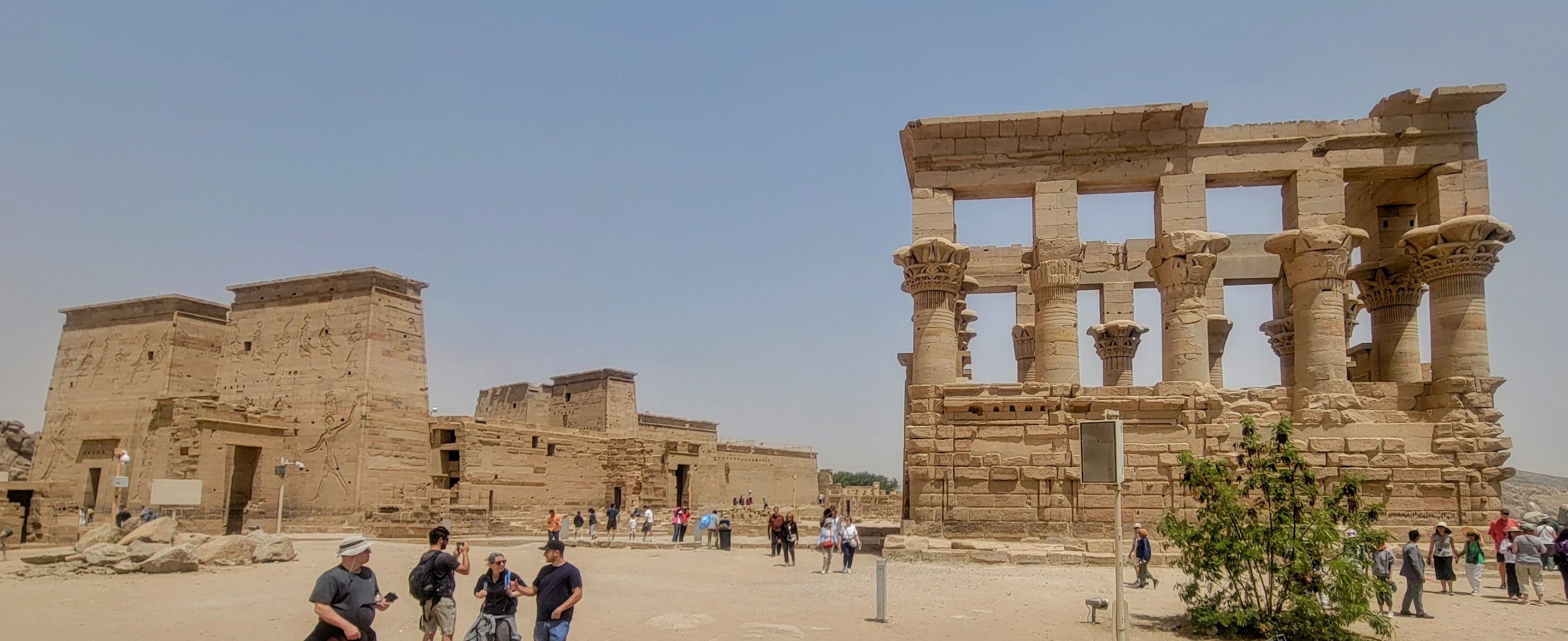
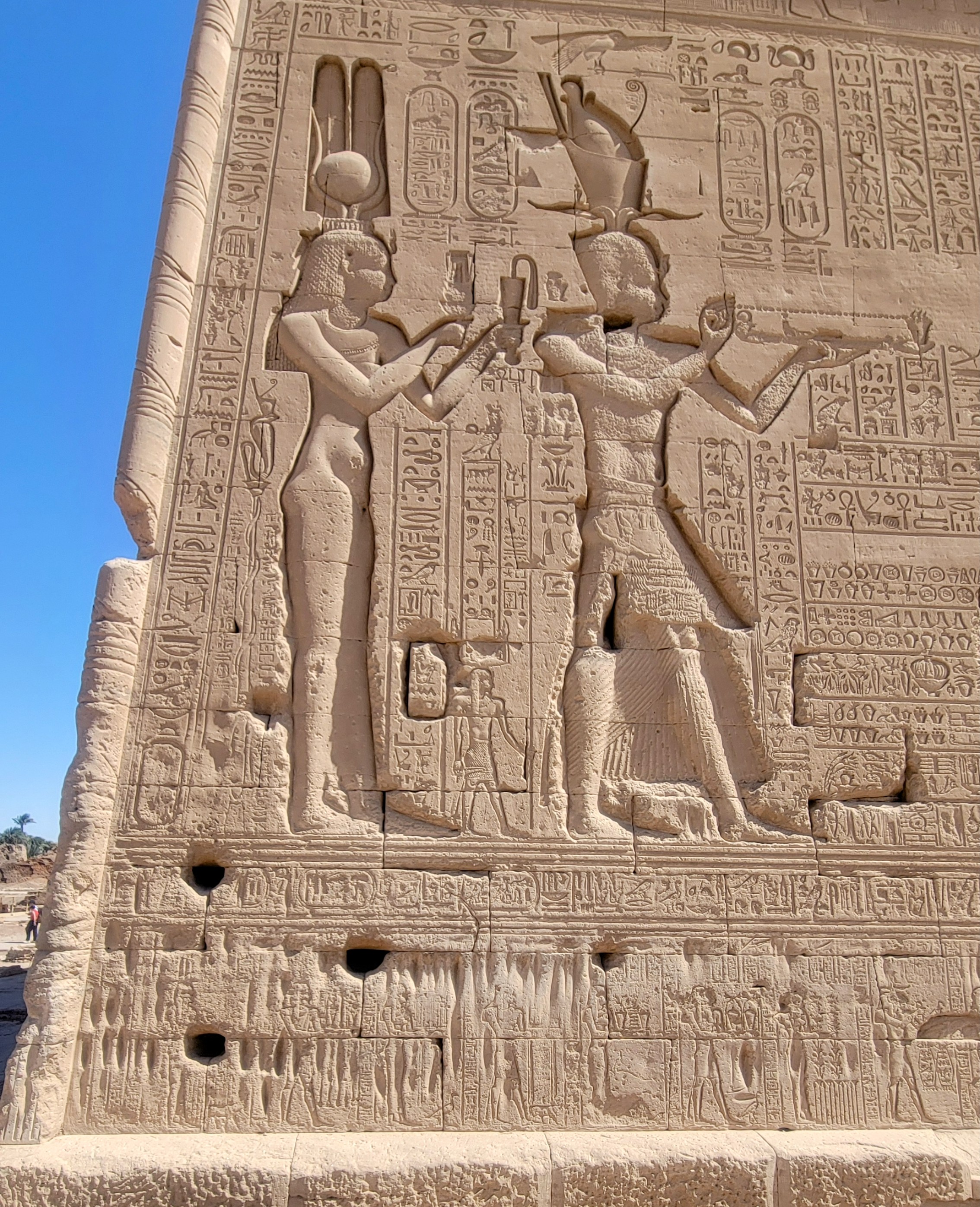
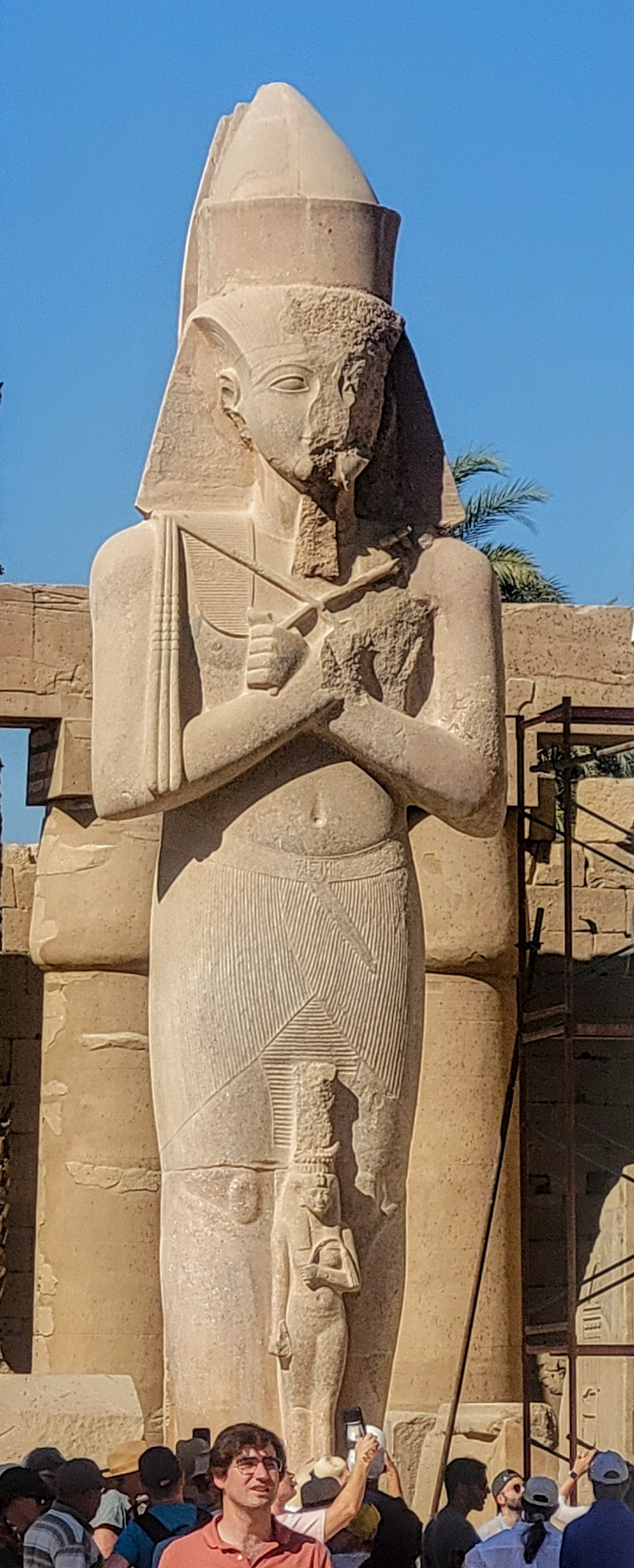
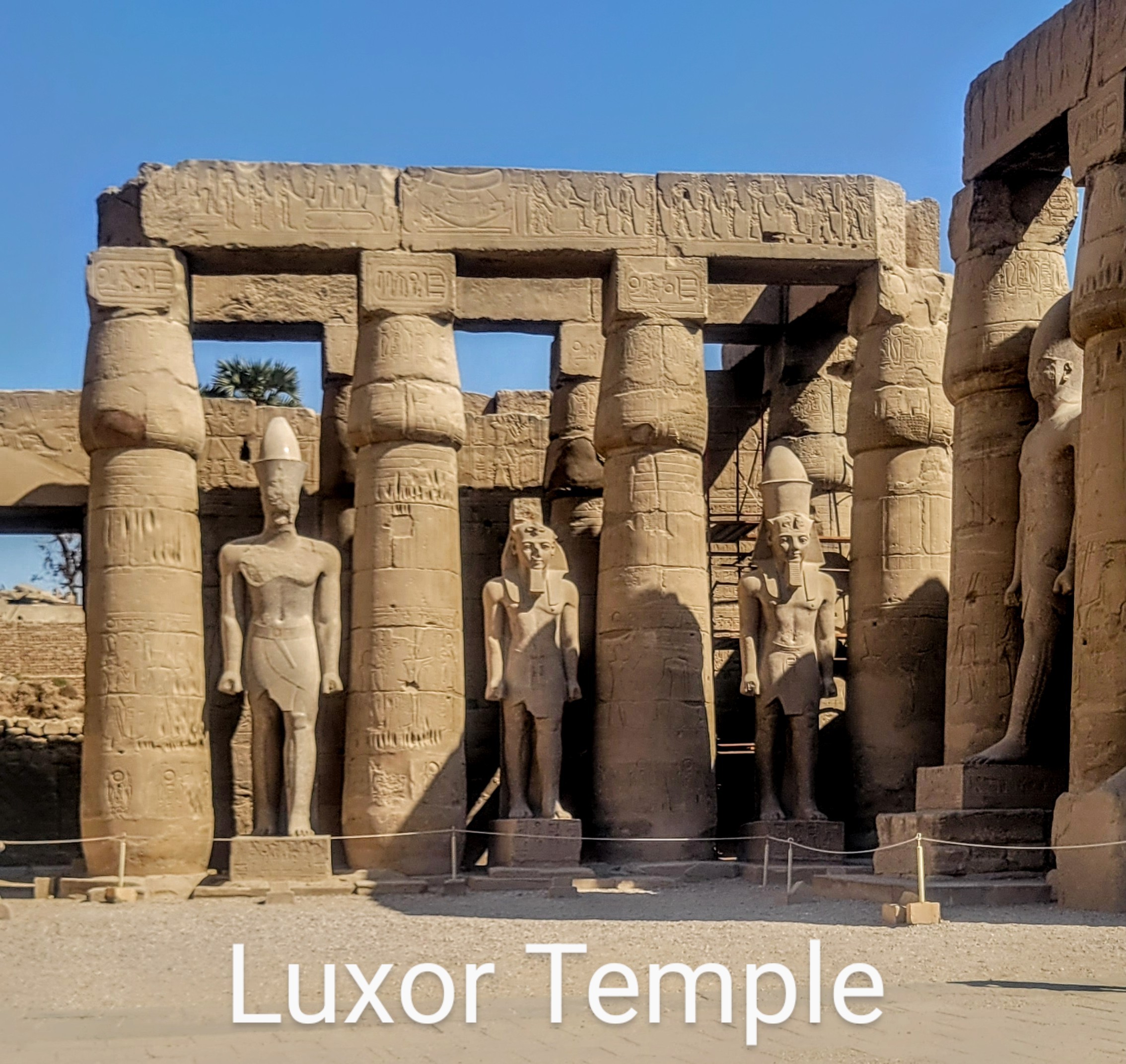
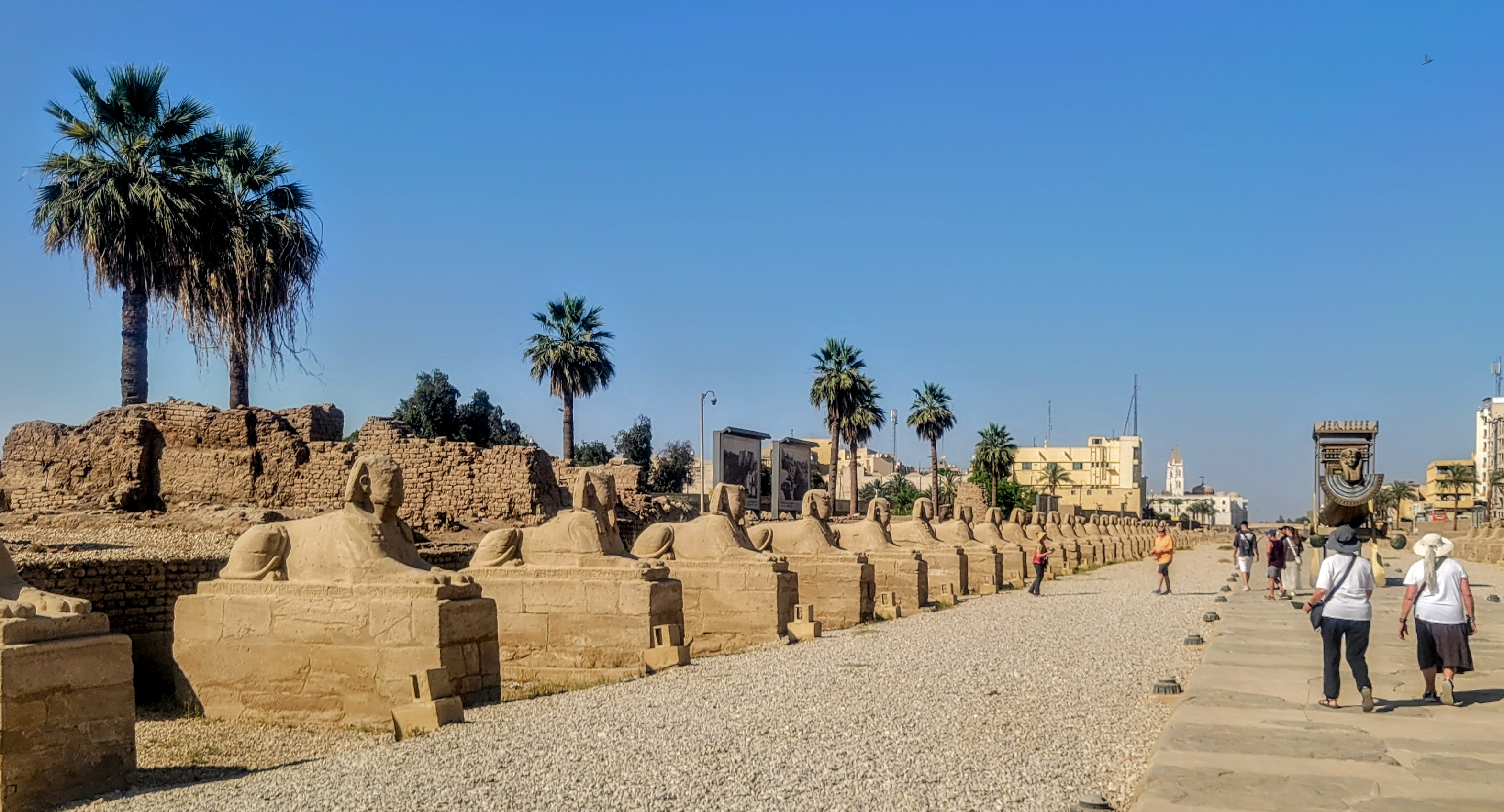
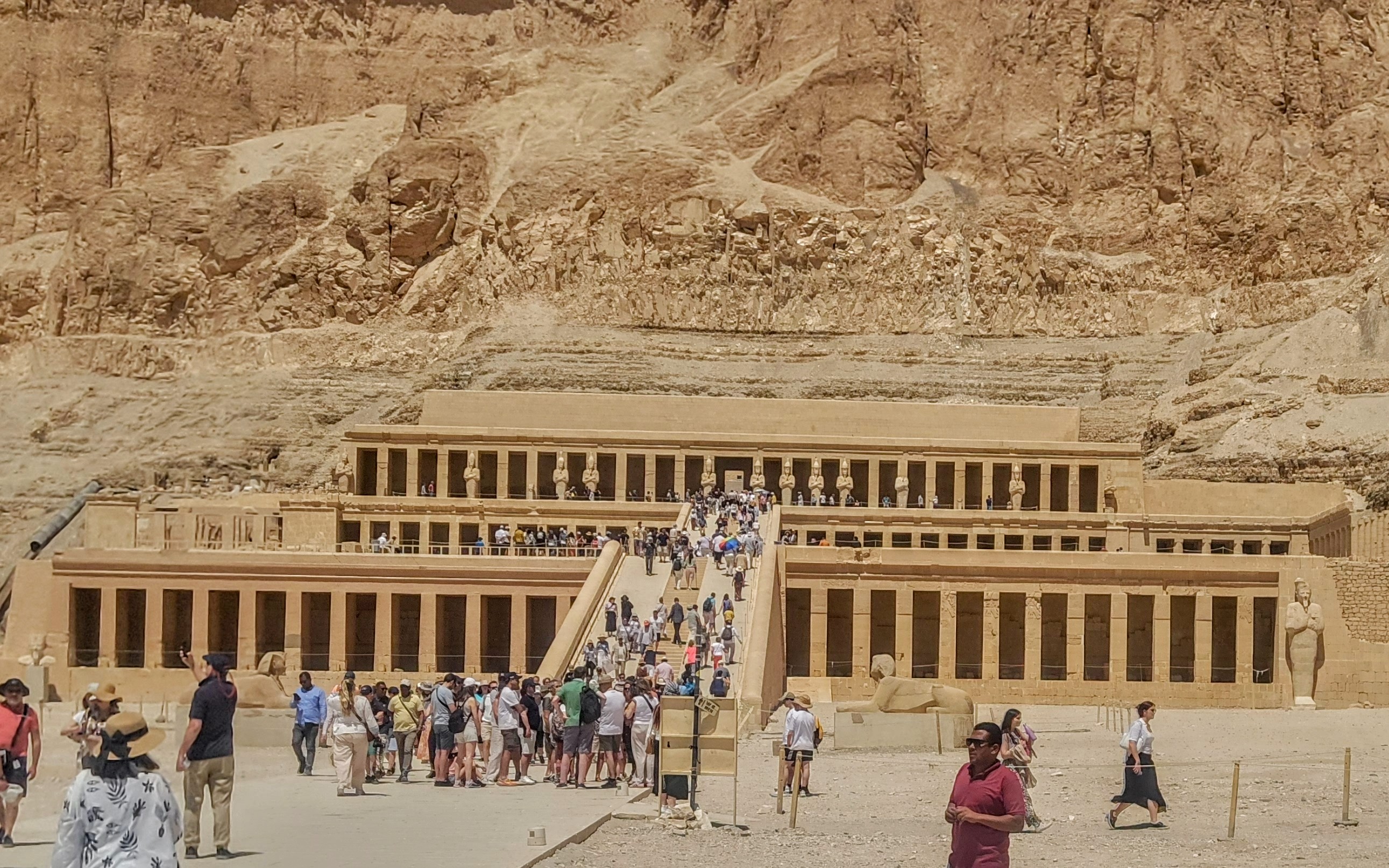
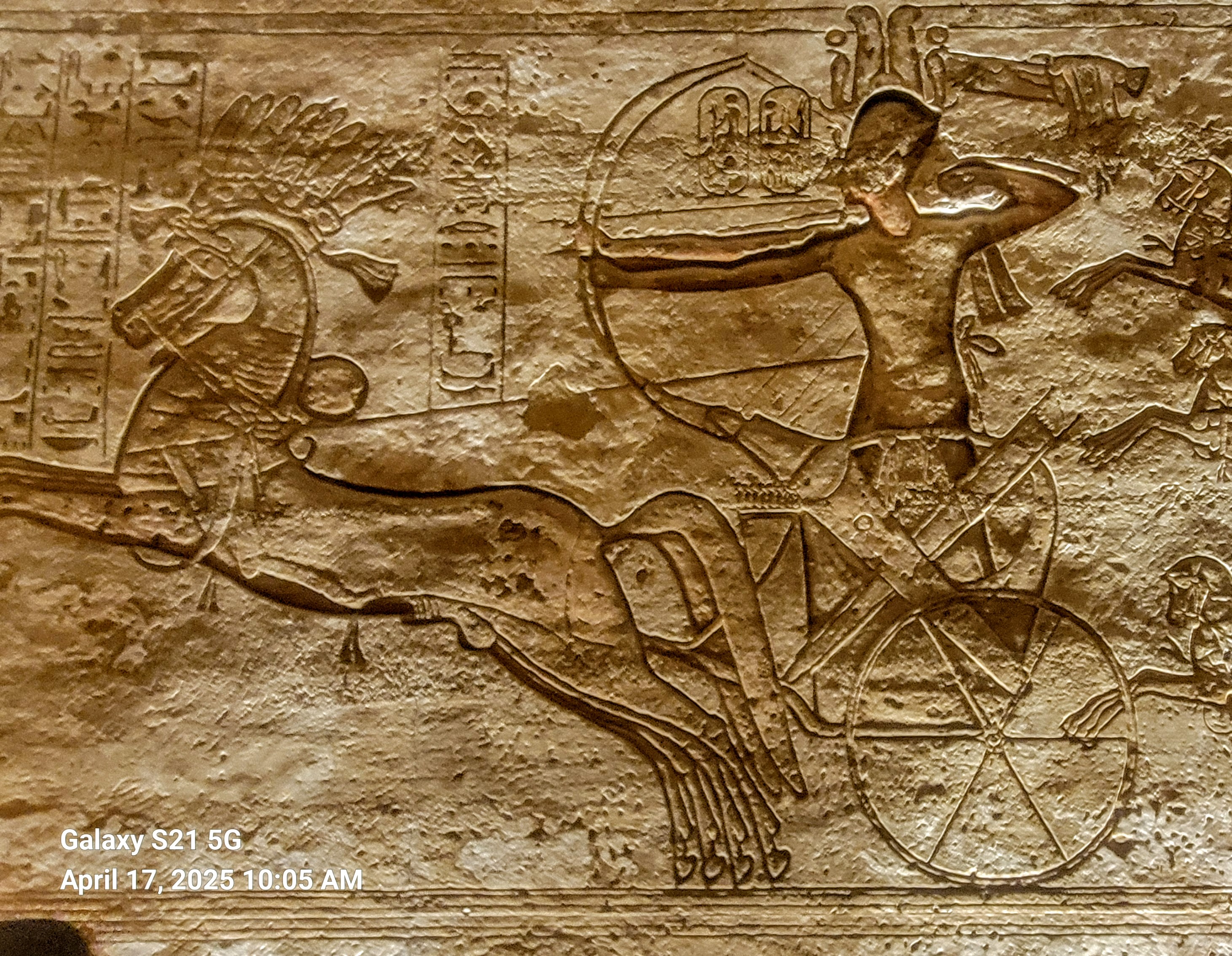
Our riverboat was one of hundreds Egyptian owned and operated boats on the Nile. The river cruise was a great addition to the tour- relaxing and comforting while on a hectic pace.The beautiful Nile is part of everyday life -there would be no Egypt without the Nile.Philae Temple only reachable by boatEgyptian Philae Temple (left) and Roman Trajan’s Kiosk (right) relocated when threatened by Nile reservoirsDendera Temple complex is one of the best preserved. The paintings and carvings look to have been done yesterday.more Edfu TempleThe vast temple complex at Karnak was built from 2000 BC to 30 BC. Most of Luxor temple was built by RamsesII.The Avenue of Sphinxes runs 2 km from Luxor temple to Karnak and had been buried for centuries.Hatshepsut Temple was built by the extraordinary queen.For many Abu Simbel was the highlight of the trip. Hard to believe it was deconstructed and rebuilt before it was lost under Lake NasserThe famous carvings of Ramses II are everywhere at Abu Simbel and throughout Egypt. He lived to 92 and had to have been the greatest Pharaoh.
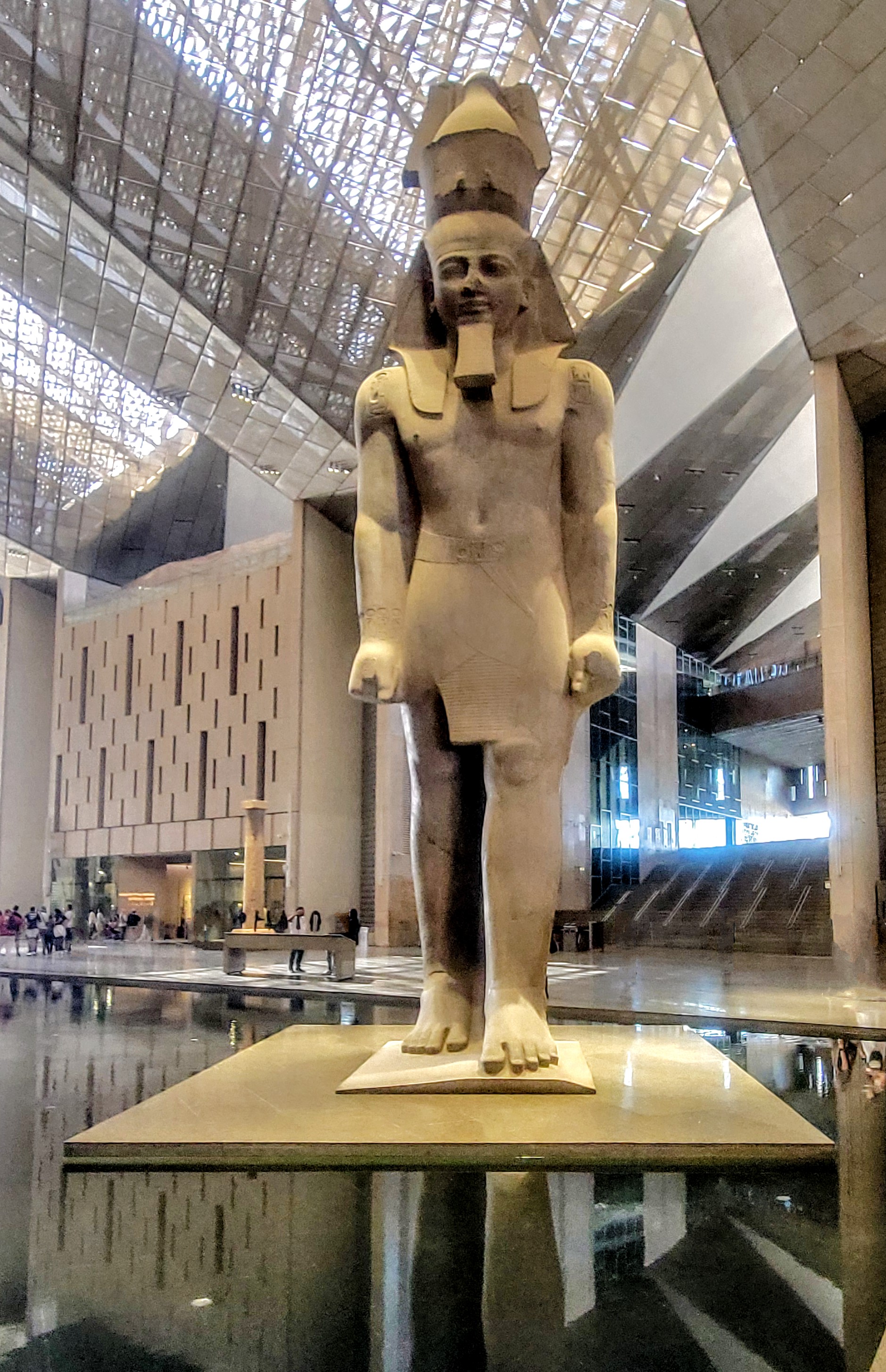
The tour finale was a visit to the brand new Grand Egyptian Museum – GEM – also called the Giza Museum. It is located just 2 km from the Giza Pyramids. This was many many years in the making and is now the largest in the world. The building itself was designed by an Irish architectural firm after a competition from 81 other countries. There was a partial opening in November 2024 after a parade of mummies from the old museum. The complete Tut collection will be moved in time for the grand opening July 3, 2025. Egyptians are rightly proud of this achievement which will eventually display over 100,000 artifacts. We were able to view 12 galleries and the grand staircase.
While only 12 of 42 galleries were open to us, the new Grand Egyptian Museum GEM is spectacular. When totally open it will be the largest museum in the world.
Overall impressions of our 14 day tour. Egypt is a classic bucket list destination. Its not an easy country to visit. We don’t think we would ever try it on our own. Traffic is chaos. Cleanliness is something that must be improved upon. Public toilets are pretty grubby and you must pay 10 to 20 EGP to use them. Air quality is a problem from vehicles and blowing sand. Would we go again? Probably not just because there are so many other places to see. Would we learn a lot more if we visited again? Absolutely! This is an overwhelming story told in extraordinary detail. The Egyptians are rightly proud of their ancestors. They do a great job sharing with the world.
The third leg of our European holiday was a 17 day Great Rail Journeys Grand Scandinavian rail tour to the Arctic Circle and the west coast of Norway ending in Oslo. Our tour began with a guided tour of Stockholm’s Gamla Stan or Old Town. We then toured the Swedish Royal Palace on our own. Our rail journey began the next day with a train to Ostersund from Stockholm Central Station. Our group had its own section of the long distance coach with clean rest rooms and good wi-fi. It was a rainy day but let up enough for us to enjoy a great pizza at a beautiful Italian restaurant in Ostersund which had applied to host the Winter Olympics but lacked required infrastructure.
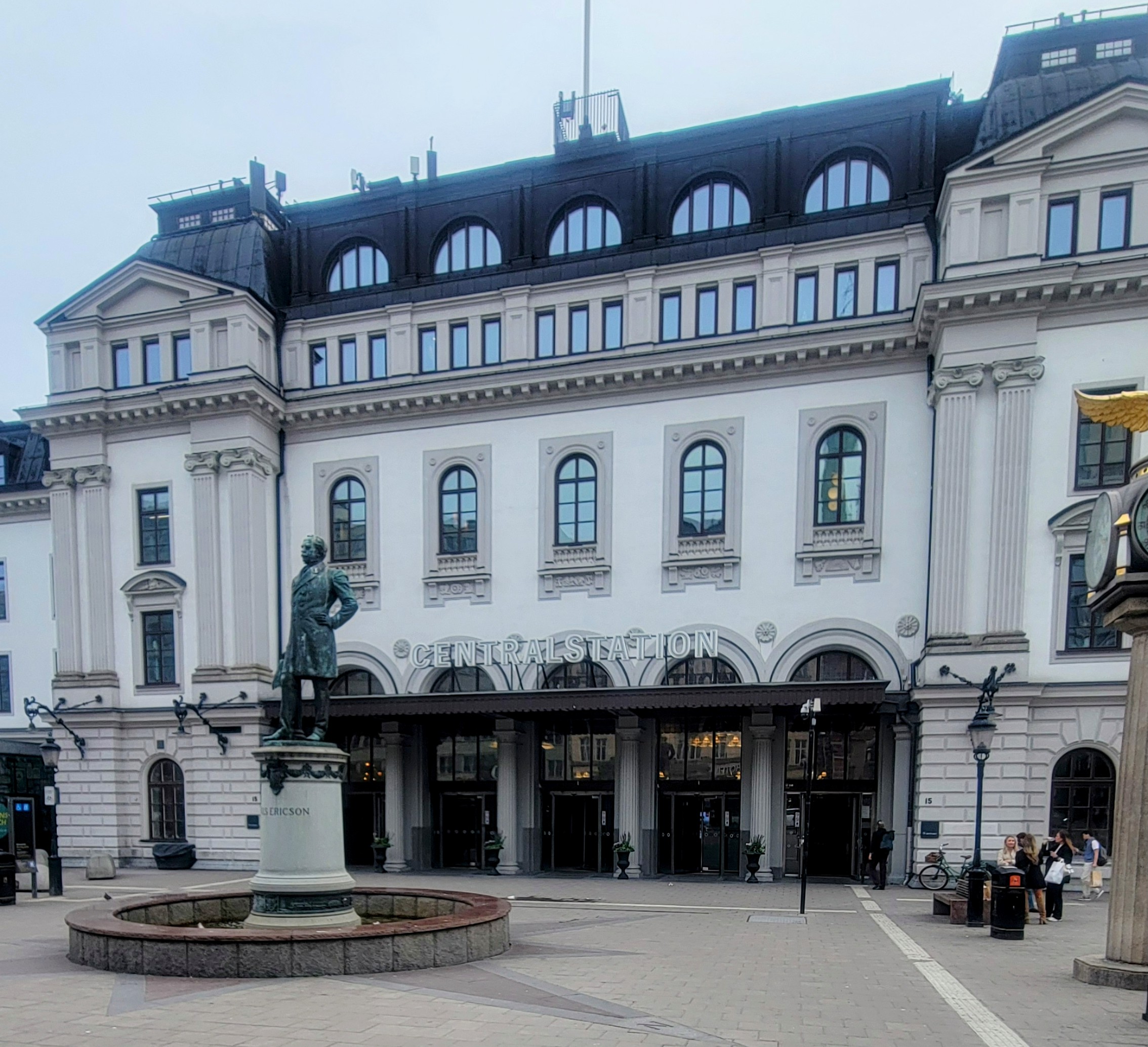
Stockholm central train station
Northern Sweden is like northern Michigan or Minnesota
Our next couple days we visited Arjeplog and Jokkmokk crossing the Arctic Circle where we had a little ceremony and got certificates. We were then in Lapland or Sami country. The Sami are one of the indigenous people who have lived in the Arctic for thousands of years. They have suffered the usual degradation but now have better support in education and health. We enjoyed meeting a Sami family and tasted their dried reindeer, salted pike and tea. They are the only people allowed to herd and harvest reindeer.
Crossing the Arctic Circle
Reindeer
Sami village
Inside a Sami home
Narvik is a small Norwegian city above the Arctic Circle. It was our first stop in Norway after a long bus ride. We were supposed to travel the Ofoten railroad but a derailment damaged the route and passenger service was suspended. Those things happen. Narvik is famously known as the site of Hitler’s first defeat. In 1940 British French, Polish and Norwegian forces pushed the mighty Germans out of Narvik where the Wehrmacht was obtaining 95% of their iron ore mined in nearby Swedish mines. The defeat was temporary however when without notice the allies withdrew and the Luftwaffe returned destroying the city. Narvik has a great museum about these times. Netflix has been showing a Norwegian made movie “Narvik” about this story.
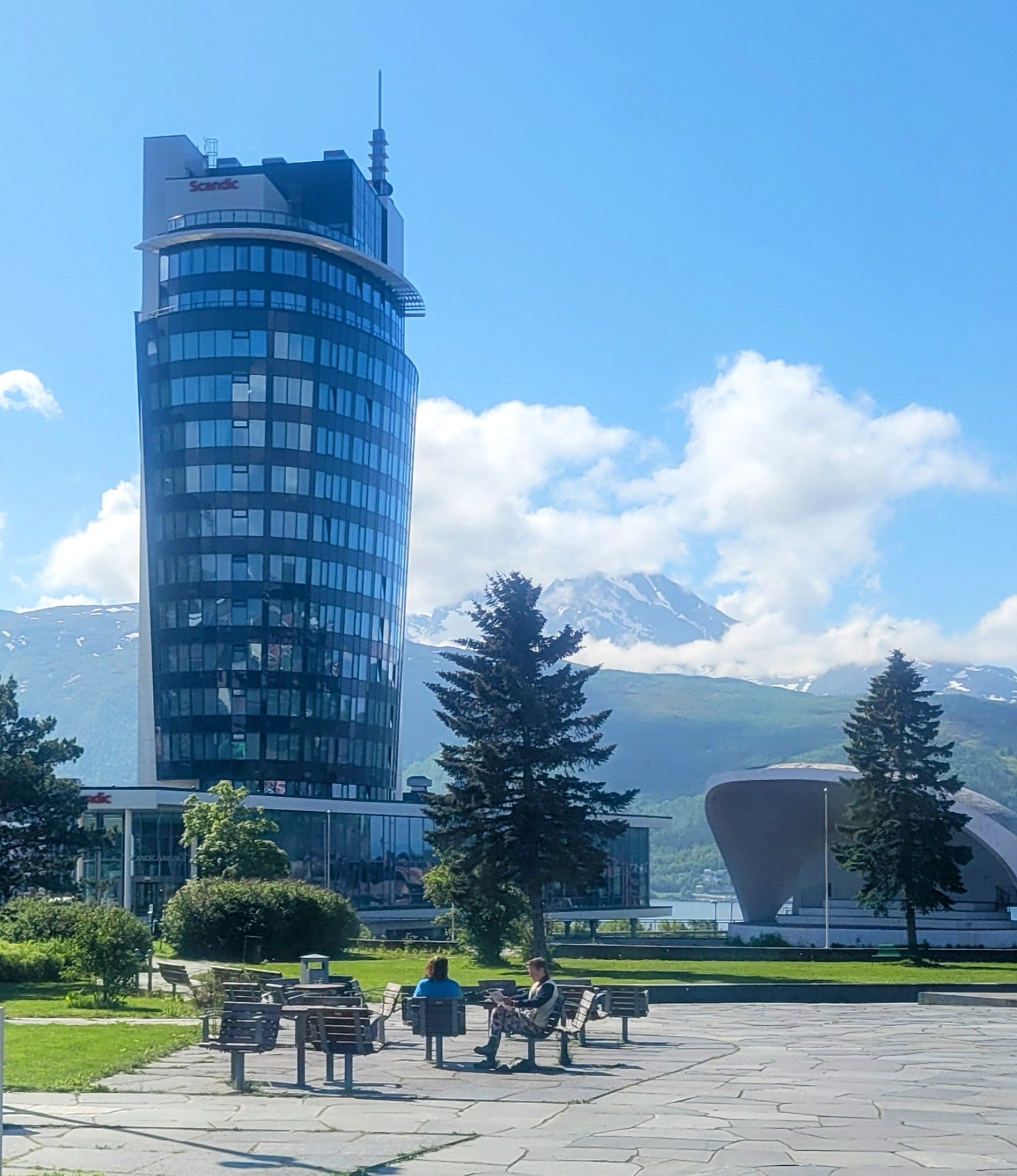
Our Scandic hotel in Narvik
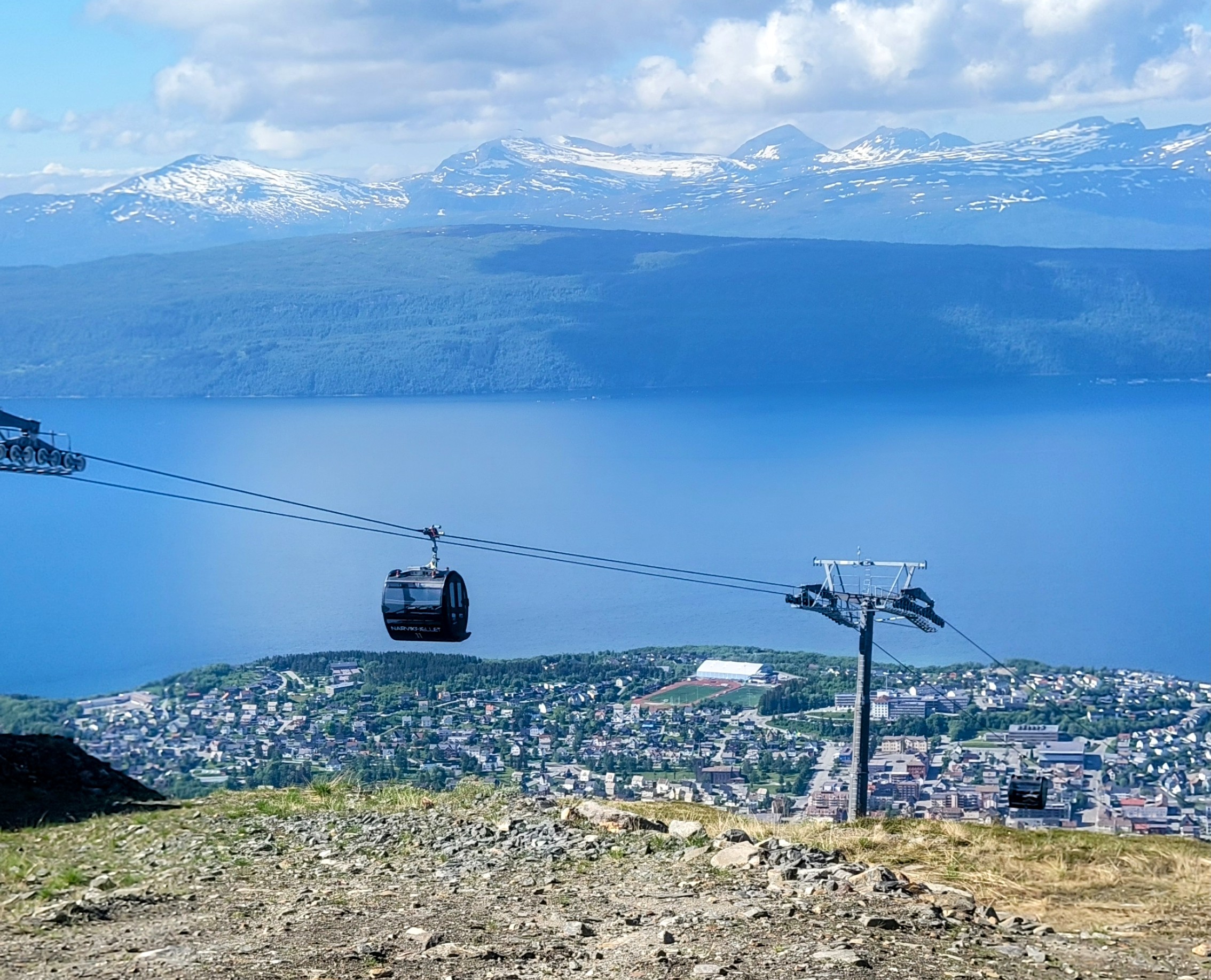
Cablecar overlooking Narvik
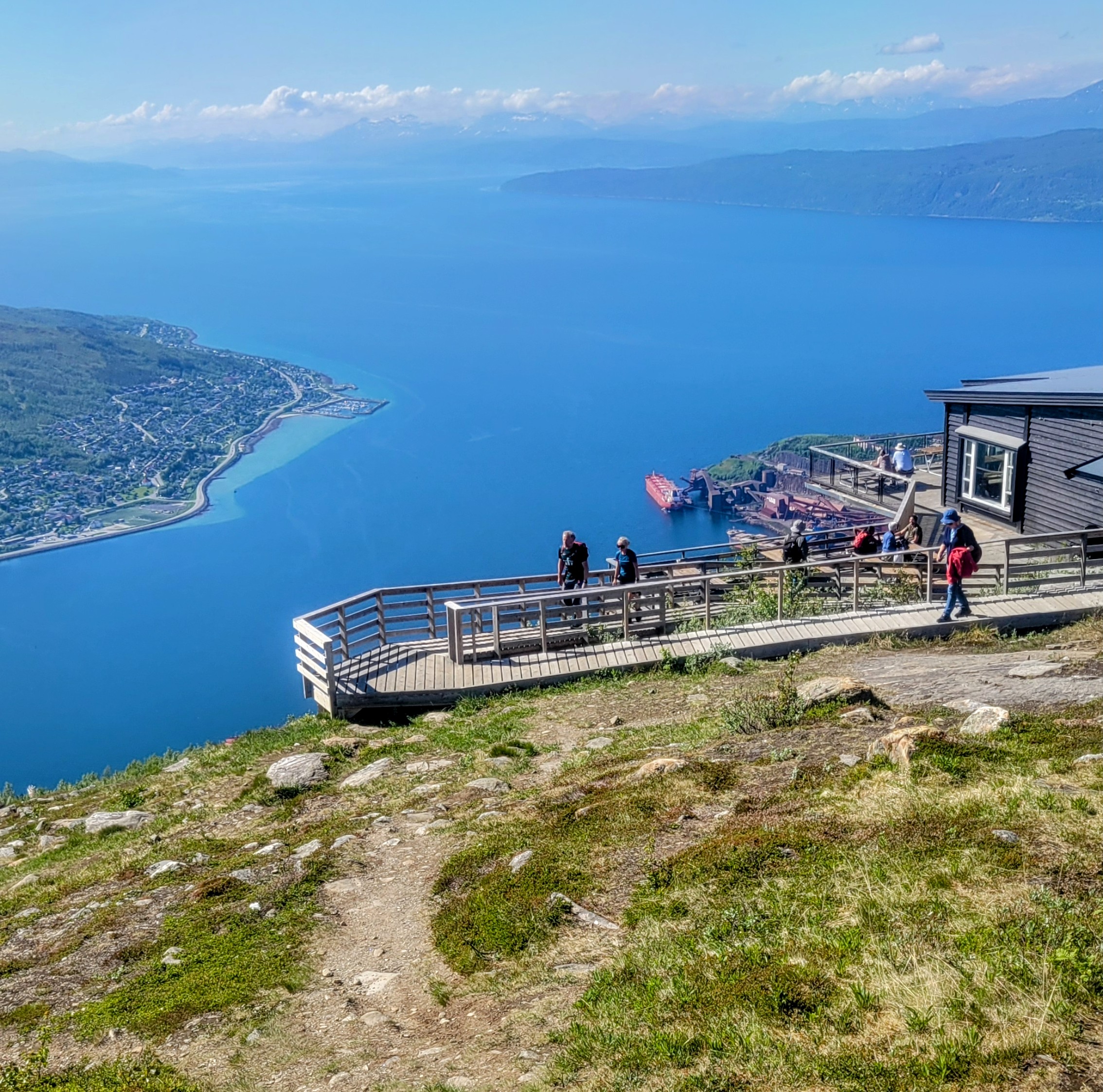
Fjord view from mountain top
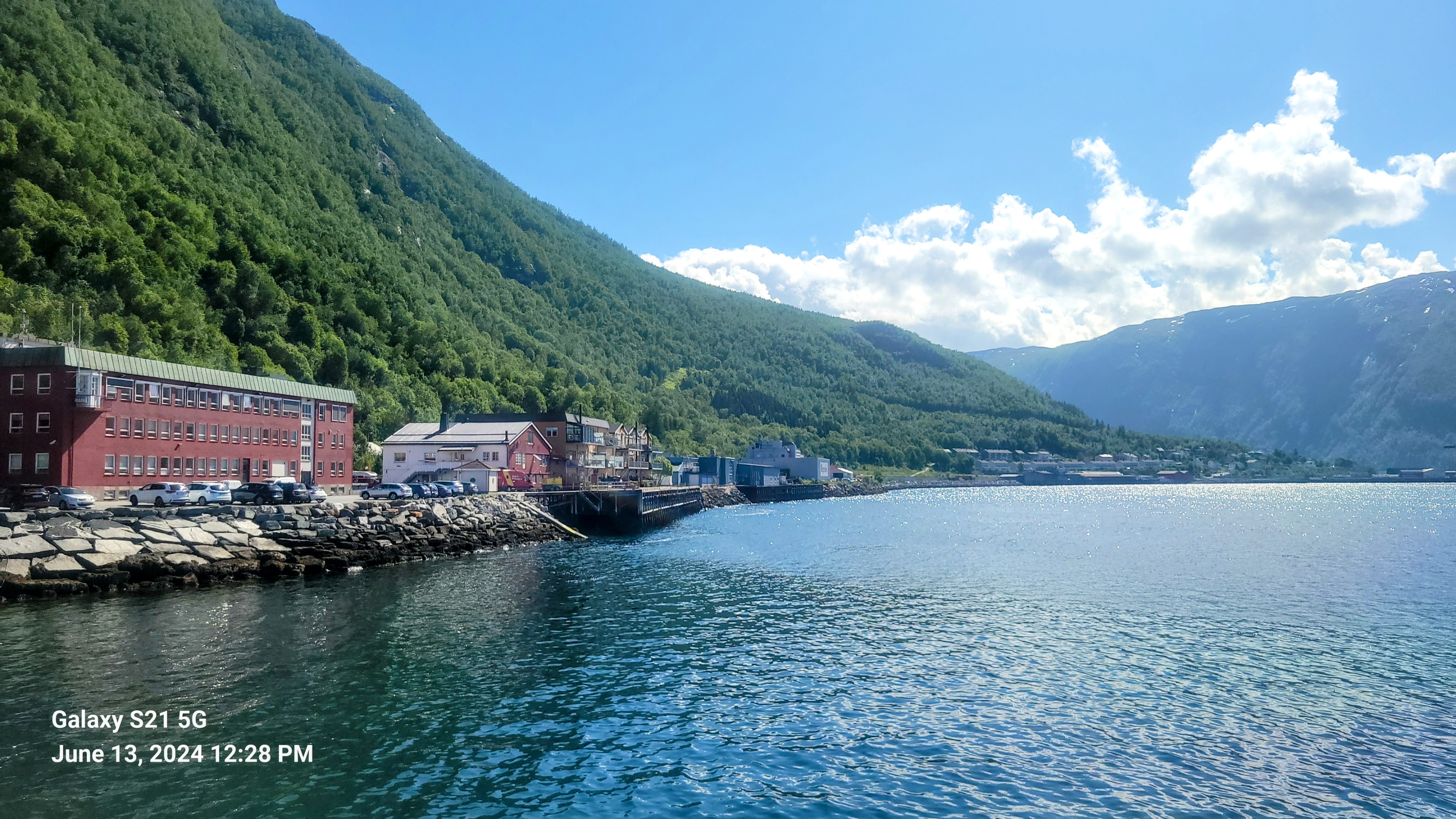
Ice free fjord in Narvik
The next day we traveled by bus, ferry and the Nordlandsbanen train to Verdal, site of the great battleof Stiklestad in which the Norwegian leader St. Olaf died yet assured Norway’s Christian tradition. Olaf was very persuasive, adopt Christianity or lose your head! We had a great guided tour of the historic church, cemetery and a Viking long house. The hotel here was very unique and food really good.
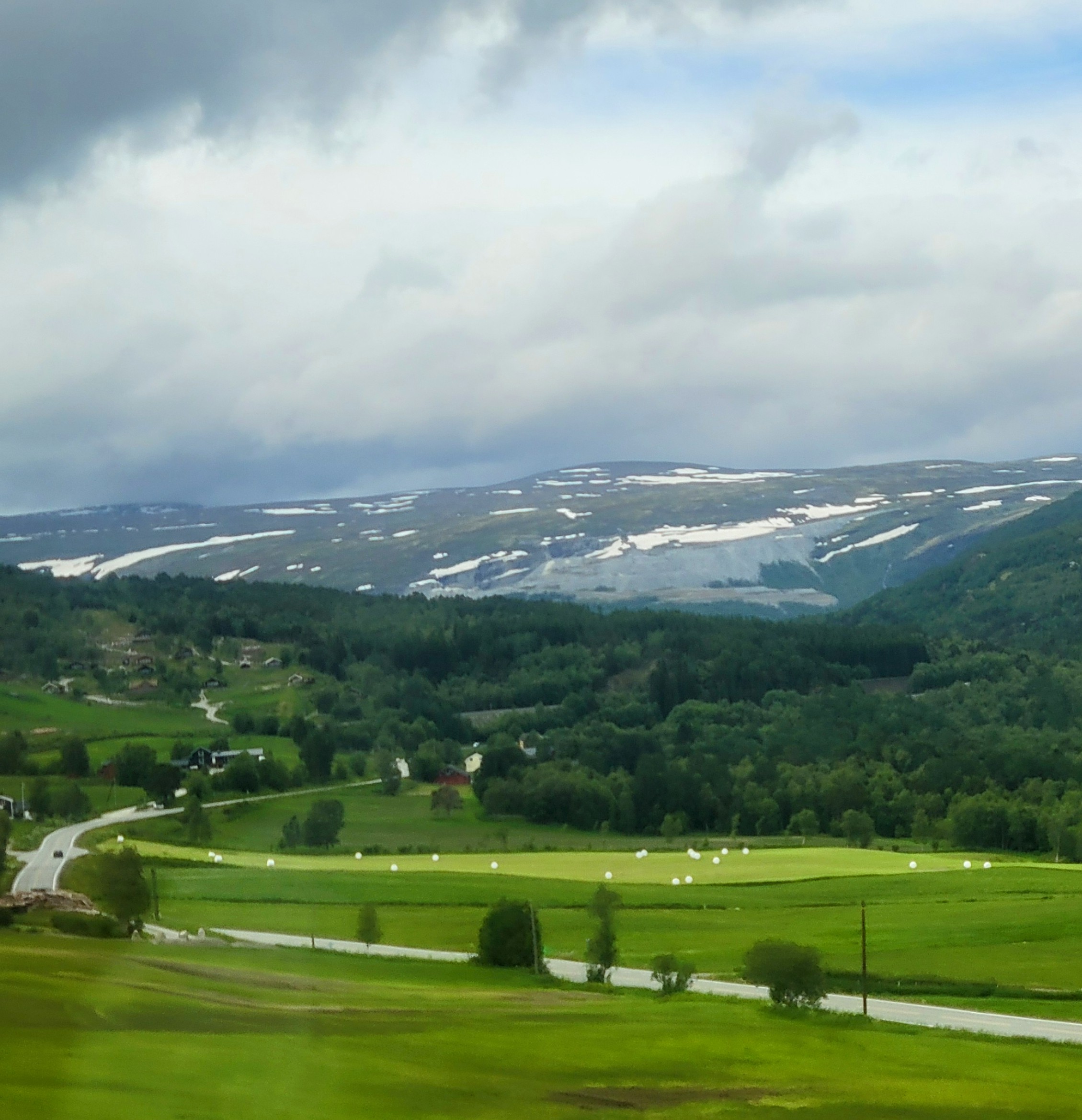
Beautiful Norwegian countryside
Nordlandsbanen railway to Verdal
Village church erected on exact location of Olaf’s death
Carvings inside Viking longhouse
Trondheim is a beautiful small city and university town. Founded in 997, its the oldest town in Norway and was the capital until 1217. Our hotel was right on the harbor and close to everything. Our local tour guide gave us a great overview which made our free time more enjoyable. More to see so we would love to revisit someday.
Picturesque Trondheim
Historic wharves turned into housing
Stiftsgarden royal residence, largest wood building in Northern Europe
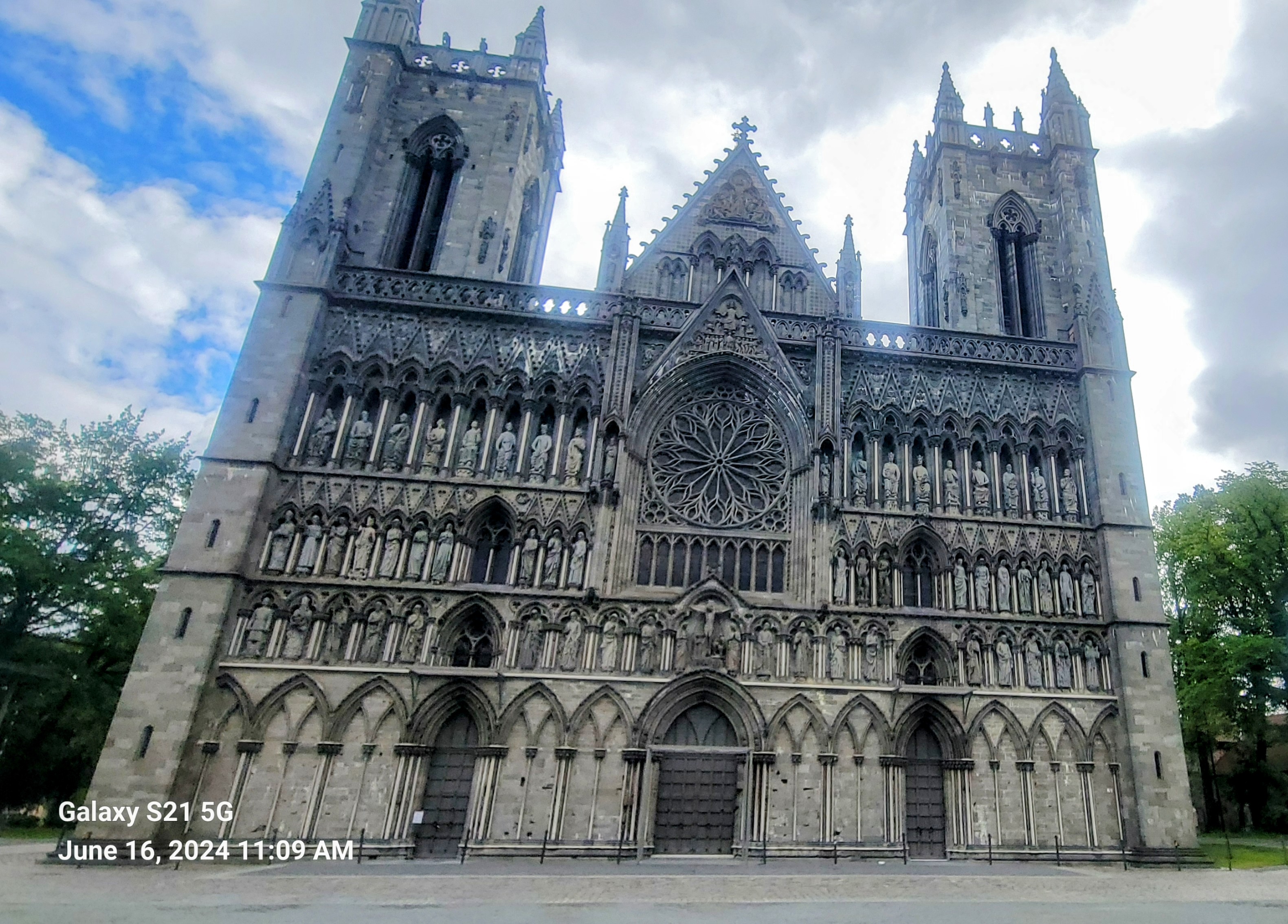
Nidaros cathedral, burial site of St Olaf
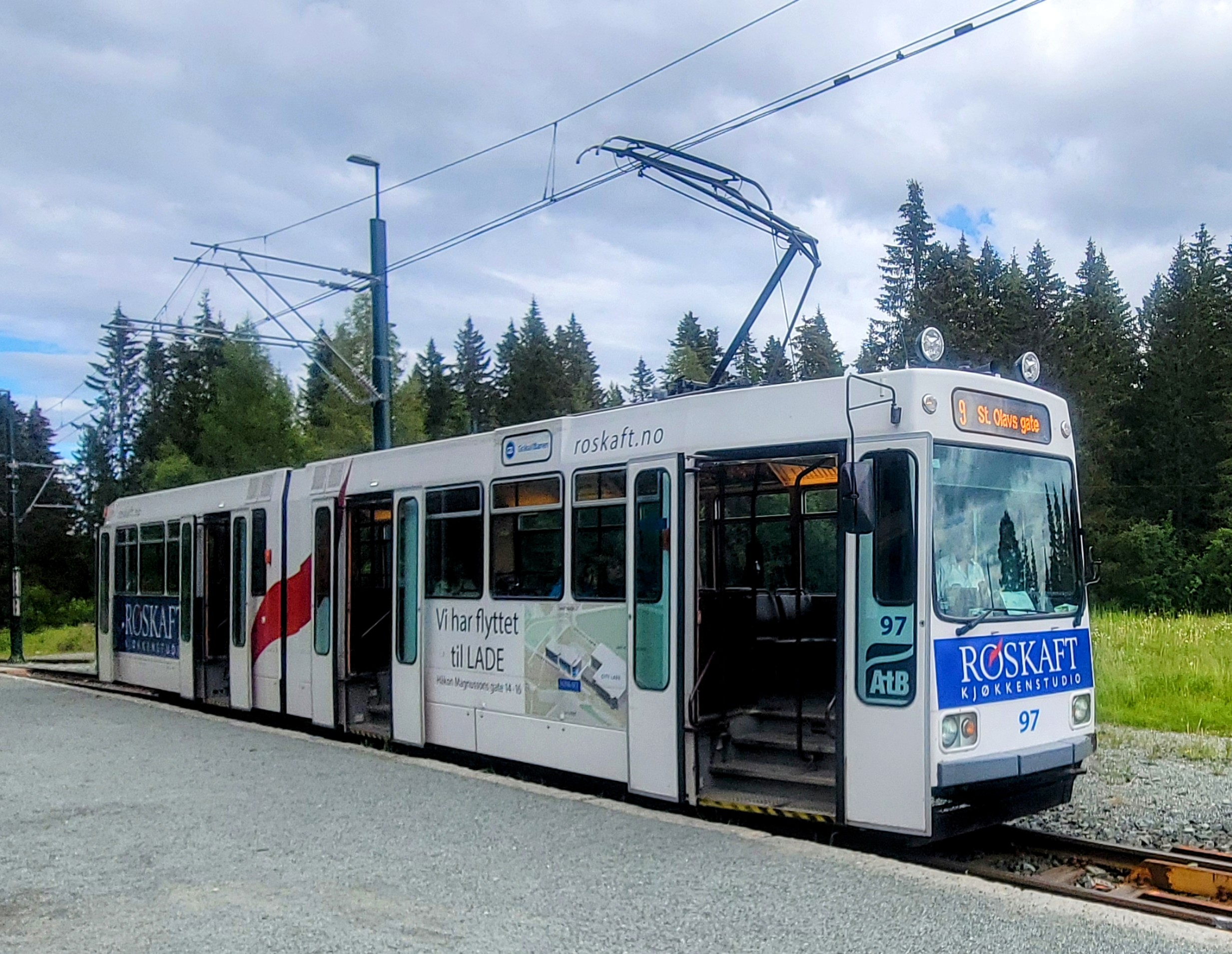
The world’s most northerly tram-Trikken
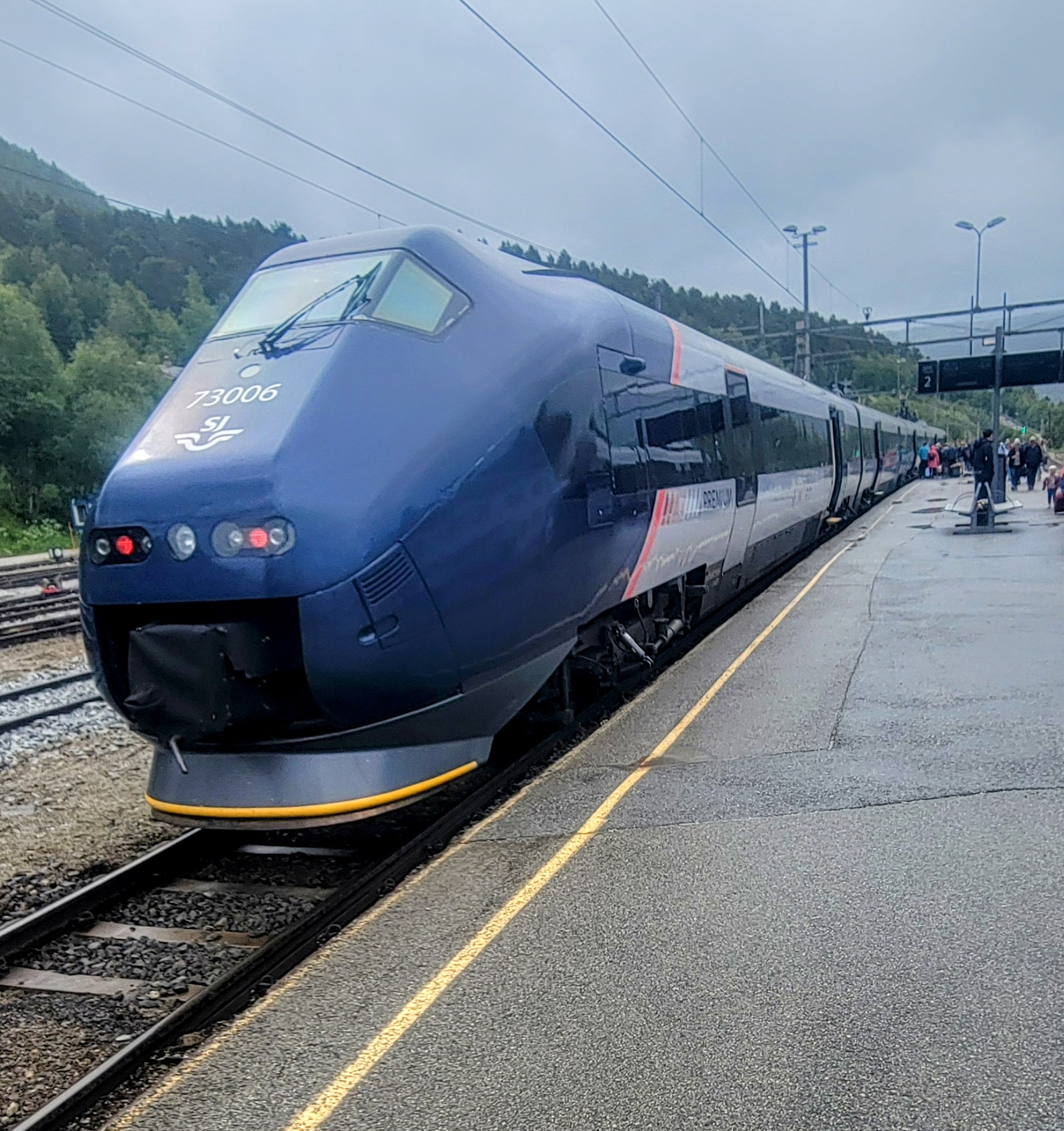
Rauma Railway was one of the featured trains of the tour. This was the beginning of countless scenic views.
Rauma Railway among the most scenic
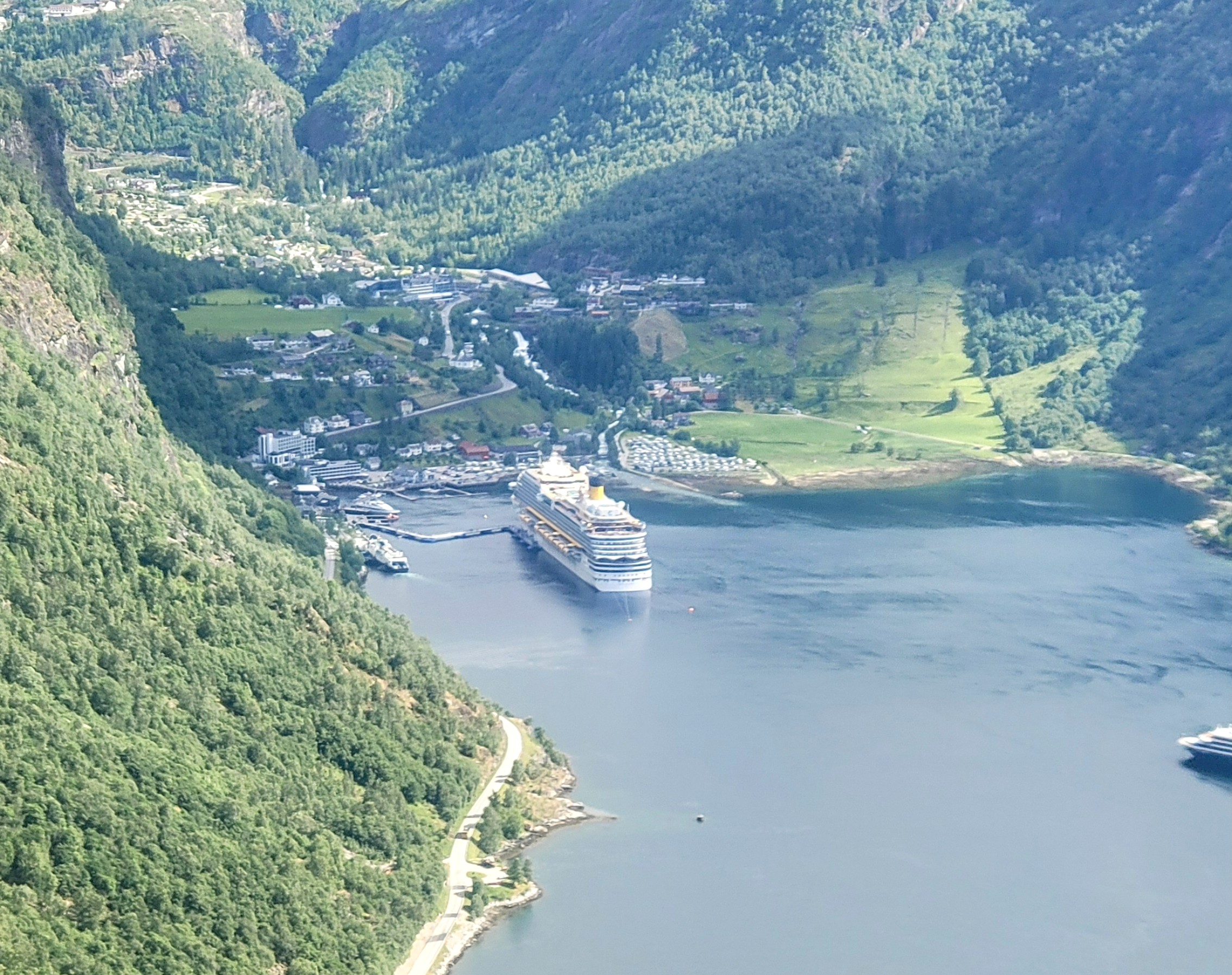
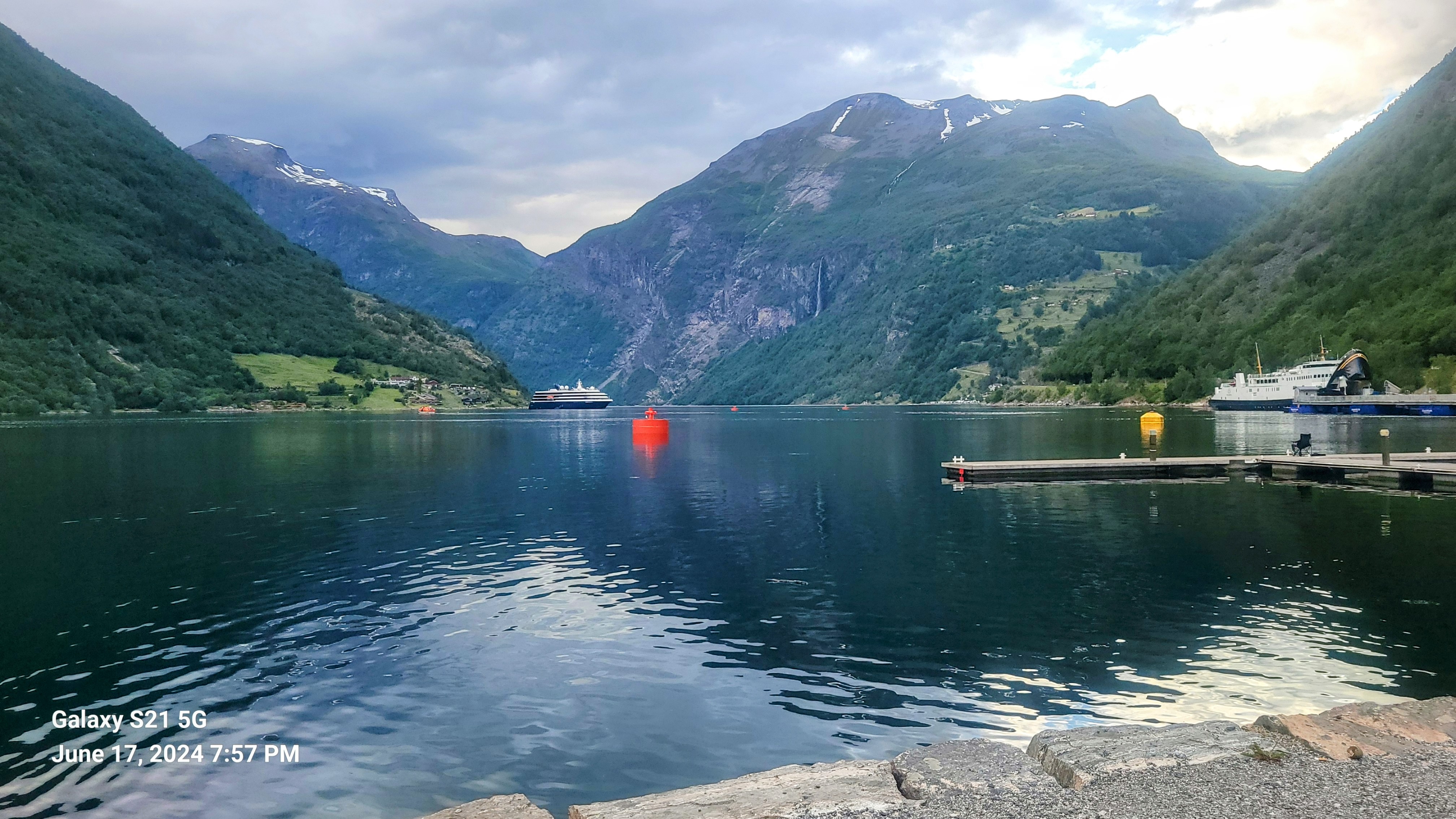
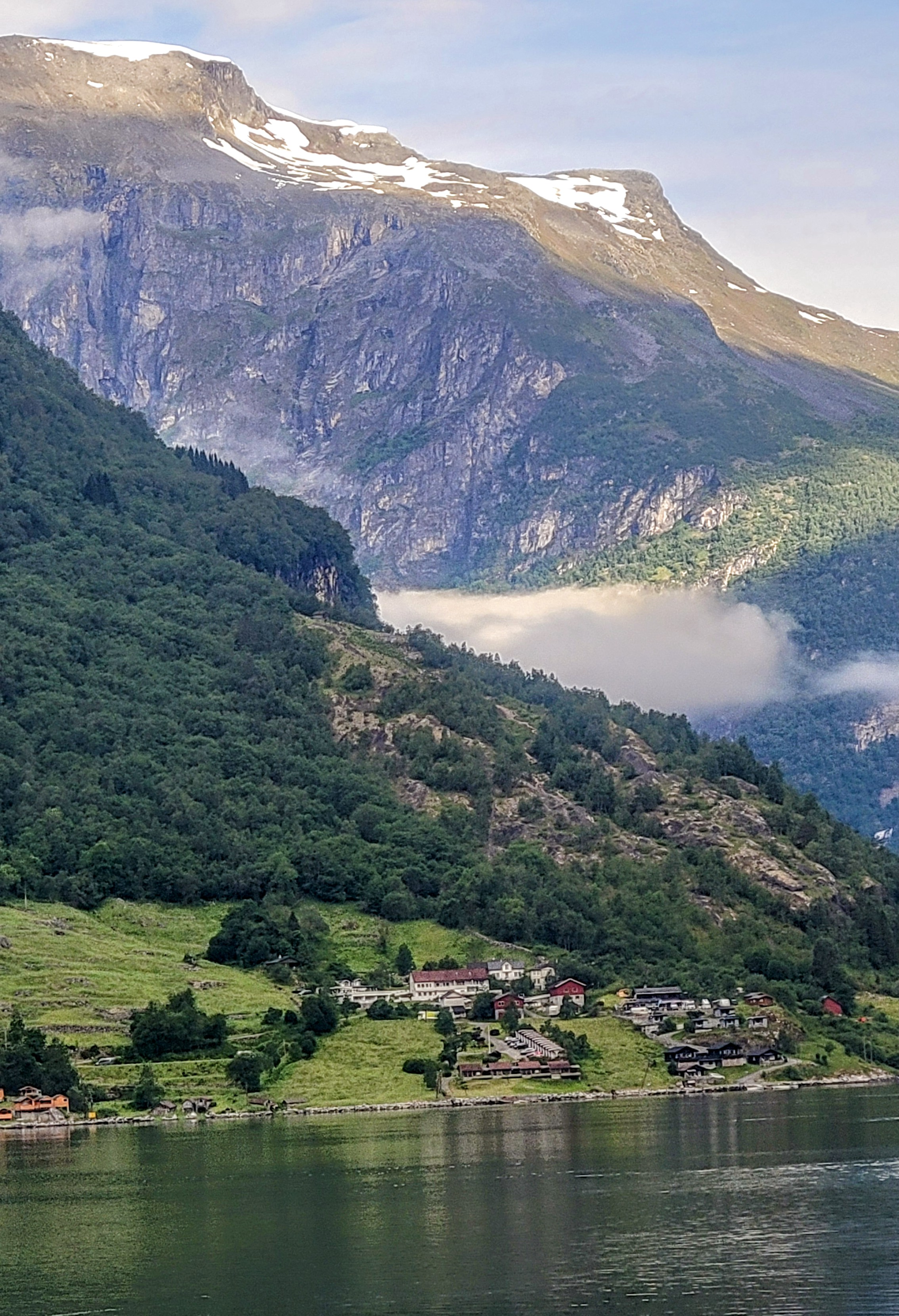
Geiranger fjord is a UNESCO World Heritage site due to its spectacular pristine scenery. The village of Geiranger sits at the end of the fjord. We were fortunate to have a balcony hotel room overlooking the harbor. This is the 3rd busiest cruise port in Norway and daily sees thousands of tourists. This is scheduled to change in 2026 when Norway will prohibit fossil fuel powered cruise ships from its most popular fjords.
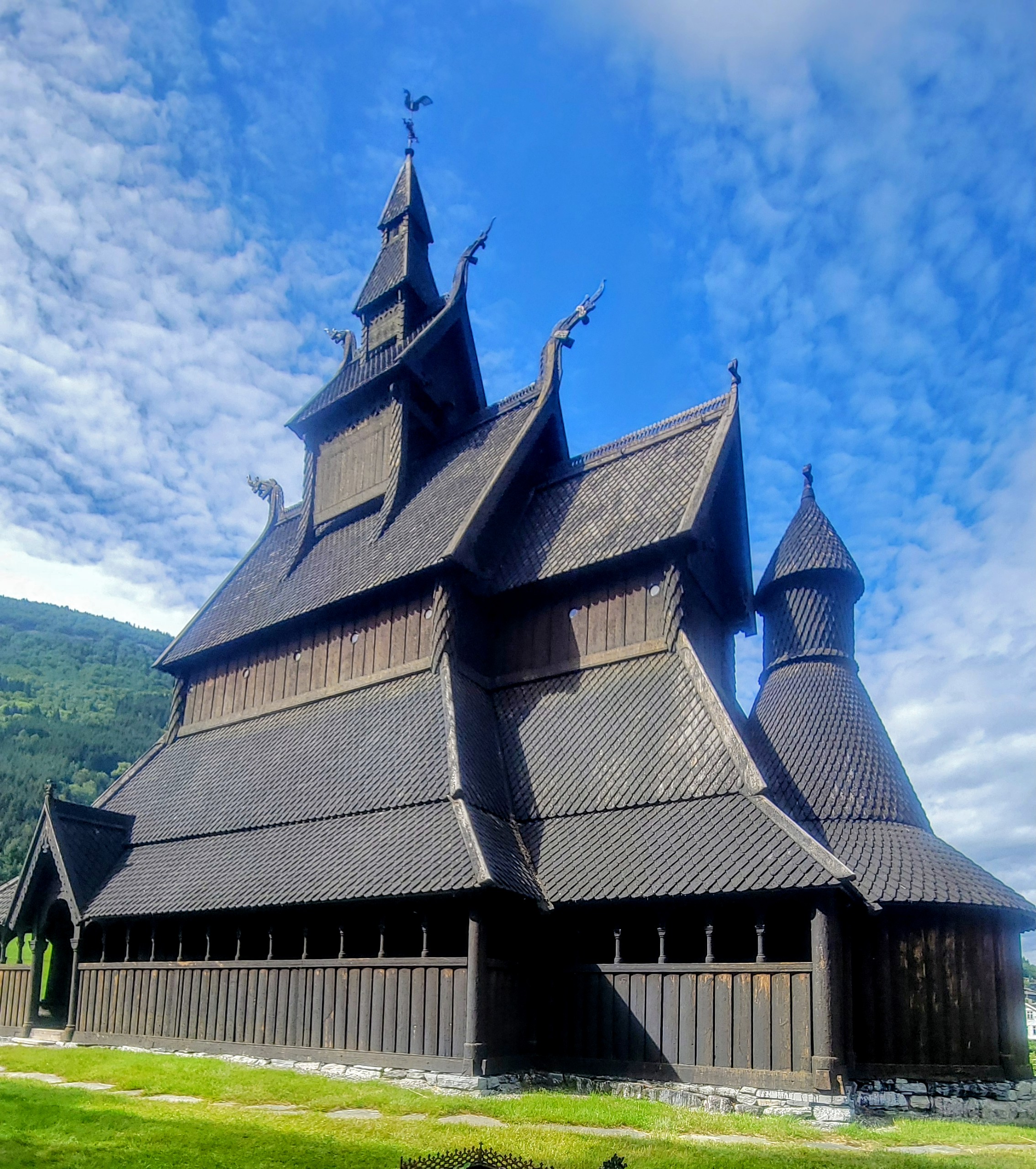
Hopperstad stave church was a fascinating stop on our journey from Geiranger to Flam. The entirely wood church built in 1130 reflects many Viking influences. The dark color is a result of traditional preservation with pine tar and ashes.
Hopperstad stave church
Original carvings from 1130
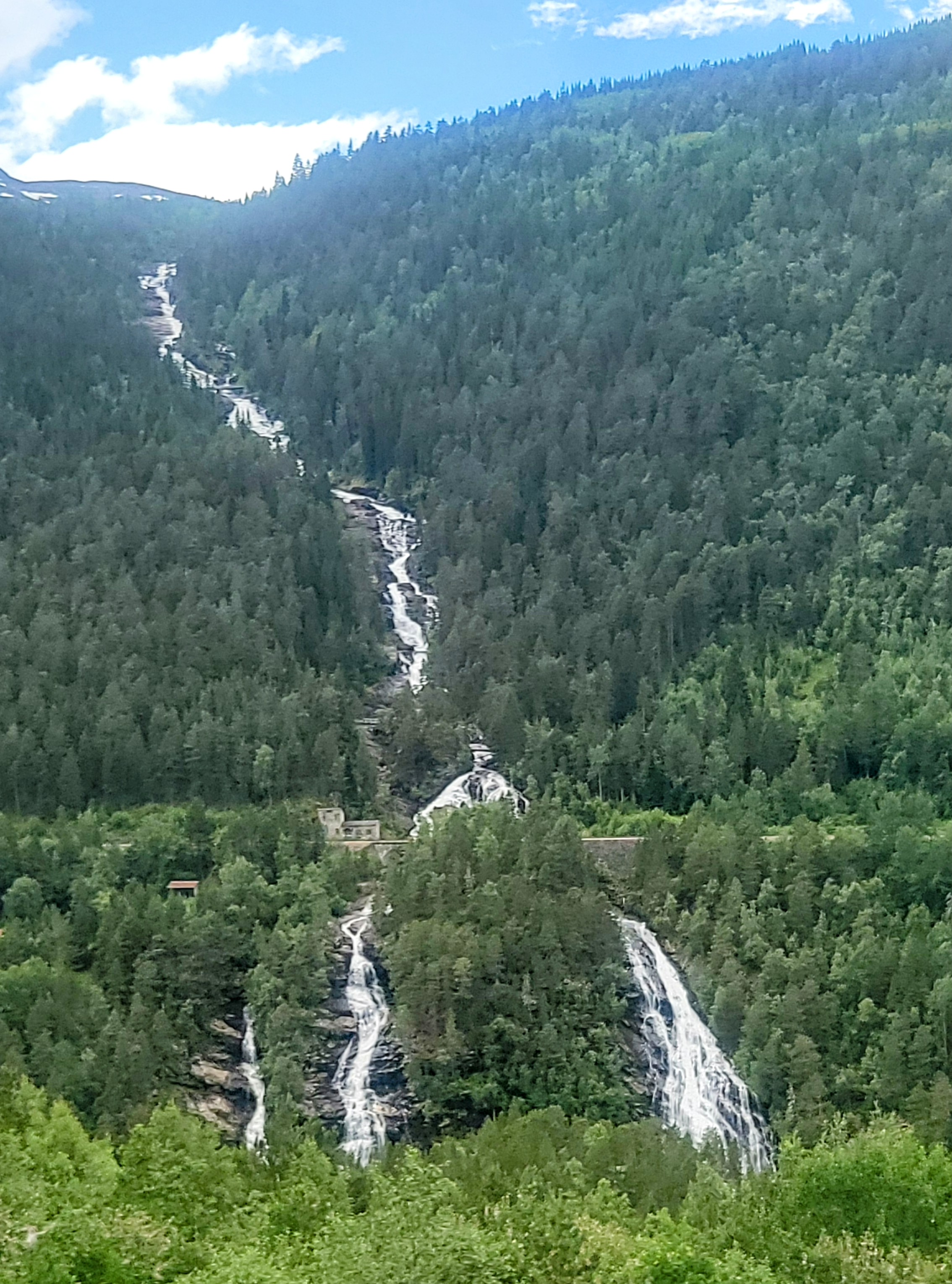
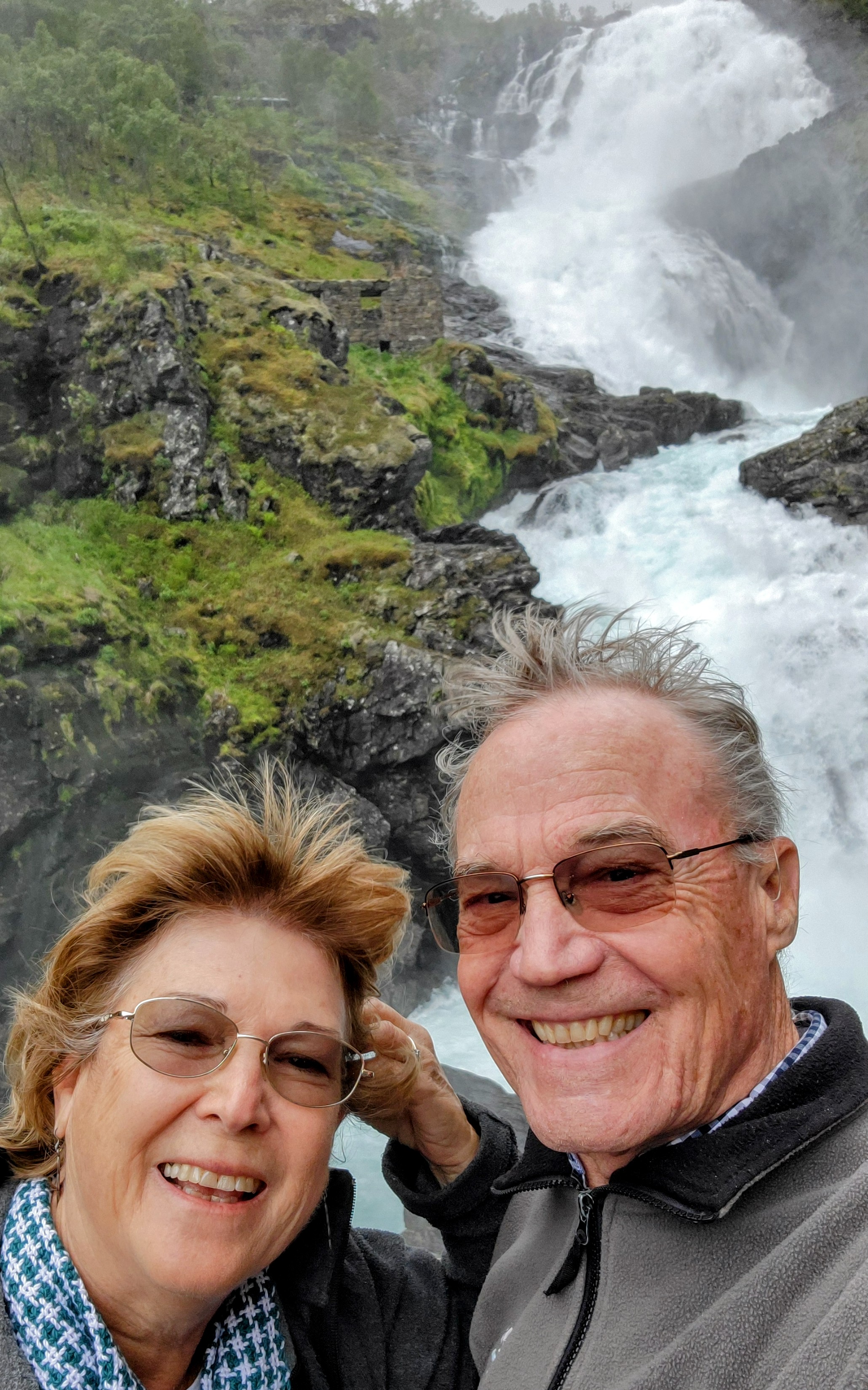
Flam is another village at the end of a fjord. It features the historic Flamsbana Railway to the mountain town of Myrdal. We stayed at the venerable Fretheim Hotel built in 1870. Our seafood buffet here was extensive, creative and absolutely delicious. The railway has a nice little museum explaining the construction of the line. As with almost everything in Norway the exhibits were in English. The railway is called the 20 line because it took 20 years to build, is 20km long and has 20 tunnels. It climbs at a steep 5.5% grade. The highlight for most is the stop for the Kjerfossen Waterfall which is accompanied by a haunting Norwegian folk song and a dancing Huldra. While getting out of the rain we noticed World War II bunkers which the Nazis built to deter any allied approach. We also had a scenic fjord cruise aboard a carbon fiber electric ferry. The boat may be a glimpse into the future of tourism in Norway’s fjords. The scenery was again spectacular.
Flam Railway
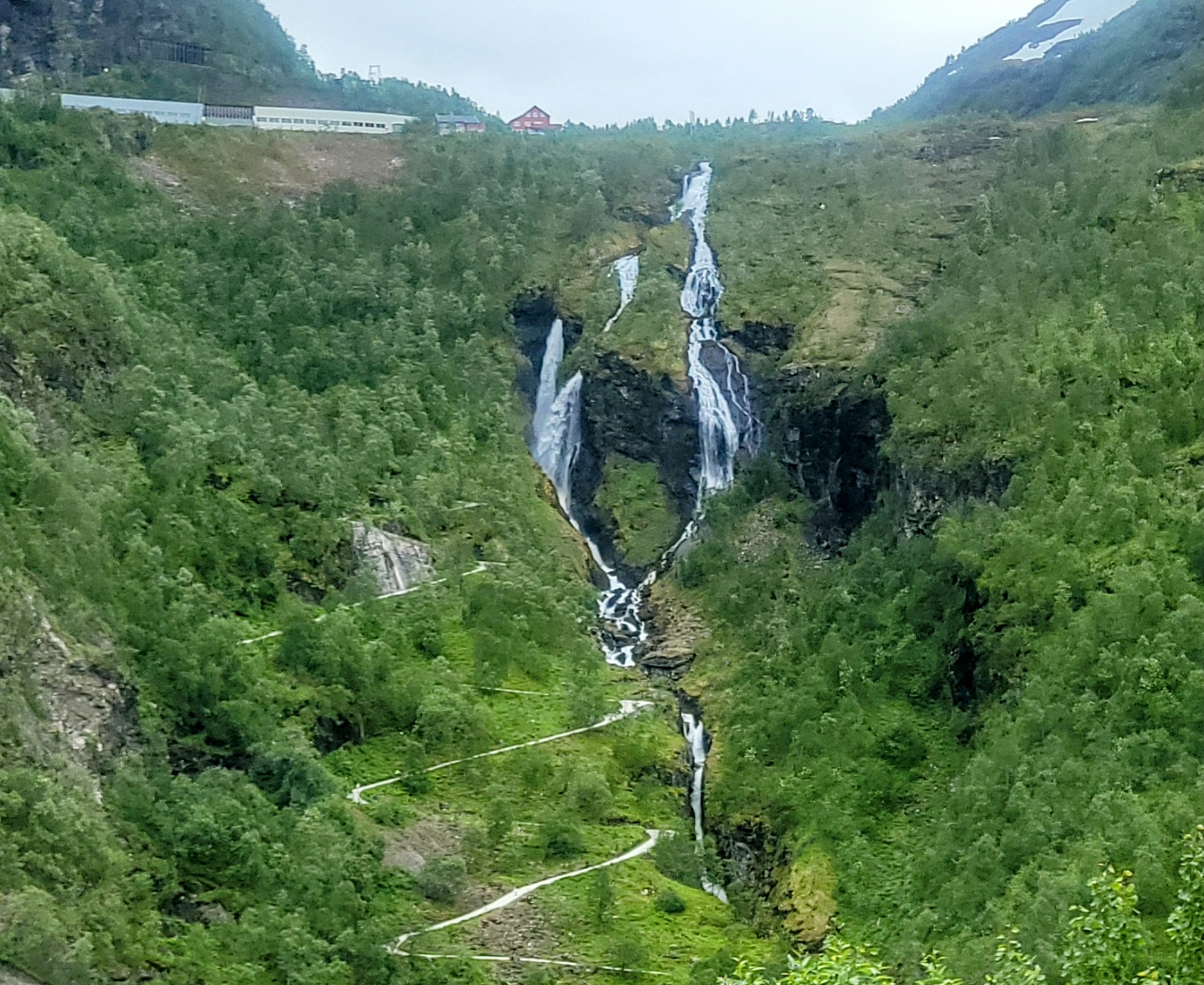
Waterfalls below Myrdal
Bergen featured a guided walking tour with plenty of free time to explore this beautiful and historic city. We ventured up the Floibanen funicular to spectacular views. Also we saw the Bergenhus Fortress at the entrance to the harbor. This was a very busy city. Its also important to Norway’s salmon and oil industries. Our tour ended with an all day rail trip over Norway’s mountains to the capital of Oslo. Unfortunately we arrived late and left for the airport very early the next morning so we didn’t see much of this vibrant thriving city.
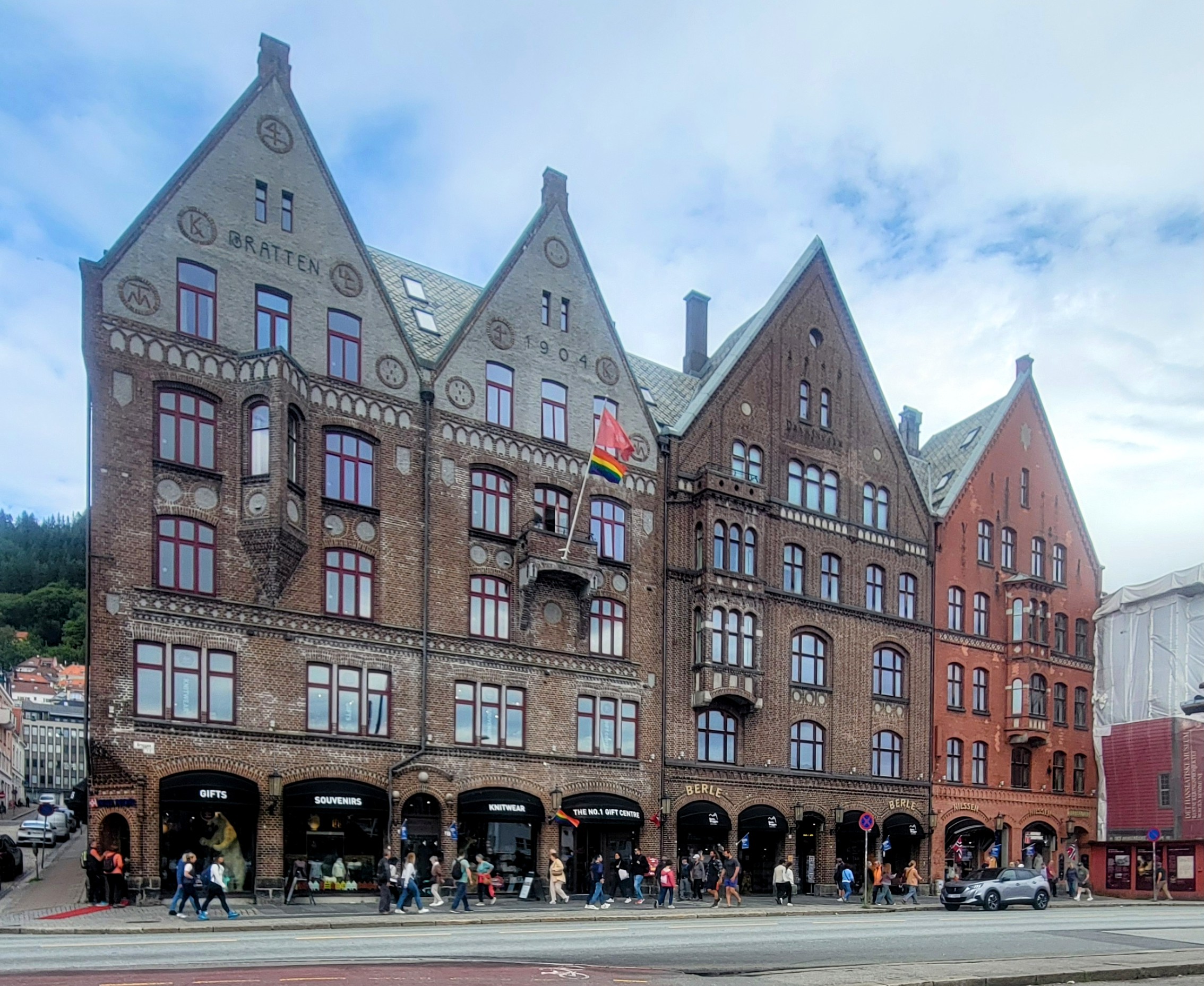
Bergen’s historic warehouses
Classic Norwegian architecture
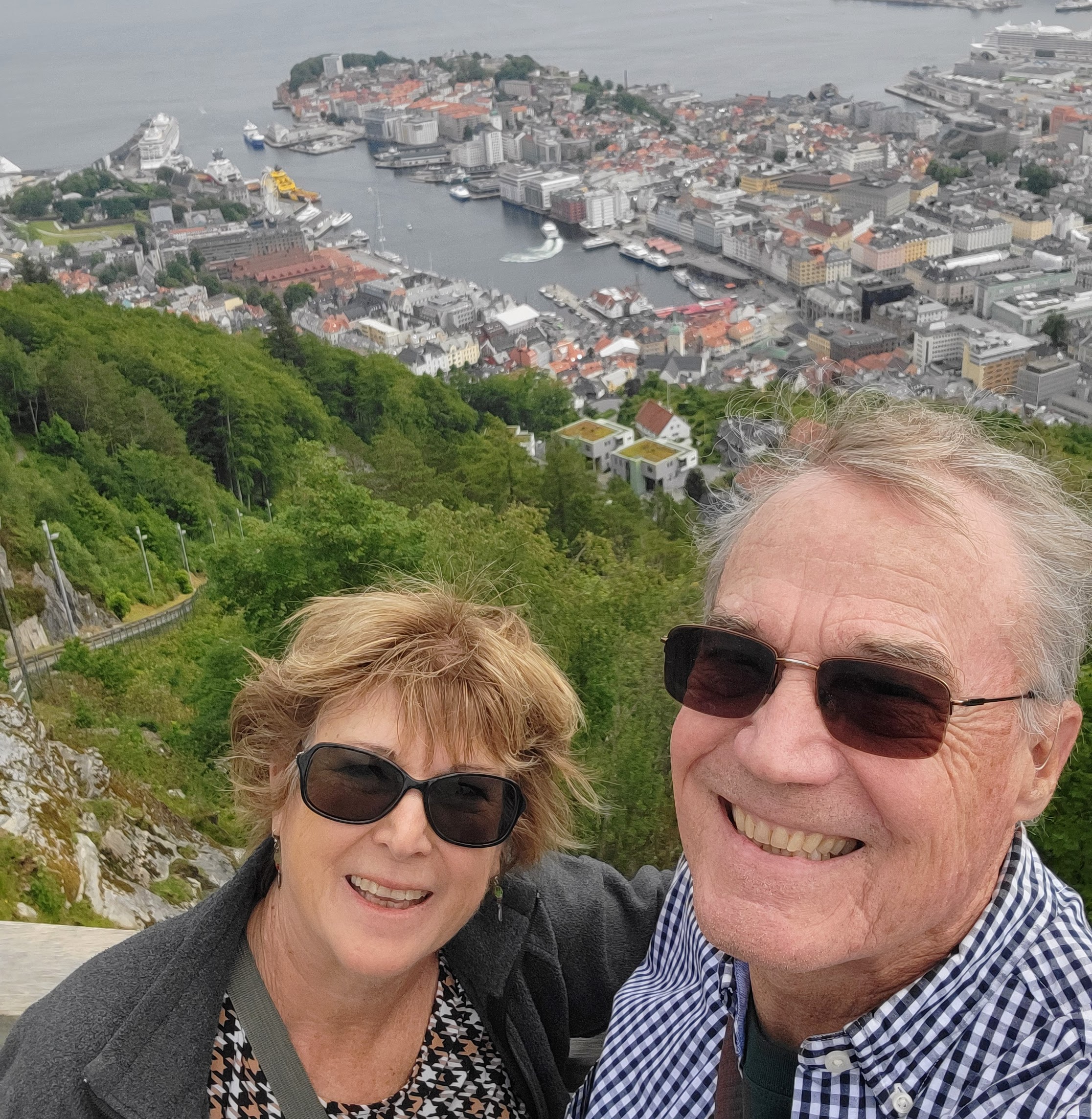
View from Mount Floyen
Overall this was a great tour of Sweden and Norway. Norway has some of the most beautiful scenery we have ever seen. For a great rail journey however there were too many long days on buses. Even our tour manager agreed. We later learned this was a new itinerary for Great Rail Journeys and we think they need to refine the offering. Stockholm, Lapland, the Sami people, Narvik, Stiklestad, Trondheim, Geiranger, Flam and Bergen were all memorable places to visit. Norway is a small country, only 5 million people. It is also one of the wealthiest countries and very expensive. However, we always find a way to enjoy on a budget.
Our European holiday included several days between the end of the Viking Danube River cruise and the Vacations by Rail Arctic Circle Express tour. After all we’d heard about Prague we knew that we had to include a visit. We disembarked the Viking Viljalm in Budapest and immediately headed to the train station for the 7 hour train ride to Prague, the “City of a Thousand Spires”. The station itself was quite beautiful as it was Gustave Eiffell’s first project. The train was clean smooth and fast, up to 160 kph. Beautiful eastern European countryside flew by.
Budapest’s Nyugati railway station built by Gustave Eiffel
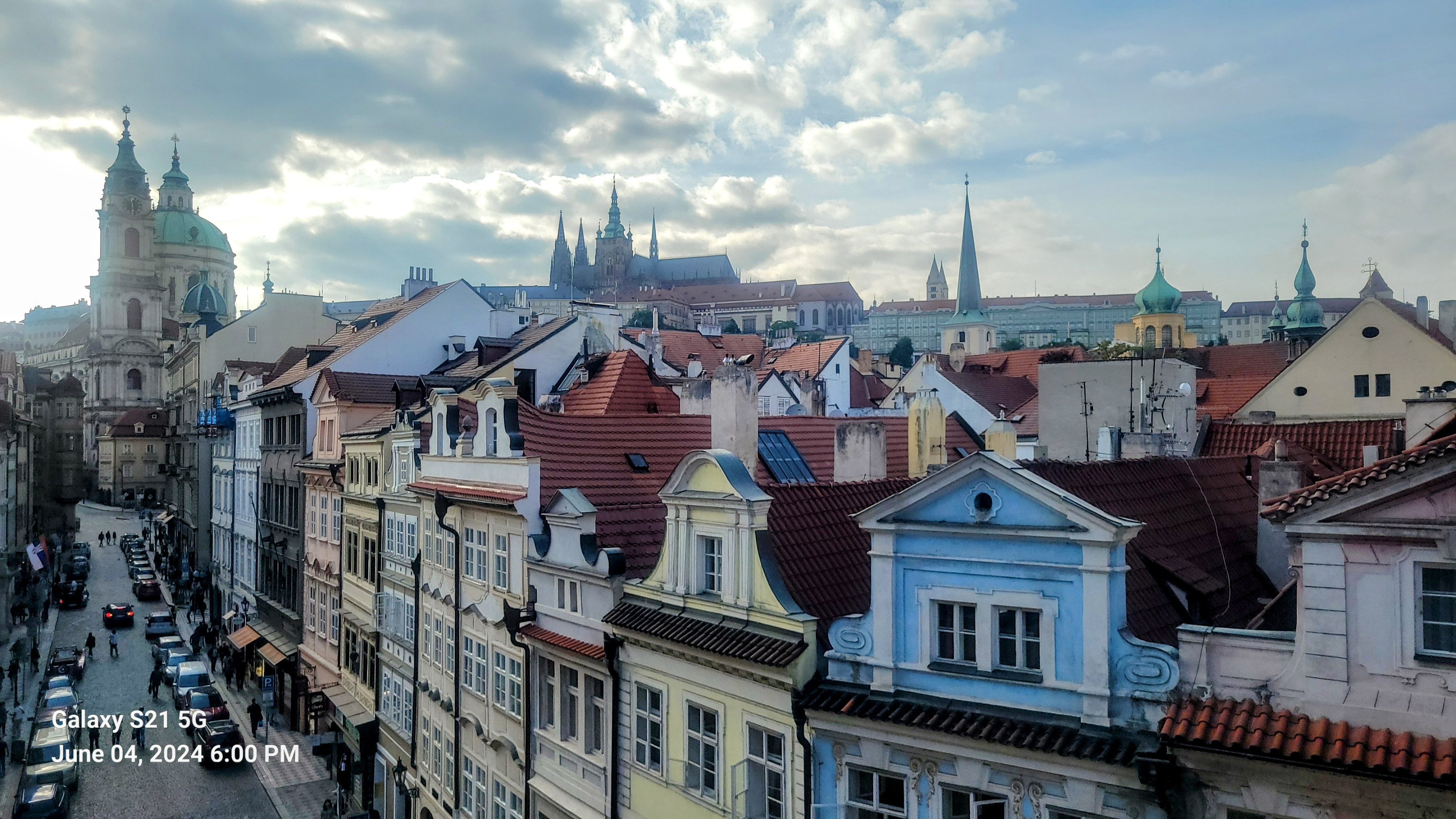
We had an AirBnB host waiting for us in the very heart of the old town. The apartment was mere steps from the famed Charles Bridge, a UNESCO World Heritage site. Out our windows we had great views of the bridge’s north tower and St Vitus cathedral in Prague Castle. The foundation of our building was laid around 1100.
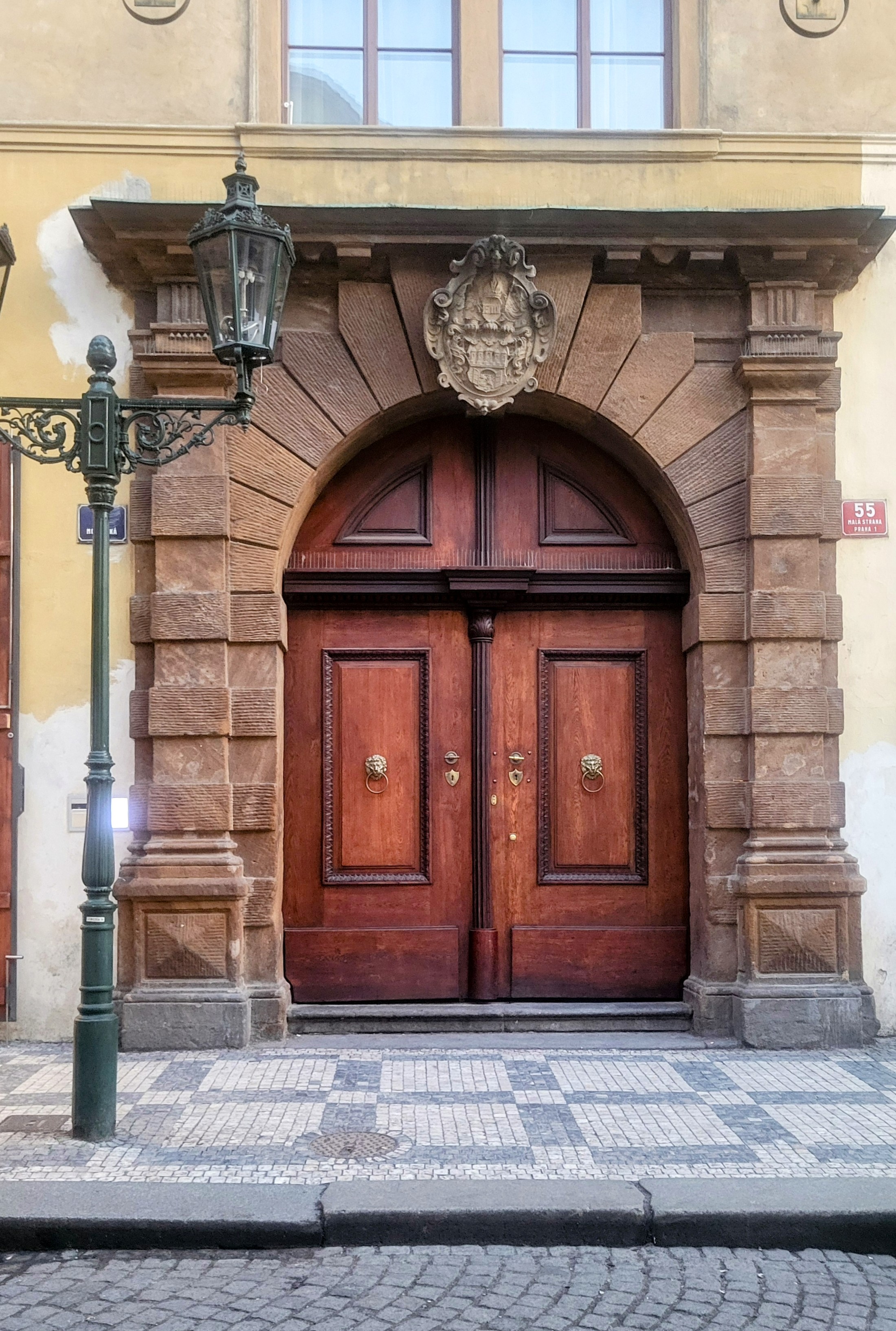
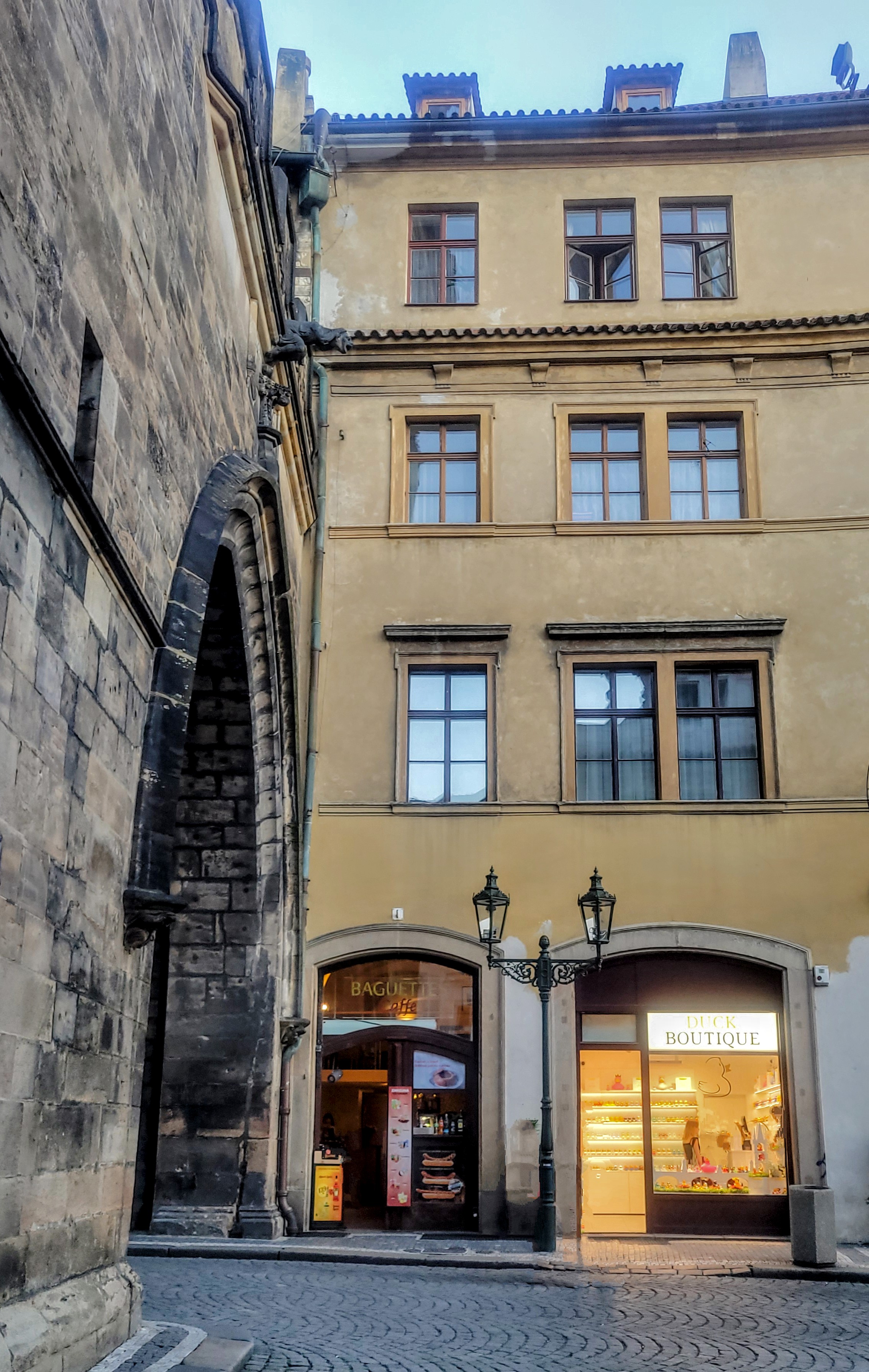
Entrance to our apartment
Top right our windows, left Charles Bridge Tower
View from apartment
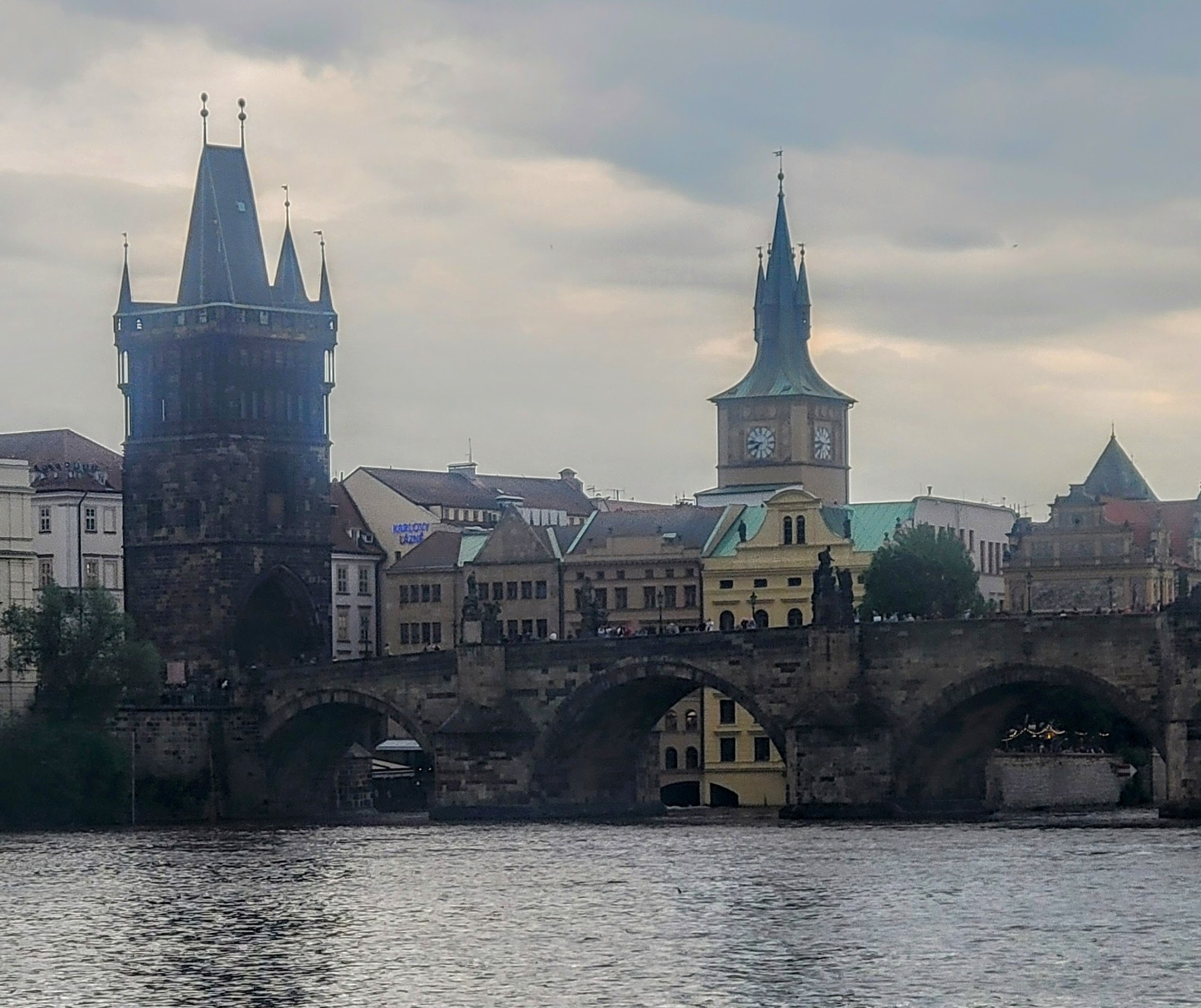
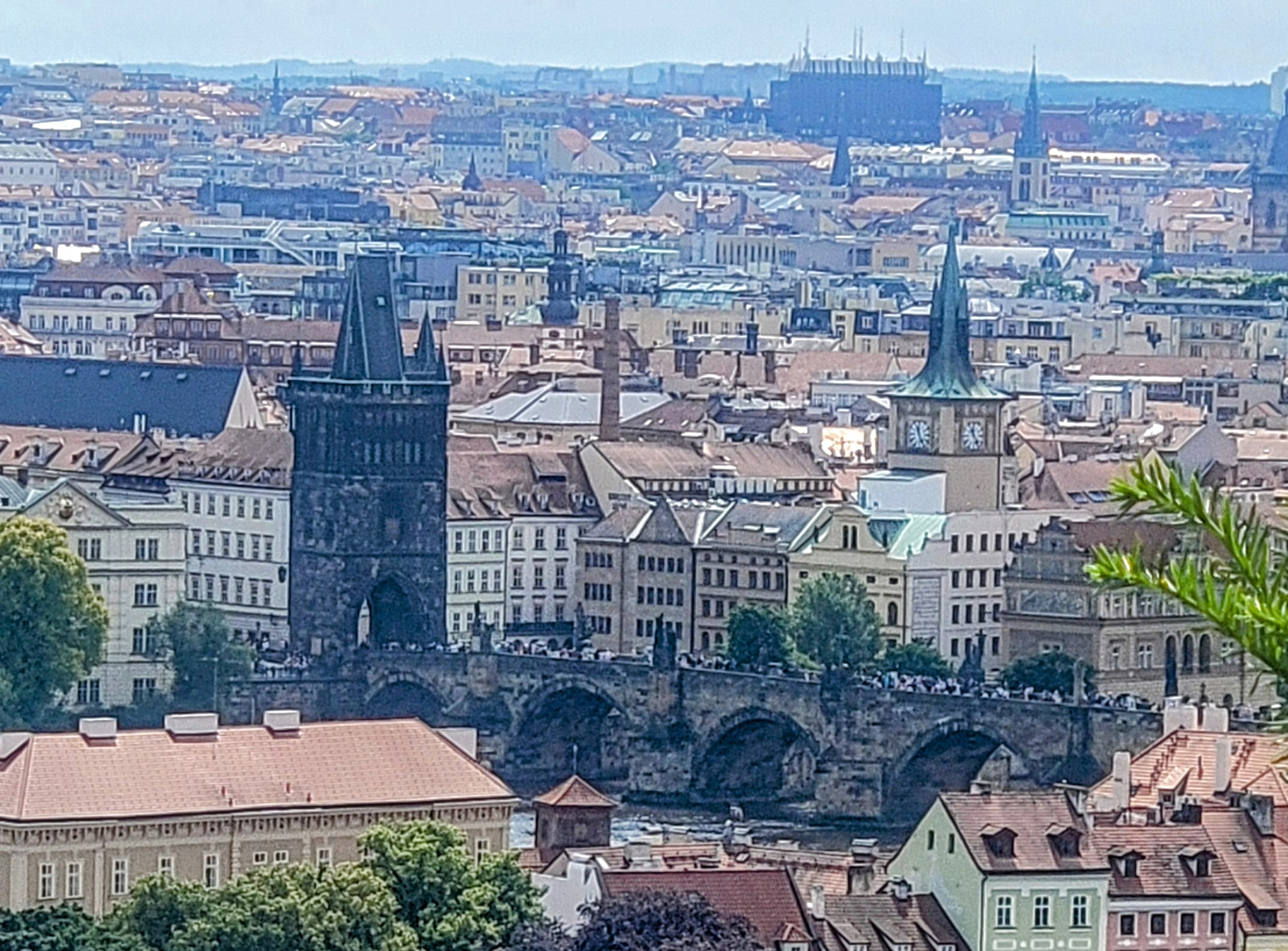
Charles Bridge completed in 1402
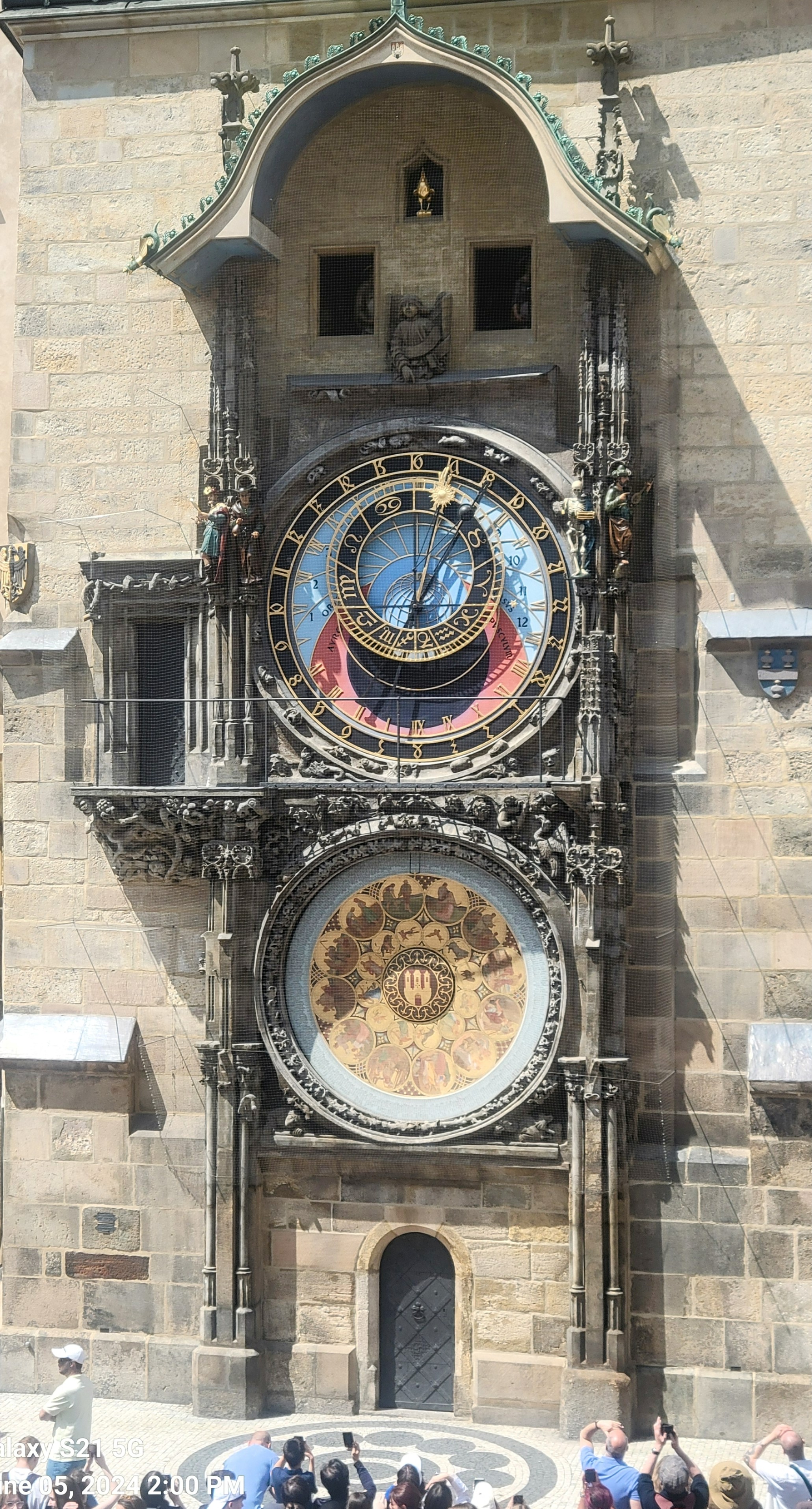
Our first day we had booked a tour with PragueWay Tours. The tour was led by a college student who didn’t seem to have a plan. He did however introduce us to his city and help us learn to navigate. The city hall tower and its underground cellars afforded great views and history. We left the tour at the famous Astronomical Clock which we watched from the second floor Mozart Cafe across the square. Wenceslas Square is where the population gathers for momentous events such as the fall of Communism.
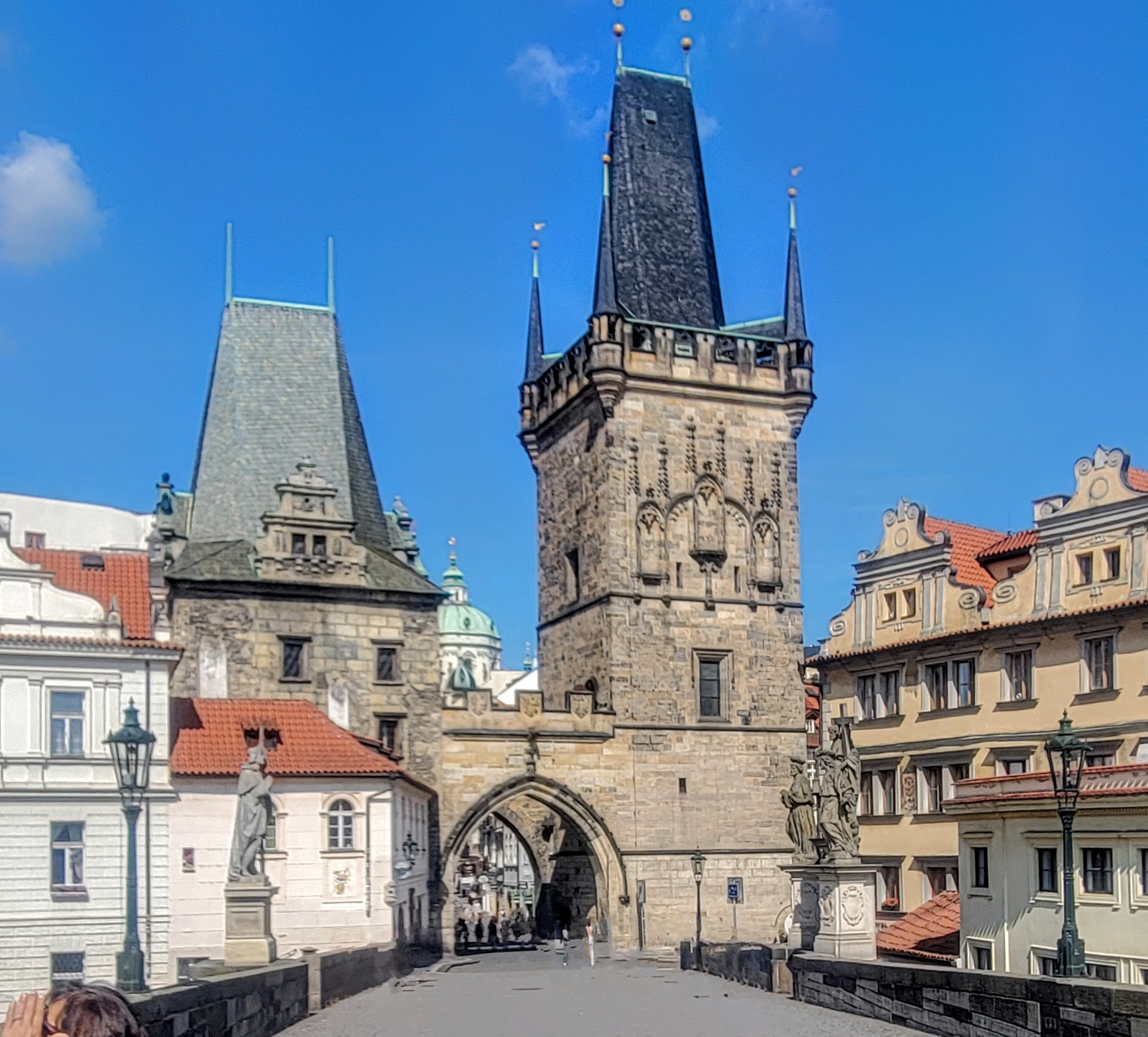
Lesser town tower – our end of Charles Bridge
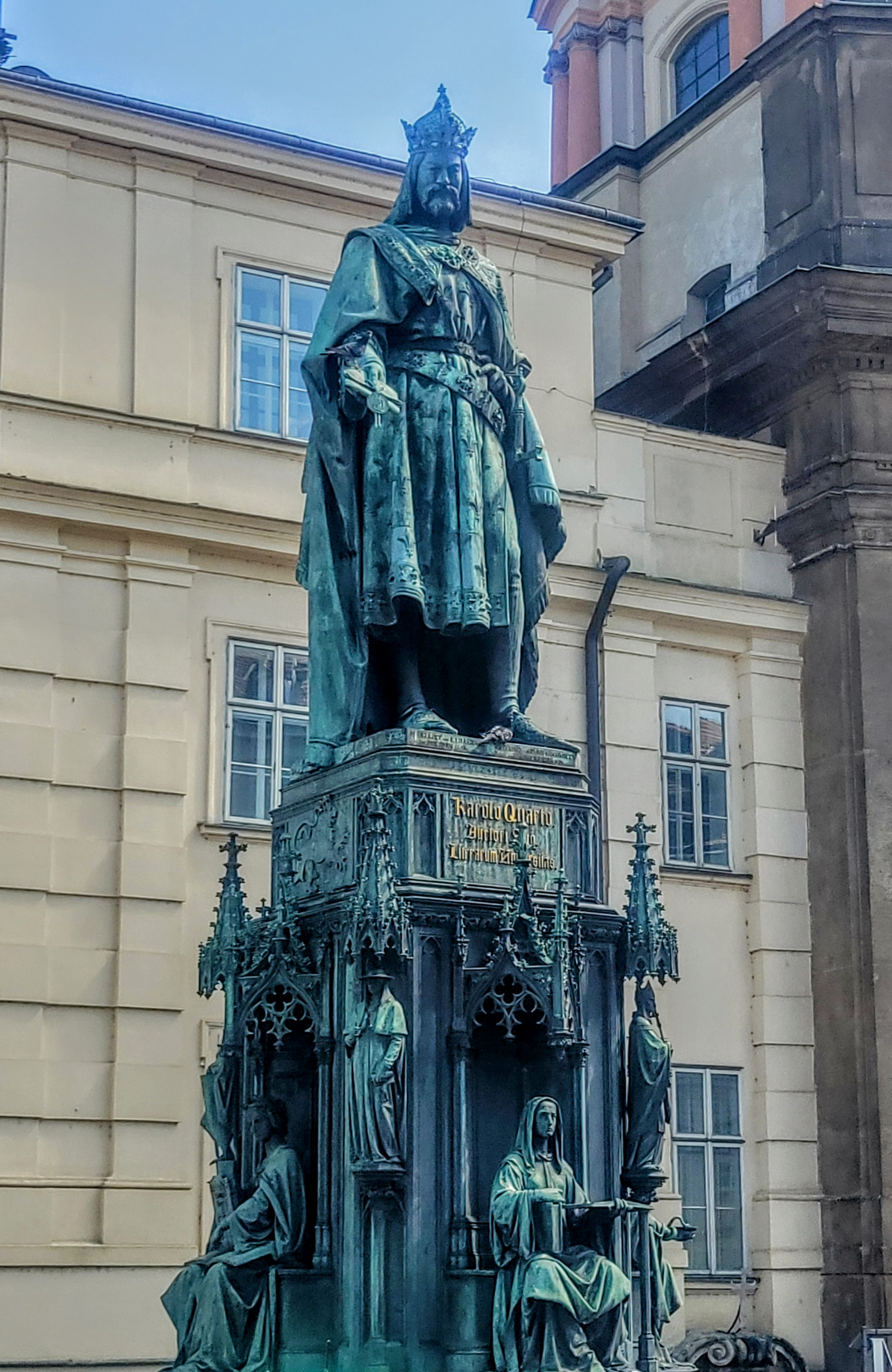
Statues of saints line the bridge
Prague’s astronomical clock in the town hall tower
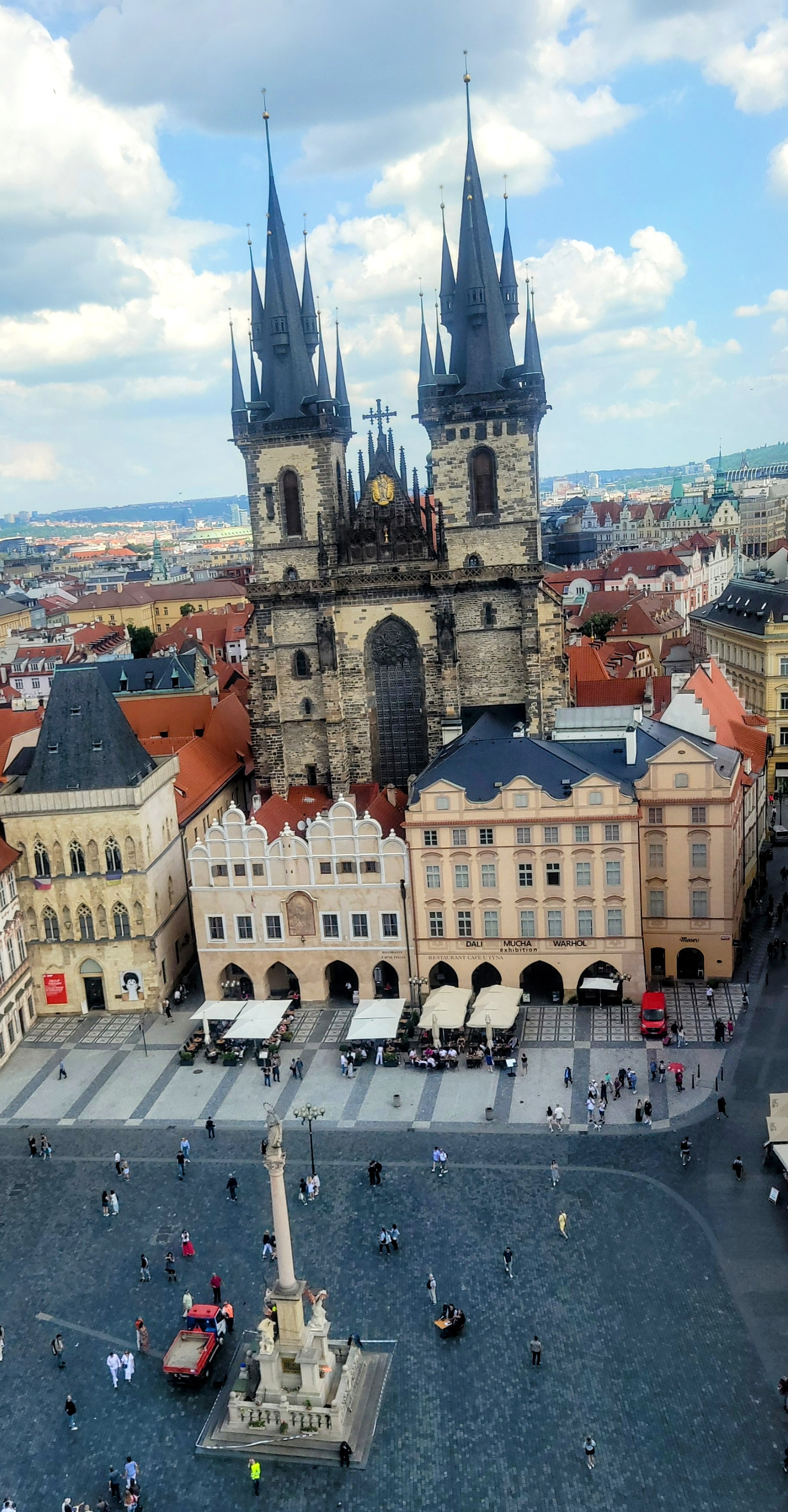
Town hall tower view of a gothic cathedral
Church hosted our classical concert with organ, violin and mezzosoprano
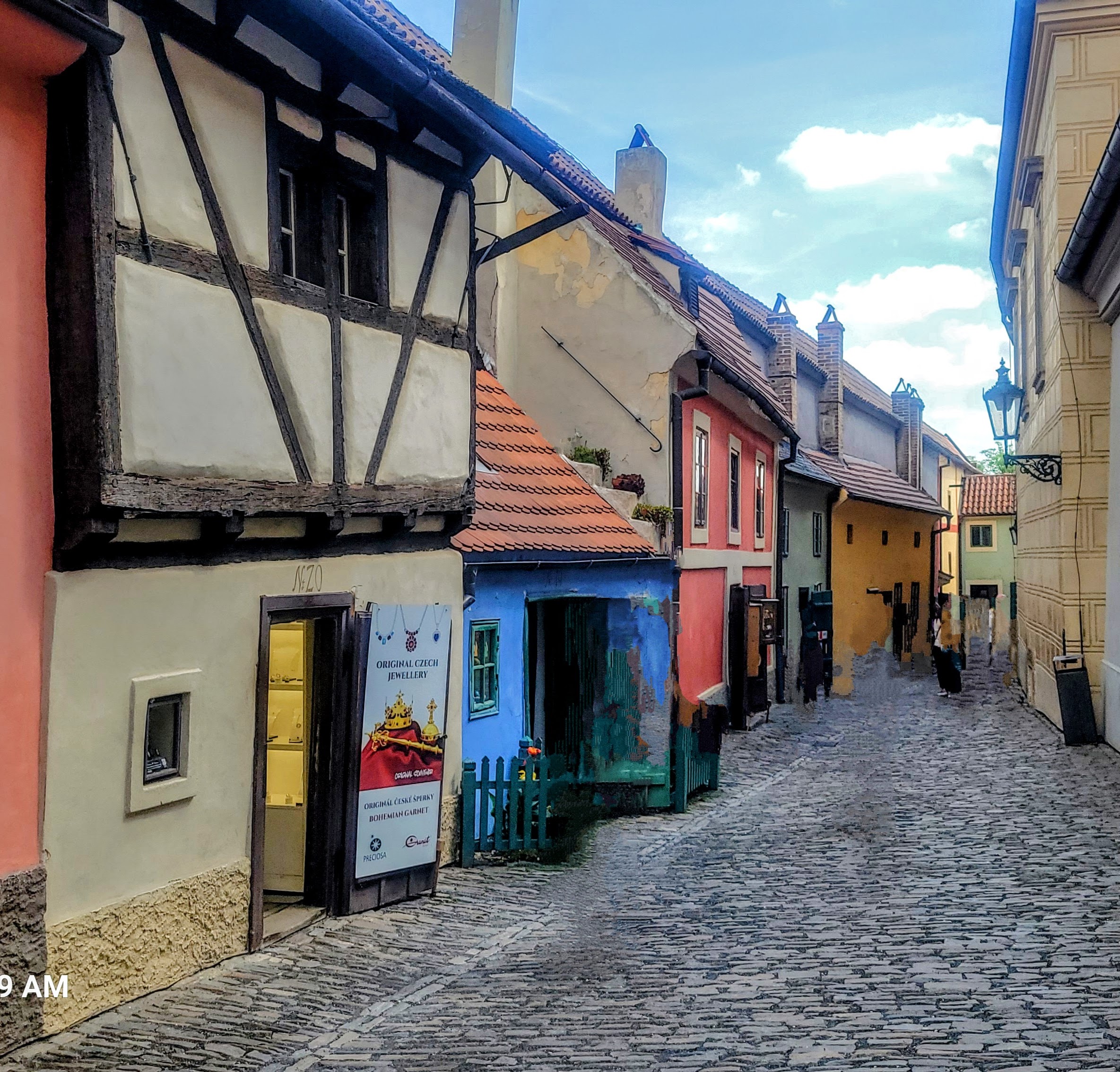
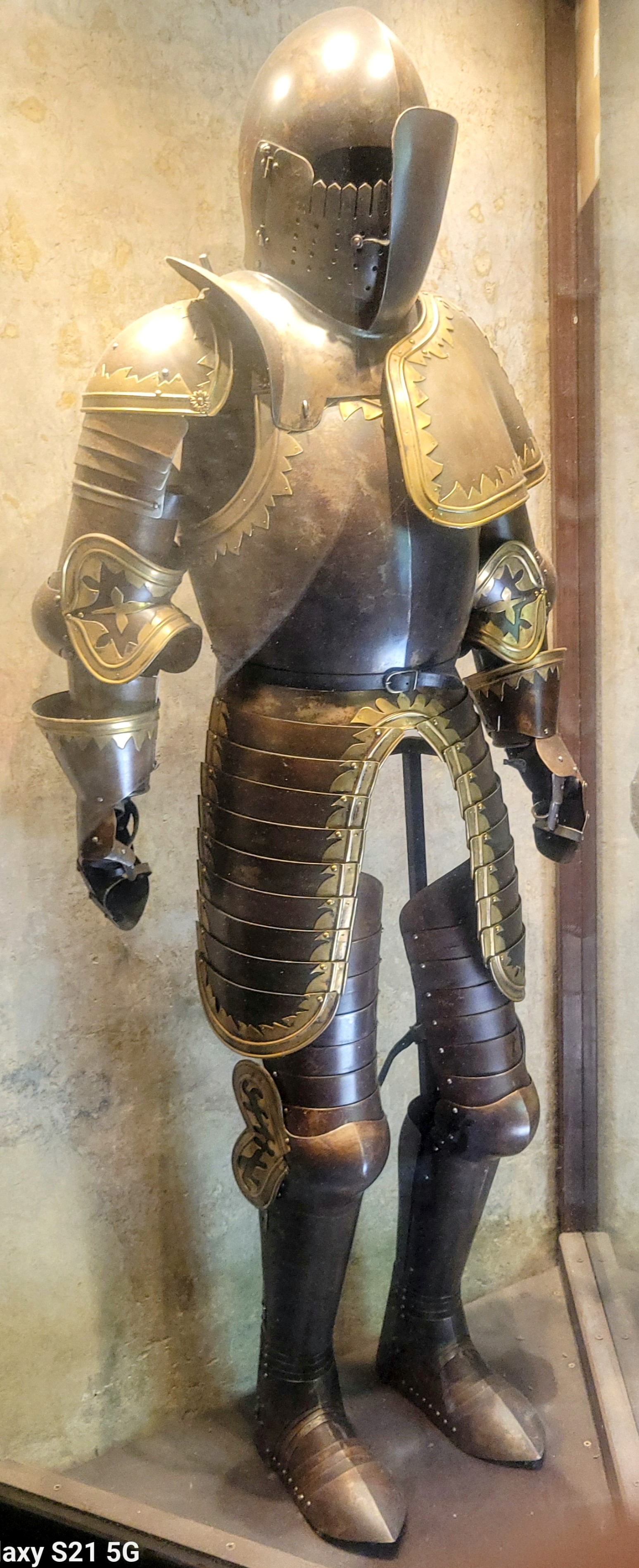
Prague Castle is a must-see for any visit to Prague and we planned to get there early via the ubiquitous trams. Prague makes all trams free for pensioners over 65 with no ticket required. Built in the 9th century the castle is said to be the largest on earth. Its packed with things to see as well as great views of the city from its hilltop location. St. Vitus Cathedral is very impressive. We loved the Golden Lane and displays of Medieval weapons and armor. It is still the official residence of the Czech president after serving as the seat of power for kings of Bohemia and Holy Roman emperors.
St. Vitus Cathedral, founded 930, finished 1929
Classic flying buttresses
Inside massive cathedral
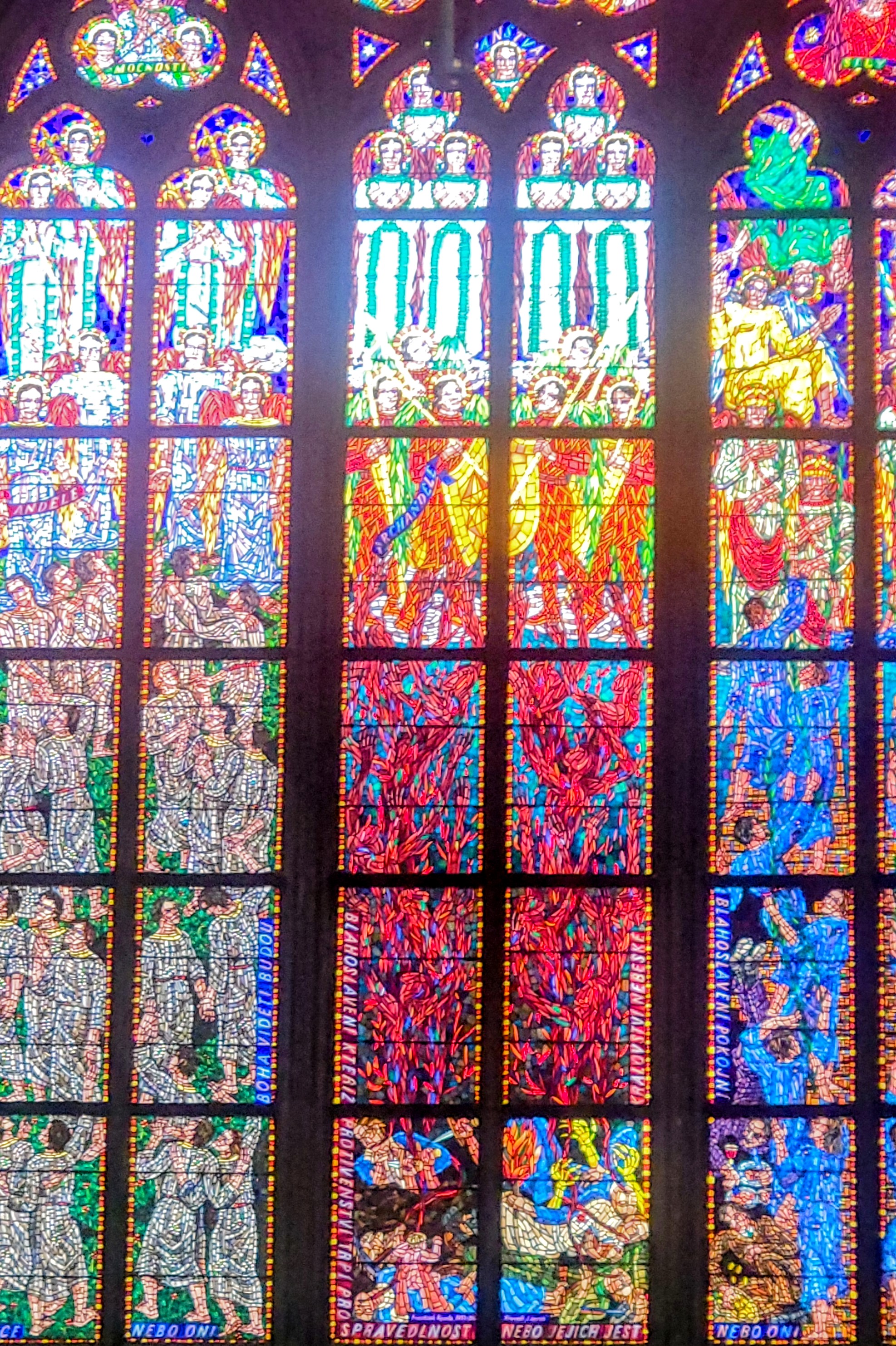
One of many stained glass panels
Medieval Golden lane apartments
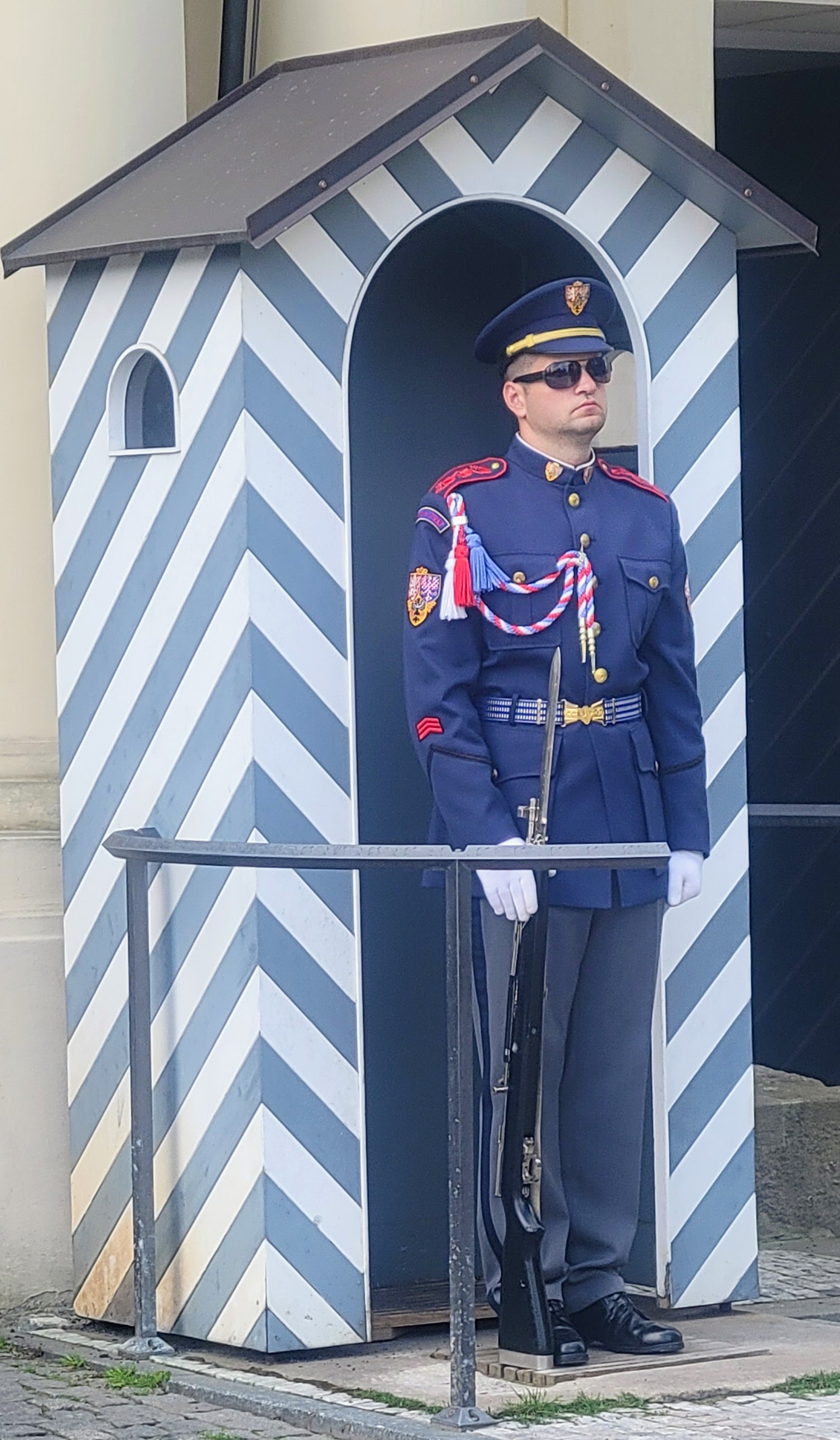
Castle is still home of Czech president
City view from castle
Prague is proud of its history and its a very popular tourist destination with people from all over the world. However when we wandered off into narrow winding streets off the main areas the crowds dissipated. There are low cost classical music performances daily in historic churches that are subsidized by the state. We were amazed by the quality. The historic center of Prague is a UNESCO World Heritage site. There are museums galore. And quaint little restaurants and cafes everywhere. And the locals take their time to eat. There is no rush. Art and sculpture complement the stunning architecture throughout the city. We were very happy to have our own unstructured time in this iconic city. We’d love to return.
As part of a rather ambitious 2024 European vacation, we booked a Viking river cruise on the Danube. This area was all new to us and included visits to several iconic European cities.
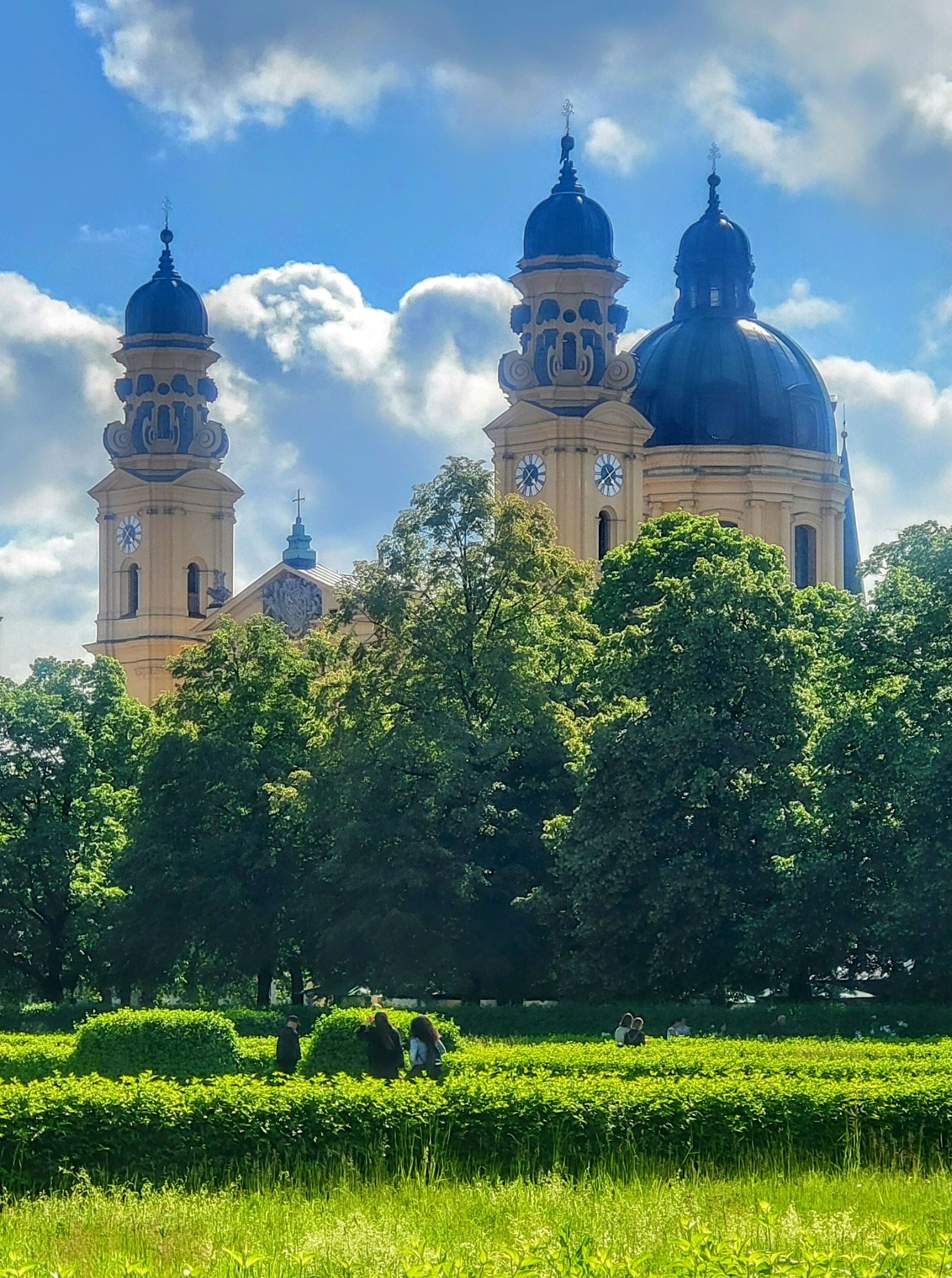
Our journey started in Munich. After a long flight from Florida and a short train ride to the city our hotel room was not available due to the morning arrival. We decided the best use of our time before check-in was to walk and explore the city. Munich is a beautiful city with tons of history. We walked until we got lost then learned how to use the subway to return to our hotel. We found the city very busy with tourists from all over the world yet it was clean and well maintained..
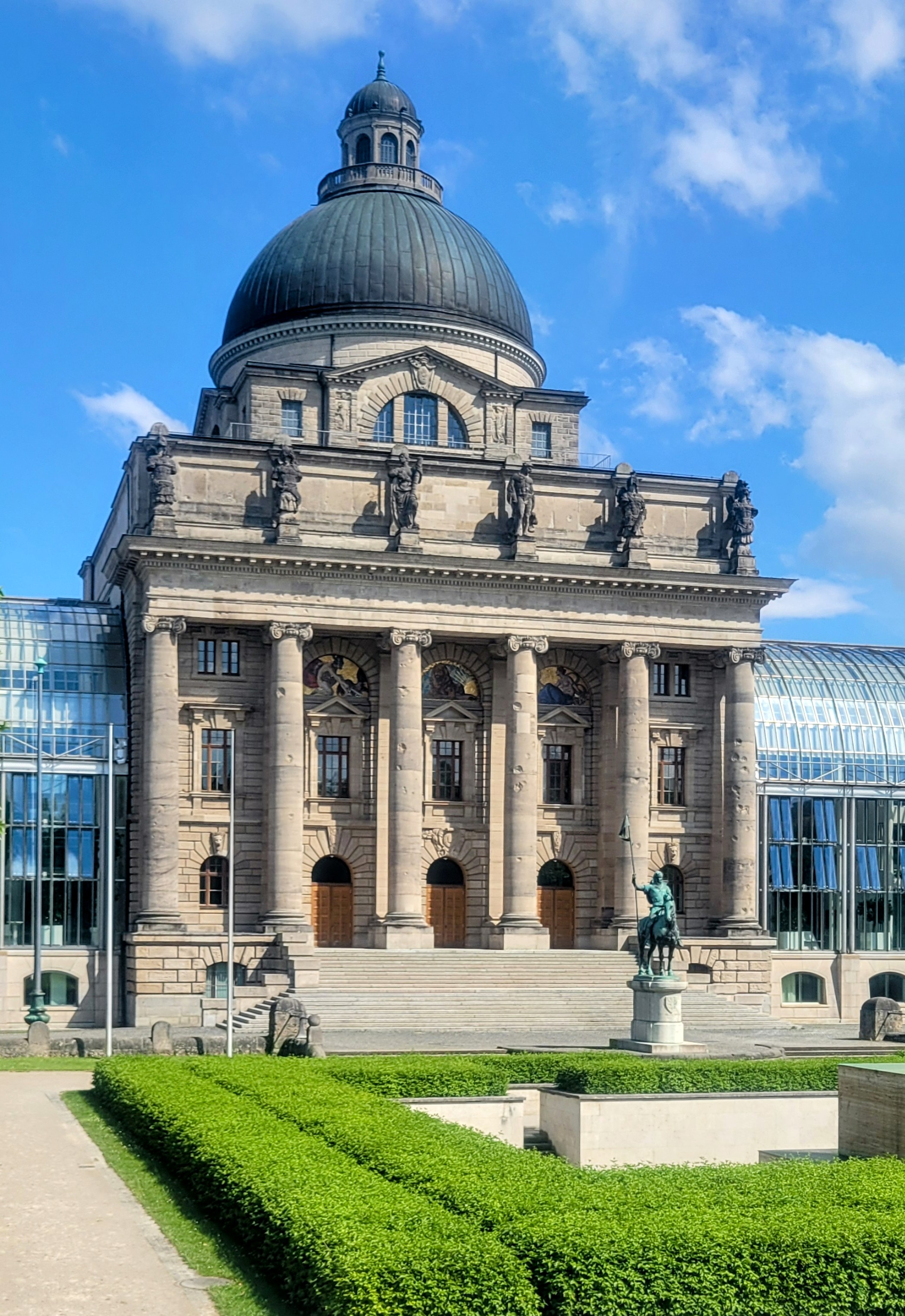
Bavaria State Chancellery
Munich has a blend of monumental architecture and parks
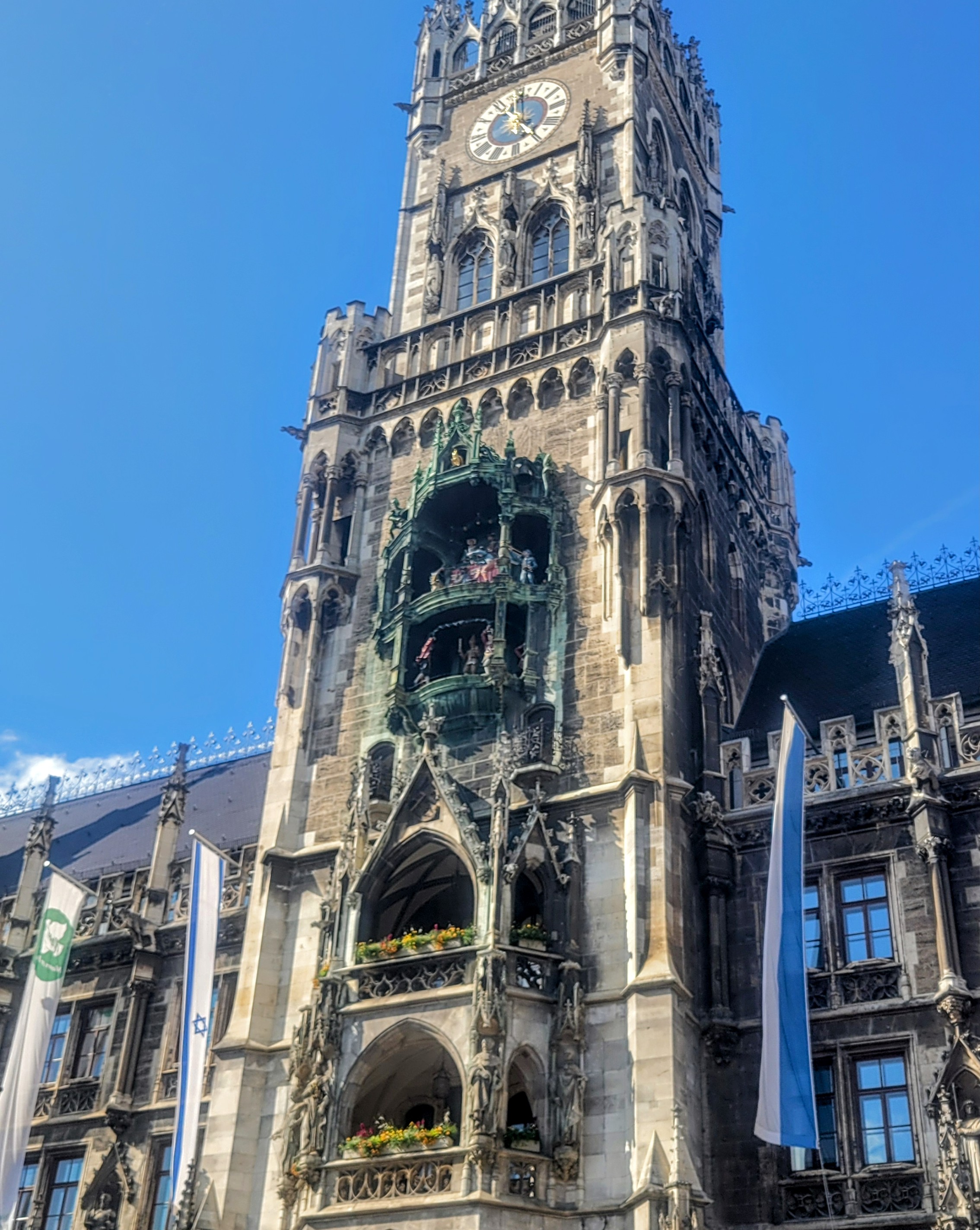
Munich’s famous Glockenspiel
a cafe where we enjoyed schmalzknudel
Year round surfing in Munich
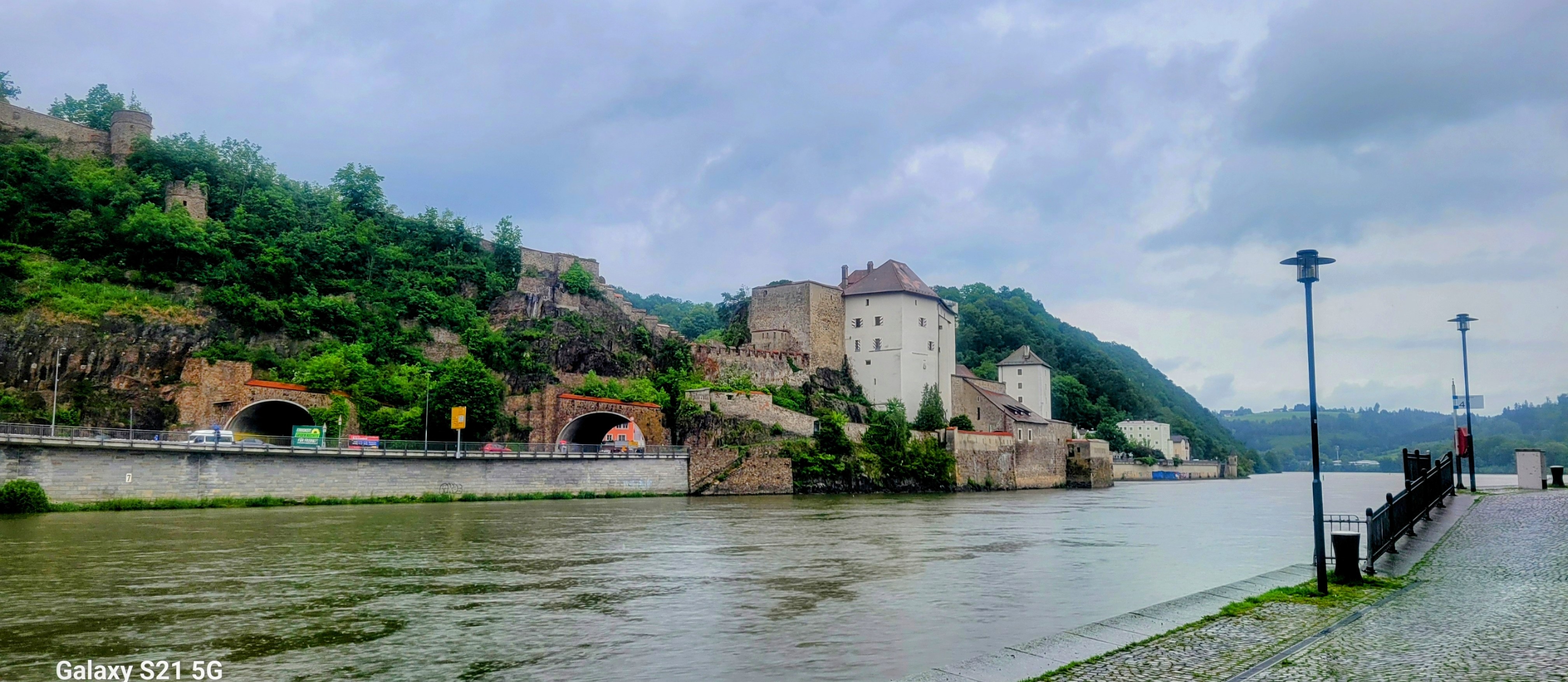
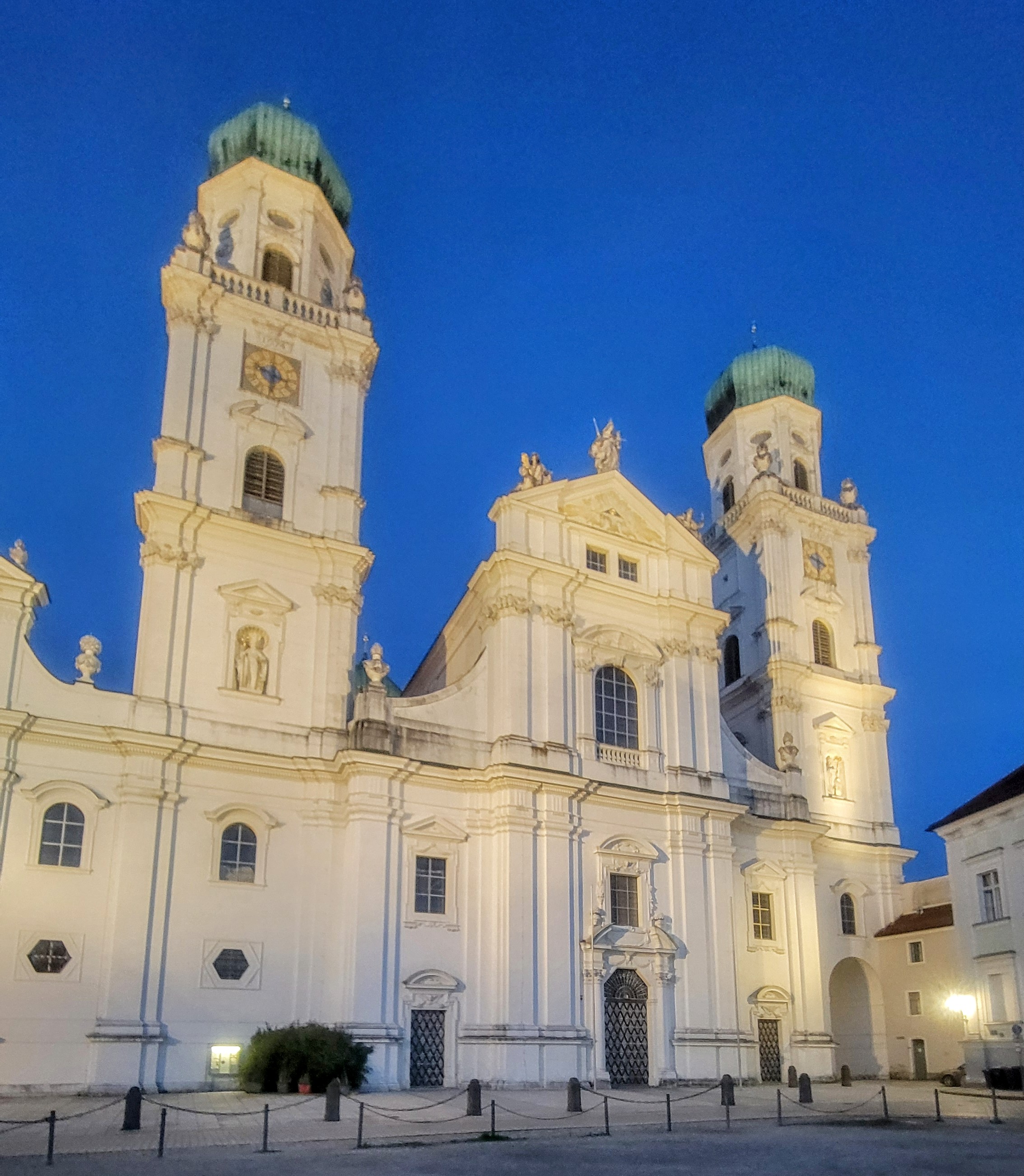
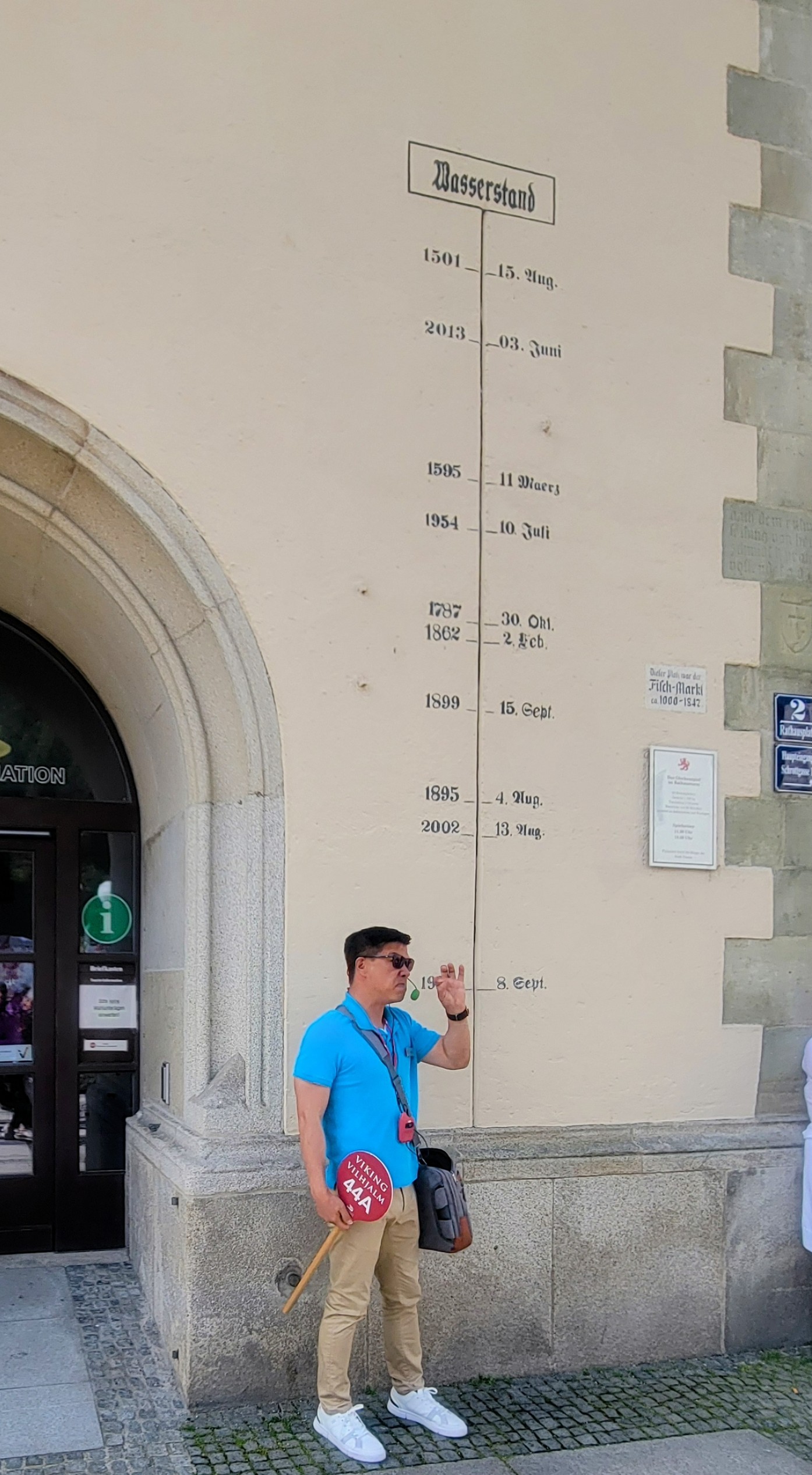
The next day we took the train to Passau where our river ship Viljalm awaited us. Passau is a pretty little town where 3 rivers come together. The river was rising but we didn’t know a week later the city would be flooded and the docking area would be under water and un-usable .
Passau sits at the confluence of the Inn, the Ilz and the Danube rivers
Its a beautiful place to walk at night
Historic high water marks
The Ilz and Danube join here
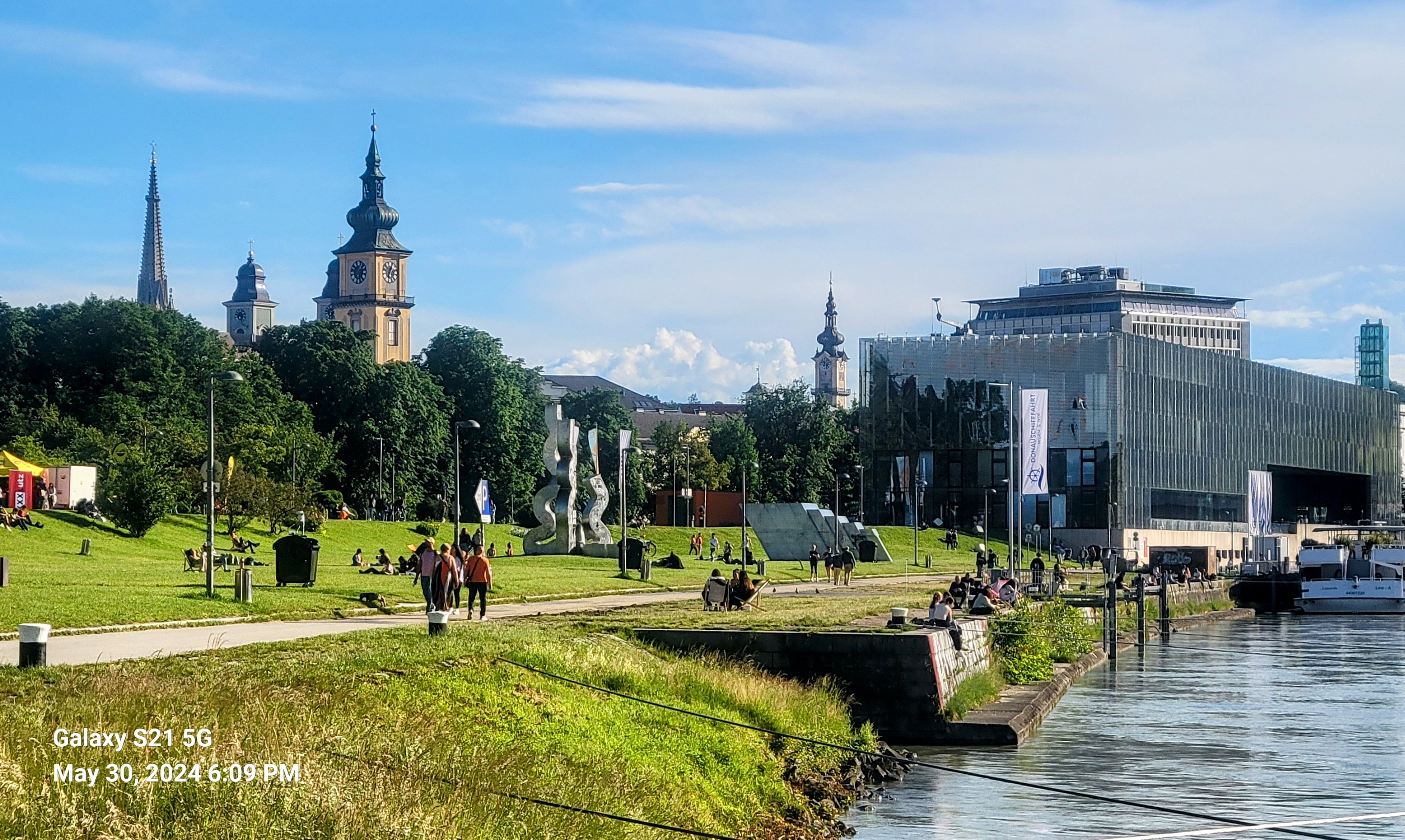
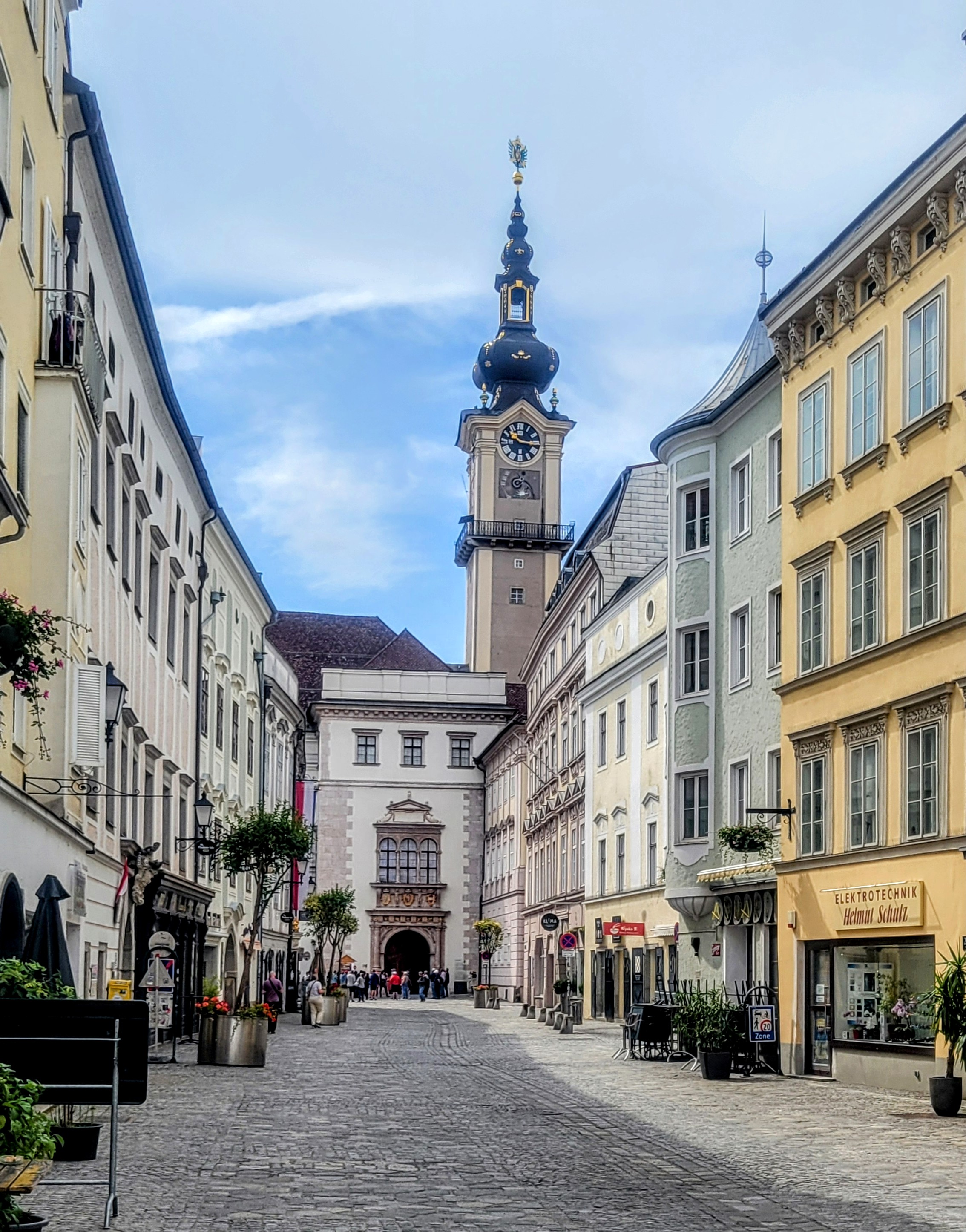
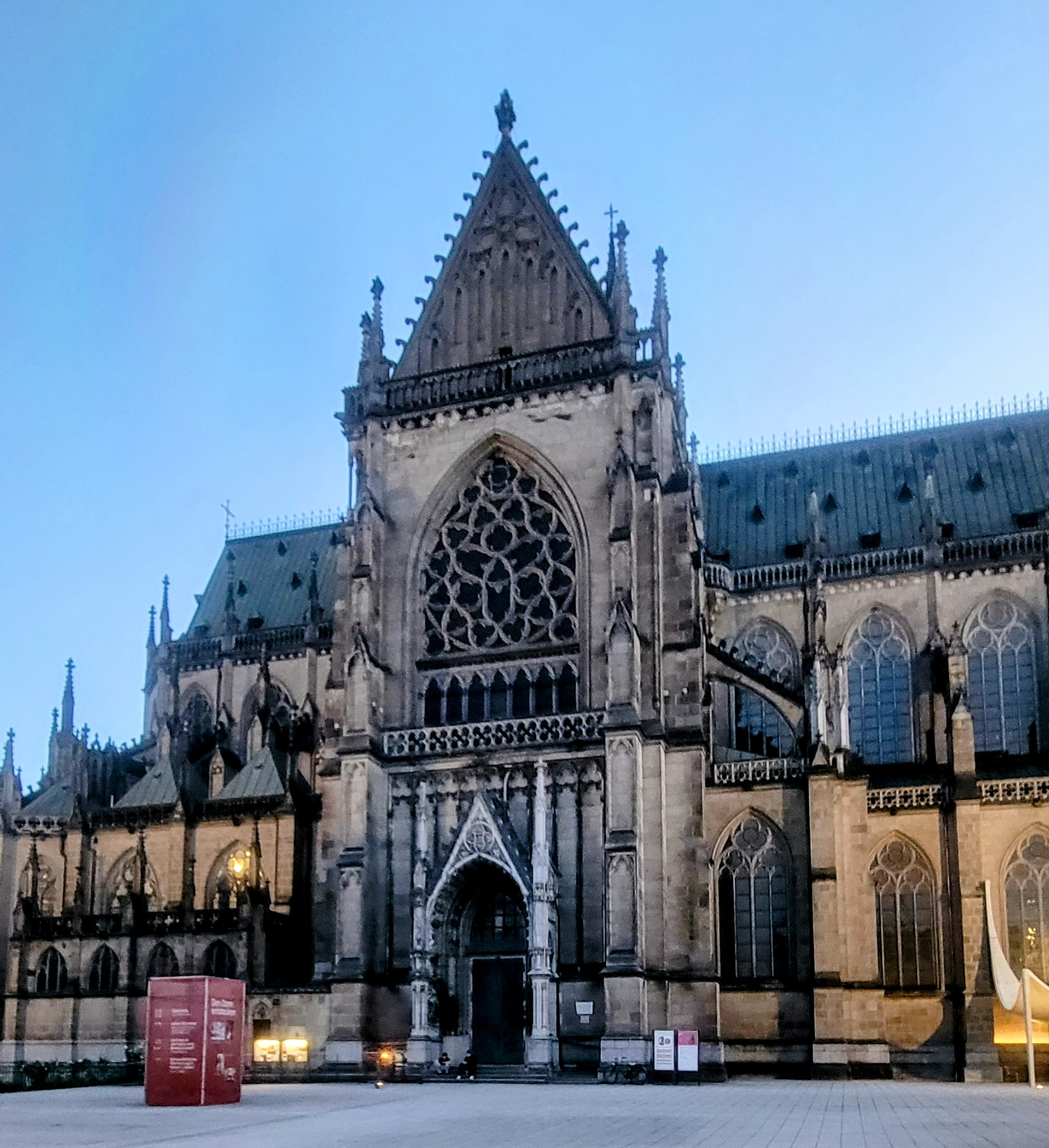
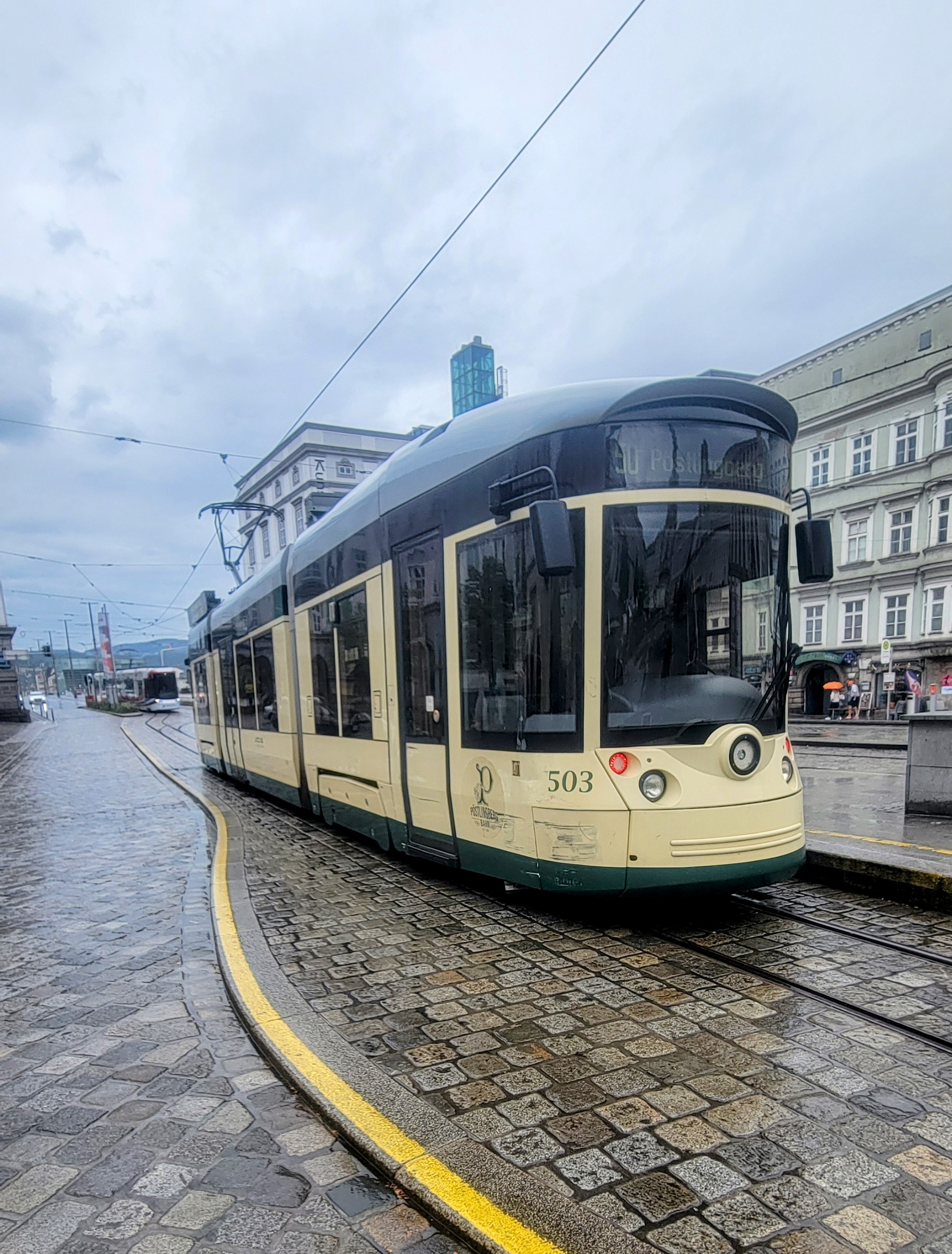
Our first stop was Linz Austria. Our included tour touched on Hitler’s link to the city. He had the best years of his childhood there, made a significant speech there and sought to make Linz a cultural capital of his Reich. It became an industrial center for Hitler’s Reich and was heavily damaged during World War II. Linz was a nice little city. We love the trams in Europe and rode a historic tram to a park overlooking the city. Linz was founded by the Romans as Lentia in the first century.
Linz riverfront
Plague monument
Historic Postlingberg Tram
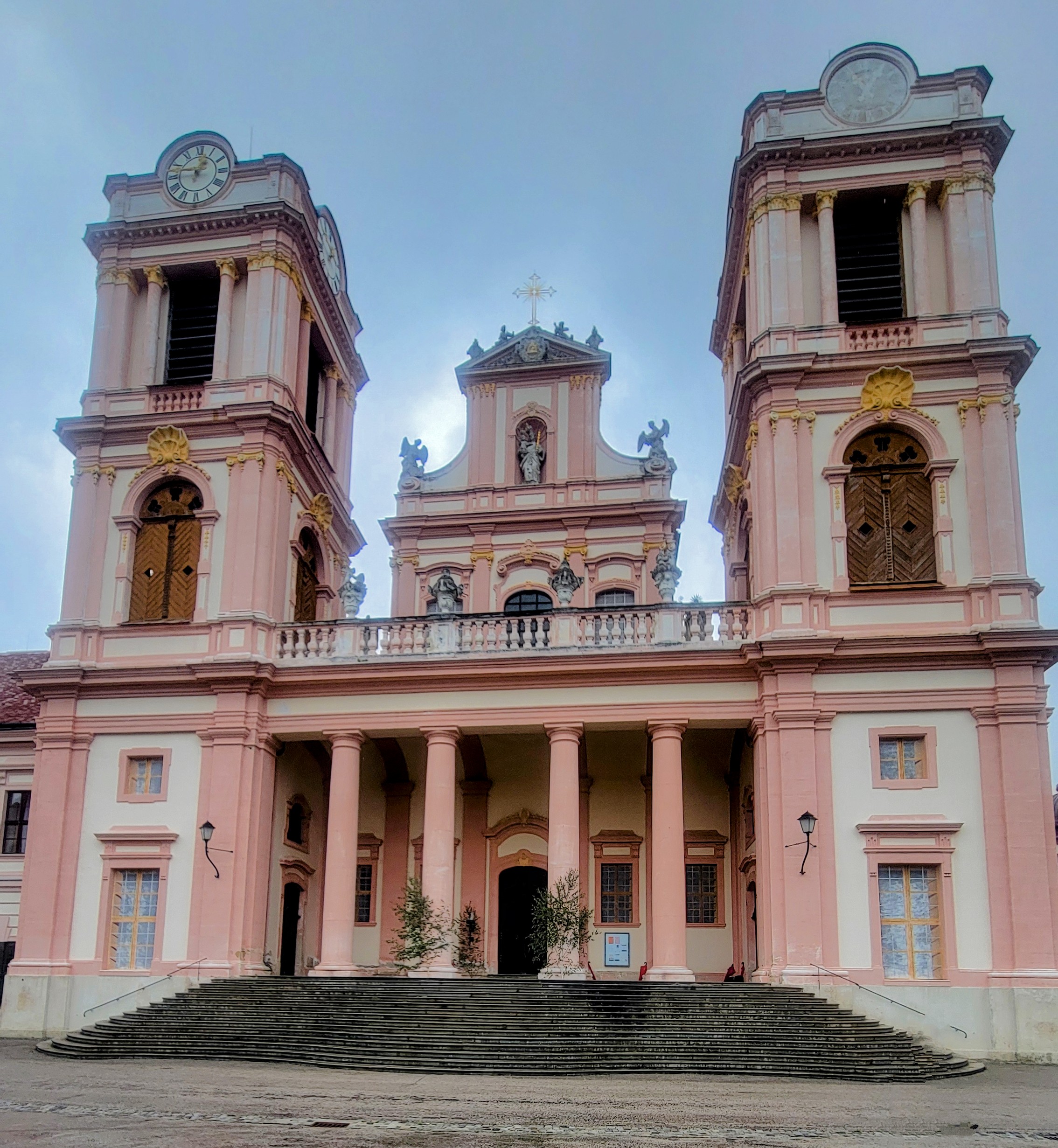
Next Viking took us to Gottweig Abbey near the town of Krems. The abbey has been active since 1083. Its located in the Wachau Valley a UNESCO World Heritage site famous for high-quality wines. The abbey is famous for its products made with apricots.
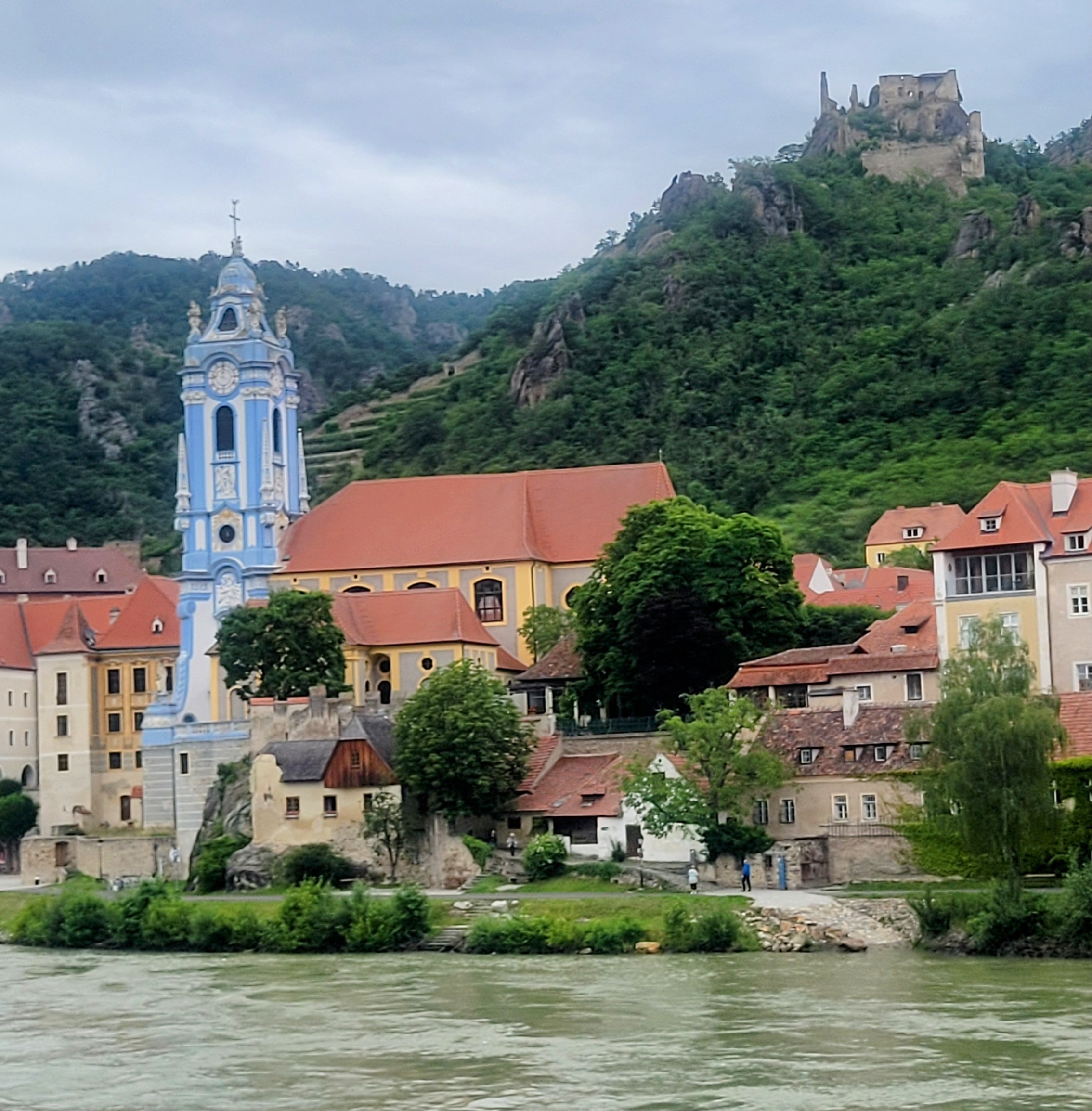
Passing iconic Durnstein along the Danube
Gottweig Abbey
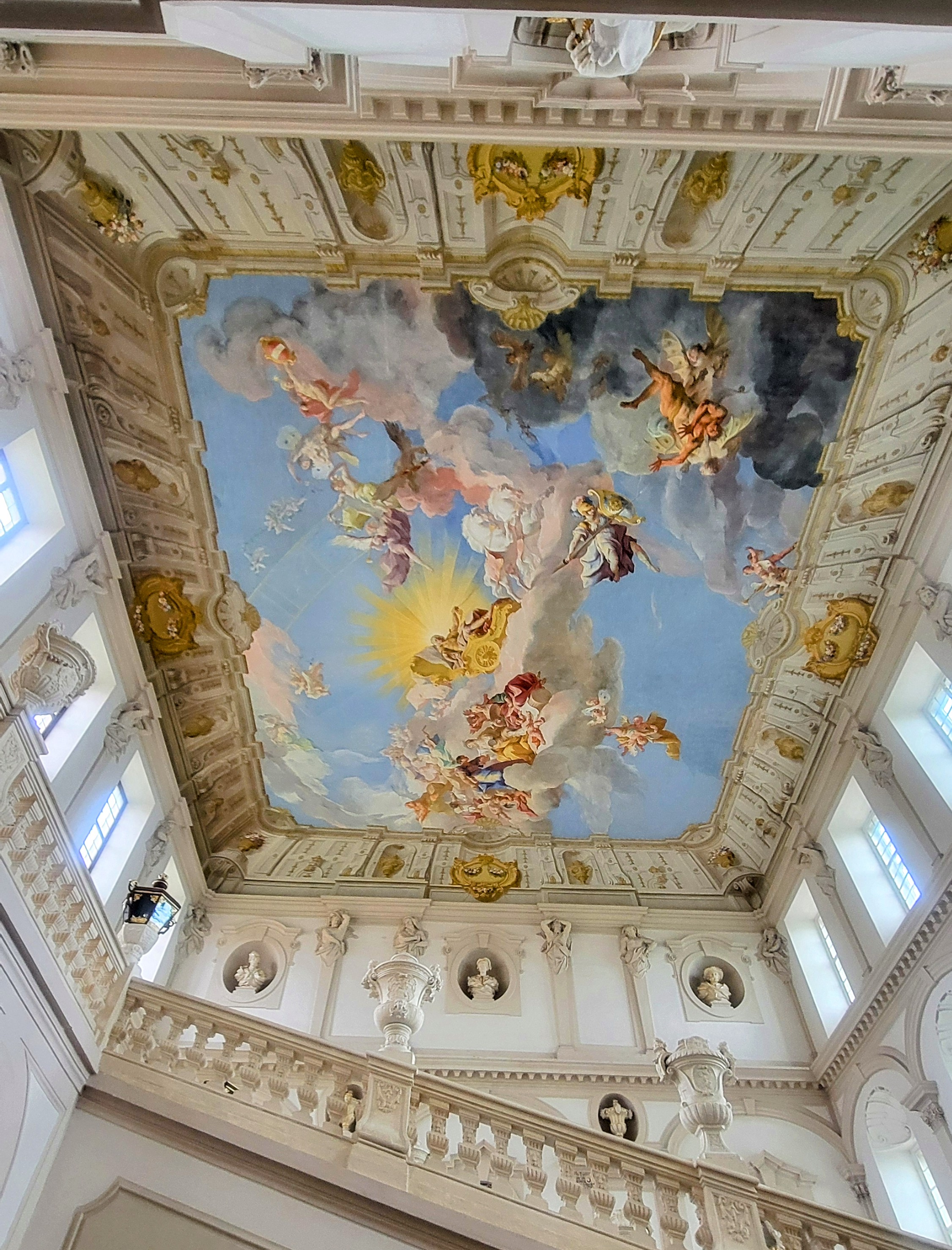
Baroque fresco is considered a masterpiece
Vienna was so impressive and crowded. The former imperial capital is beautiful with great architecture, museums and cafes. We attended a classical music concert that was the best we’ve ever seen. Museums were plentiful and busy. Many had timed entry but we were able to tour the palace museum with many royal artifacts. We barely scratched the surface of things to do in Vienna.
Hofburg Palace
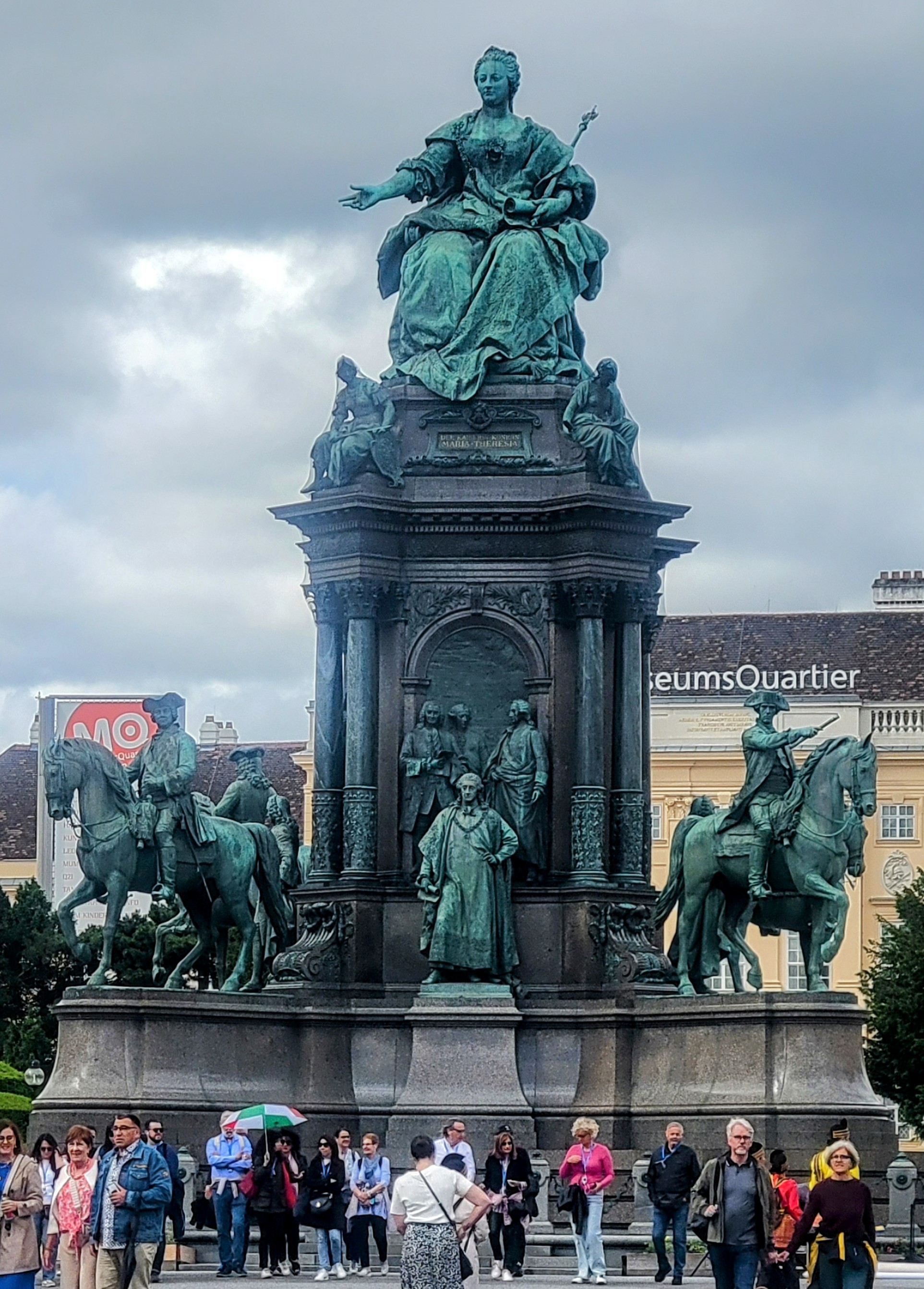
Maria Teresa, Queen of the empire
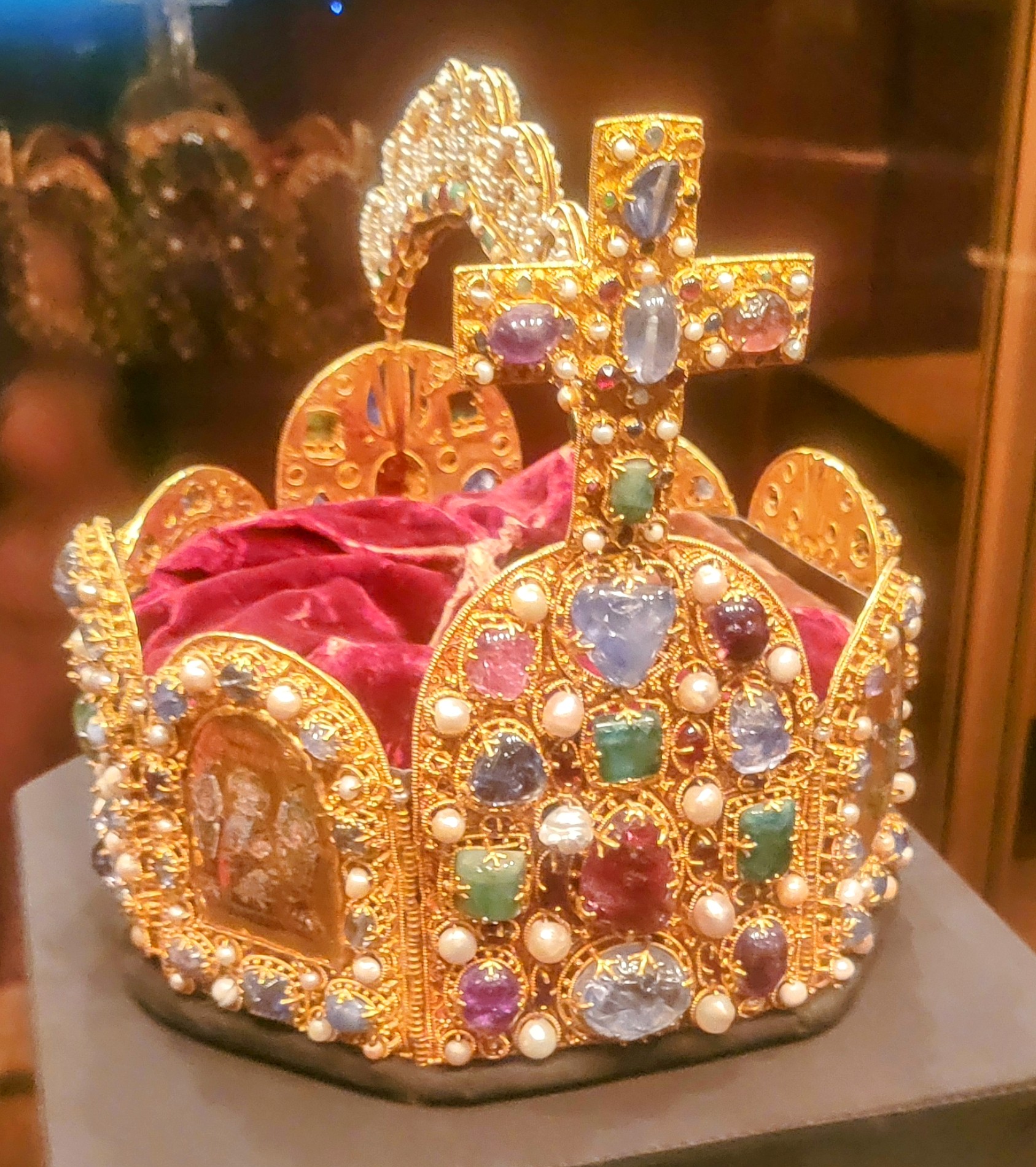
Hapsburg crown jewels
Enjoying Landtmann coffee house
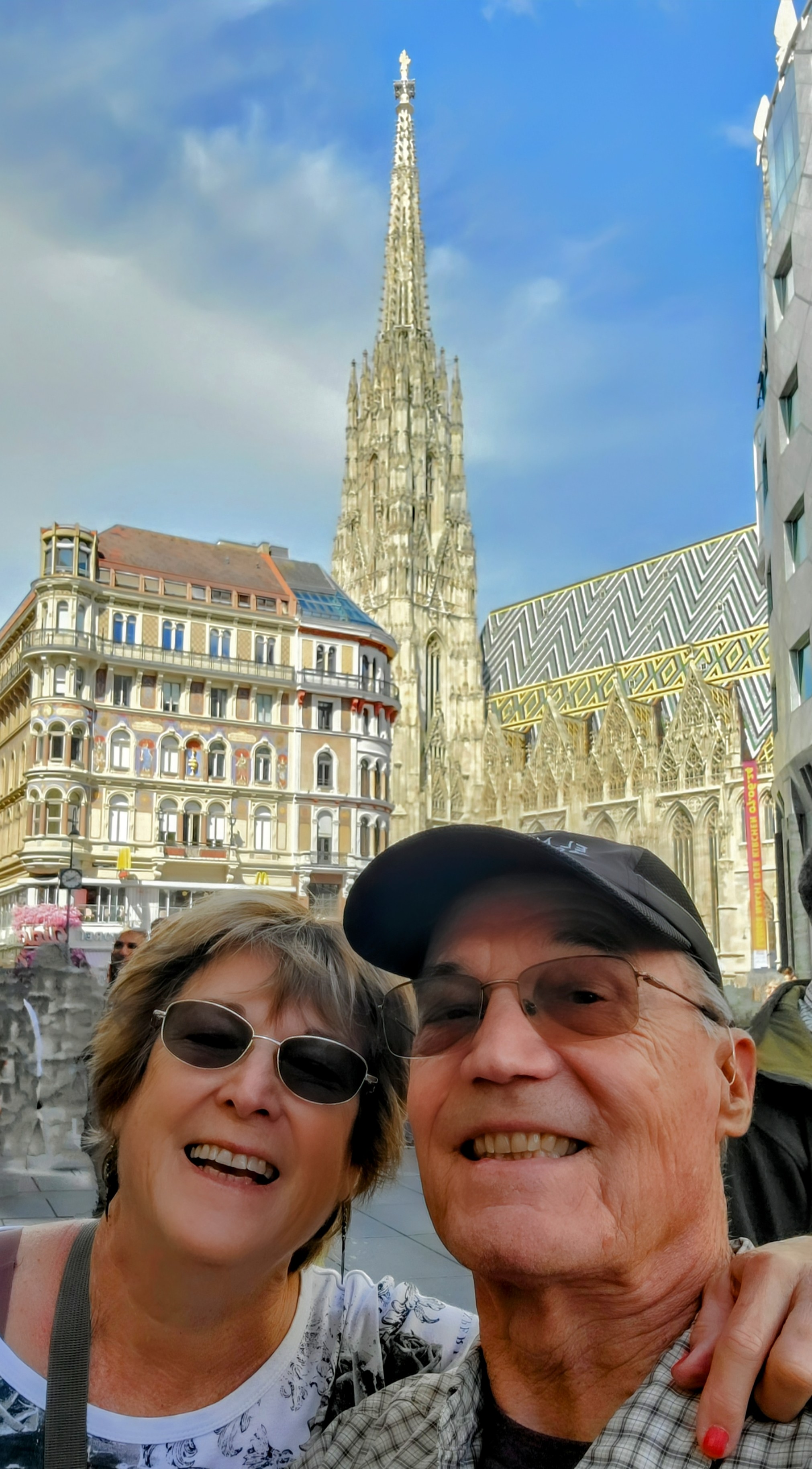
Central Vienna
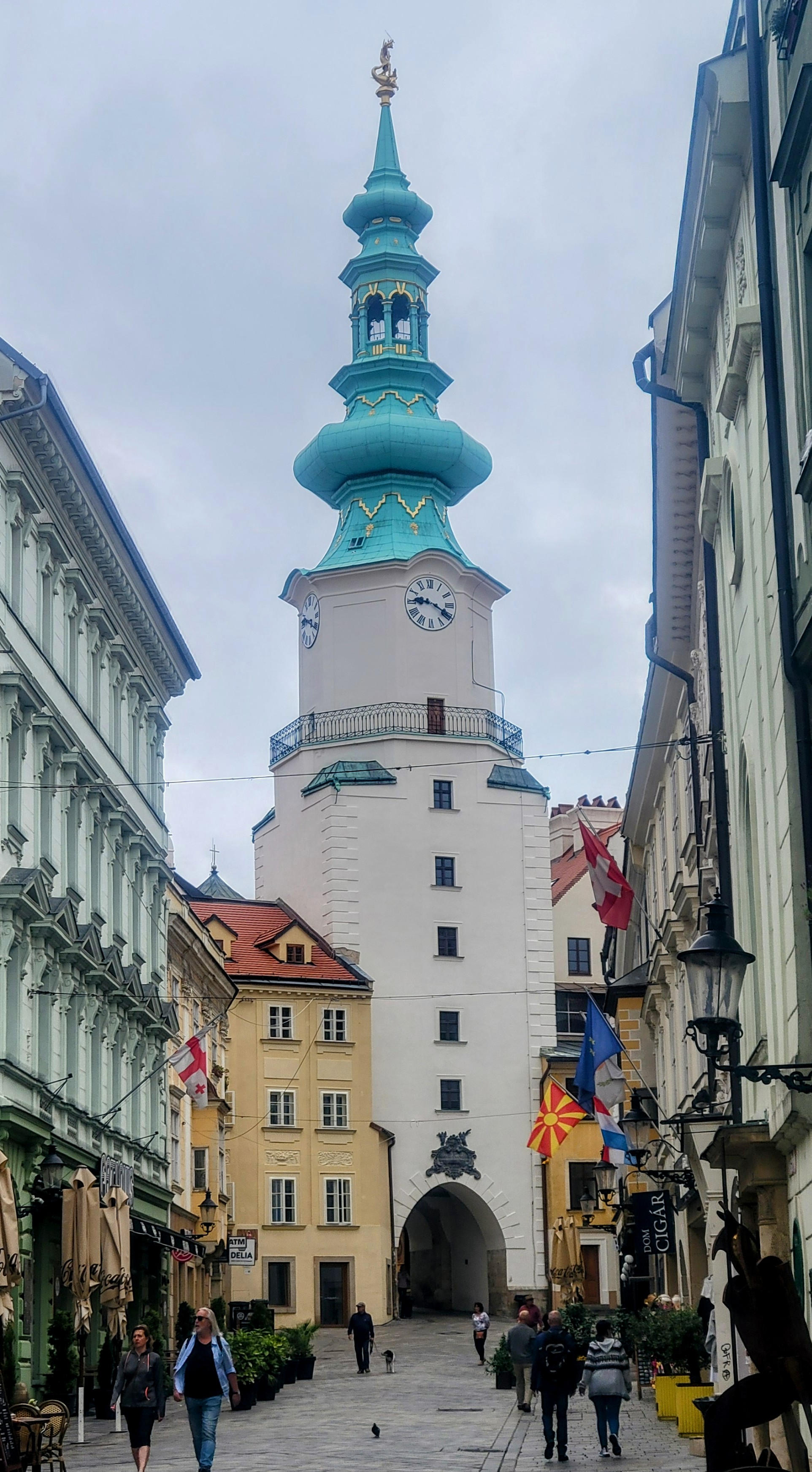
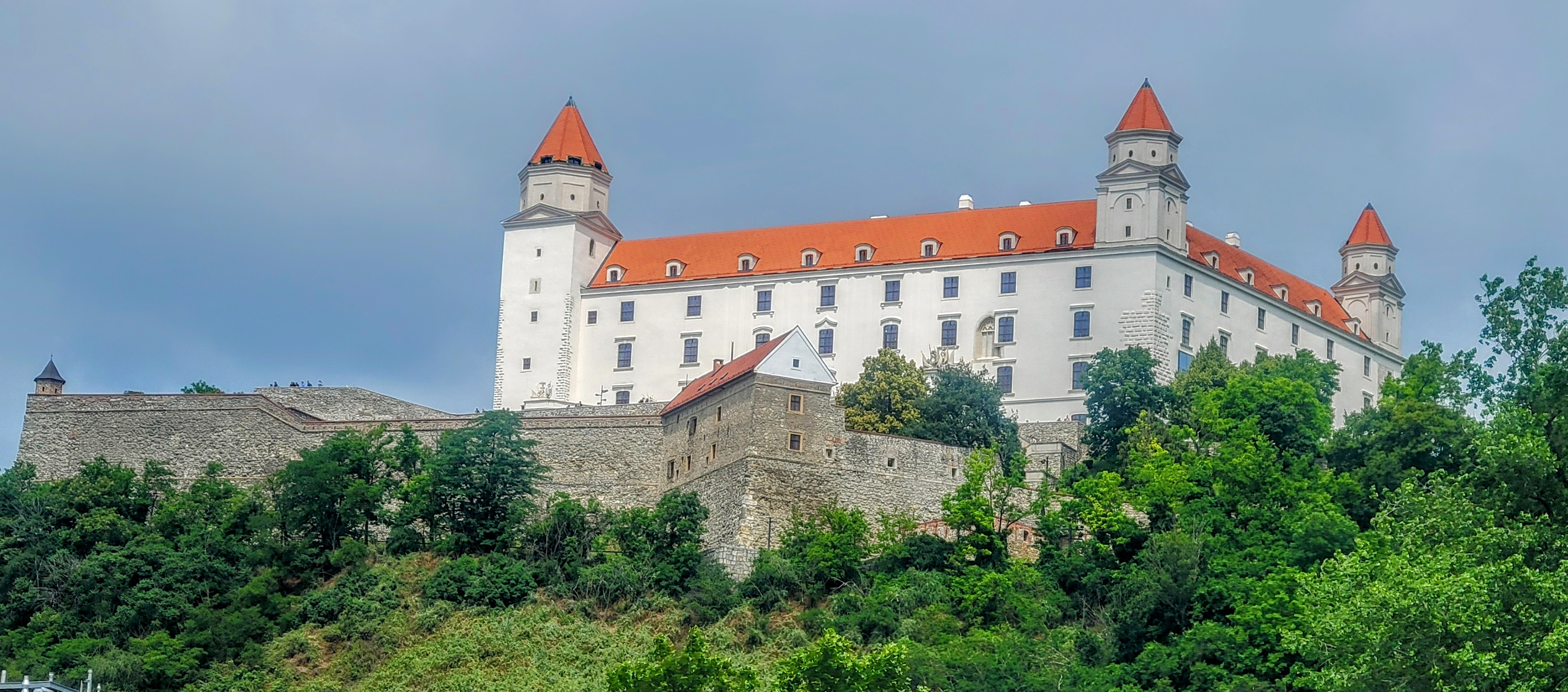
Next stop was Bratislava in Slovakia. Another great Medieval city with a tower in the old walled part of town and a castle overlooking the city and the Danube. It was the capital of the Kingdom of Hungary from 1563 to 1783. We only had a half day here and could’ve used more time.
Tower in the Medieval wall
Tower view
Bratislava castle
We arrived in Budapest late in the evening and experienced the Hungarian Parliament from the river bathed in stunning golden light. As we sailed past the ship broadcast the Blue Danube Waltz and fireworks erupted nearby. Truly an unforgettable moment. Our tour of Budapest the next day included both Buda (the low flat east side) and Pest (the hilly west side of the Danube). We also had free time to ride the trams, visit the Central Market Hall and see the memorial shoes recalling the slaughter of Jews on the banks of the river. There is much more to see here.
Hungarian Parliament
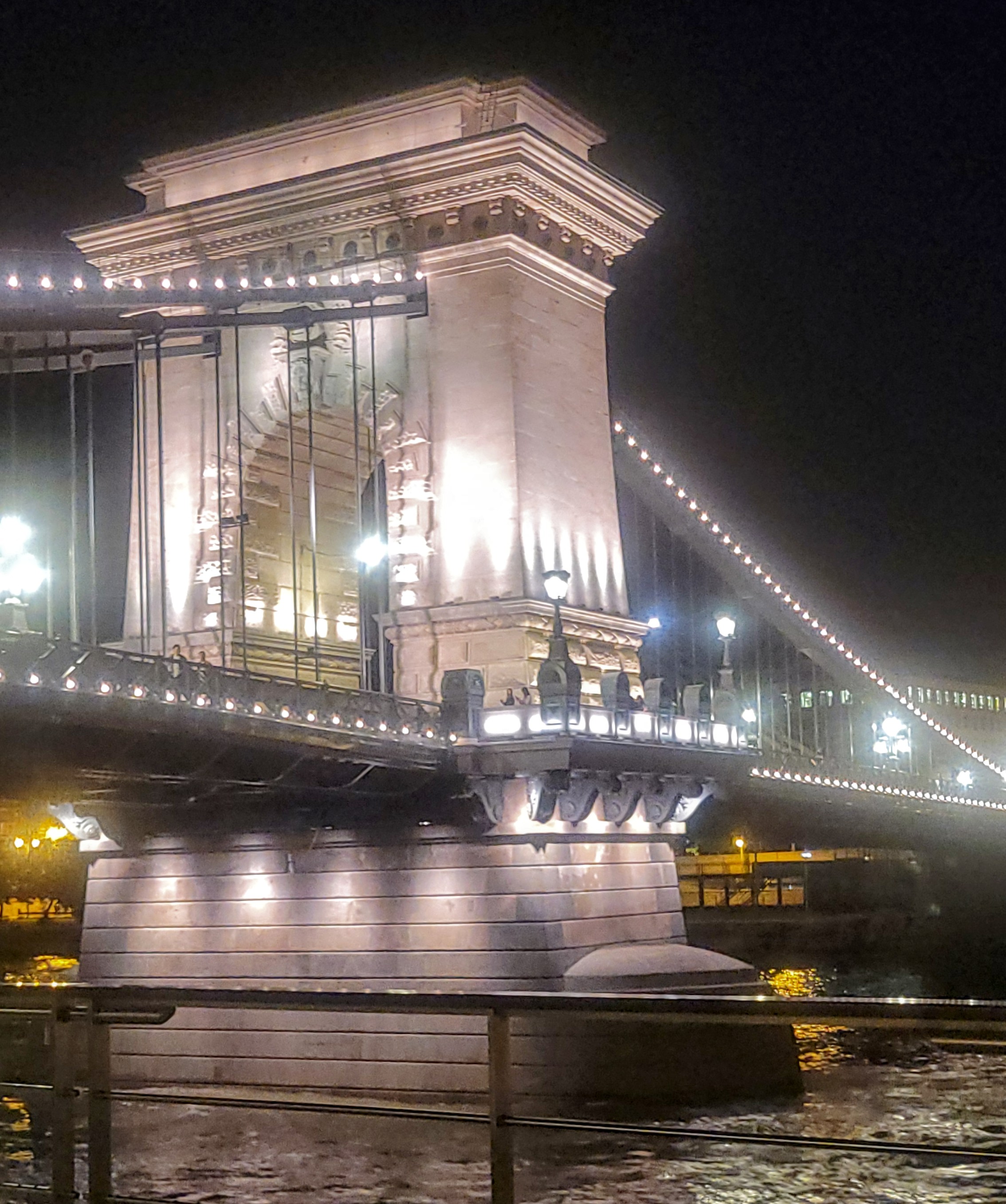
Chain Bridge
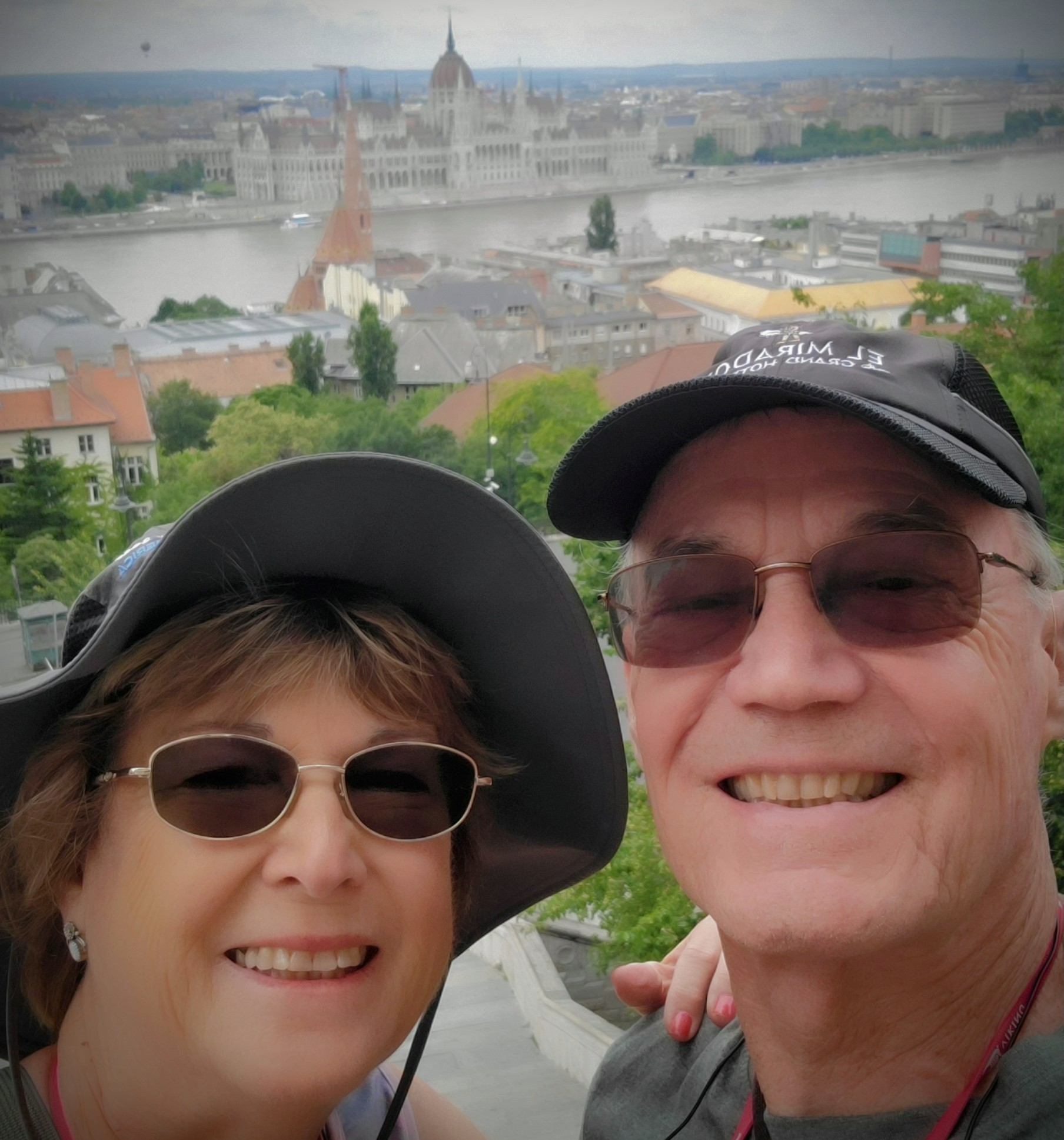
View from castle hill
Memorial to Jews killed by Nazis
Church of Our Lady of Buda Castle
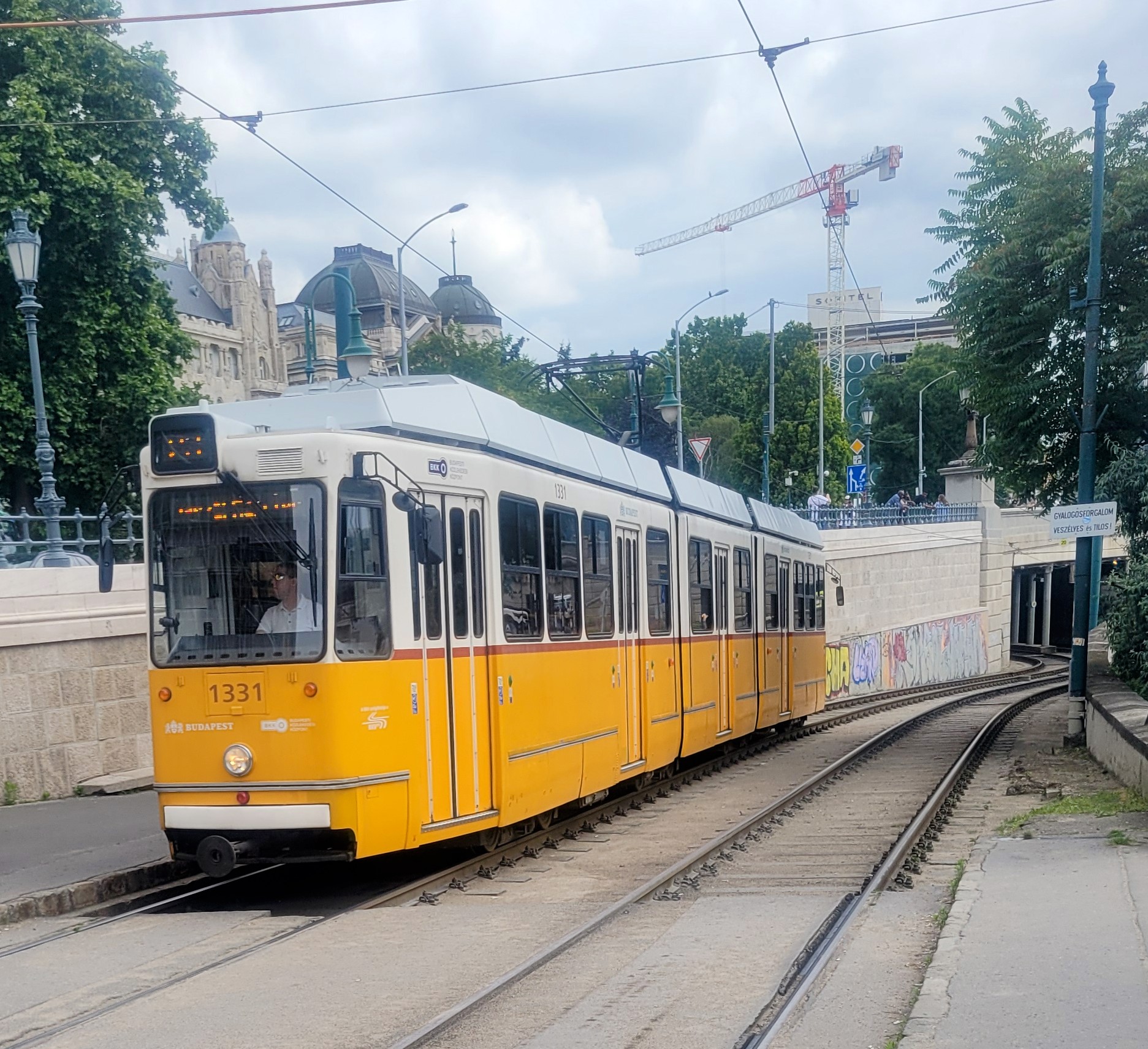
Trams are free for seniors
This was our second Viking river cruise and we enjoyed it. Our previous cruise dinner took 2 hours every night. This time they got it done in an hour and a half max. Big improvement. They brought on local entertainment that was top notch. The food was good. As with any cruise this was a sampler tour of central Europe. We could definitely see ourselves revisiting Vienna, Bratislava and Budapest.
We recently traded in our class C motorhome for a new Coachmen Nova class B van. Vans have become very popular with the RV community and we dealt with the largest B dealer in Florida, Sunshine State RV.
Besides the easy maneuvering and superior fuel economy the van we bought has a powerful lithium battery system. This enables us to camp off grid more than any RV we’ve previously owned.
We want to use it as much as possible to learn a new way of camping and find any factory defects while under warranty. Our dealer included a 1 year membership in Harvest Host in the sale. This membership allows us to stay at hundreds of properties around North America at no charge provided we make a small purchase or donation. These stays are off grid so the lithium batteries are key. This would be a whistle stop trip with multiple stops each day
Day 1 Jacksonville Florida
Lunch with our daughter and 2 great grandkids. It was great to see them.
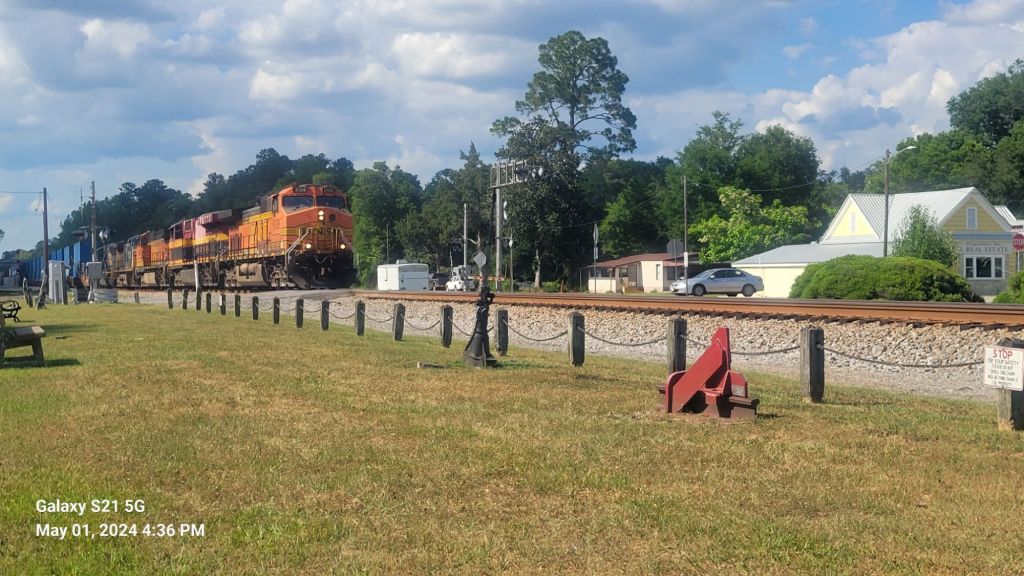
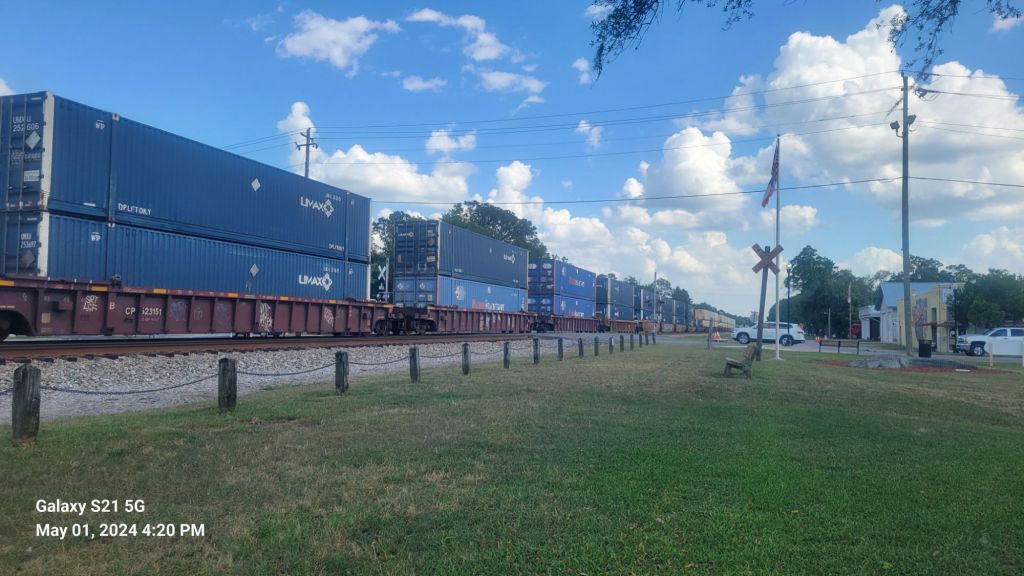
Folkston GA. The town welcomes rail fans and allows overnight parking near the train watching platform. It was a great spot but sooooo many train horns all night made for little sleep.
The Folkston Funnel hosts lots of trains
Day 2
Kingsland Georgia
We met long time RV friends Mark and Lyn at Steffens restaurant in Kingsland GA. Great local breakfast place.
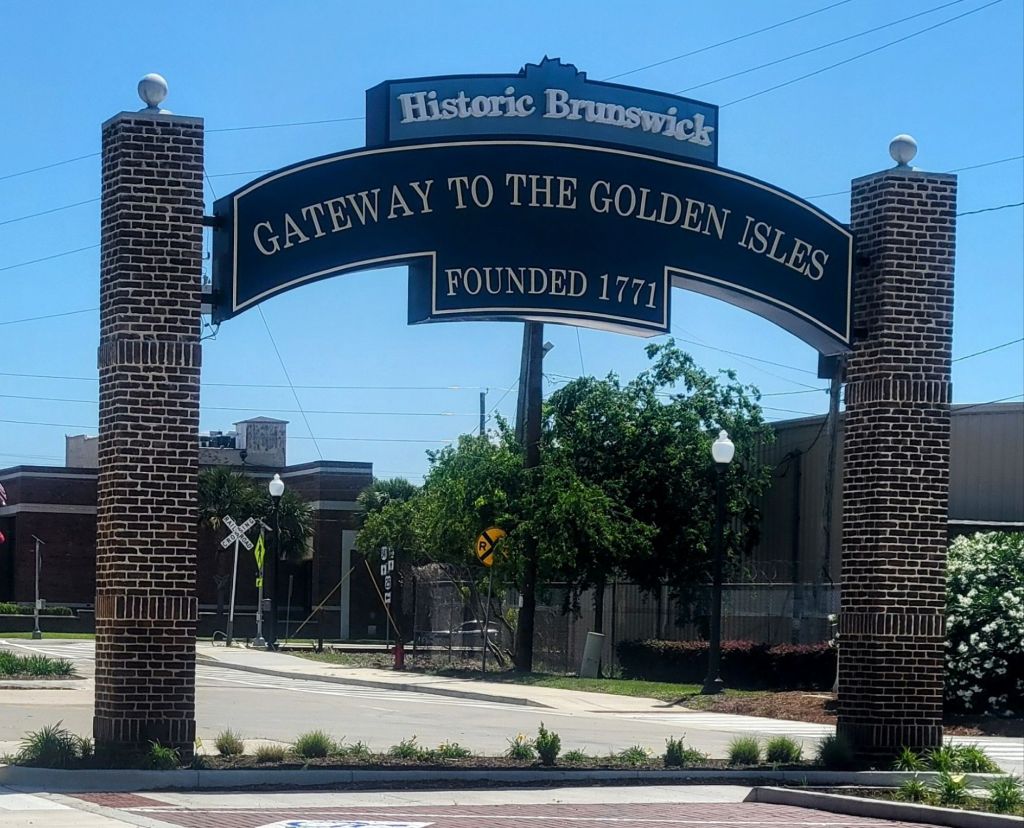
Brunswick Georgia
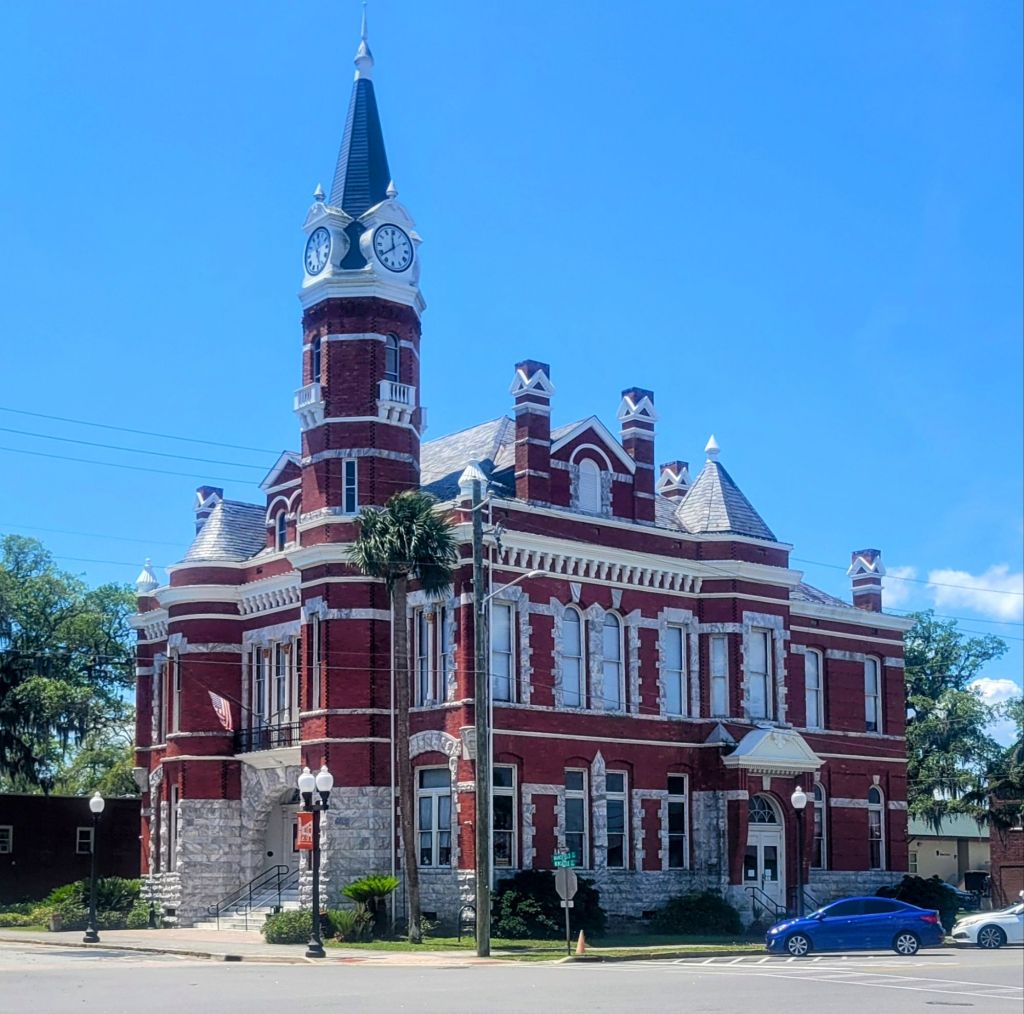
Old city hall Brunswick
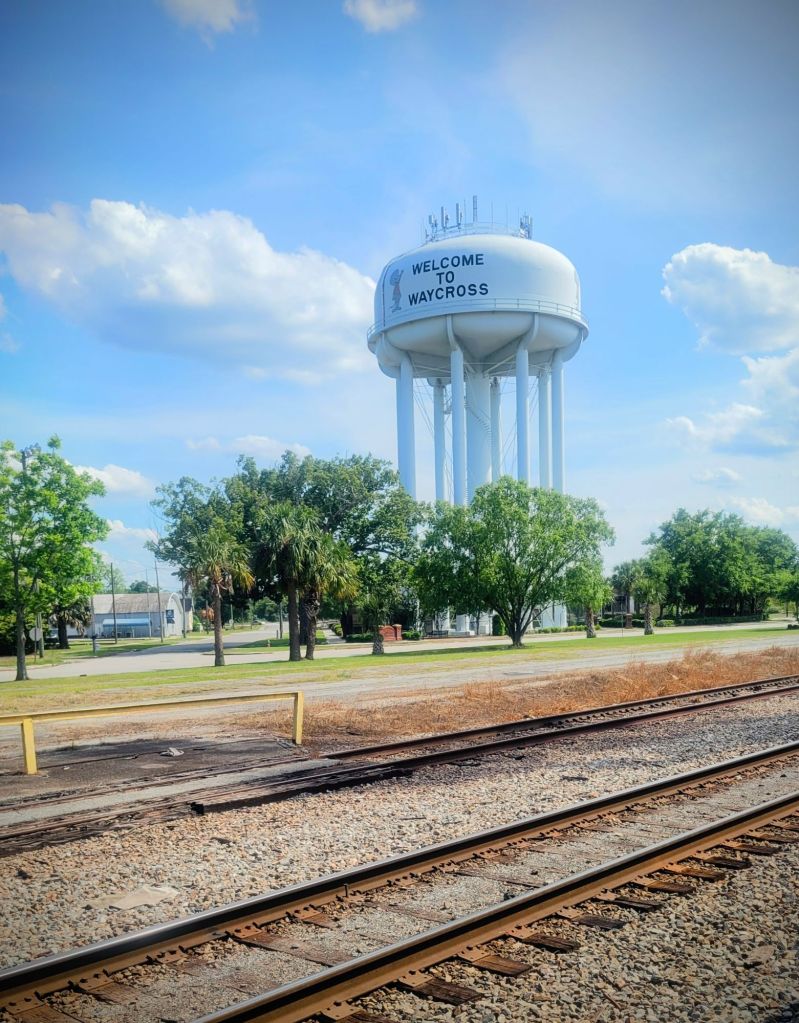
Waycross Georgia
Douglas Georgia
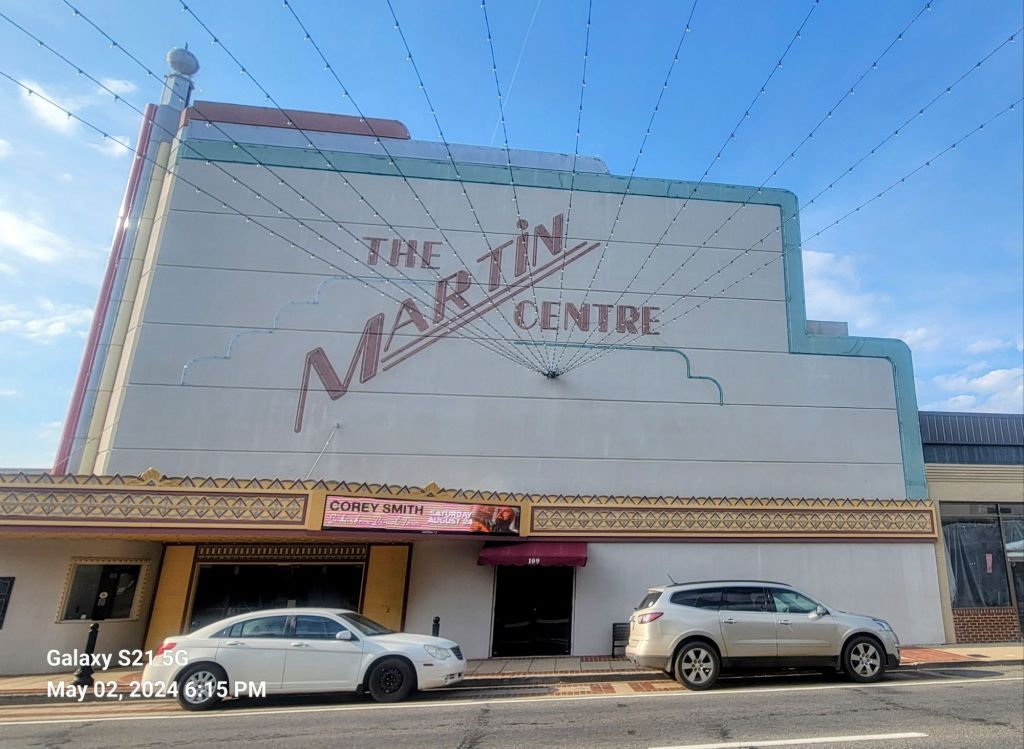
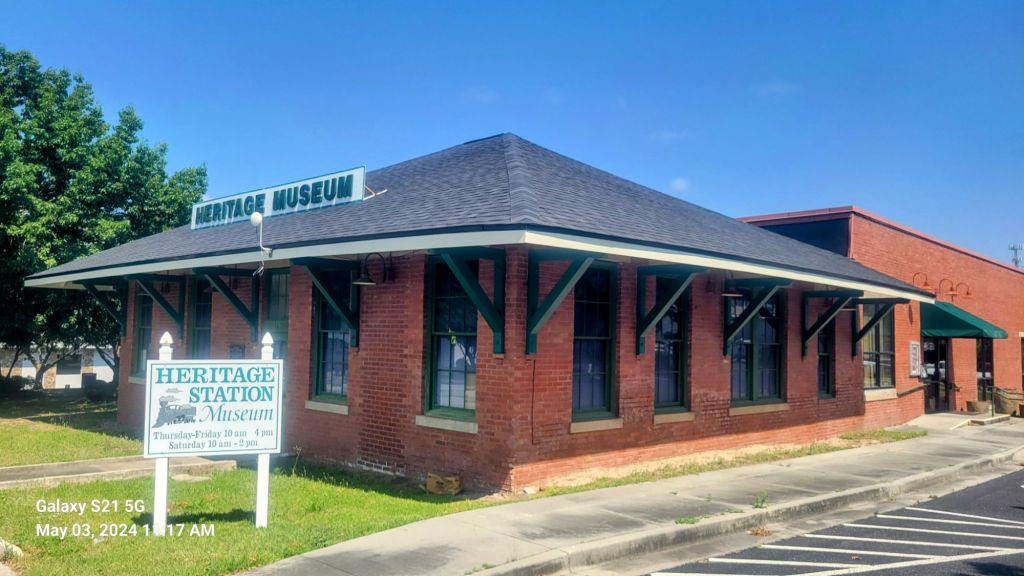
The Martin Centre hosts big actsDouglas Heritage Museum housed in old Georgia Florida Railroad depot
We stayed at a Harvest Host location at the Douglas Ga Chamber of Commerce. This was simply parking in the rec center parking lot but it was quiet and safe. We had a nice dinner at the Fern Bank restaurant. Douglas was a pretty sleepy city that amazingly had a nice music venue, The Martin Center. Just in the next month they had a Credence Clearwater Revival tribute band and then a Led Zeppelin tribute band. They also had a nice Heritage Museum.
Day 3
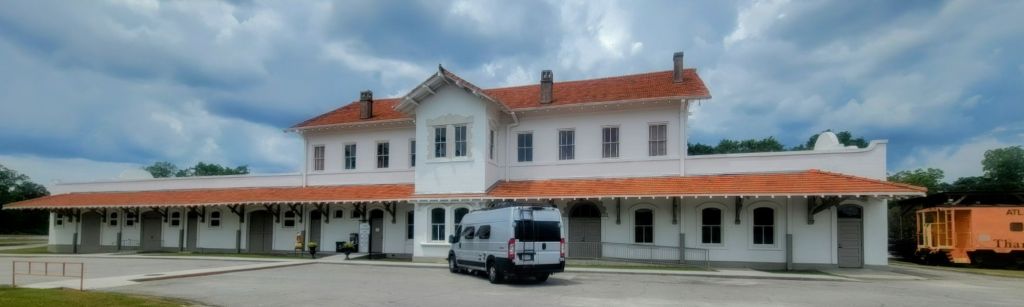
Fitzgerald Ga. It’s home to the Blue and Gray Museum housed in the old train depot. This museum tells the story of the Fitzgerald Colony that was founded in the late 1800s as a place where Union veterans could get a new start after post Civil War hard economic times. It became a place where former soldiers of the North and South lived and worked together. We found this story of reconciliation interesting but we also learned the town became a “sundown town” that required blacks to leave town every evening.
The Blue and Gray Museum
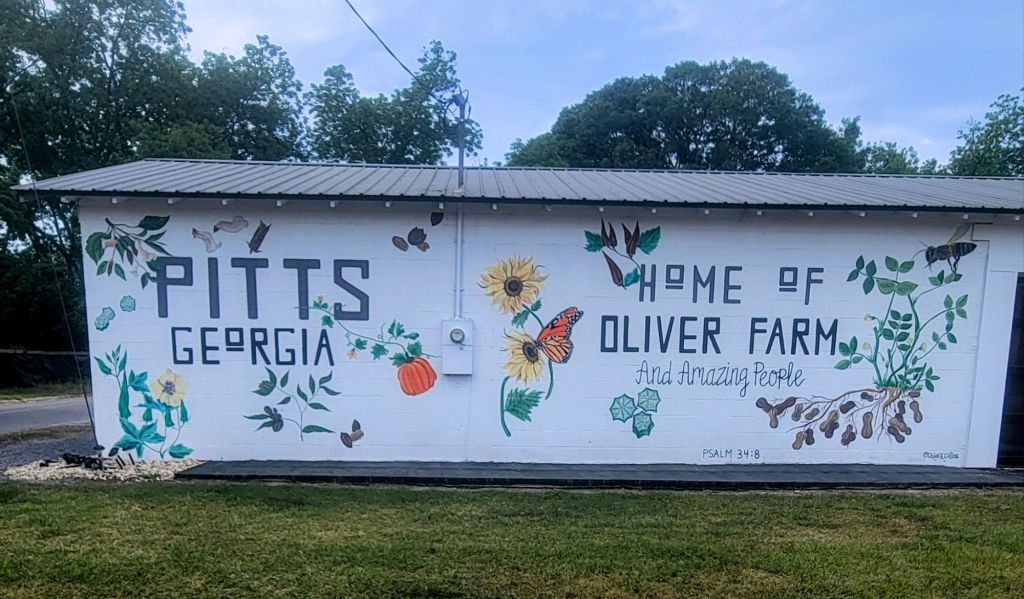
Pitts Georgia
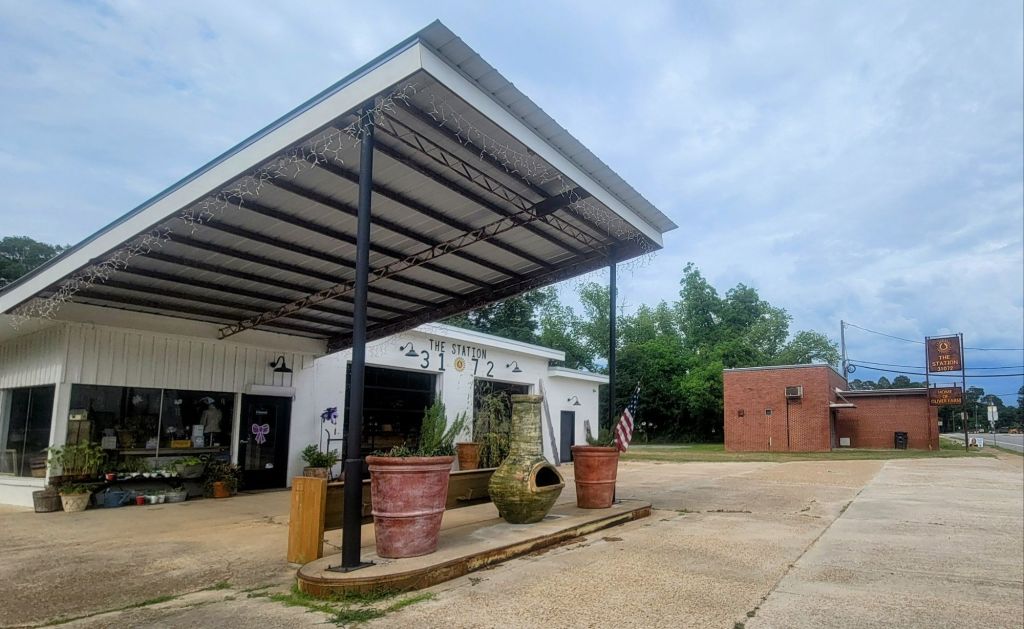
That night we stayed at another Harvest Host location. The Oliver Artisan Oil Farm in tiny Pitts GA. This family operation produces high quality nut oils including pecan (the healthiest of all oils), sunflower, green peanut and others we were unfamiliar with. They also featured art from local artists and acted as convenience store for the community.
Old gas station converted to Oliver Artisan Oil Farm store
Day 4
Cordele Georgia
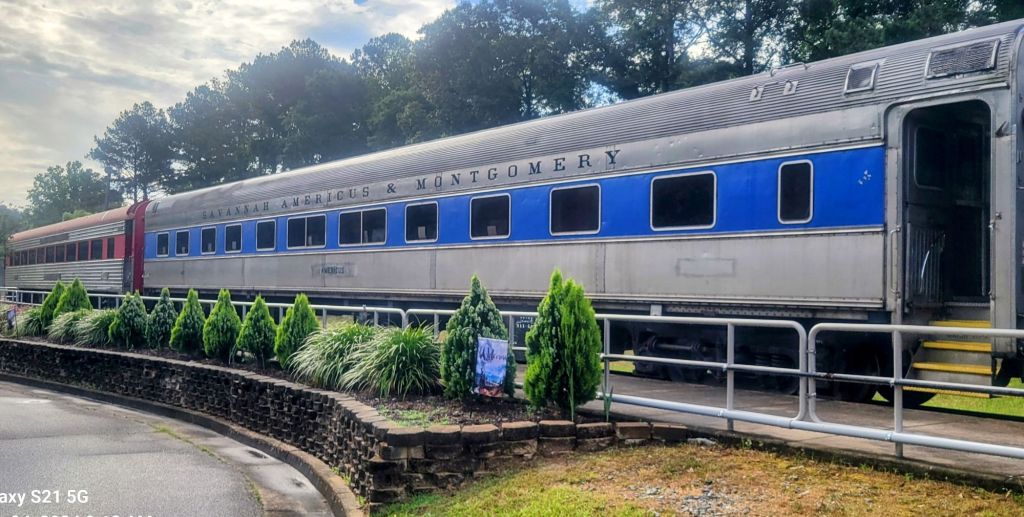
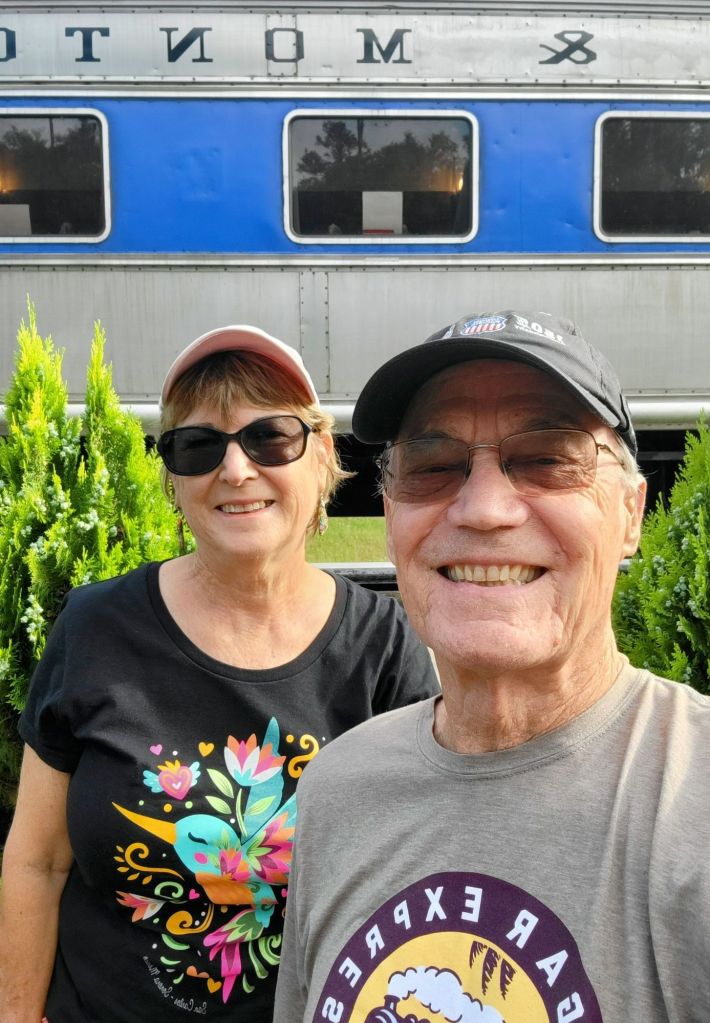
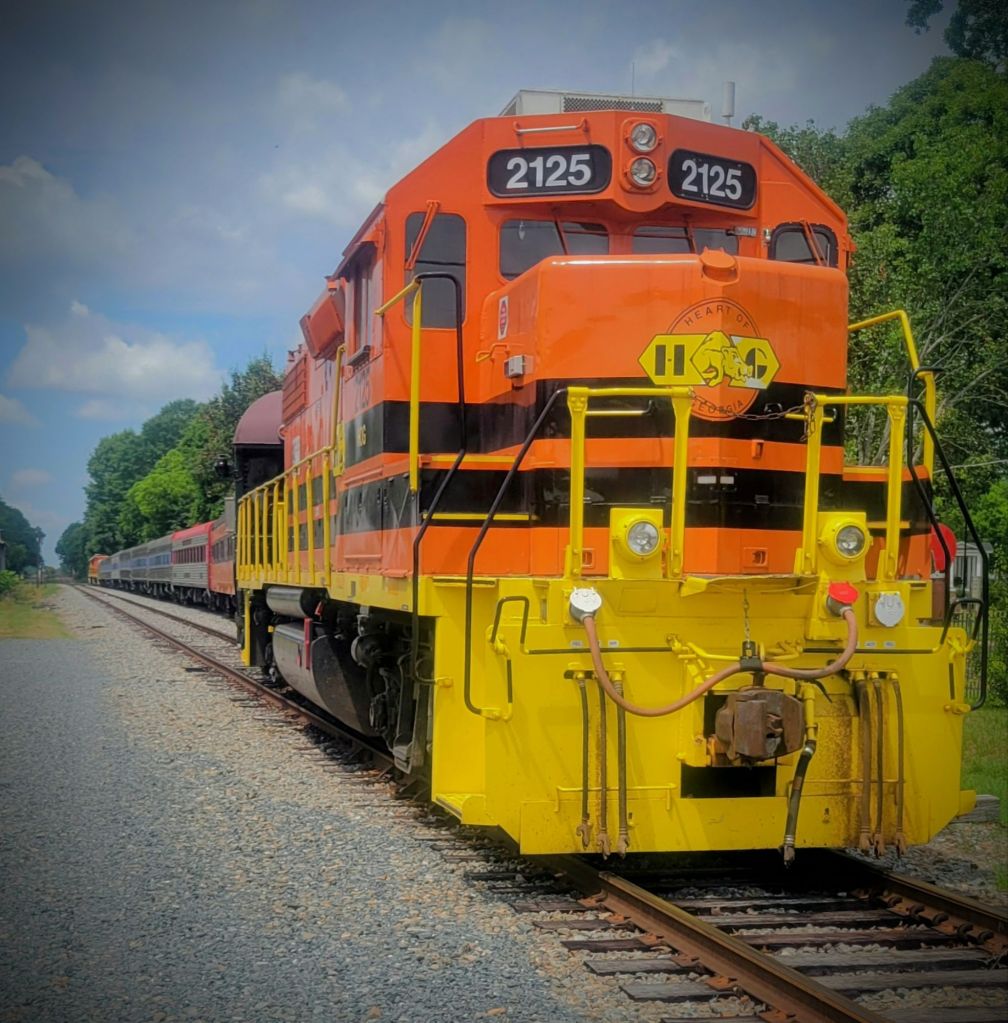
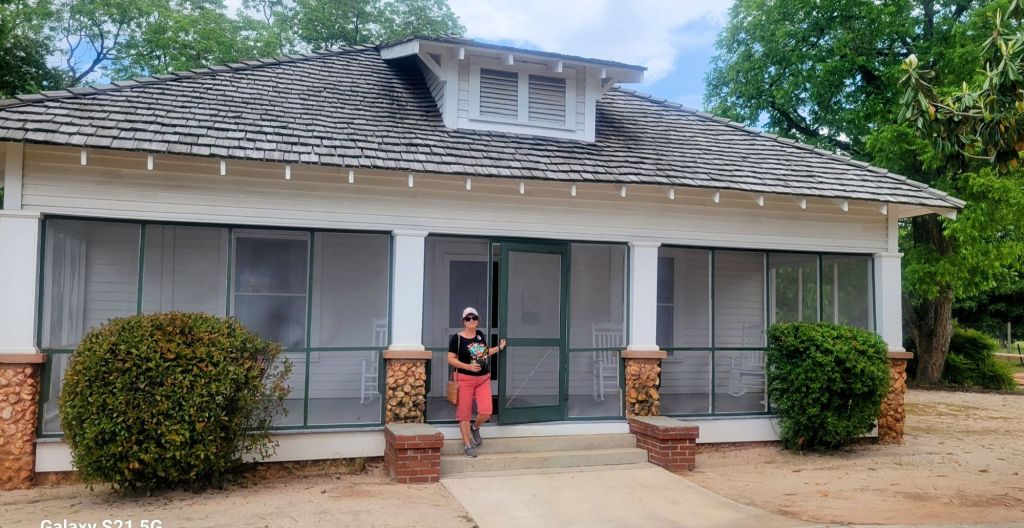
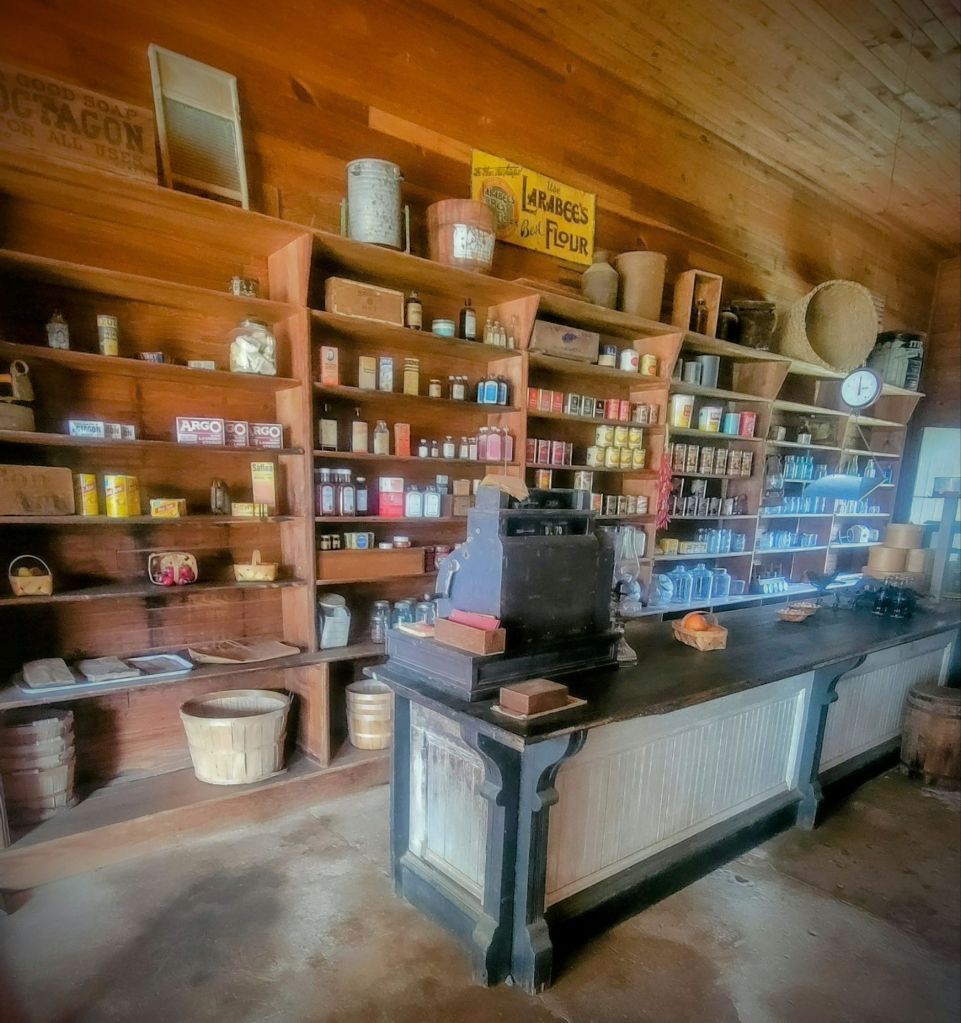
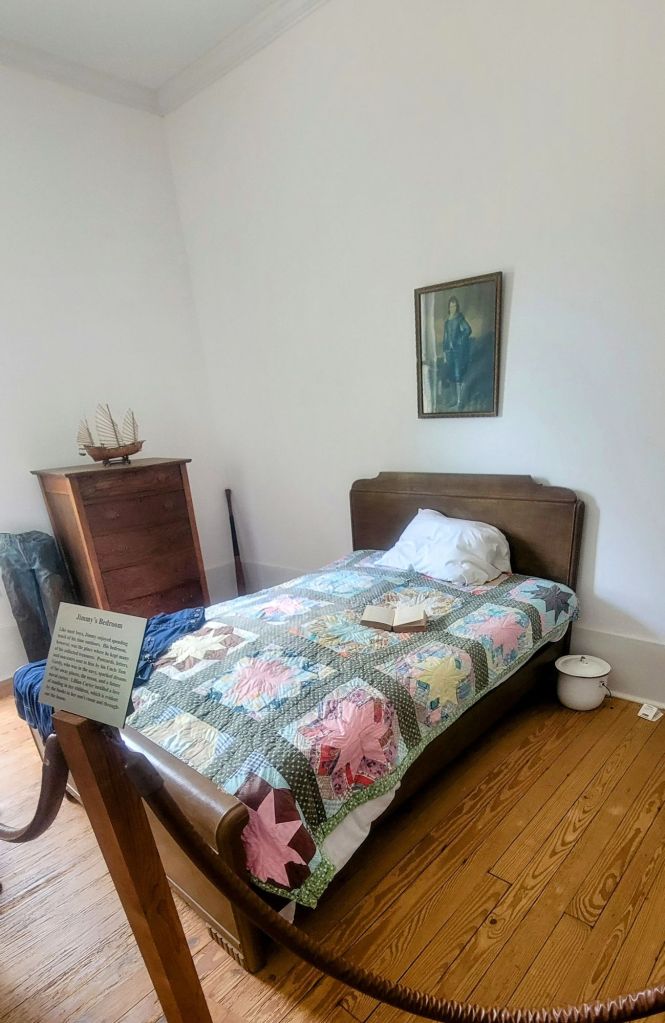
The SAM Shortline is an excursion train we’ve just missed several times so this trip we made it happen. It runs from Cordele Georgia to Plains and then to Archery. It’s a nice ride in air-conditioned cars to Jimmy Carter country. Plains is where he kicked off his presidential campaign and Archery is the preserved farm of his boyhood. We enjoyed both and especially loved the peanut butter ice cream.
1949 Savannah Americus & Montgomery passenger carsOur train pulled by a Heart of Georgia locomotiveThe Plains depot where Jimmy kicked off his presidential campaignJimmy Carter’s boyhood homeThe Clark house where Jimmy stayed with the black couple when his parents went out of townThe store on the Carter family farmJimmy’s bedroom
Norman Park Georgia
The Wilkes Blueberry Farm Harvest Host location was recovering from a severe rain storm when we arrived but the next day we enjoyed a wonderful visit with JR on the farm. 10000 bushes on 10 acres produces tasty berries. We also bought jelly and tasted delicious blueberry ice cream.
Day 5
Thomasville Georgia
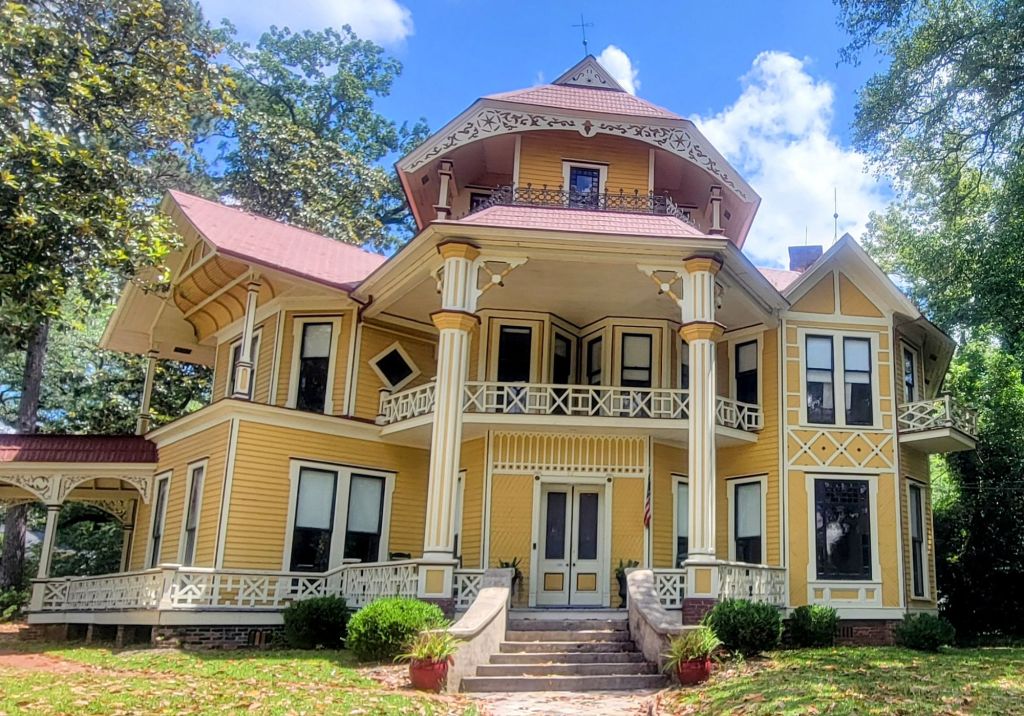
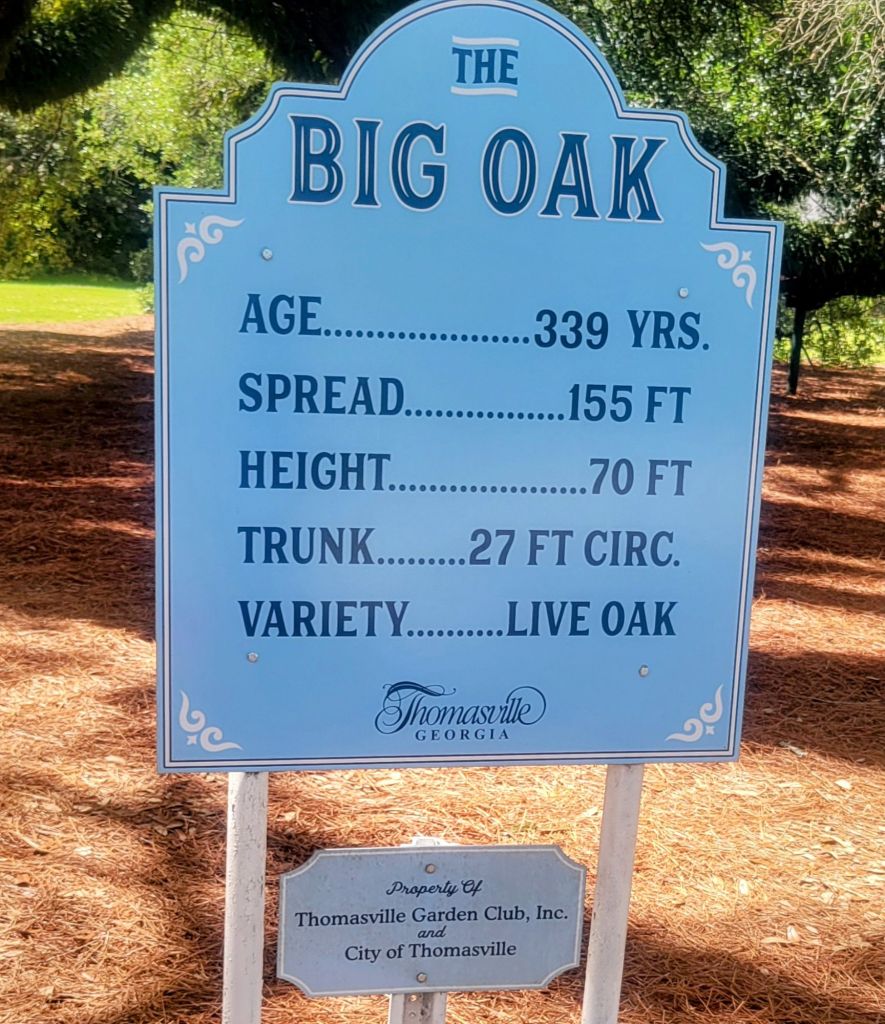
Sunday is quiet so the visitor center and museums were all closed but we enjoyed walking the town where we saw The Big Tree and the Lapham Patterson house historic site. A grand Victorian home built as a winter residence in 1884-1885.
Lapham Patterson historic houseThomasville celebrates a Big Oak
Ochlockonee Georgia
Our last Harvest Host location was Pope’s Museum which offered no tour and little information but it was a quiet and dark place to spend the night at least until the rooster started at 5 am. This was our only disappointing Harvest Host stop. They said we had to arrive by 4PM which would be understandable on a typical day but the day that we arrived the owners were out of town. We made a donation toward their historic preservation efforts and we’re glad we did.
Pope’s Museum
All in all it was a fun short trip in the van. Traveling off grid in sweltering heat was doable. Harvest Hosts worked as promised. We got 16 miles per gallon vs 8 in our former class C. We’re excited about the new places we can visit with our new campervan.
Copper Canyon has been called Mexico’s Grand Canyon. Its been on our list for some time so when we learned of a Gate 1 Travel tour, we booked the October 11, 2023 tour. We planned to combine this trip with an RV trip to Texas, New Mexico and Arizona. After some health issues over the Summer we were ready to travel in late September.
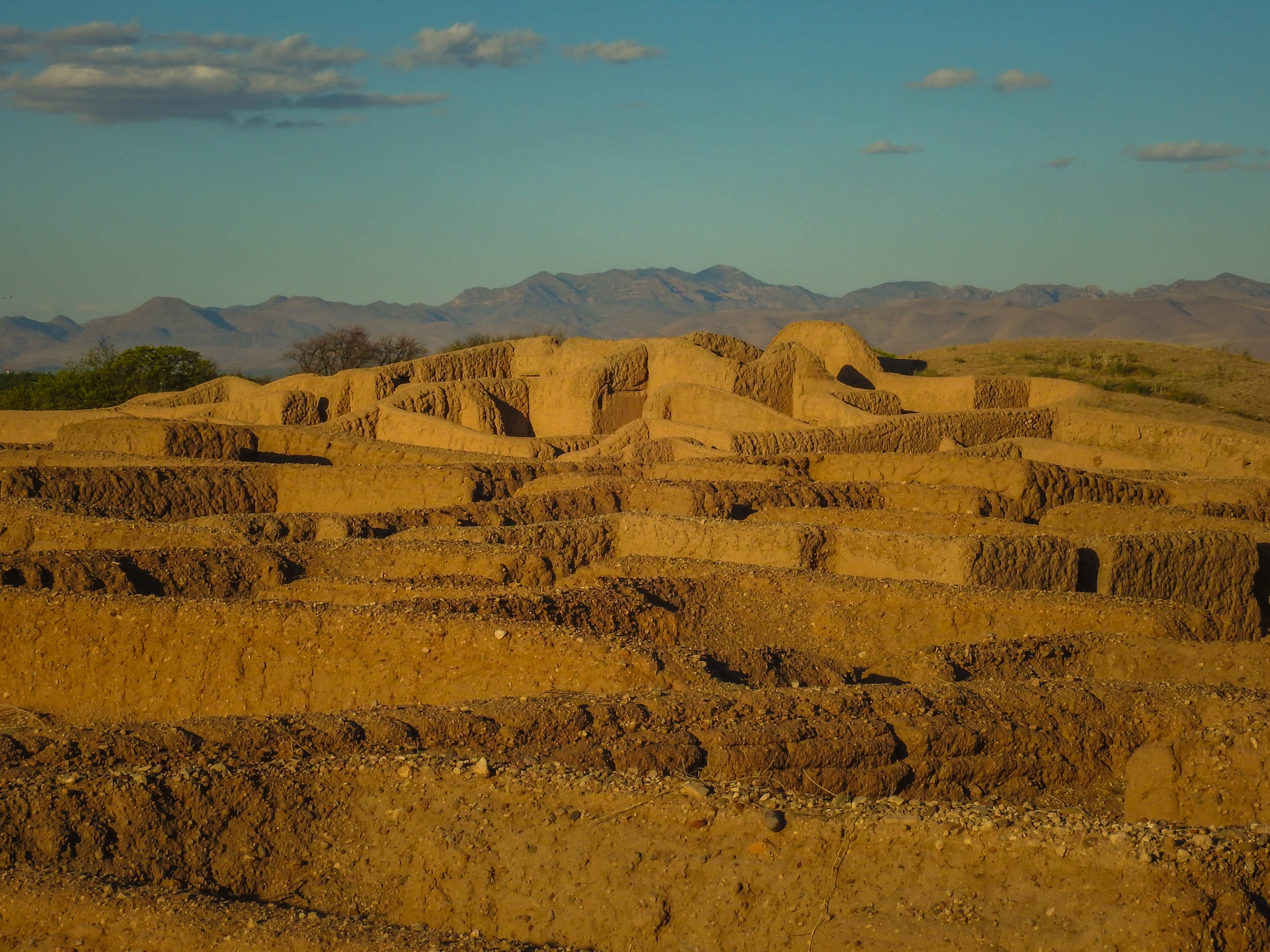
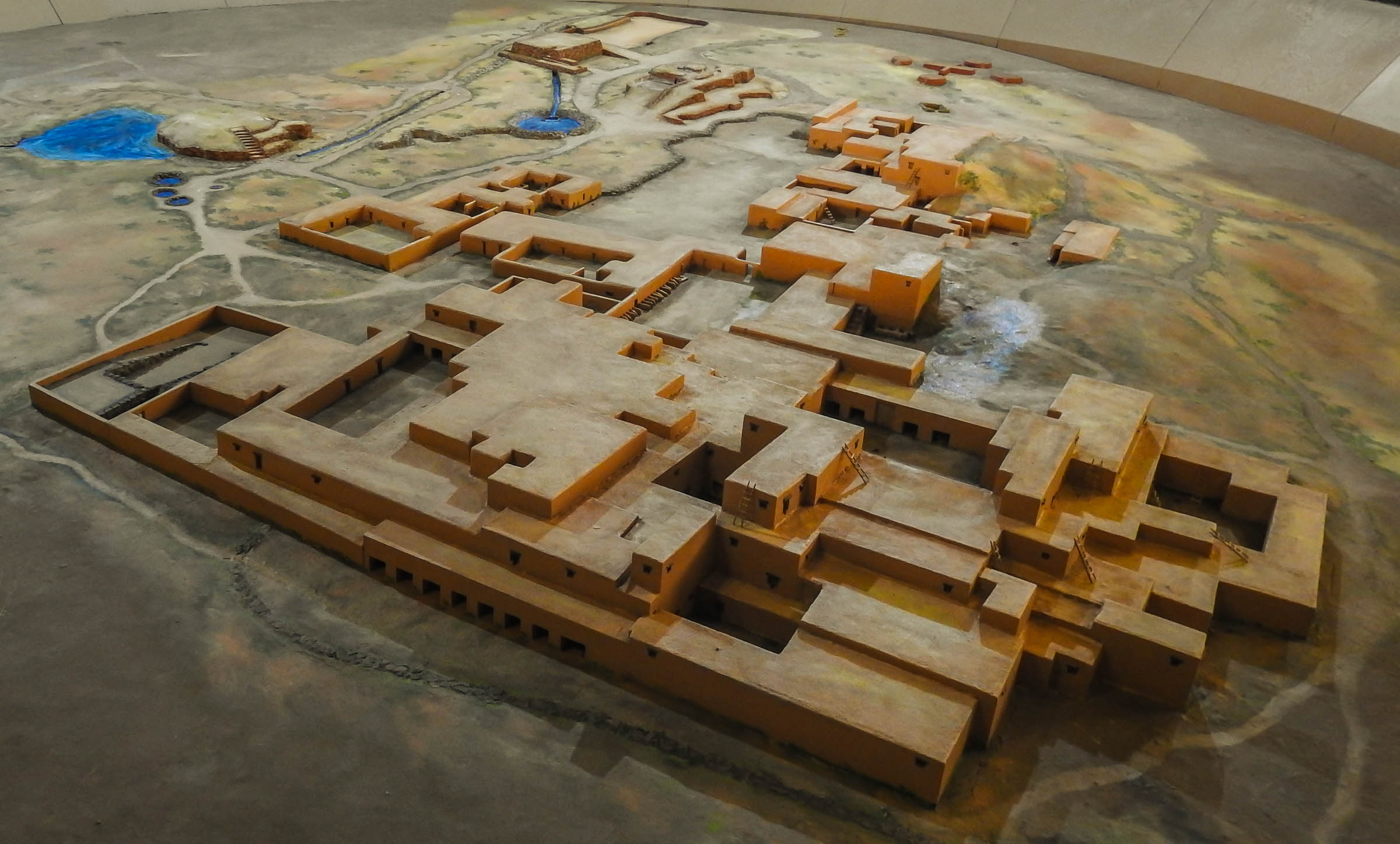
Our tour participants gathered at the Doubletree Hotel in Tucson Arizona. The group totaled 30 people led by Manuel Jurado, a native of Chihuahua state in Mexico. His English was good and his knowledge incredible. The first day was a long bus ride crossing the border at Palomas with lunch there at the Pink Store, a place we had visited many times. At Casas Grandes, Chihuahua we visited the Pacquime Archeological Site, a UNESCO world heritage site. These Mogollon people developed fine pottery skills without the use of a wheel. This tradition is carried on today in the village of Mata Ortiz. We experienced a demonstration of these skills with a local family. The ruins of this major trading center have been somewhat excavated to reveal a large city. Their trade network extended north to Chaco Canyon in present day New Mexico, south to Guatemala and to the Pacific and Gulf coasts.
Paquime Archeological SiteModel of ancient city of Paquime
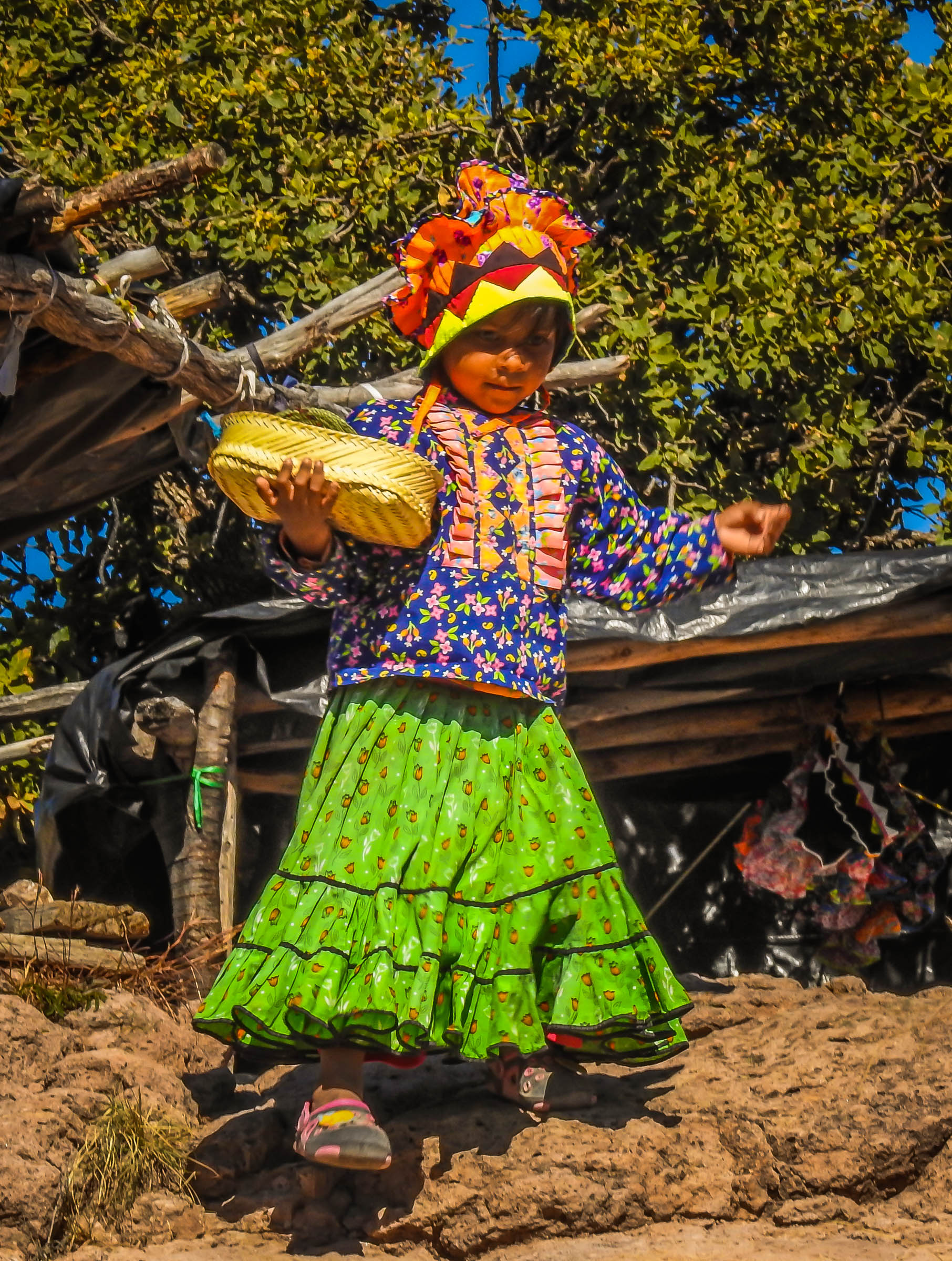
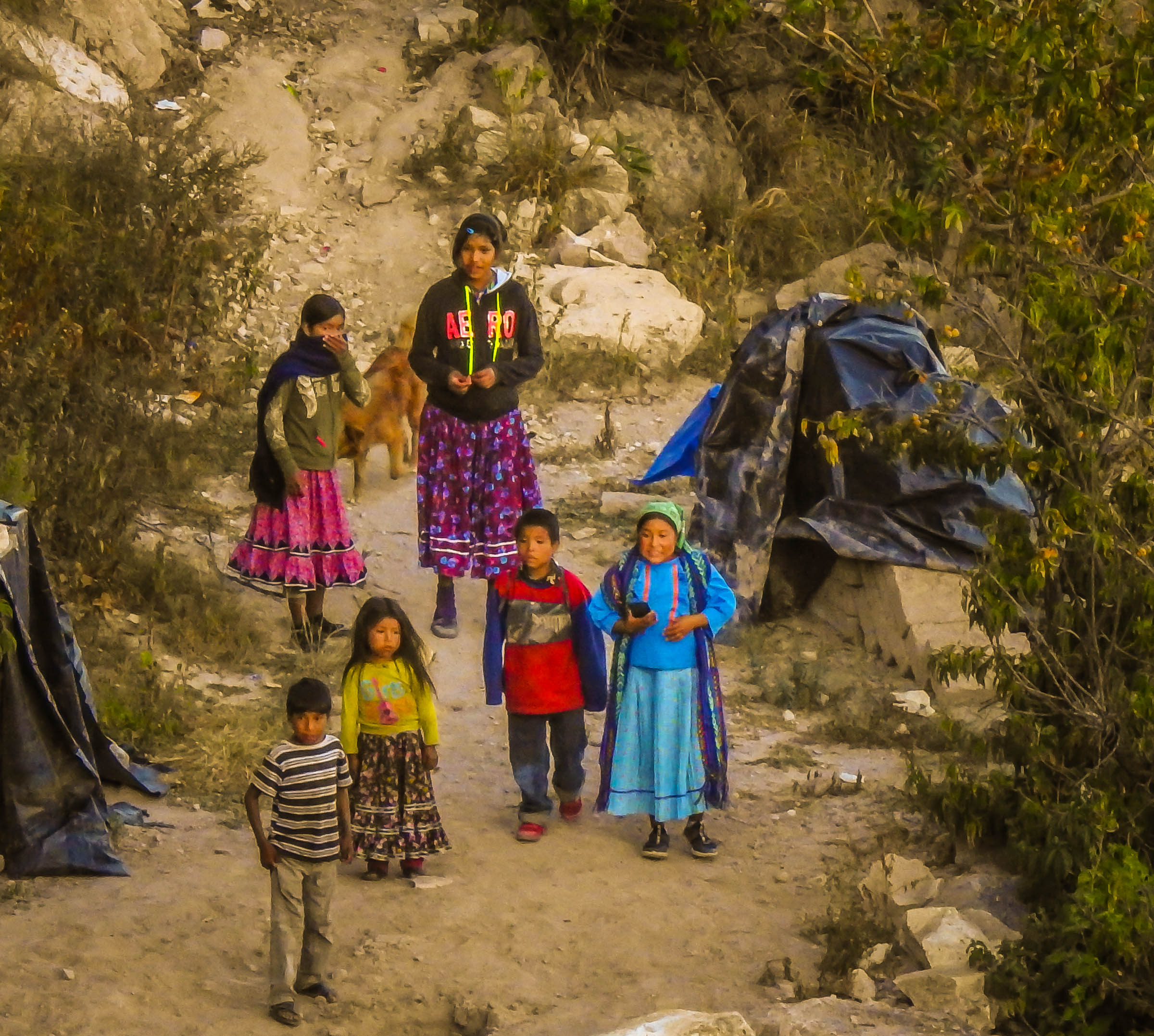
At Cuauhtemoc Chihuahua the next day we learned of the 3 cultures in this part of Mexico. They are the Mexicans of course, the Mennonite and the Tarahumara. The Mennonites immigrated from Canada when they were given land, an exemption from military duty and from swearing allegiance to the country. This was an opportunity to raise the standard of living with improved farming techniques. This region is one of the largest apple growing regions in North America. Today more than 100,000 Mennonites still live in Mexico. The Tarahumara are the second largest indigenous group in North America. Today more than 60,000 still live in mostly in primitive conditions. Their real name is Raramuri meaning foot runners. They are famous for running down deer and other prey barefoot in the mountains.
young Tarahumara girl at craft marketRaramuri family near their home on Copper Canyon
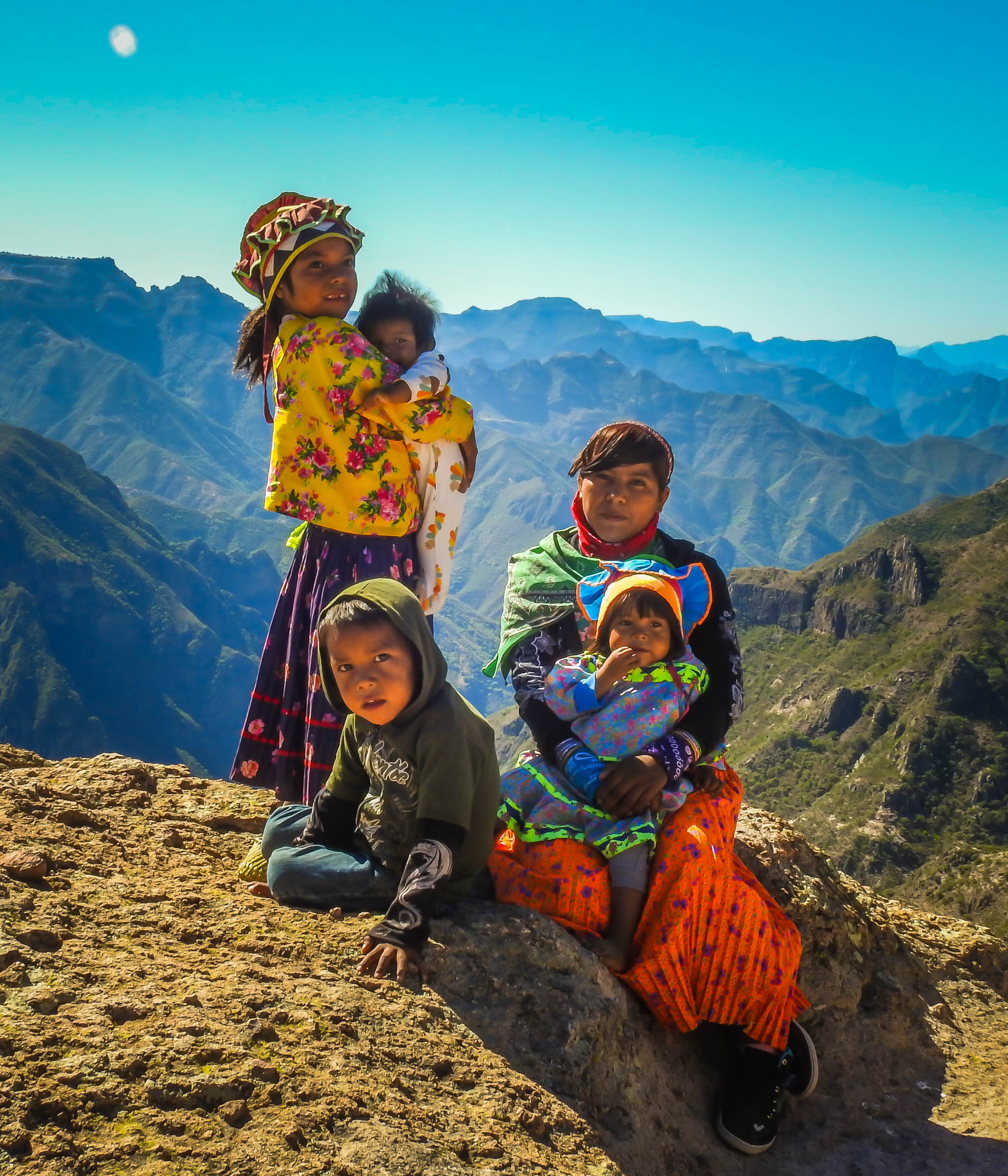
Barrancas del Cobre is the Mexican name for Copper Canyon. Our Hotel Mirador sat on the rim of the canyon with balcony rooms overlooking sunrise and beautiful sunsets. We discovered a large assortment of hummingbird species on the patio. The next day we rode an aerial tram into the canyon for more great views and a number of indigenous craft vendors. The people were all nice and friendly.
Beautiful family near the craft market
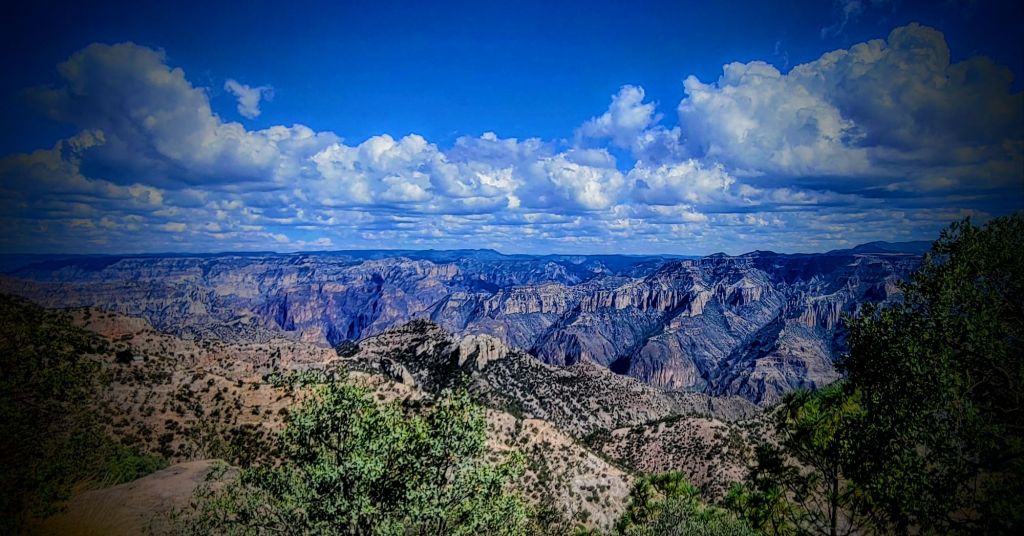
Copper Canyon
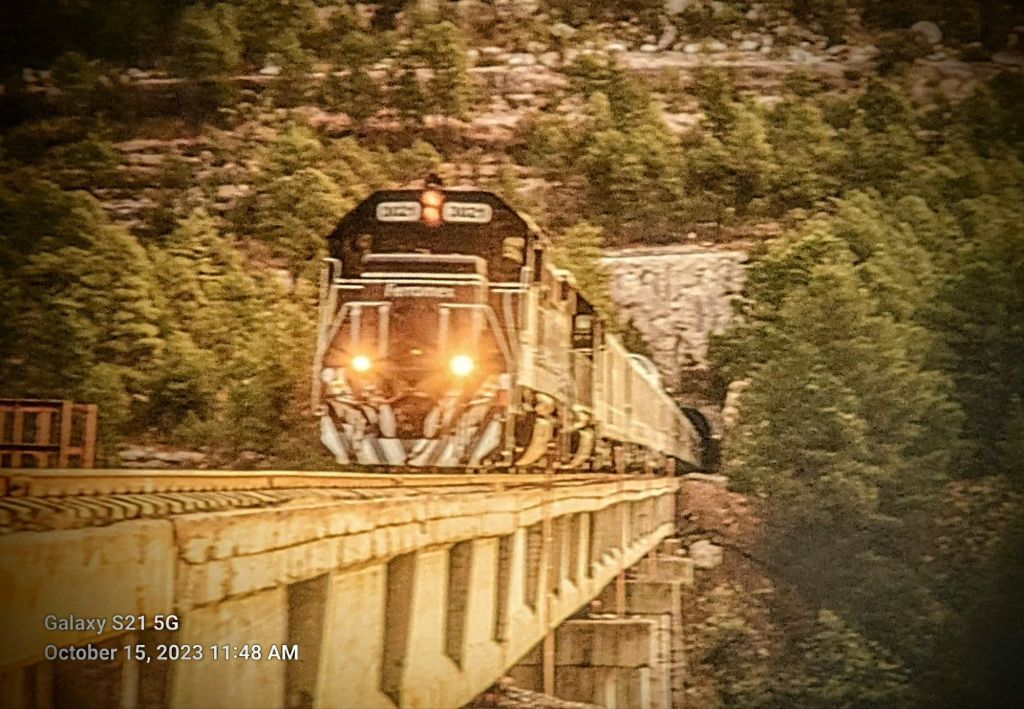
The Sierra Tarahumaa (Copper Canyons) are are the highest and most rugged sections of the Sierra Madre Occidental mountains. 25000 square miles of these mountains are designated by the Mexican government as a natural park. The centerpiece of our tour was the train ride through these Copper Canyons. We boarded the train at Posada Barrancas and worked our way south and west over 32 trestles and 86 tunnels over the 420 mile journey to El Fuerte. It was all day with a nice lunch served.
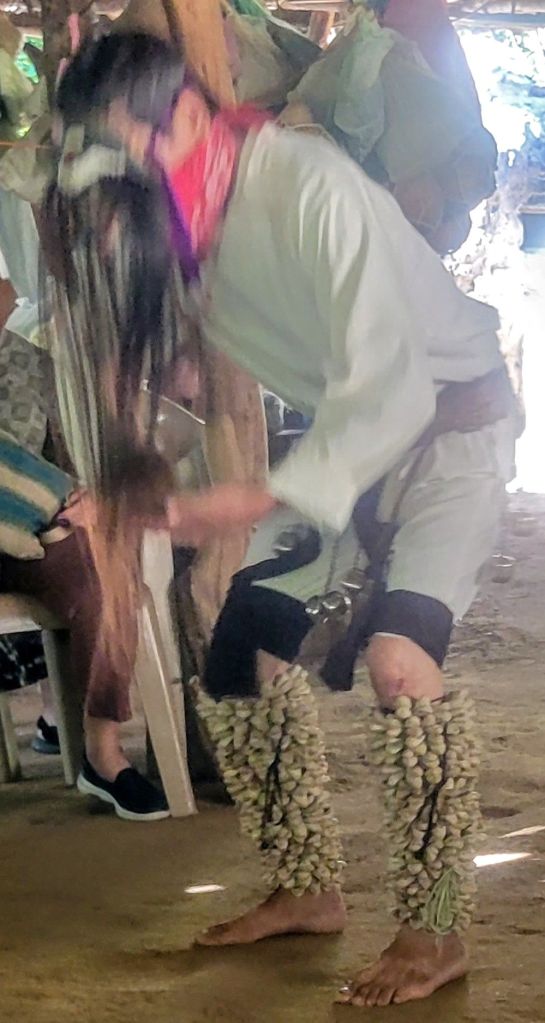
After the train ride we visited another indigenous people, the Mayo. There we learned about native herbal remedies these people developed in this area, Sinaloa’s spikey forest. It seems this is one of the places on earth with the most medicinal plants. We also watched a deer dance and ate homemade tortillas.
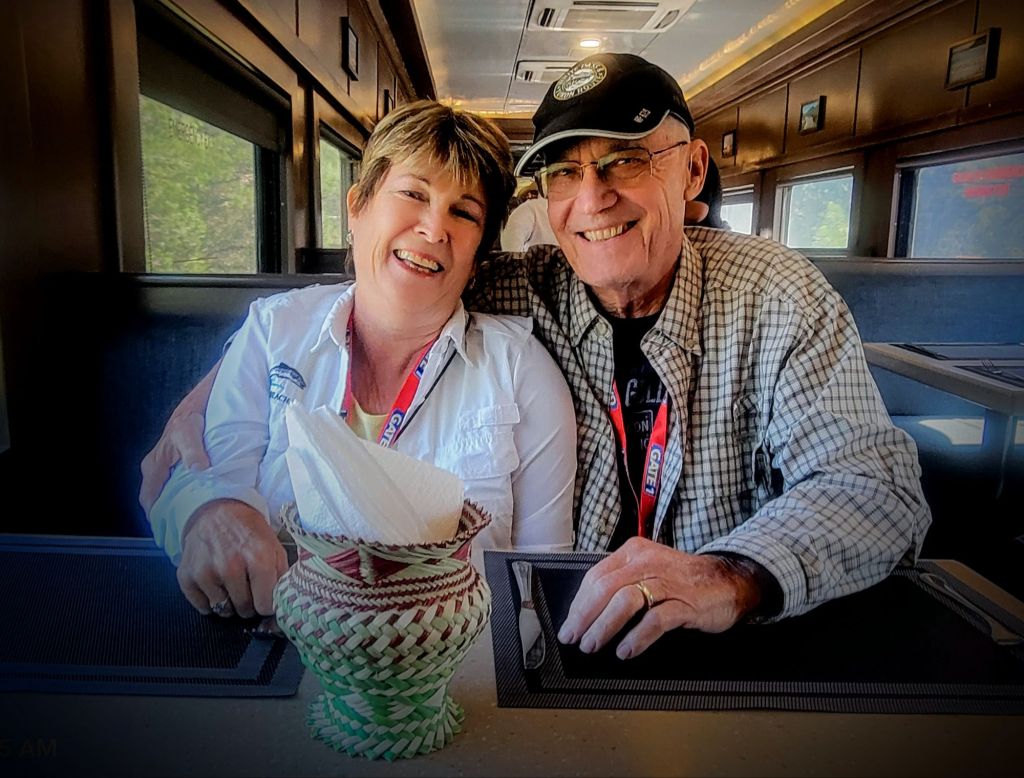
Us on the El Chepe train Sesame seeds drying along the train route in Sonora Deer dance
The next day we toured the old colonial town of El Fuerte. Then we had lunch in Navajoa before arriving in Alamos to stay in a 400 year old hacienda turned hotel. Alamos is a charming town favored by many celebrities including Carrol O’Connor. It is the best preserved colonial town of northern Mexico.
400 year old hacienda turned hotel Private performance by Minstrel band “Los Estudiantes”
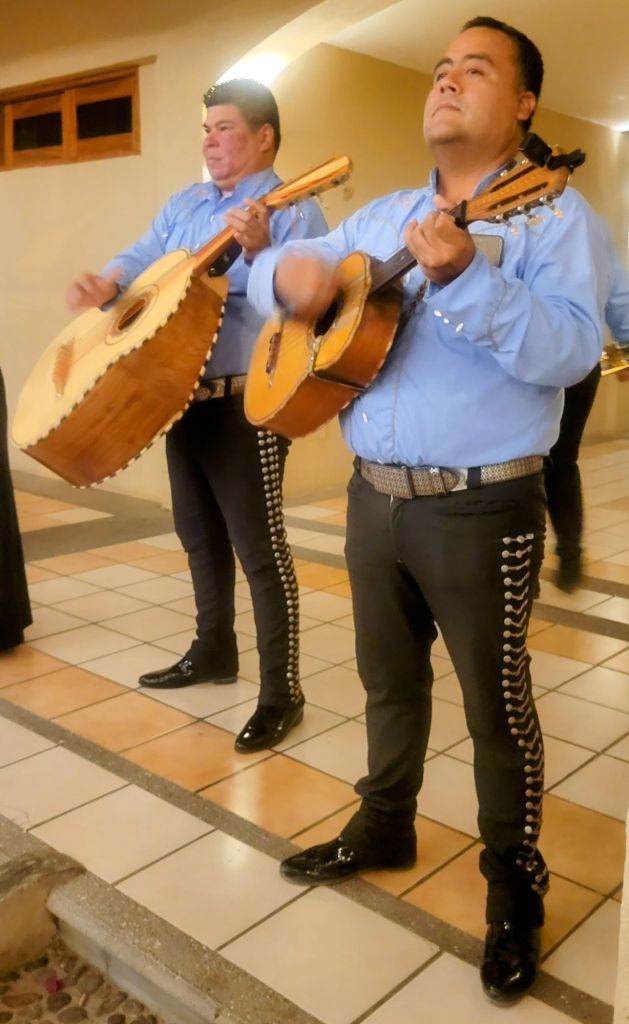
The journey to San Carlos took us through the land of the Yaqui Republic. This is another indigenous group who have preserved their idea of communal land ownership and refuse allegiance to anyone. Our last night in Mexico was at a fancy resort hotel in San Carlos. San Carlos would be another Cabo if it had an airport. We enjoyed a great Mariachi band and boat ride on the Sea of Cortez.
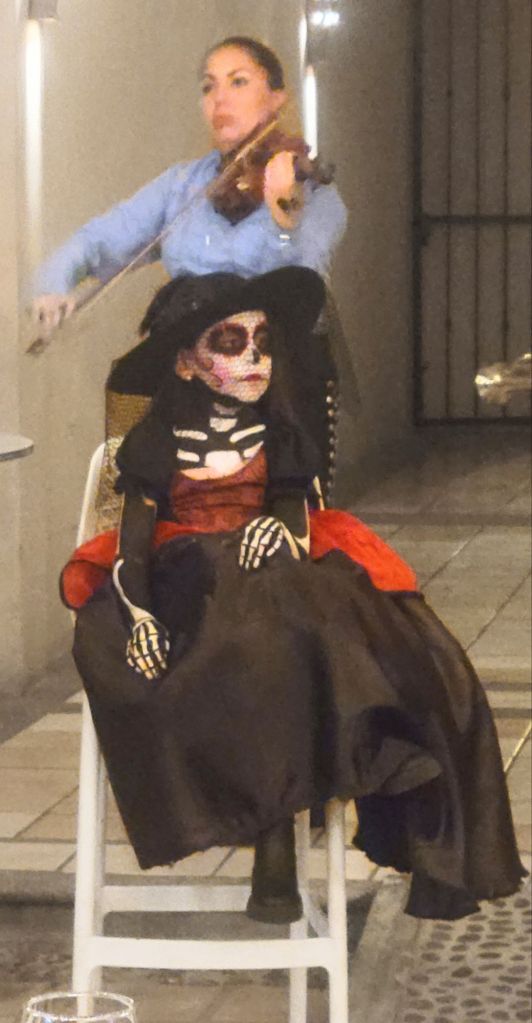
Balcony view in San Carlos Mariachi bandYoung girl in Day of the Dead costume
Our Copper Canyon trip exceeded our expectations mostly due to our fabulous guide Manuel. It was so much more than a train ride and scenery. The tour was mostly about Mexico, its cultures and people. We learned a lot. Most people in our group had taken more than one Gate 1 tours. By the end of the trip we could see why. We’ll be back.
Here we are again for the second half of our Holland America Line Grand South America Cruise onboard Volendam.
Buenos Aires really was a mid point as many passengers who had been along since Ft. Lauderdale disembarked and others joined us for the remainder of the cruise. We had 3 days and 2 nights there so our newcomers could get acclimated. From here we headed to Brazil, a huge country with lots of people and a tropical climate.
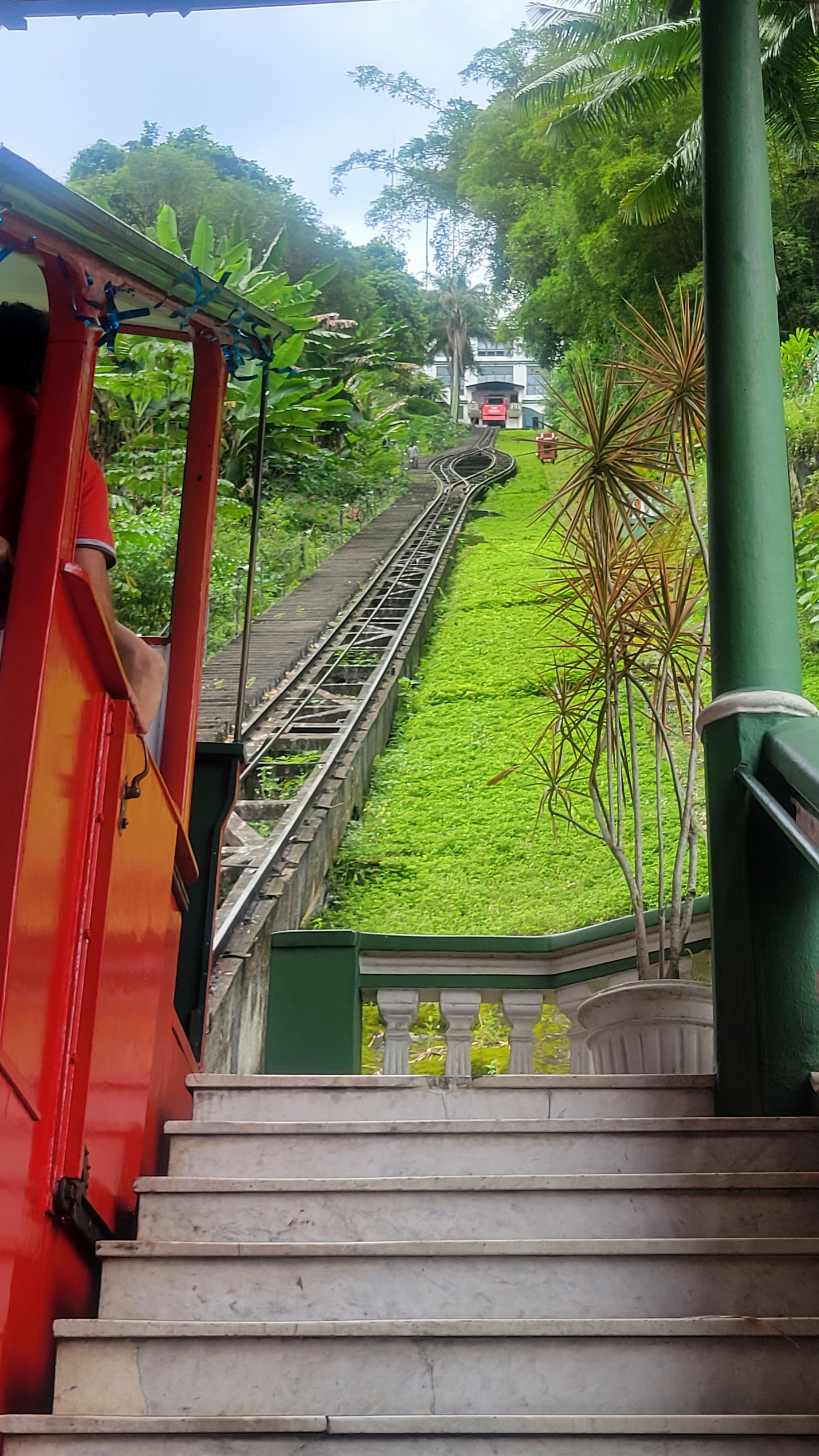
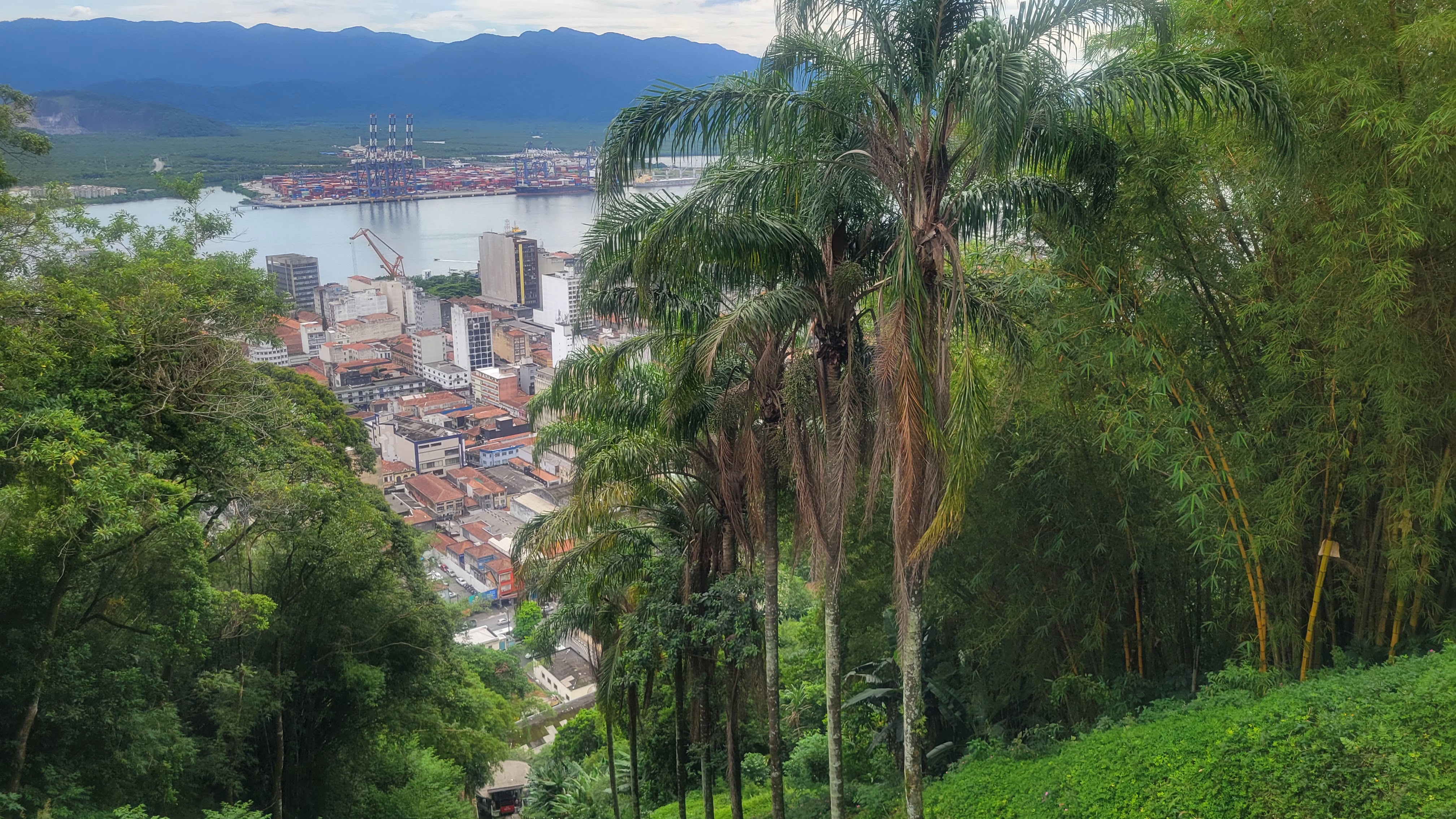
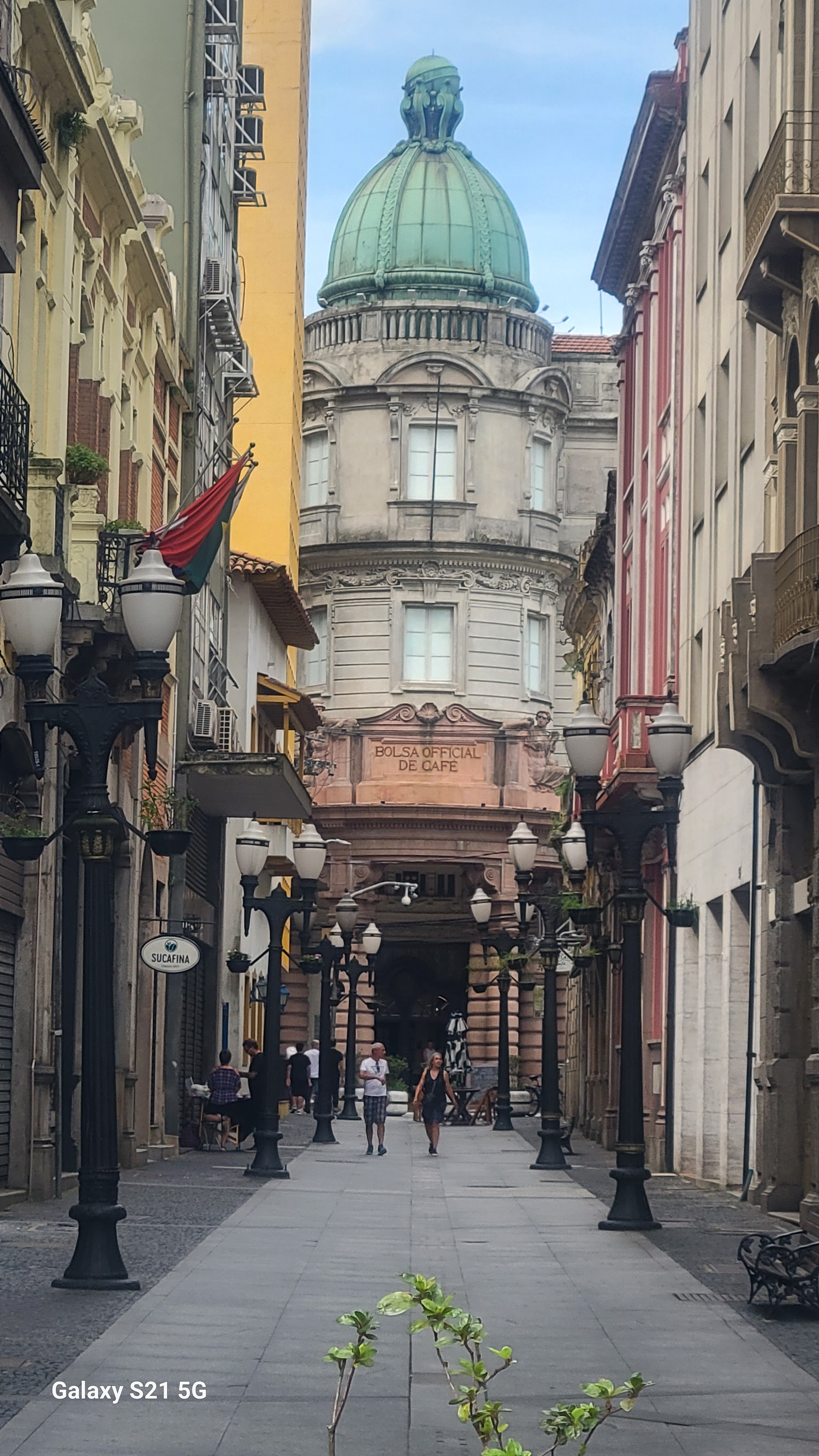
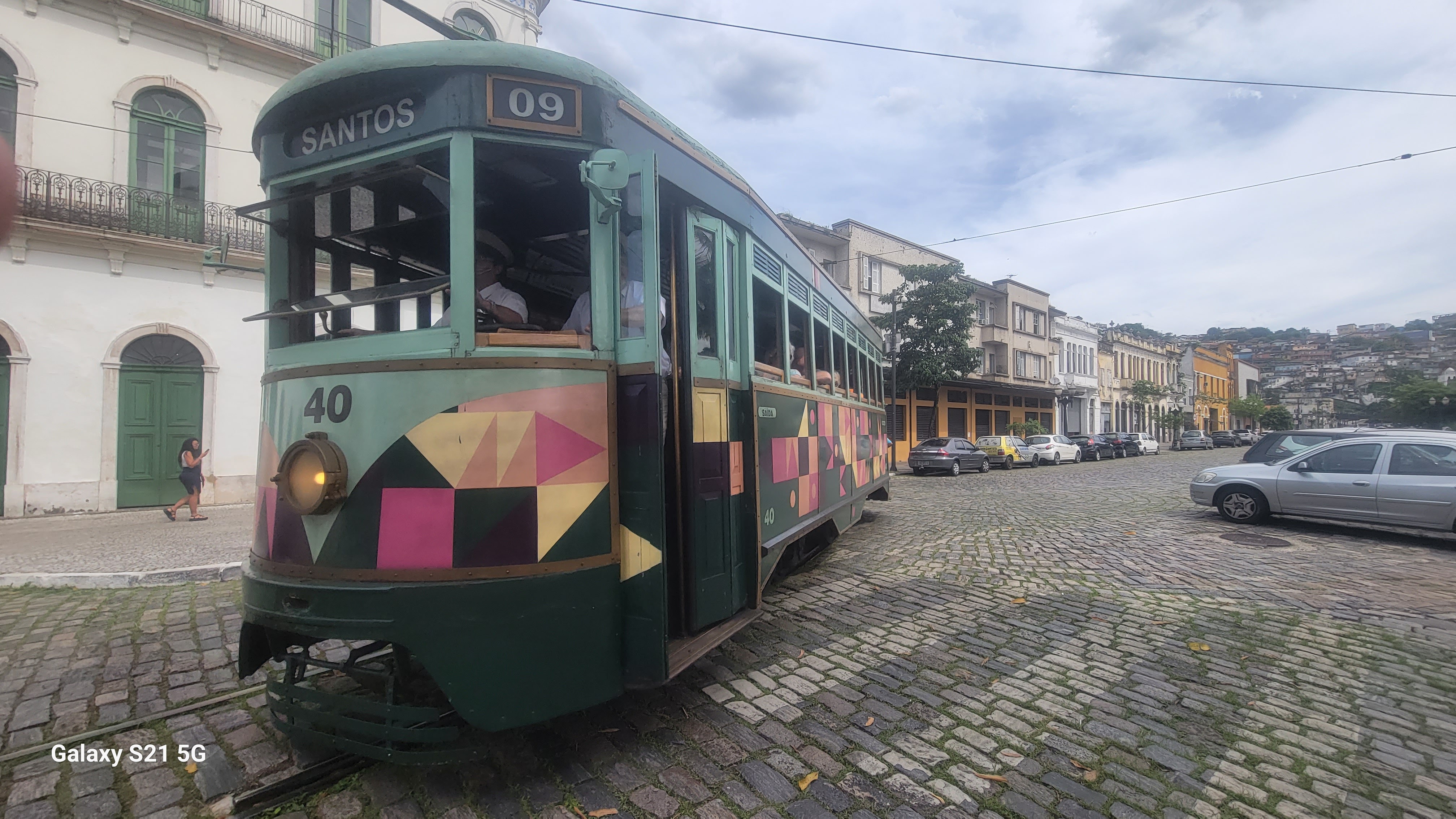
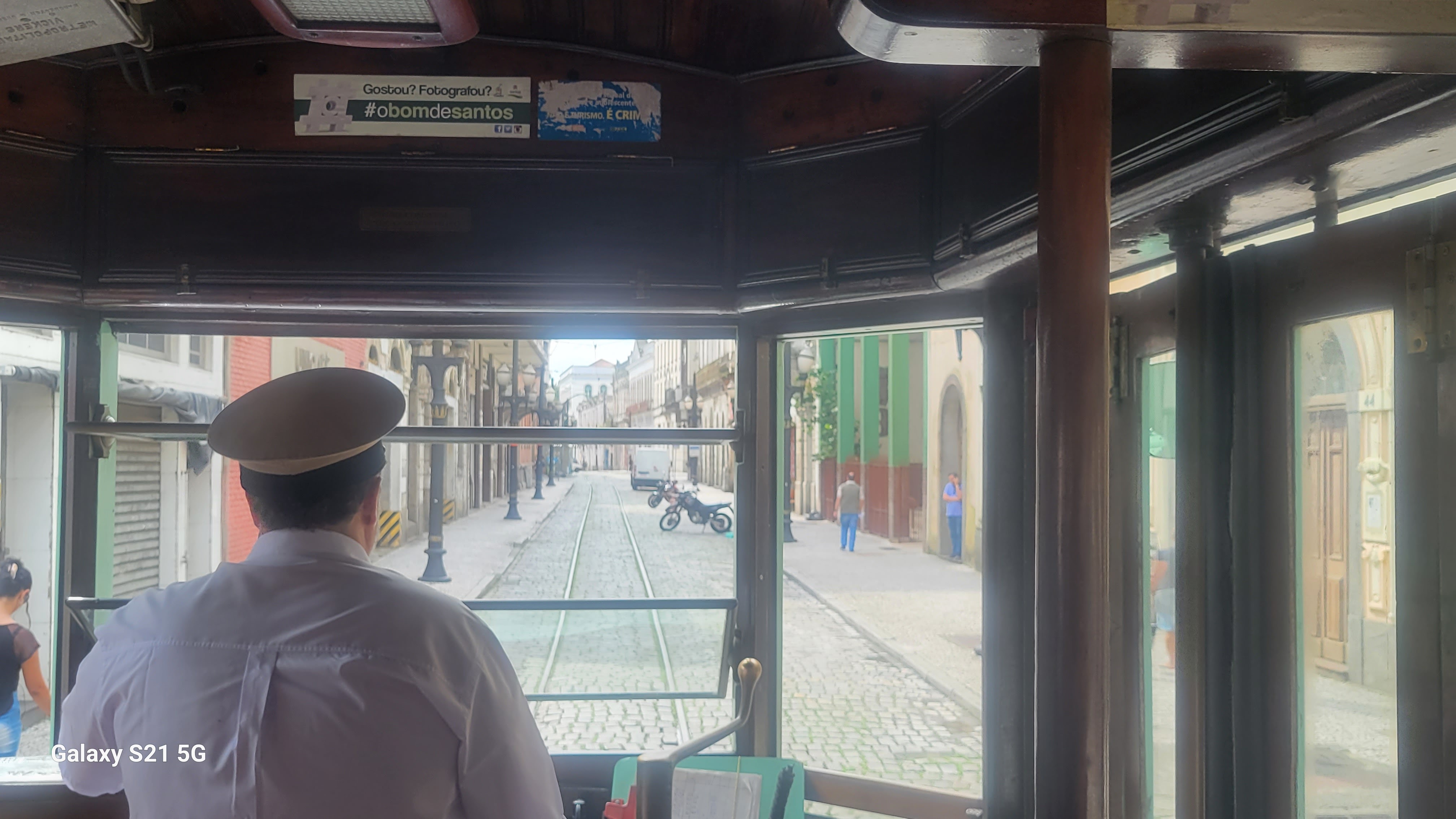
Santos Brazil. This was our first port in Brazil. It was founded in 1546 by the Portuguese. We visited the Coffee Museum which is in the old coffee trading center where world prices were negotiated. The funicular to the top of Mount Serrat gave us great views of the city and harbor. The old city has a restored streetcar which was short but enjoyable. Nice restaurants are popular in this tourist city. It was hot, 97 degrees, and humid. Here also Holland America brought on board “Oi Brasil”, a team of dancers, musicians and even a lecturer who would sail with us sharing the culture of Brazil all the way to Manaus.
Funicular to top of Mt. Serrat
Santos view from Mt. Serrat
Coffee Museum
Santos historic streetcarr
Streetcar view in old Santos
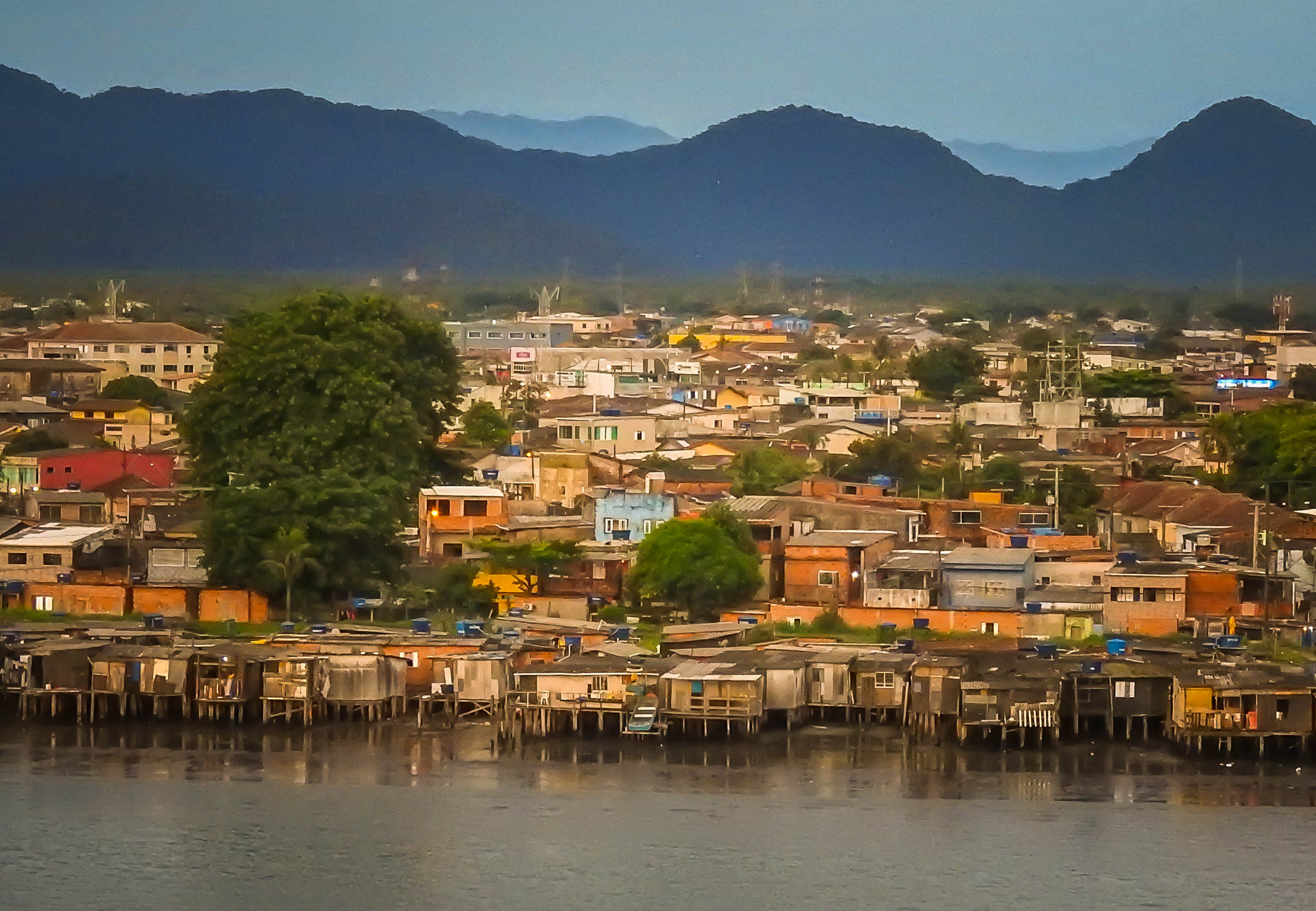
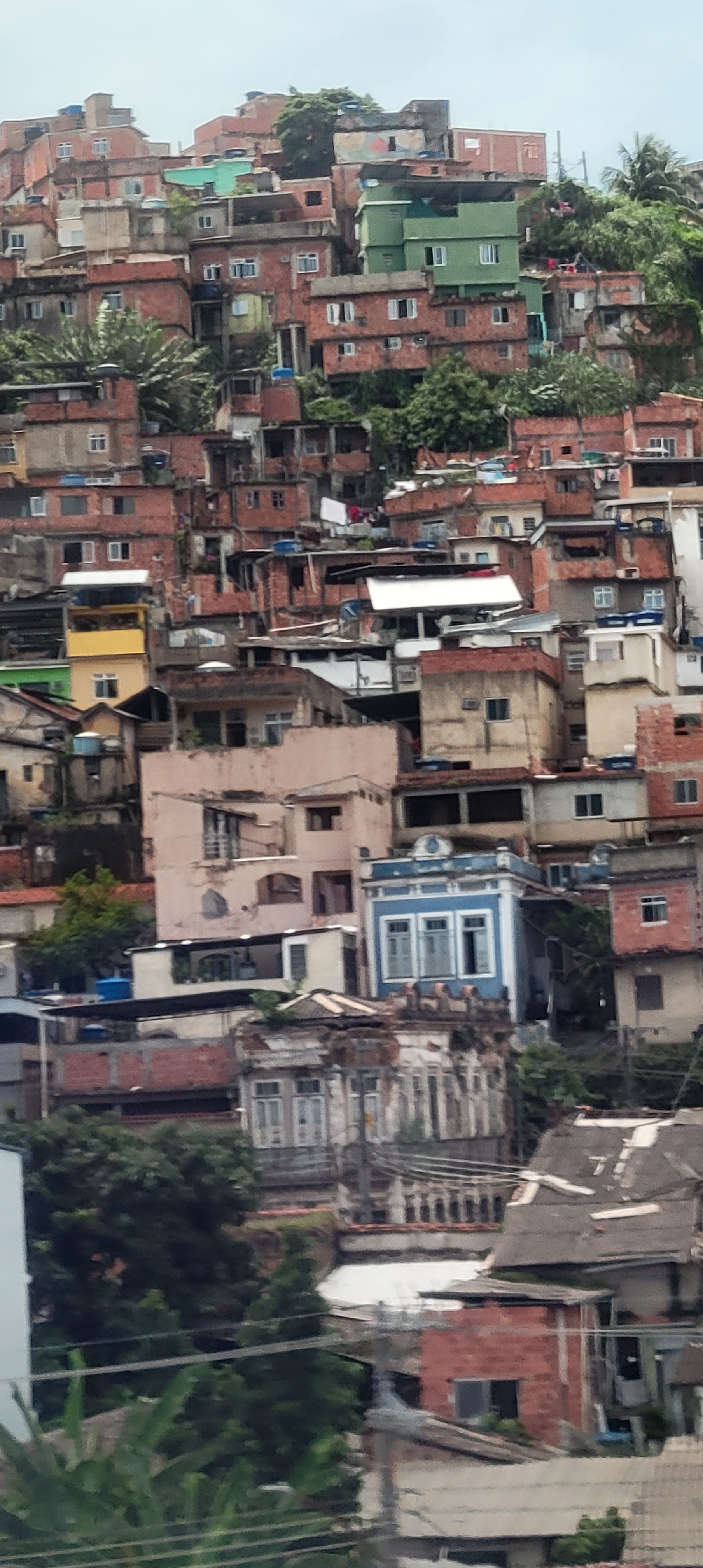
Huge favela (slum) in Santos
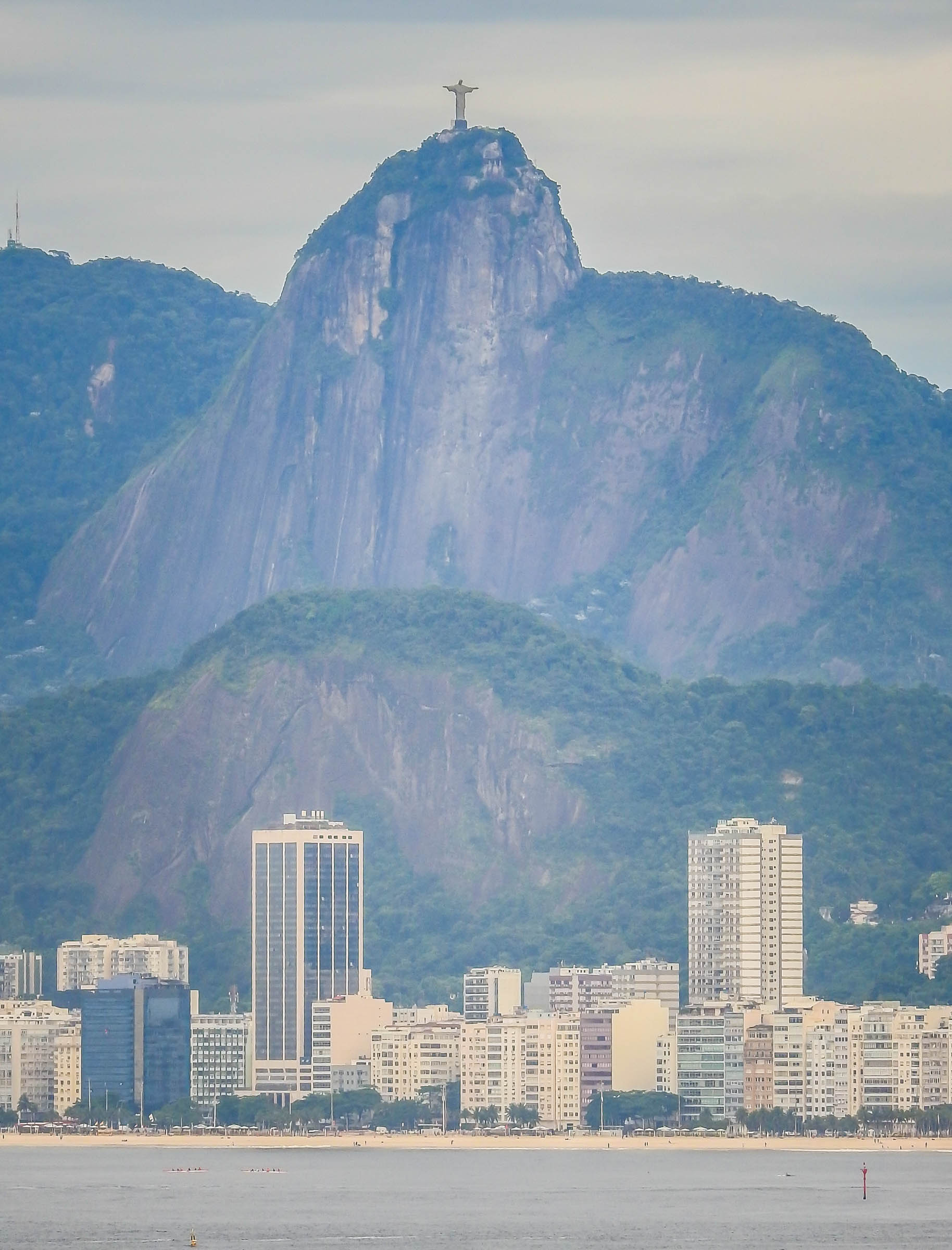
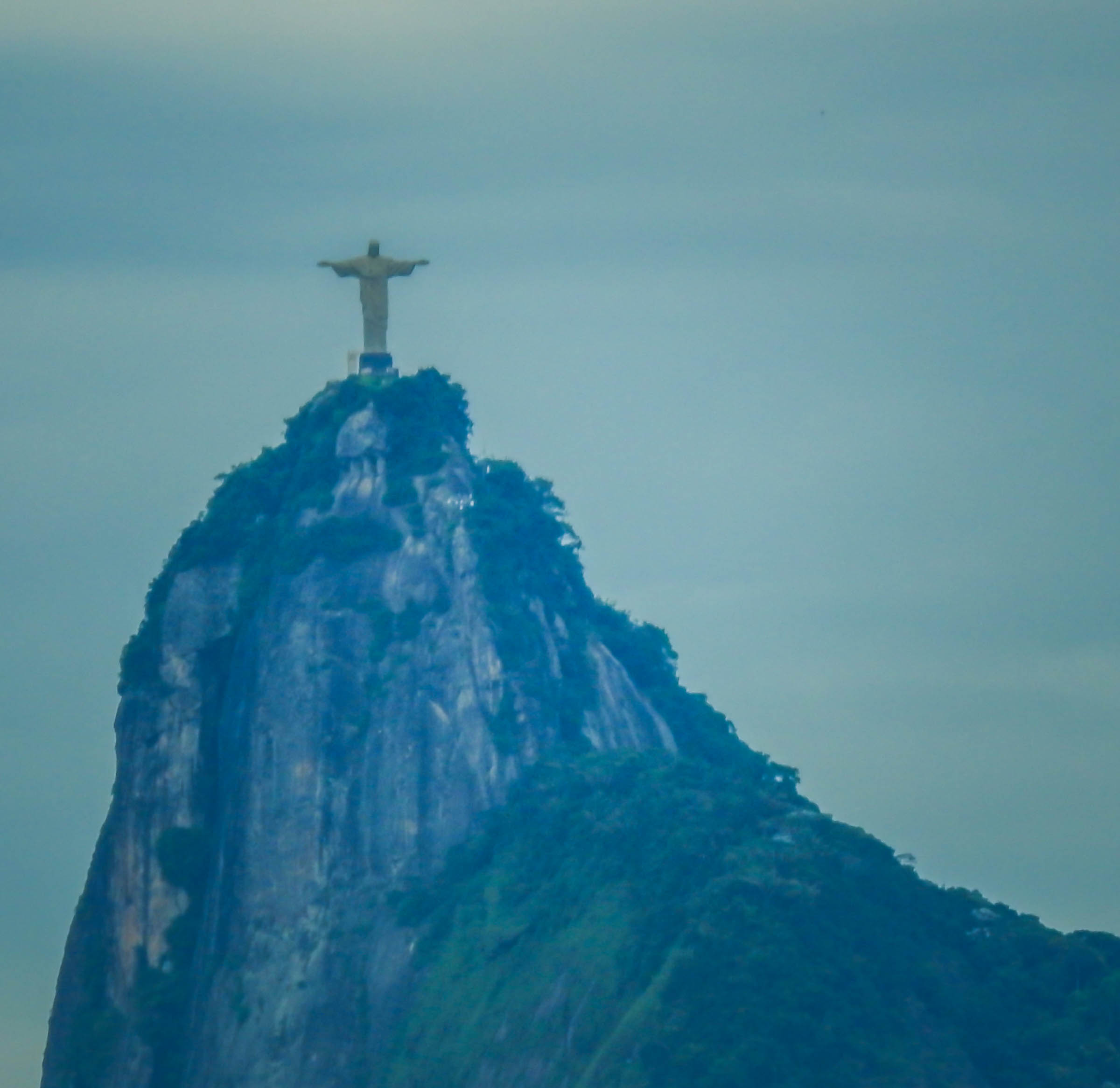
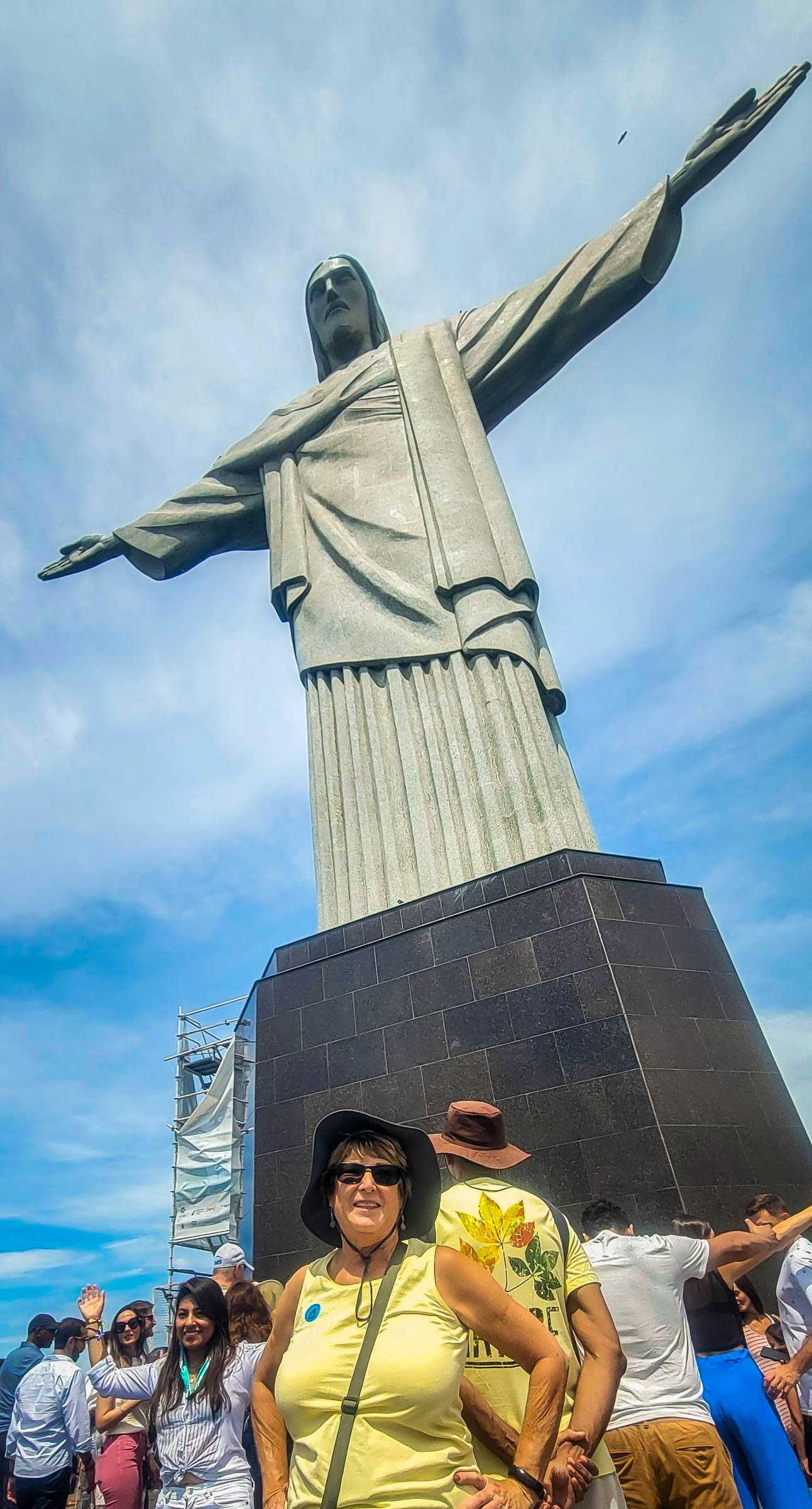
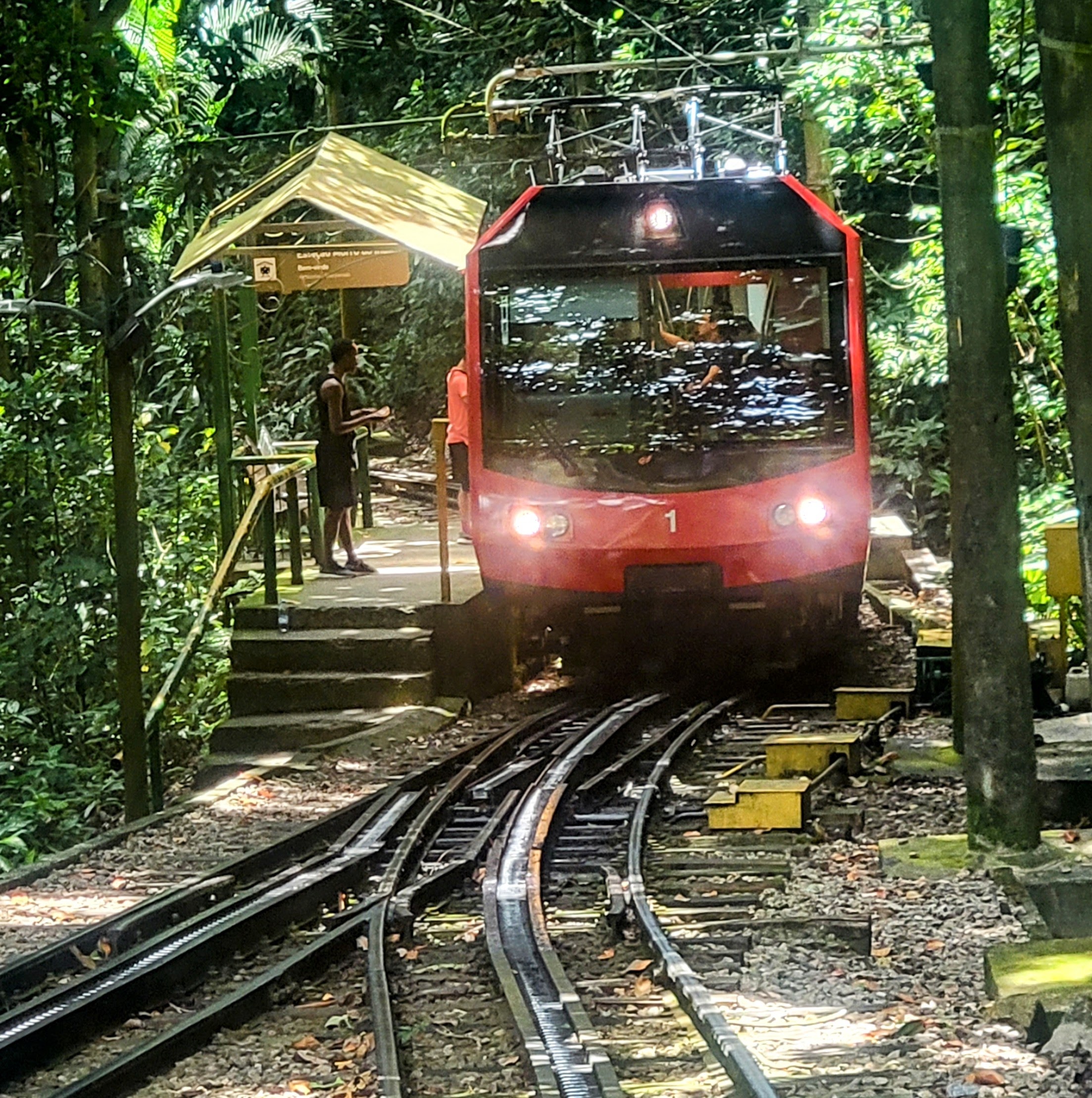
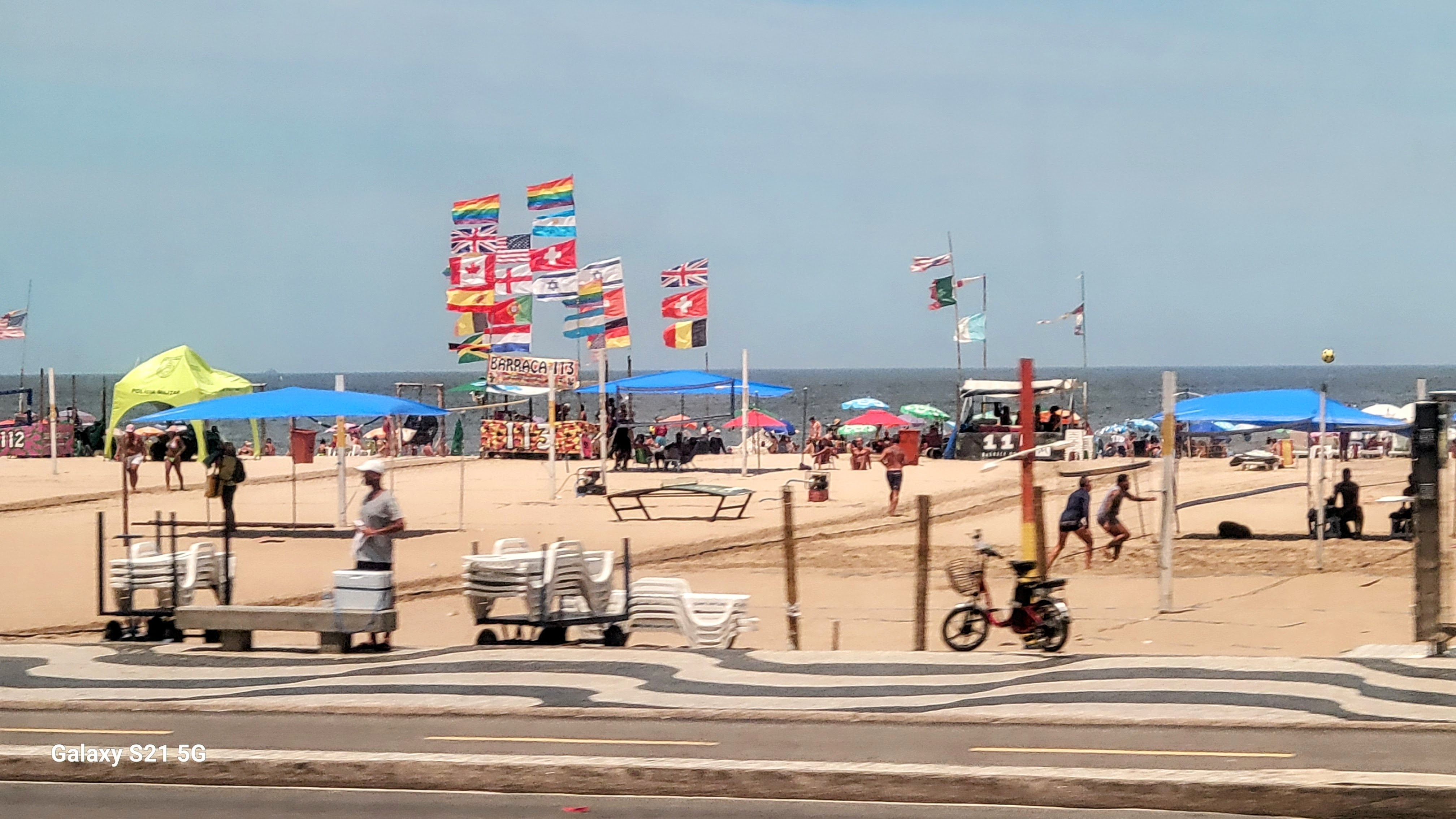
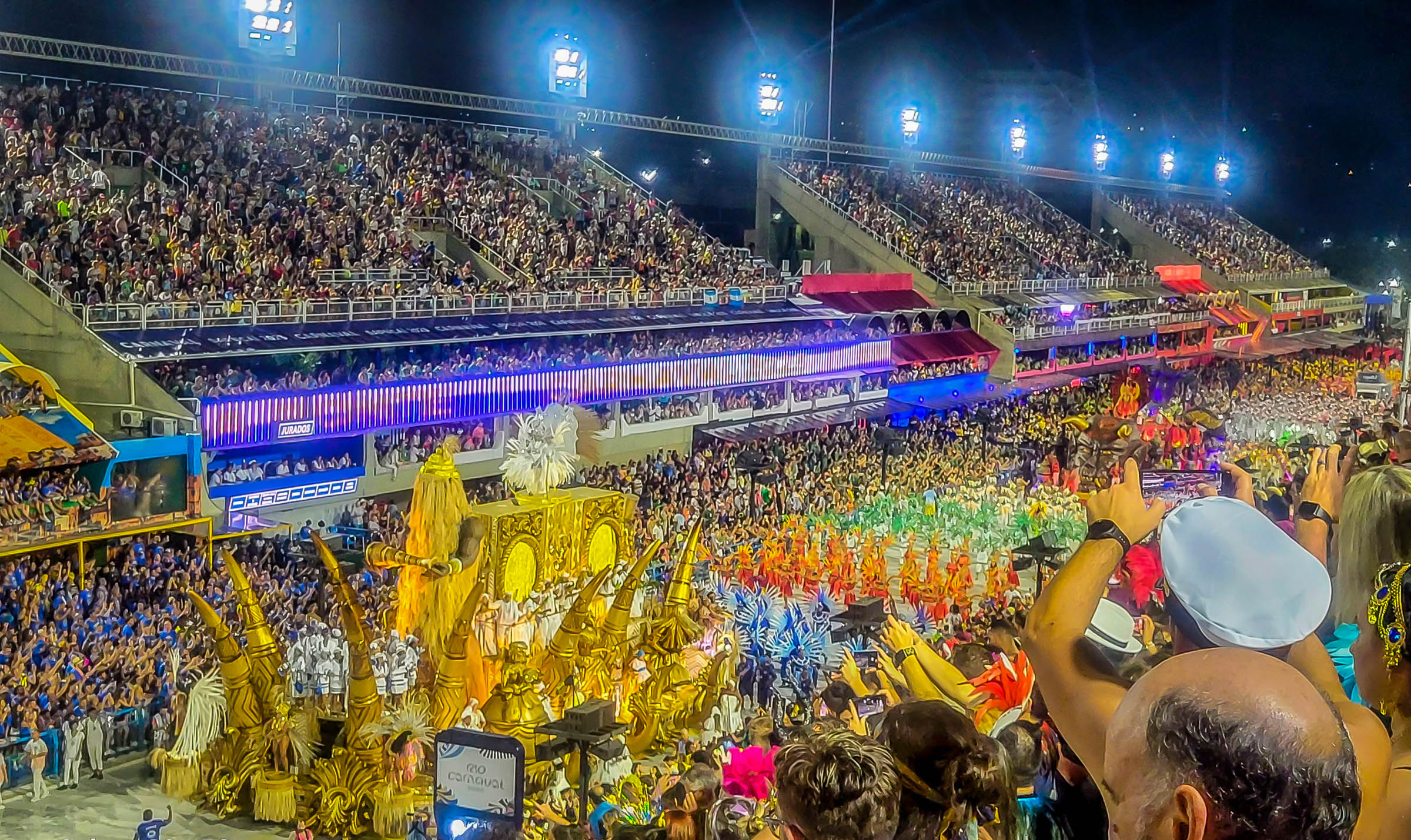
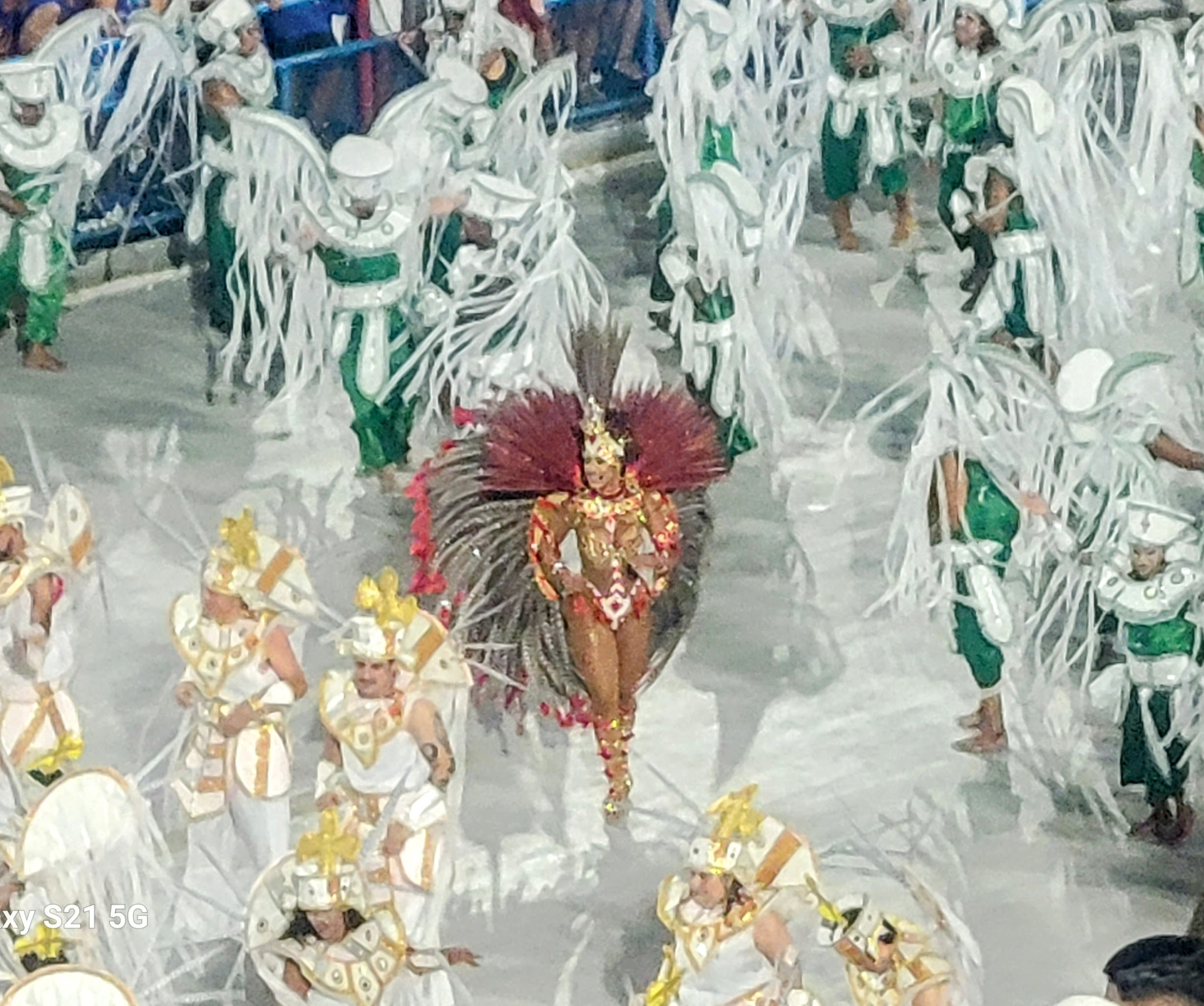
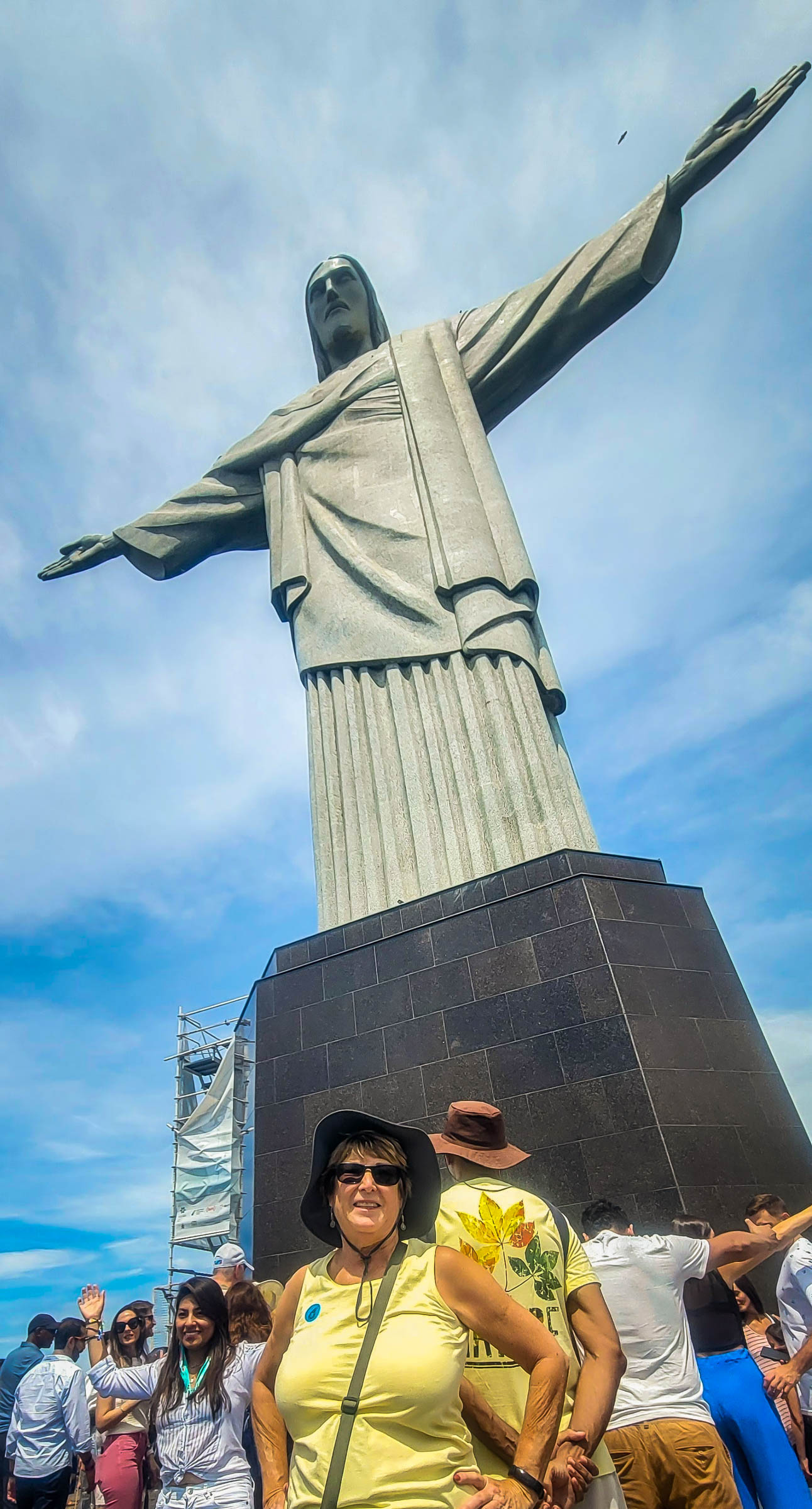
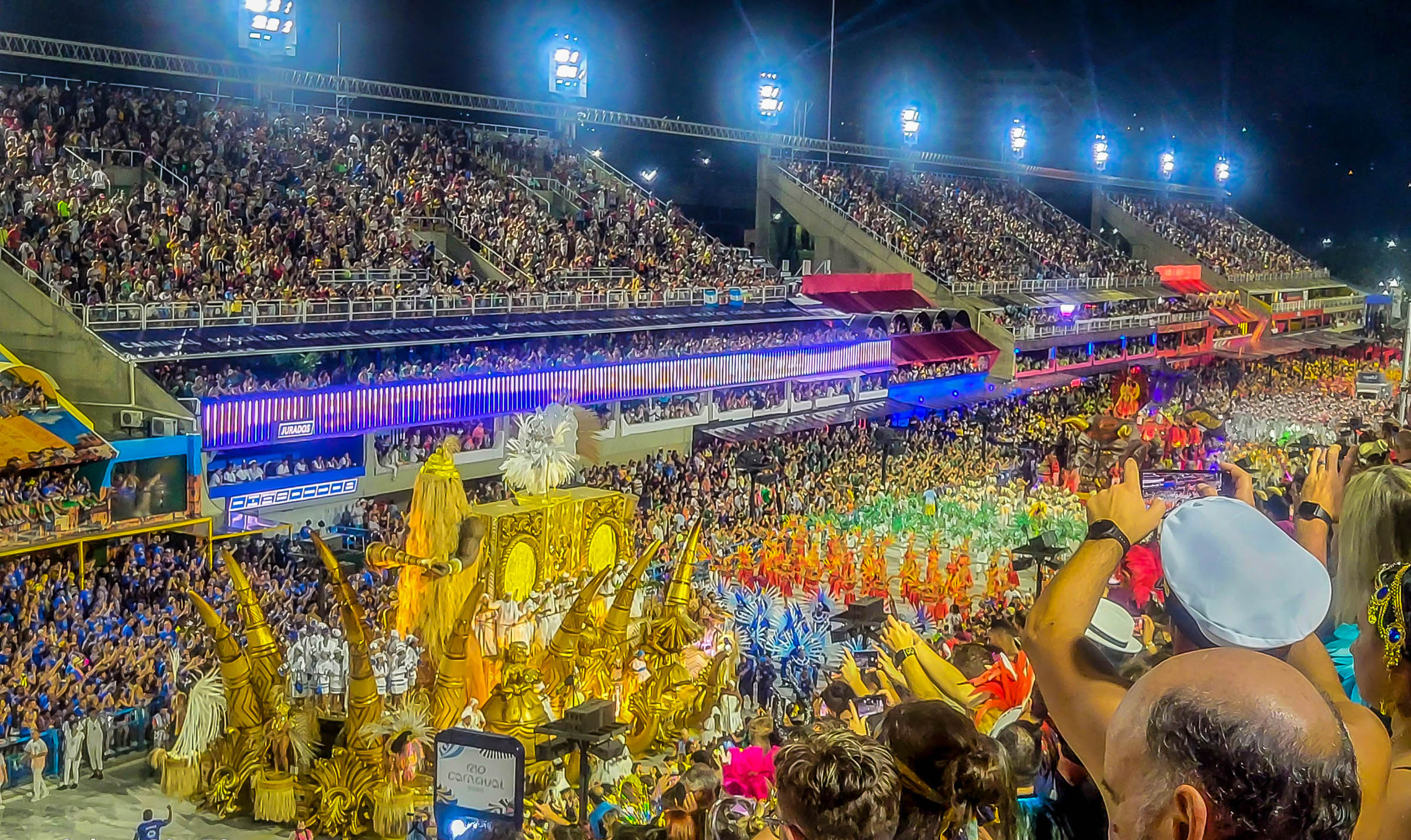
Rio de Janeiro Brazil We got up early to witness the sail in past Sugarloaf Mountain into Rio’s harbor. The setting is spectacular. Christ the Redeemer sits high above the city. We docked right downtown but immediately noticed a very polluted harbor. We took a Holland America tour to Christ the Redeemer statue using a cog railway and stairs. We were lucky it wasn’t overcrowded that day so we had time for an extended tour past beautiful homes in the Ipanema and Copacabana neighborhoods. We got a brief view of the beach too. It was Carnival time in Rio and the city goes crazy with official and unofficial parades affecting traffic and access to tourist sites. People from all over Brazil come to Rio for Carnival. Since we had an overnight we were able to take the HAL offered trip to the Sambadrome for the Superbowl of Brazil. 11 months of planning and millions of dollars are spent on this event. After seeing the huge favelas (slums) of Rio we wondered if those resources could be better spent elsewhere. It was crowded, loud, relentless, colorful and tiring. There were some topless performers, lots of thongs. Our bus got us there by 8PM, the first Samba “School” paraded from 10 to 11. We stayed for 3 schools and caught the first bus back to the ship. We got back at 3AM! It was an experience to remember but not repeated. Many of us wished we had visited Rio some other time. Rio was hot and humid.
Sailing into Rio past Christ the Redeemer
At the top
Swiss built cog railway to the top
One huge favela (slum) in Rio
Copacabana beach
Sambadrome at Carnaval
One of hundreds of floats
Thousands of dancers
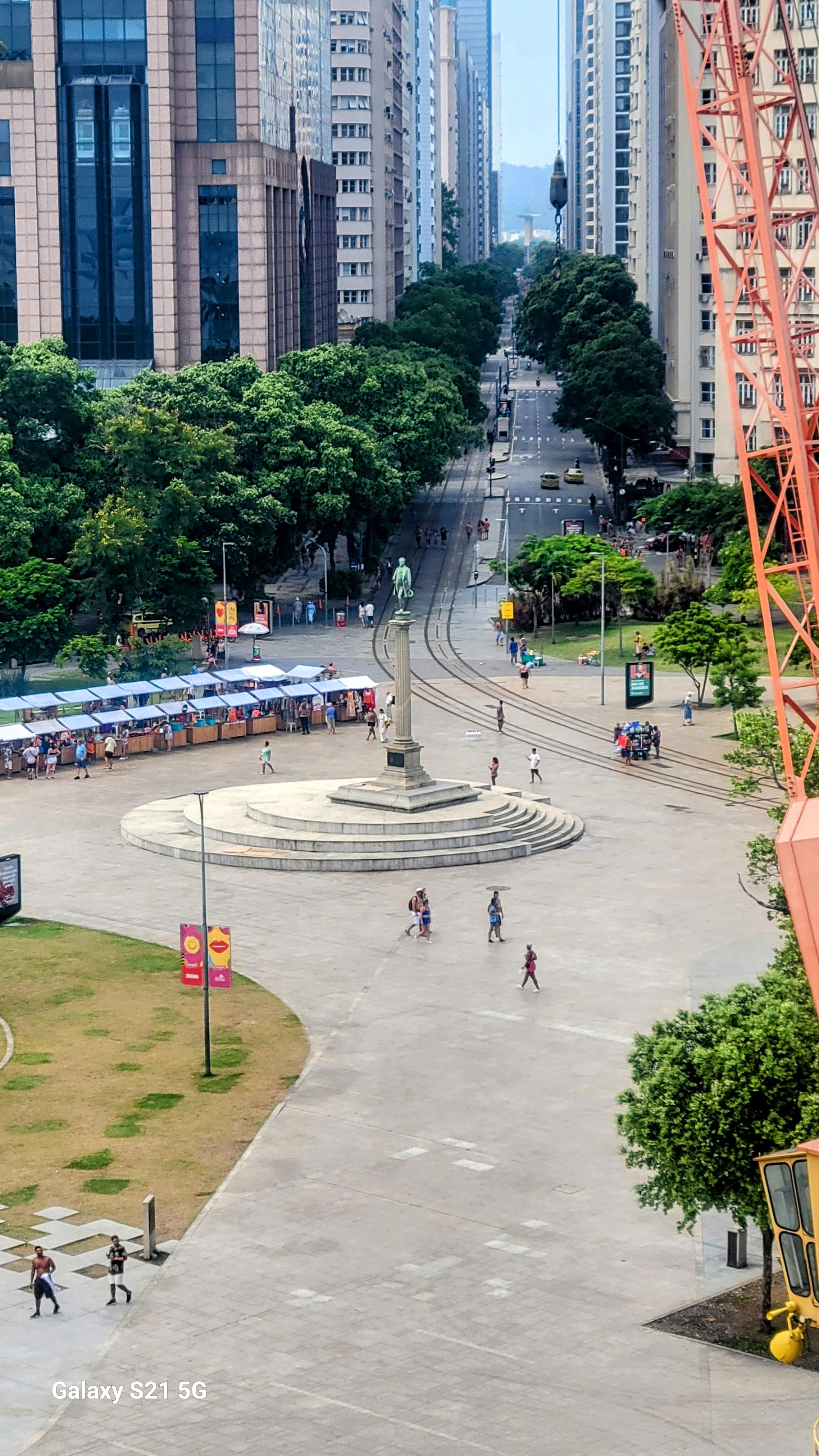
Downtown Rio
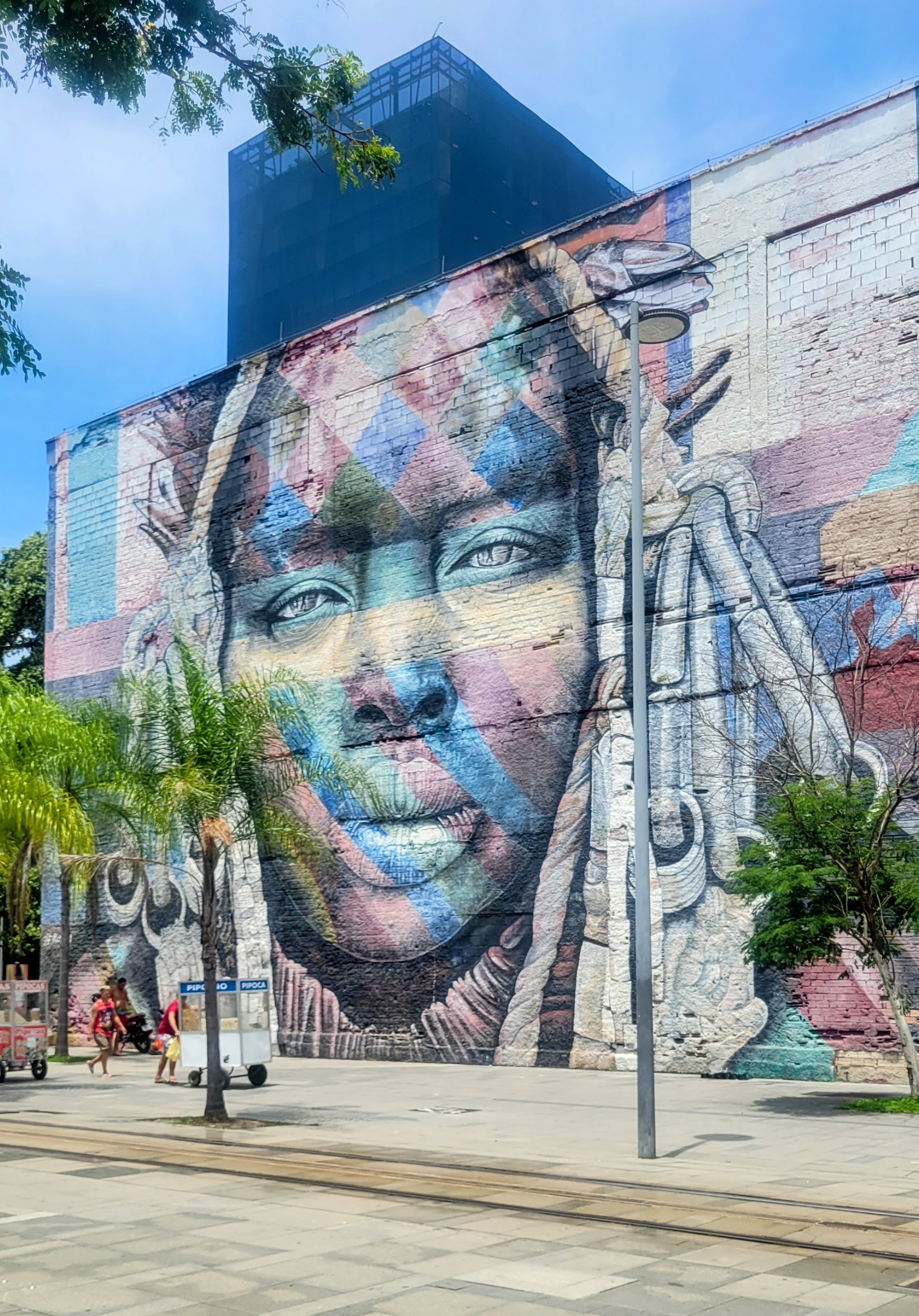
Mural near the port
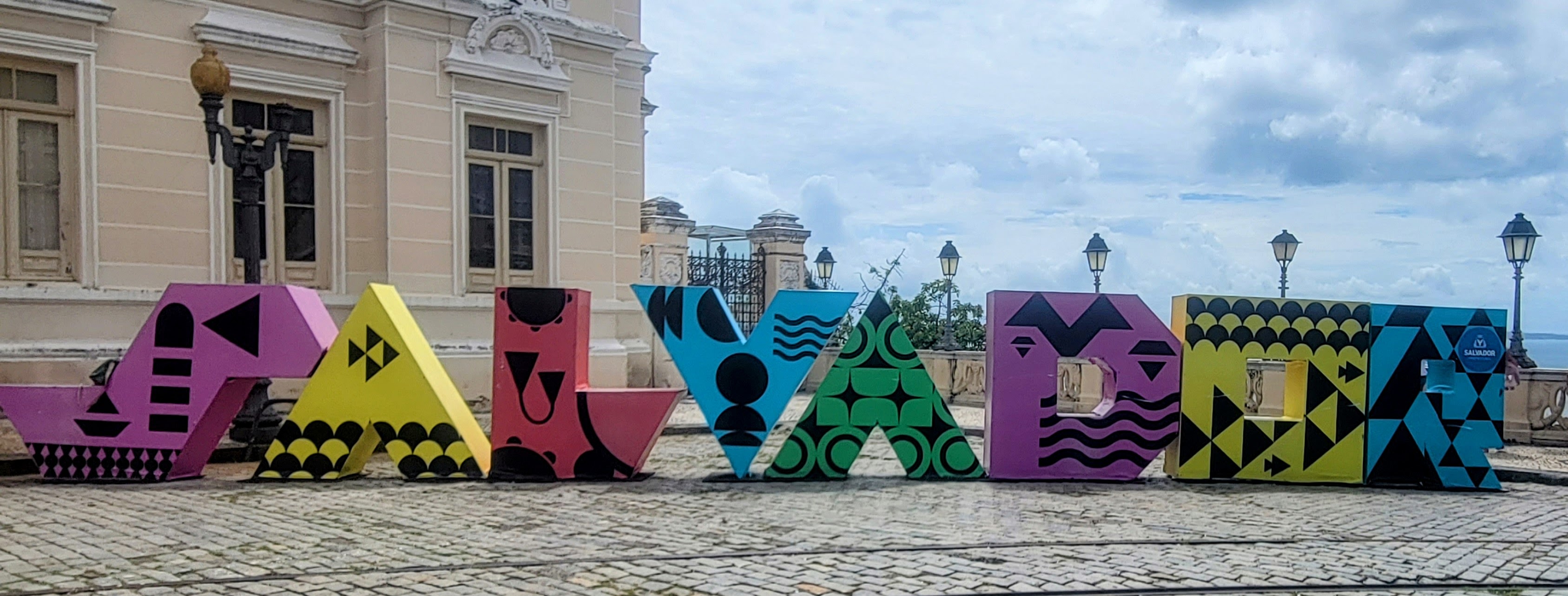
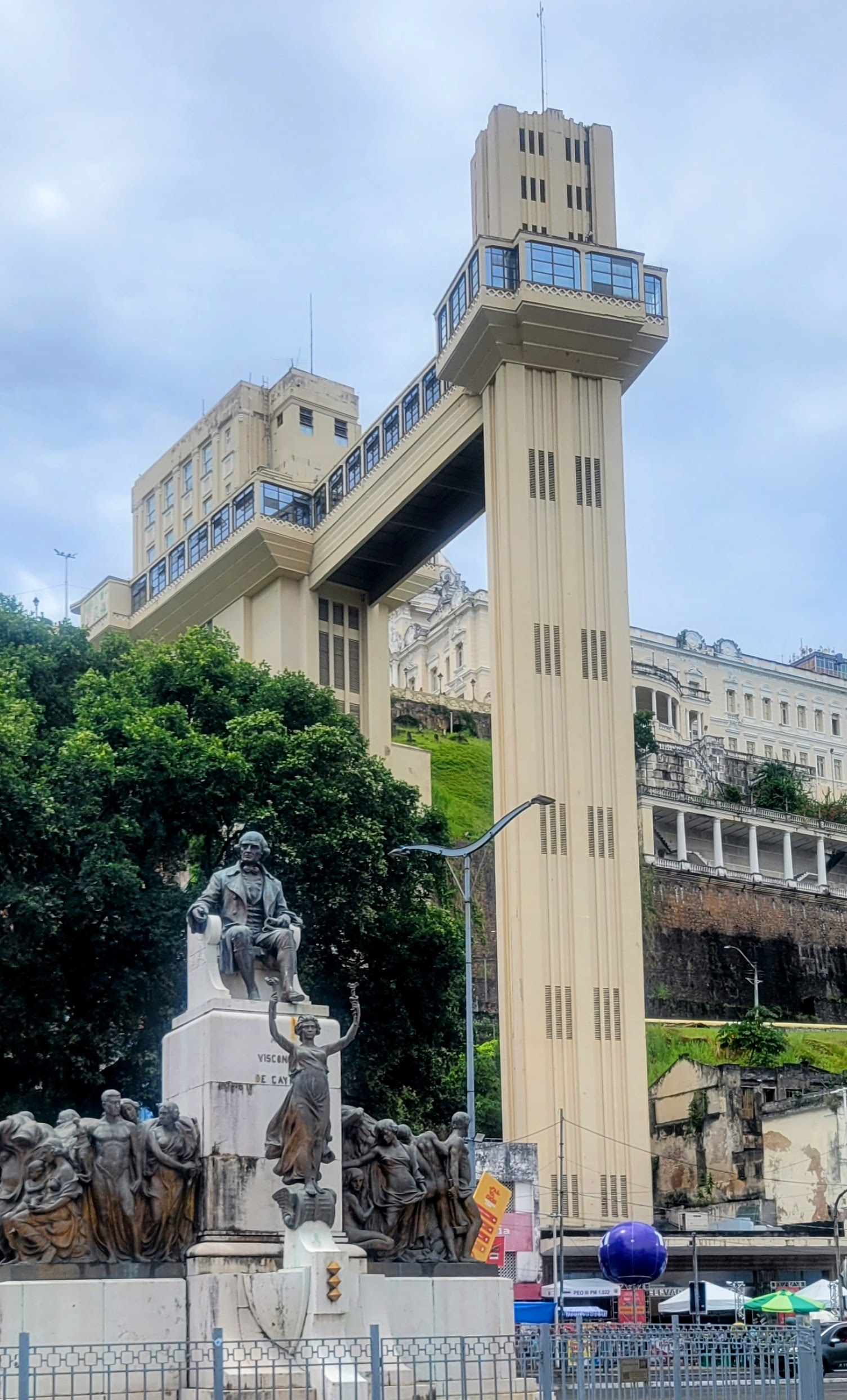
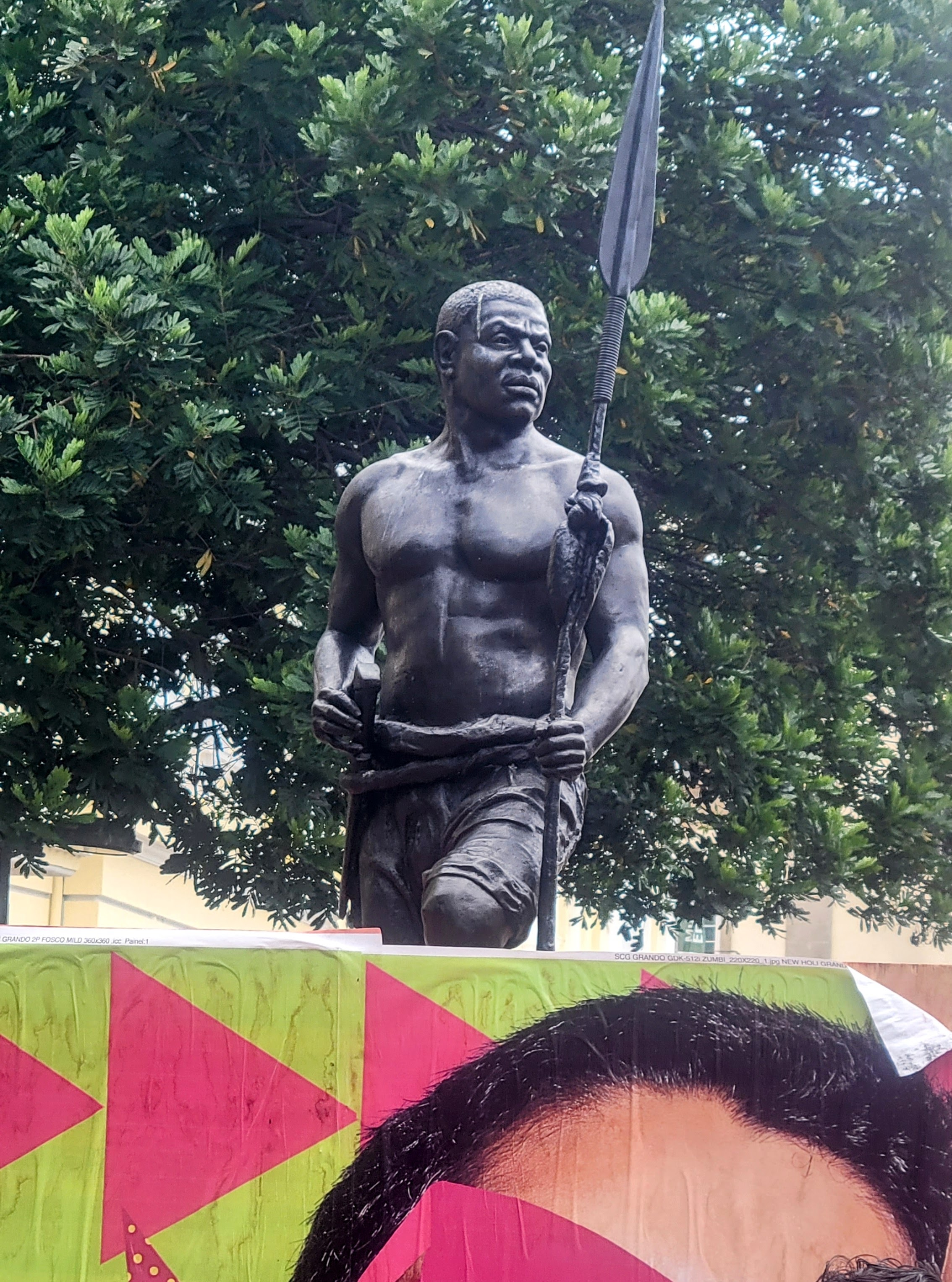
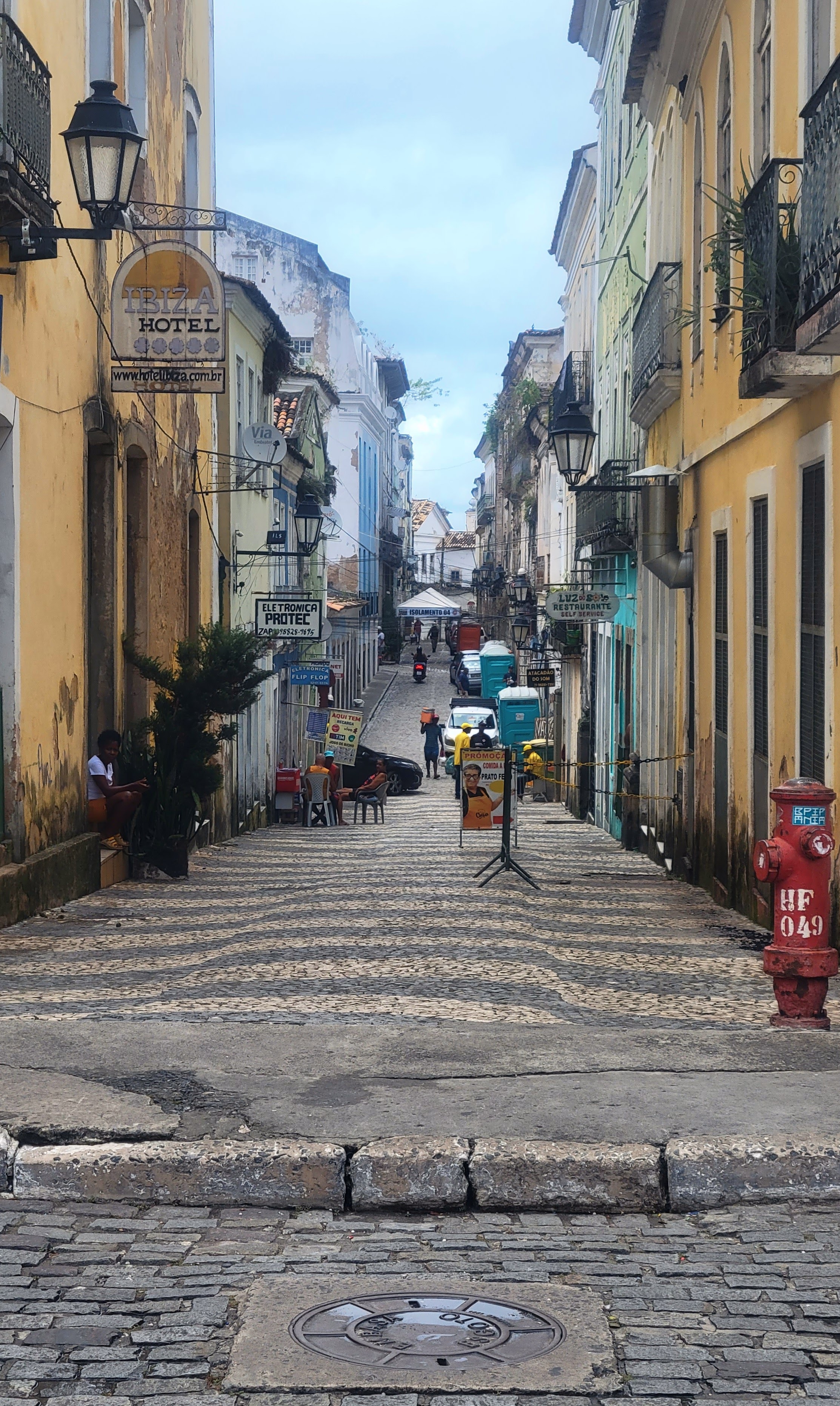
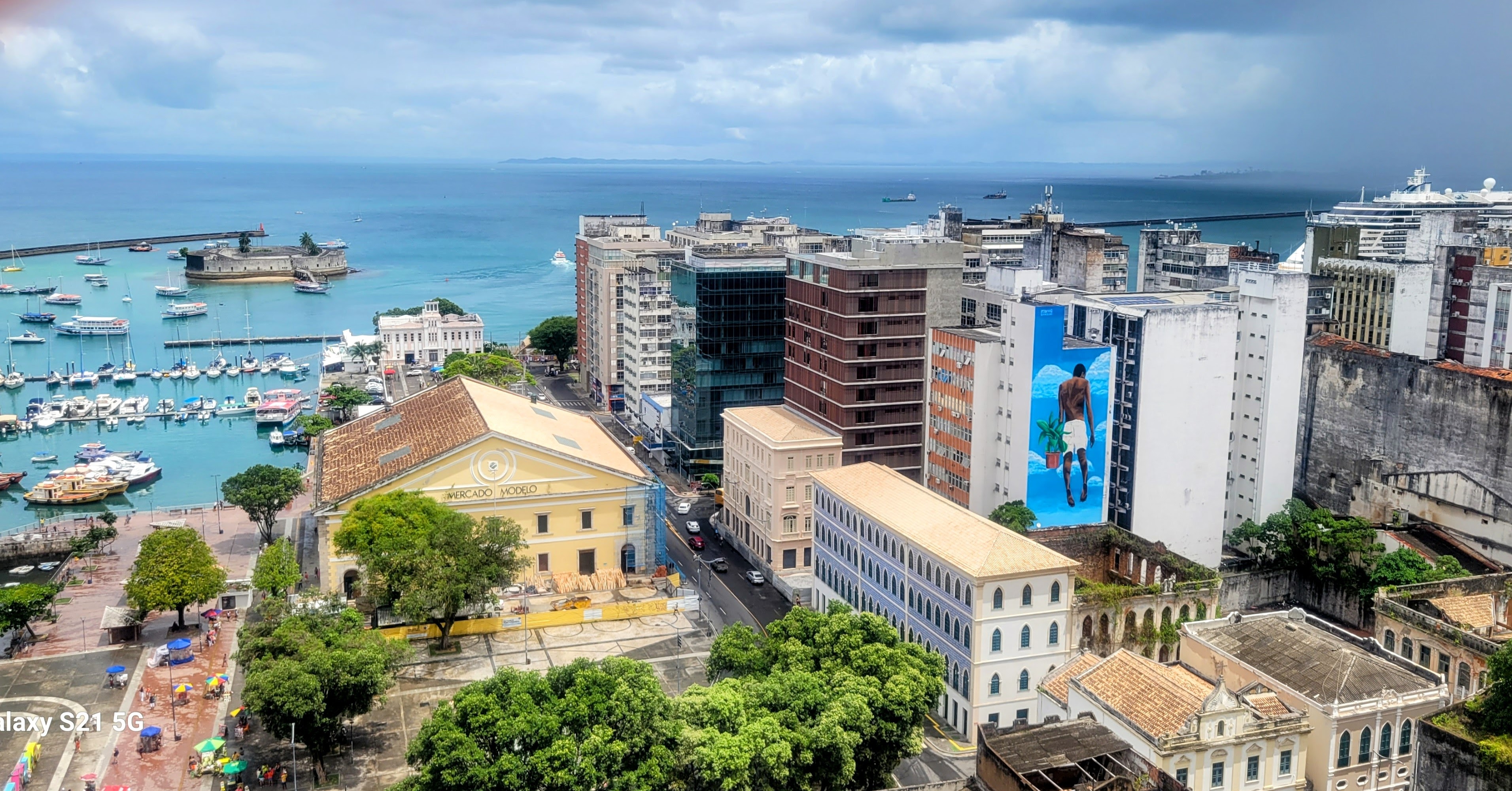
Salvador da Bahia Brazil Salvador is another of Brazil’s oldest cities. It was founded in 1549 and is a center of Afro Brazilian culture. 75% 0f the population identify as African or mixed race after 500 years of inter-racial marriage. The historic city center is a UNESCO World Heritage site. It is also another big Carnival city. While we were there it was crowded and all monuments, churches and most tourist sites were seriously boarded up to prevent damage from unruly crowds. There was a large police presence and yet many of our fellow cruisers lost their phones to thieves and at least one was assaulted and lost a necklace. We were all warned not to display any jewelry but still we’ve never seen so much street crime in any other port. Police did nothing. Having said all that, Salvador is a beautiful old city we wish we could’ve seen some other time of year. We remained docked here until 11PM but no one ventured out in the evening when the streets were full of homeless and beggars. Not as dirty as Rio but close.
Elevator from lower city to upper city
Salvador is another big Carnaval city
All monuments and churches boarded up during Carnaval
Beautiful colonial streets and architecture
Salvador port from upper city
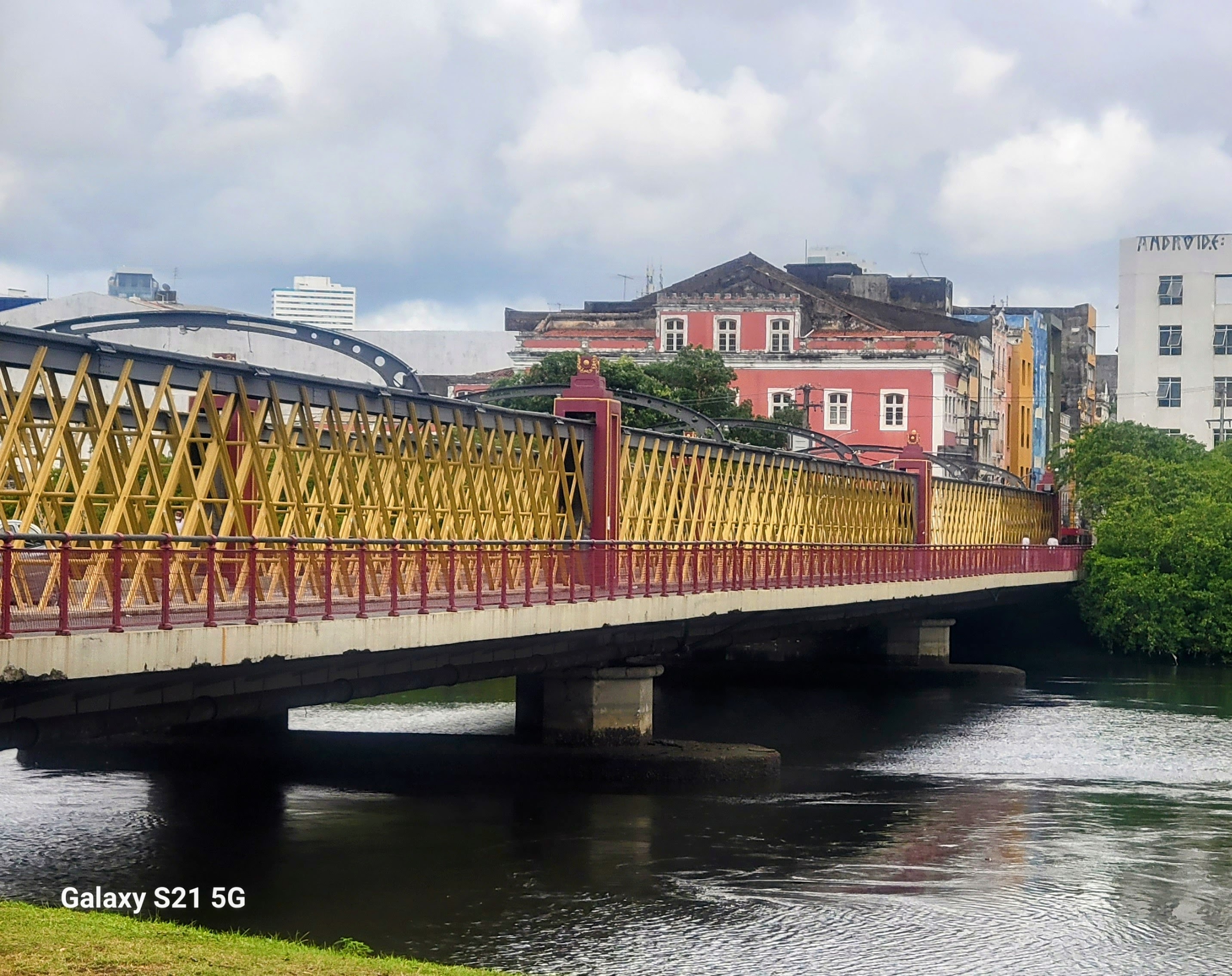
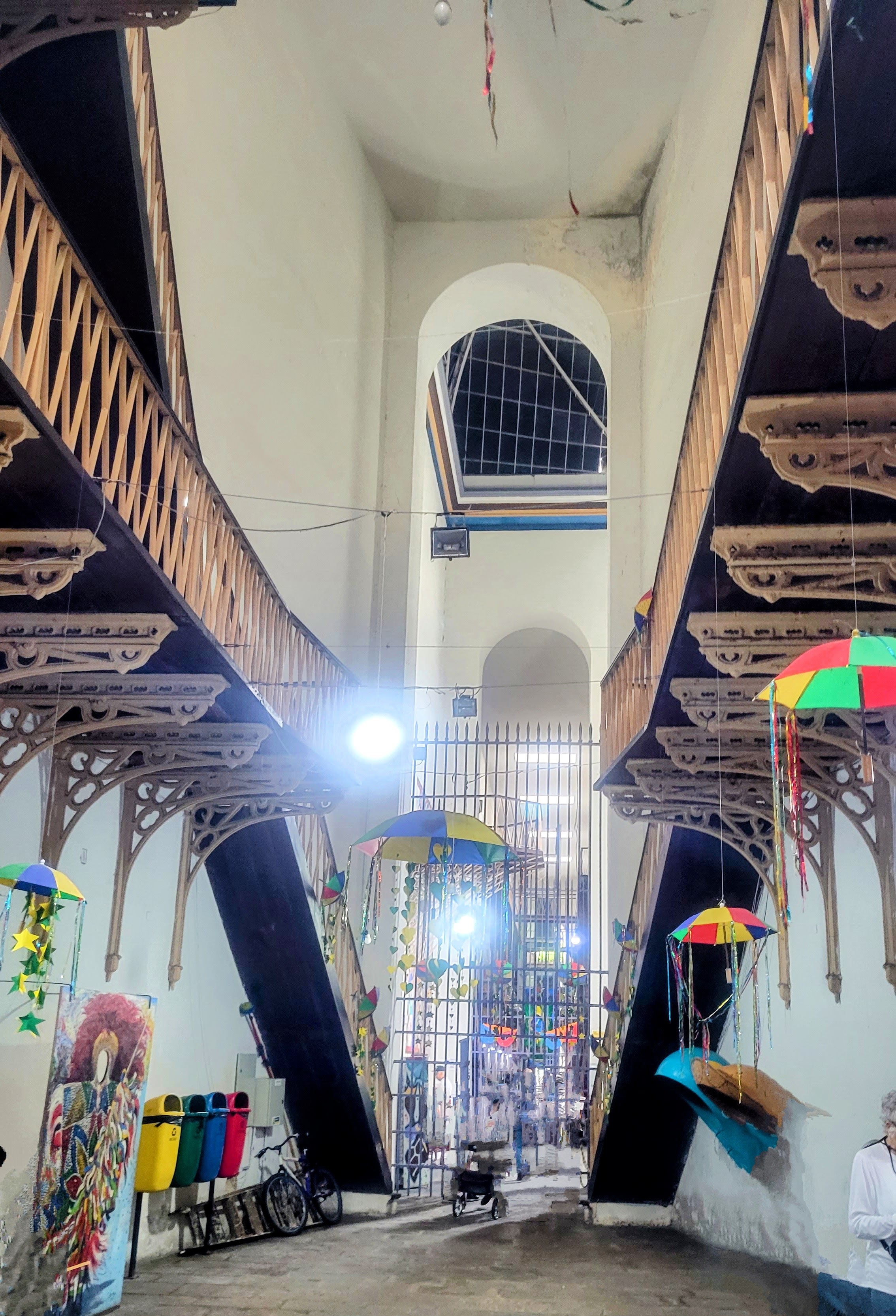
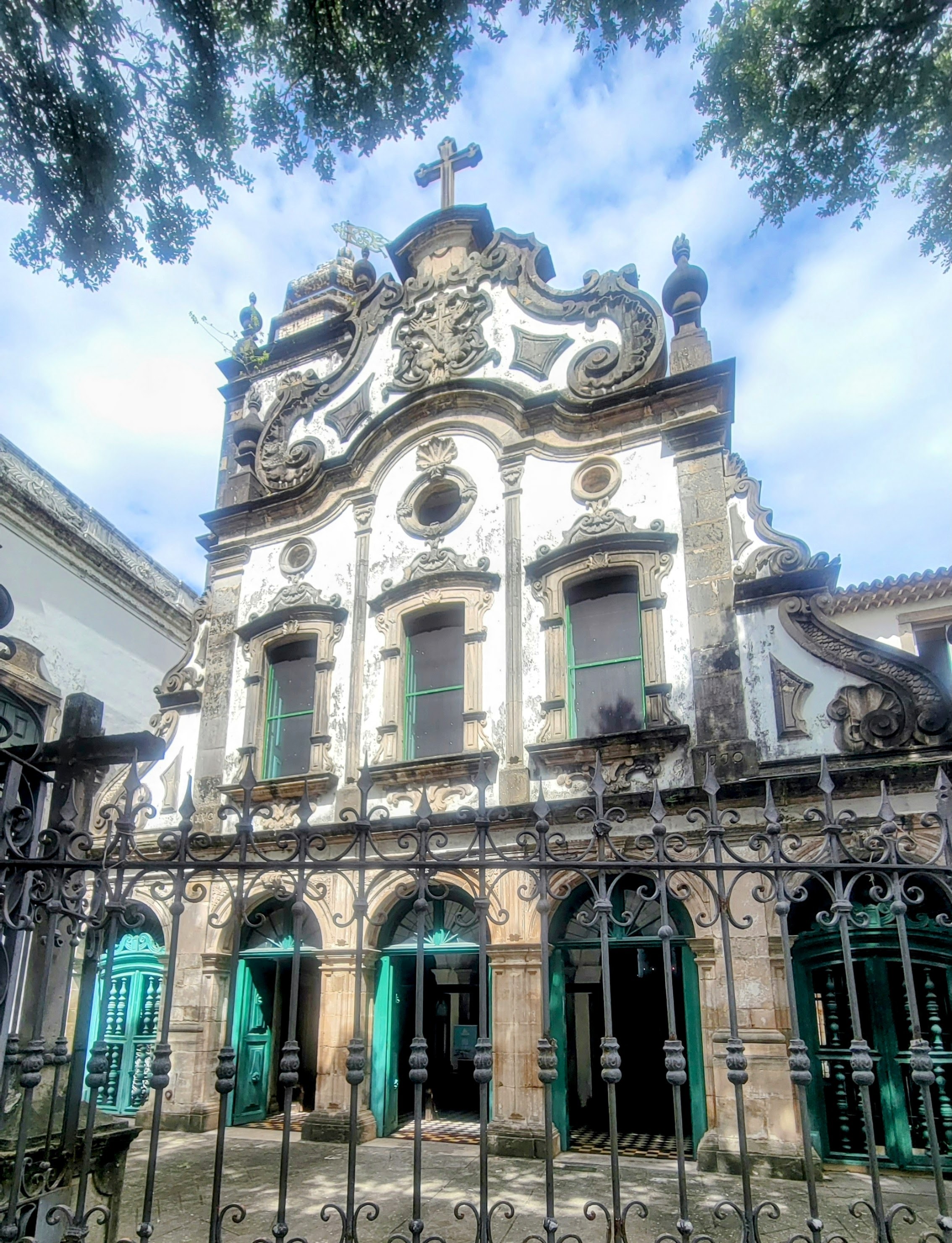
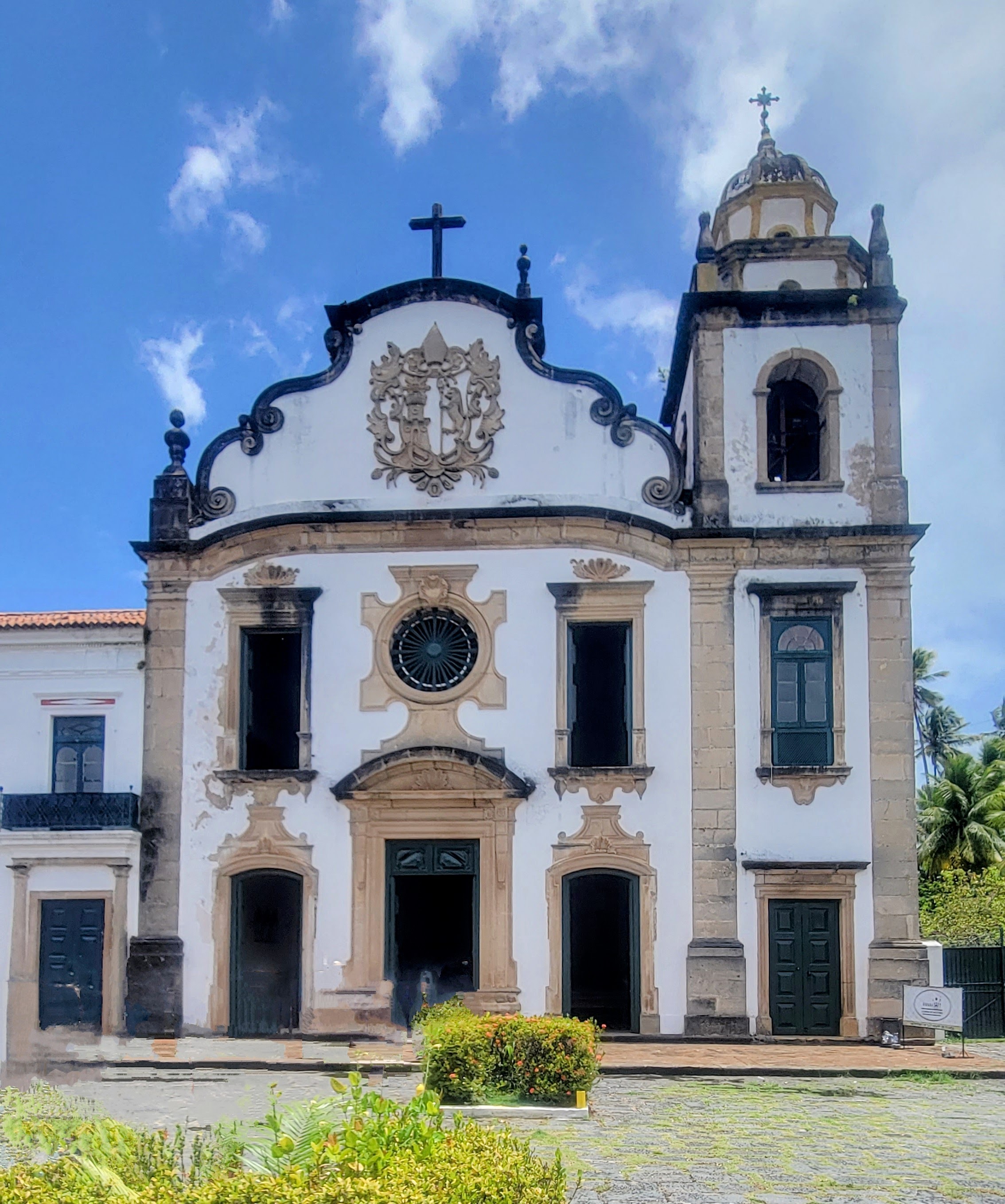
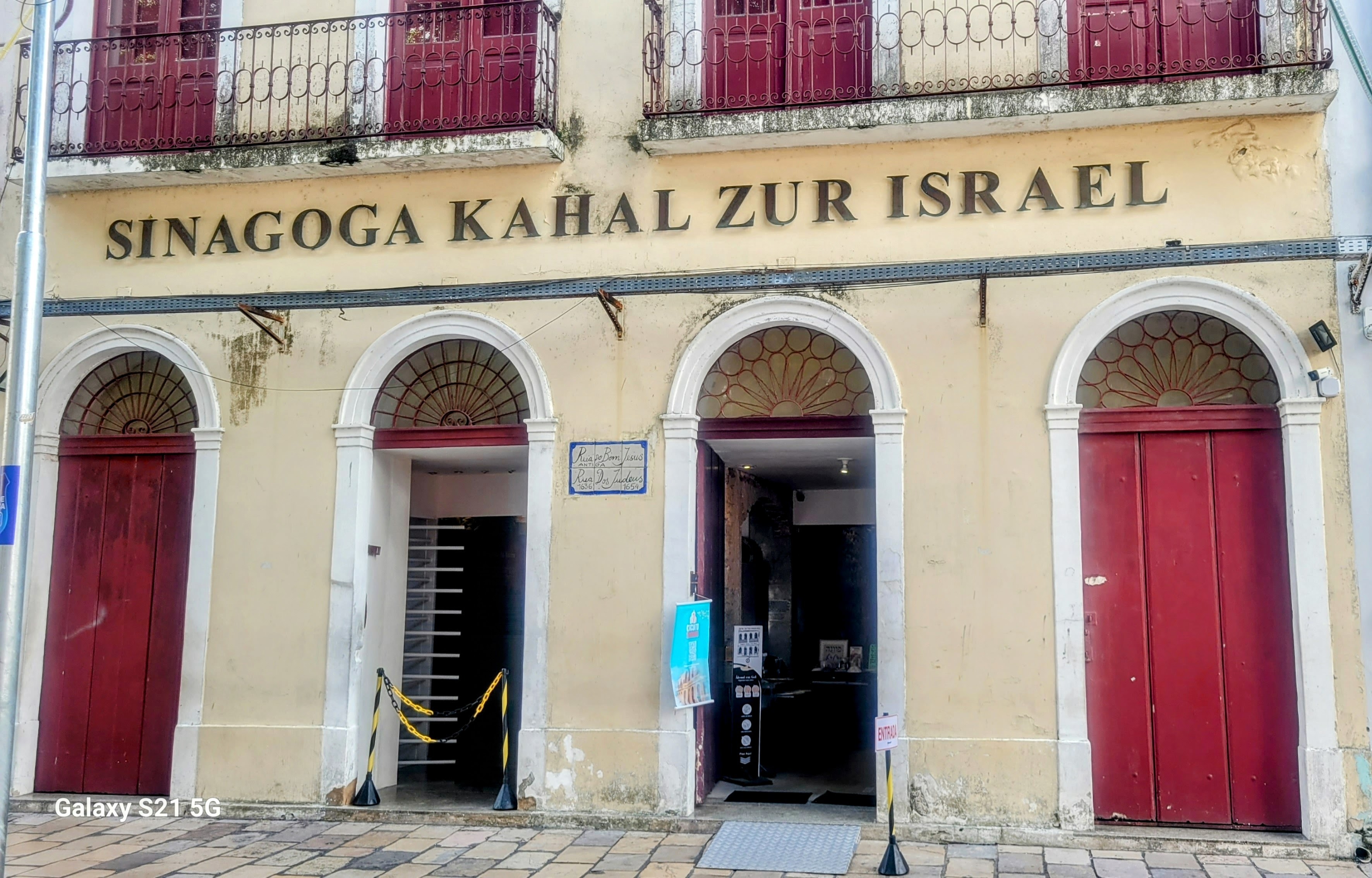
Recife Brazil Recife is the largest city in Northeast Brazil. Its population is over 4 million. The city center has a craft market in an old prison and many beautiful colonial buildings but we were warned not to walk around too much. Near the port we walked to Bon Jesus St said to be among the prettiest in Brazil. While there we saw a synagogue established in the 17th century during a period of Dutch rule. It was the first synagogue in the New World. When the Portuguese expelled the Dutch that synagogue moved to what became New York City, again the first in North America. We took a HAL tour which also included the nearby town of Olinda a UNESCO World Heritage Site.
Recife from Olinda
Recife has many rivers
Craft market in former prison
More beautiful colonial architecture
Church in historic Olinda
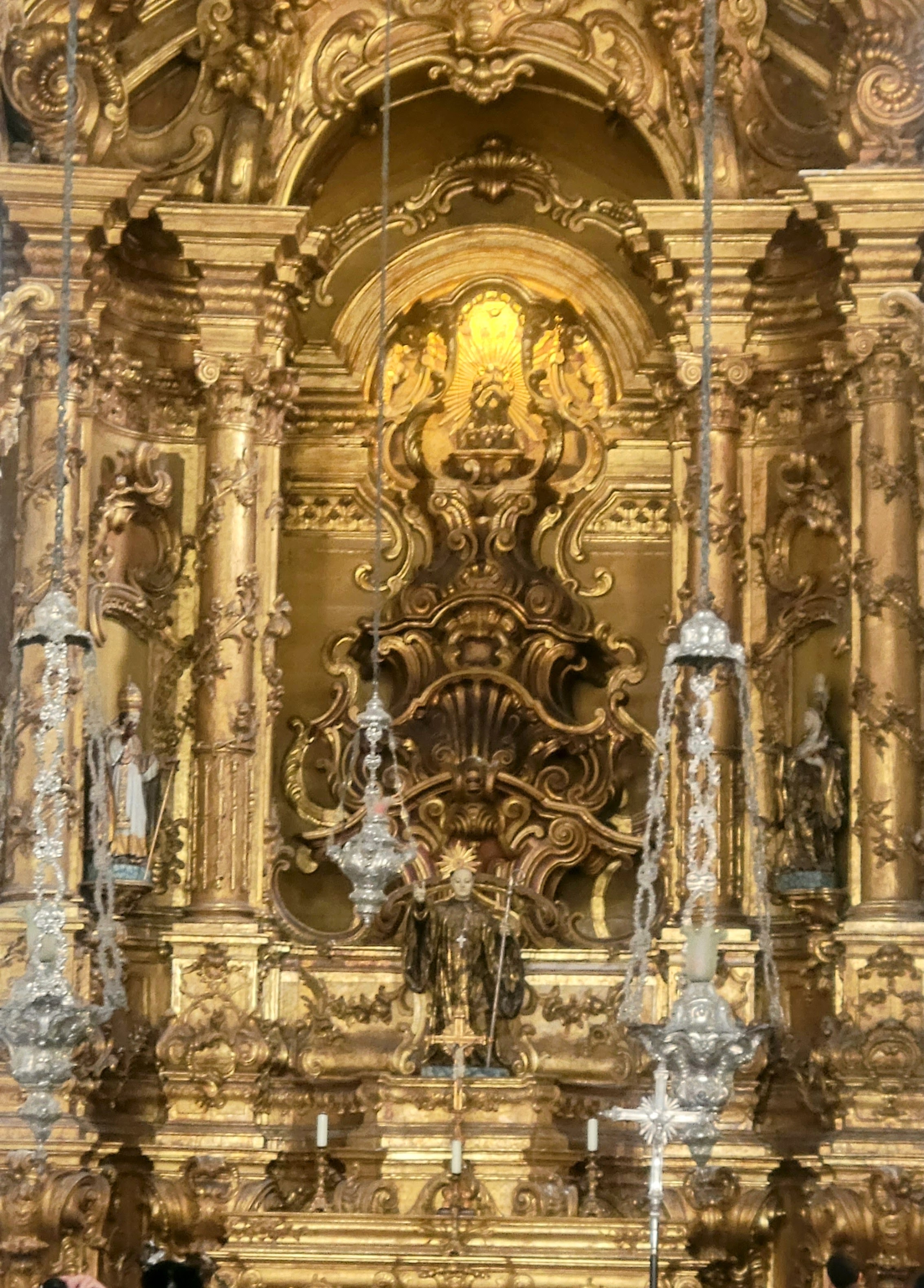
Ornate church interior
First synagogue in the New World
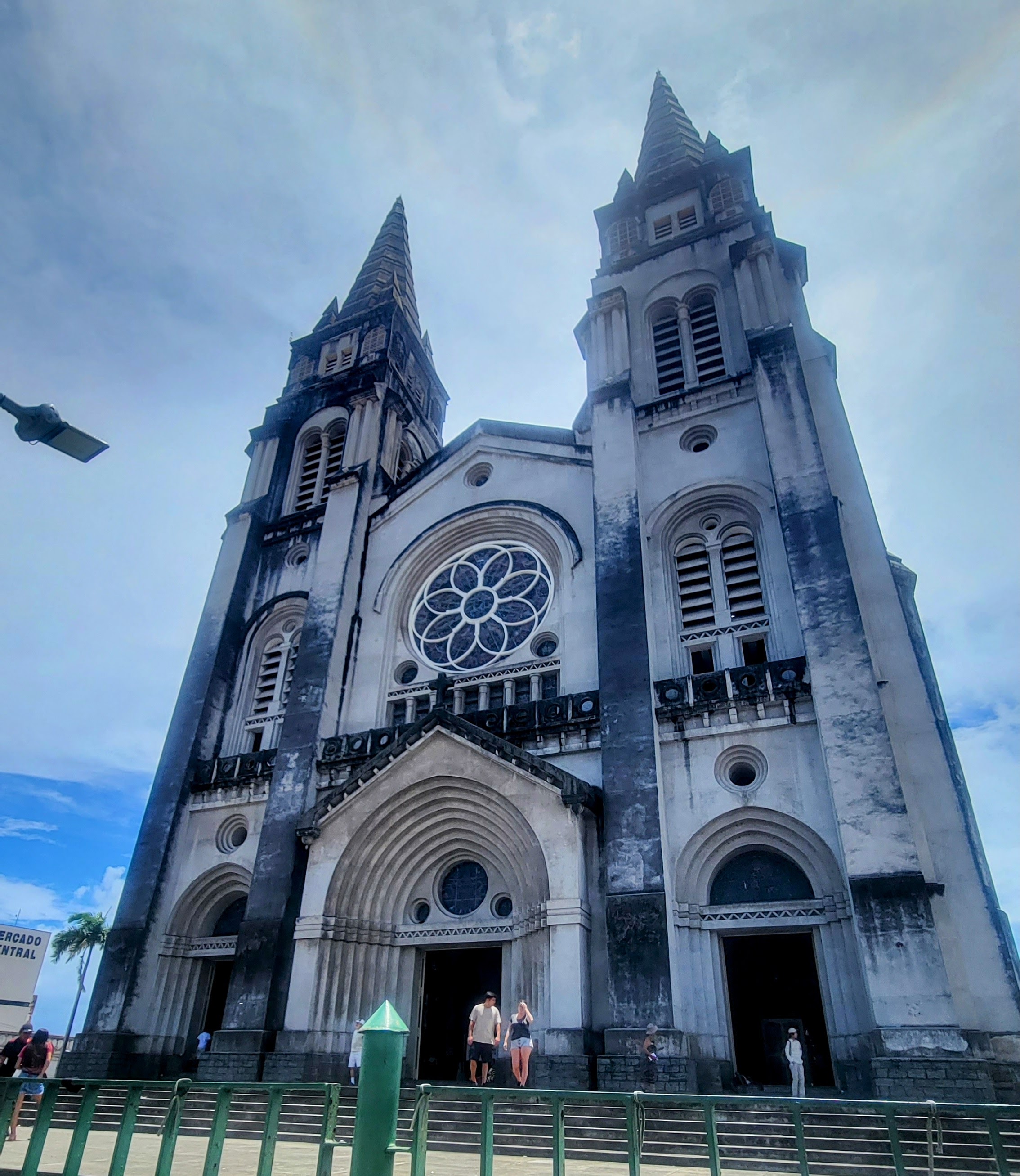
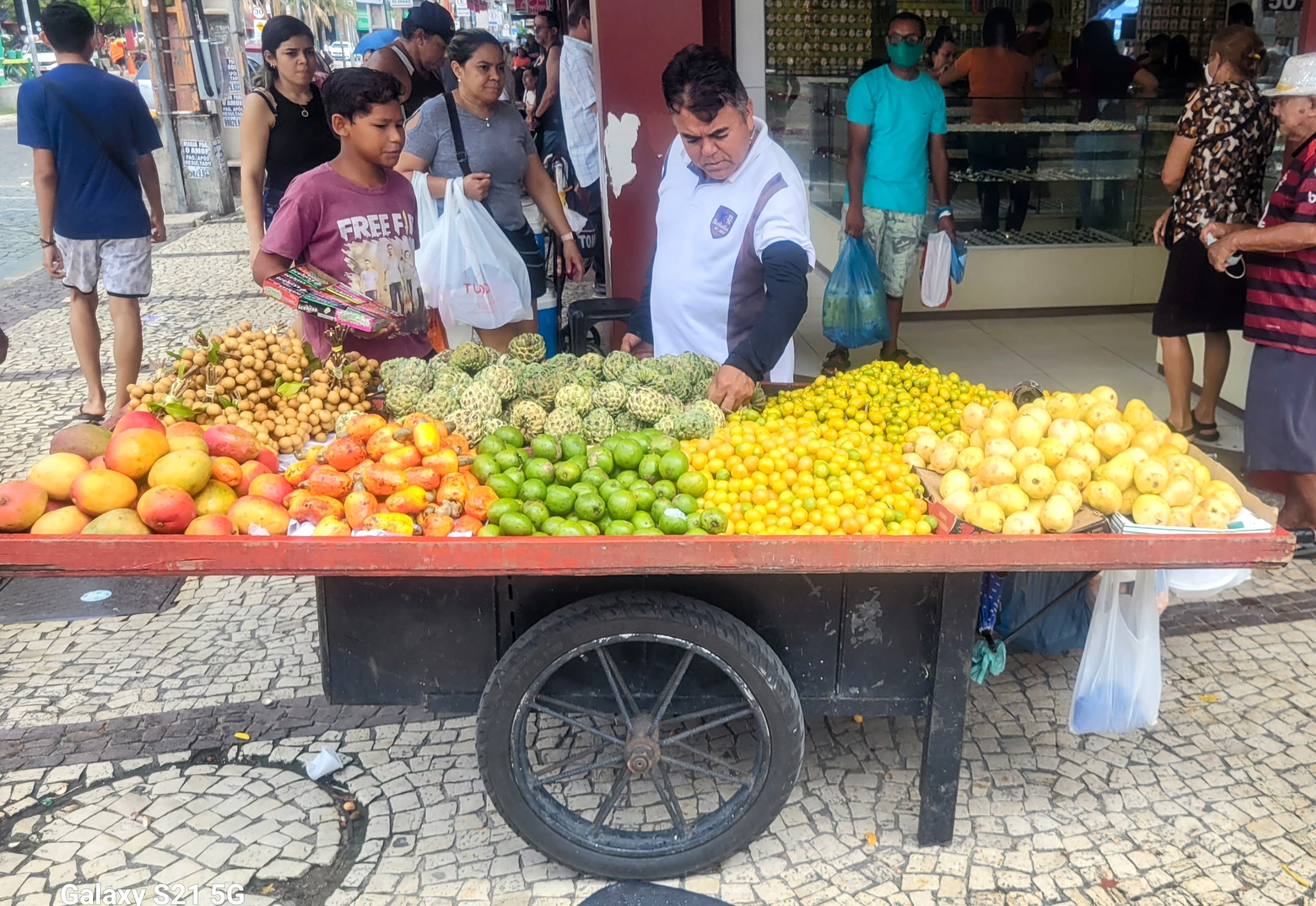
Fortaleza Brazil Another huge city most of us had never heard of. Fortaleza had a large craft market, cathedral, closed museum and shops. We had fun shopping for yarn and crochet hooks. We also bought brazil nuts and cashews.
Fortaleza cathedral
Typical Brazilian fruit cart
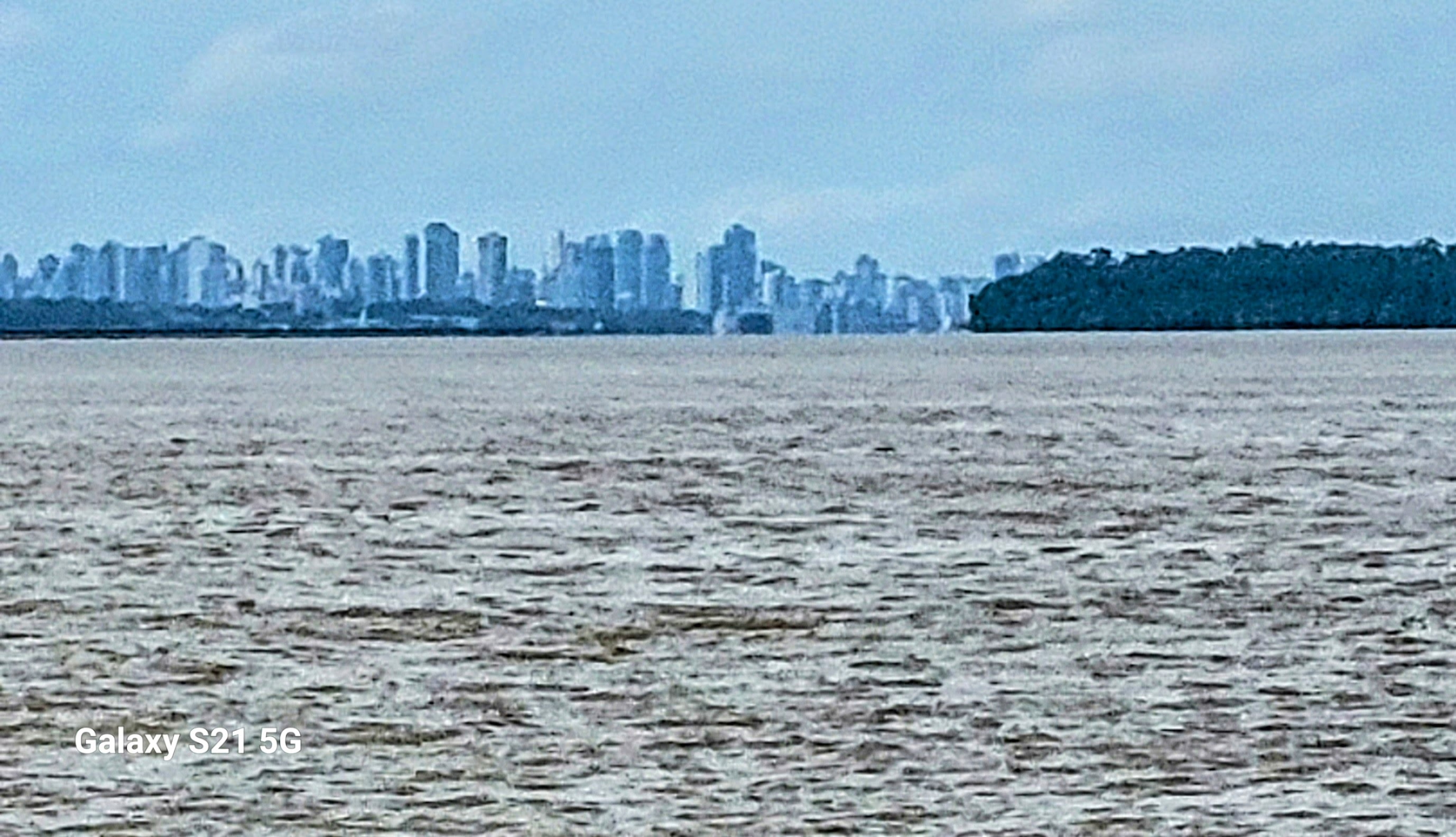
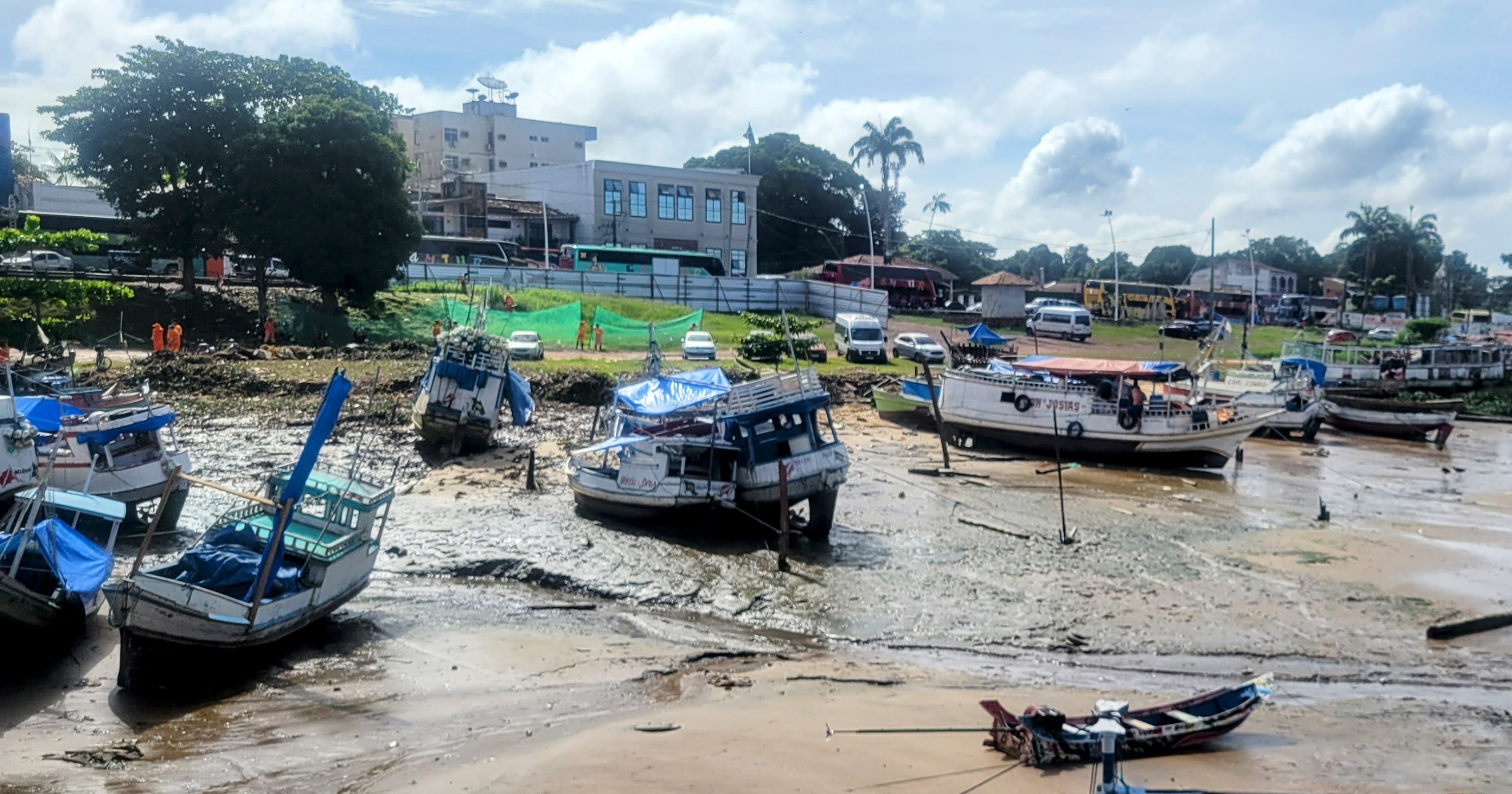
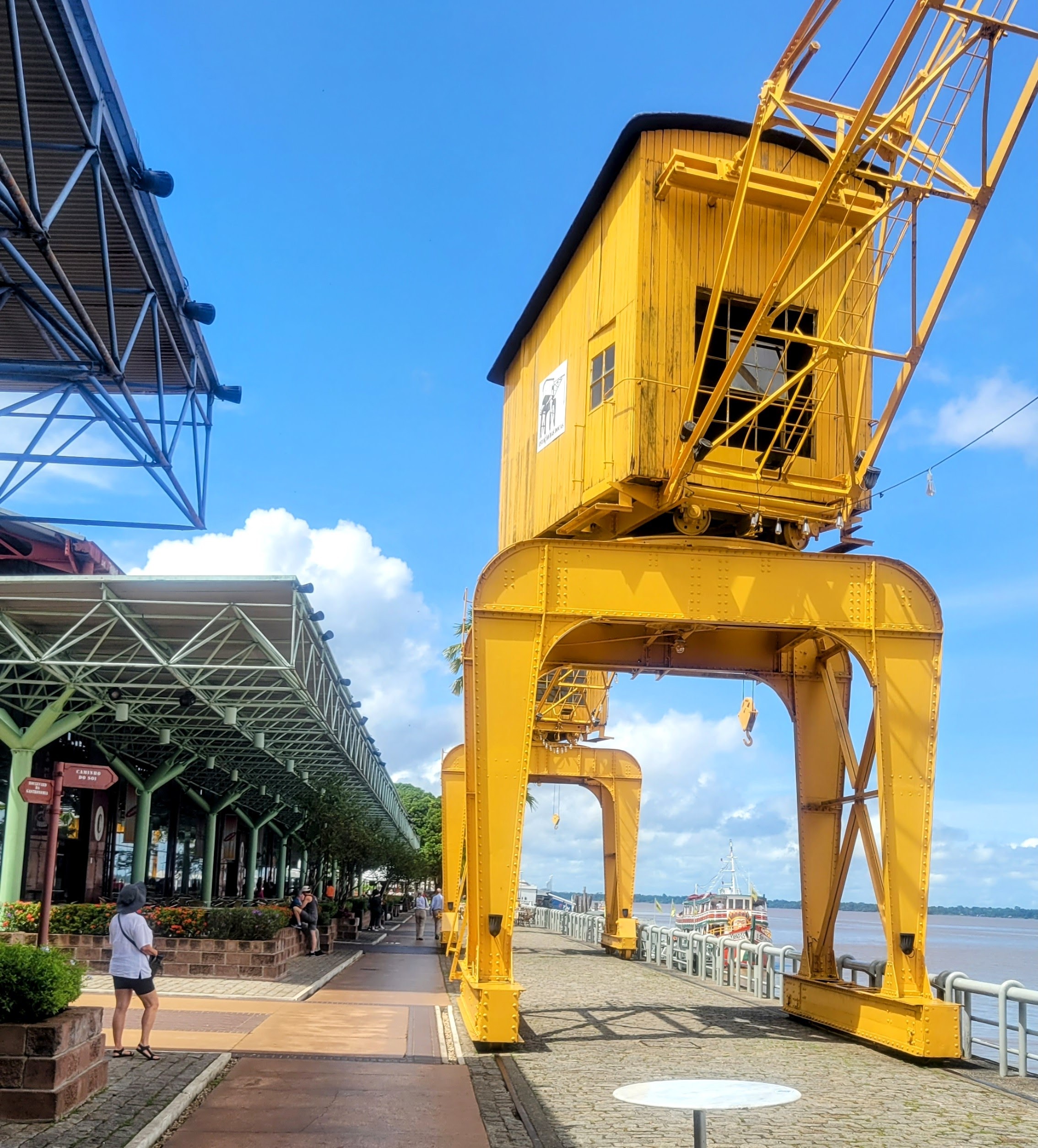
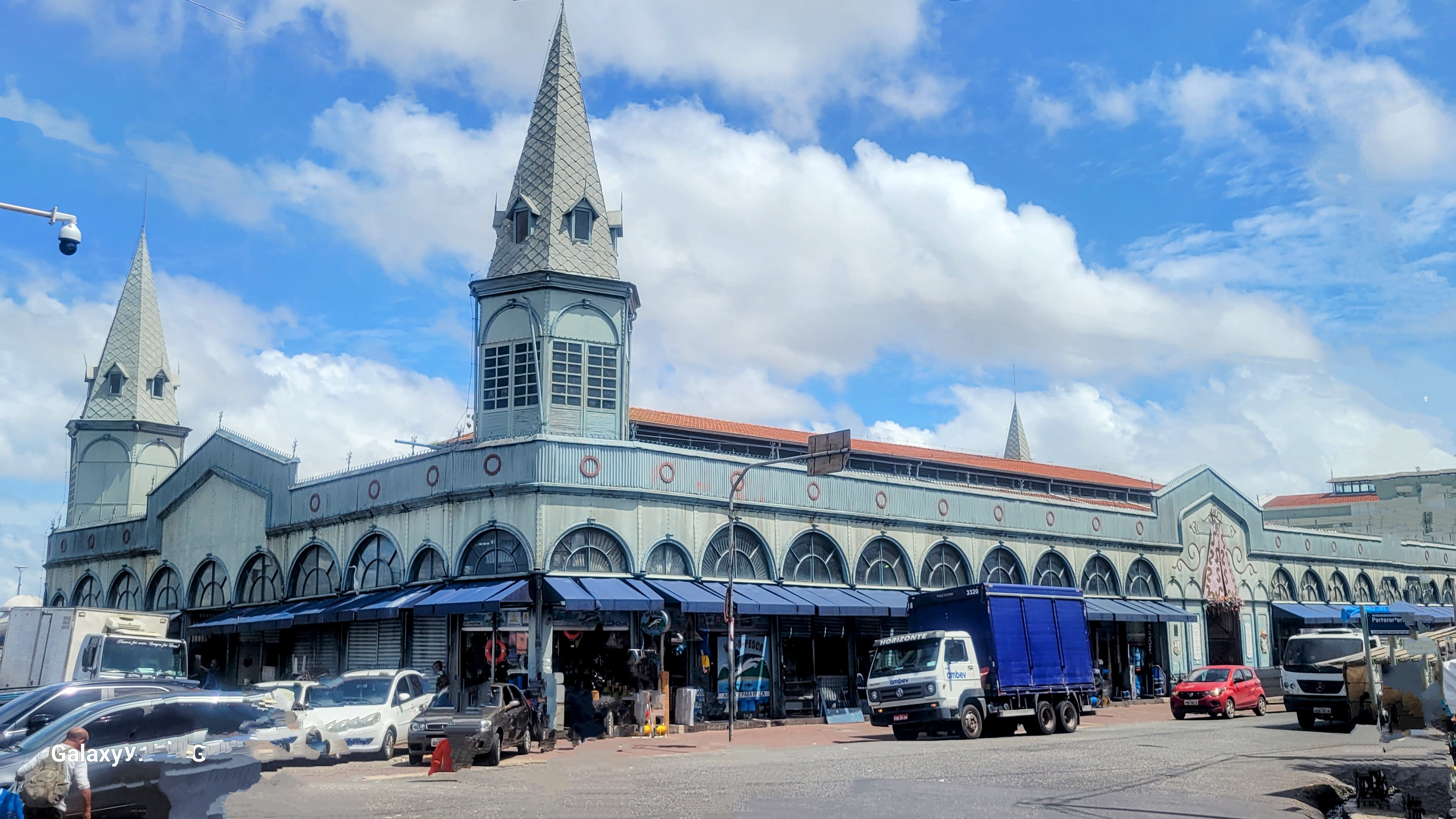
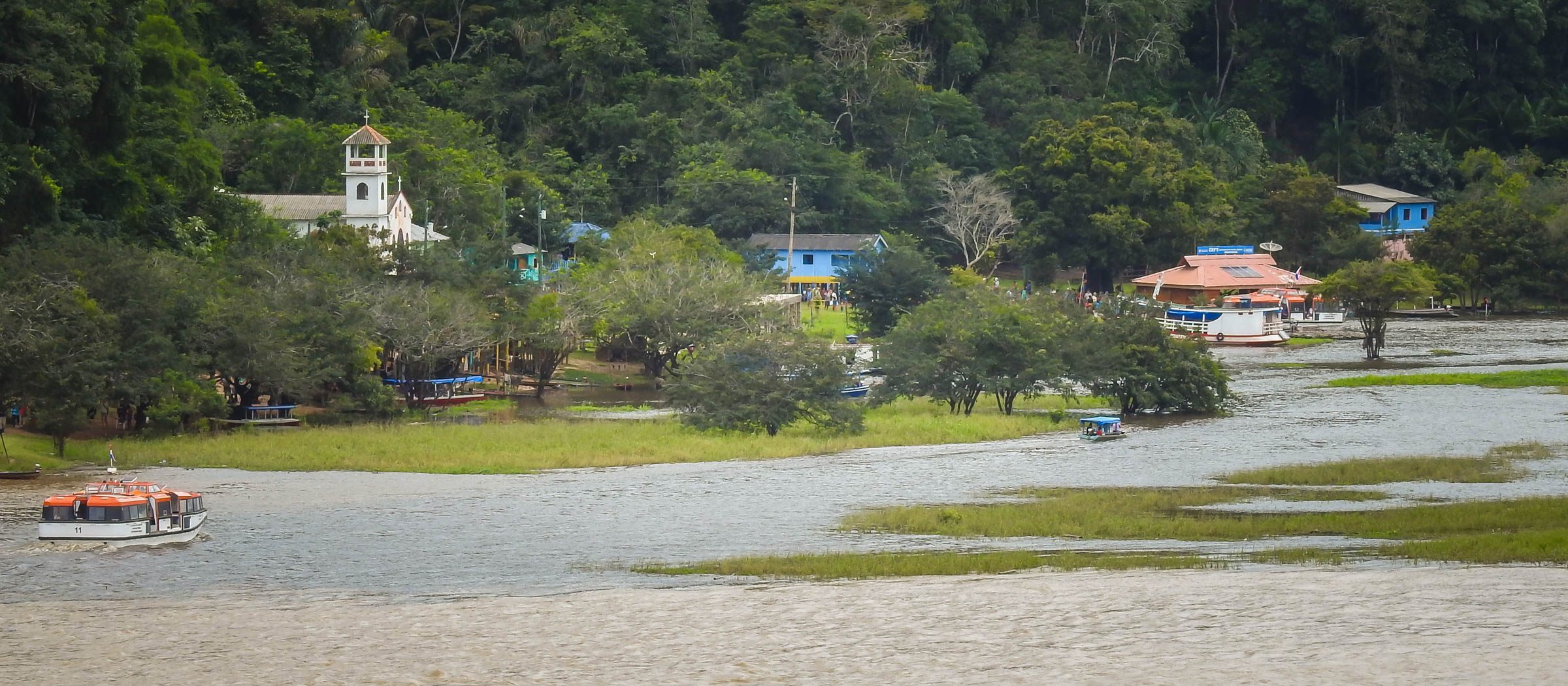
Belem Brazil This was our first port in the Amazon region. We actually had to anchor and tender into the port of Icoaraci to reach Belem via an hour shuttle bus. Icoaraci itself was a very rough town. We literally walked a gauntlet from the tender to the bus. Docas Station in Belem is very nice with restaurants and cafes. Mercado Ver O Peso is huge and historic. There is an old fort and art museum. Everything is geared to the river and the countless boats coming and going.
Belem from our tender
Icoaraci at low tide
Docas Station
Ver O Peso or See the Weight market
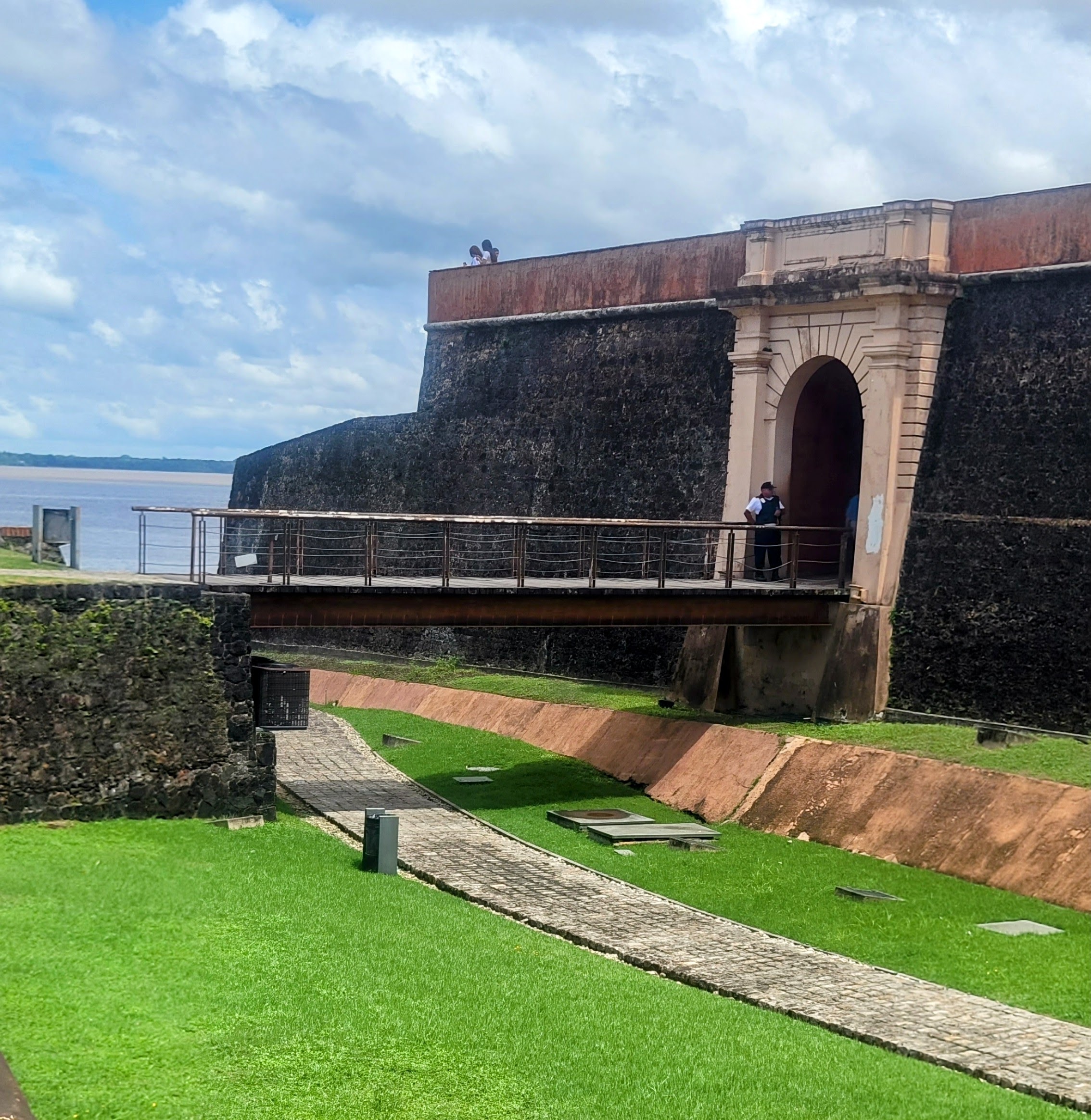
The fort at Belem
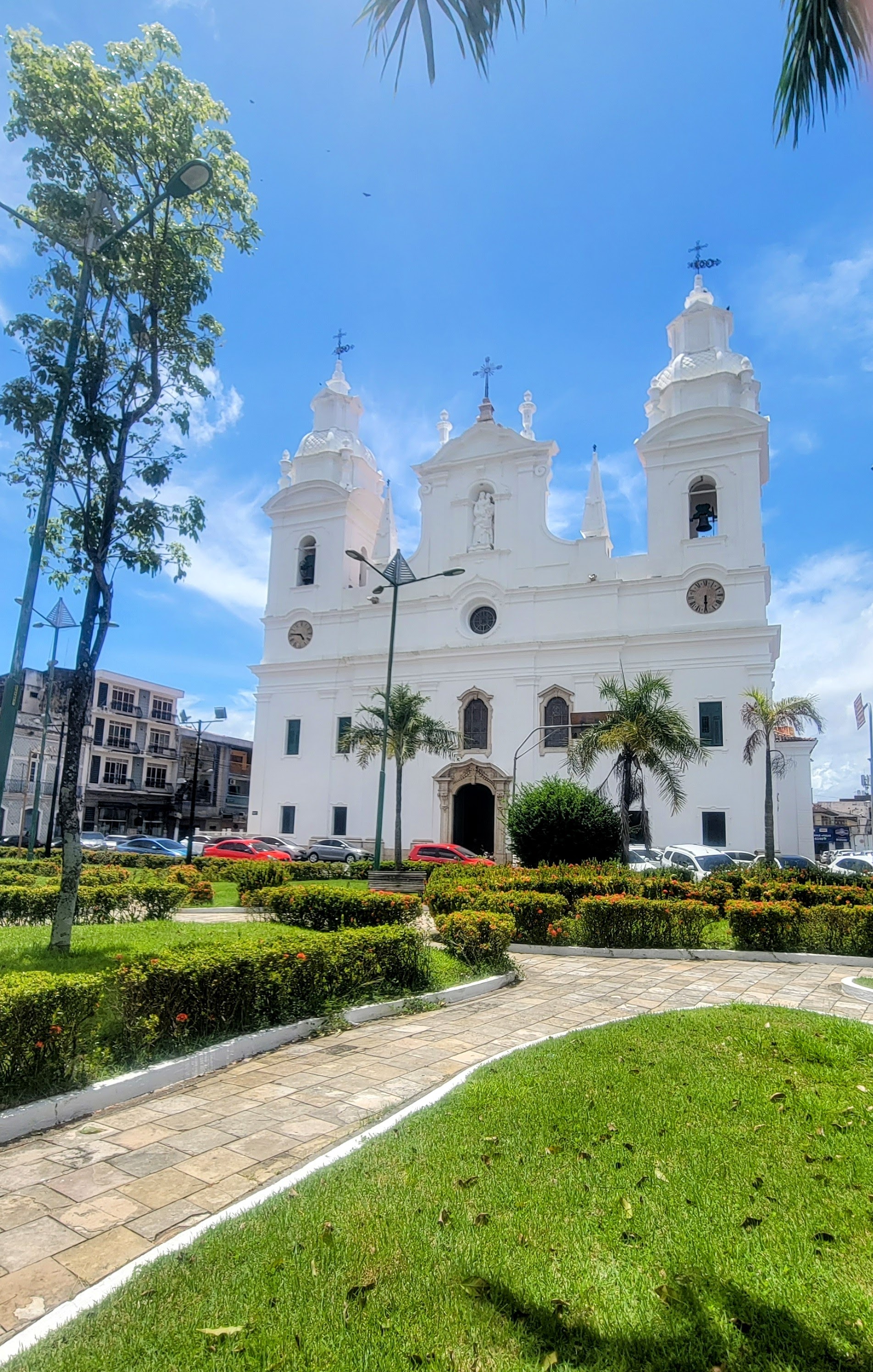
Belem Cathedral
Its all about boats and the river
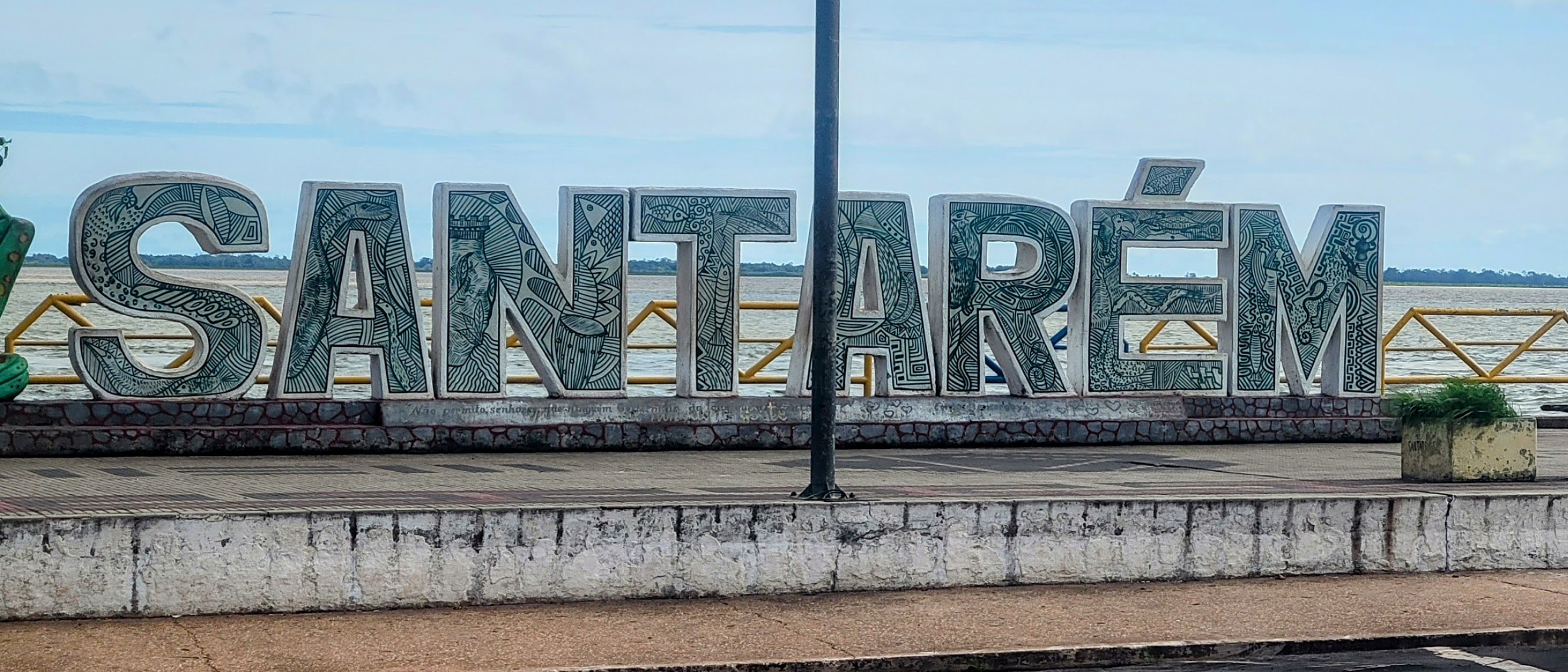
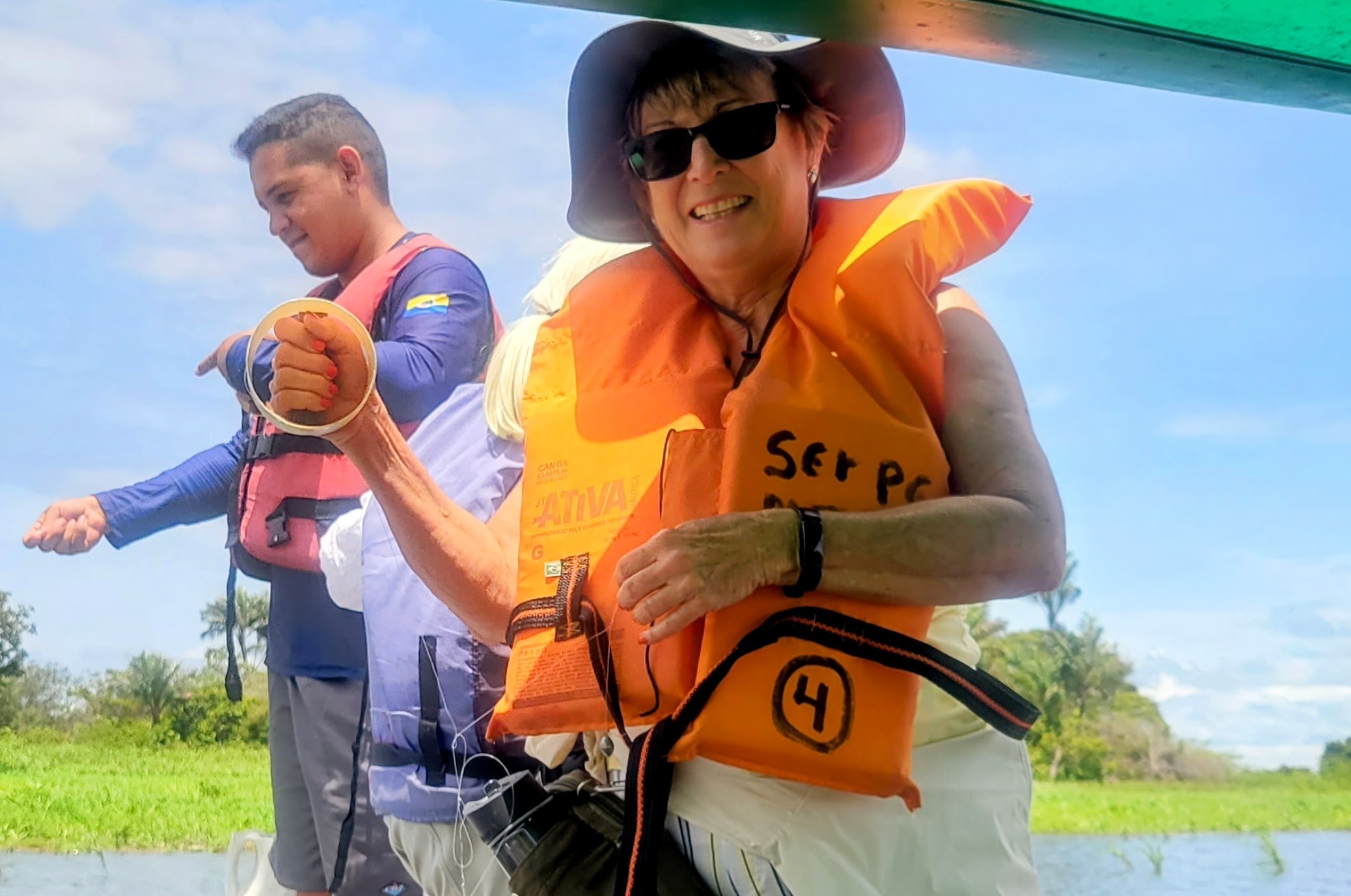
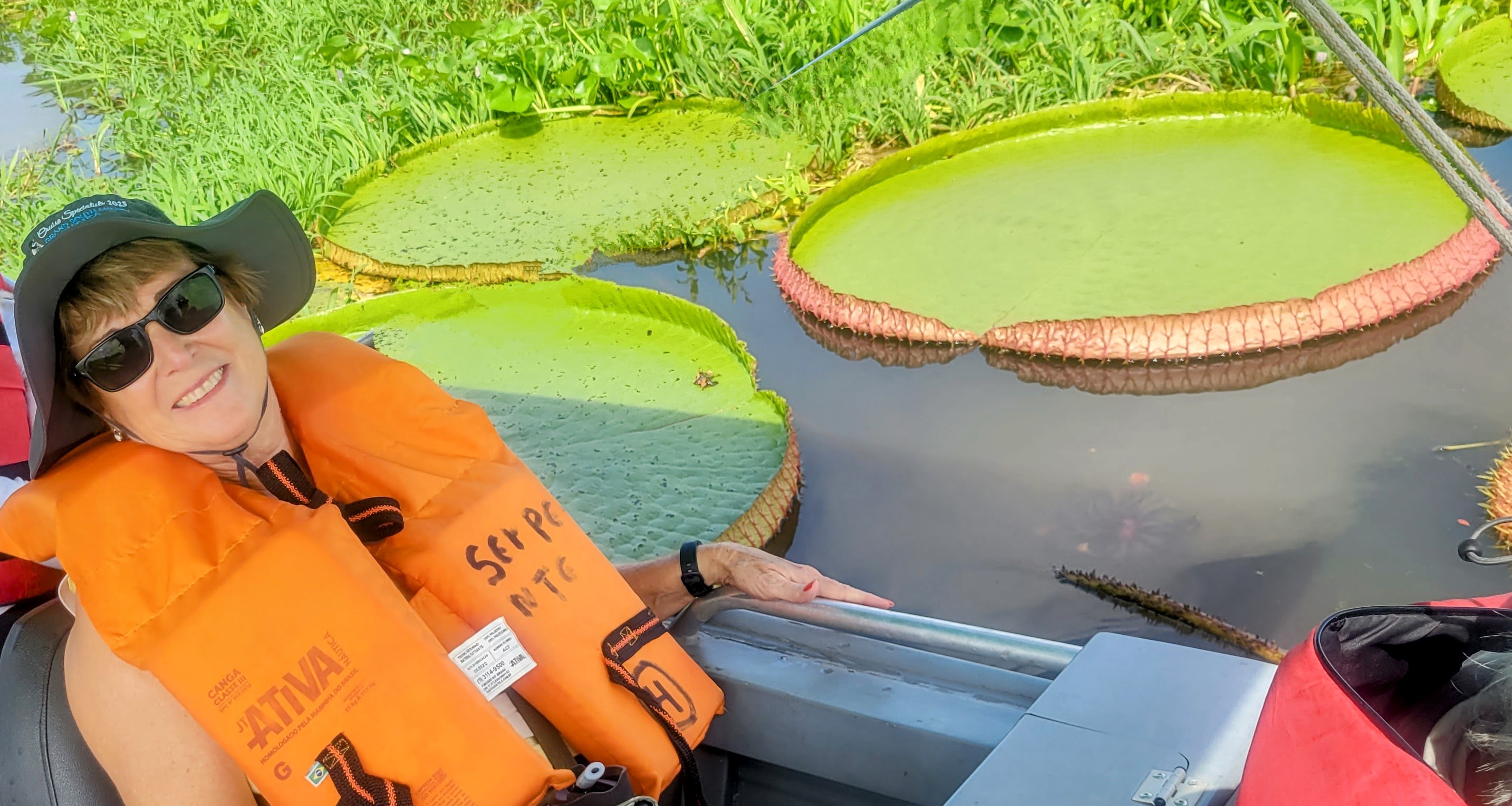
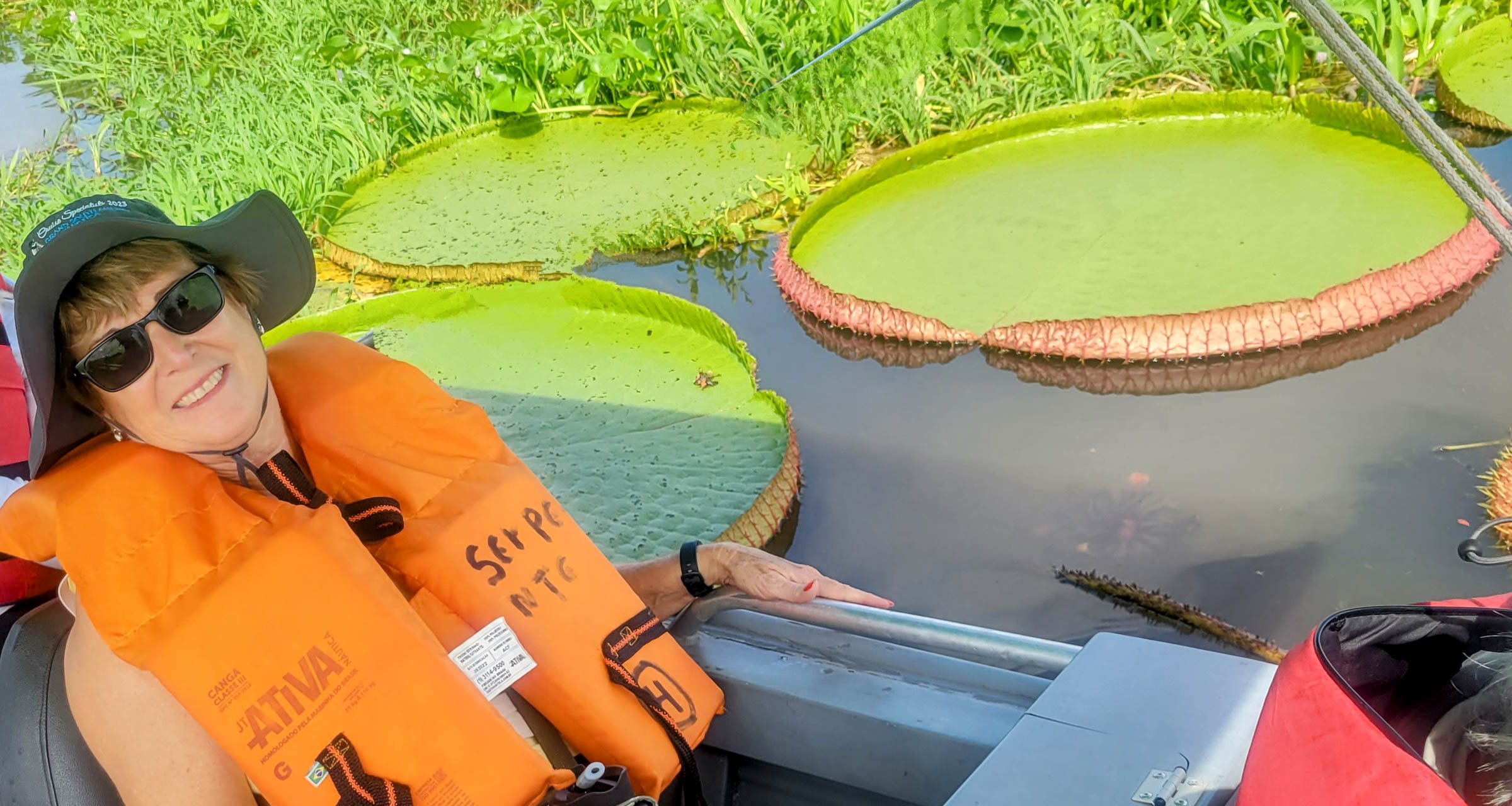
Santarem Brazil Santarem is a city right on the Amazon. Here we joined 6 others for a small boat tour of the area. We saw villages built on stilts, pink dolphins, giant water lilies and the meeting of the waters where the Amazon and its tributary flow side by side without mixing for miles. We fished for Piranha (didn’t catch any). It was great fun.
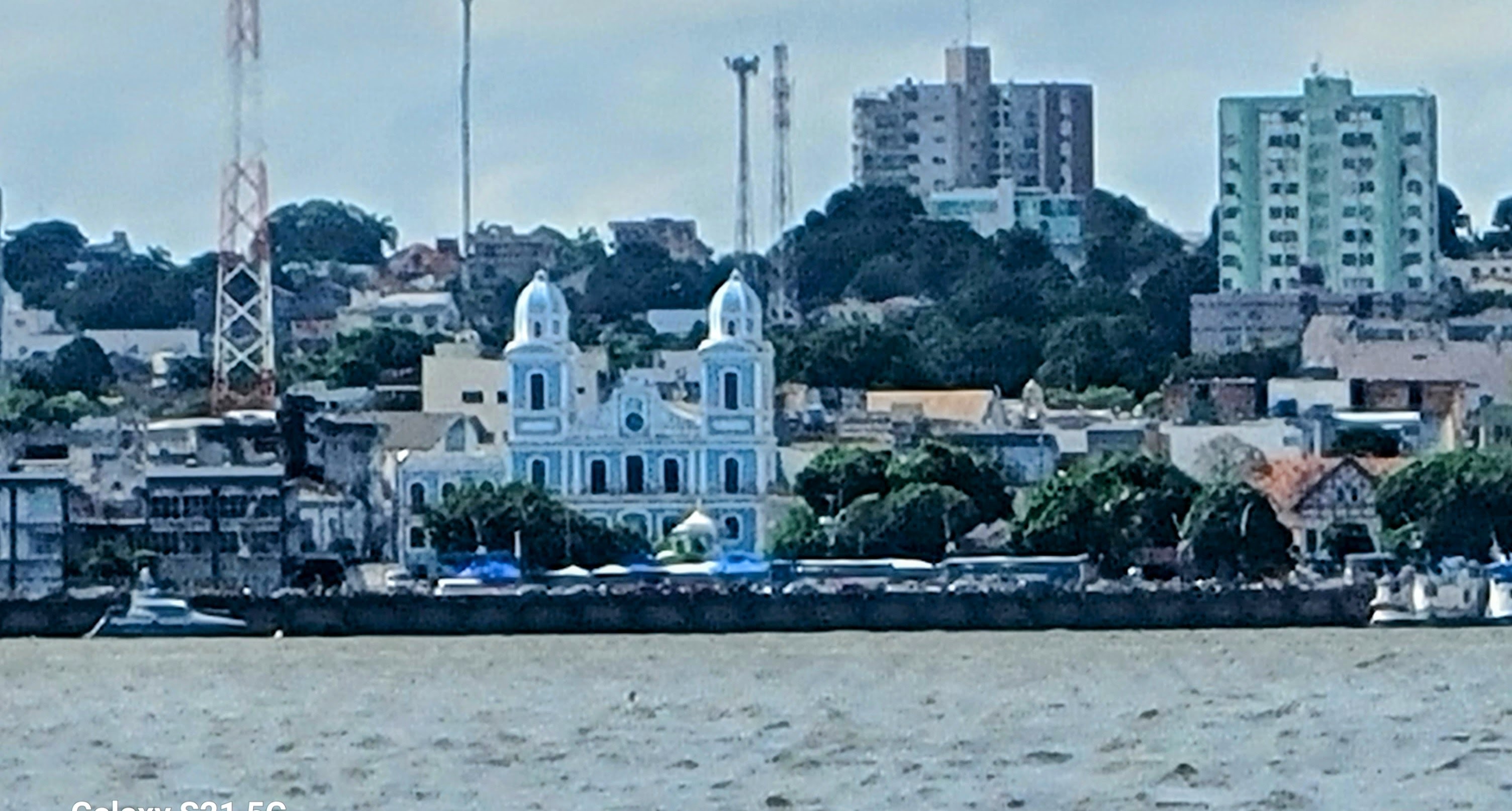
Santarem from the Amazon
Fishing for piranha
Giant water lilies from our small boat
The muddy Amazon and its tributary not mixing for miles
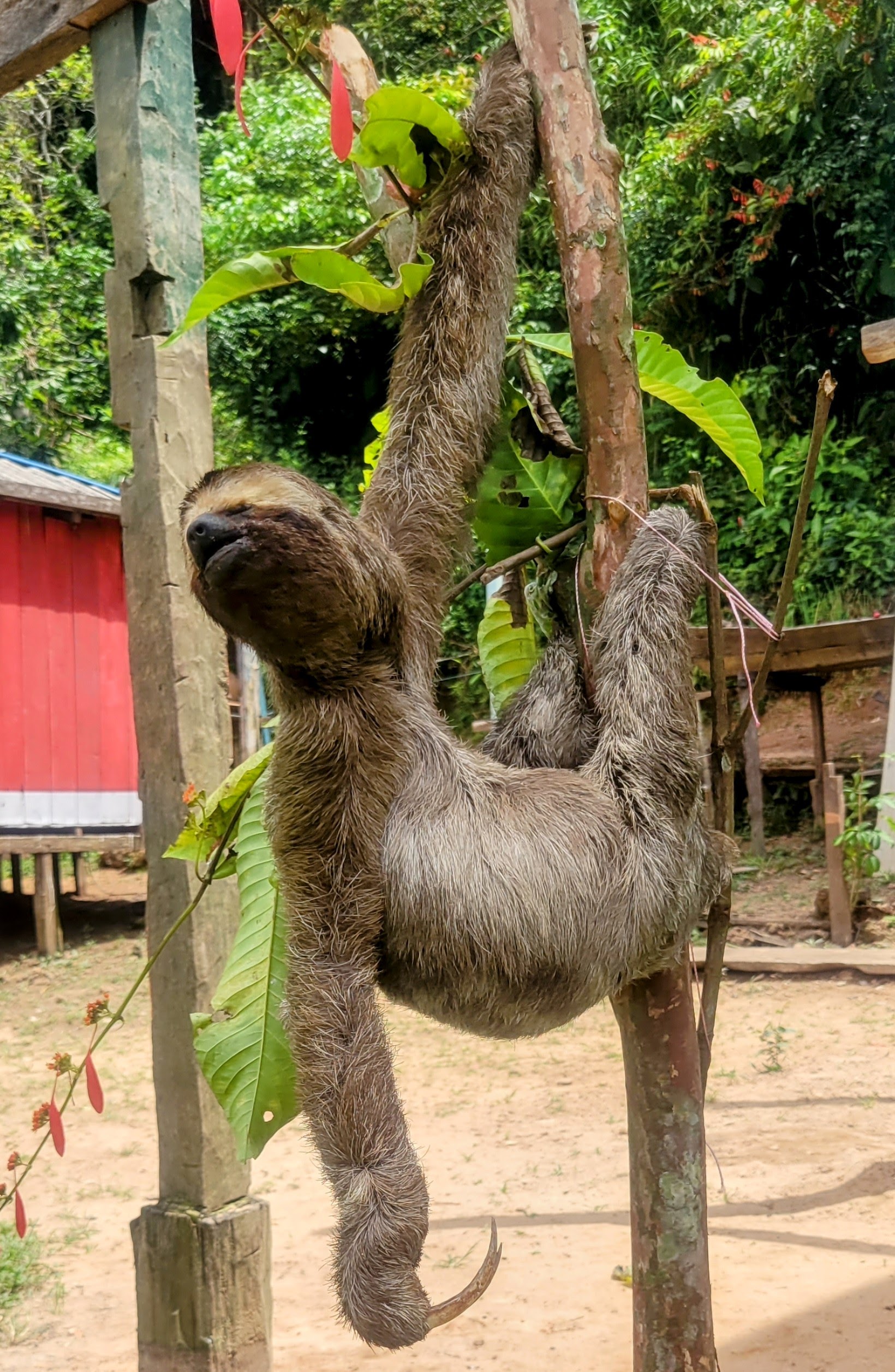
Boca da Valeria Brazil This was probably the most unusual stop of the entire cruise. Our giant ship anchored just off a small river and tiny village miles from any city. The native people shared some pets and costumes. Here we took an even smaller boat up the smaller river past more water lilies and homes. This entire world is river based and most of these people will never drive or fly, but they may have smartphones soon.
Boca da Valeria
Locals shared a pet sloth
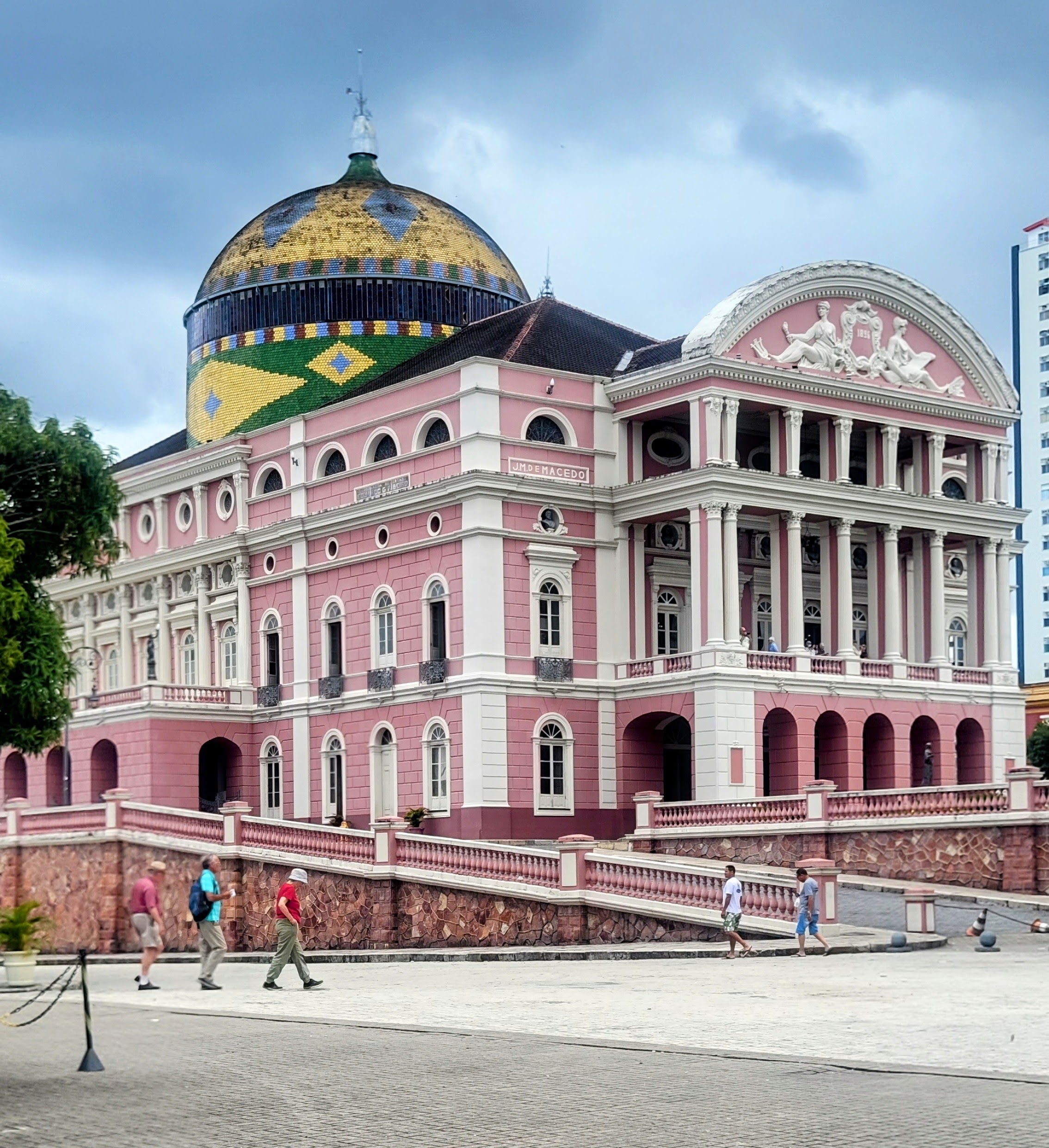
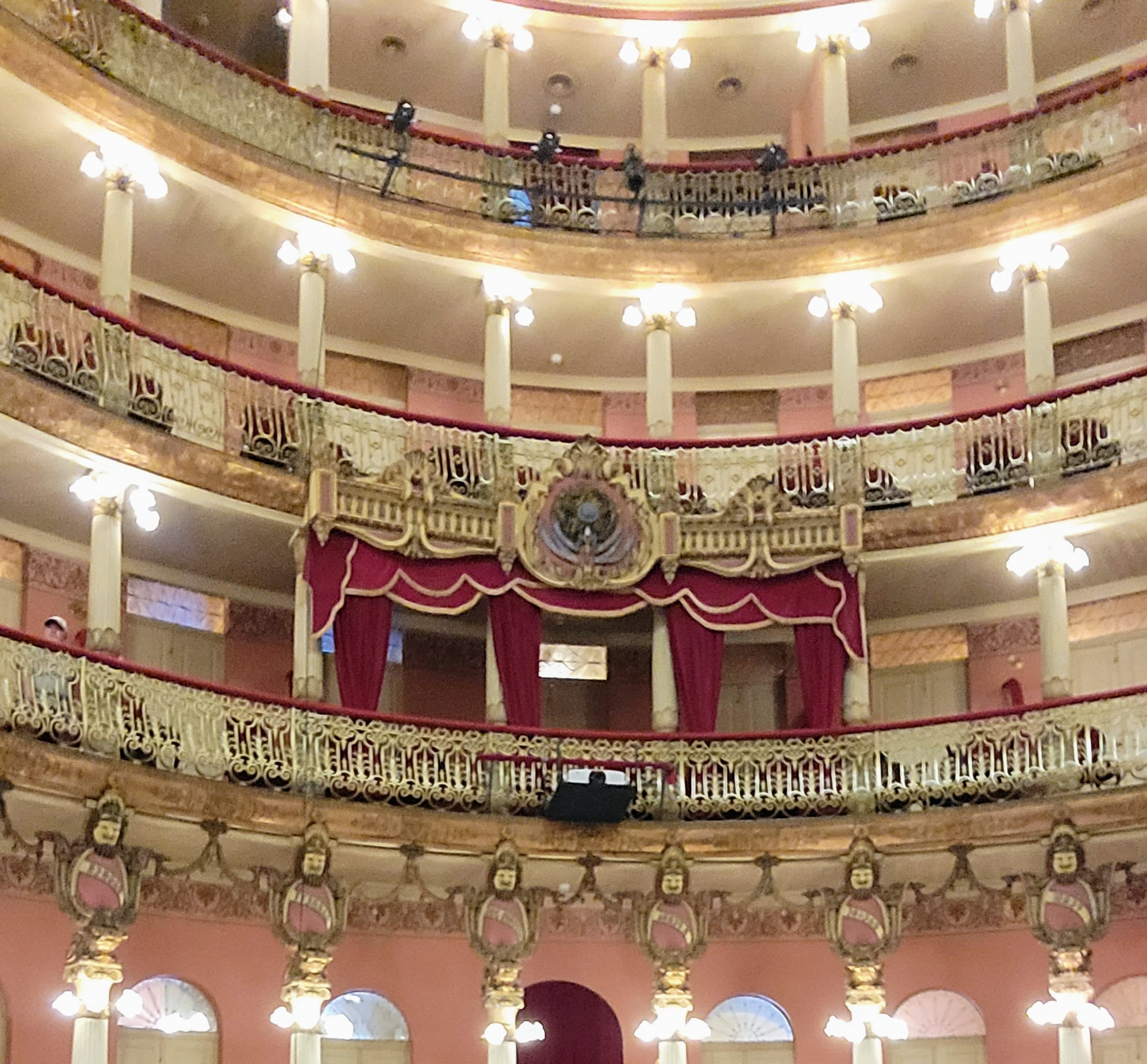
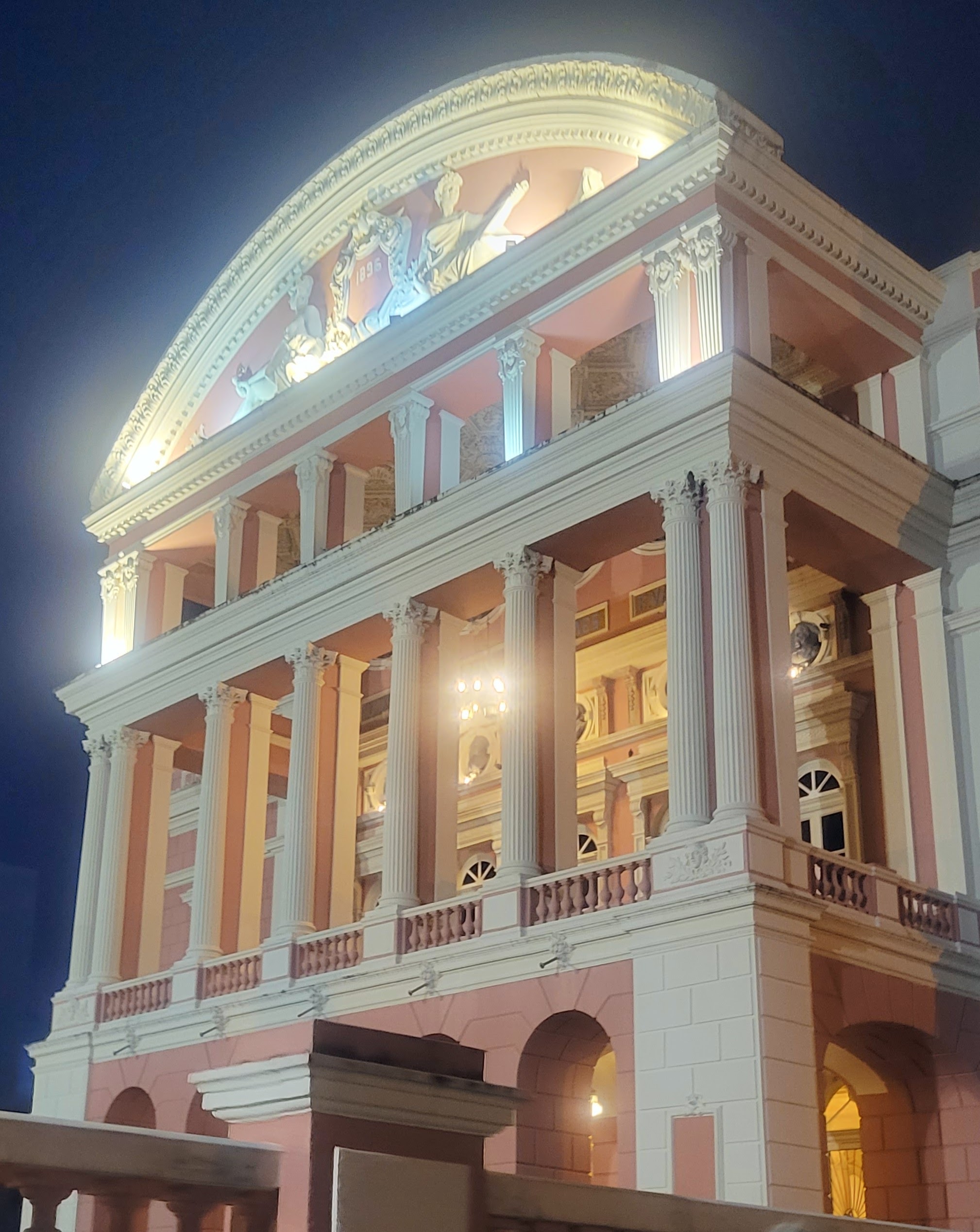
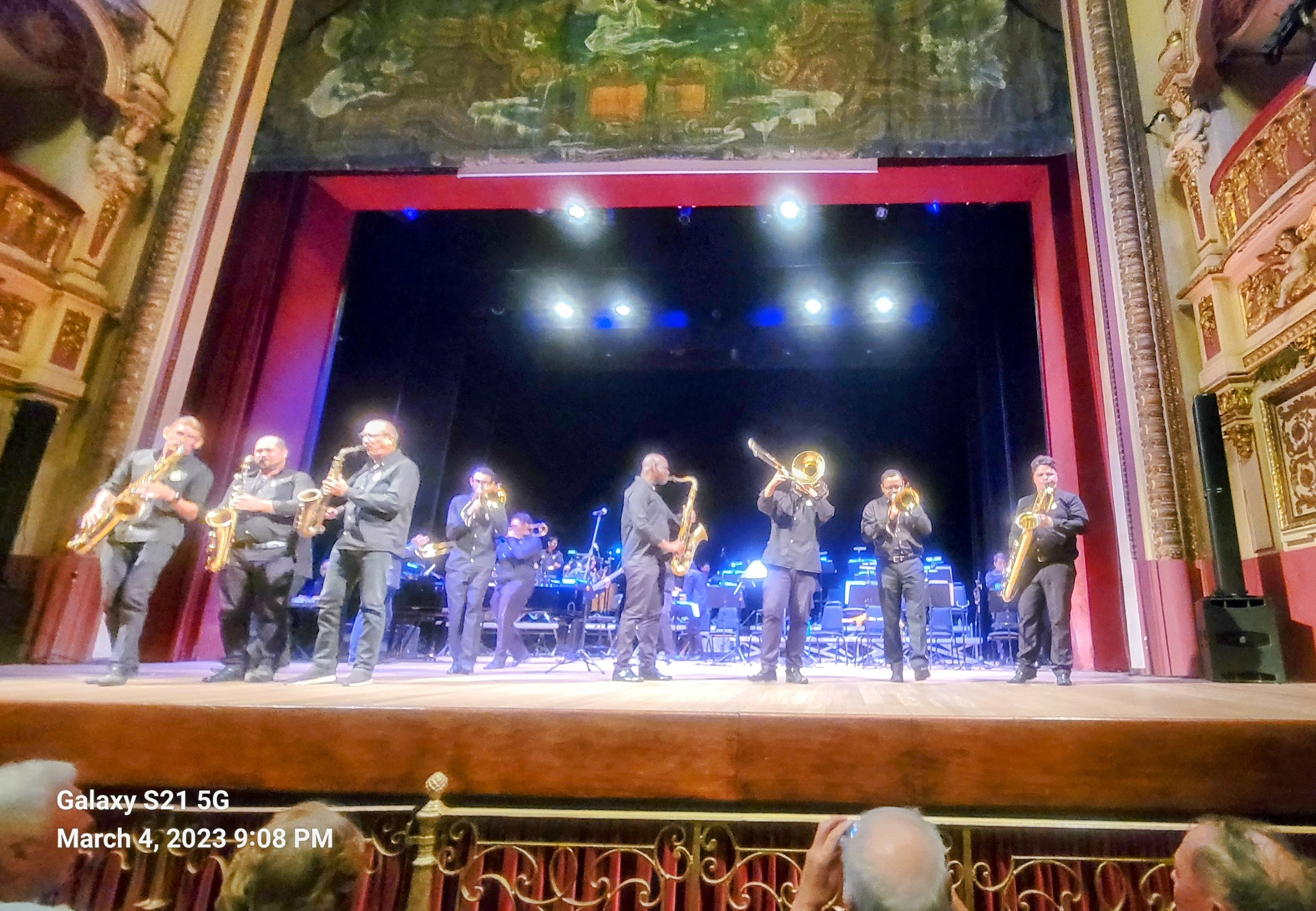
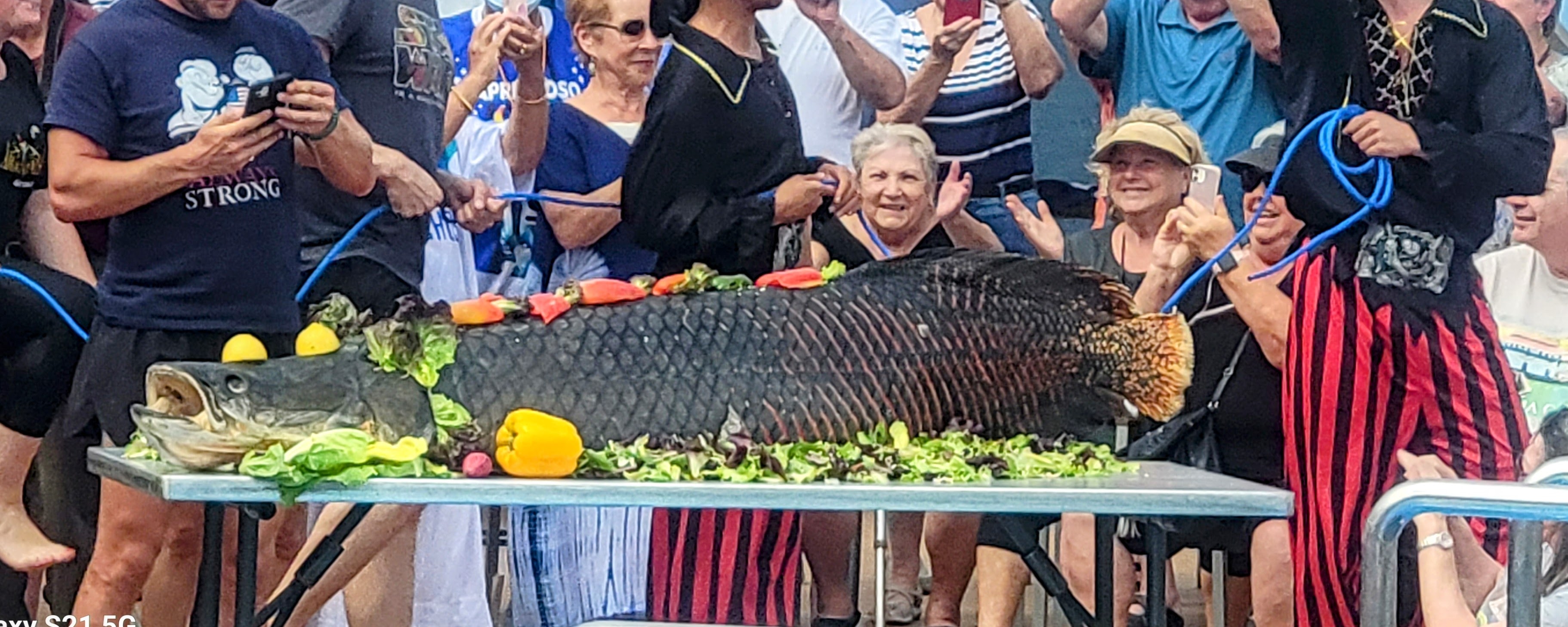
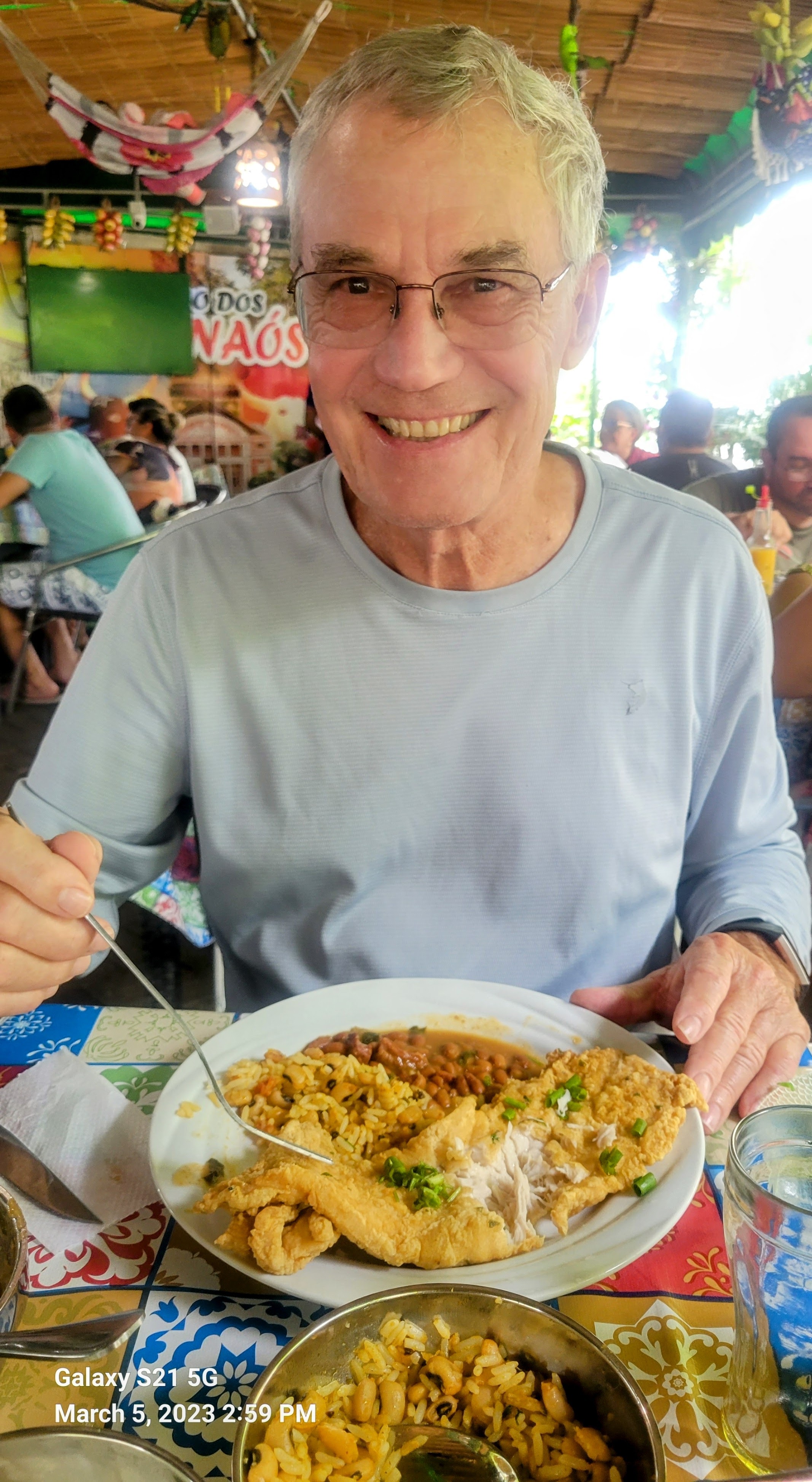
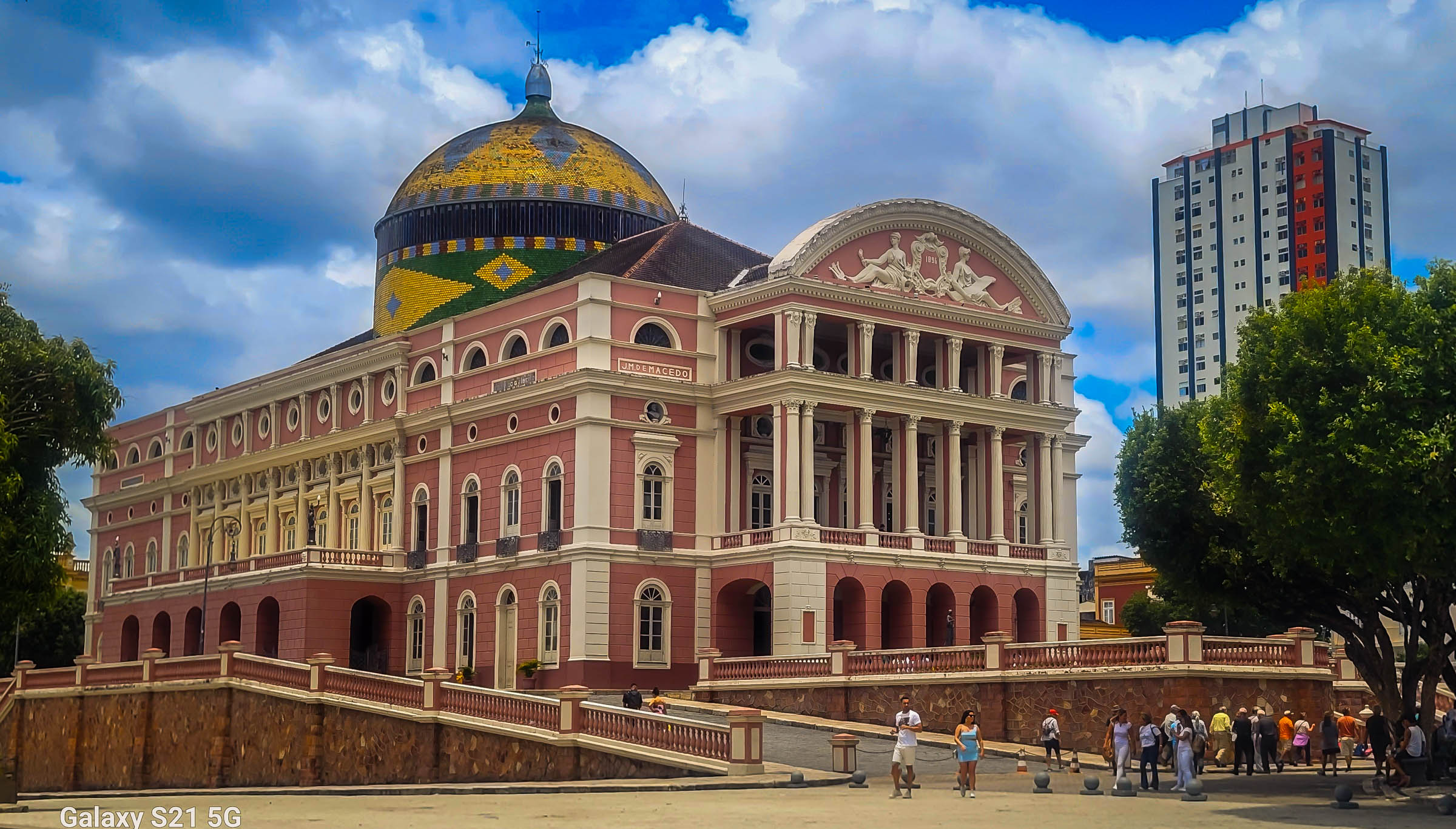
Manaus Brazil Manaus is over 900 miles up the Amazon from the Atlantic Ocean. We were fortunate to have 2 days and 1 night there. This is a very historic city since the rubber boom of the late 19th century. It was called one of the gaudiest cities in the world. No extravagance was too much. The Opera house built in 1896 cost 10 million dollars. It was built with marble from Italy, glass from France and iron from England. The first performers traveled 3 months from Europe and died from yellow fever before they ever got on stage! It has now been restored and is still spectacular. We had a tour during the day and that night HAL arranged a special big band performance just for our group. The acoustics, lighting and performance were unforgettable and a highlight of the entire cruise. Next day we toured up river to a small village then enjoyed lunch at an outdoor restaurant serving Piraracu an air breathing native fish growing up to 10′ and 485 lbs. Delicious.
Manaus Opera House is the jewel of the city
Inside the opera house
The Opera House at night
Brazilian Big Band show
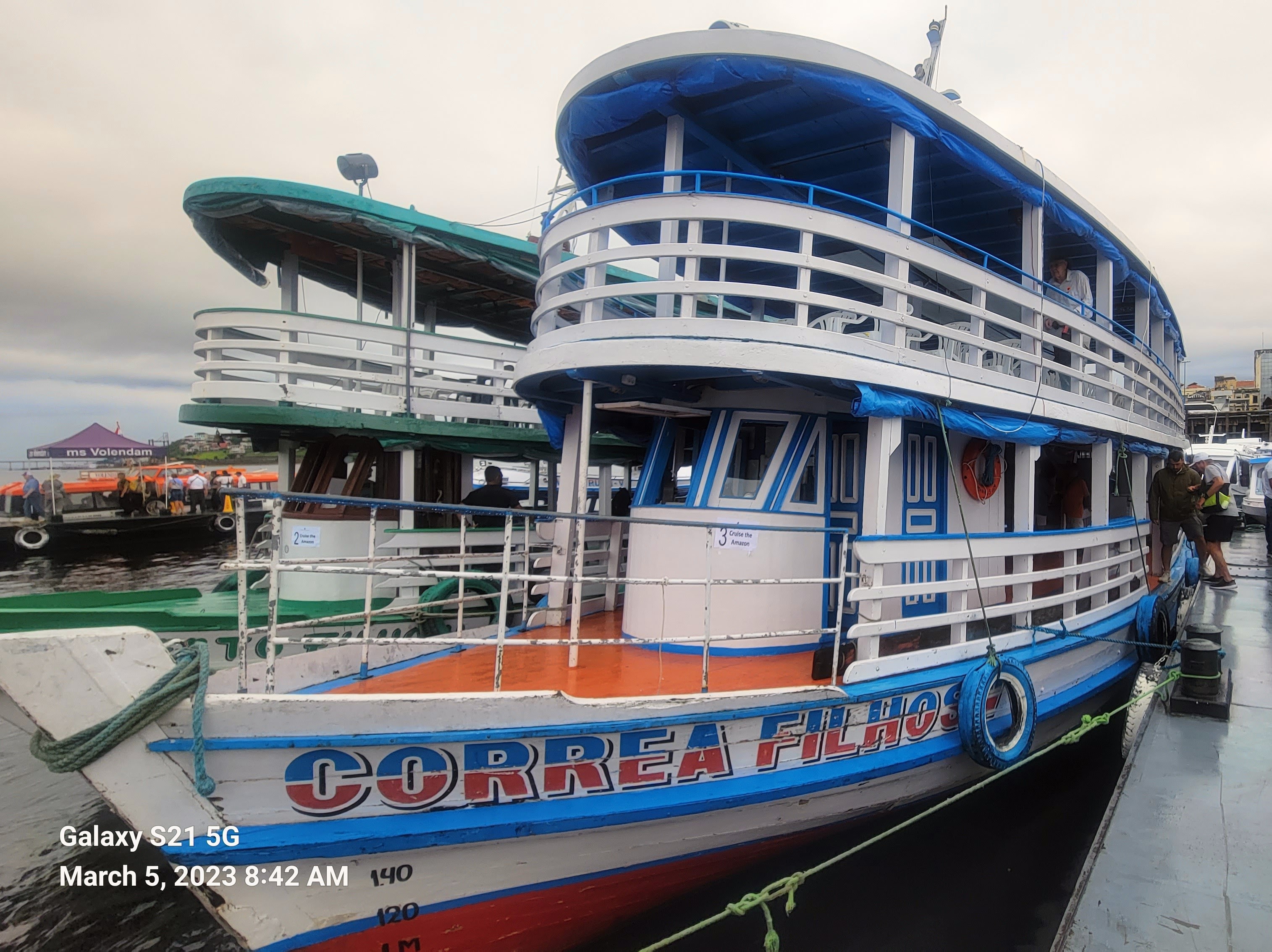
Typical Amazon boats
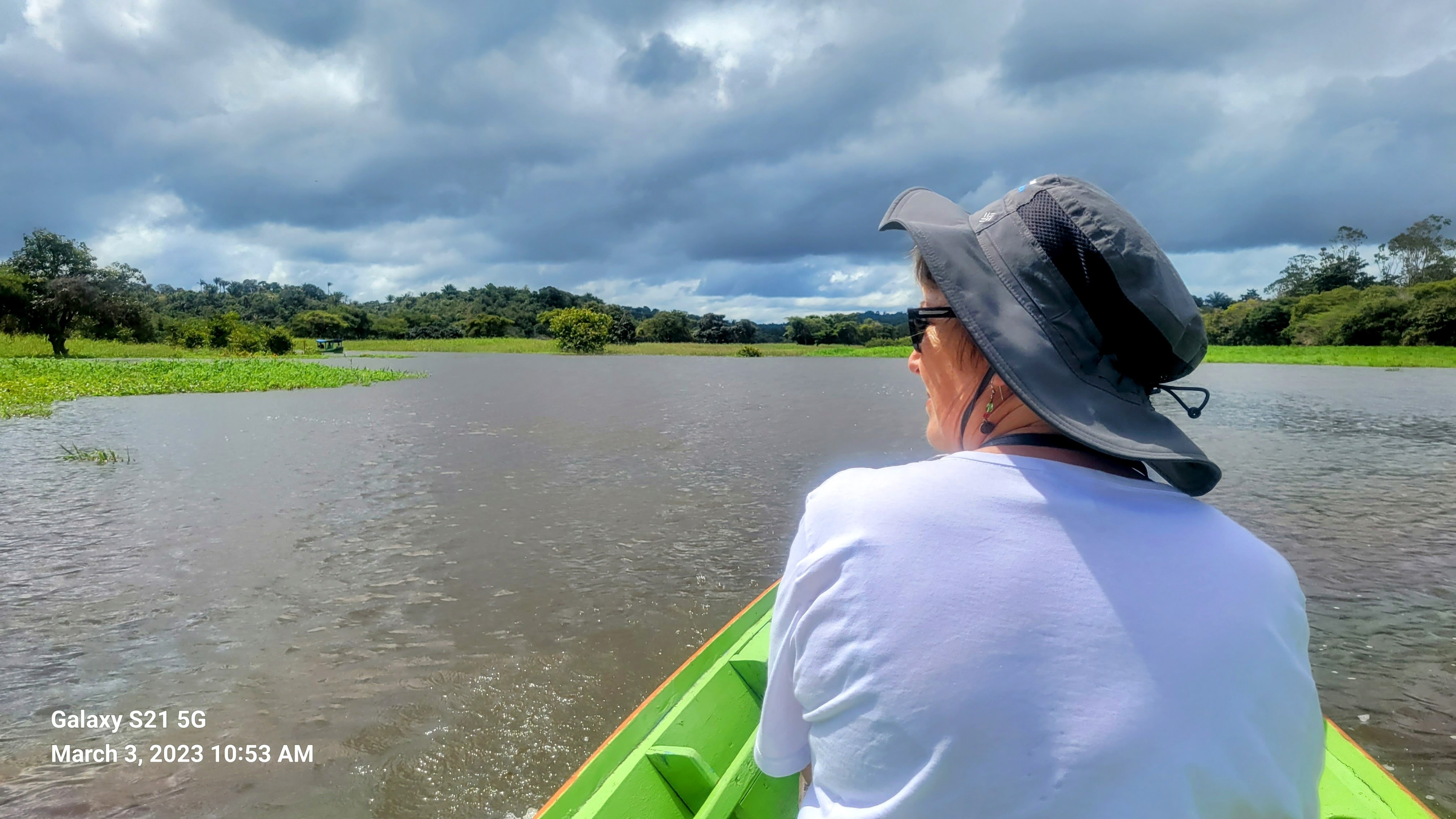
Cruising up a tributary in a very small boat
Pirarucu, an air breathing fish that can grow to 10 feet and 485 pounds
Eating delicious Pirarucu fish
Parintins Brazil Here we had another cruise only performance celebrating Boi Bumba, a festival in this part of Brazil. At all our Amazon ports we tendered to the pier. Anchoring was a challenge for the captain as the current was at least 4 knots with frequent 50 foot trees floating downriver.
Parintins home of Boi Bumba
Loud music and incredible costumes in this show
Alter do Chao Brazil Another small village and our last stop on the Amazon. Many of us found Brazil to be a big rough country. We saw more poverty, slums and pollution than anywhere else we visited. Most people spoke no English or even Spanish. Why would they, they live in a huge country with 215 million people. Yet Brazil undeniably impressed us with its culture and geography.
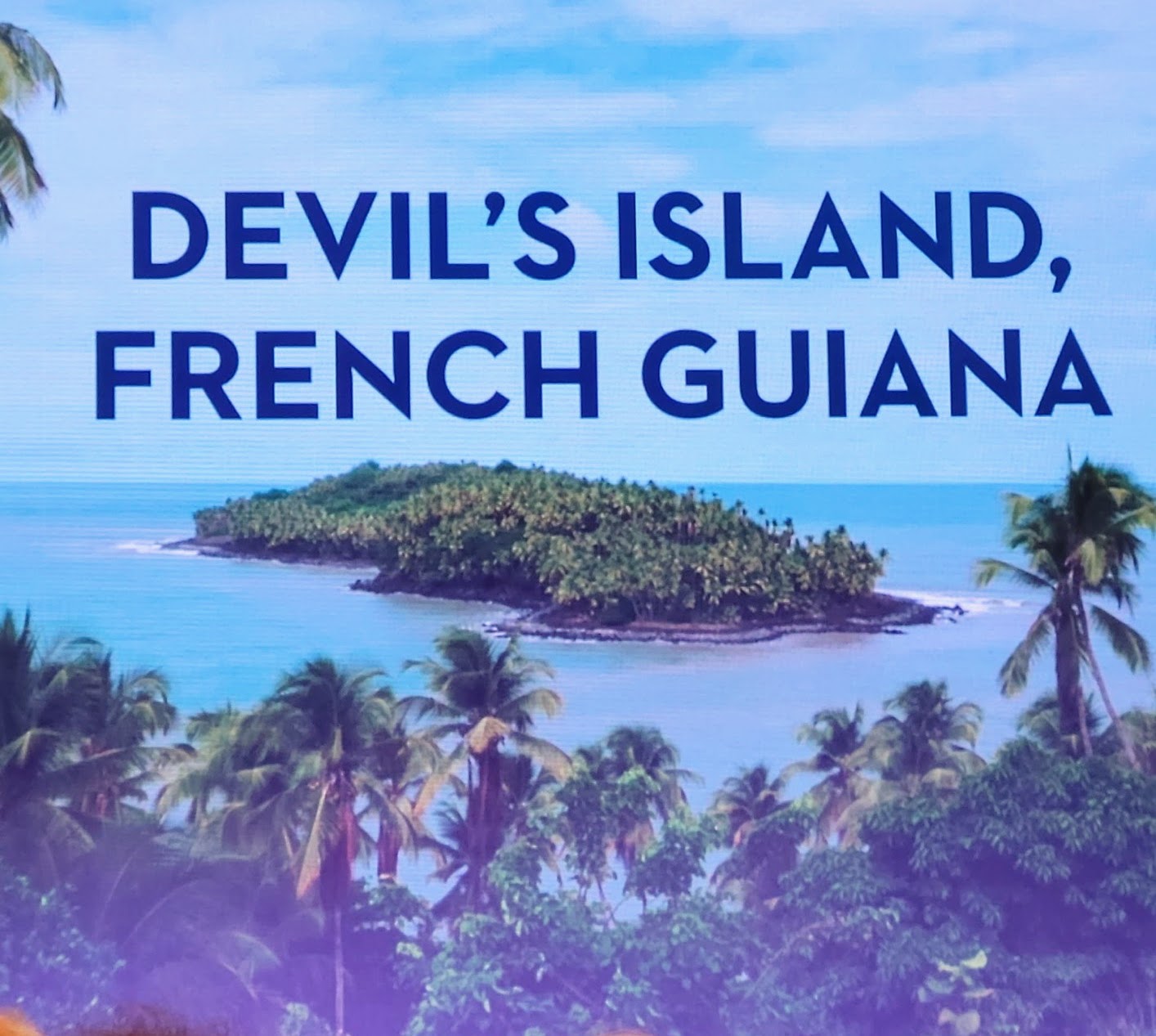
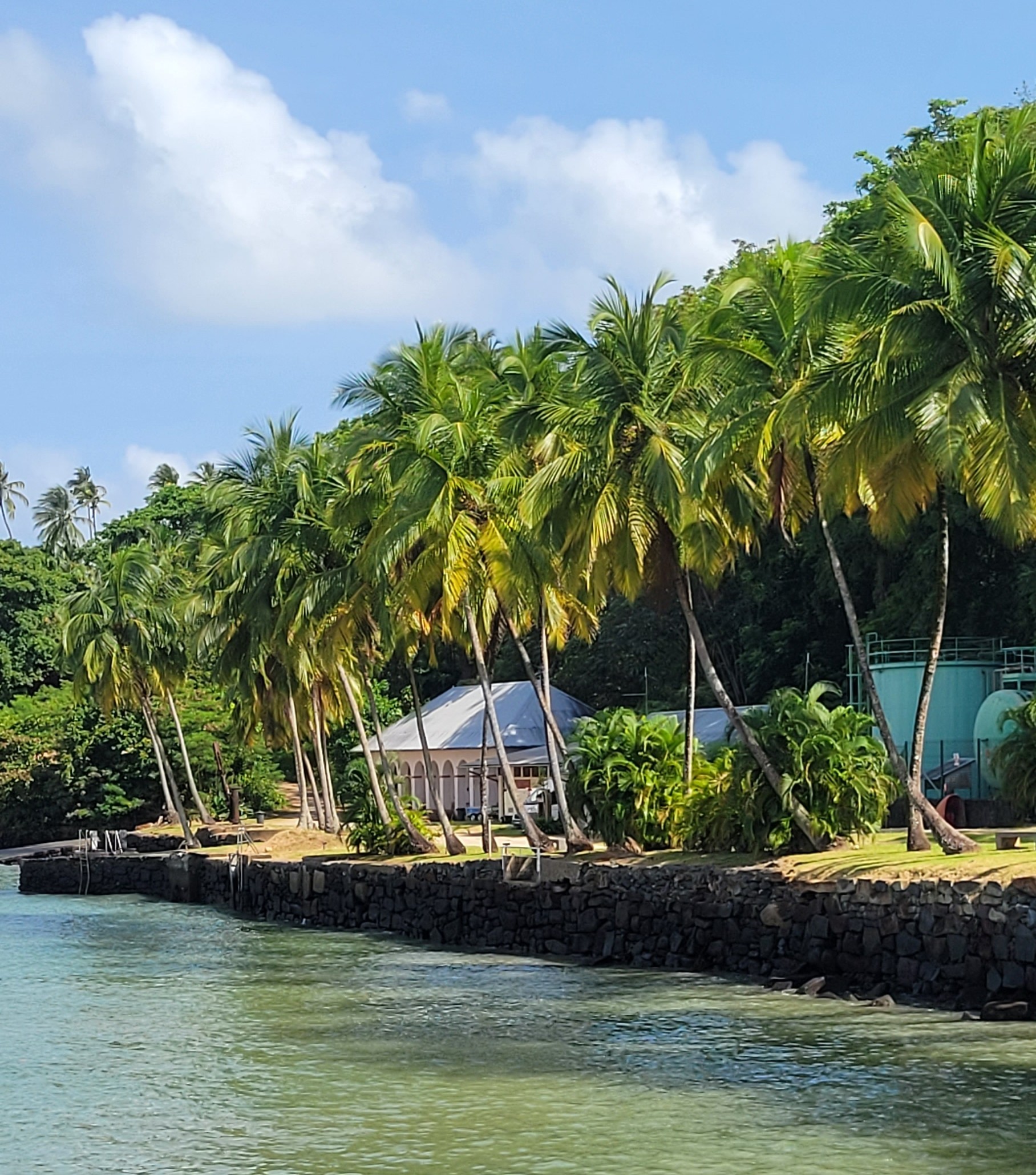
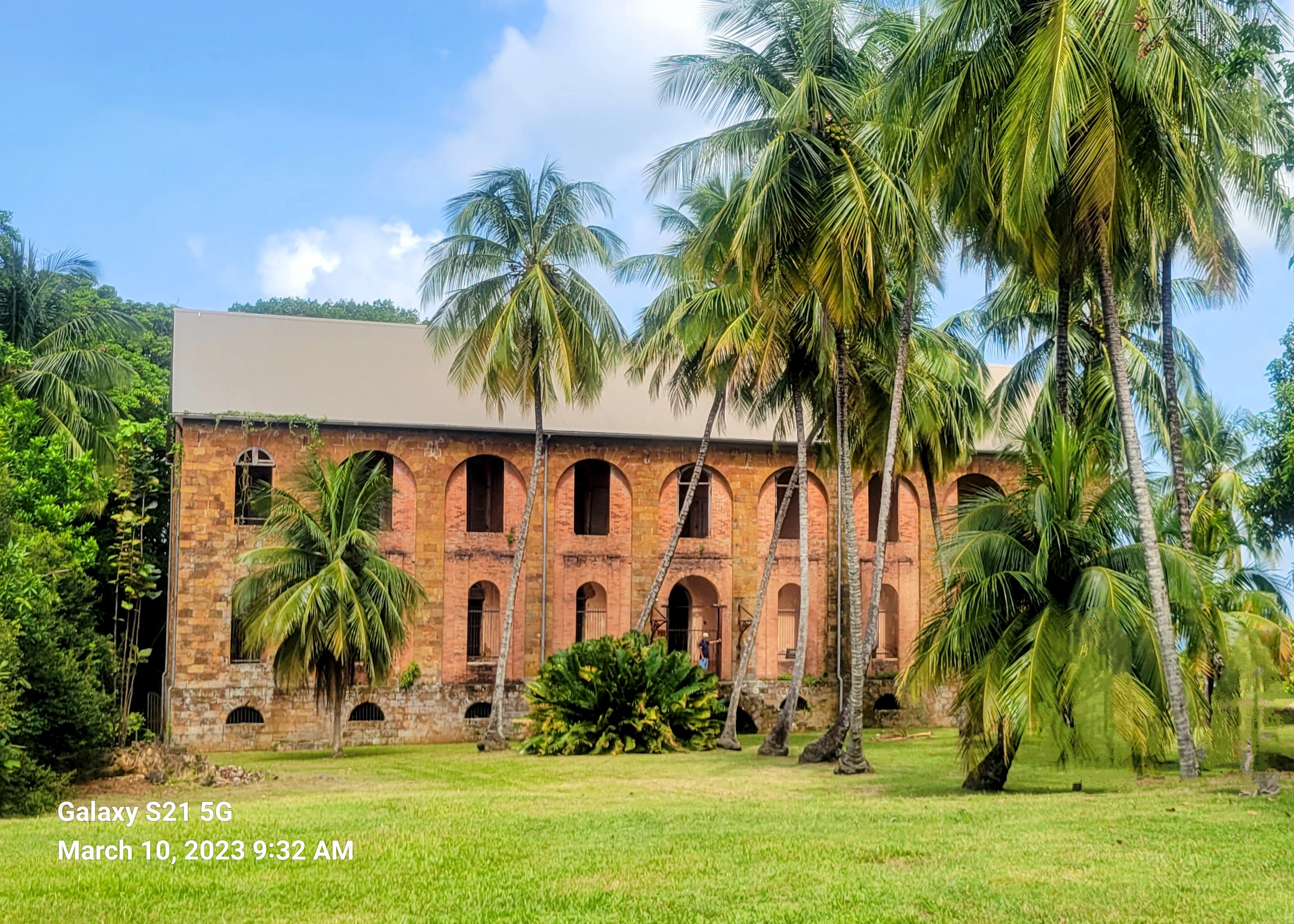
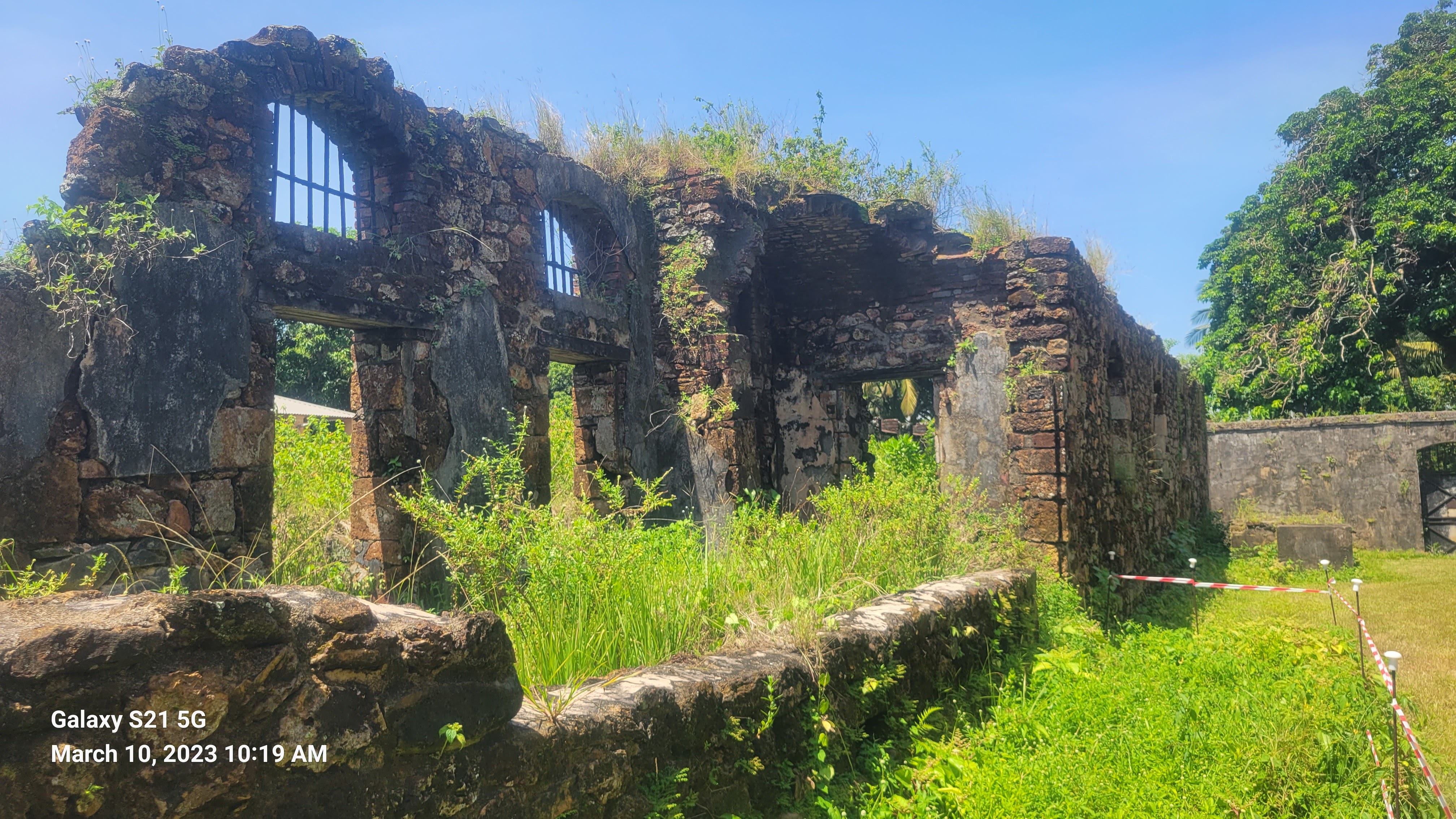
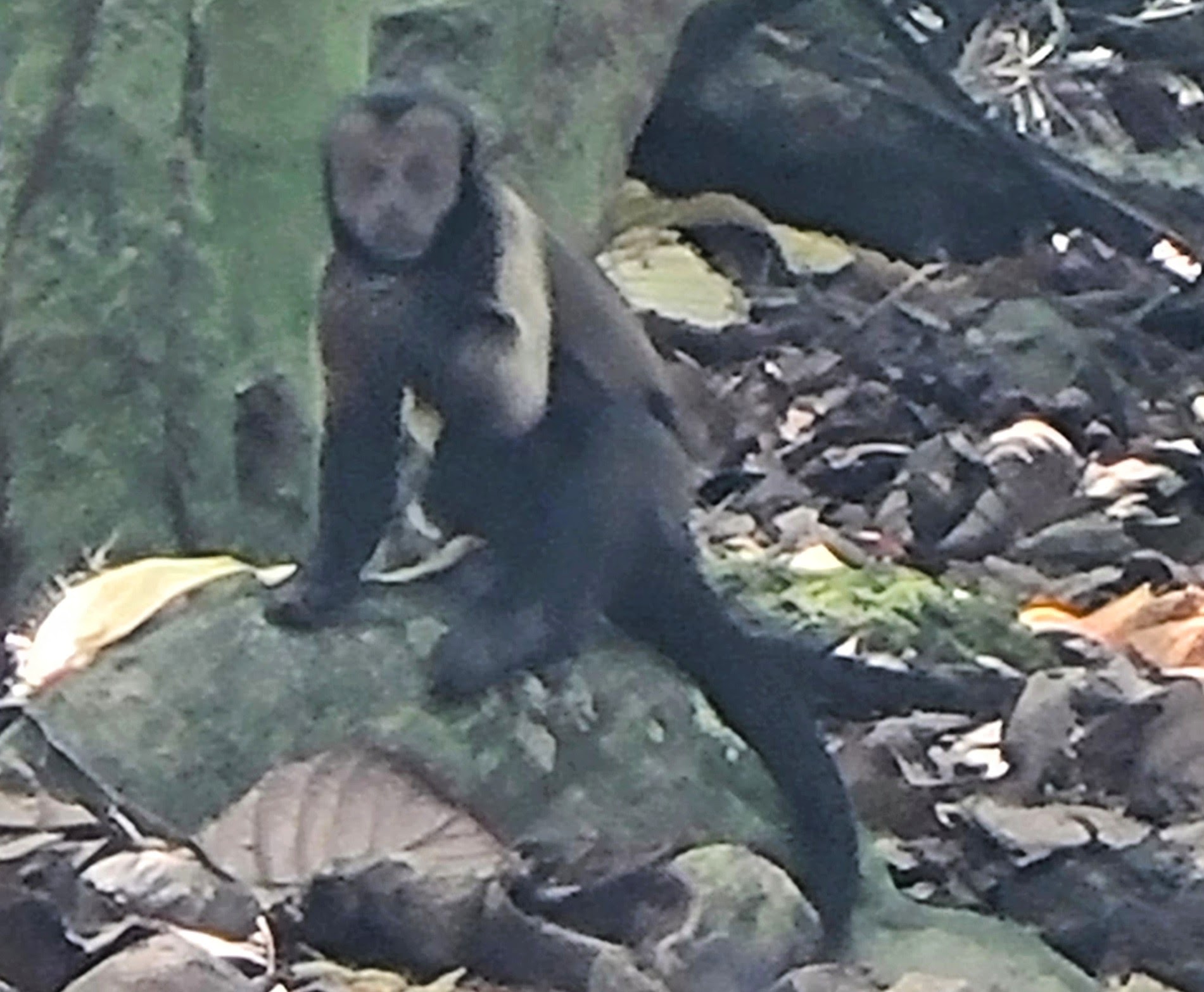
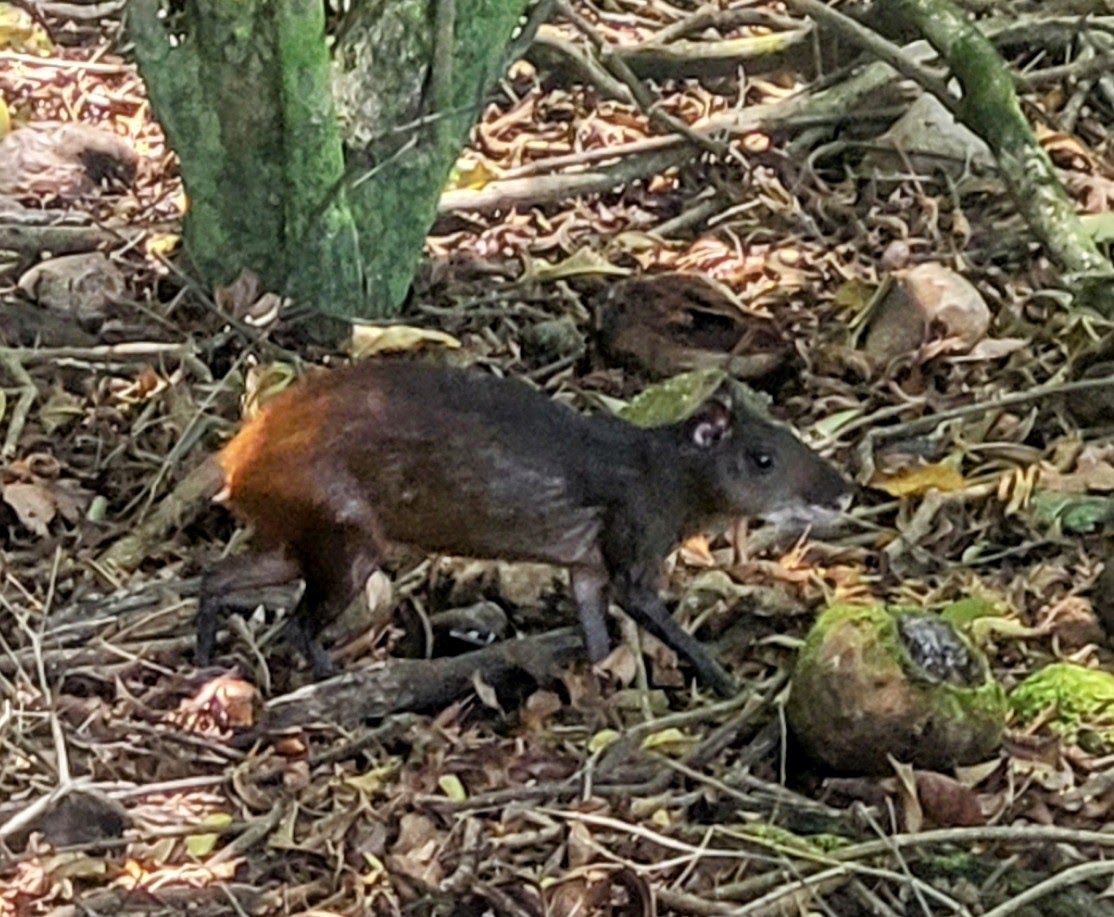
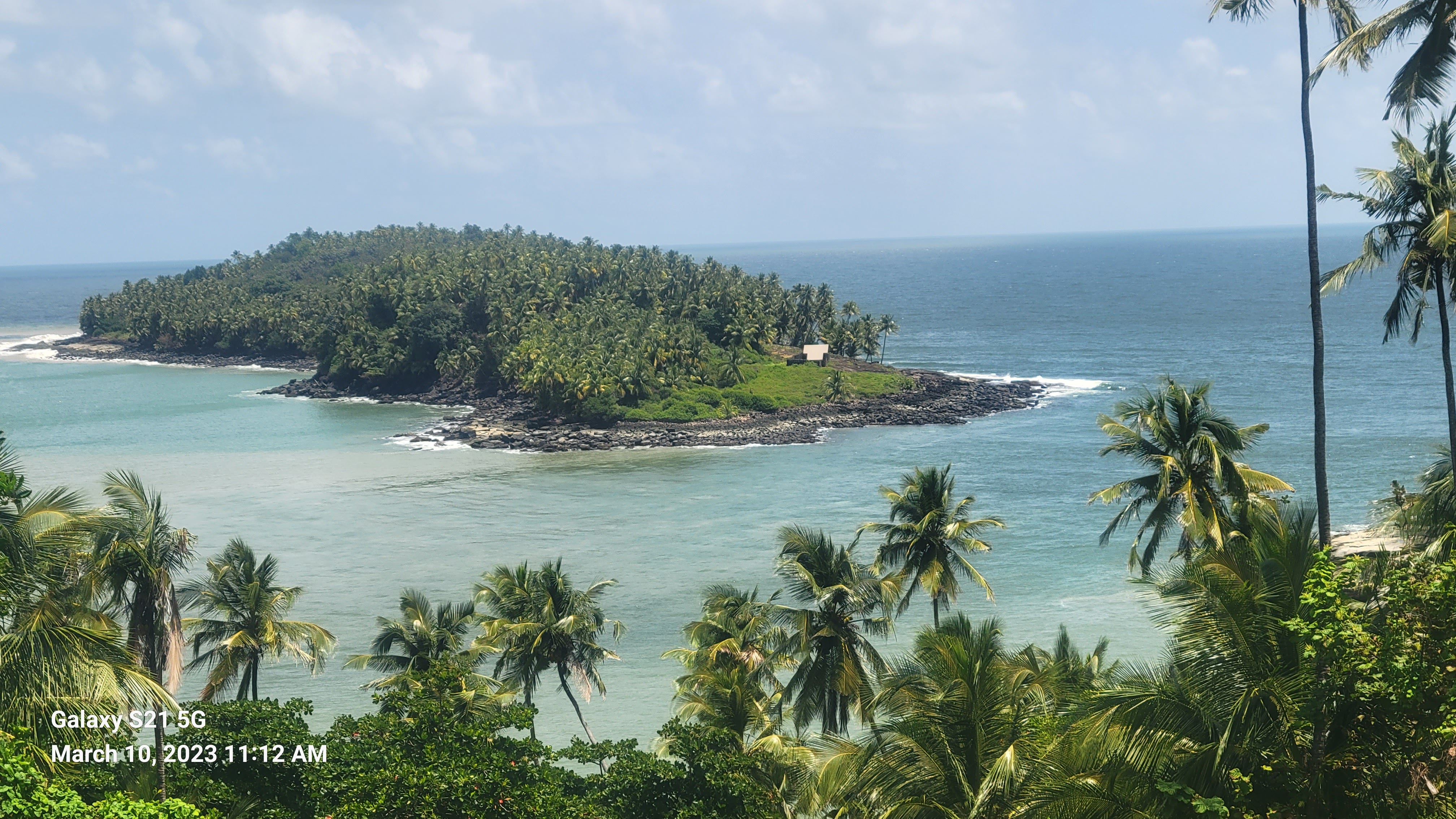
Devils Island French Guiana Made famous by the movie Papillon, Devils Island now receives several cruise ships each year. The notorious prison has been restored just to safety and there are no guided tours. HAL showed the movie the night before our visit so we were primed. We saw monkeys and a large rat like mammal called an agouti.
Here we anchored with just 5 feet of water below the keel
Tender port on Devils Island
Former prison hospital
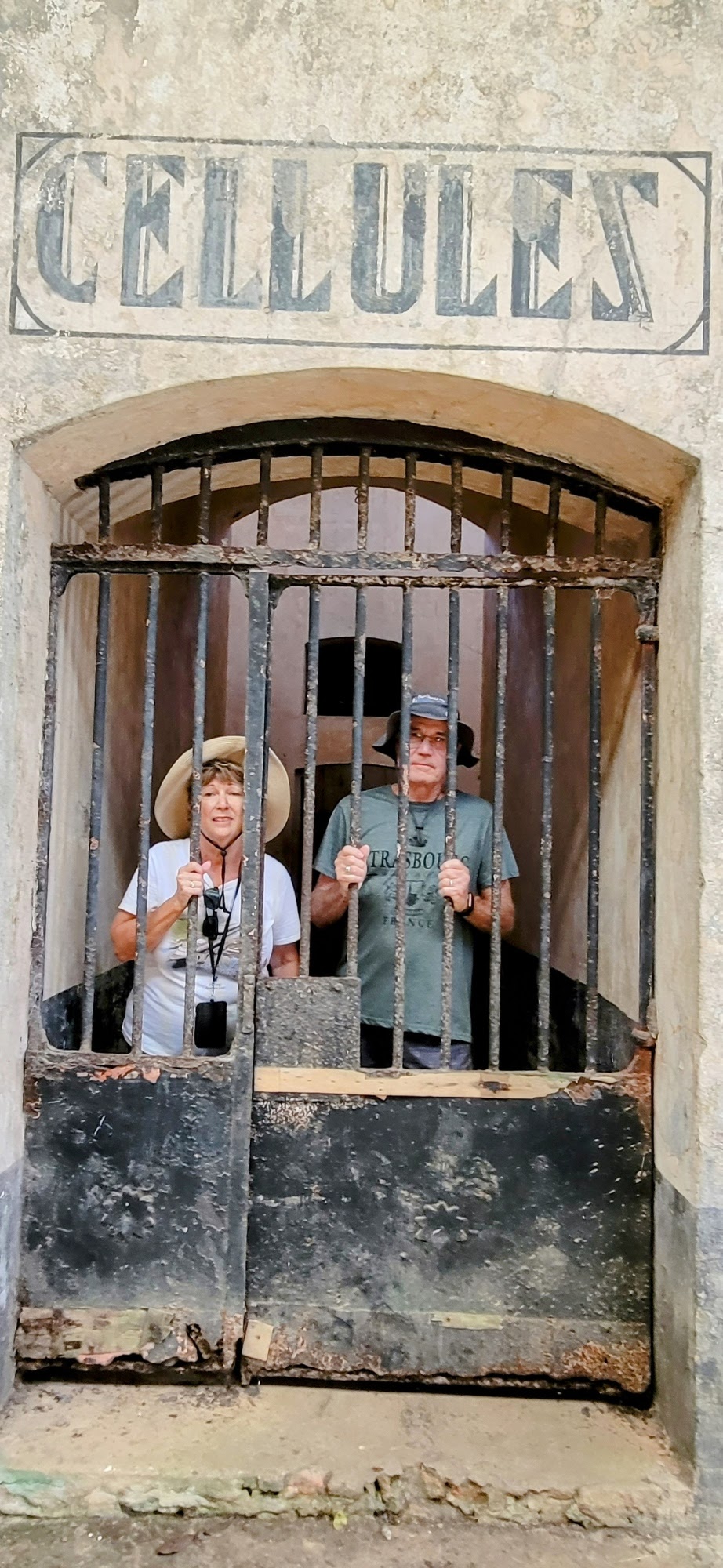
Detained on Devils Island
Monkey on Devils Island
Agouti rodent
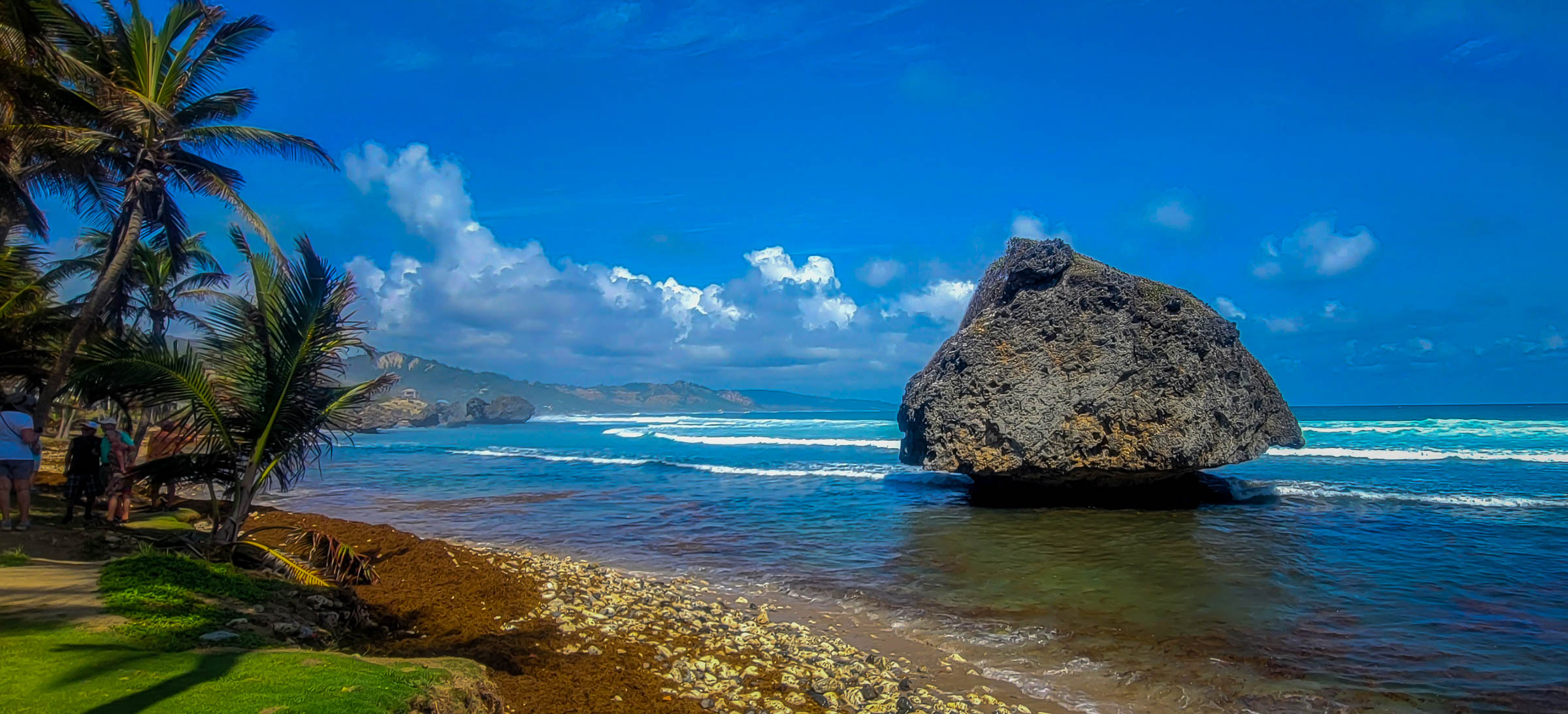
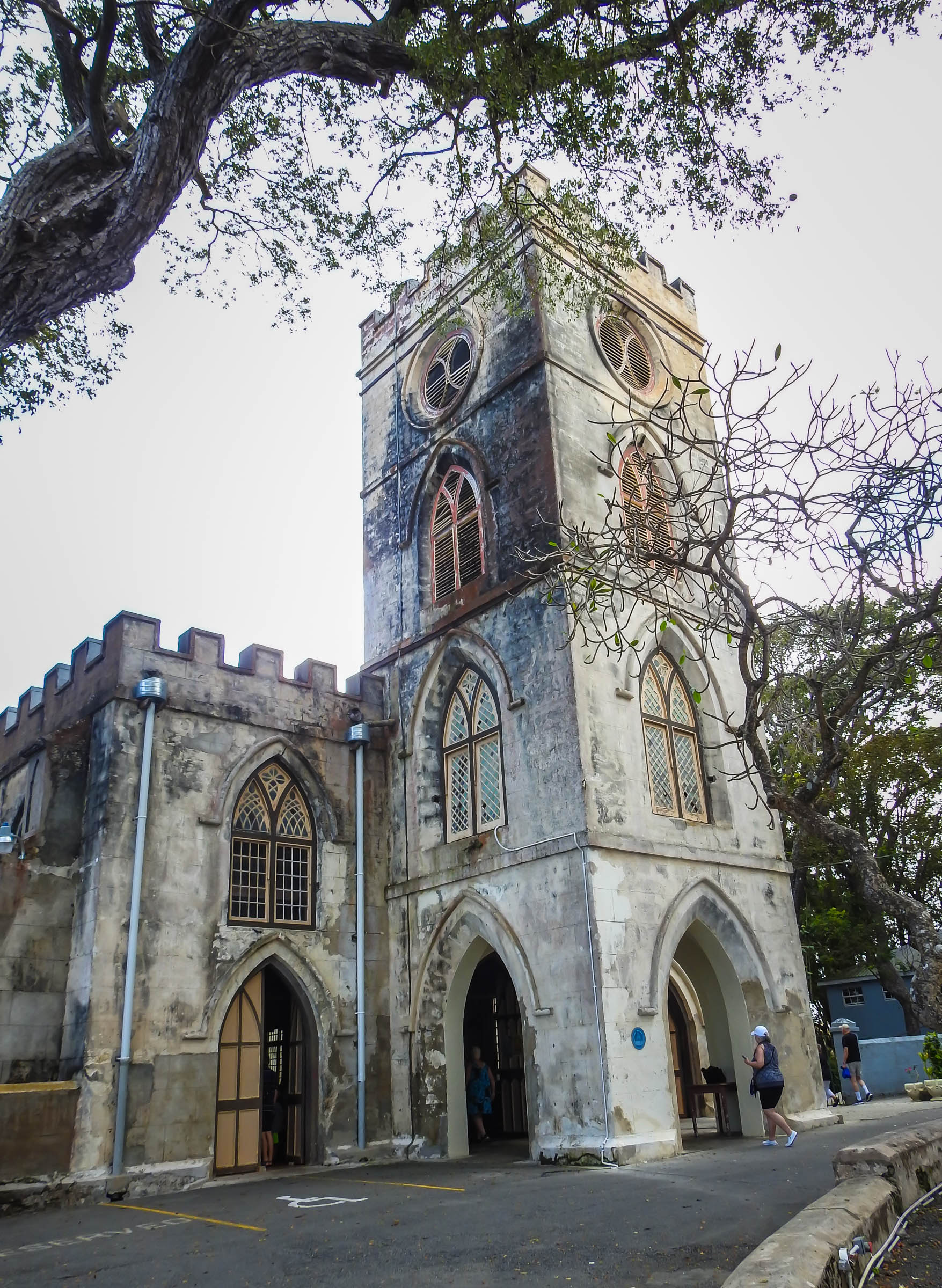
Bridgetown Barbados We had visited Barbados in 1992 on Royal Caribbean’s Monarch of the Seas and remembered quite a bit from that trip. The port is much expanded now and this was one of the ports where Cruise Specialists provided a complimentary excursion. The bus tour visited many island highlights and a lunch at a historic plantation.
Bathsheba beach
St John Parish Anglican Church
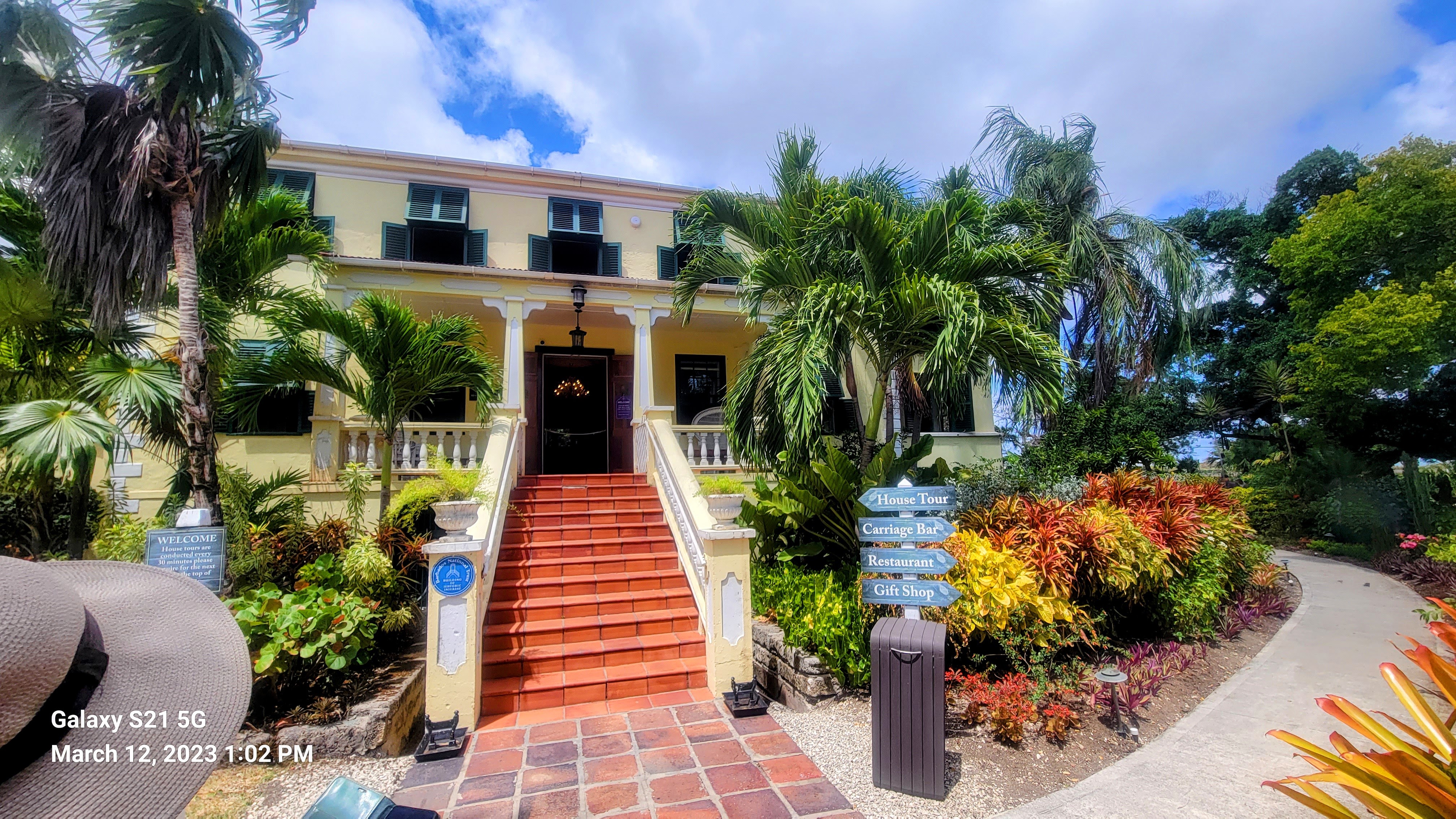
Sunbury Plantation house dates from the 1600s
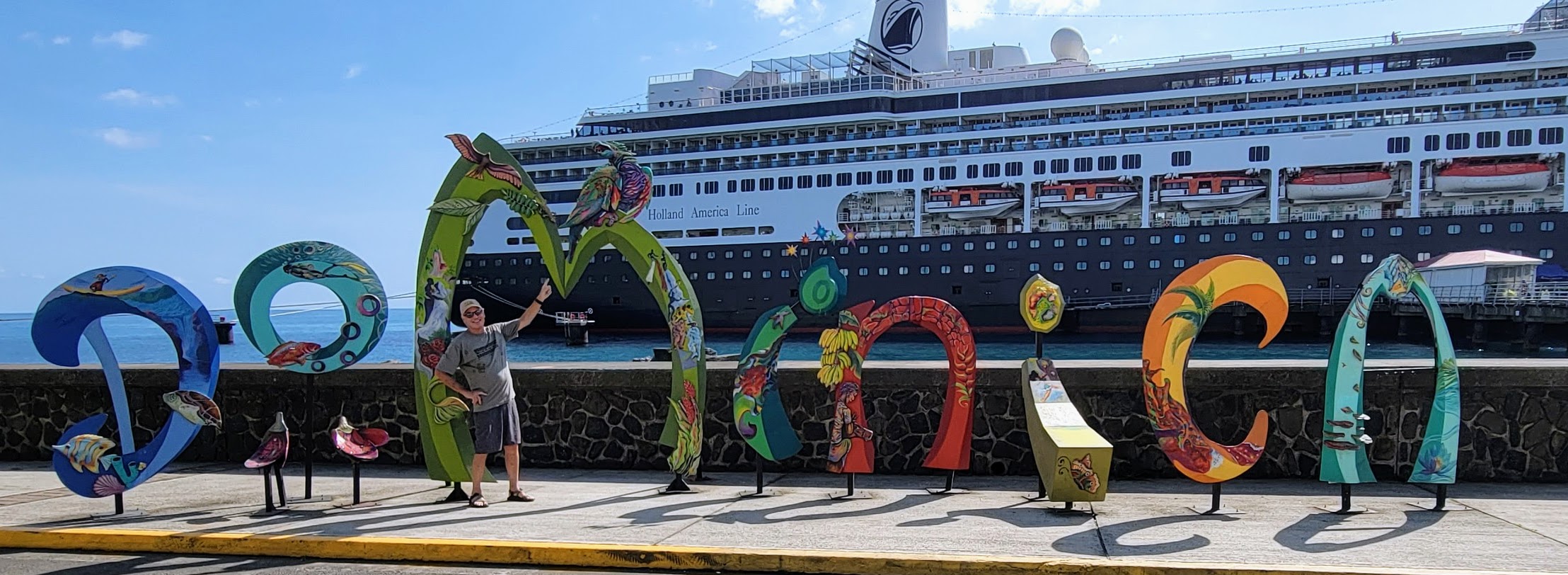
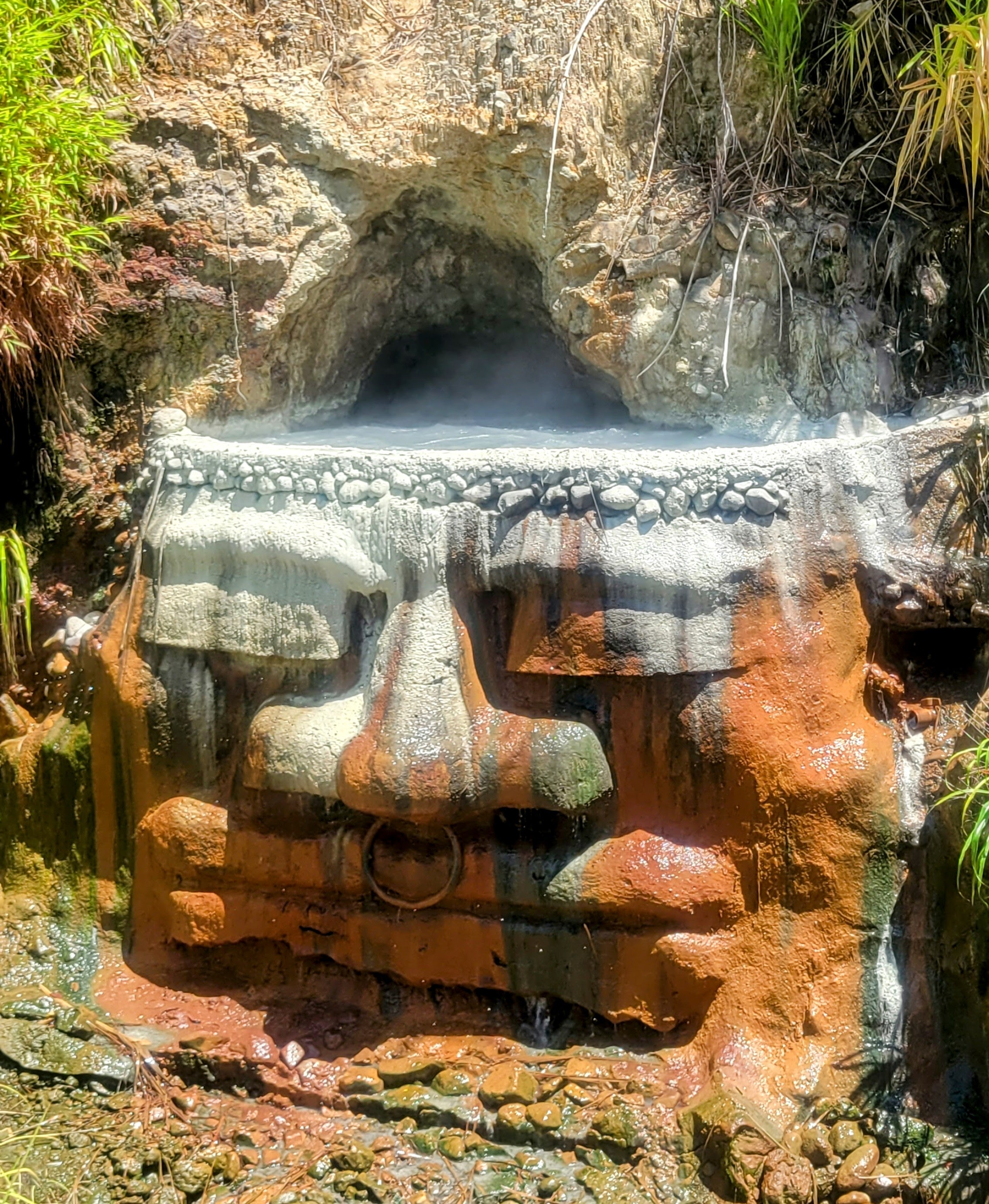
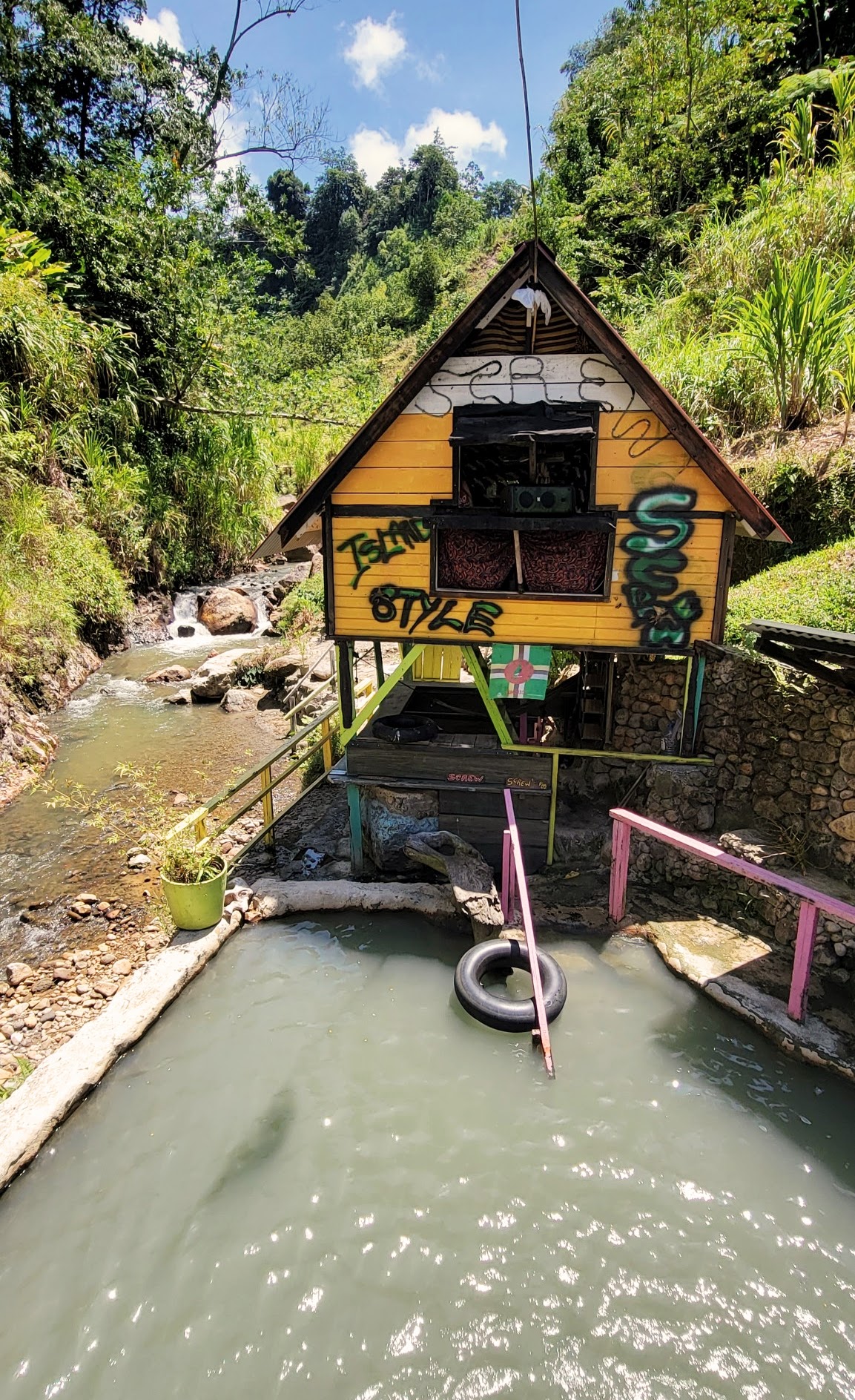
Roseau Dominica Dominica was surprisingly one of our favorite ports. At the last minute we decided to take the HAL Hot Springs Escape tour. It was great fun as we swam upstream in the Titou Gorge slot canyon to a waterfall and then soaked in Wotten Waven natural hot pools. This beautiful island has at least 4 volcanos and 365 rivers and is nicknamed “The Nature Island of the Caribbean”. Locals celebrate all its healthy living features and call it the longevity island. On a sad note while sailing from Barbados to Dominica a guitar player in the house band suffered a medical emergency and passed away before we could reach a hospital. We didn’t know until late that day and the entire ship was saddened. He was 32 years old.
Hot springs in Dominica
Really hot pool
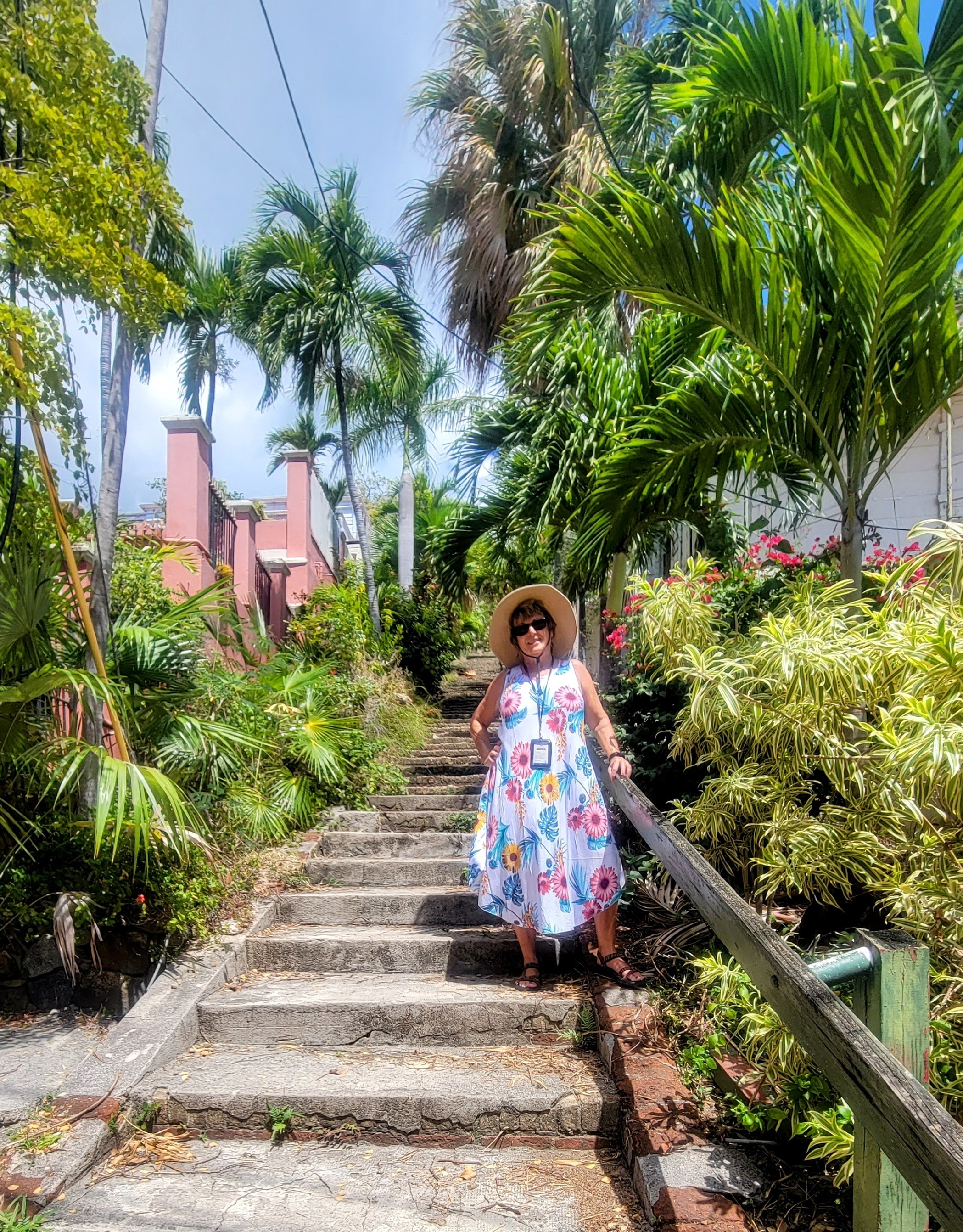
Charlotte Amalie St. Thomas USVI We’ve been to St. Thomas many times so we just did our own walking tour of this busy cruise port. The 99 steps led us to Bluebeards Castle. Unfortunately it and the adjoining inn were closed and for sale. Pandemic victims?
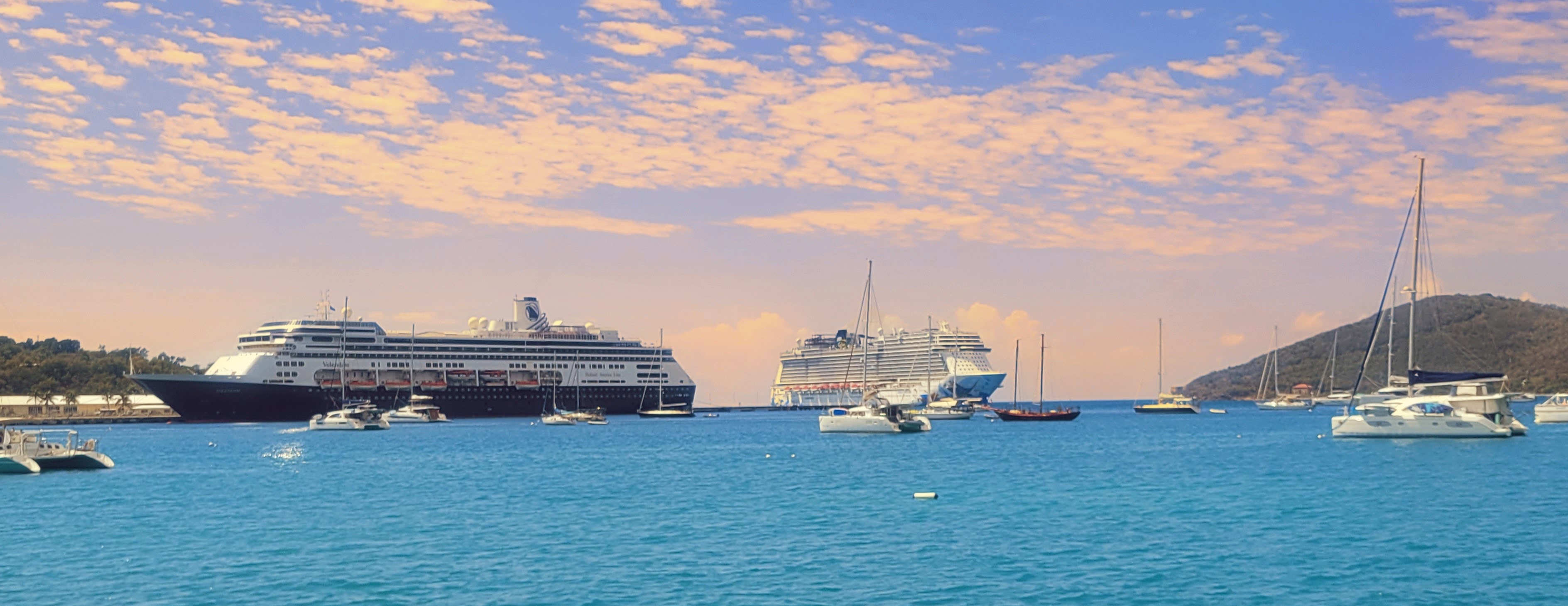
Beautiful Charlotte Amalie harbor
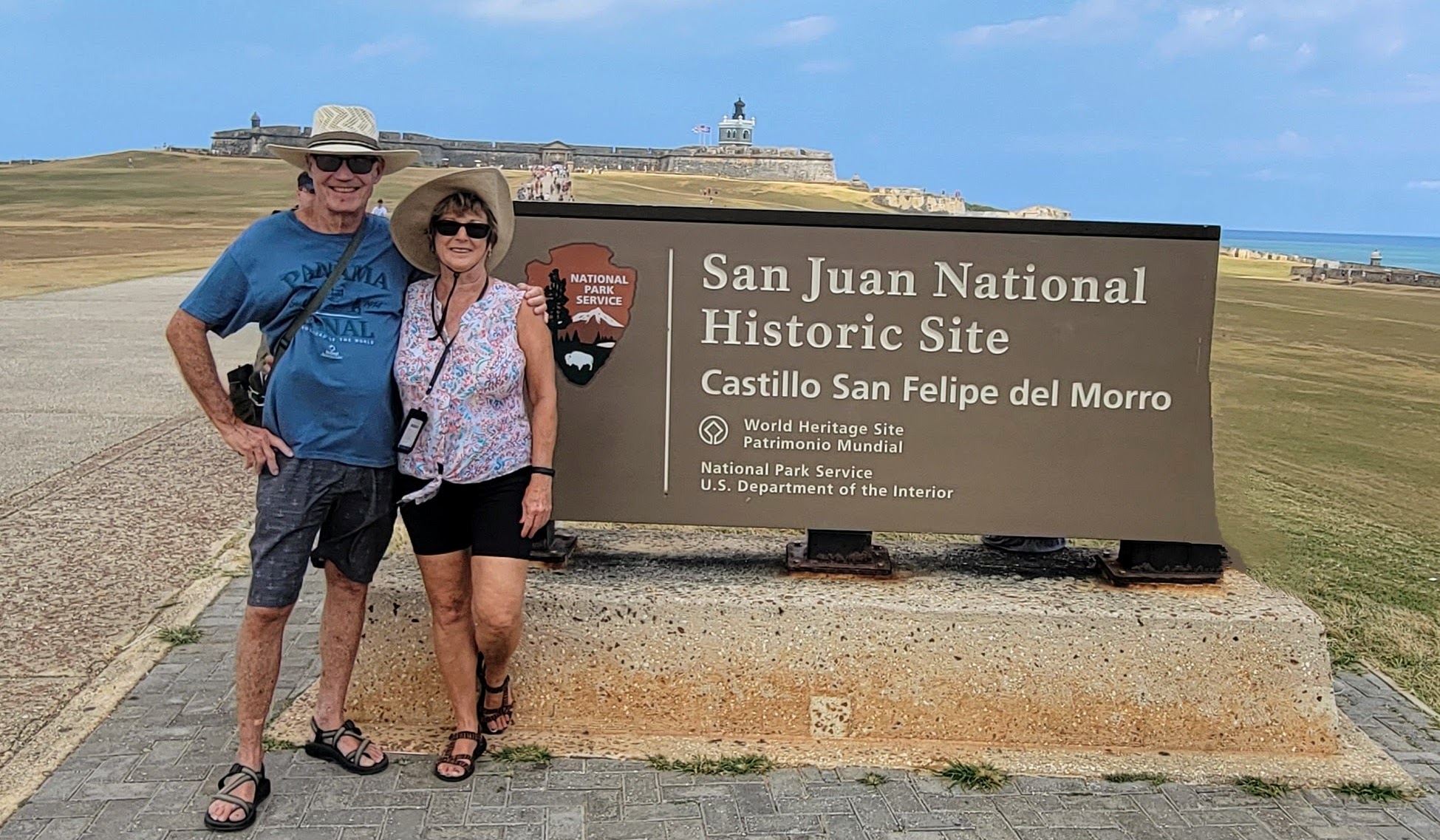
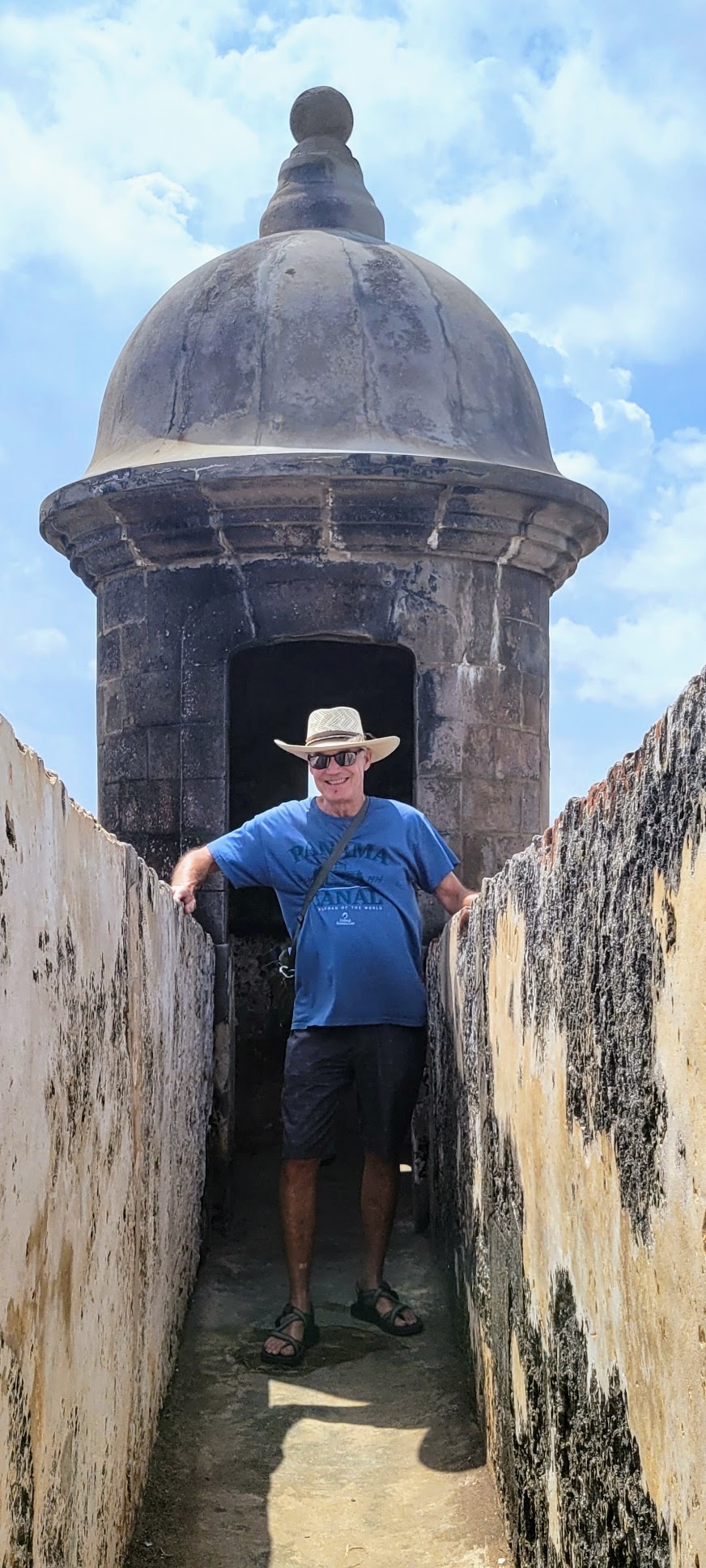
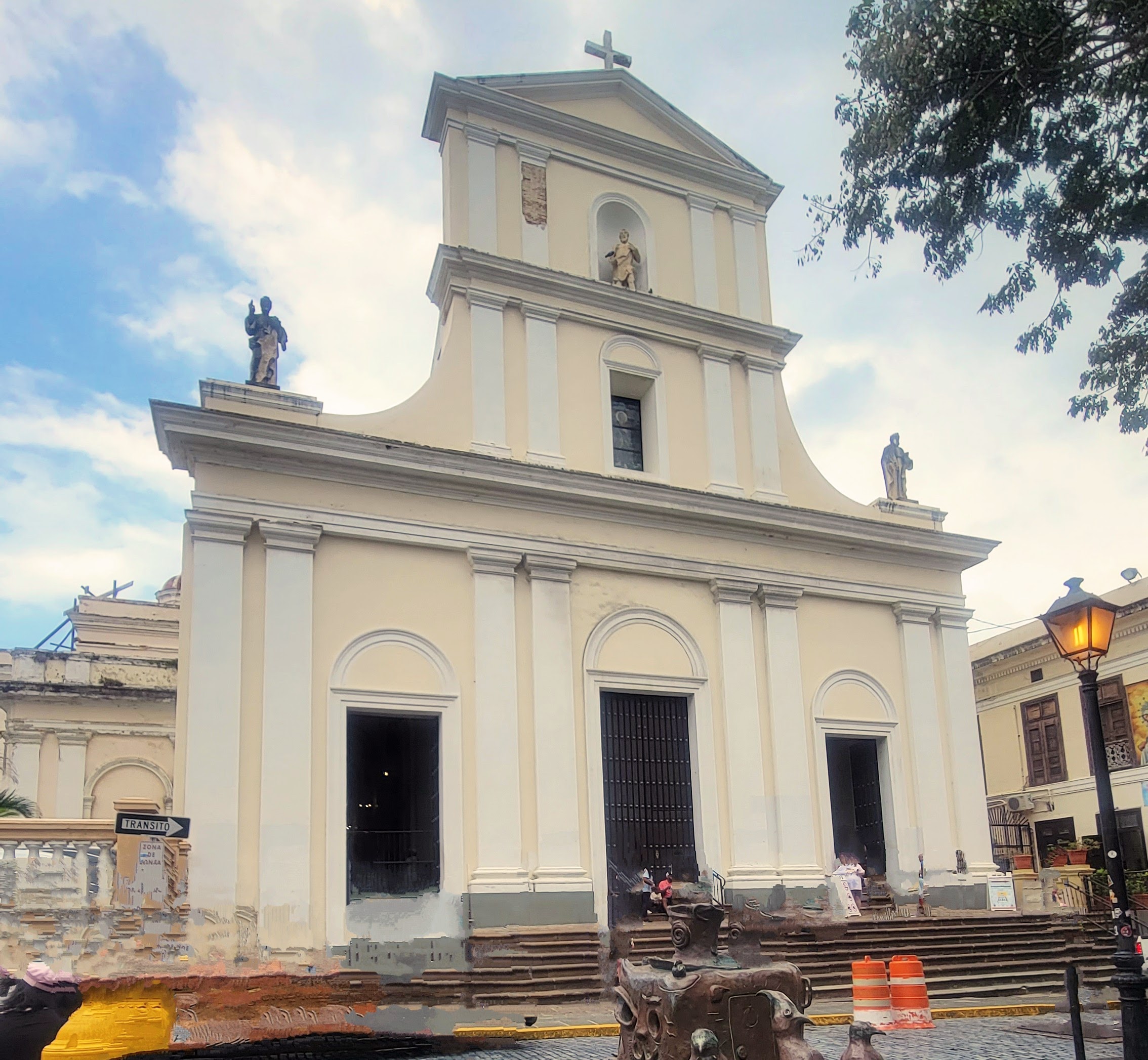
San Juan Puerto Rico San Juan is a great cruise port. And very popular. The day we arrived there were 4 other cruise ships. And mostly gigantic. So the old town was busy but we still had a good time touring the many sights. Our smaller ship had to dock a few miles away but again Holland America provided a free shuttle to the heart of everything.
So much history in Old San Juan
Cathedral San Juan Bautista is the second oldest in New World and holds Ponce de Leon’s tomb
Throughout our 34 ports circumnavigating South America all the locals we met were friendly and helpful. We also got to know many of the ship’s crew like never before on any other cruise. Being with largely the same passengers for 74 days gave us the feeling of a community. We didn’t know everyone’s names but you knew faces and couples. When in foreign cities you could recognize familiar faces. In other ways too this was a very unique cruise for us. We had multiple lectures every sea day. One day we had 5 of these educational experiences. We learned a lot. We also found it pretty easy to reach our daily goal of 10,000 steps. Neither of us gained weight on this cruise. The entertainment on board was very diverse with comedians, classical quintets, singers, magicians, the B B King R&B band as well as entertainers from many of the countries visited and of course the house bands and world stage dancers.
Another new experience for us was having a host on board for the entire cruise. We booked this cruise through Cruise Specialists, a travel agency in Seattle. In addition to a better fare and additional stateroom credits the company provided a host couple to answer questions, 2 complimentary shore excursions, 4 cocktail parties, a premium dinner, Columbia brand embroidered hiking hat and tote. We were impressed and plan to use them again.
On a grand voyage of 74 days there is simply too much to cover in one post. This post will share some images and experiences of the first half of our journey from Ft. Lauderdale to Buenos Aires.
Ready to go
Our home for the next 74 days
Ocho Rios Jamaica. We had visited many years prior and so we felt no need for a tour or anything more than a walk around town. The town seems to be struggling now perhaps due to the pandemic. We had jerk chicken in a nice bar and enjoyed people watching.
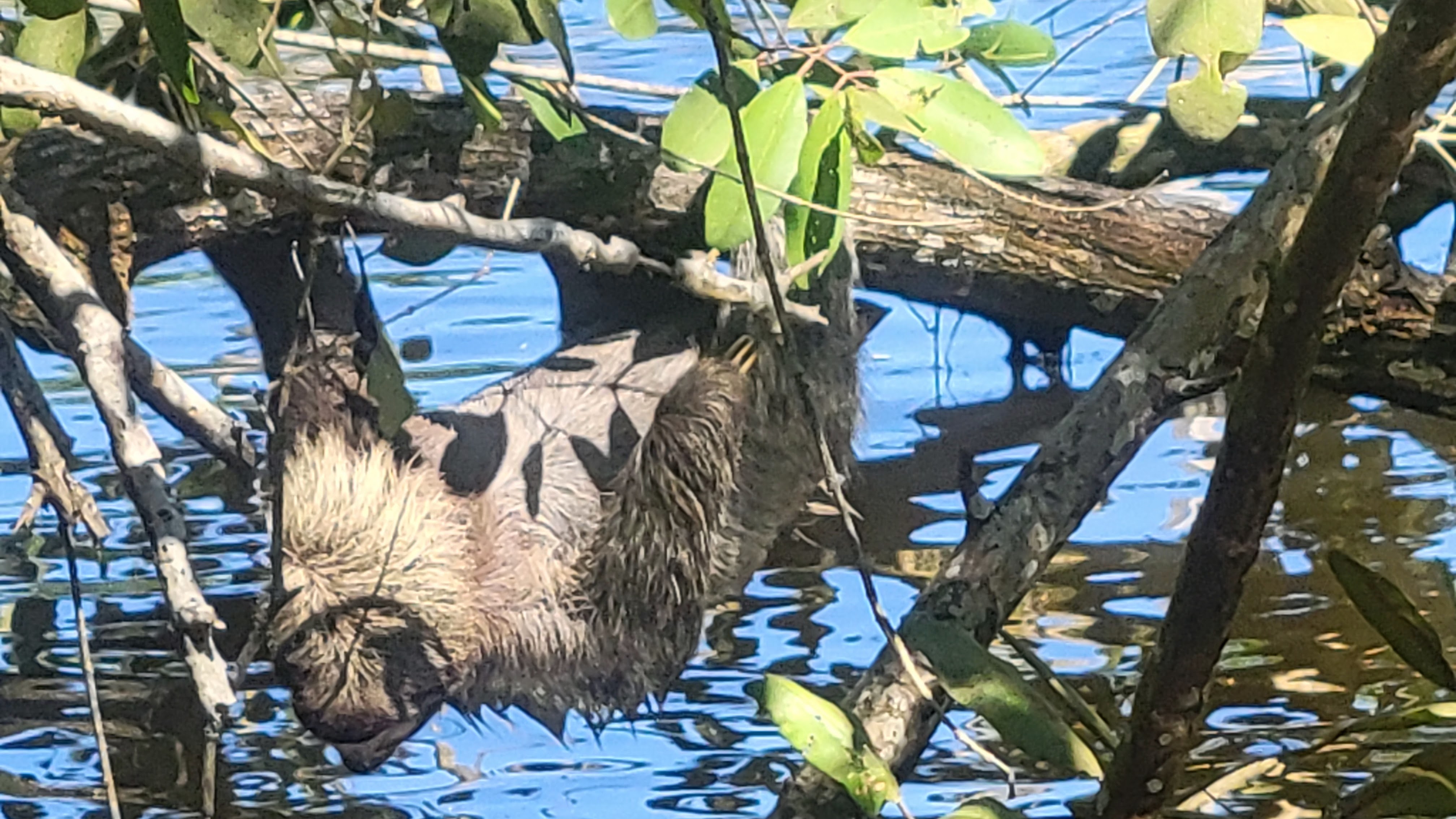
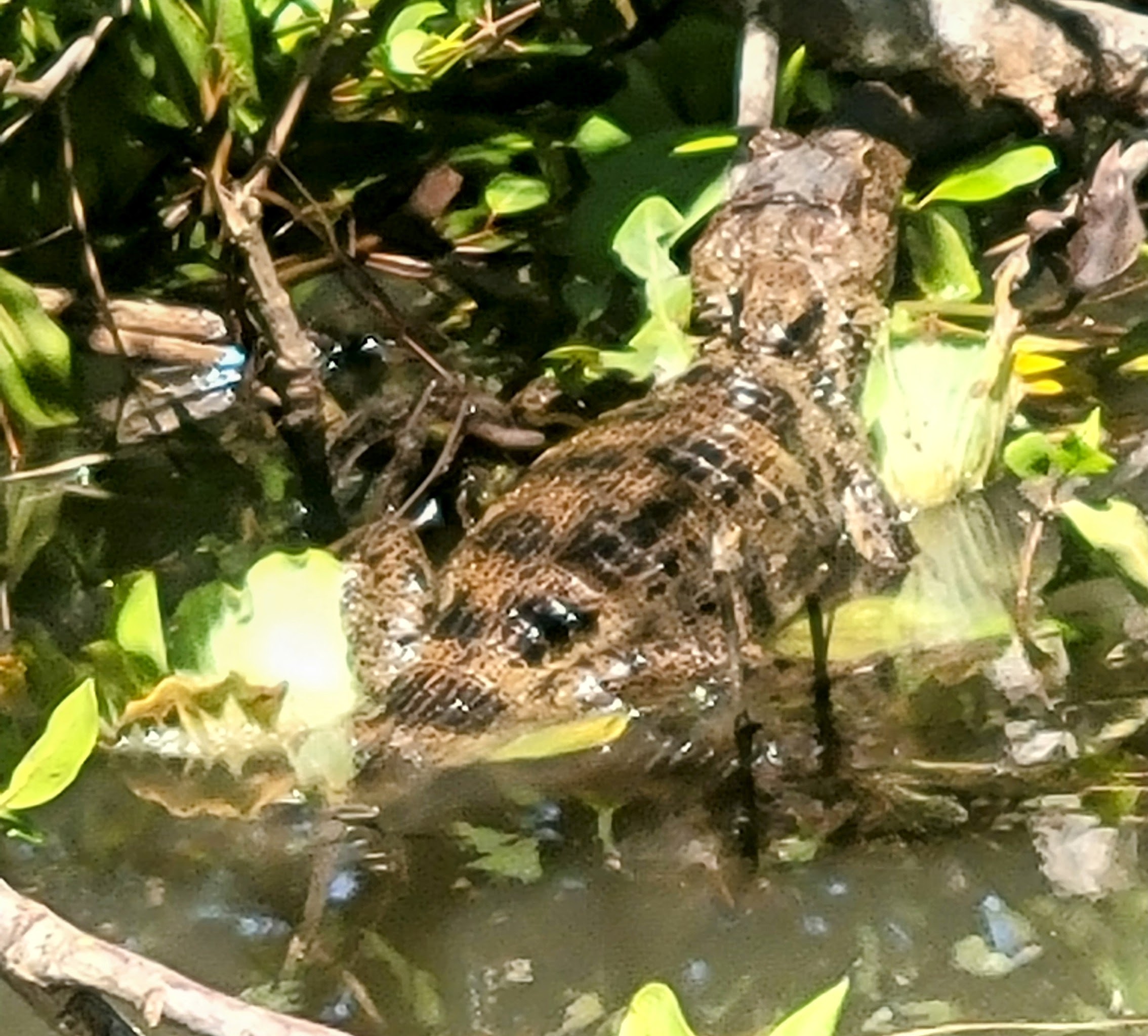
Puerto Limon Costa Rica. Here again we felt no great need for a high priced Holland America excursion but found a Trip Advisor recommended company on the pier offering a reasonably priced tour which included a boat ride on the Tortuguero Canal. We saw birds, monkeys, sloths, alligators and other lizards. It was fun.
sloth
alligator
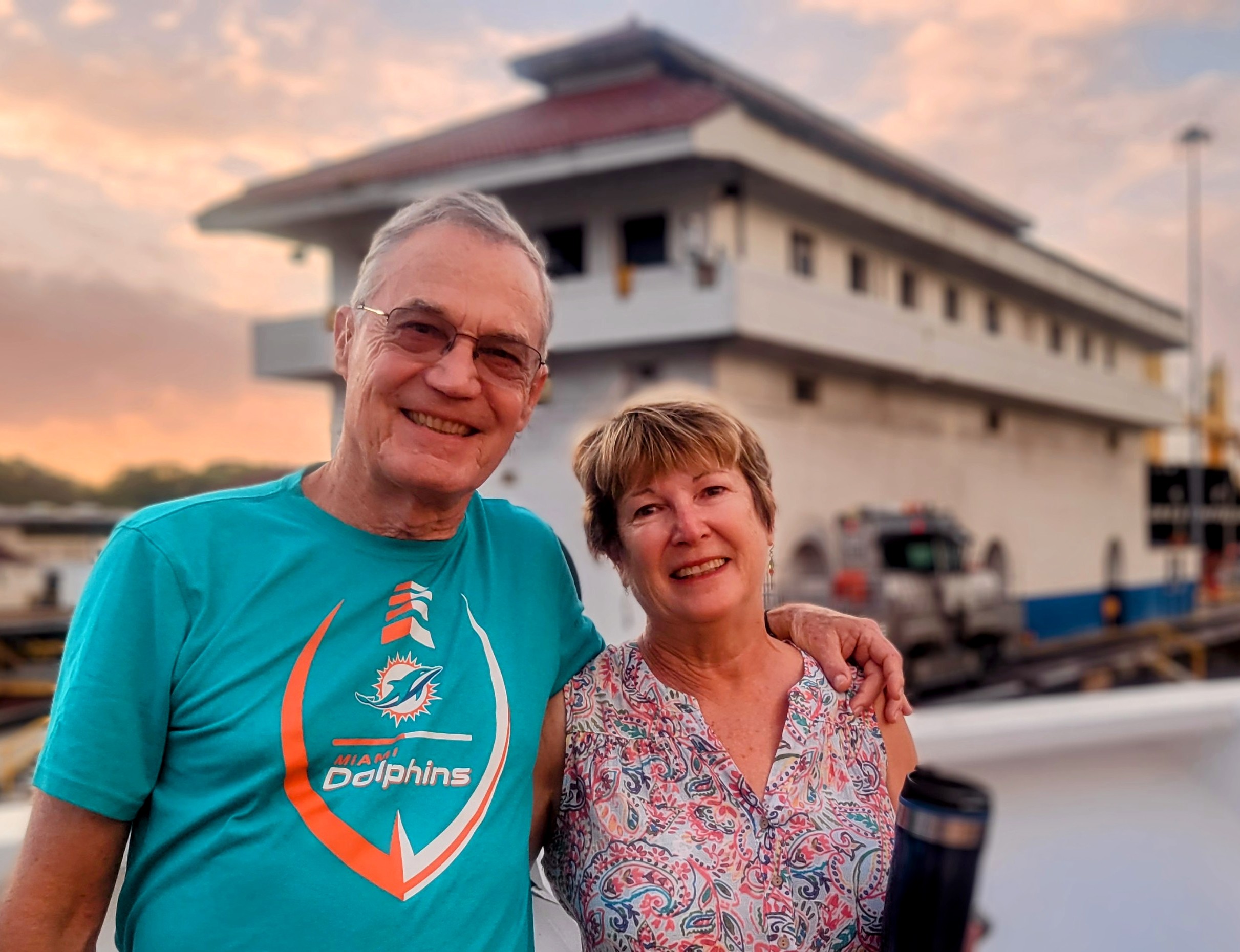
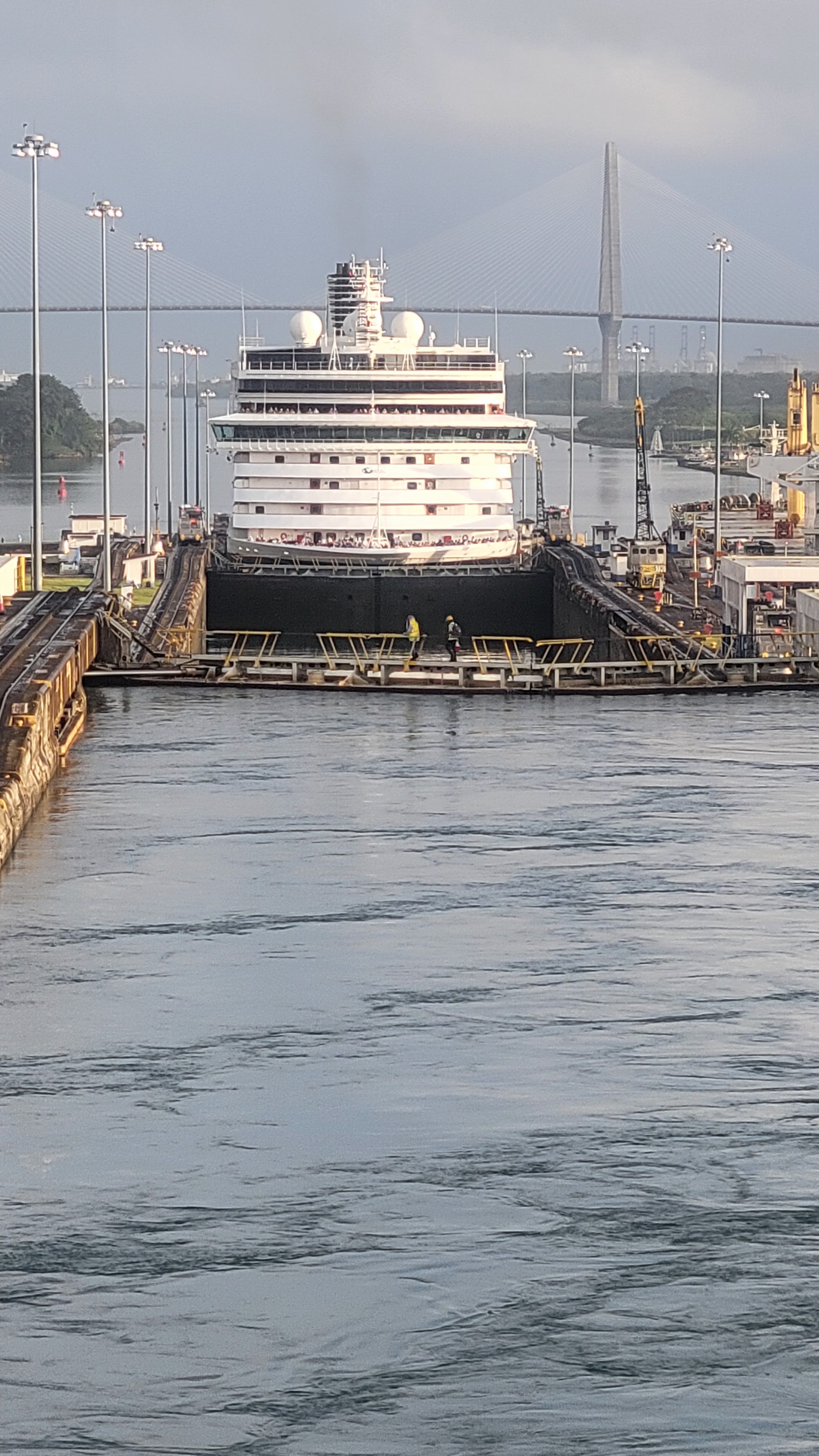
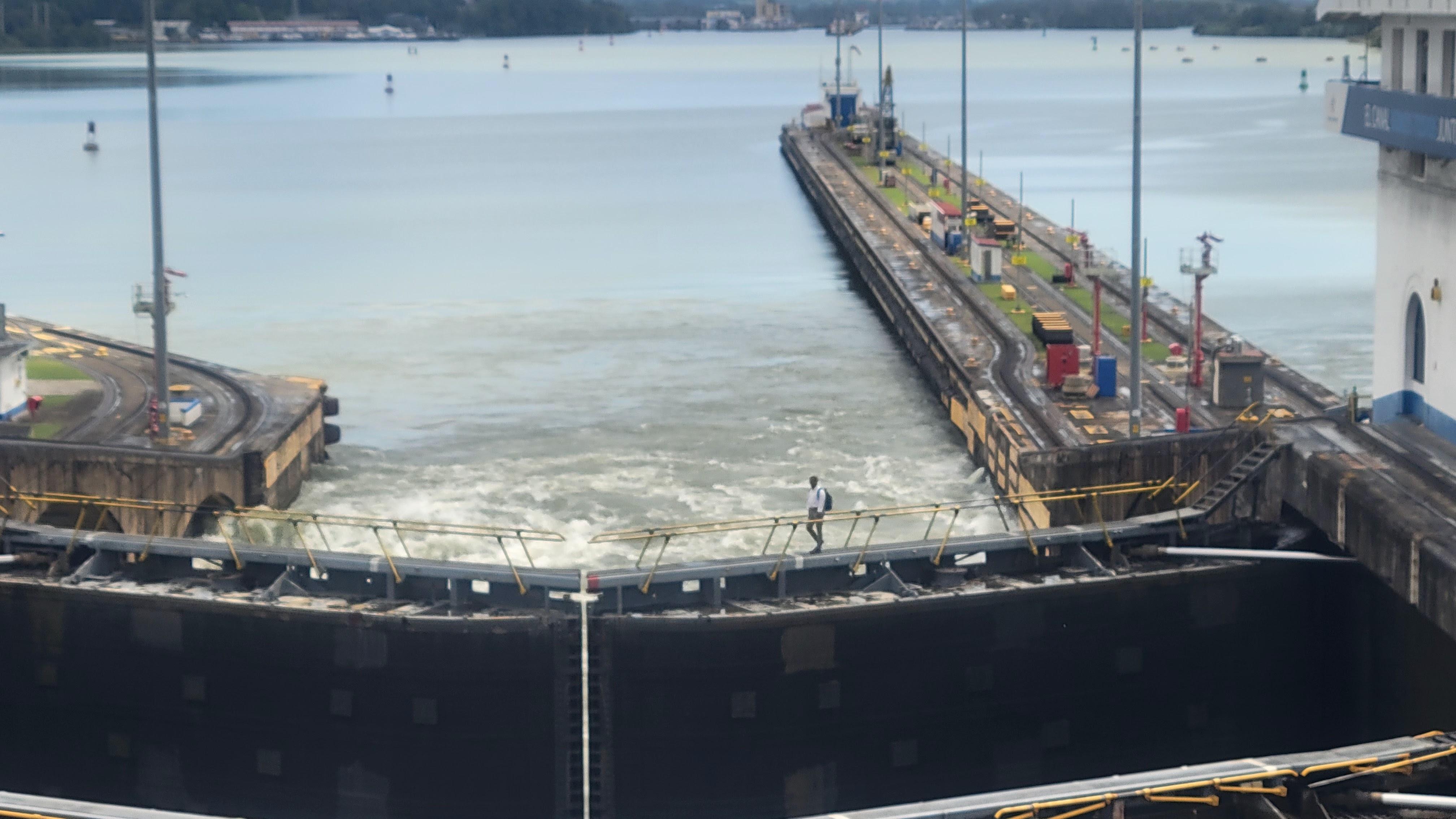
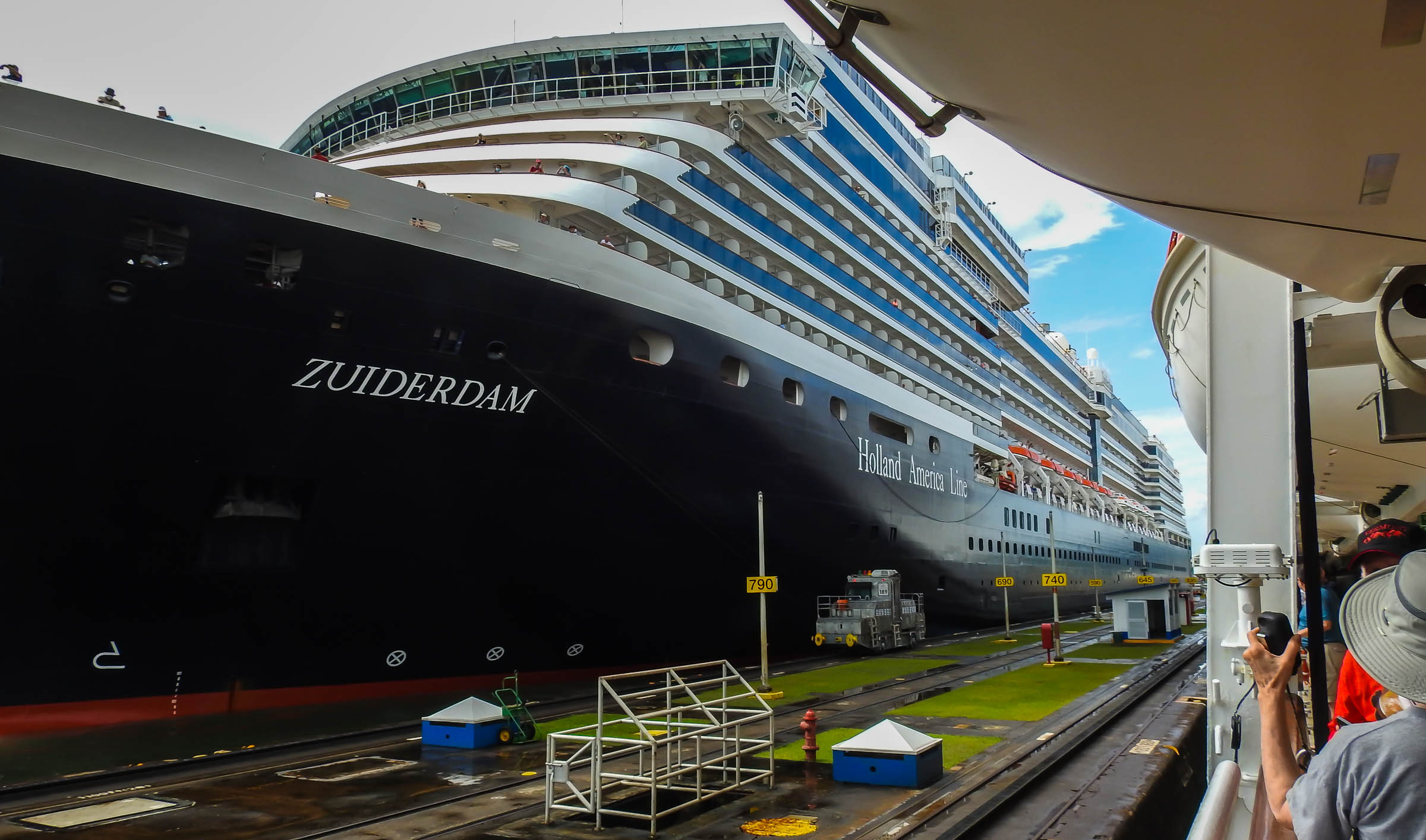
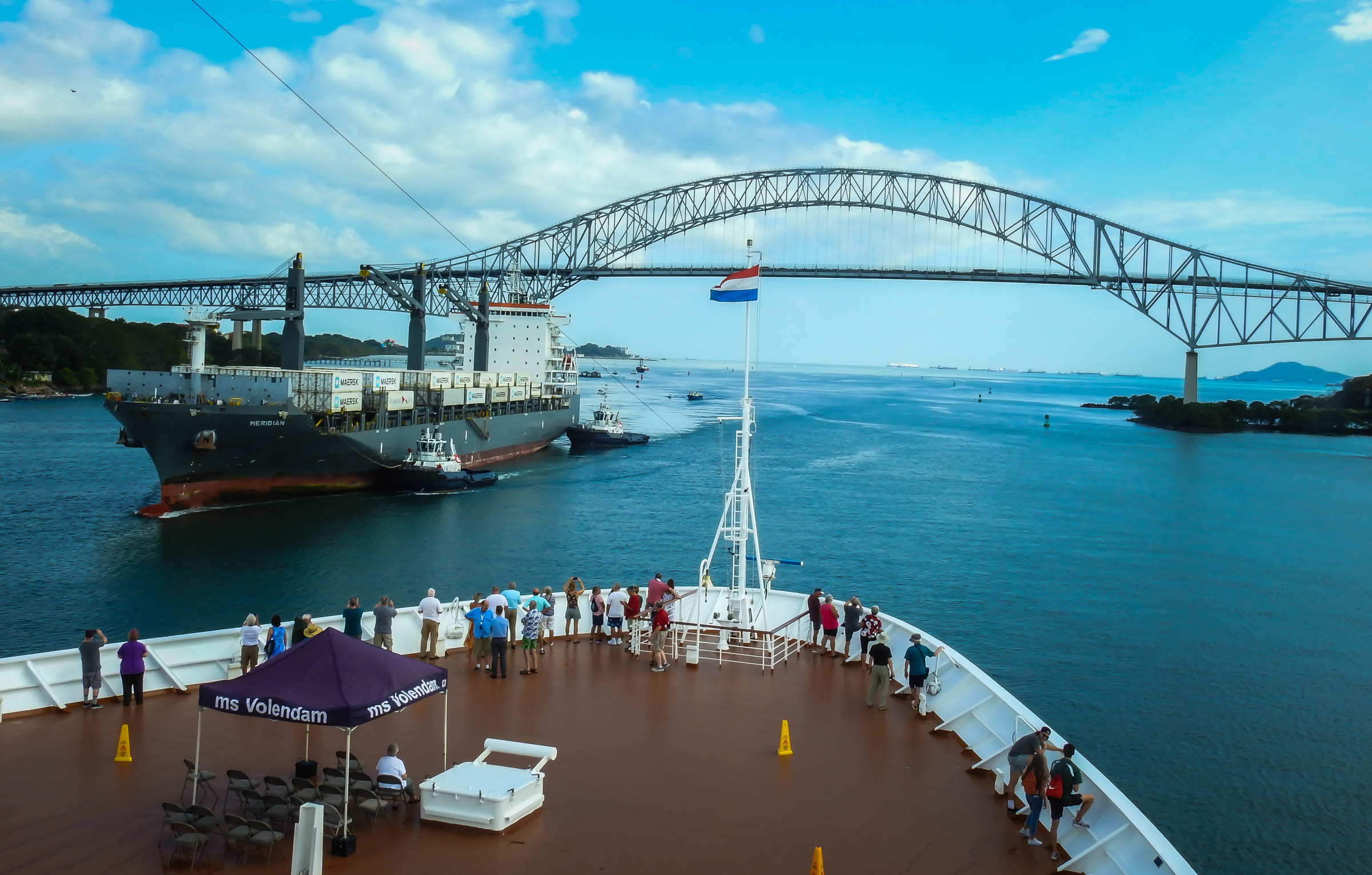
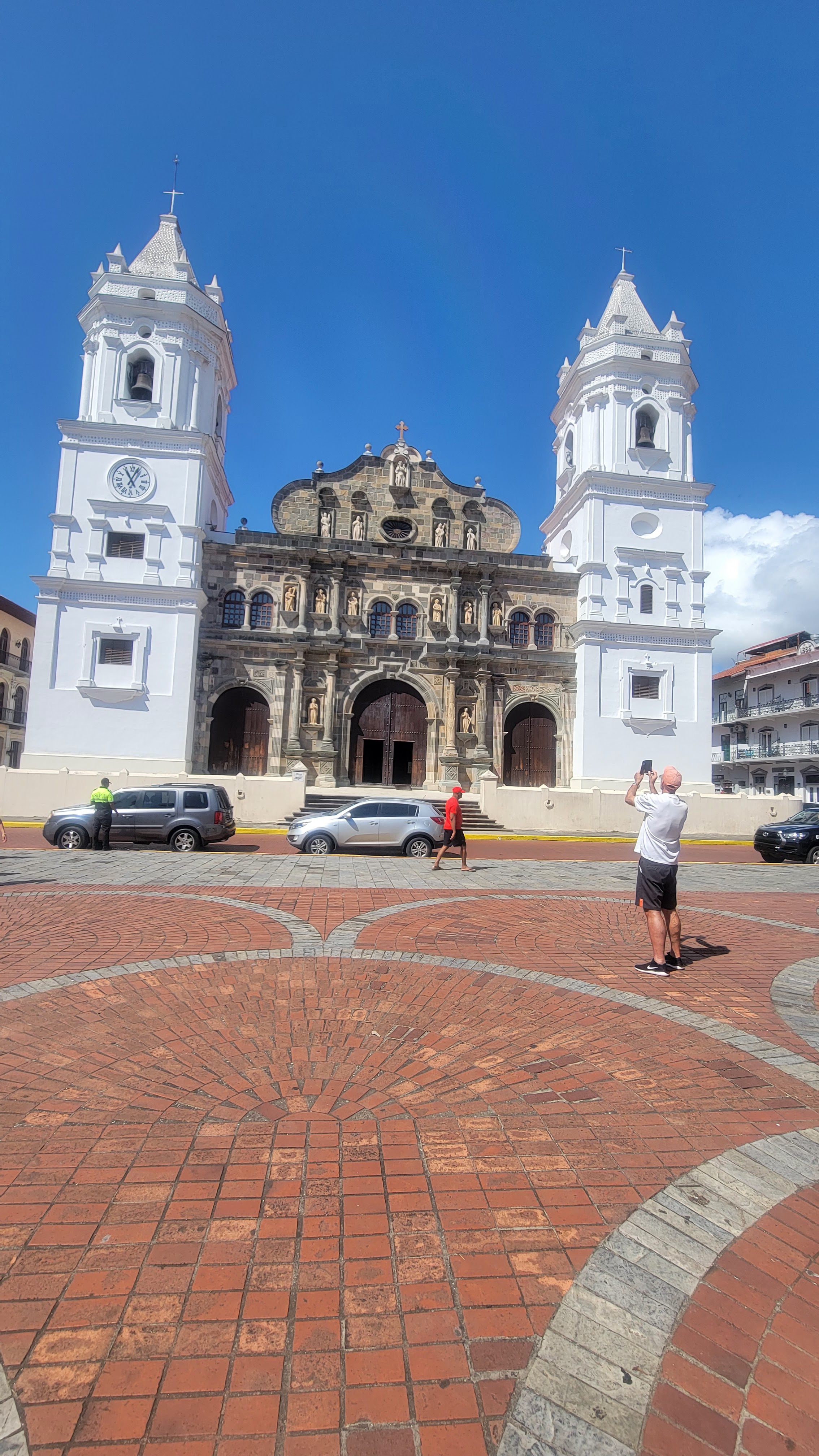
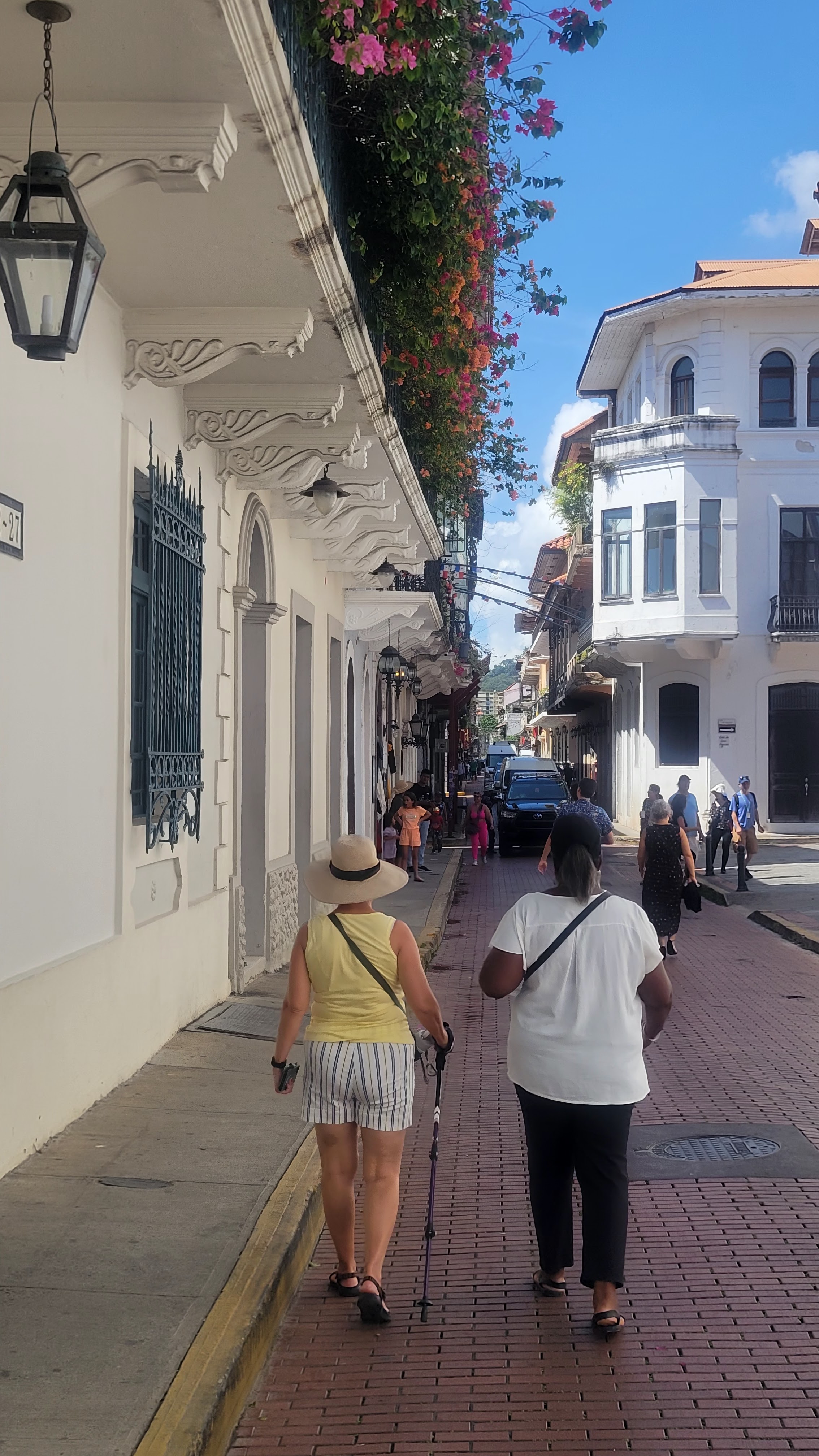
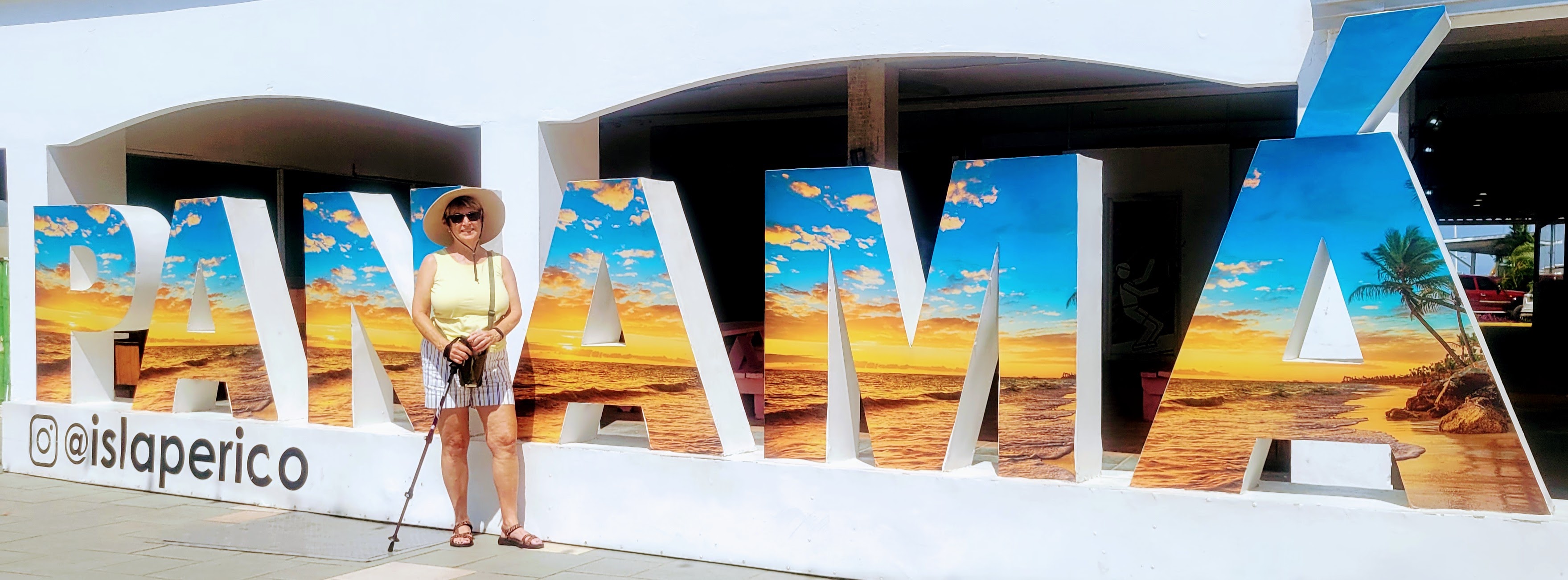
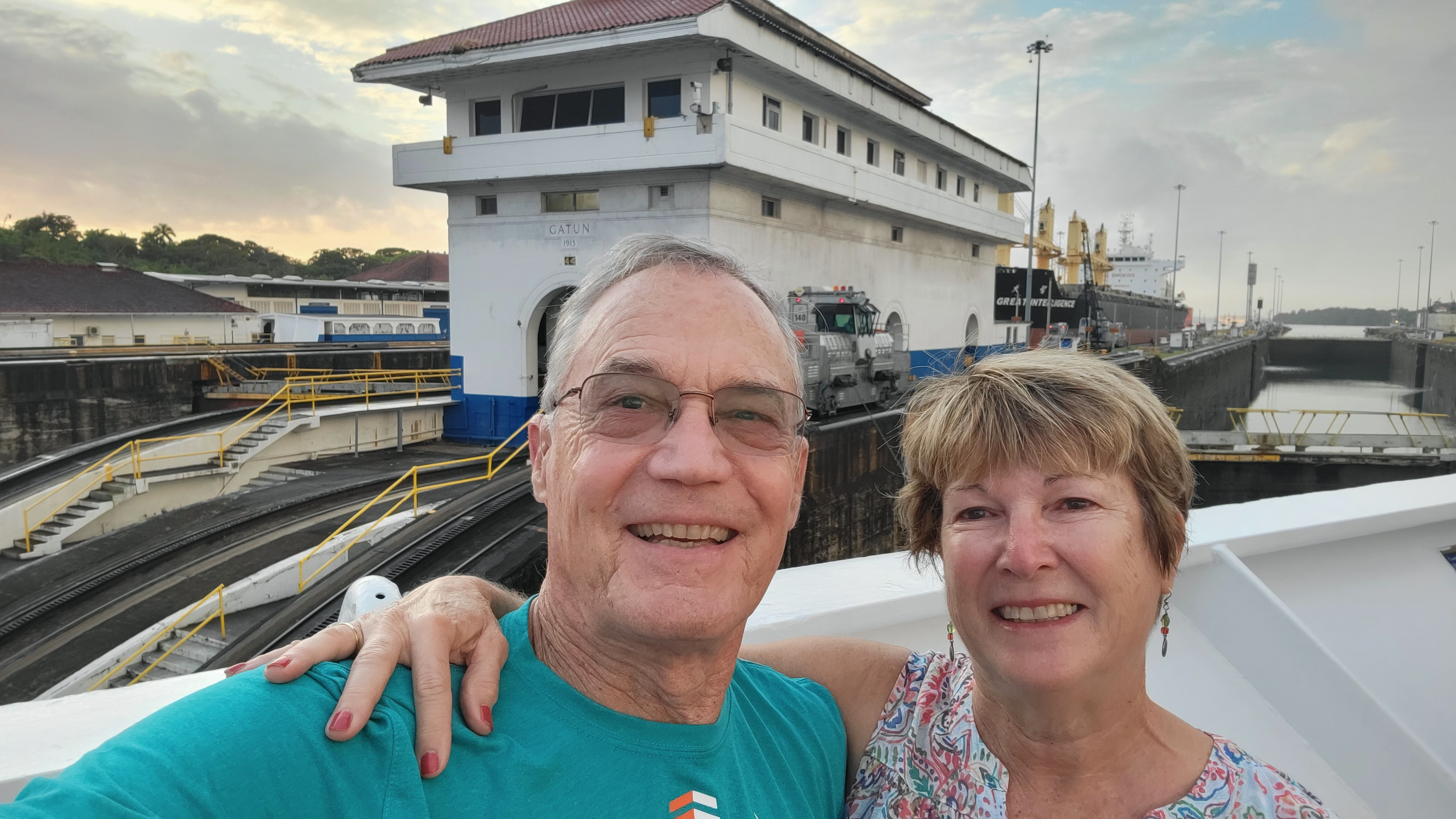
Cruising the Panama Canal. The canal always involves an early start, this time 5am! The captain opened up the bow deck so we could all see the sunrise as we entered the first lock at Gatun. It is exciting to traverse the famed canal. There is so much ship traffic and this time we were accompanied by our sister ship Zuiderdam on her cruise around the world. It was extremely hot and humid. So hot our phones stopped working. After the all day transit of the canal we docked at the new cruise terminal at Fuerte Amador Panama. The next day we grabbed a taxi/walking tour of the modern big city of Panama City as well as the old town, Casco Viejo. From here we head south along the west coast of South America crossing the Equator.
Zuiderdam behind us
Sister ship Zuiderdam in next lock
Panamax freighter in New Panama Canal
Bridge of the Americas
Cathedral in Casco Viejo
walking the old city
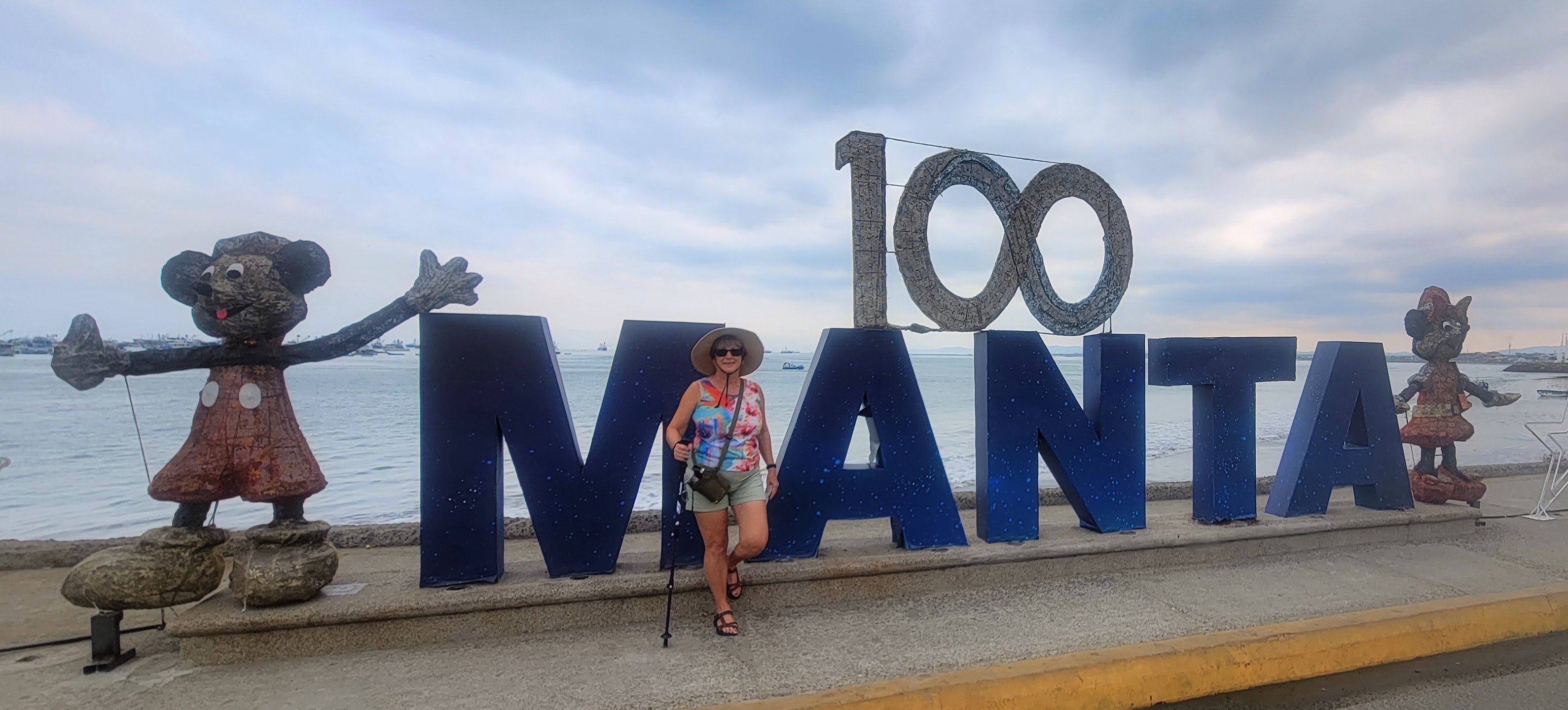
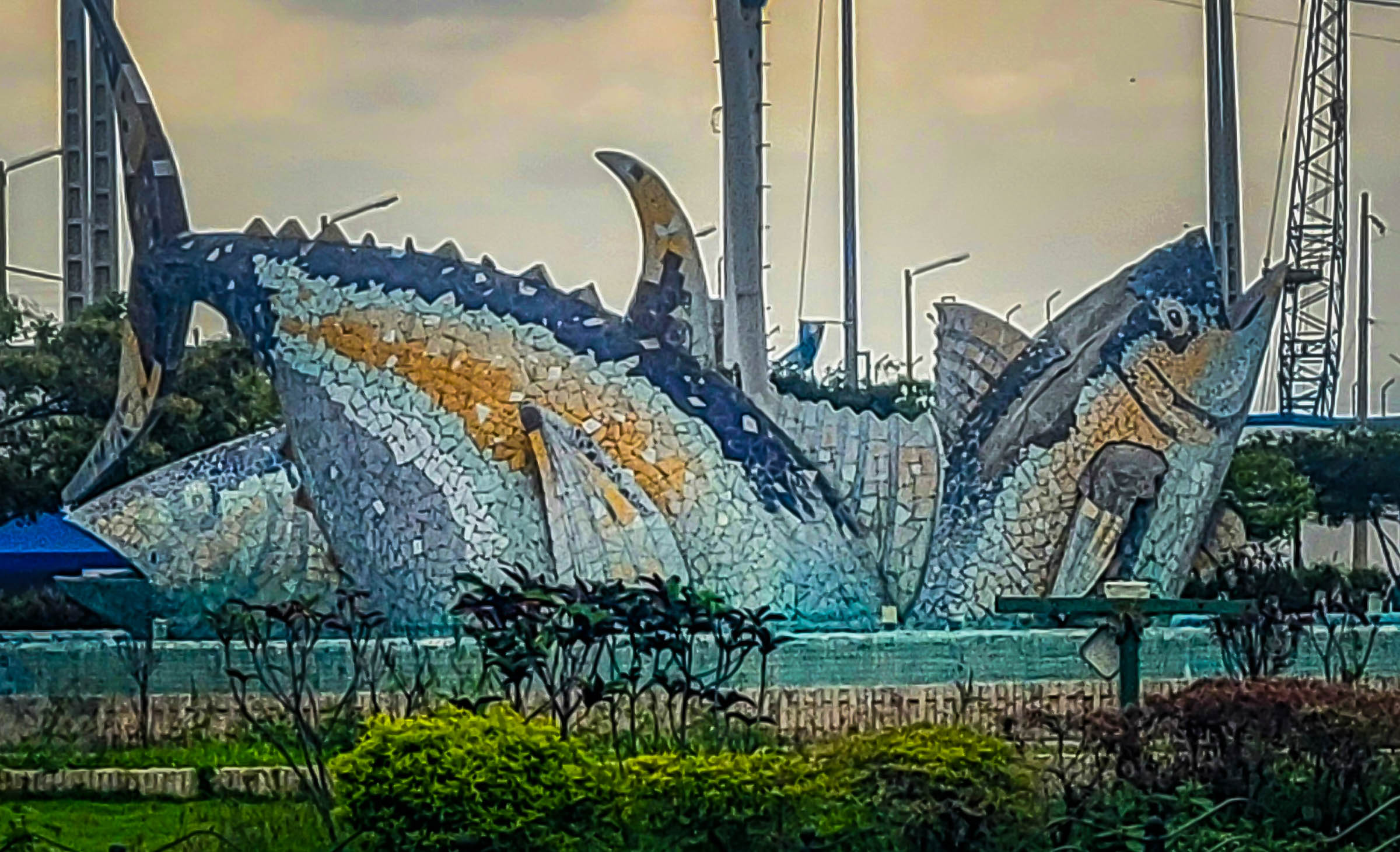
Manta Ecuador. The tuna capital of the world, Manta is home to many expats due to the pleasant climate and low cost of living. The official currency of Ecuador is the US Dollar. The cruise terminal had nice crafts and folk dancers. We bought a Panama hat (they are made in Ecuador) and a beautiful embroidered ladies top.
Tuna capital of the world
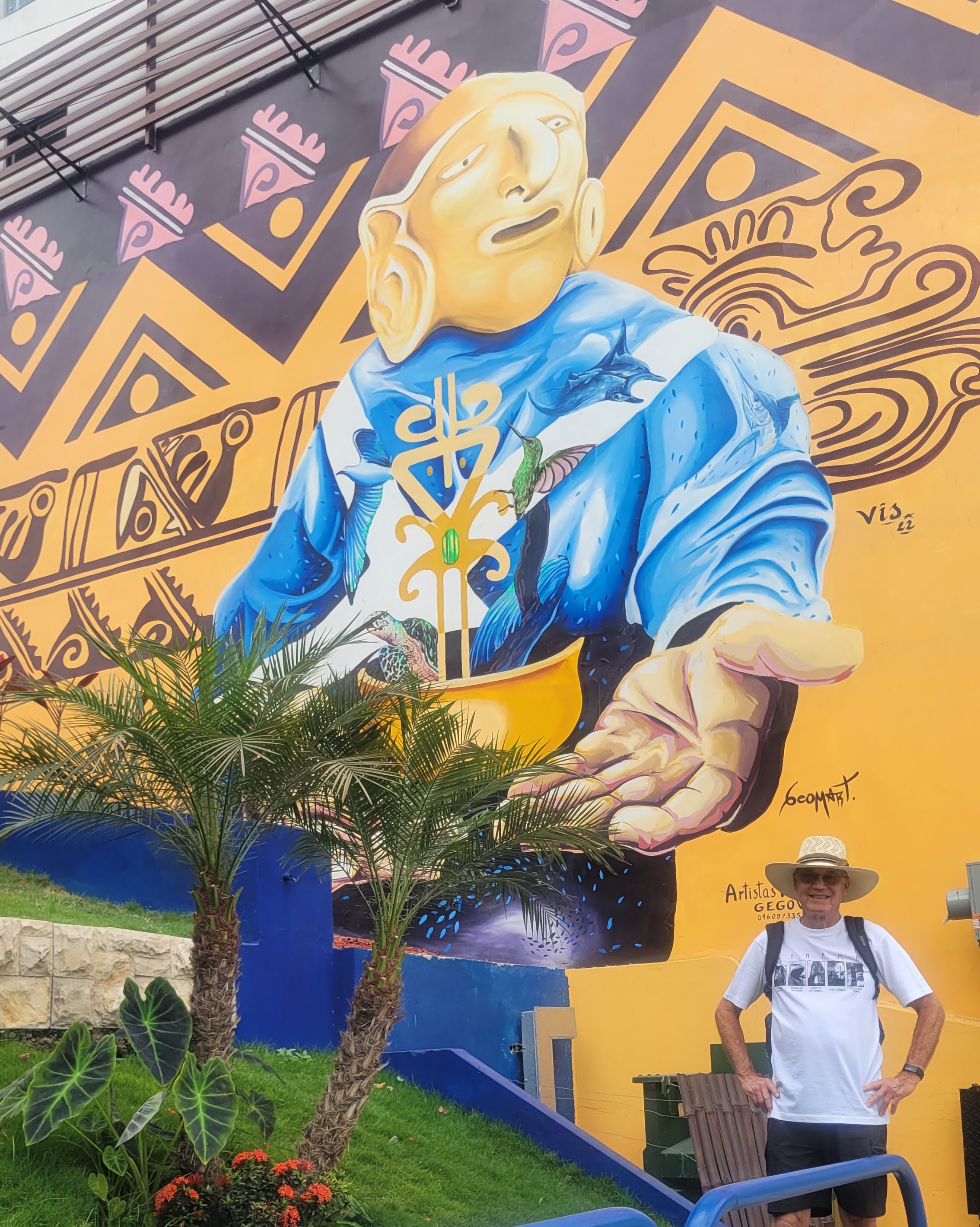
one of many beautiful murals in Manta
Fishing sculpture
Beautiful colonial era museum
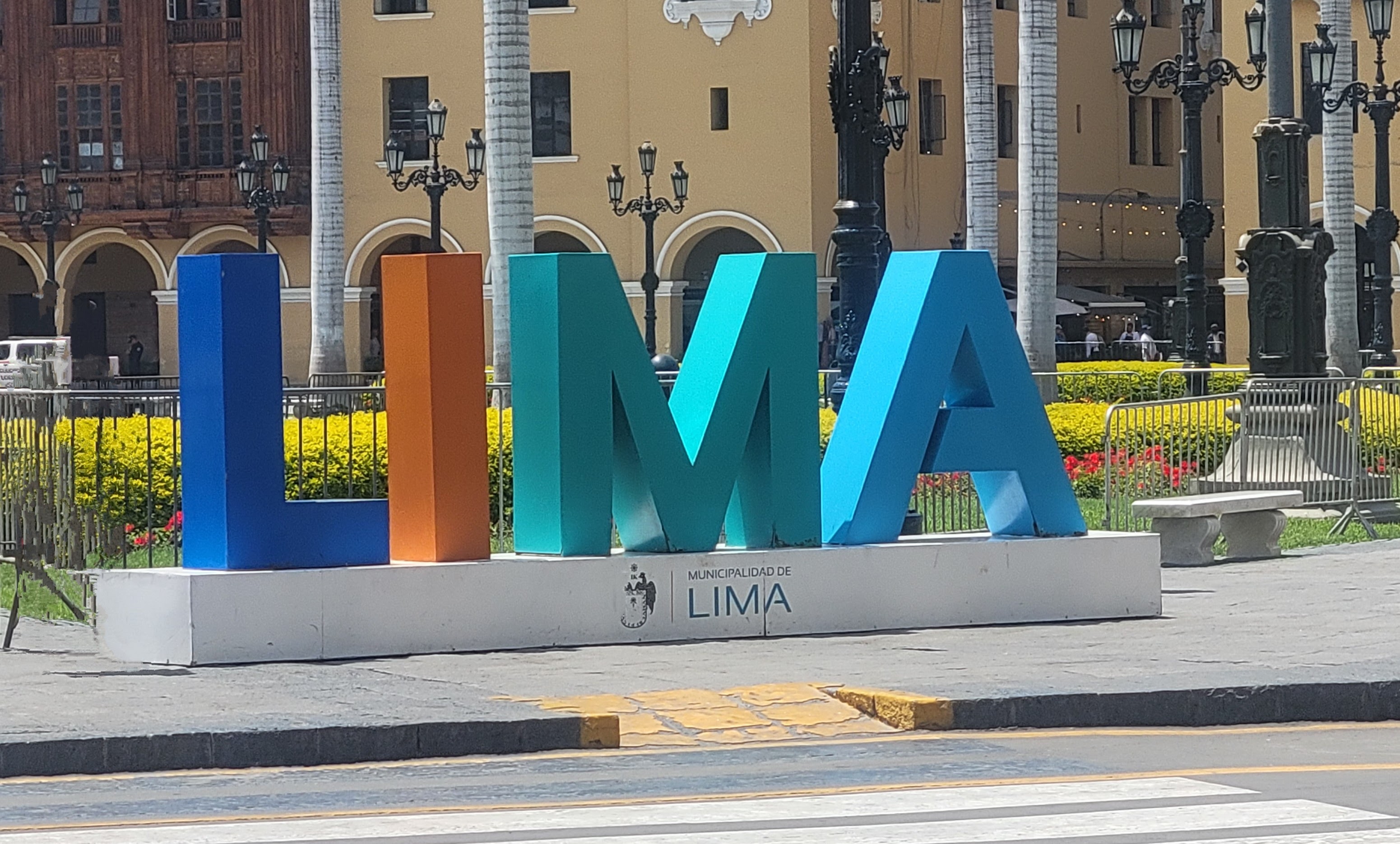
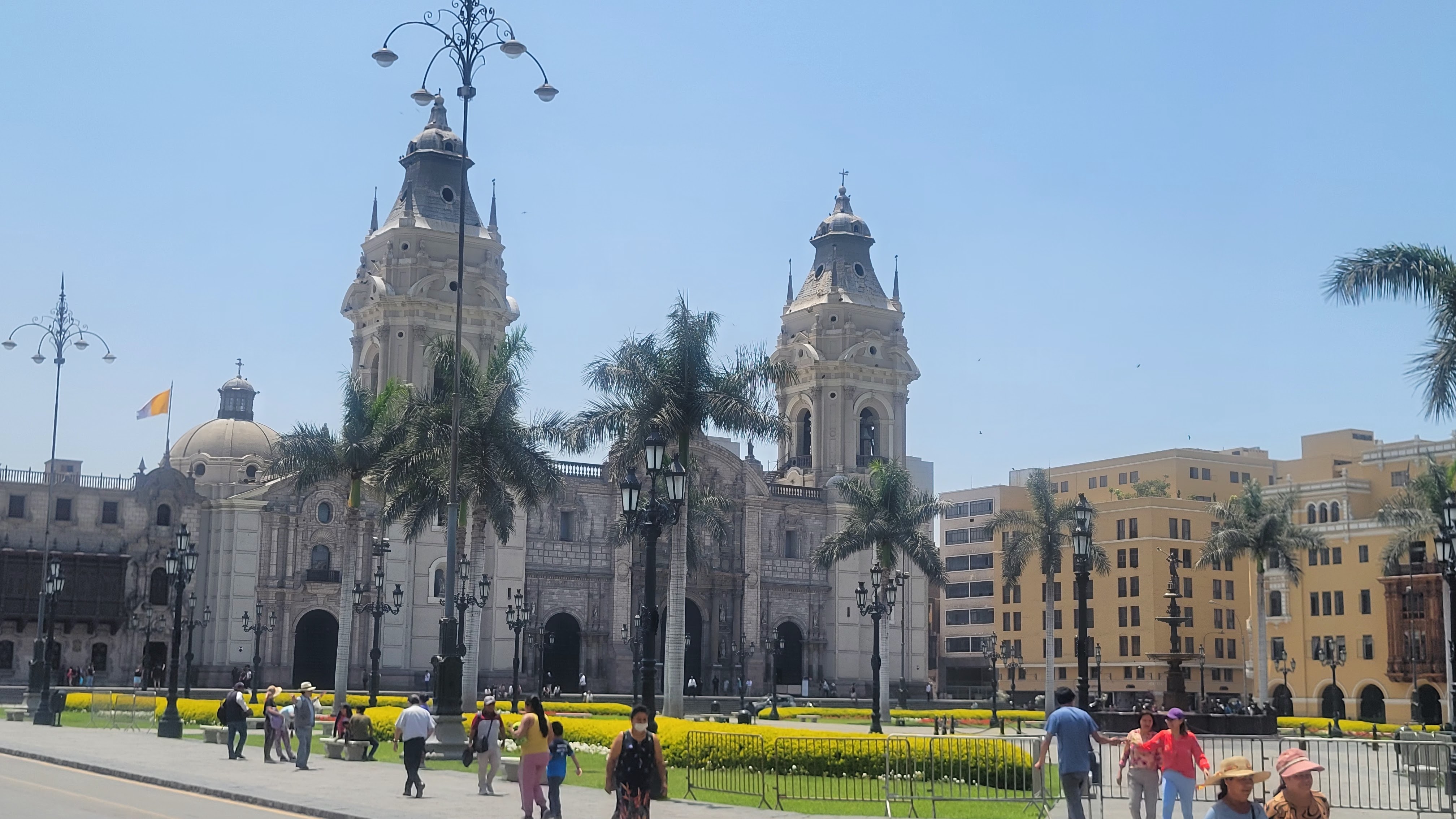
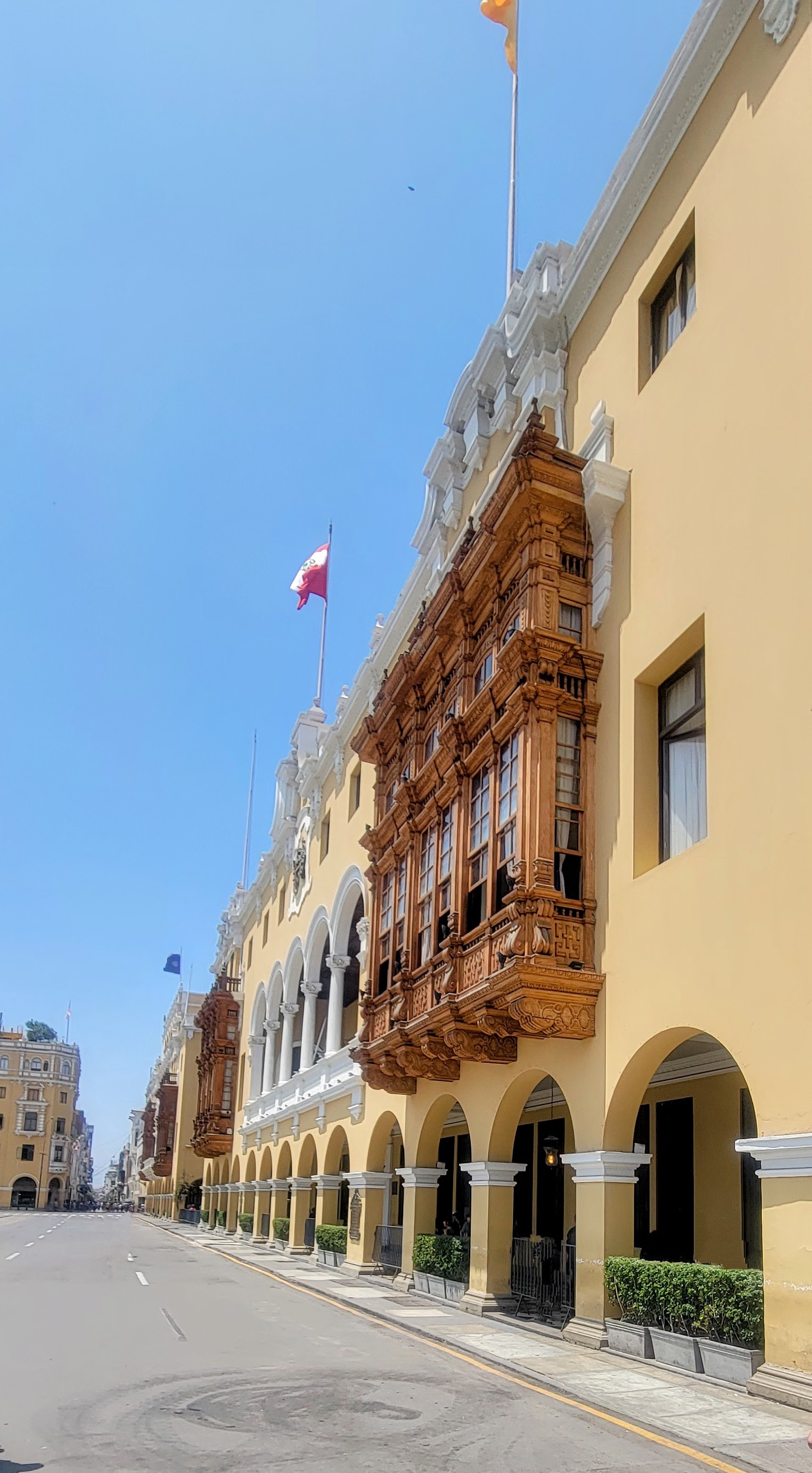
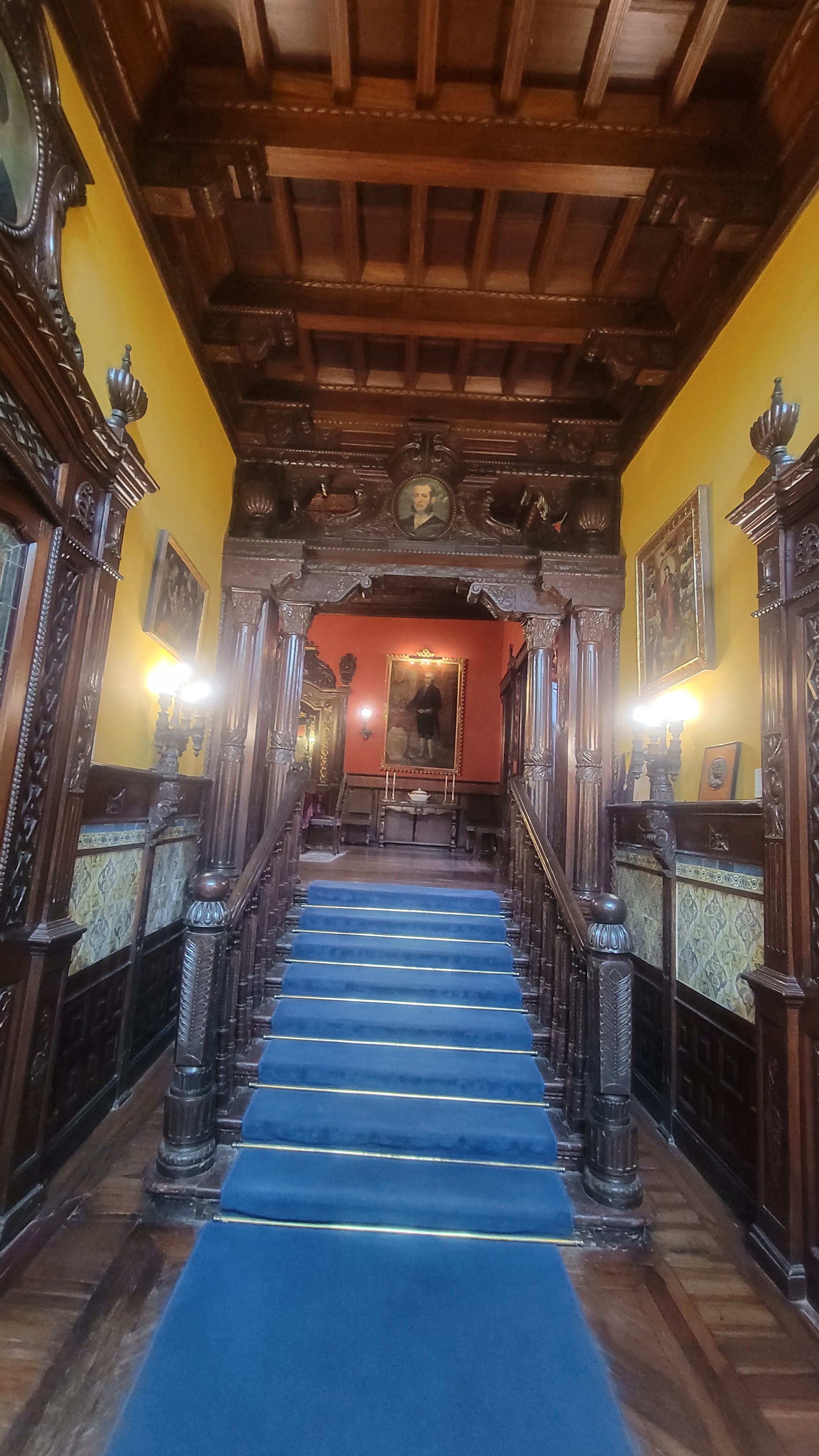
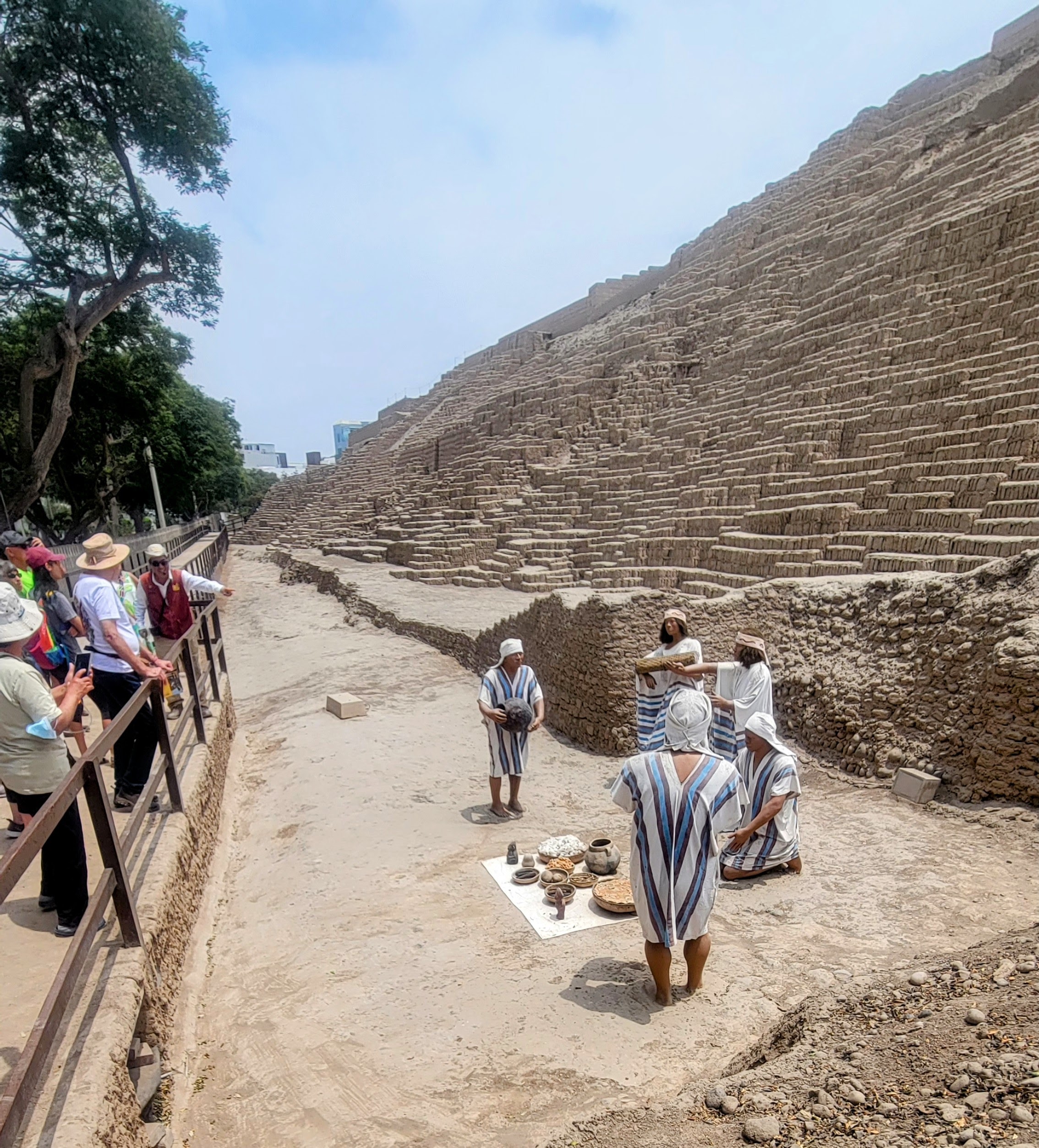
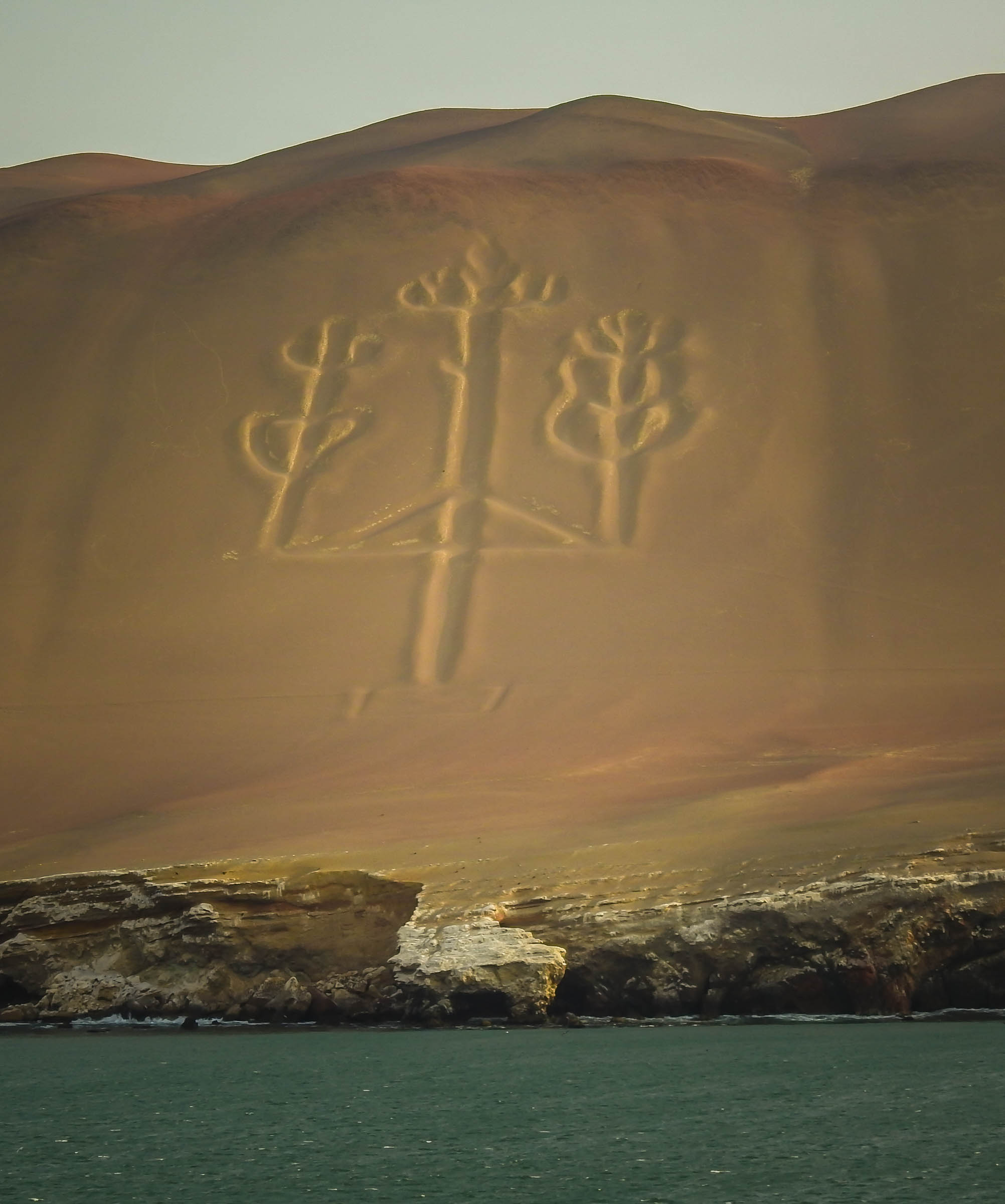
Callao (Lima) Peru. At the time of our visit Peru was experiencing political turmoil and there was a possibility we would not be able to dock in Callao, Lima’s port city. We docked without incident for 3 days and 2 nights which allowed some guests to take overnight excursions to the Galapagos Islands and Machu Picchu. A local craft market setup on the pier and we found beautiful Alpaca yarn and sweaters as well as jewelry and other gifts. Our travel agent Cruise Specialists provided a complimentary tour of Lima Then and Now. The first stop in the center of old Lima was Casa Solariega de Aliaga Lima’s oldest house. The original owner was one of the early conquistadors from Spain and the home has been in the same family since. After a walking tour where we saw the Presidential Palace, City Hall and Cathedral we traveled to a 60 year old mansion Casa Luna in the exclusive San Isidro neighborhood. The home while still lived in had museum quality collections of nativity scenes from all over Peru and the world. They served Pisco Punch a local favorite alcoholic beverage. There was heightened security but no disturbances while we were in Lima. Since the port of Callao is an area of poverty and street crime the cruise line offered a free shuttle bus to a good area to tour. Here we visited Miraflores, an upscale suburb with many craft markets and the 2000 year old site of Huaca Pucclana. We had a great tour of this amazing archeological site built 14 civilizations before the Inca. It is a very large pyramid structure built of vertical adobe bricks. One reason the site is so well preserved is that Peru is a very dry place. We learned it had not rained in Lime since 1972! There is plenty of water though due to rivers from the Andes. Afterwards we enjoyed a lunch of Peruvian cuisine at the adjacent restaurant. The craft vendors on the pier had great deals on Alpaca yarn and sweaters. Our cruise continued to General San Martin which is a port city near Paracas and Pisco Peru. We had hoped to visit the Tambo Colorado archeological site but it was closed for restorative work. This is also the area of the mysterious Nazca Lines and we good a good look at the Paracas Candleabra from the ship. This geoglyph was carved 2 feet into the hillside, stands 600 feet tall and has been dated to 200 BC. The meaning and purpose of the site remain a mystery.
Cathedral in central Lima
Beautiful colonial Lima
Casa Solariega
Huaca Pucclana archeological site
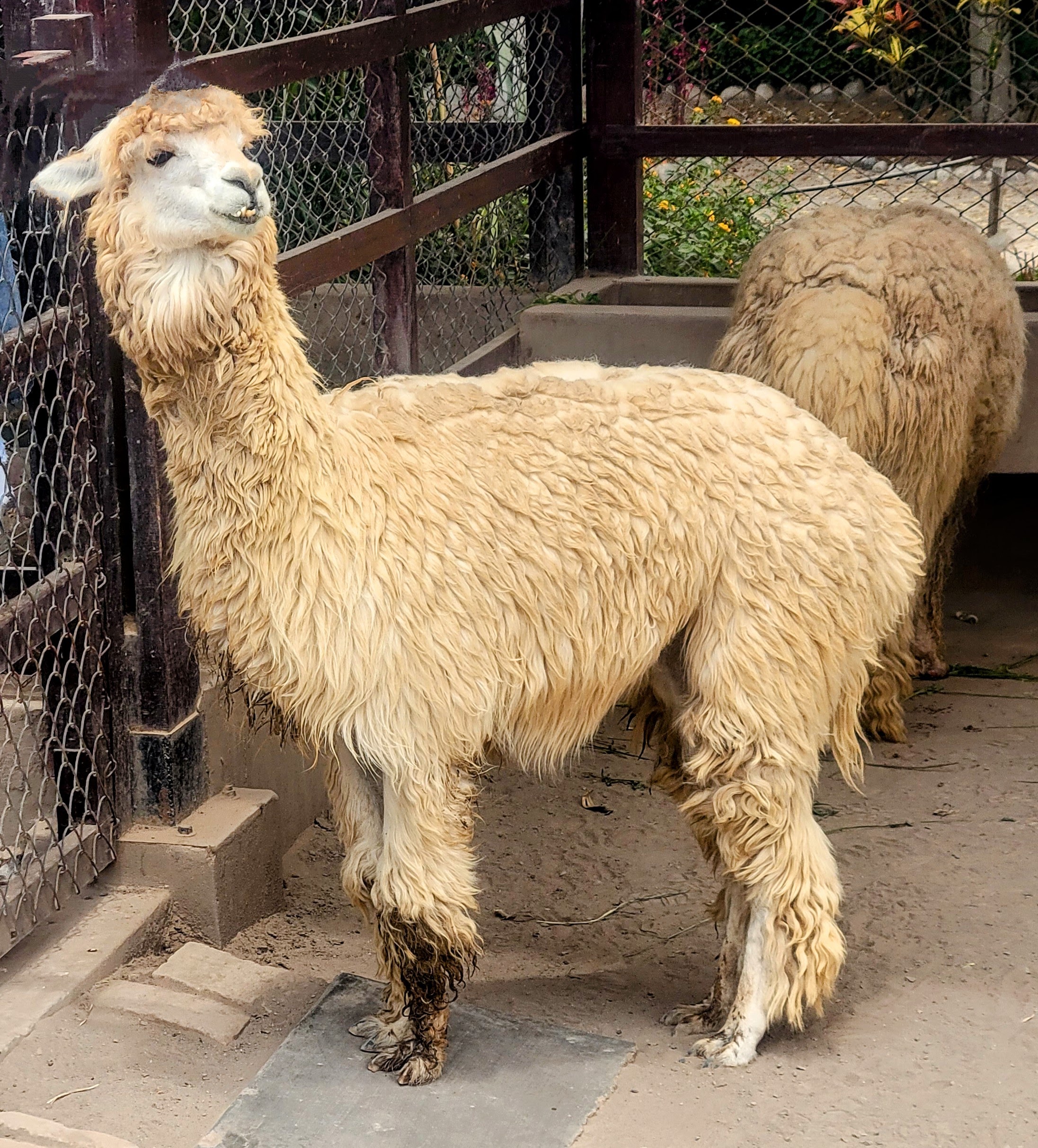
Alpaca, not llama
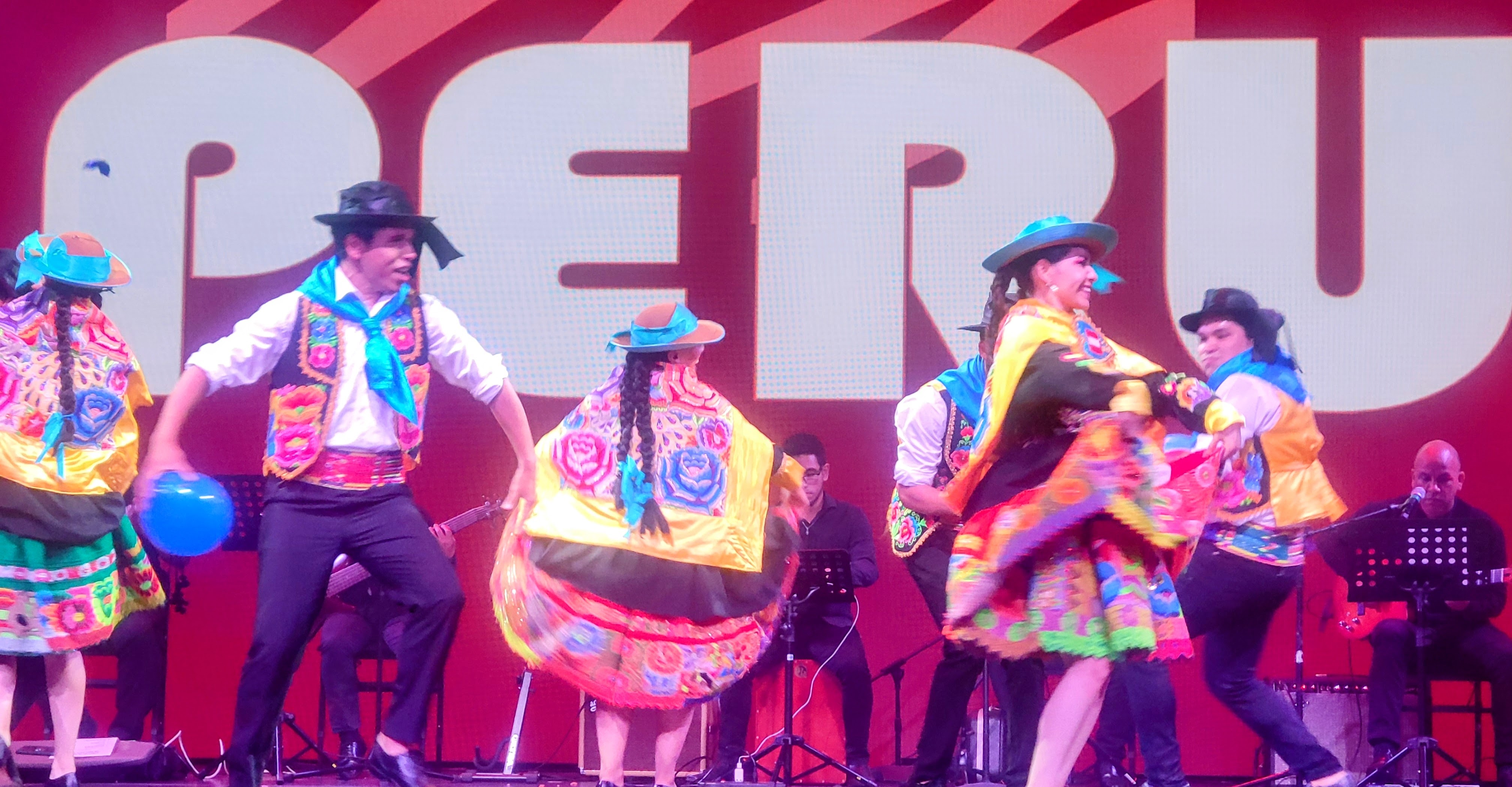
Peruvian Folkloric show on ship
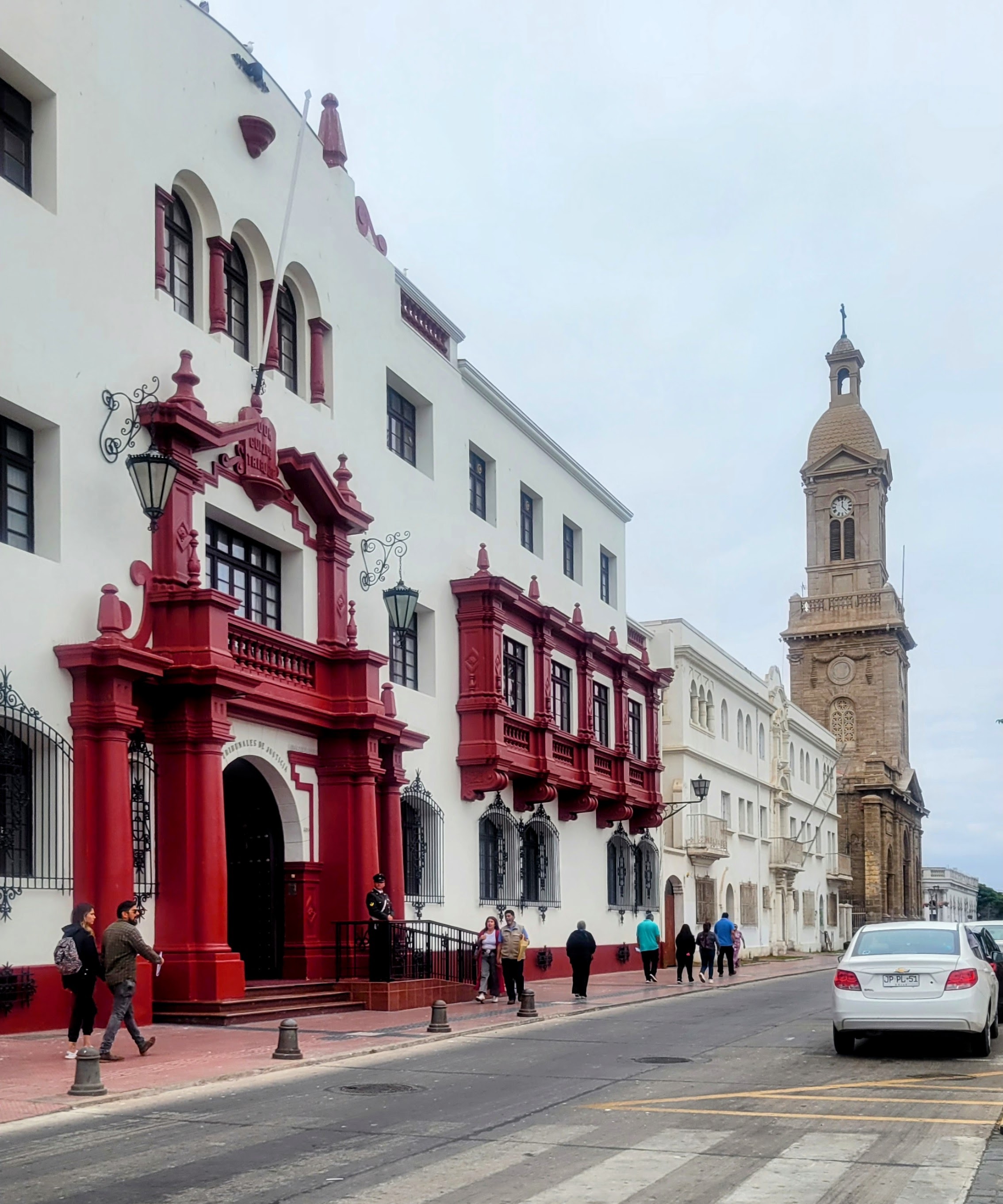
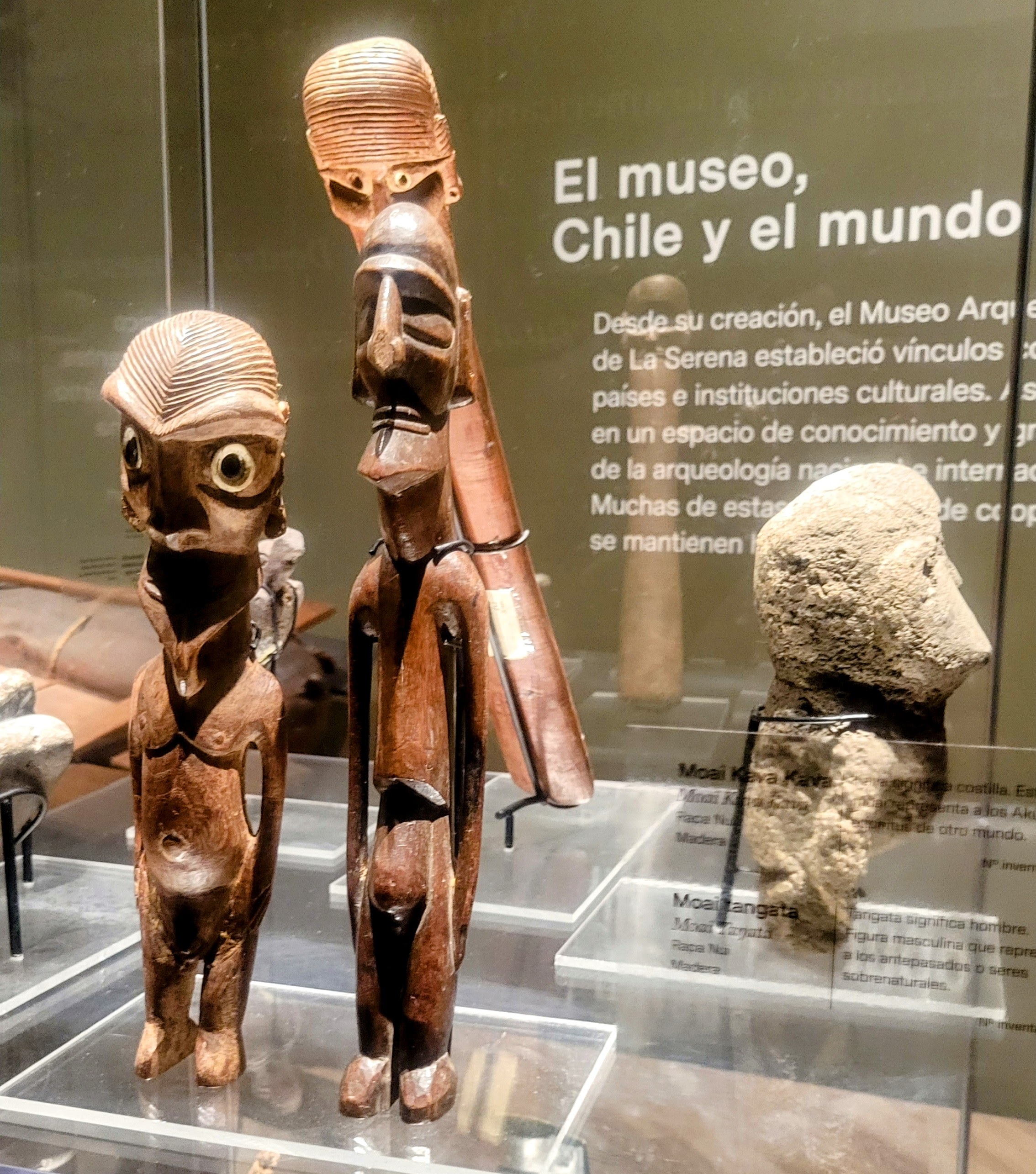
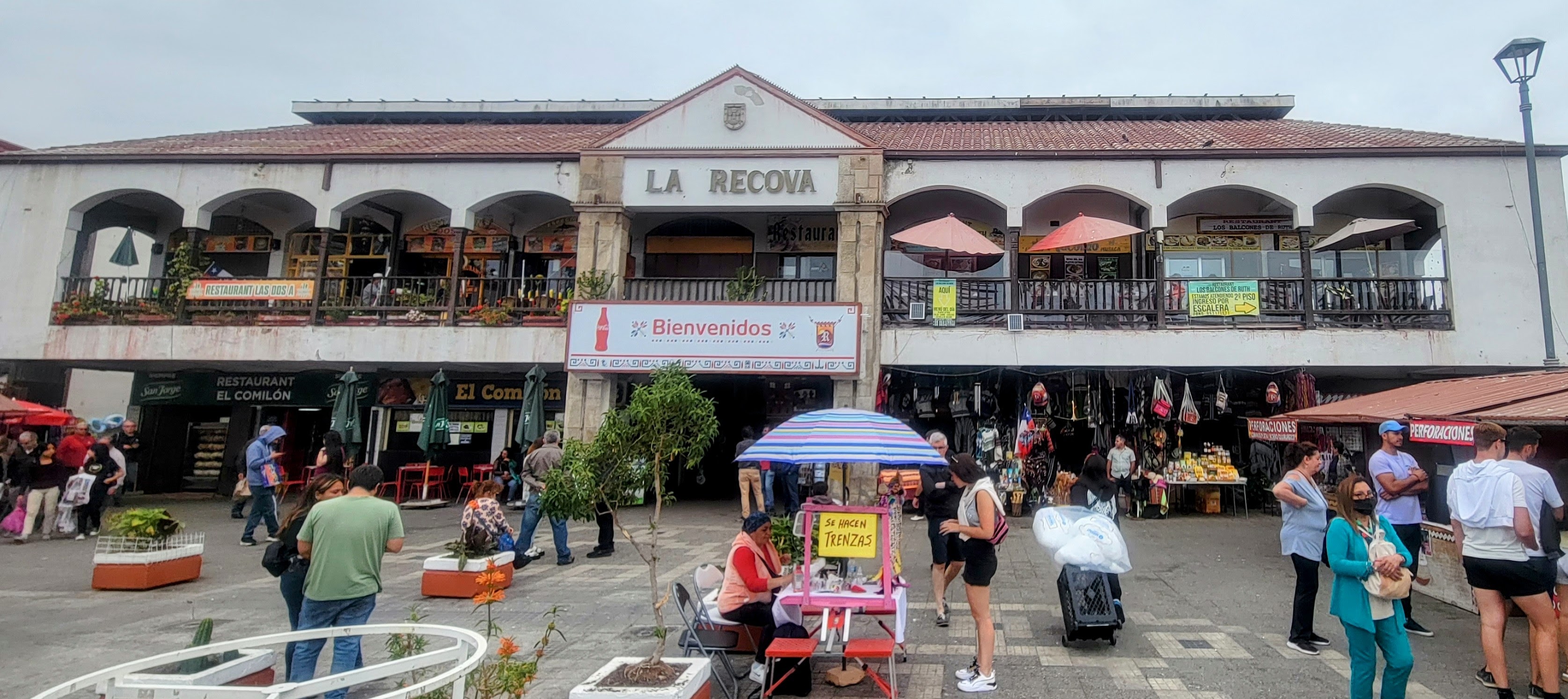
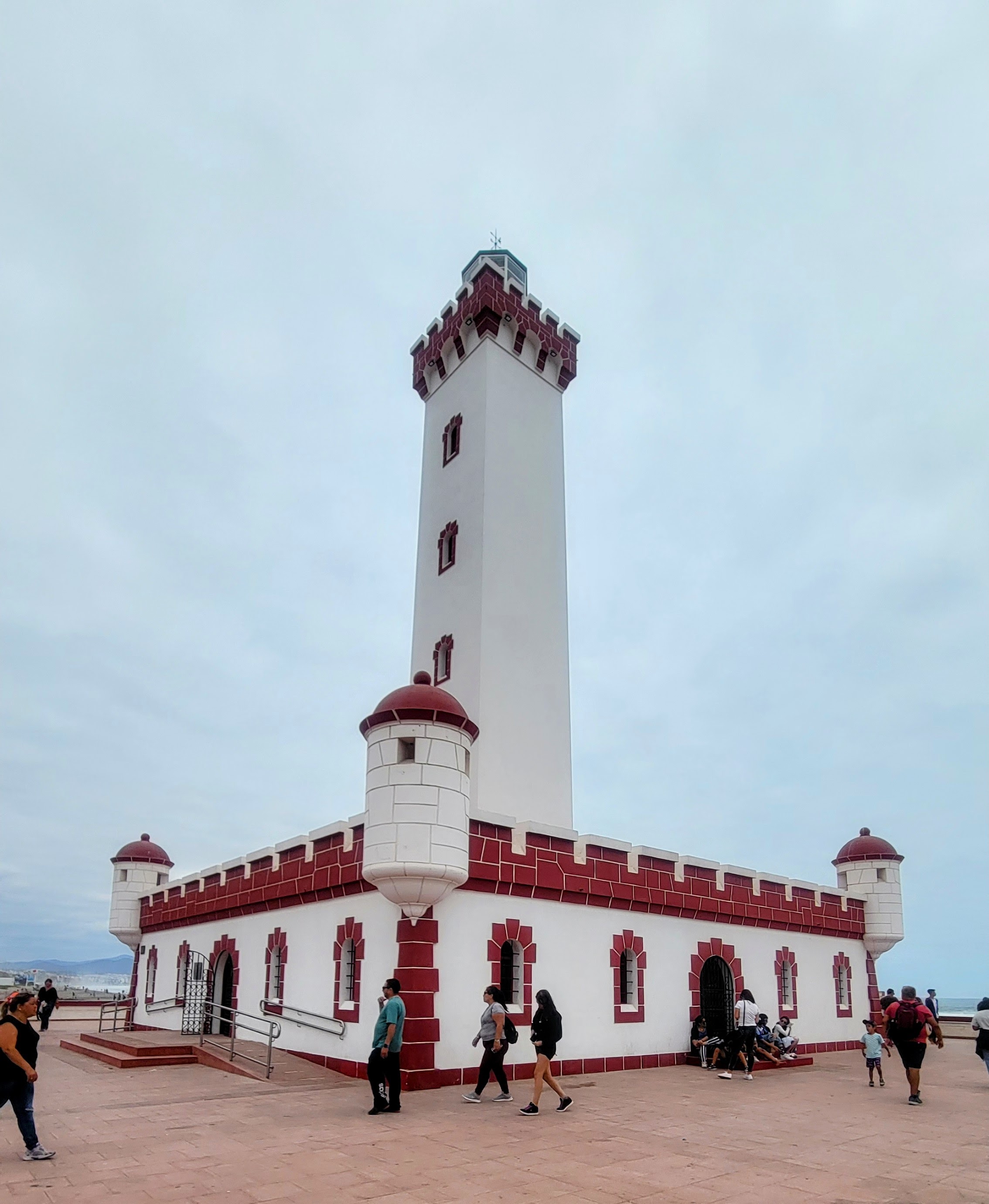
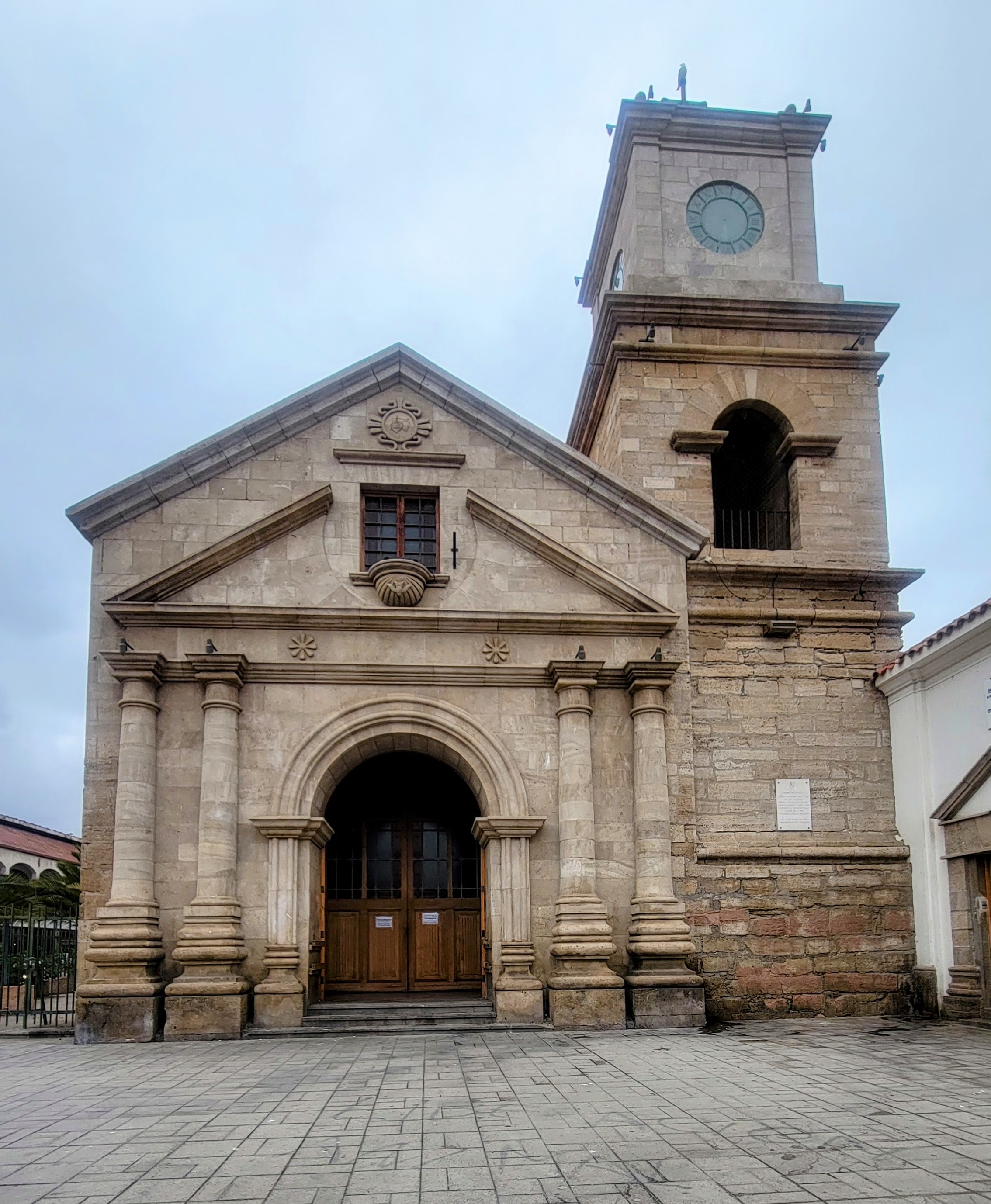
Coquimbo Chile. Coquimbo was a port city adjacent to La Serena, the second oldest city in Chile. Its a popular vacation destination for Chileans and Argentinians. We hired a taxi and toured the Museo Arceologico and enjoyed the colonial architecture of this old place with its churches, civic buildings, street music, empanadas and beautiful lighthouse.
La Serena city hall
Great archeological museum
La Recova craft market
Faro Blanco lighthouse
Massive church
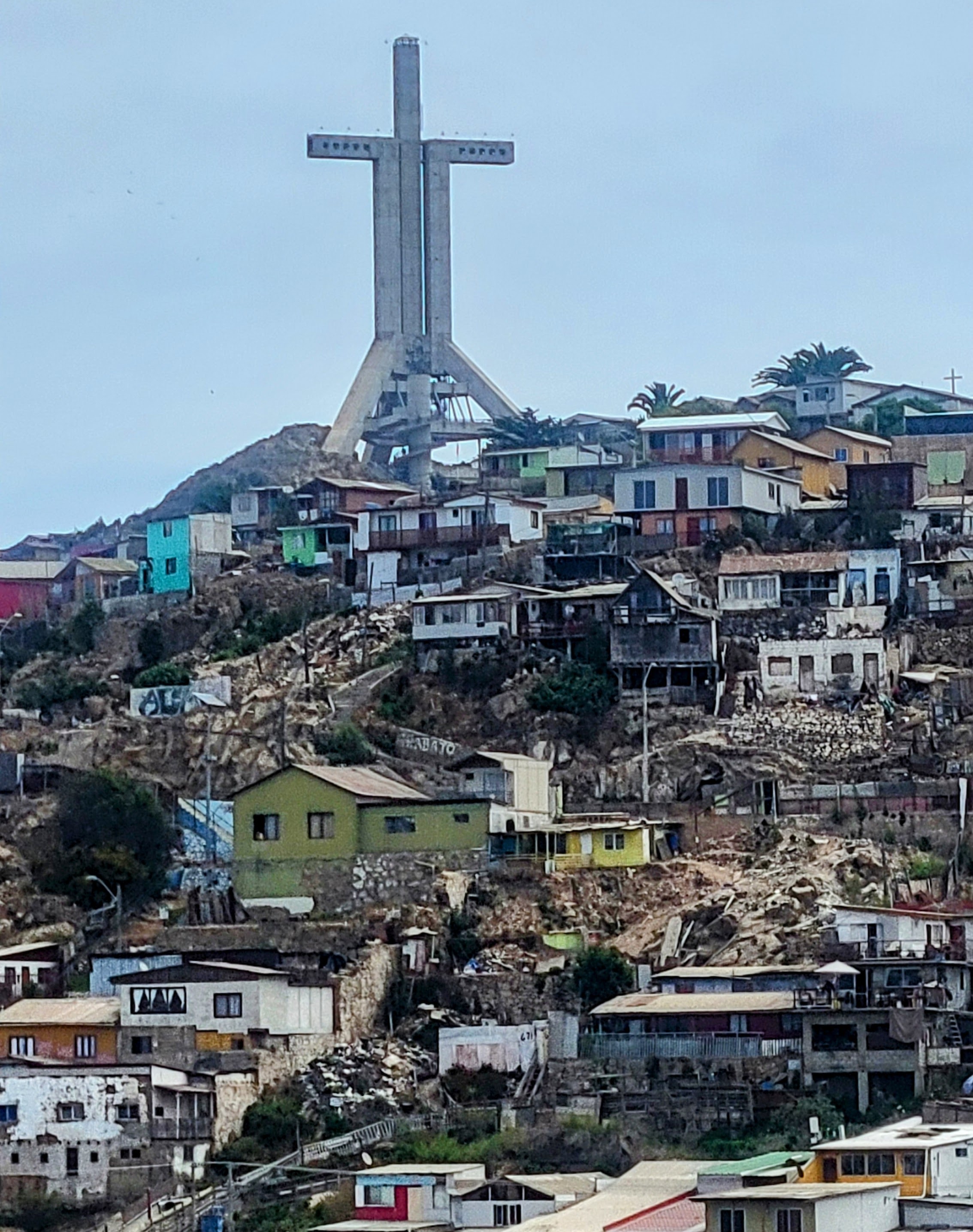
Coquimbo’s Third Millennium Cross considered the tallest monument in South America
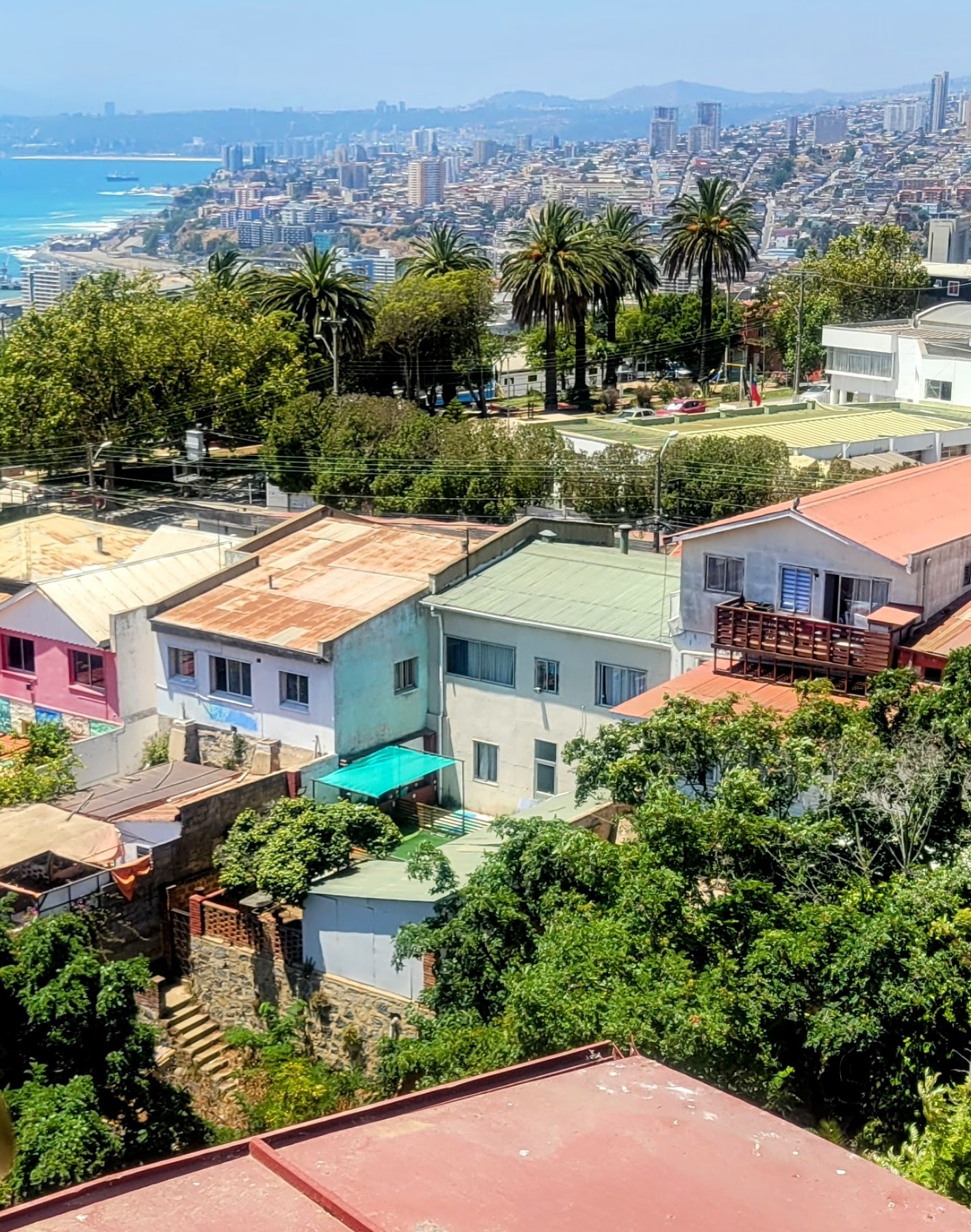
San Antonio Chile. San Antonio is the major port for the Chilean capital of Santiago. Santiago is a huge city and with the traffic it is no longer possible to do a day excursion from San Antonio. Instead we took a HAL tour to Valparaiso another busy port. The tour was lackluster other than a funicular ride up the hill to a good restaurant. We could see a Princess ship in the harbor there unable to dock to to the Pacific Ocean swells. Our own ship docked in San Antonio hired 2 tugboats (at a cost of $100,000) to push us against the pier all day because of the swells.
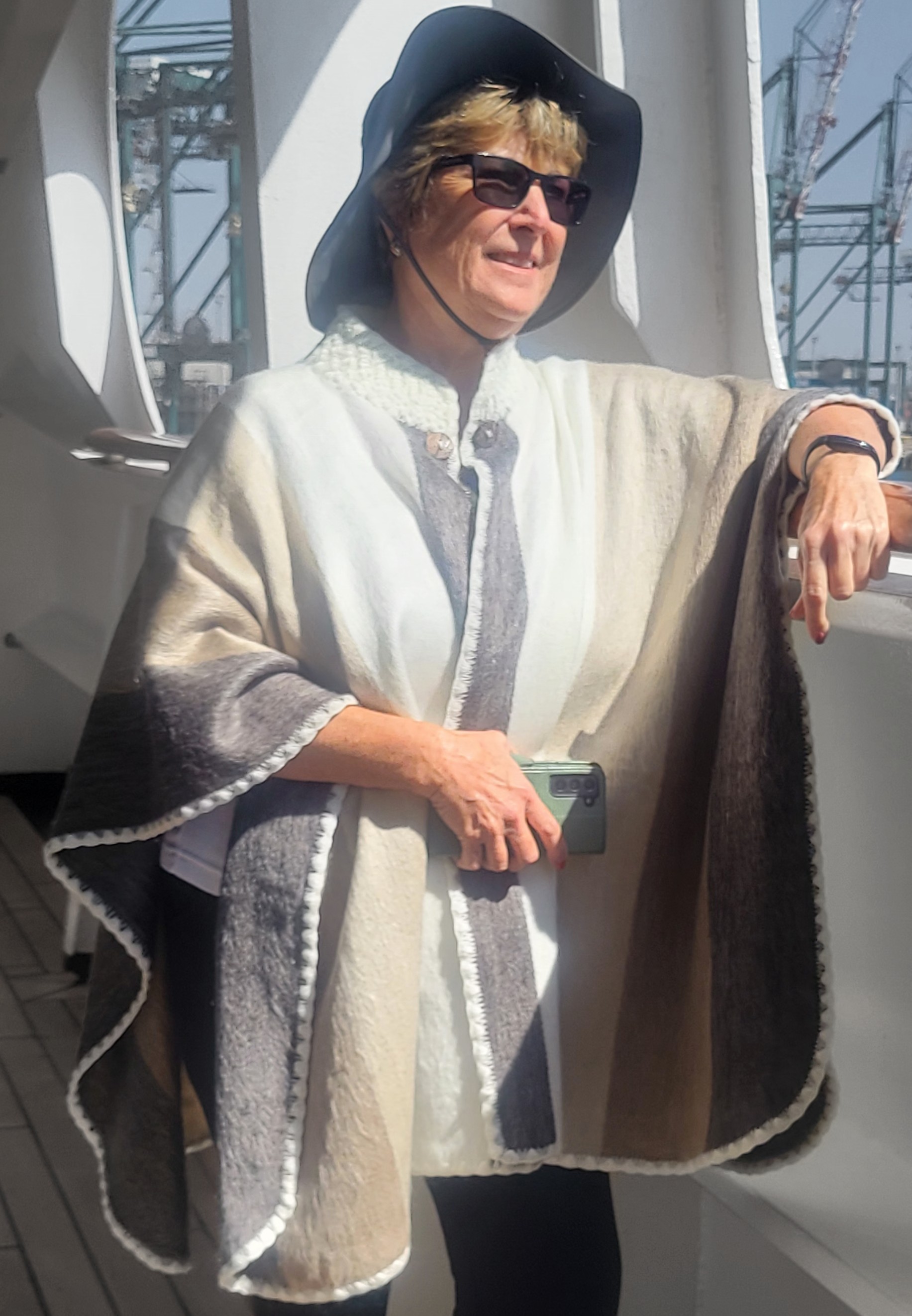
Beautiful alpaca shawl purchased in Valparaiso
Valparaiso Chile
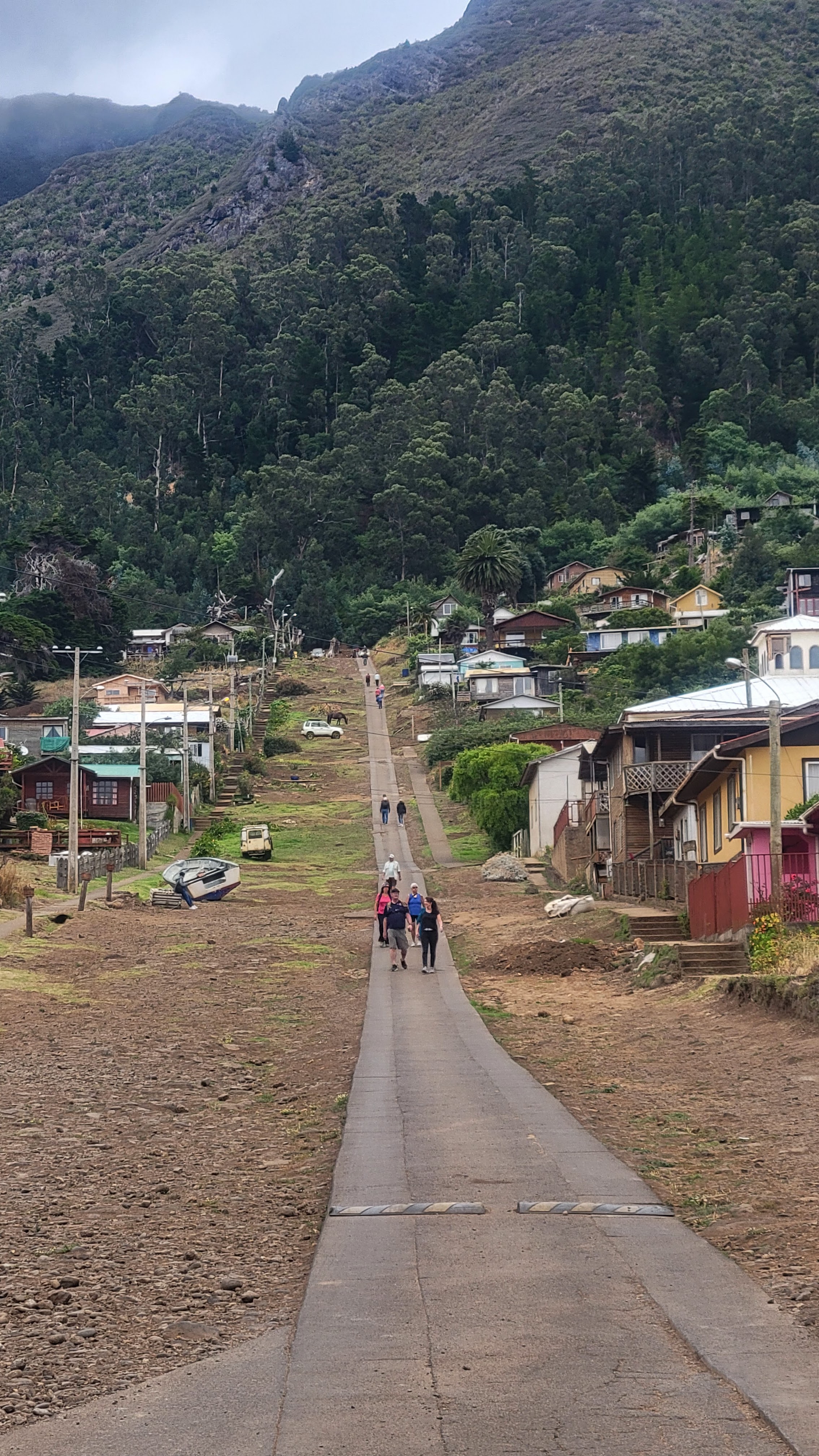
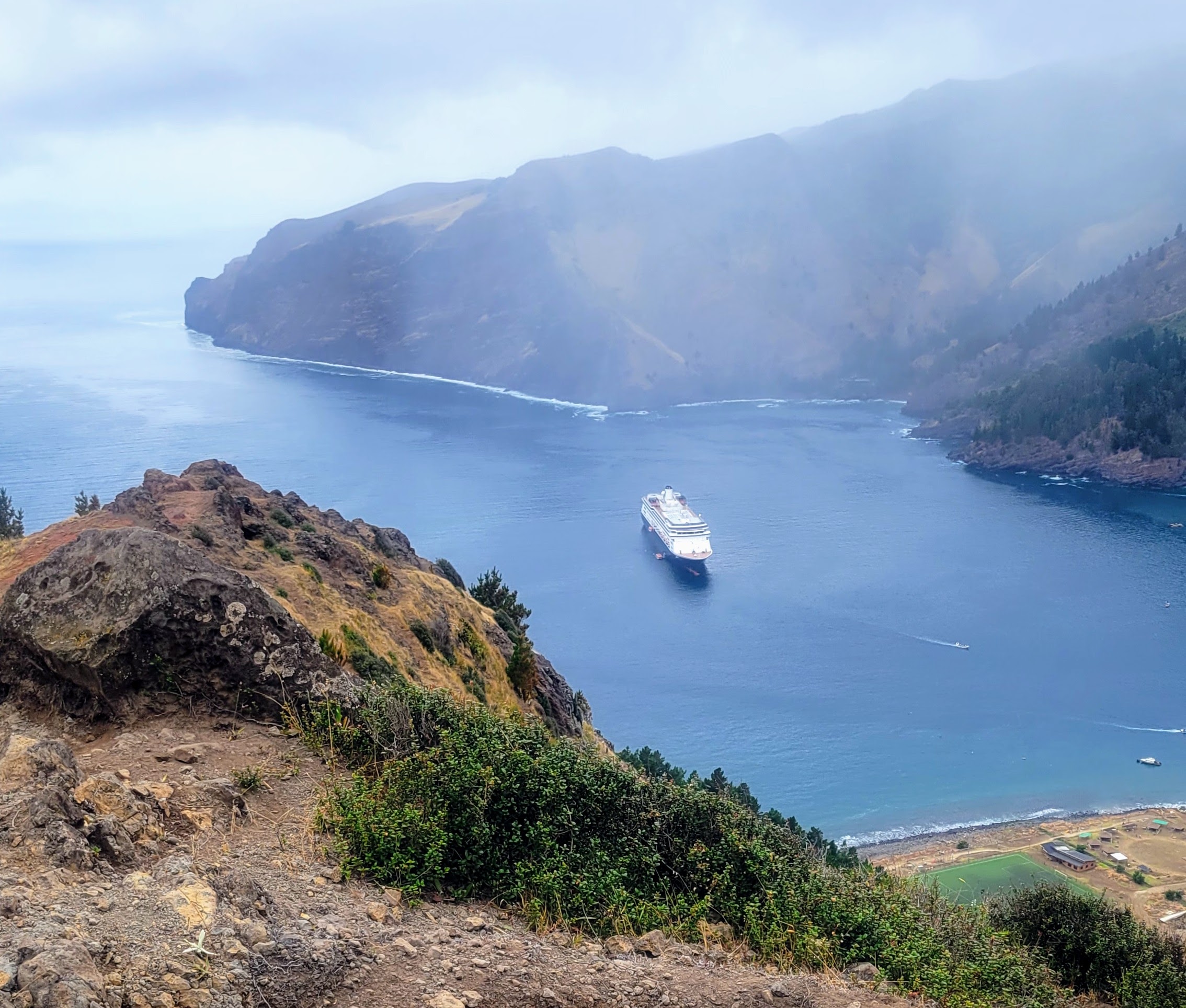
Isla Robinson Crusoe Chile. Located over 400 miles west of Chile in the South Pacific Ocean. From 1704 to 1709, the island was home to the marooned sailor Alexander Selkirk, who at least partially inspired novelist Daniel Defoe‘s fictional Robinson Crusoe in his 1719 novel. It is a rugged island where we hiked to the top of a mountain. We also explored caves formerly inhabited by political prisoners. Our departure was delayed several hours when a passenger had to be medically evacuated from the island to a hospital in Chile.
“town” on Robinson Crusoe Island
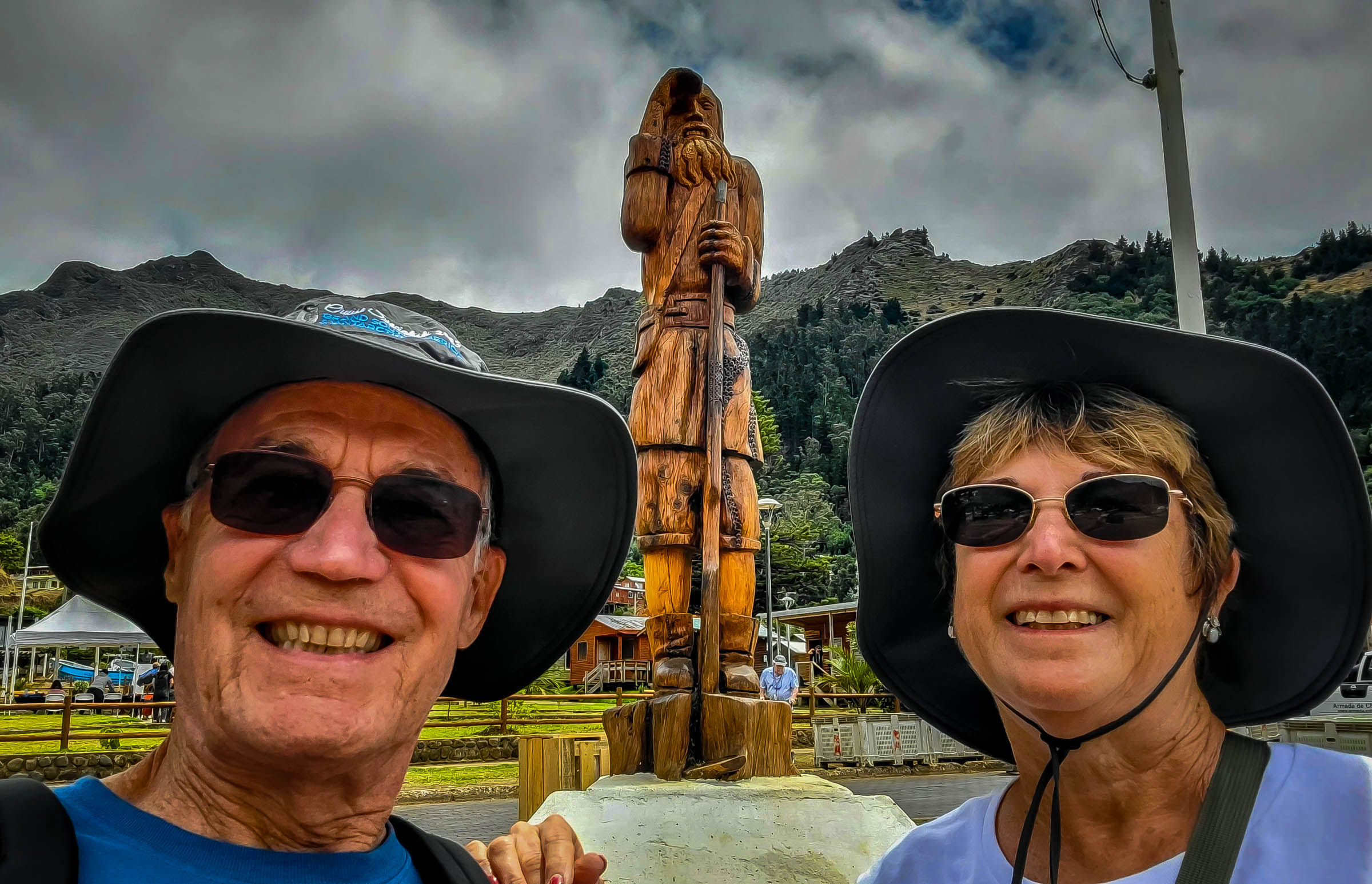
Monument to Alexander Selkirk
Volendam from 1000 foot mountain
Puerto Montt Chile. Our first stop in southern Chile was established by German colonists during the 1850s and still has many German restaurants and shops. We took a local bus to the resort town of Puerto Varas in the lake district inland surrounded by active volcanos. This was a very nice area. Puerto Montt had the great Angelmo craft and seafood market and is the second largest producer of farmed salmon in the world. Our ship’s chef picked up salmon for some great dinners on board.
Strong German heritage in this Chilean city
Catholic church based on one in the Black Forest of Germany
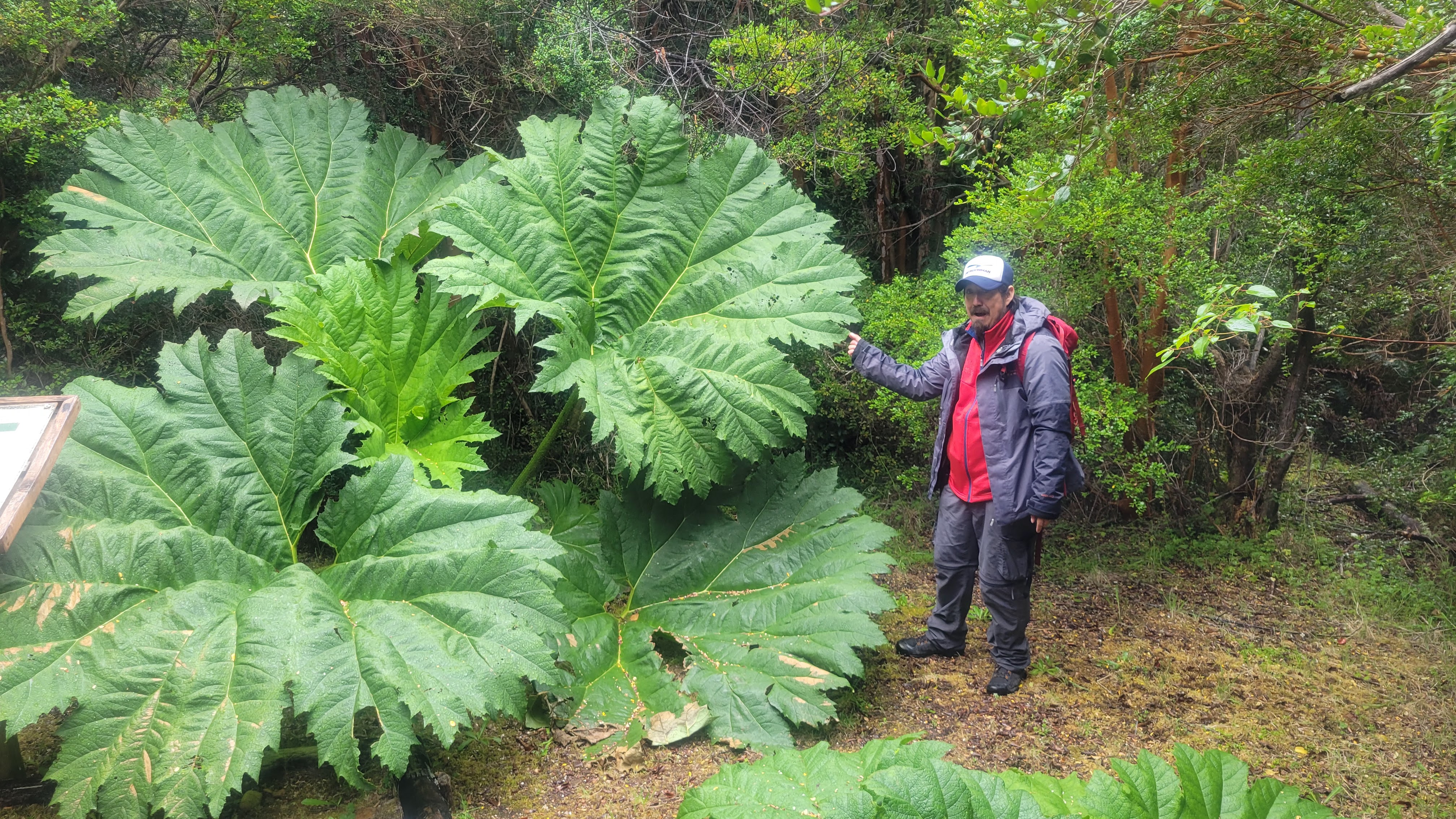
Puerto Chacabuco Chile. This place felt like an outpost in the Alaskan panhandle. Rainforest all around, we enjoyed a hike where we learned about local flora and enjoyed a rustic lodge feast of barbeque lamb and local wines.
Patagonian frontier town
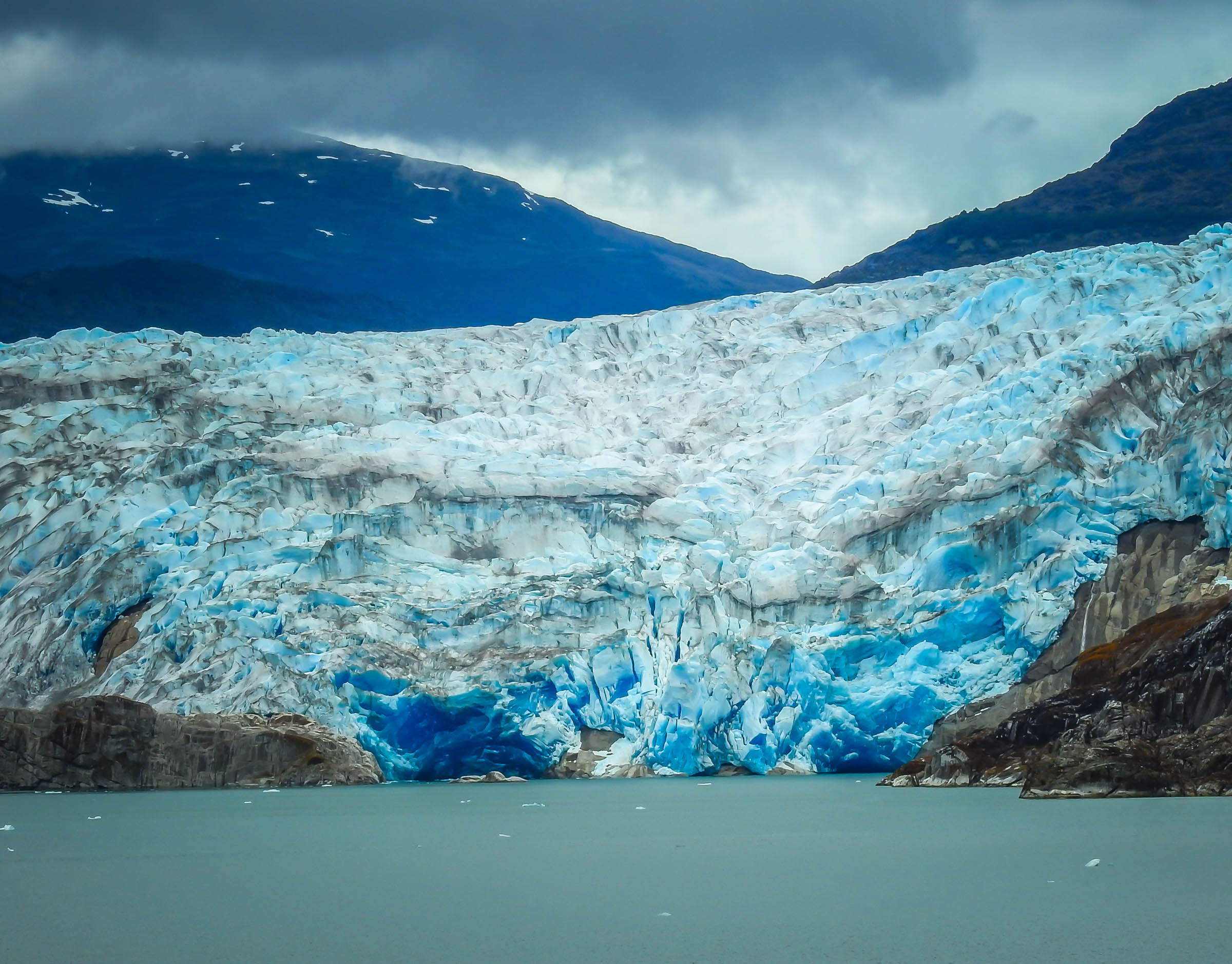
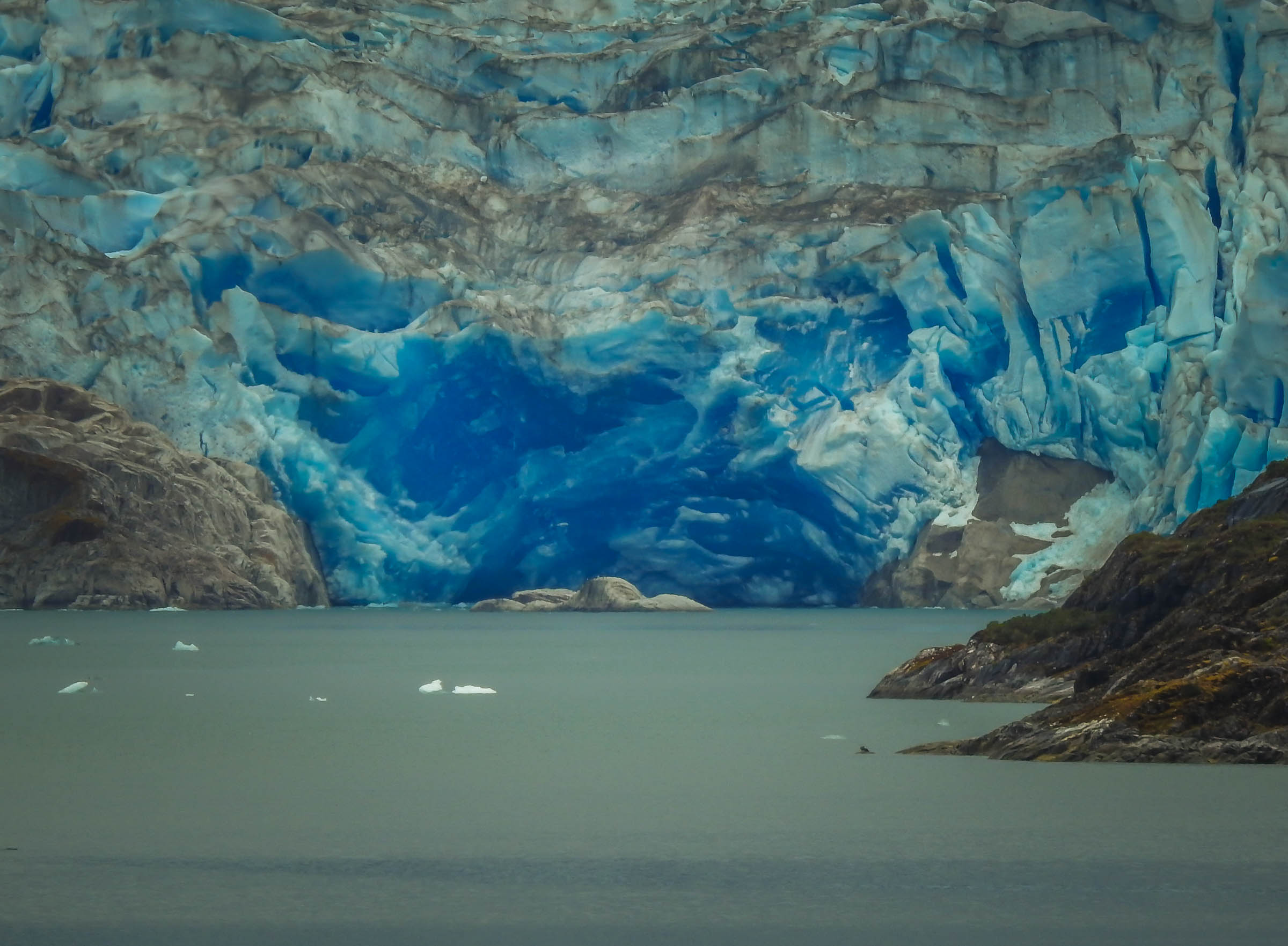
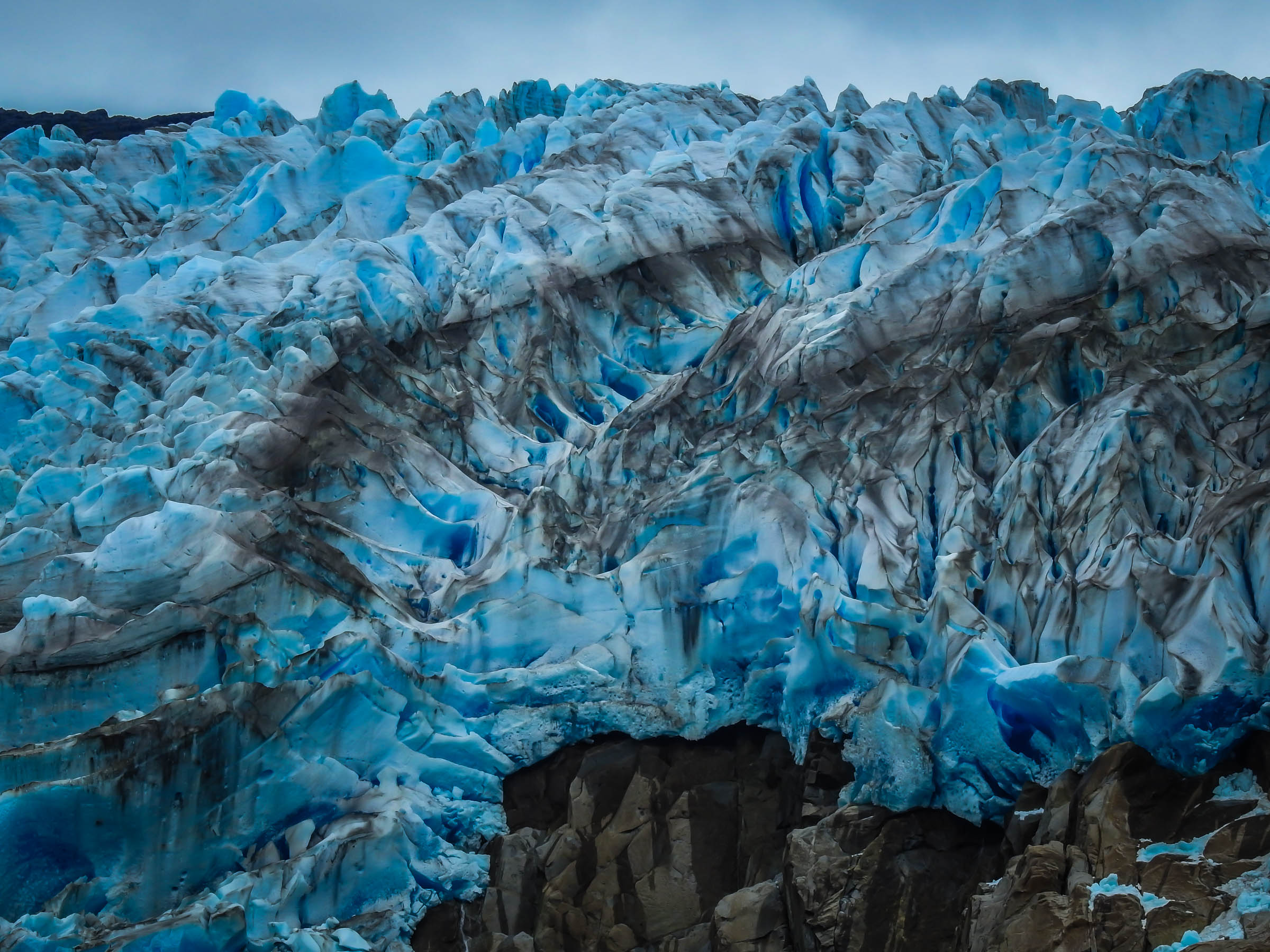
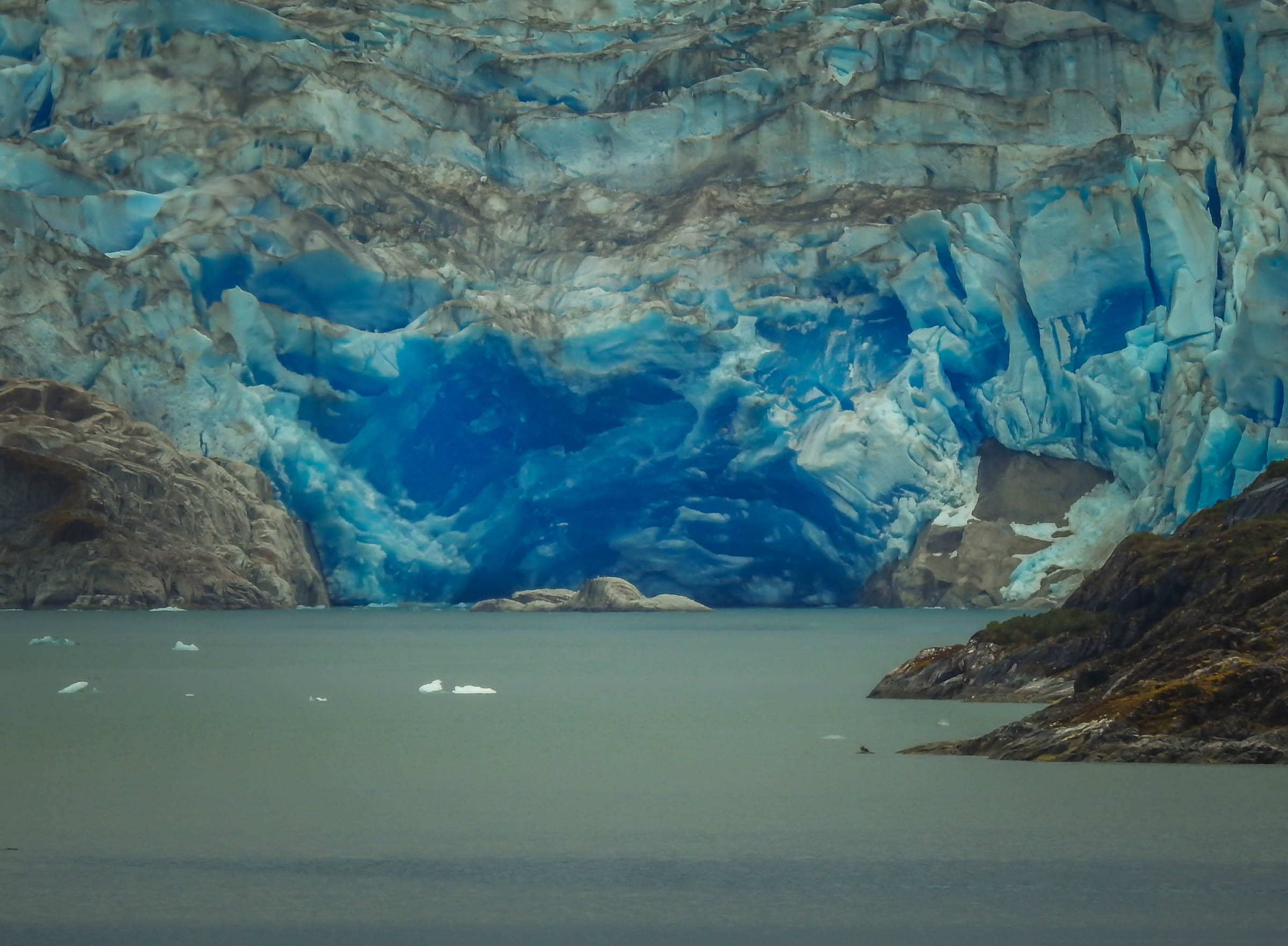
Cruising Chilean Fjords. Here the captain took our big ship up close to the many glaciers in the Patagonian district of Chile. We got close to Fjordo Glacier and El Brujo Glacier.
Chilean glacier
Deep blue of old ice
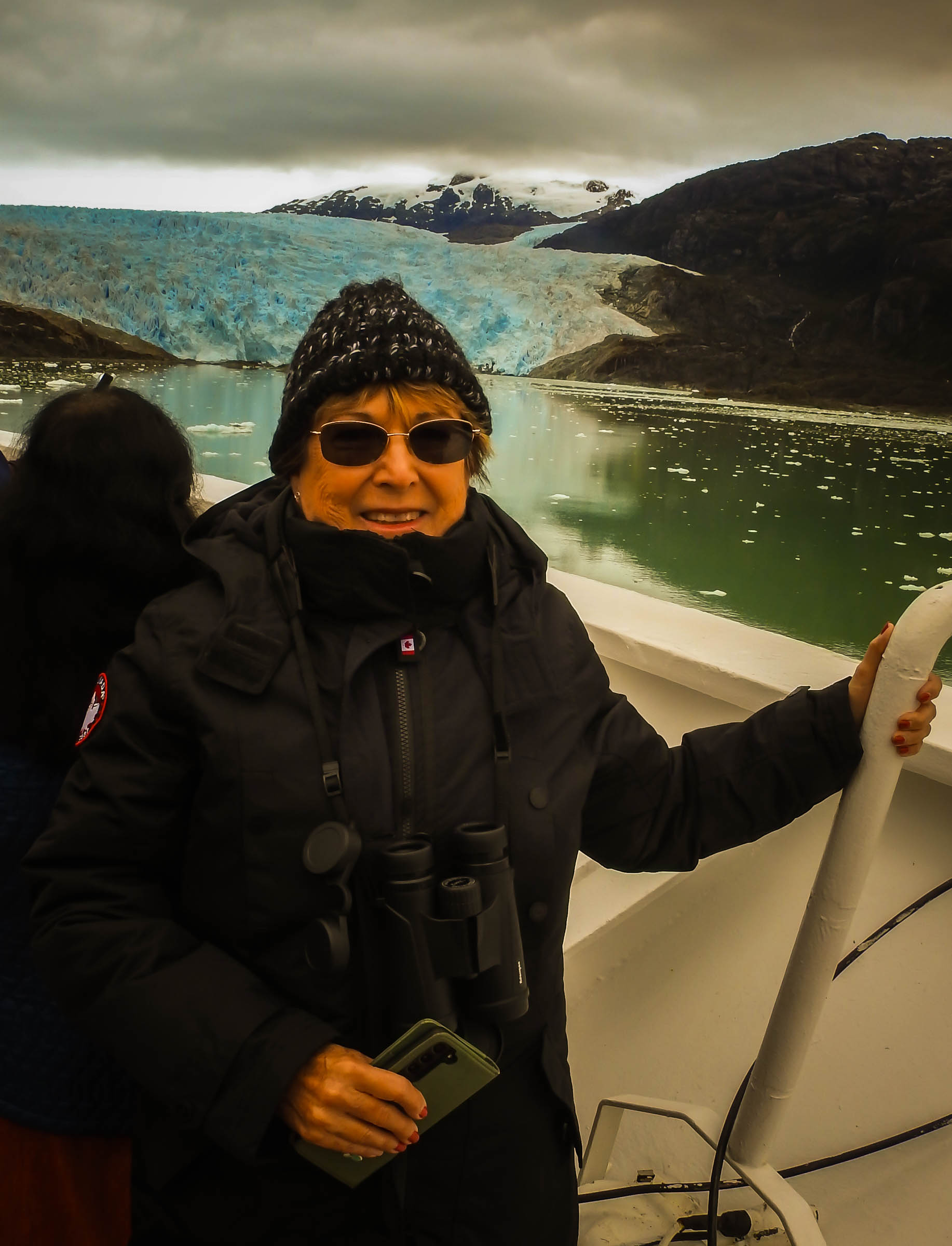
Di on deck
Lichen? on rocks
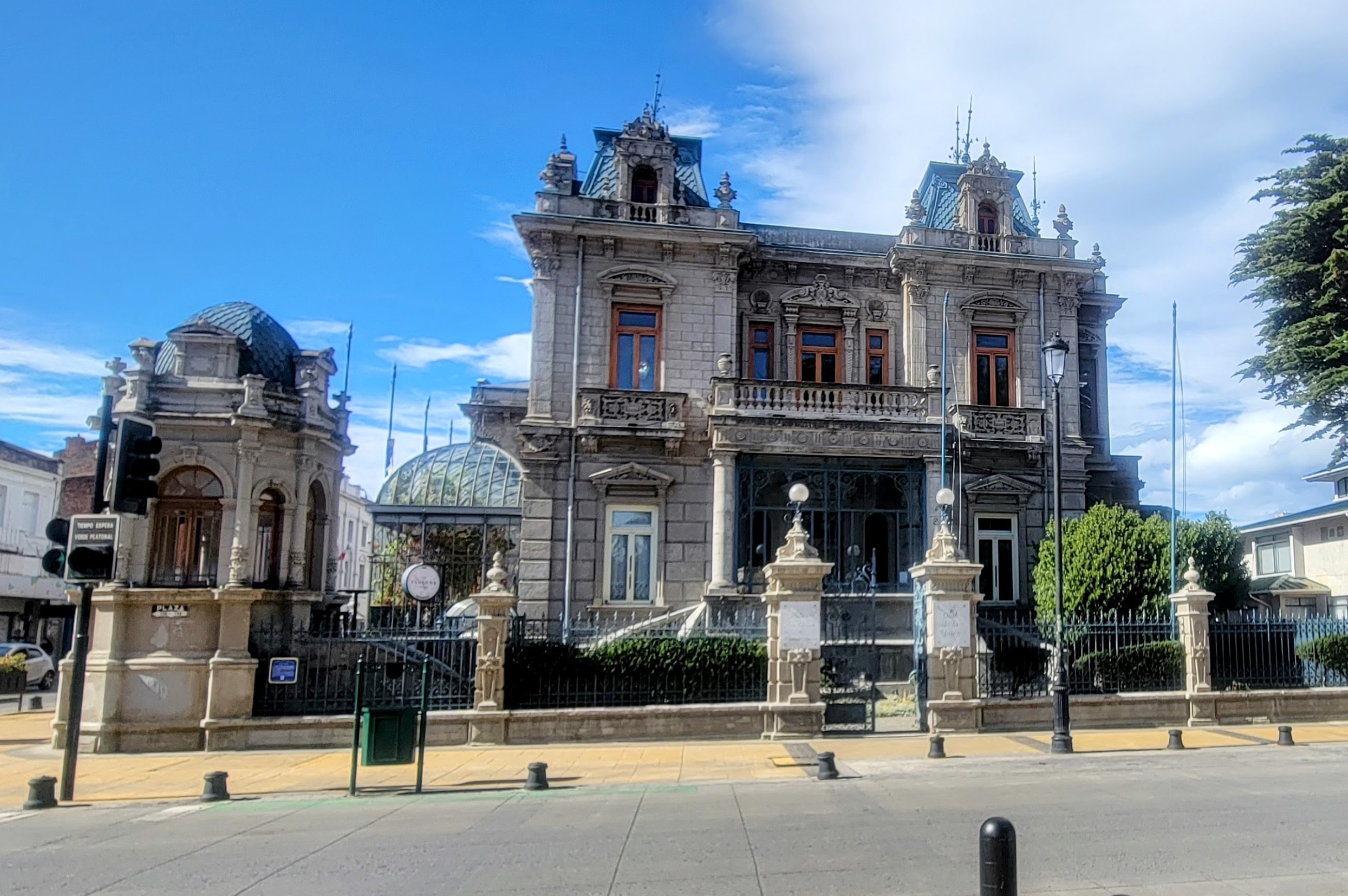
Punta Arenas Chile. This was one of our favorite stops in Chile. Much of the history of exploring Antarctica started in Punta Arenas. Fortunes were made here in sheep and wool. We had hoped to take a local boat to Isla Magdalena to see a penguin colony but the winds were so high no boats went out that day. Instead we walked to Plaza de Armas, Magallanes Regional Museum, the Sara Braun house, the Borgatello Museum, cemetery and sheep monument.
Sara Braun home
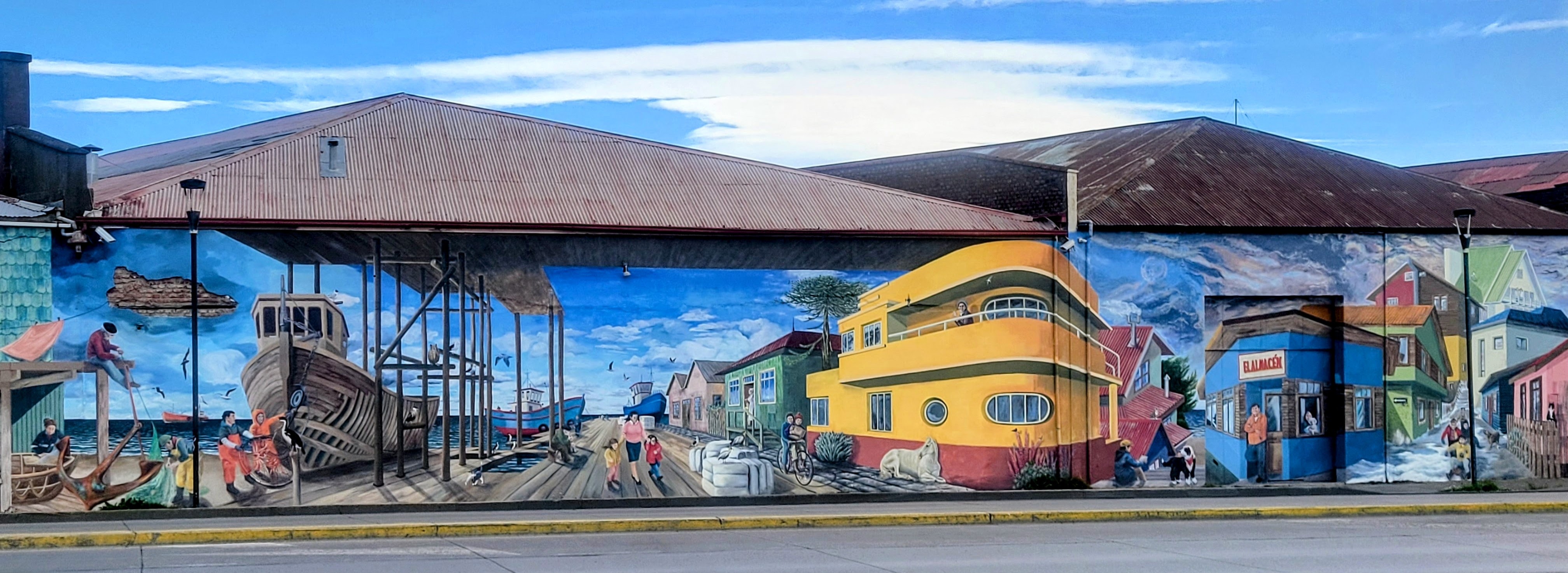
Fantastic murals in this port city
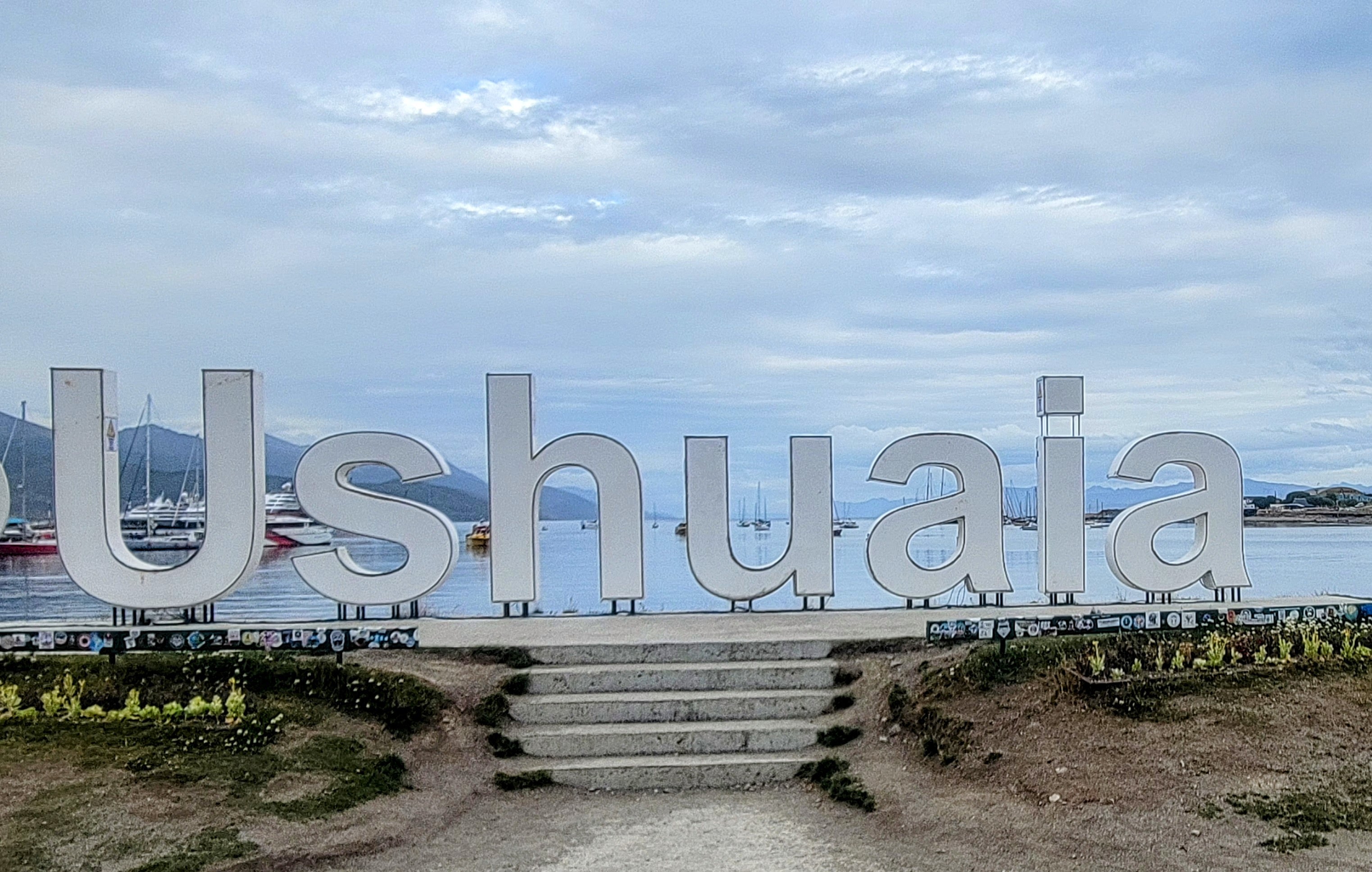
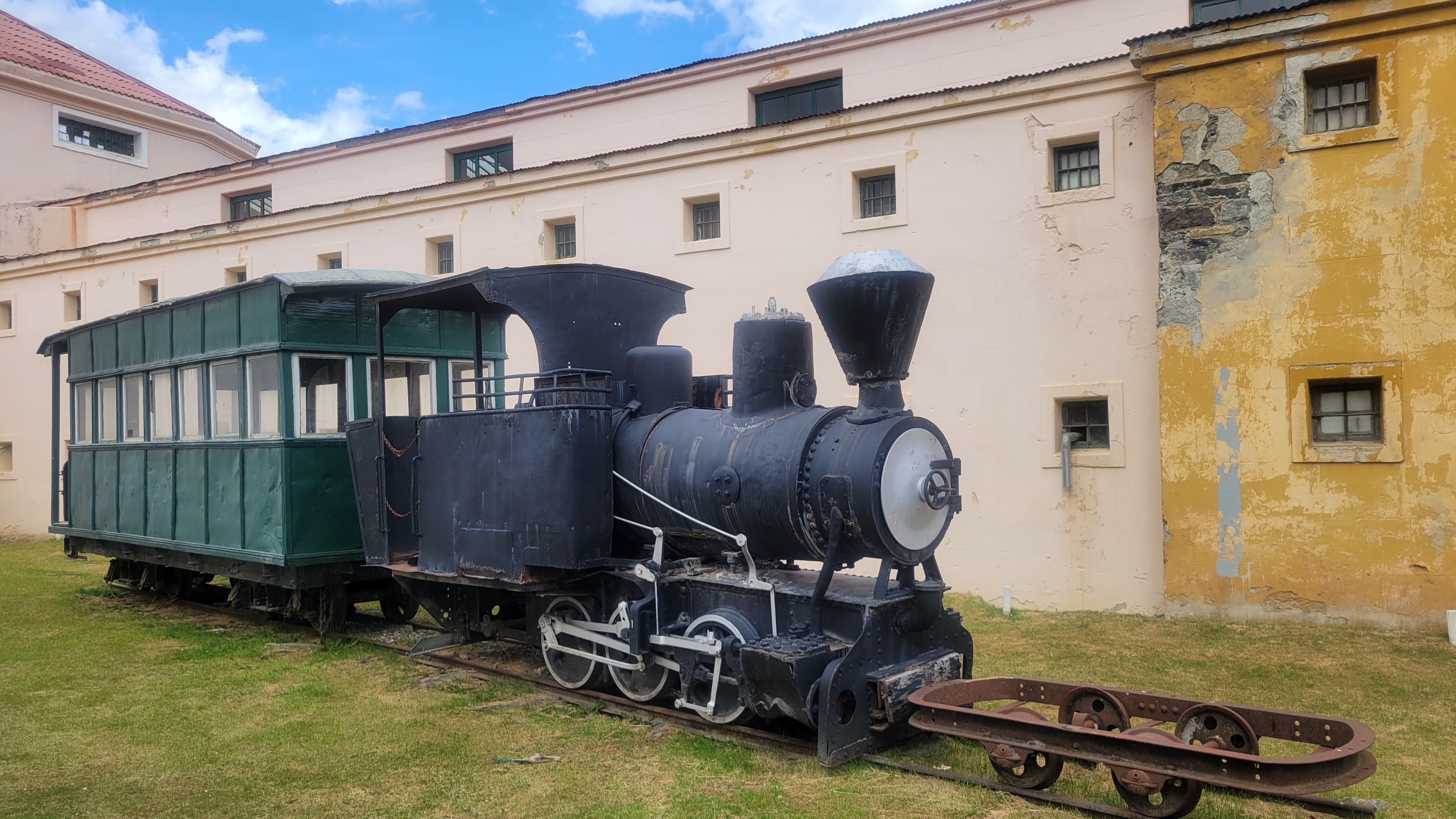
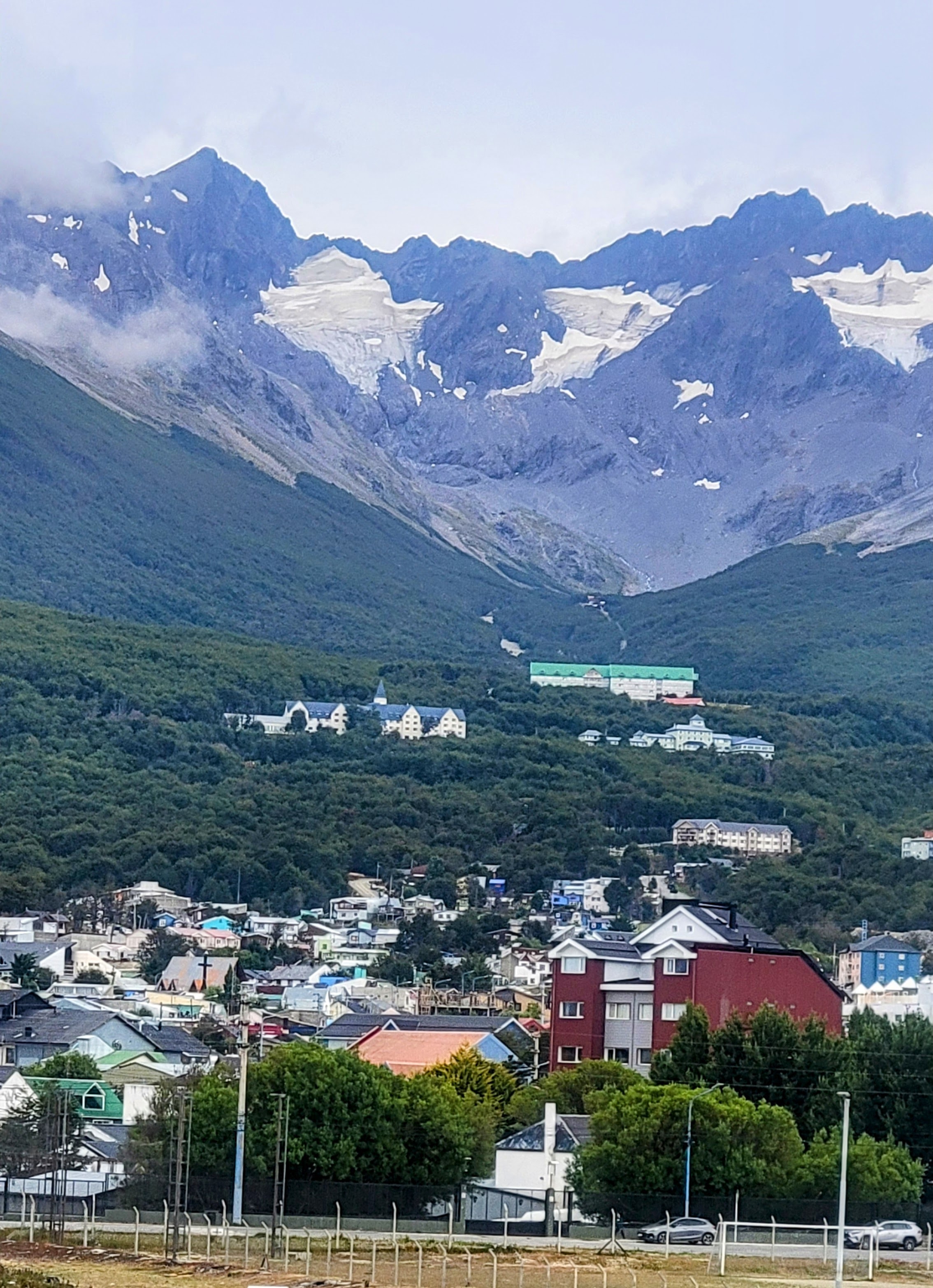
Ushuaia Argentina. After cruising glacier alley and the Beagle Channel we arrived at another outpost known as the southern-most city in the world. It was once a penal colony and we toured the former prison turned museum. The harbor here was teeming with expedition ships making their last port before Antarctica. We enjoyed Submarinos (hot milk with chocolate sticks) at Laguna Negro cafe. The hokey Train Trolley gave us a nice tour around town although we wished we could have been riding the “Train at the End of the World” tourist train. This was a rare South American tourist town where English was widely spoken. The Argentine Peso is a story in itself. The official exchange rate was 185ARP per dollar but on the street we received 350ARP/USD. Credit cards were a little scary but at least our cards gave us a good rate.
The original train at the end of the world hauled political prisoners
Ushuaia sits at the end of the Andes
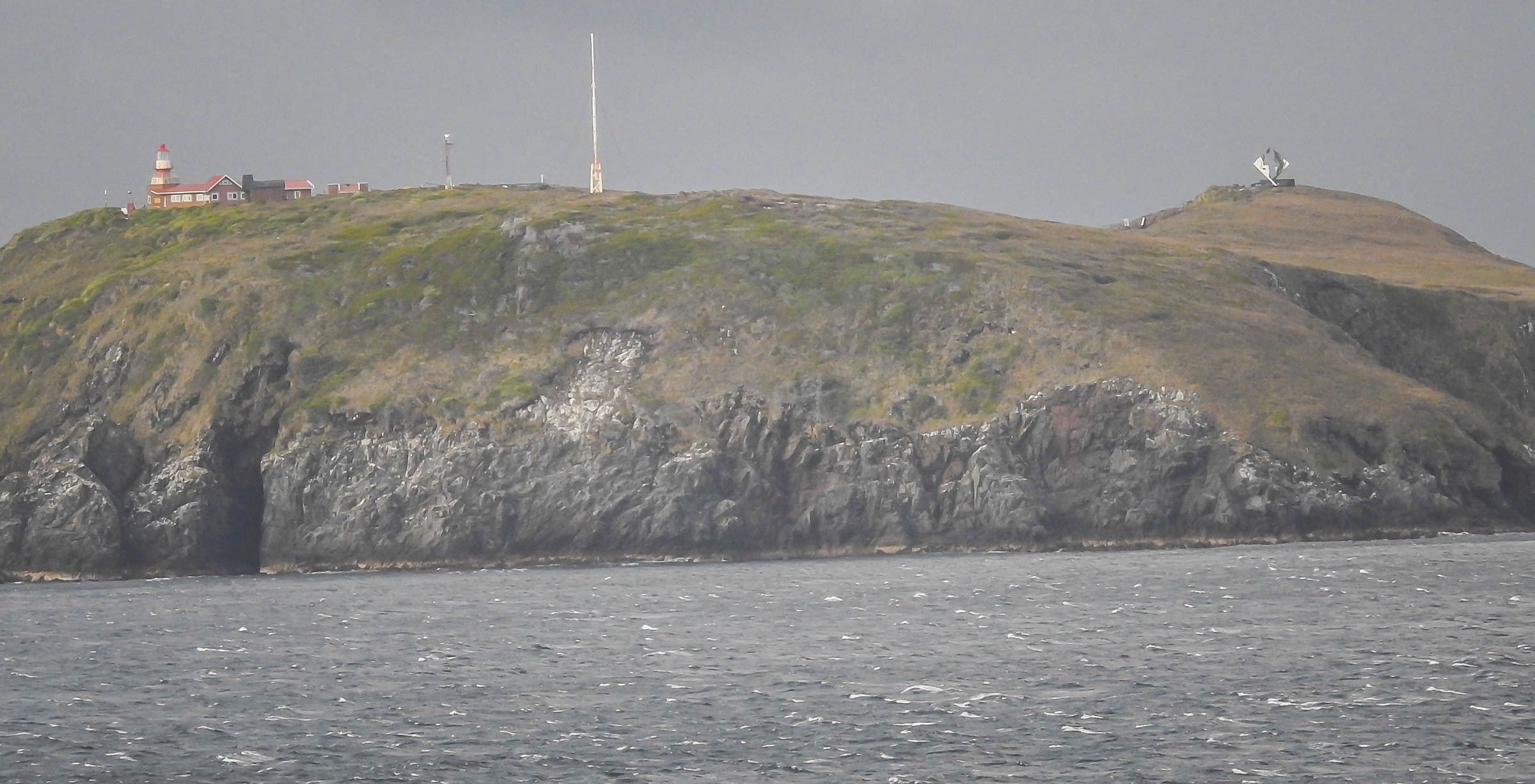
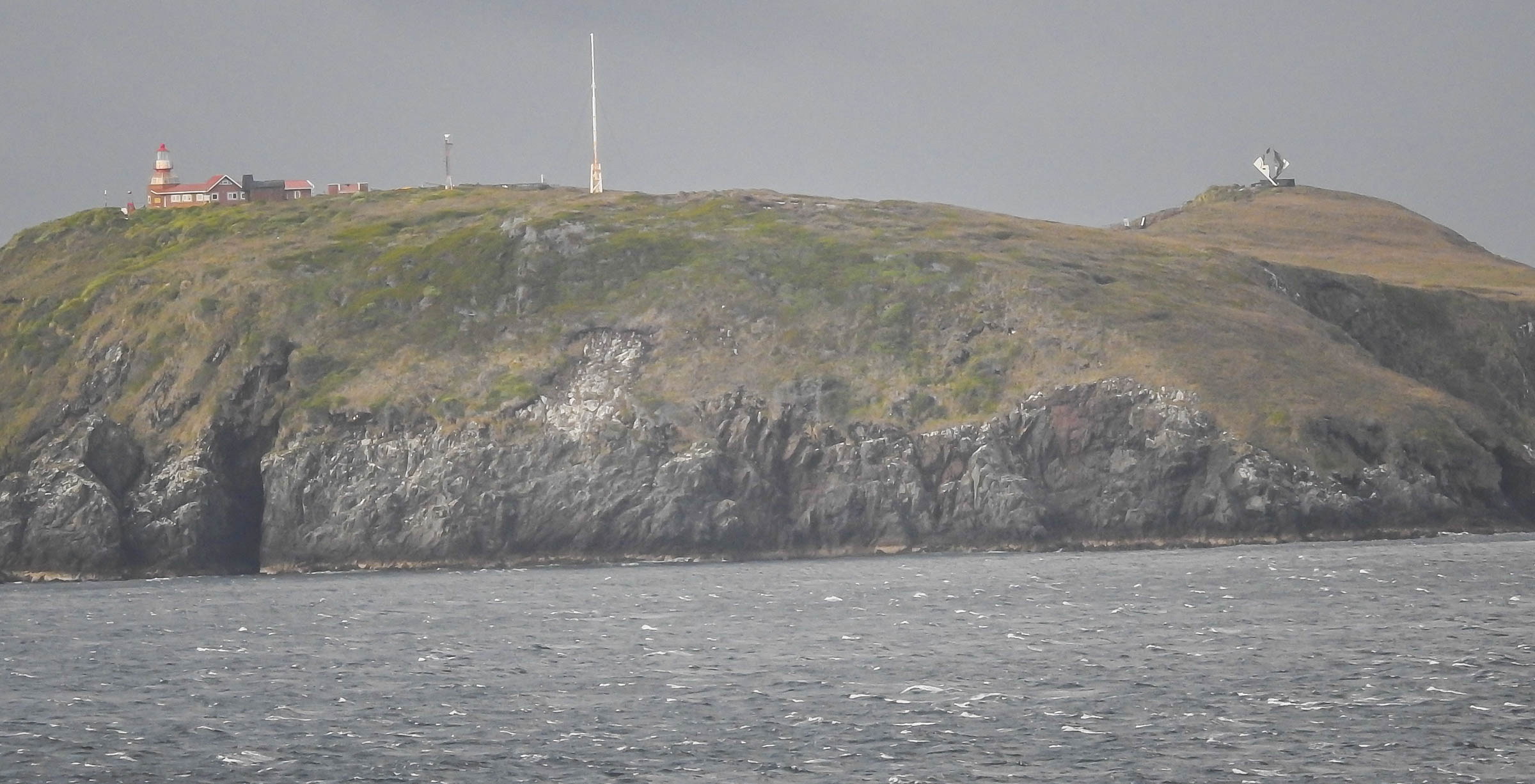
Cruising Cape Horn and crossing the Drake Passage. Leaving we passed Cape Horn in rough seas. We crossed 60 degrees south latitude. On board entertainment featured Duo Siqueira Lima a classical guitar husband and wife duo who wowed us with their skill and stage presence. Our crossing the Drake Passage was as good as we could expect.
Cape Horn
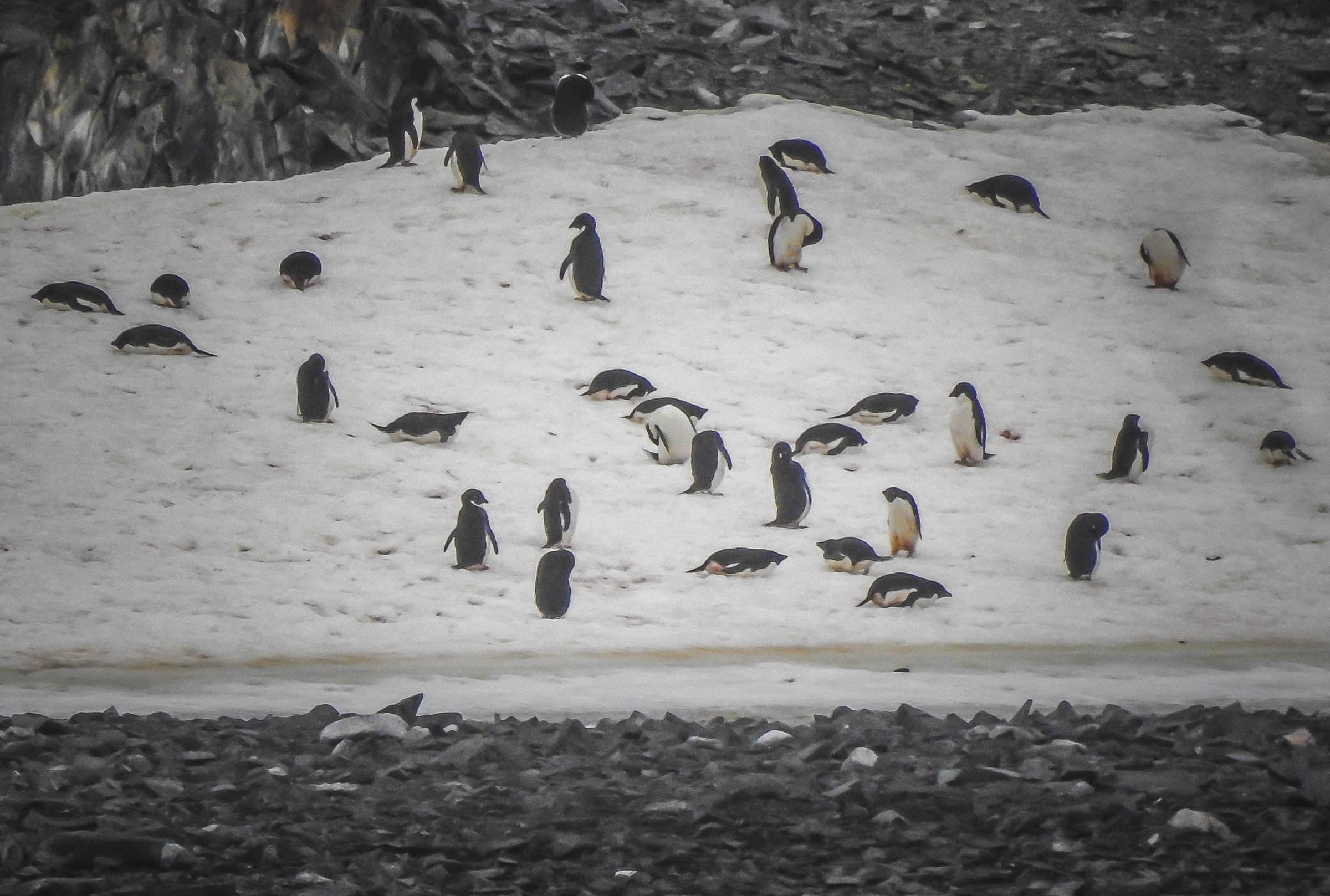
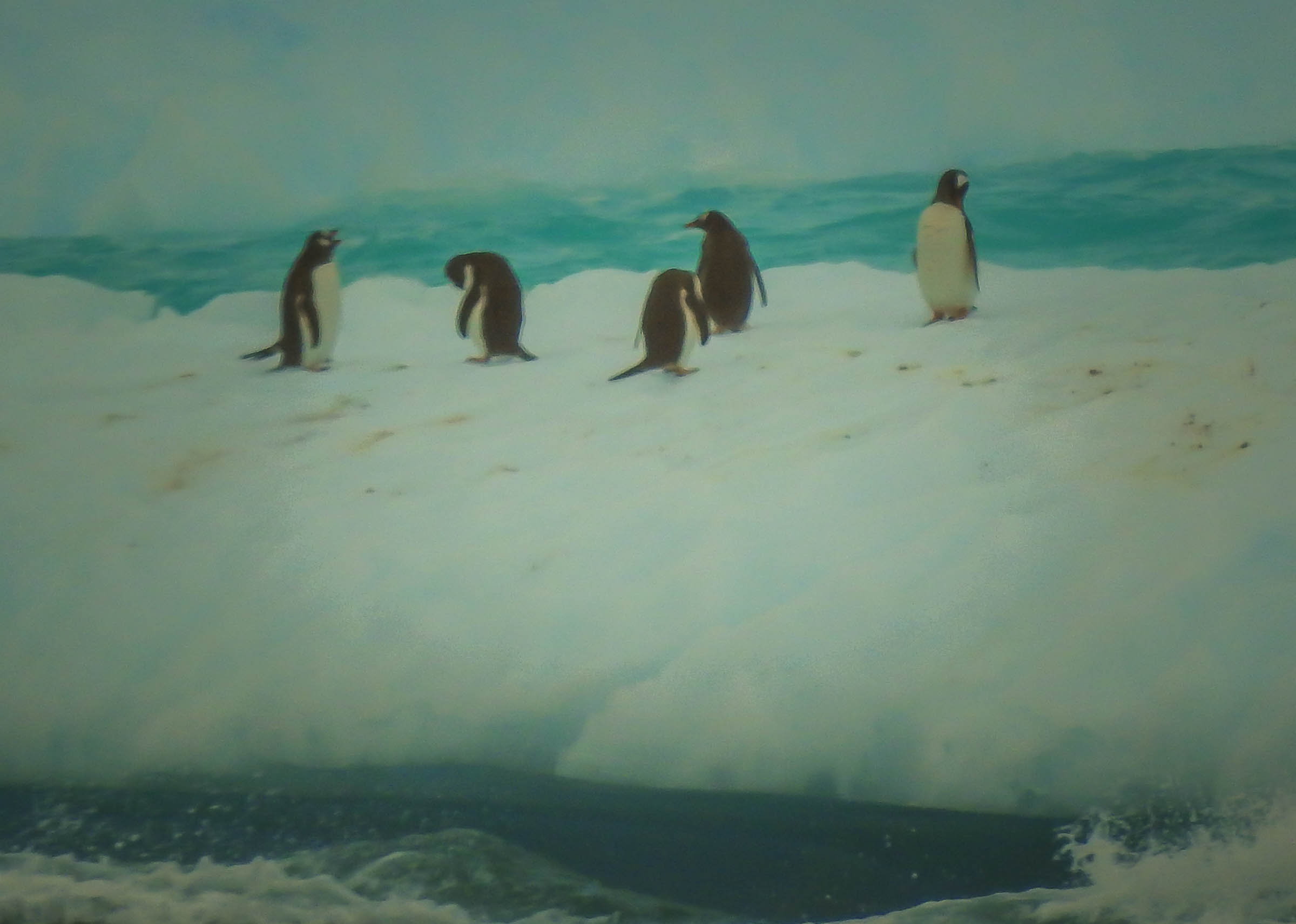
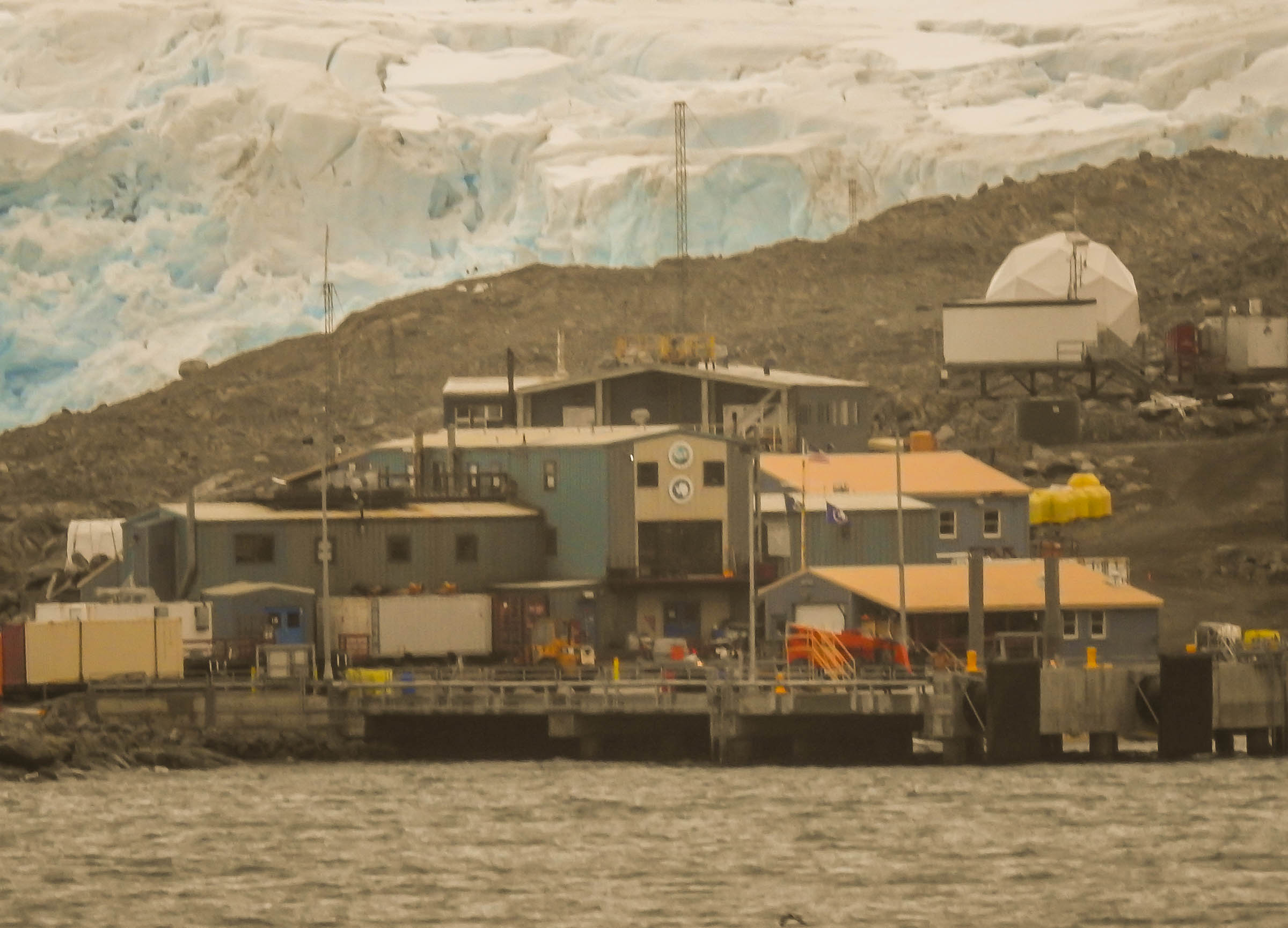
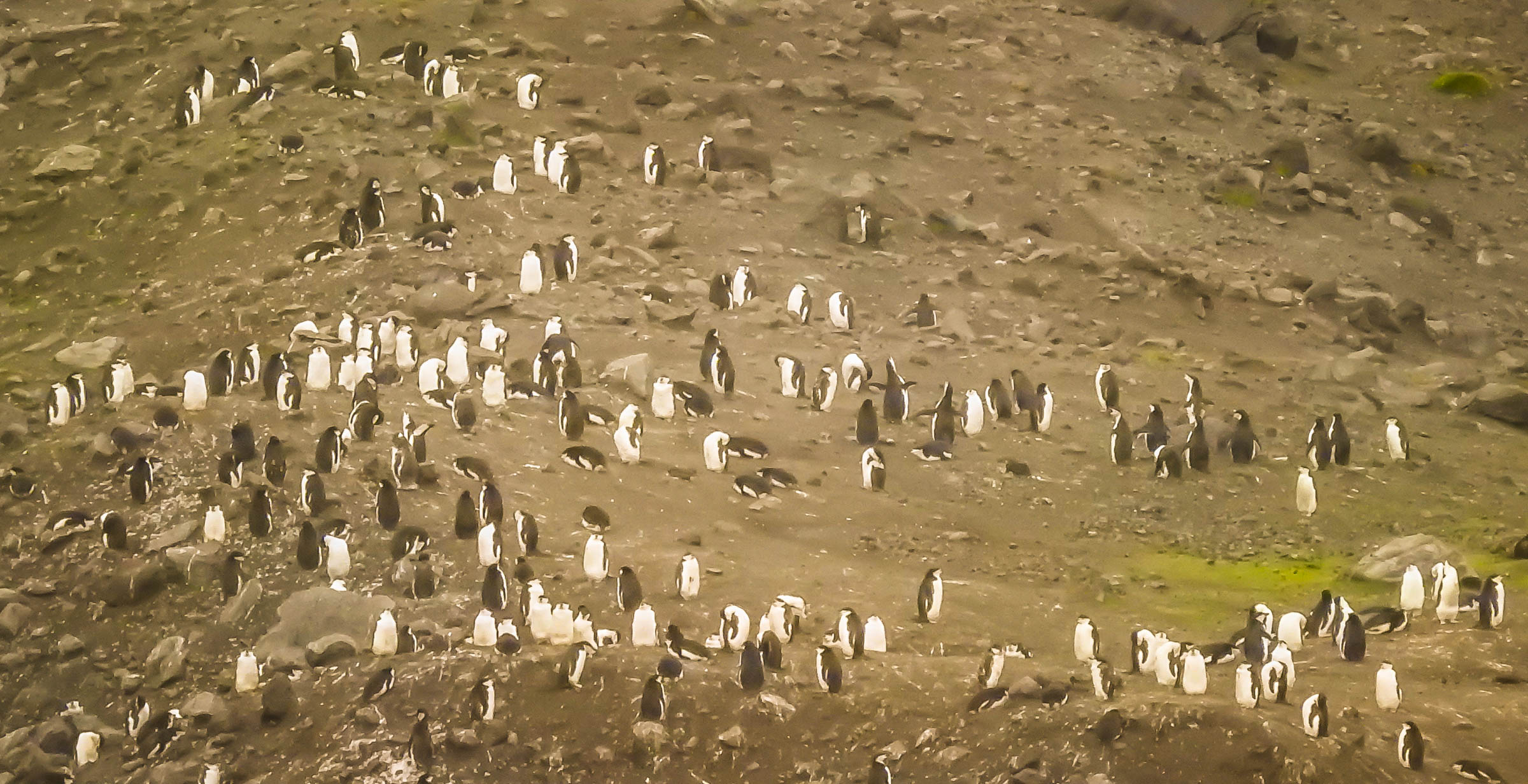
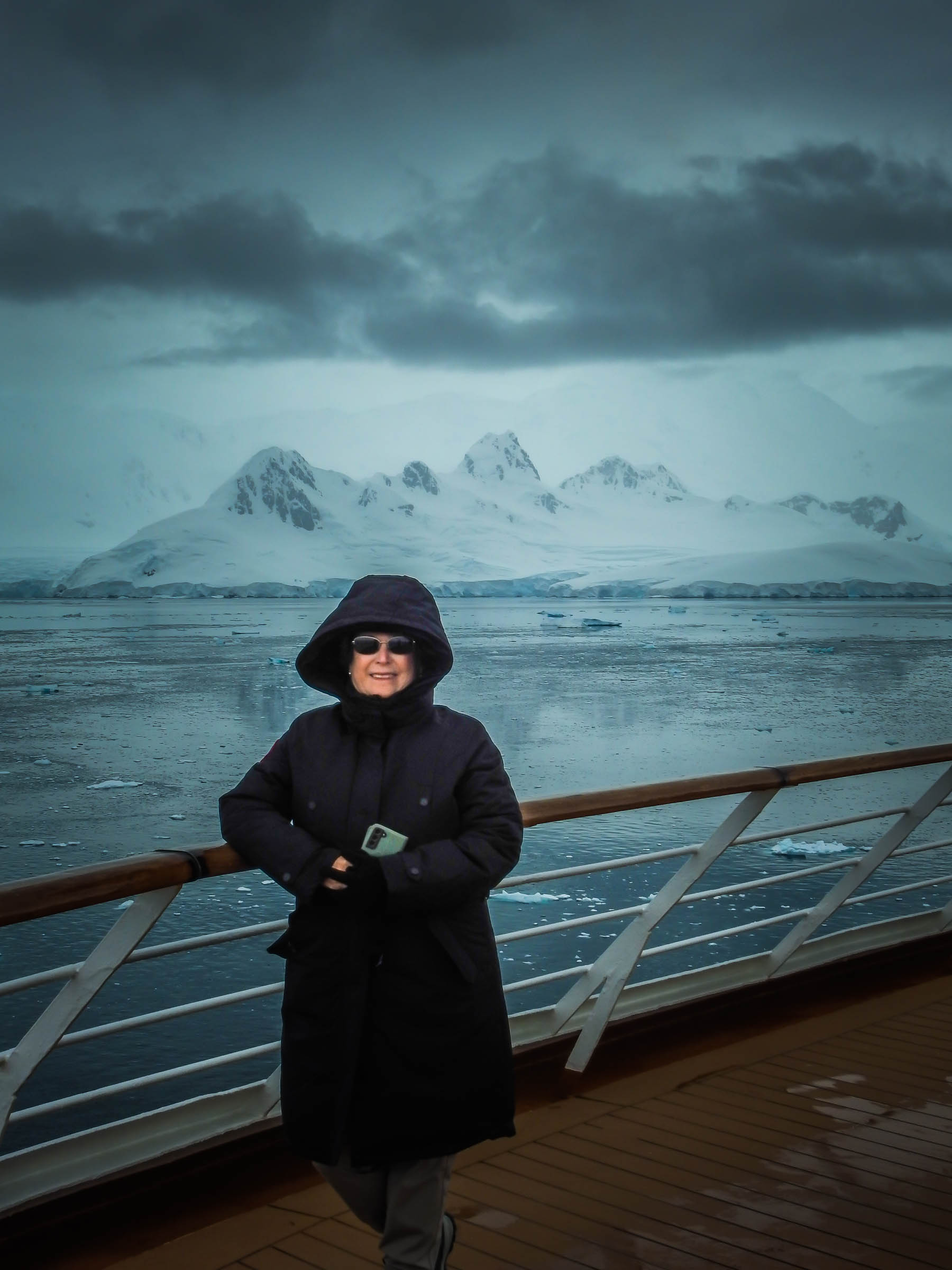
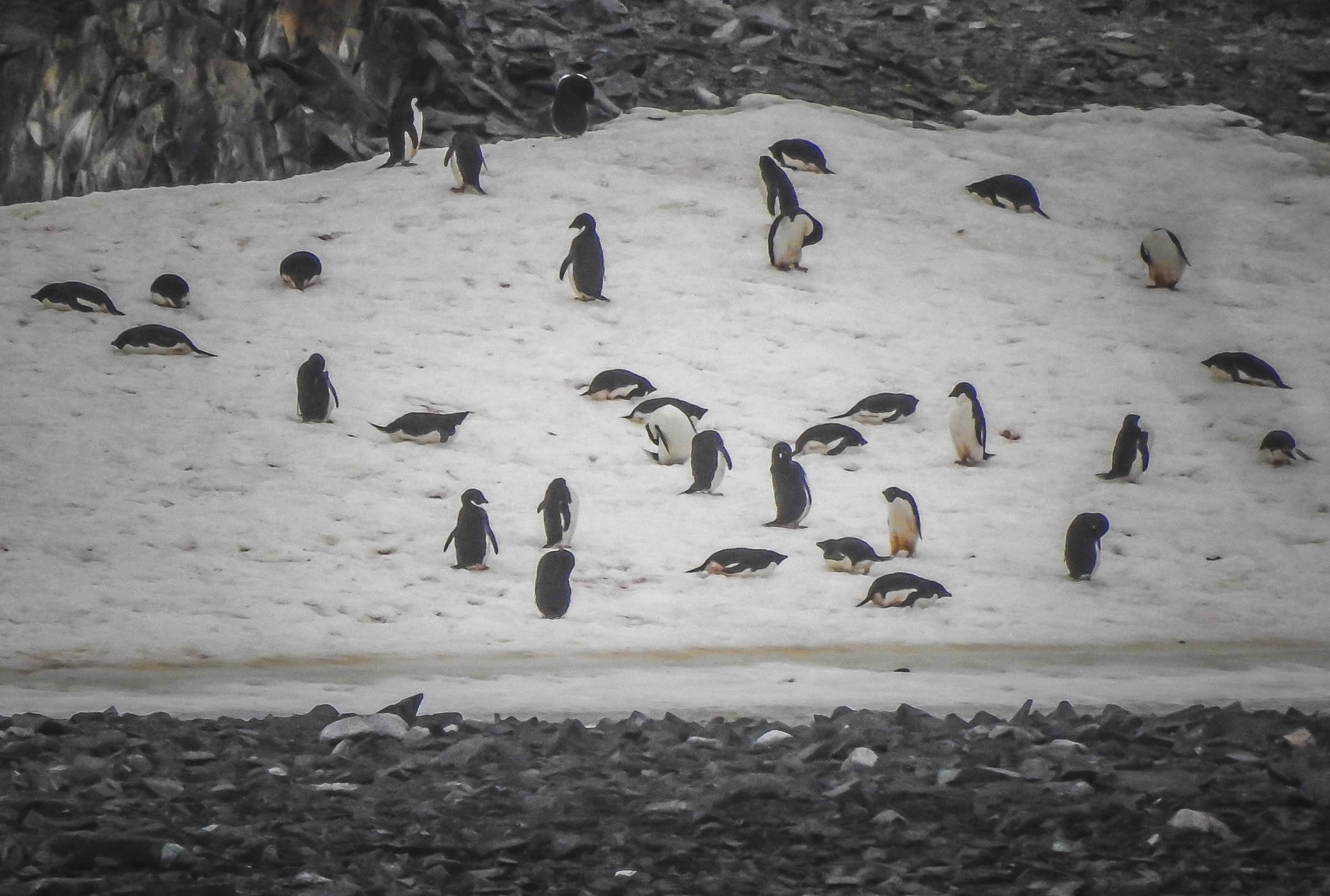
Antarctica. This was one of the main attractions for taking this cruise and while it wasn’t quite what we expected it was spectacular and memorable. We had 3 scientists and 2 ice pilots on board for all our days there. We had a 6am start for our first day in Antarctica. It was cold and foggy which then turned into cold and snow and wind. Cruising Dallman Bay and Paradise Bay we saw some humpback whales bubble feeding, gentoo penguins and orcas but not as many as we had hoped. The crew had fun building snowmen on the pool deck. By the end of the day ice conditions caused us to abort Lemaire Channel but we did get to see Palmer Station, the US research station. The second day we cruised Neumeyer Channel, Wilhelmina Bay and Errera Channel where we heard singing whales saw lots of cute Adelie penguins. The third day we headed to Hope Bay to see whales but the ice again blocked our way. We had to turn around in winds that had picked up to 100 mph! This caused a great listing of the ship, dishes crashing and anxiety among passengers. No one was seriously hurt because the Captain had sternly warned all to SIT DOWN. It was memorable. The fourth day we visited Deception Island, a volcanic caldera which is home to over 100,000 chinstrap penguins. We saw lots of icebergs and calving glaciers. At this point the weather was deteriorating with one low pressure storm after another. The captain regretfully cancelled our stop in the Falkland Islands, there was no way with 40 knot winds and we had to time our passage back across the Drake Passage to miss the worst of it. We still had the roughest seas of the cruise with waves up to 40 feet top to bottom and regularly hitting deck 3. It was exciting.
D in the Antarctic summer
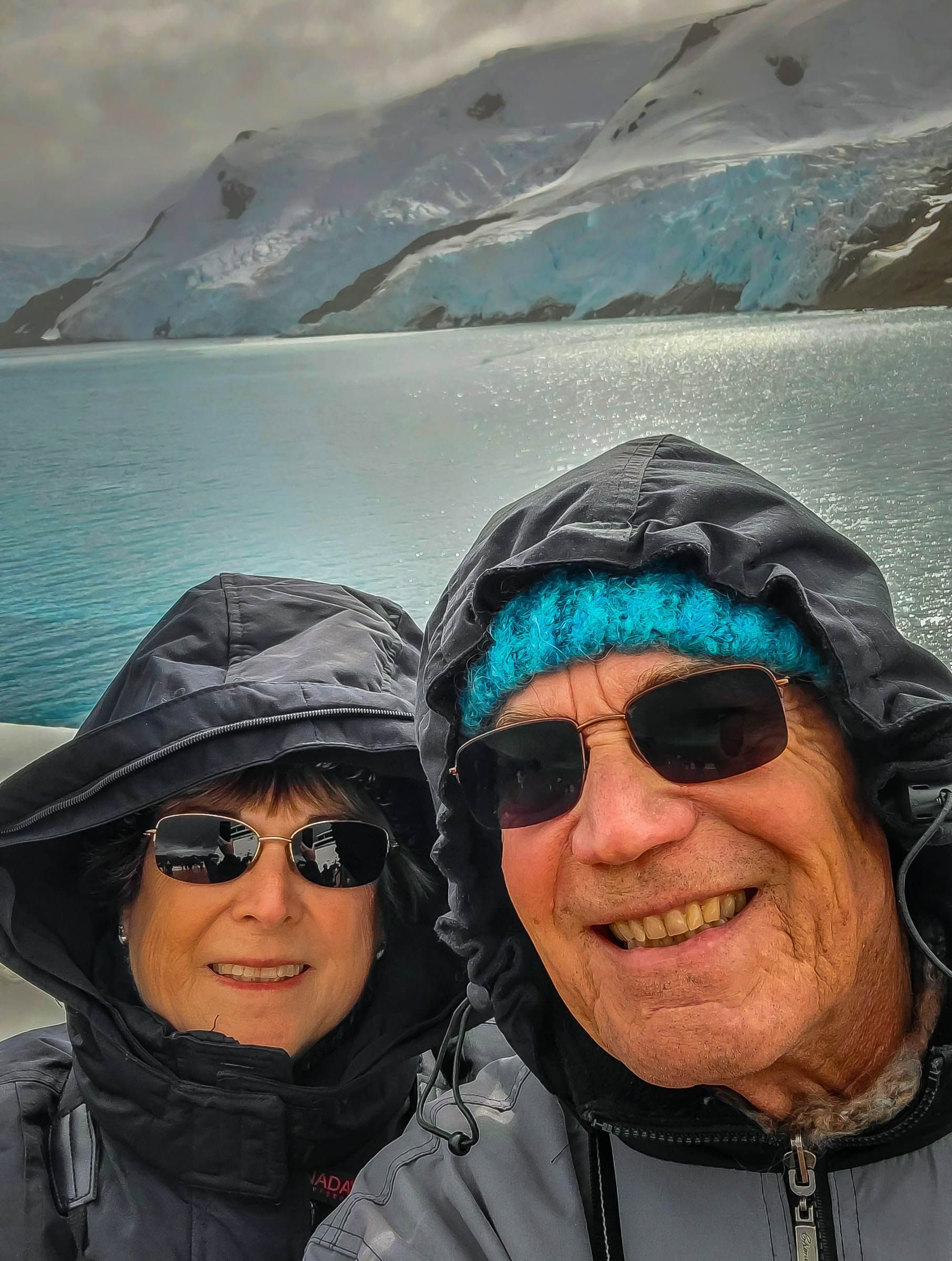
Us in Antarctic summer
Many expedition ships in summer
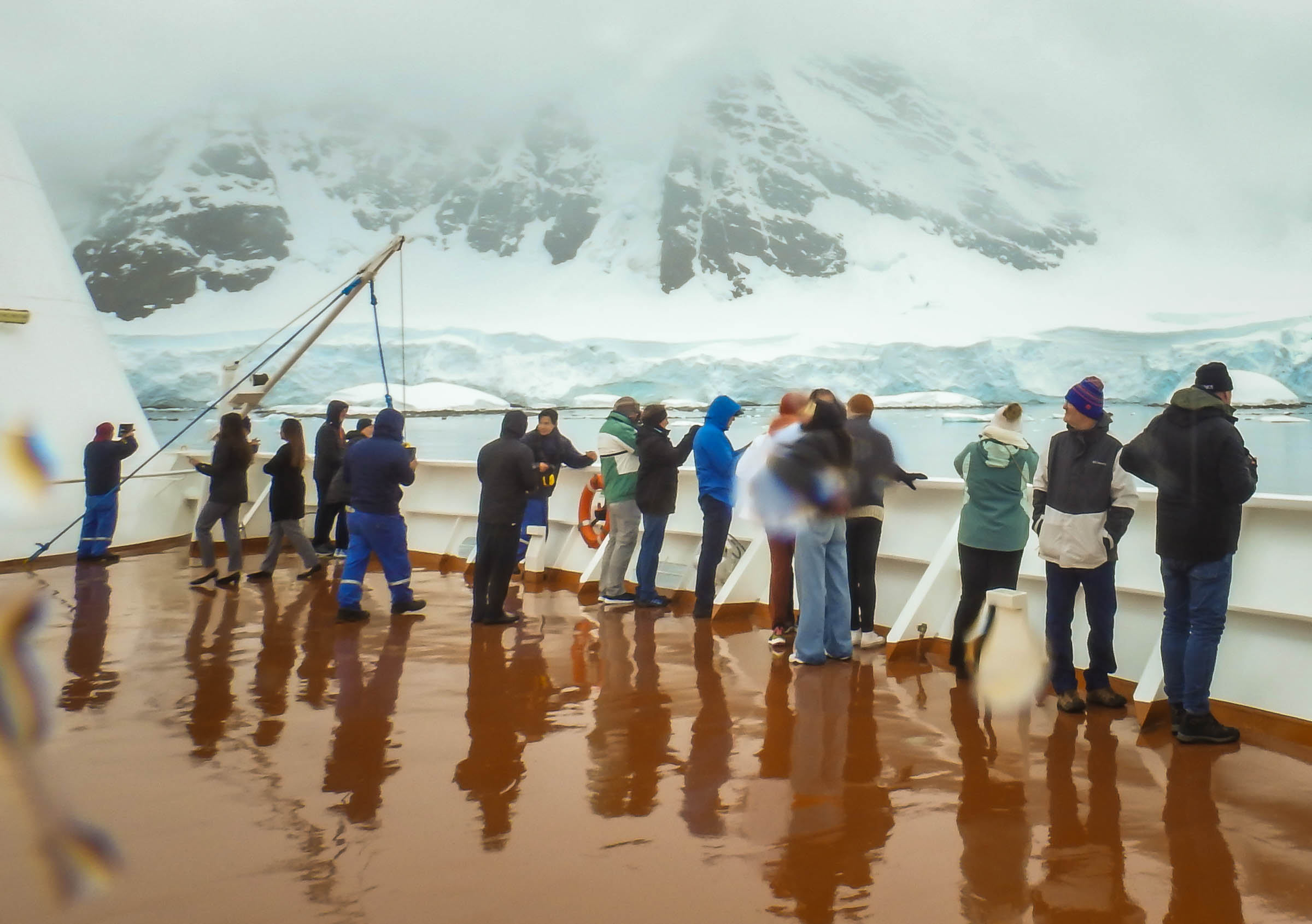
Outside decks for best viewing
Icebergs are common
Adelie penguins only in Antarctica
USA Palmer Station
Hundreds of thousands Chinstrap Penguins
sea lions too
Antarctic sunset
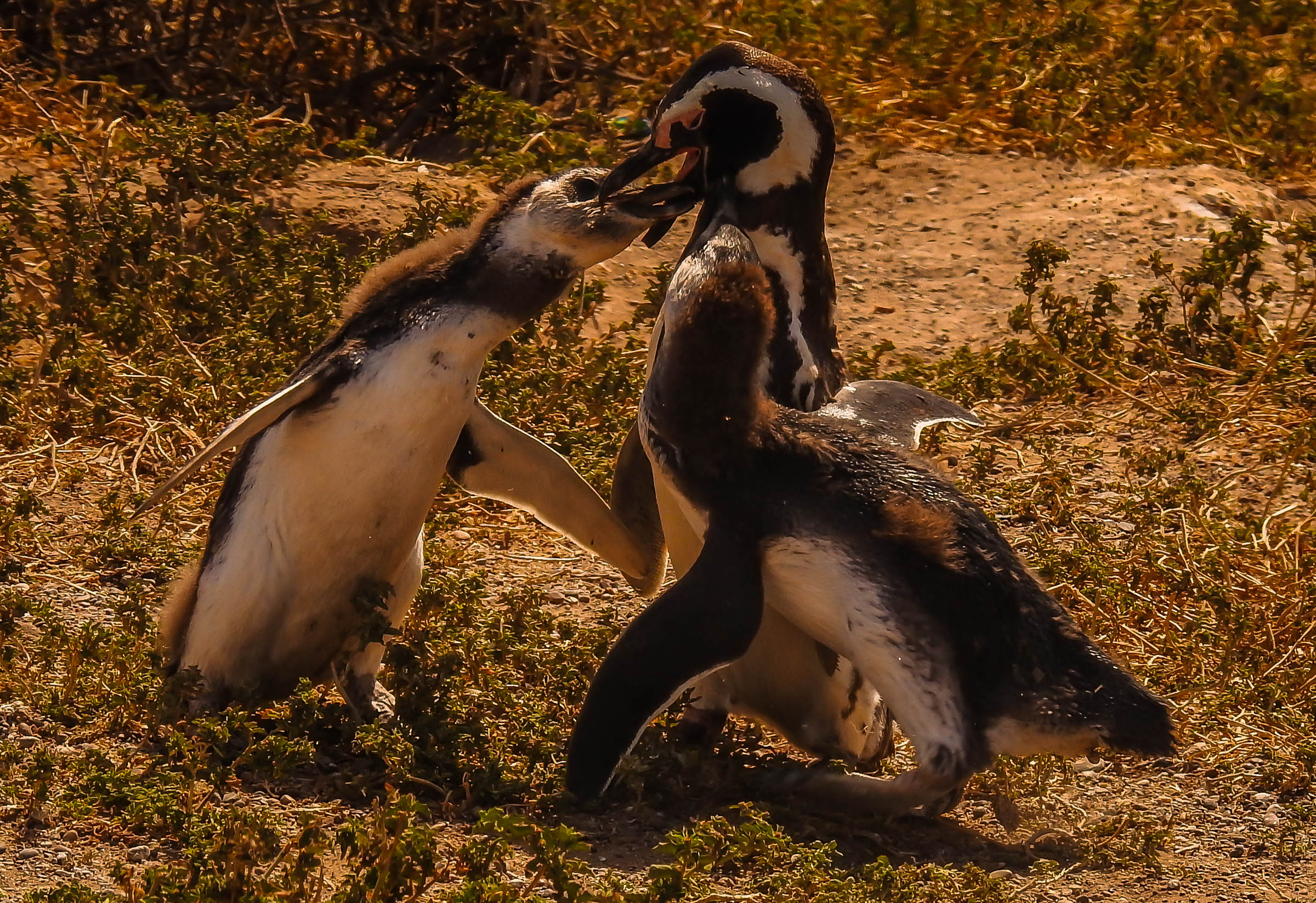
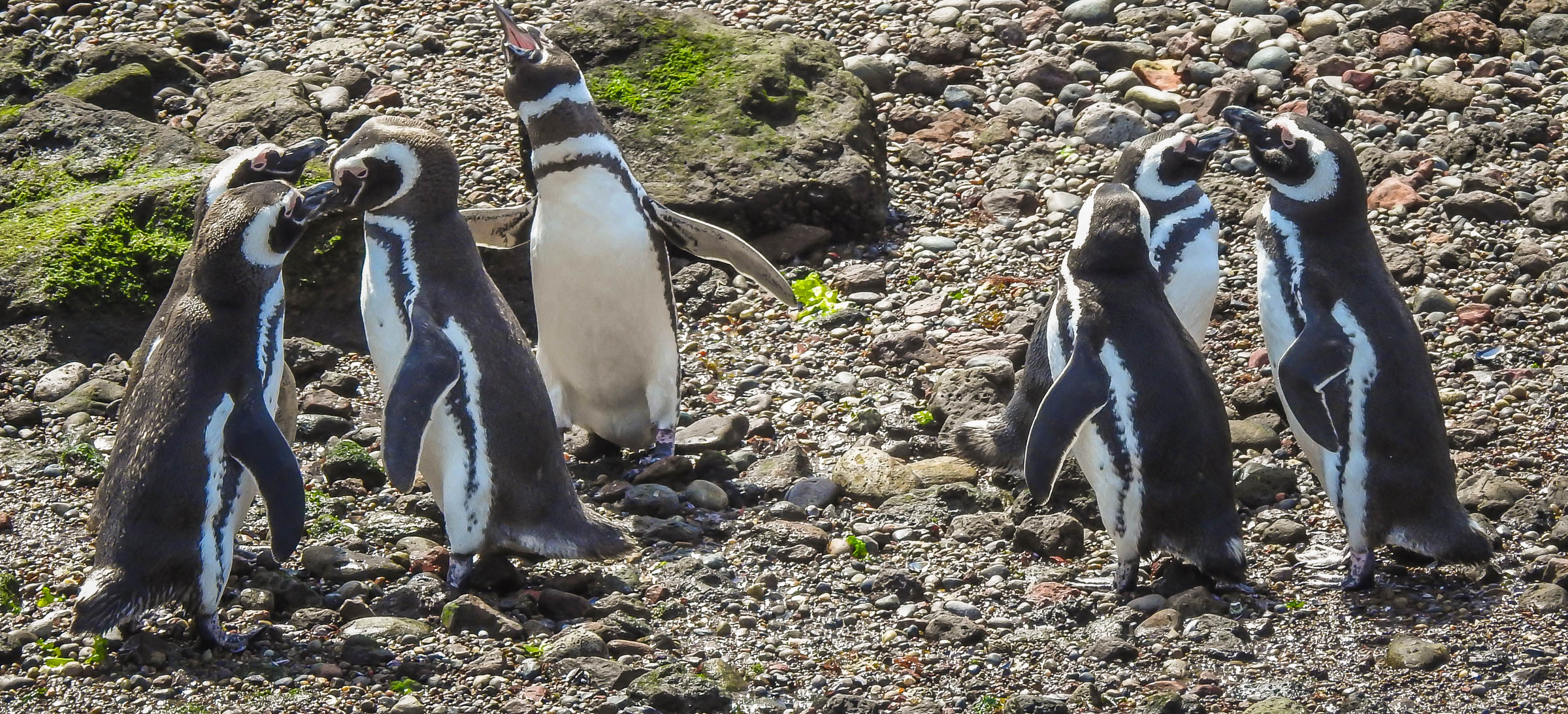
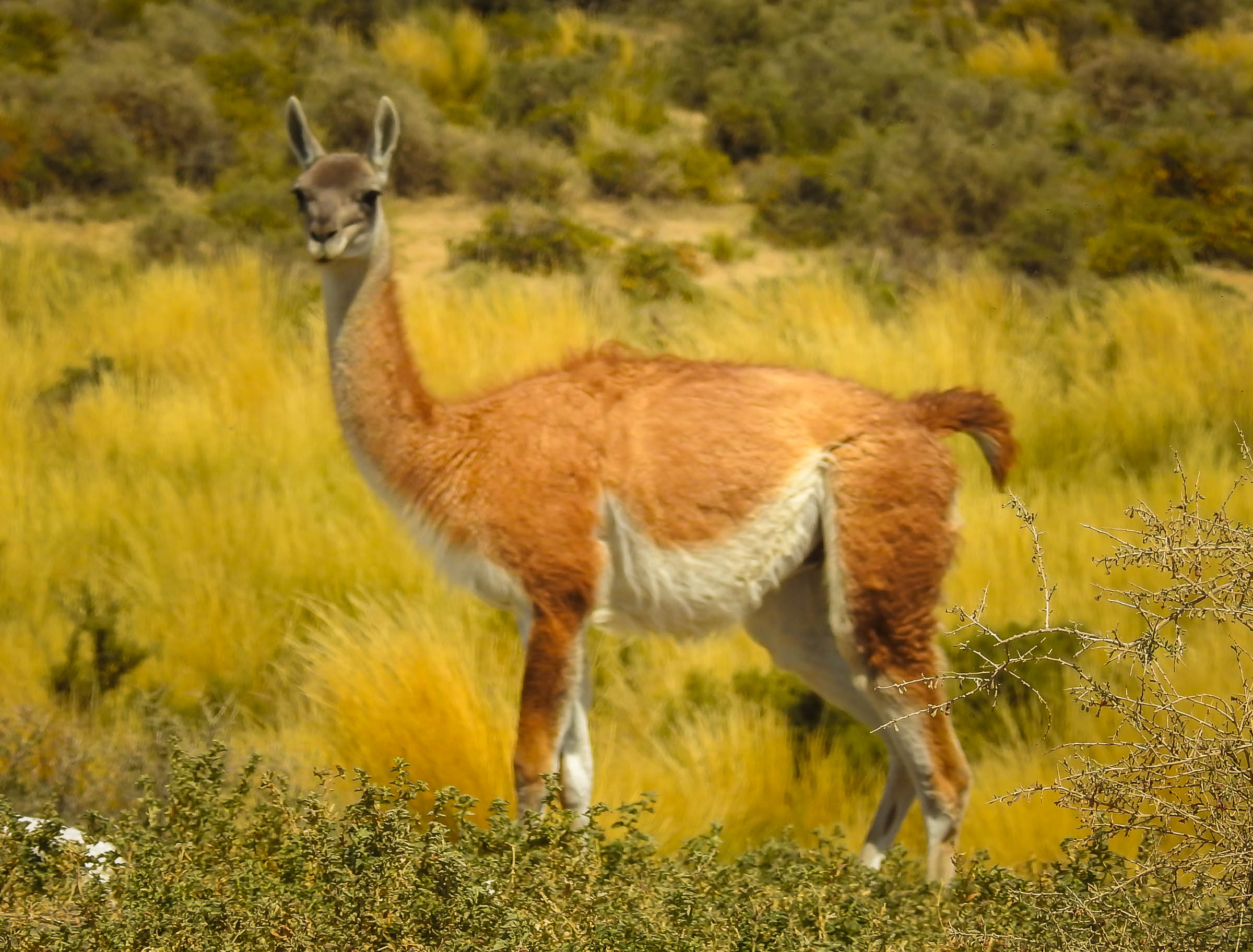
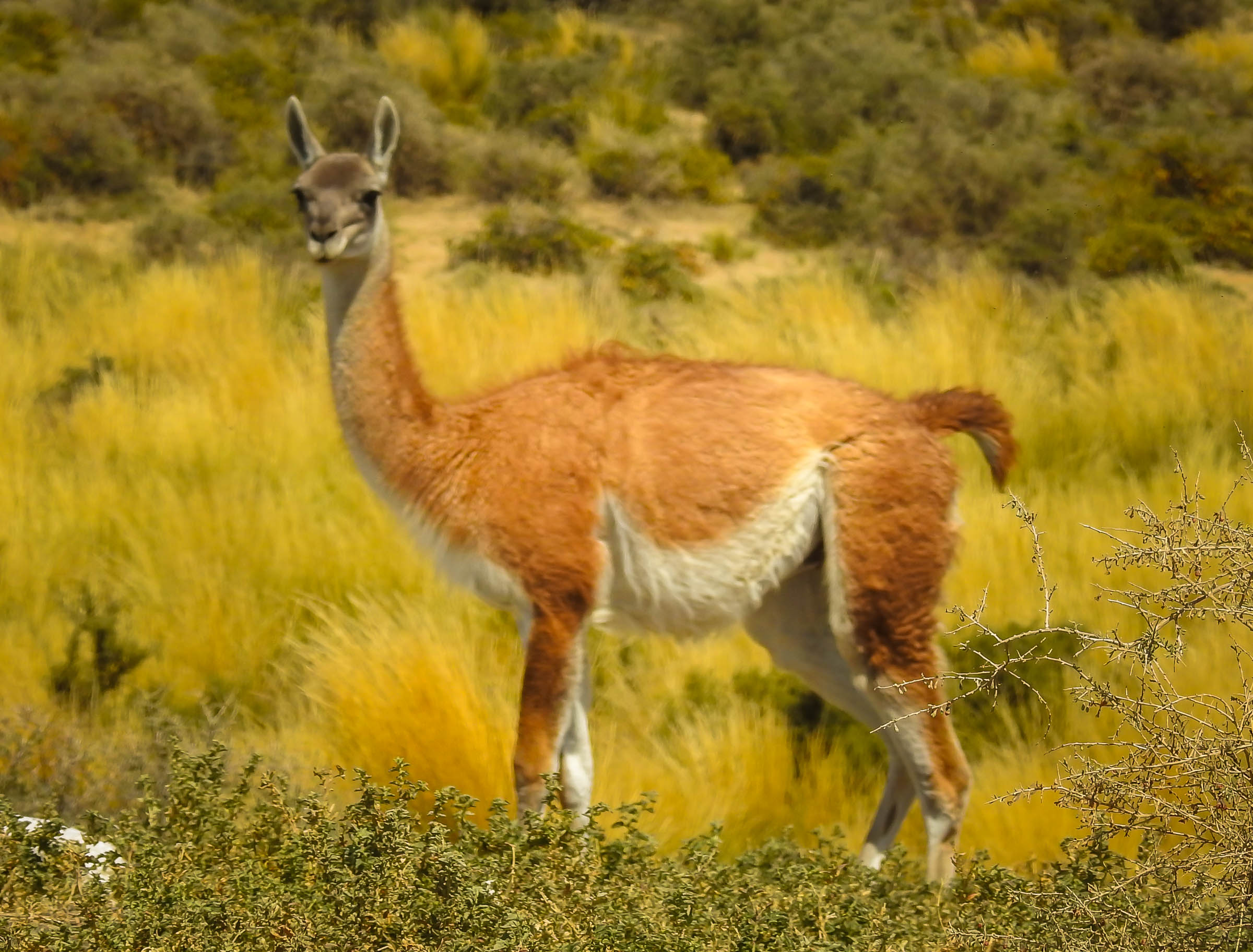
Puerto Madryn Argentina. This is where we got up close to the Magellinic penguins. The Tombo Preserve here is home to thousands of penguins rearing their young. These penguins live in ground burrows and stand about 2 feet tall and weigh about 8 to 14 pounds. They are totally unafraid of humans and wander freely around the tourists. Don’t get too close though, they have wicked beaks. We also saw the unique guanaco, a wild llama like mammal. This is also the area where orcas are seen snatching dinner off the beach. Lots of wildlife here.
Marching Magellanic penguins
Fluffy young penguinn
Feeding the young
Very social penguins
Patagonian guanaco
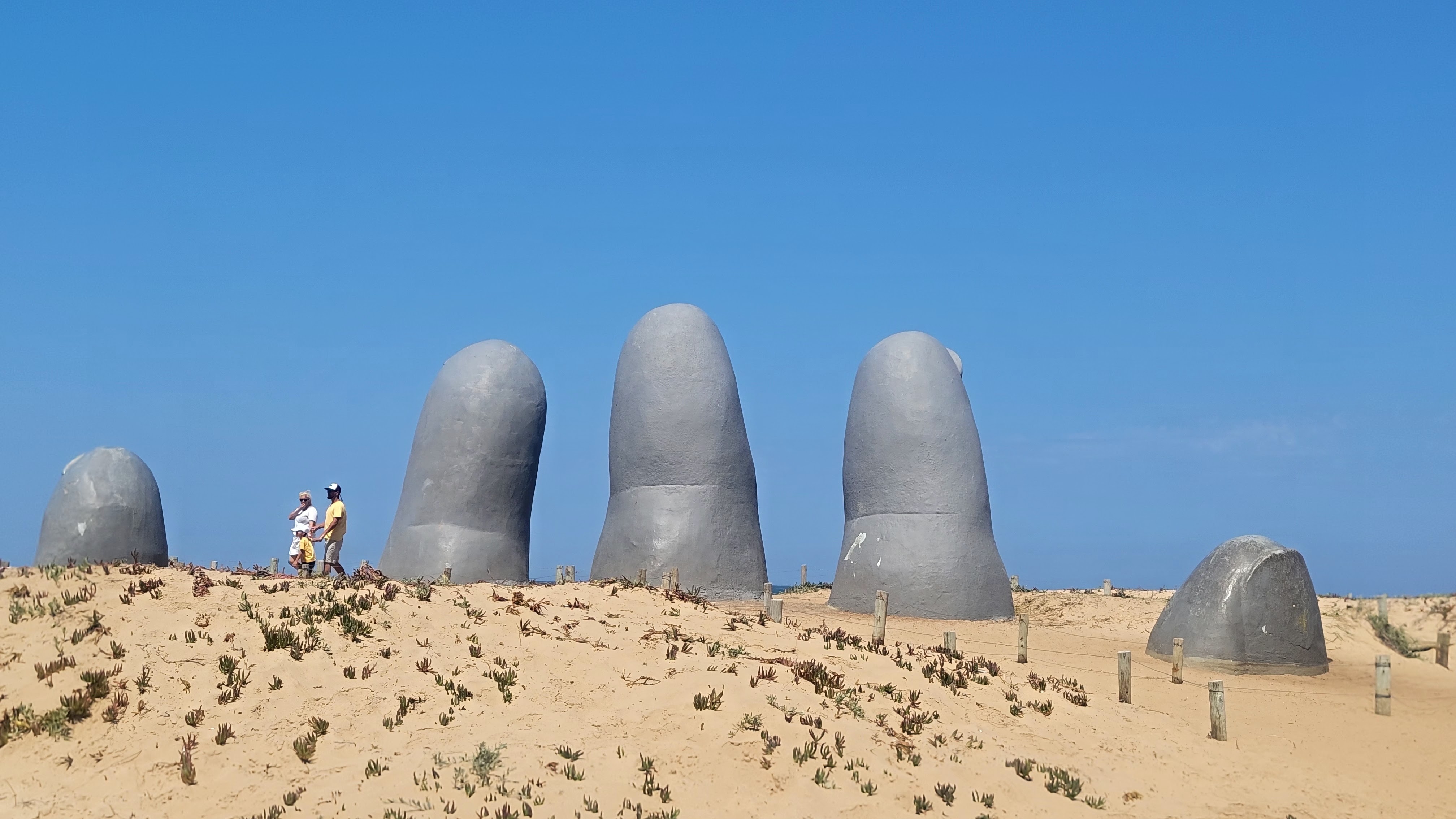
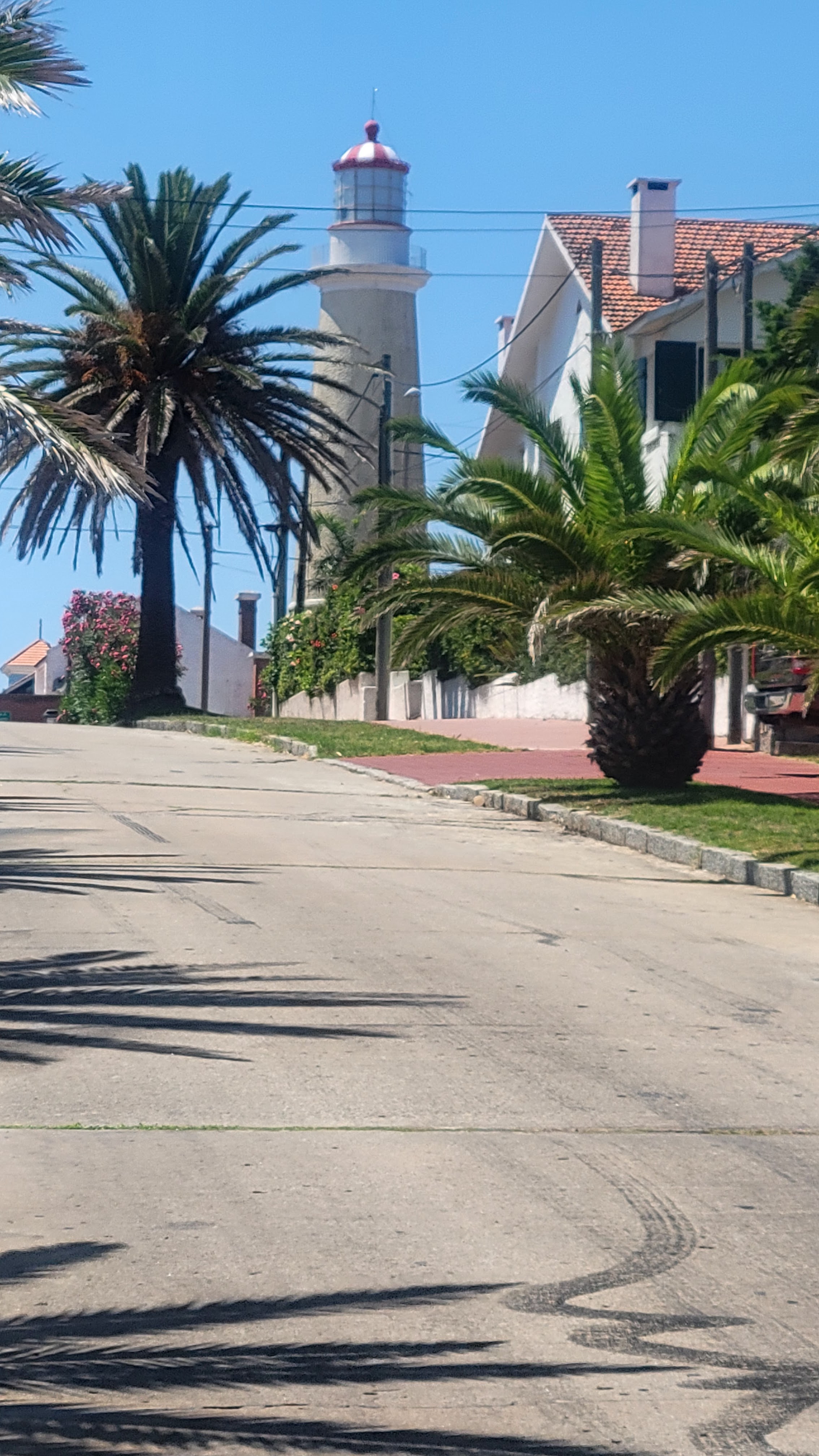
Punta del Este Uruguay. This was a summer resort town for the middle and upper classes. Nice beaches, hotels, restaurants. Many yachts. Very clean, very safe.
“The Hand” is the 1982 work of Chilean artist Mario Irarrazabal
Montevideo Uruguay. Montevideo is the capital of Uruguay and a very nice historic city. We enjoyed the architecture, plazas and just walking around. We felt like we could live in Uruguay.
Montevideo has a beautiful city center
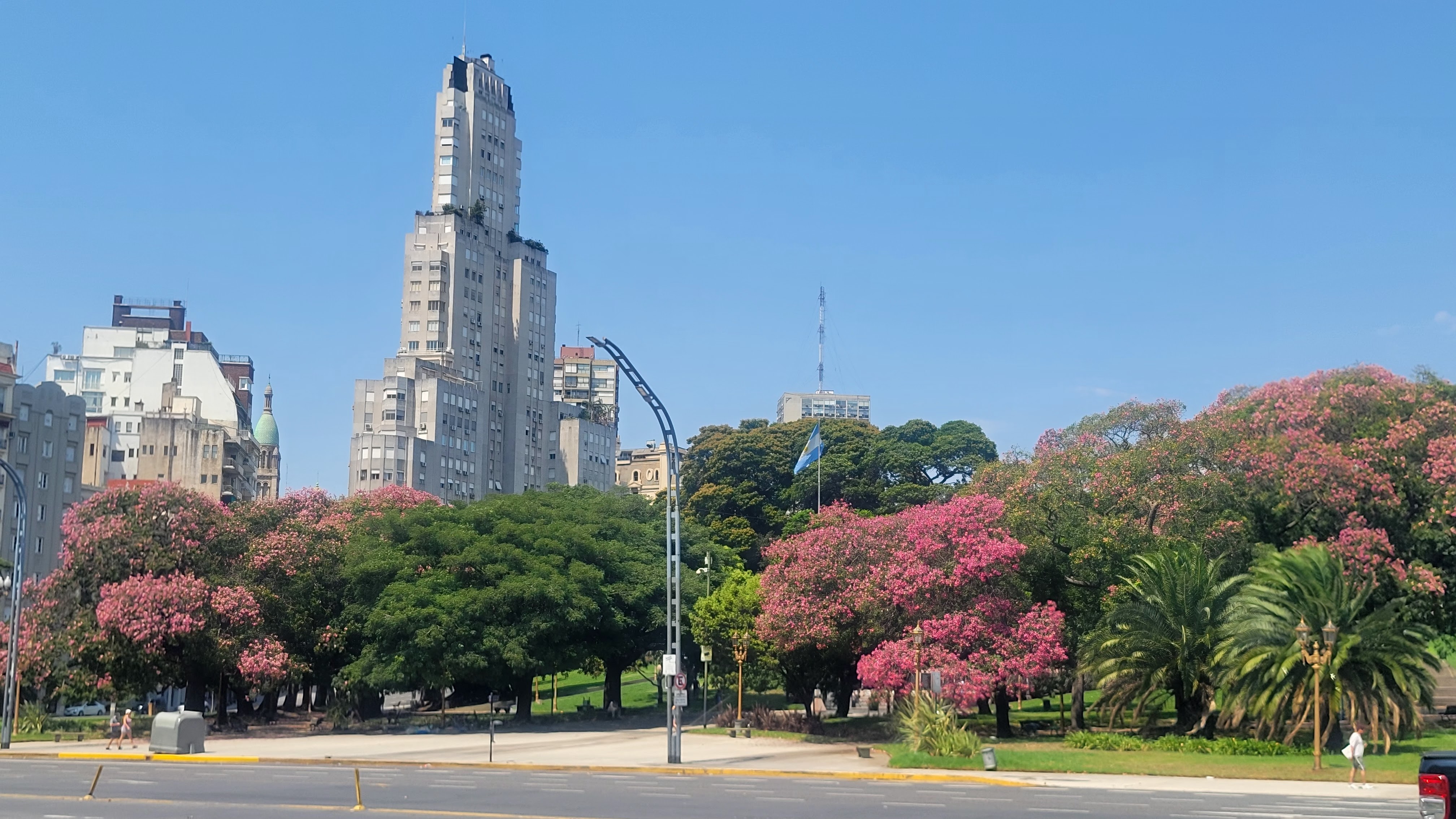
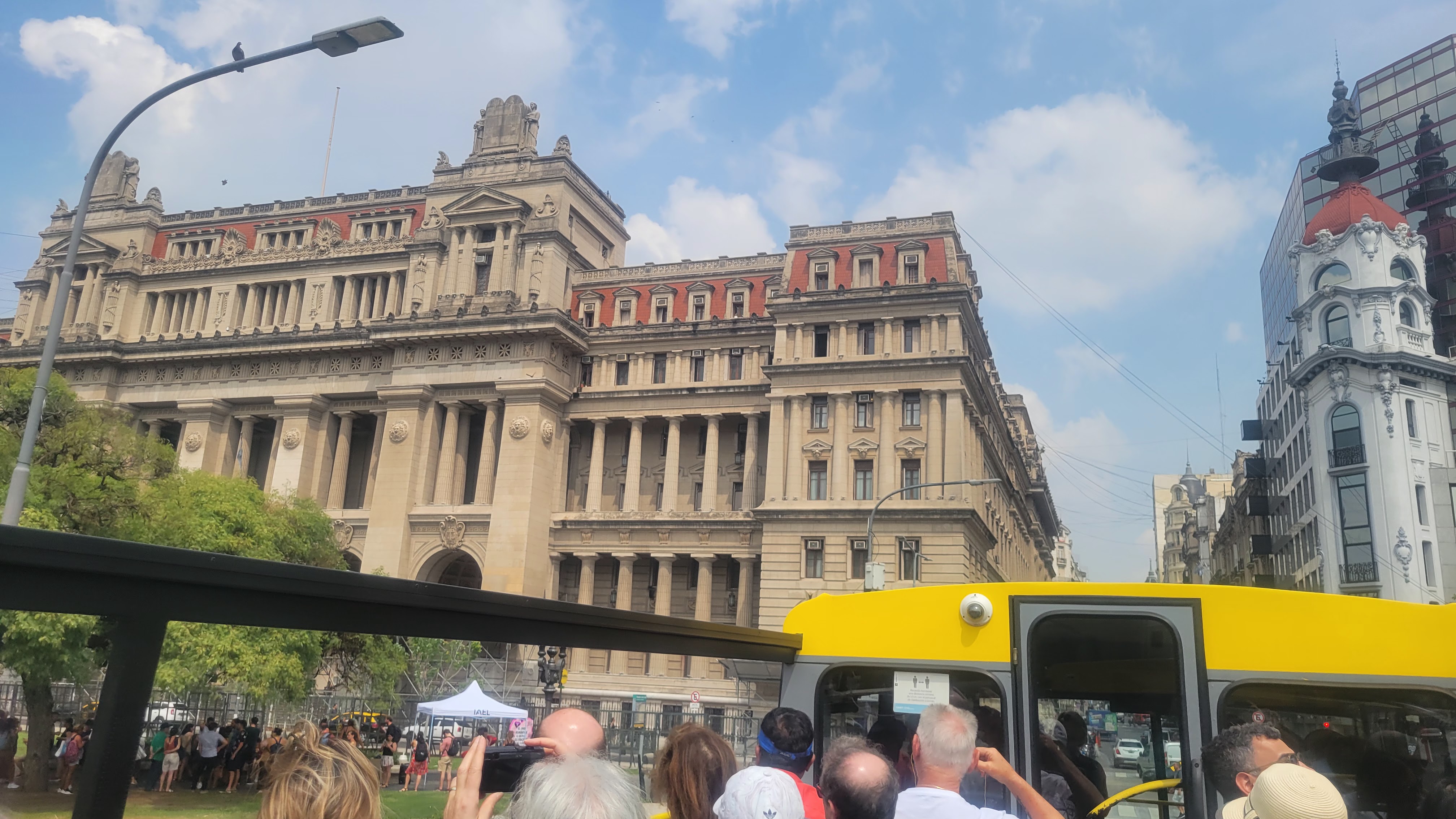
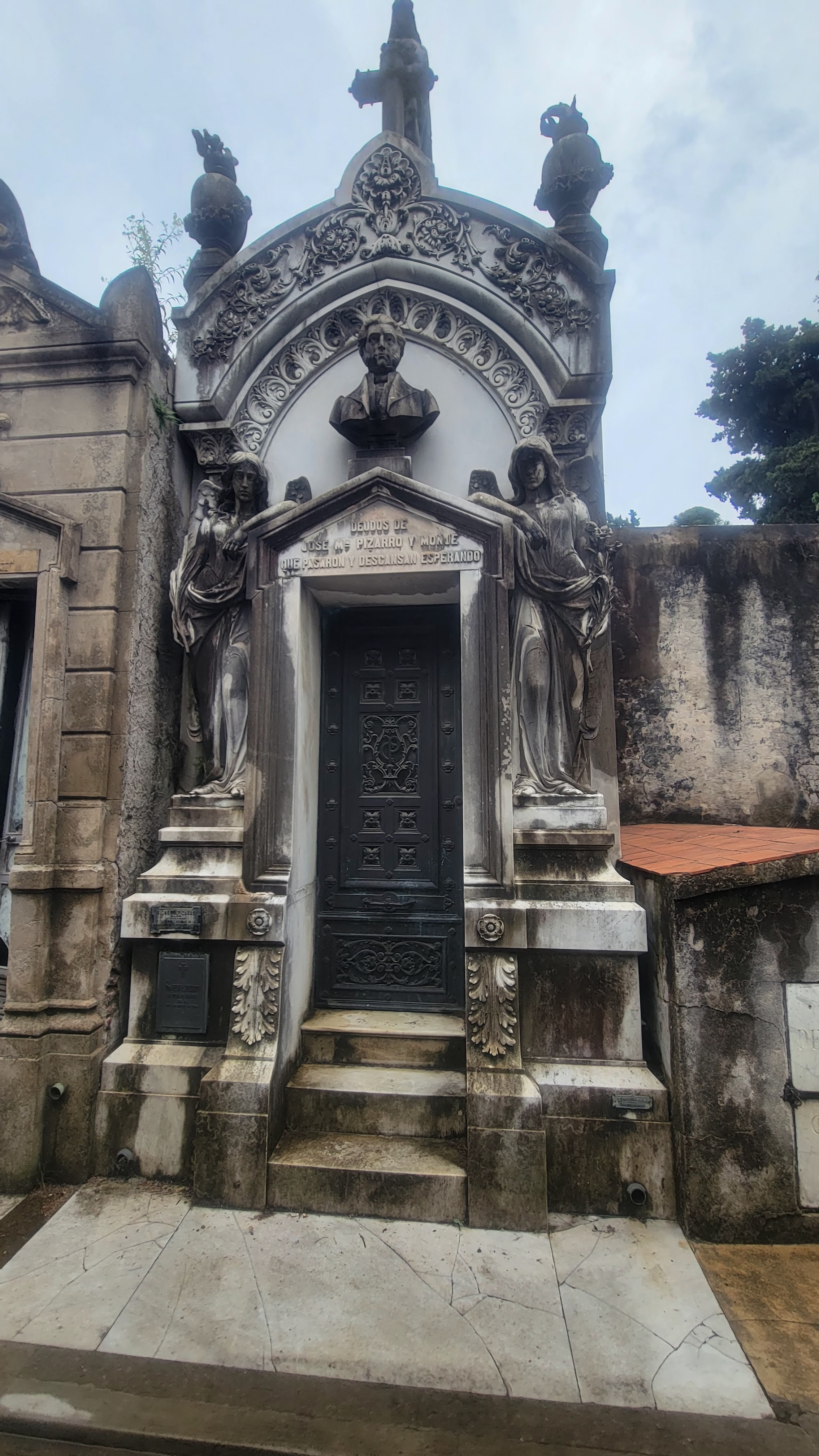
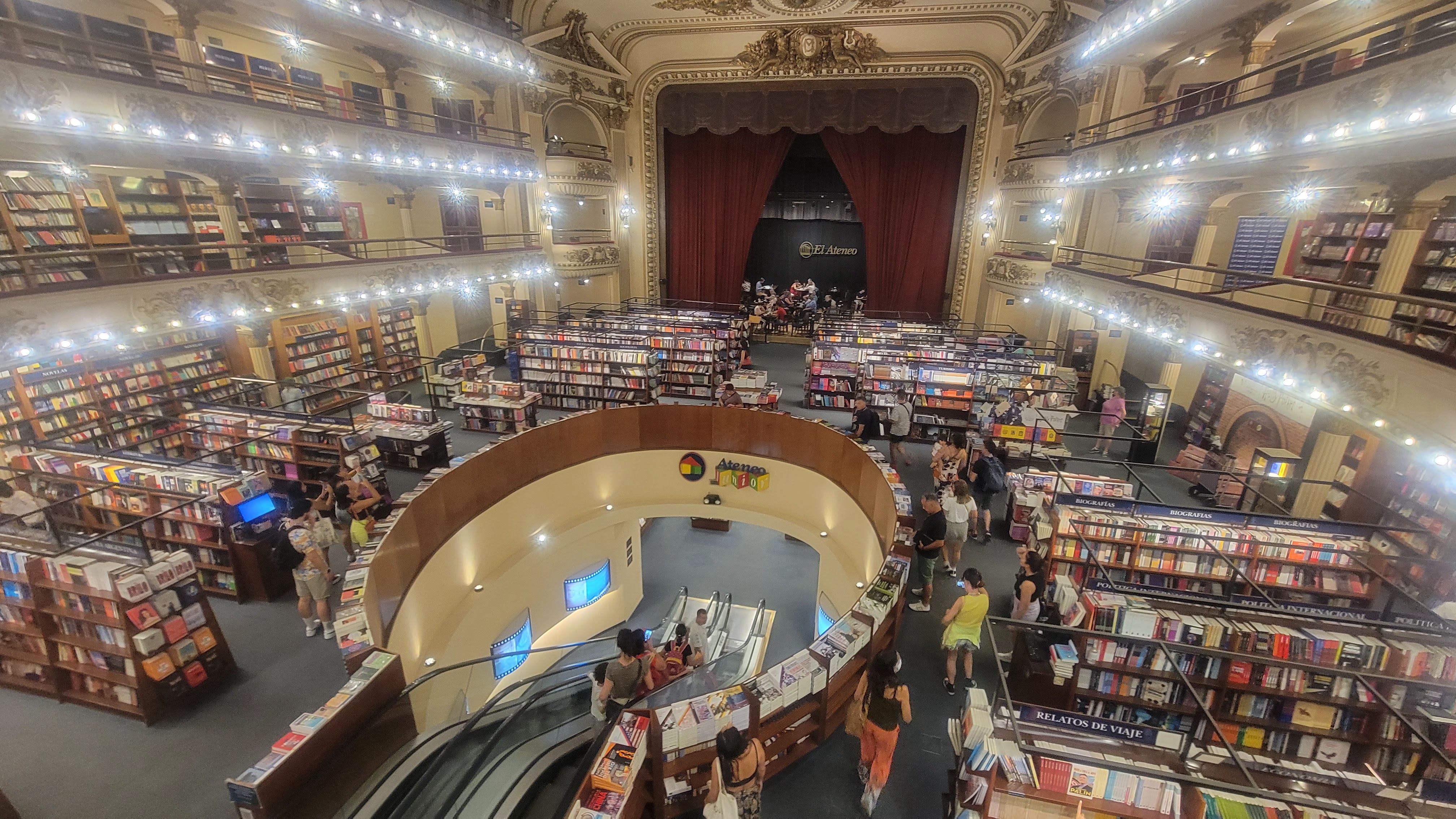
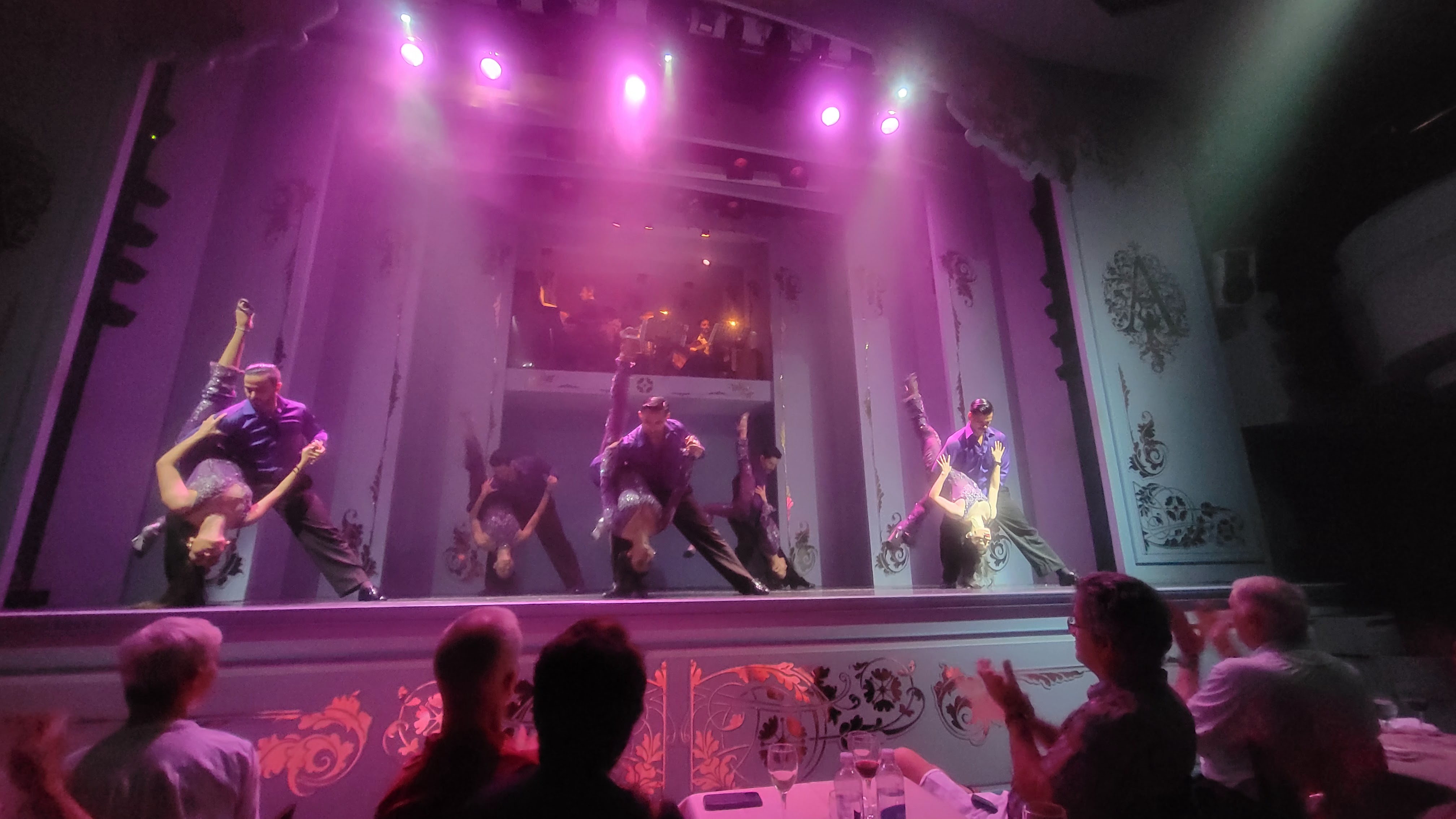
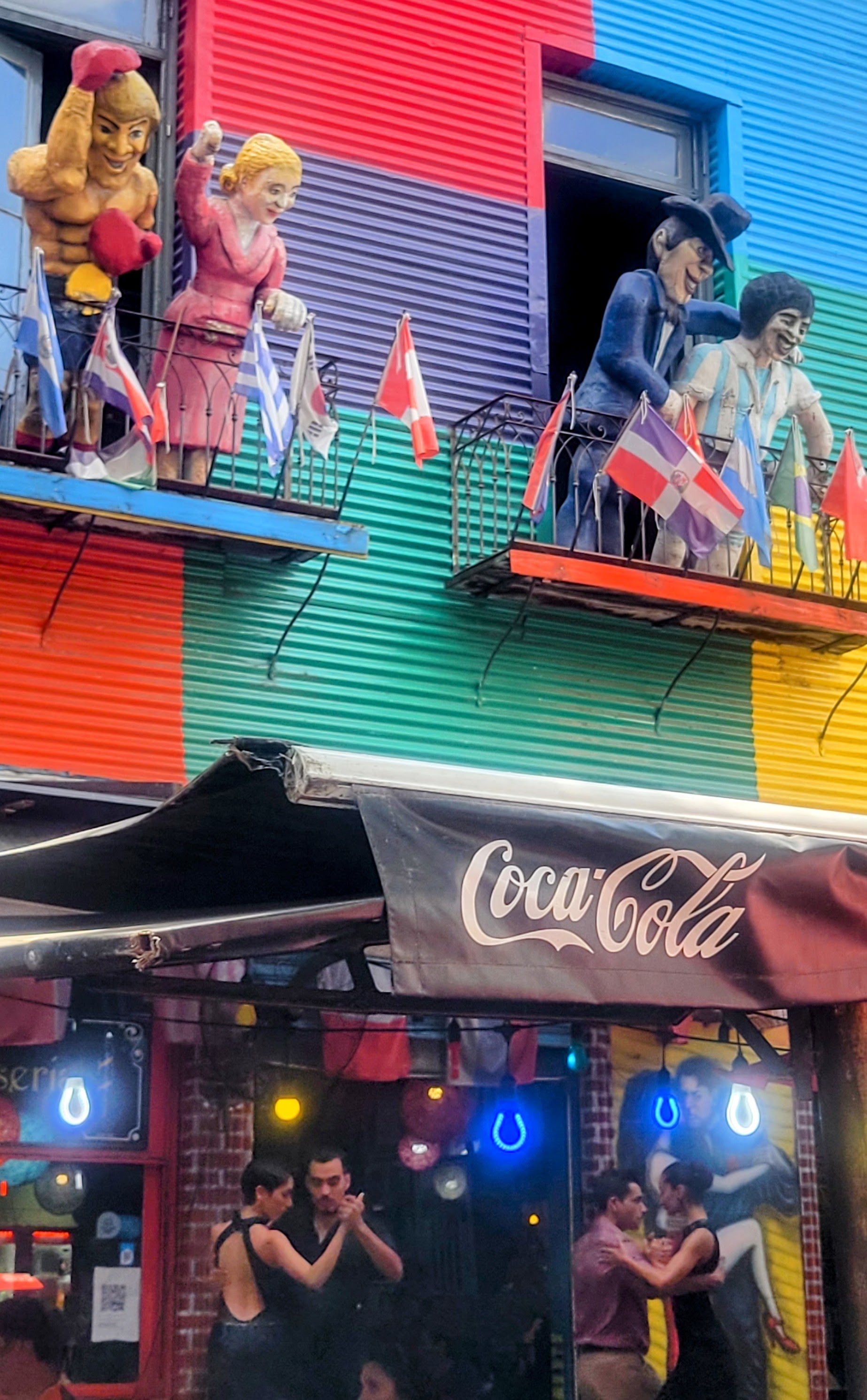
Buenos Aires Argentina. Buenos Aires was the end of the cruise for many and the beginning for some just joining us. It is a huge city of over 15 million. Again since the port area was not the best, HAL offered a shuttle to the center of the city. We saw churches, monuments, the clock tower, a railroad museum and a shopping mall with great frescoes on curved ceilings. A HAL tour showed us Recoleta Cemetery where Eva Peron is buried and the El Ateneo bookstore/cafe built in a former opera house. As we were staying overnight we were able to attend a tango show at one of BAs tango cafes. It was spectacular with 10 dancers 2 singers and a live band. The next day we took a hop on hop off bus tour where we saw different neighborhoods. La Boca neighborhood was especially lively with colorful shops, restaurants, impromptu tango dancers and 3 dimensional street art.
BA is known for its European architecture
Eva Peron’s monument in Recoleta Cemetery
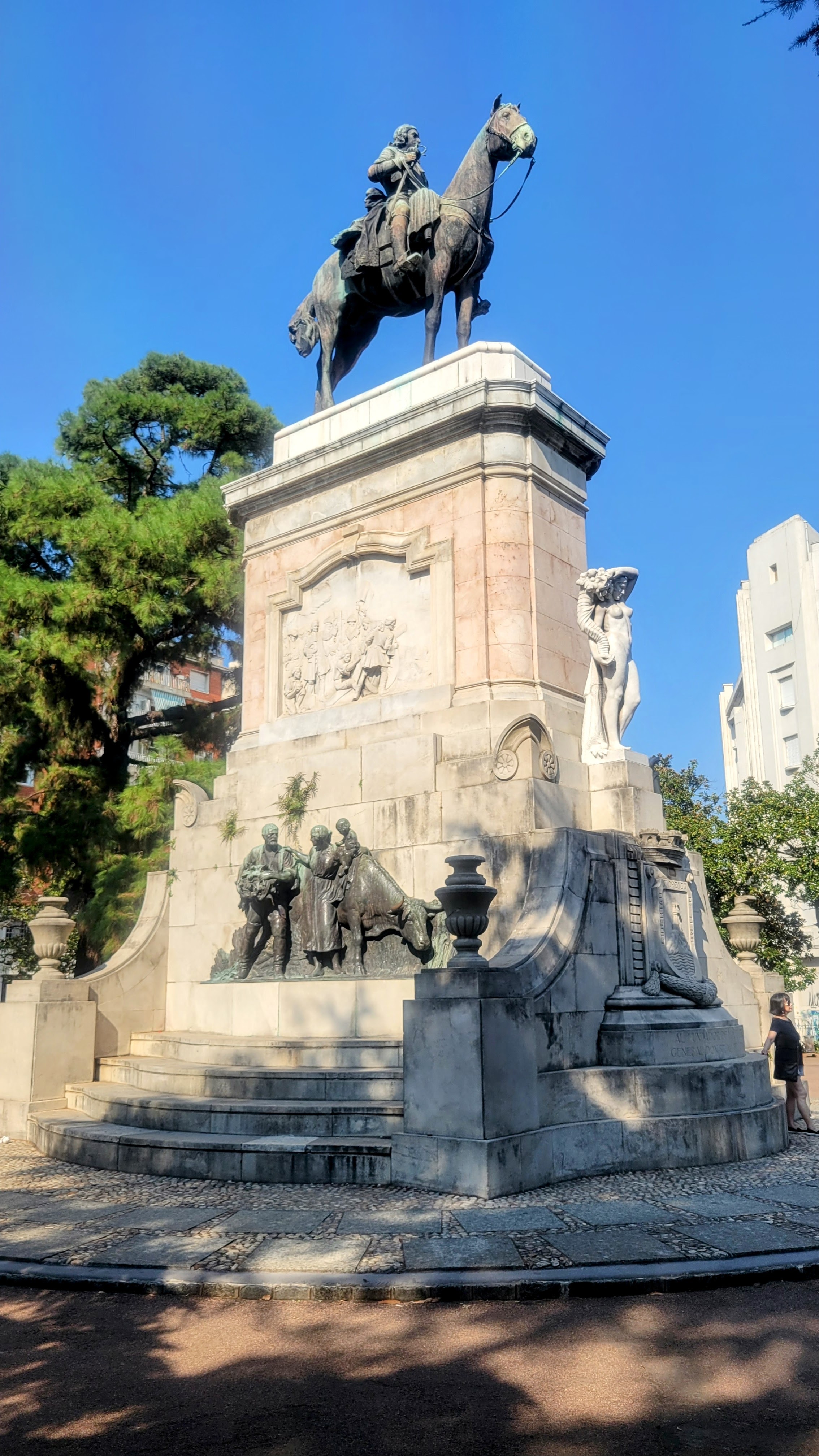
Many monuments in this capital city
El Ateneo Bookstore
Tango show
Buenos Aires La Boca neighborhood features colorful 3D art
At this point of our cruise we began to feel part of a community. We were accustomed to life at sea. Our daily life had settled into comfortable patterns which we enjoyed. New guests arriving gave us some pause as we wondered how they would fit in. We were excited about the next chapters.
We recently returned from an epic cruise completely circumnavigating South America beginning and ending in Ft. Lauderdale Florida. The trip was offered by Holland America Line and we cruised on their ship Volendam. This blog will touch on the highlights and summary of the 74 day trip. Subsequent blogs will dive a little deeper into the details and stories.
Logo for our cruise
Our ship Volendam
Our journey began January 3rd with a rental car drive from our home in north central Florida to Port Everglades in Ft. Lauderdale. We went to Jamaica, Costa Rica, Panama, Ecuador, Peru, Chile, Argentina, Antarctica, Brazil (including nearly 1000 miles up the Amazon River), French Guinea, Barbados, Dominica, St. Thomas and San Juan. In total we visited 3 continents, 34 ports in 12 different countries over our 10+ week journey. The captain tells us we sailed 18,649 nautical miles or 22,446 statute miles.
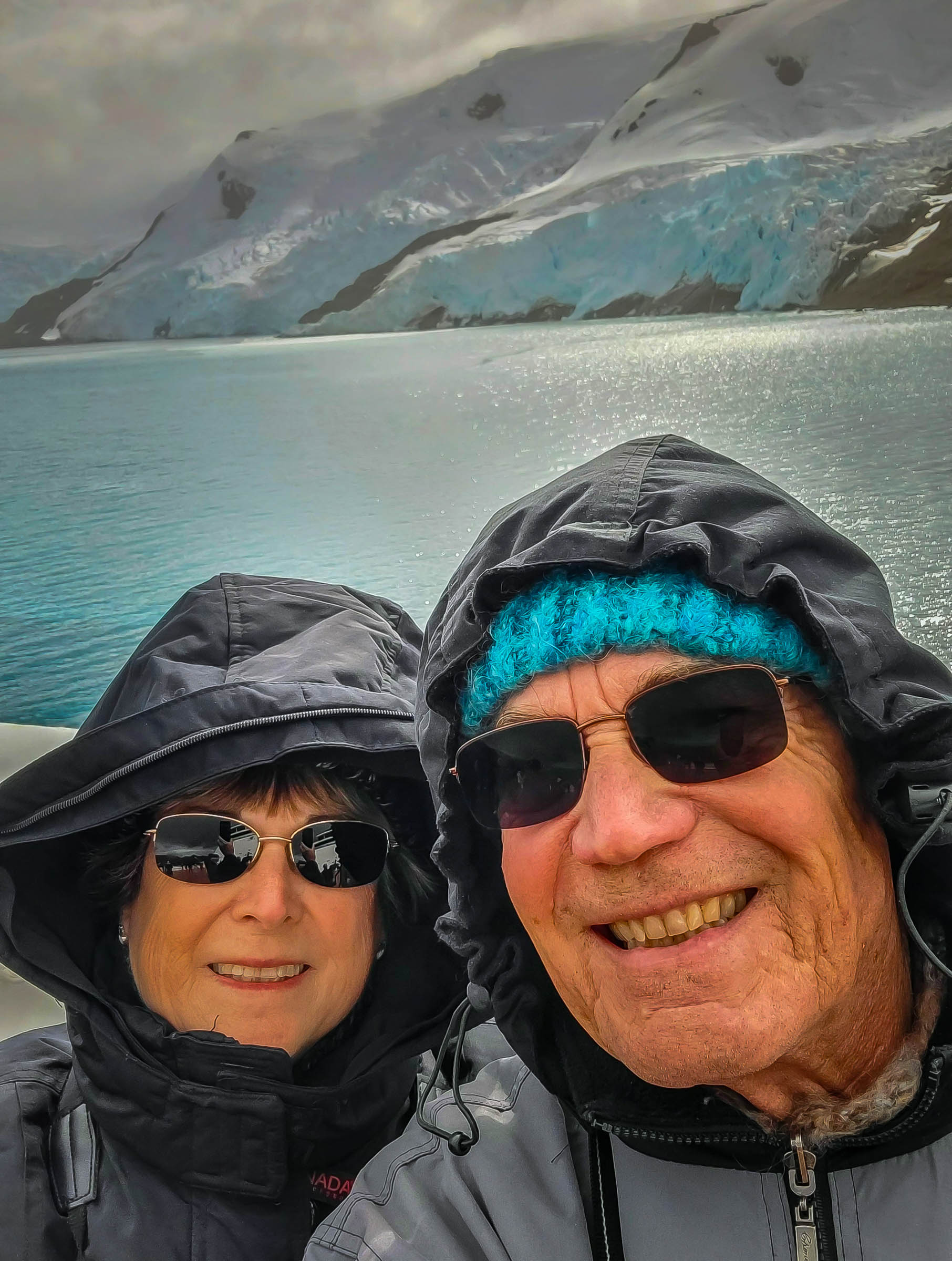
Us in Antarctica
Manta Ecuador is tuna capital of the world
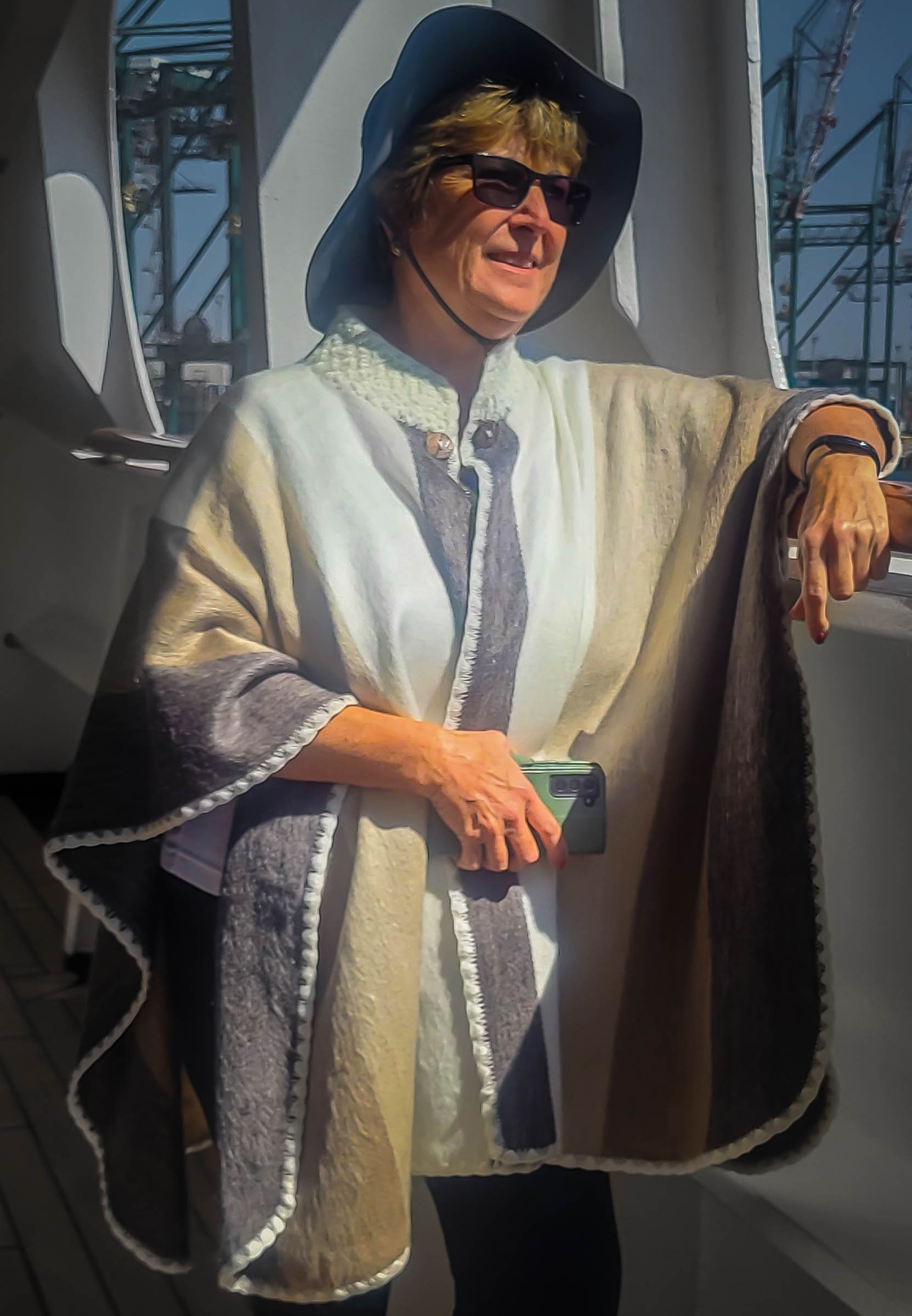
Dianne with alpaca shawl
Nazca Lines Paracas Candelabra 600 feet tall
Isla Robinson Crusoe
Holland America has really found a niche in offering long cruises to experienced travelers. The majority of our fellow passengers were in their 60s and 70s with quite a few 80s and even some 90s. We had one gentleman traveling alone who never ceased remining us that he was 97 and a half! We had many singles including a woman from NYC who was taking her first cruise. Another woman traveling alone was a retired prison guard from a maximum security prison in Canada. Speaking of Canada we had many from that country just enjoying a winter holiday. Some couples had taken this exact cruise 4 and 5 times. There were a good number of Dutch and German cruisers too. For us this was an opportunity to see many countries we had never visited as well as see Antarctica and the Amazon for the first time. Our ship, Volendam, had 1175 passengers out of a possible 1475. By today’s standards this is a smallish mid-size ship. She was built in Italy in 1999. We had to pack for very cold, windy conditions (Antarctica) and extremely hot (Buenos Aires 102) and humid conditions (Brazil).
Glacier in Chilean fjord
Cape Horn
Dianne in Antarctica
Adelie penguins
While we have been regular cruisers since 1992, this was more than twice as long as any previous trip. It was interesting how we got to know so many crew members and fellow travelers. By the end of the trip we really felt like a community. This was our extended family we had developed. We made some friends, others we knew pretty well, some we just recognized and some we kinda avoided like an annoying cousin. We had several medical evacuations and at least one death – a 34 year old guitar player from the entertainment team who the captain could not get to a hospital fast enough. There were rumors of several more deaths but none confirmed. Over a period of almost 3 months things will happen to a community.
Guanaco at Puerto Madryn Argentina
Tango in Buenos Aires
Holland America did a great job of providing lectures and information along the way. Debbie from Shore Excursions was very informative about ports and ship offerings and Jeremy, our cruise director, was excellent in his port talks about history and what to see in each port. He was all around a great presenter and super nice guy. We changed captains mid way thru the trip but each was very informative, friendly and had a sense of humor. Some of our favorite crew members were Eleanor, Esther, Eko, Anna, Ace, A-frame, Tanisi, Mr. T and Wisman. Eko actually remembered us from a cruise 3 years ago! While cruising the west coast of South America we had a university professor lecturing on those countries. During our Antarctic cruising we had 3 scientists on board providing lectures and commentary. In Brazil HAL brought on a team from “Oui Brazil” who performed dance and music and also taught Brazilian samba, capoeira and drumming. The Brazil team also had a great lecturer who gave us so much history and cultural info. During overnight stays Holland offered outstanding on shore performances including tango in Buenos Aires, Carnaval in Rio de Janeiro and a big band show in the world famous Manaus Opera House.
Christ the Redeemer in Rio de Janeiro
Carnaval Sambadrome
Giant Amazon water lily
Manaus Opera House
One more footnote about this cruise is about our travel agency, Cruise Specialists. Somehow over the internet we found them (they found us?) and we booked this trip thru them. Little did we know the benefits we would receive by using their agency. First off we got an additional $600 in fully refundable cruise credits to use on shore excursions or whatever. Then at the first of 3 cocktail parties we received very nice embroidered Columbia hats and embroidered tote bags. We also had 2 on board hosts to chat with and get advice and questions answered. They also provided 2 complimentary shore excursions and a premium dinner. If you wish to contact them, our agent was Bridgett Webber.
Devils Island French Guiana
Overall this was the trip of a lifetime. We had so many educational experiences and some exhilarating ones too. To be able to see and do all this without an airport and flying is just incredible. Holland offers more Grand voyages including ‘around the world’. You can be sure we will consider every offering.
Following our Swiss rail tour we decided to take a Viking river cruise. It’s a mighty long airplane ride across the Atlantic so we thought we should do more than one thing. When Viking offered free air and they would fly us whenever and wherever we wanted that clinched the deal.
Viking is the largest river cruise operator with over 80 boats. We chose Viking’s Rhine Getaway. It’s an 8 day cruise from Basel Switzerland to Amsterdam Netherlands with stops in France and Germany.
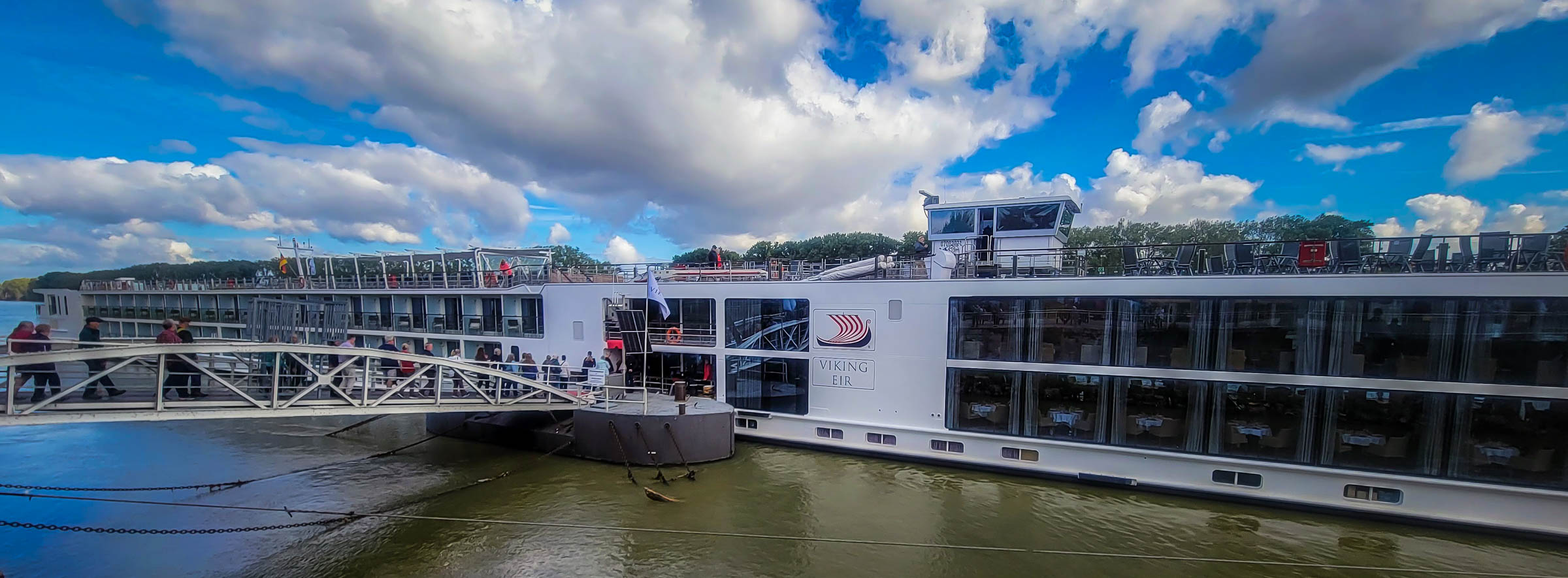
Our ship Viking Eir
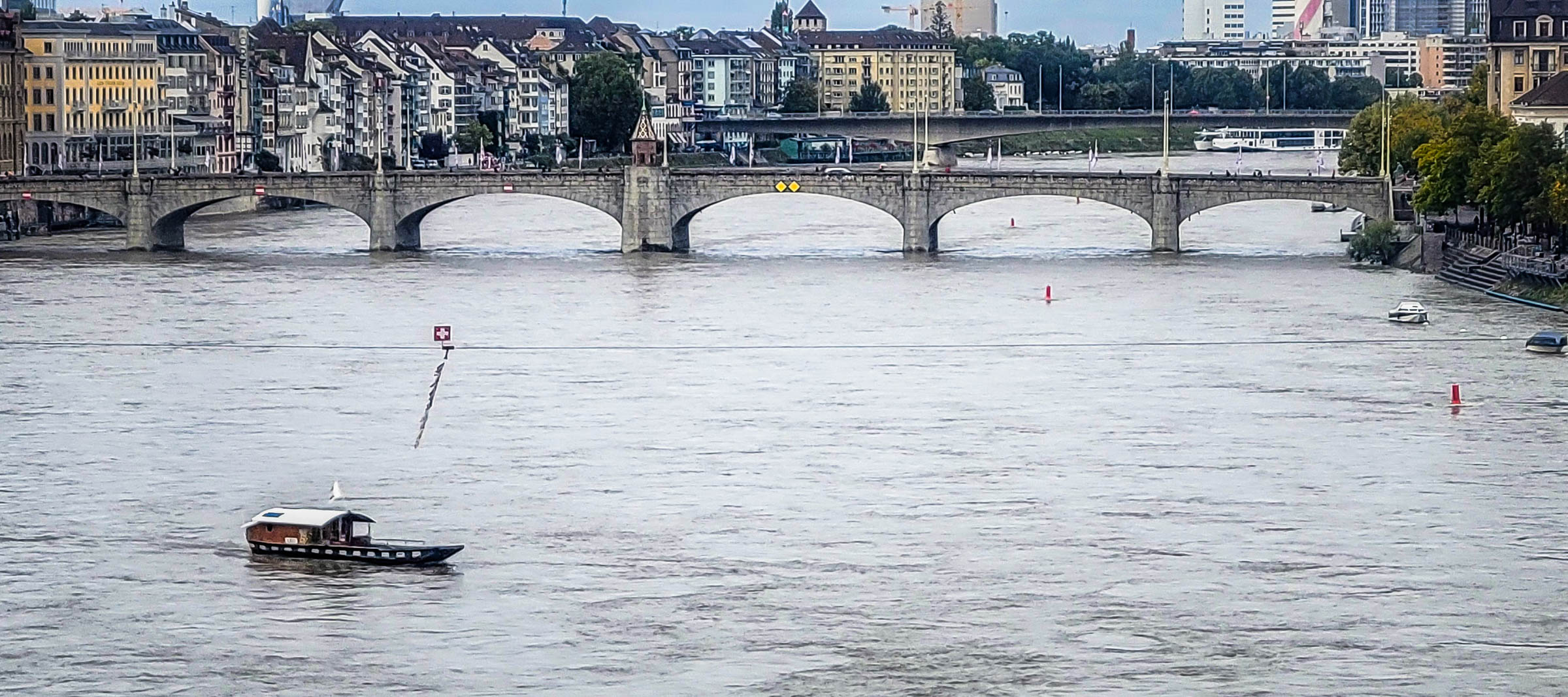
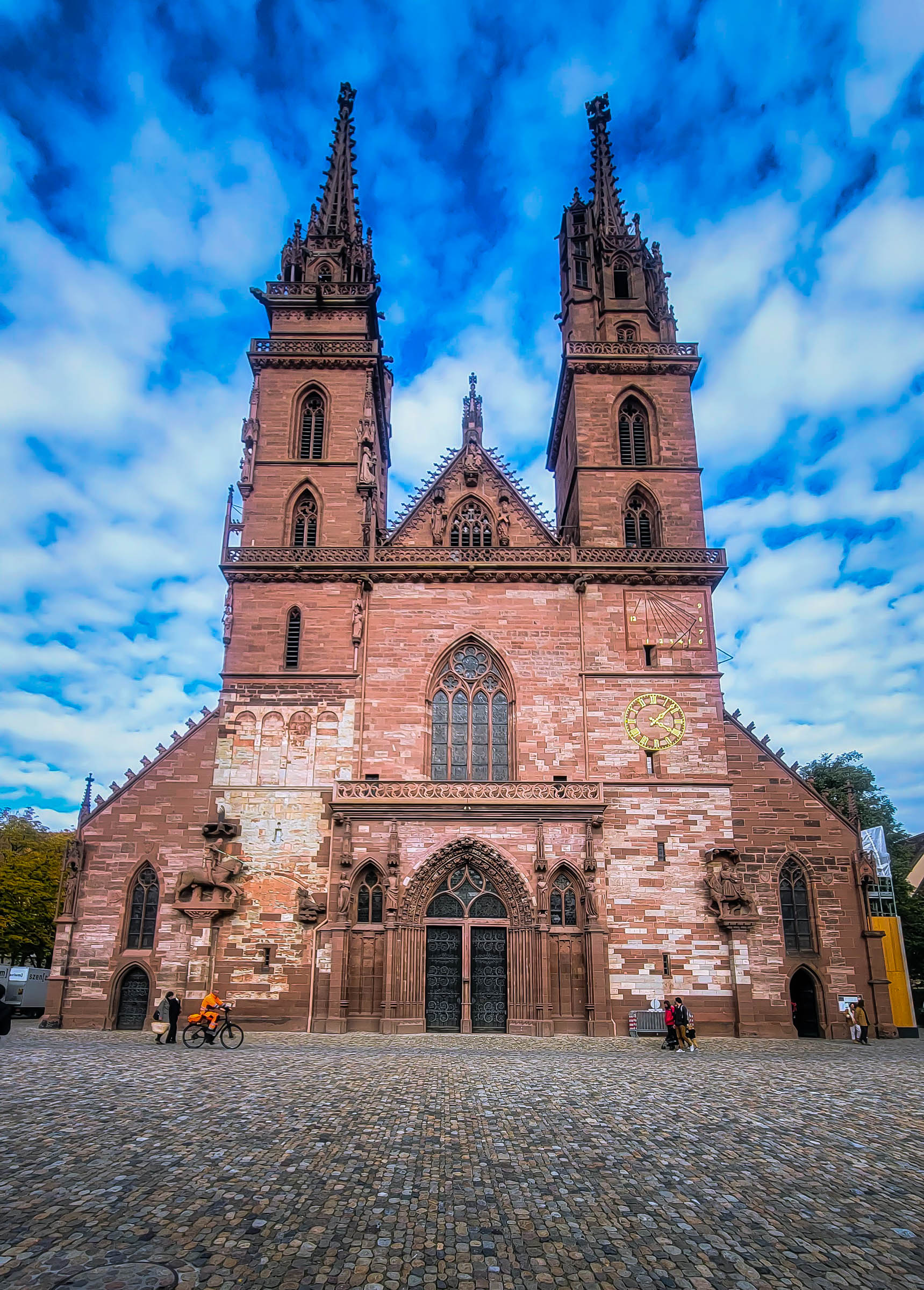
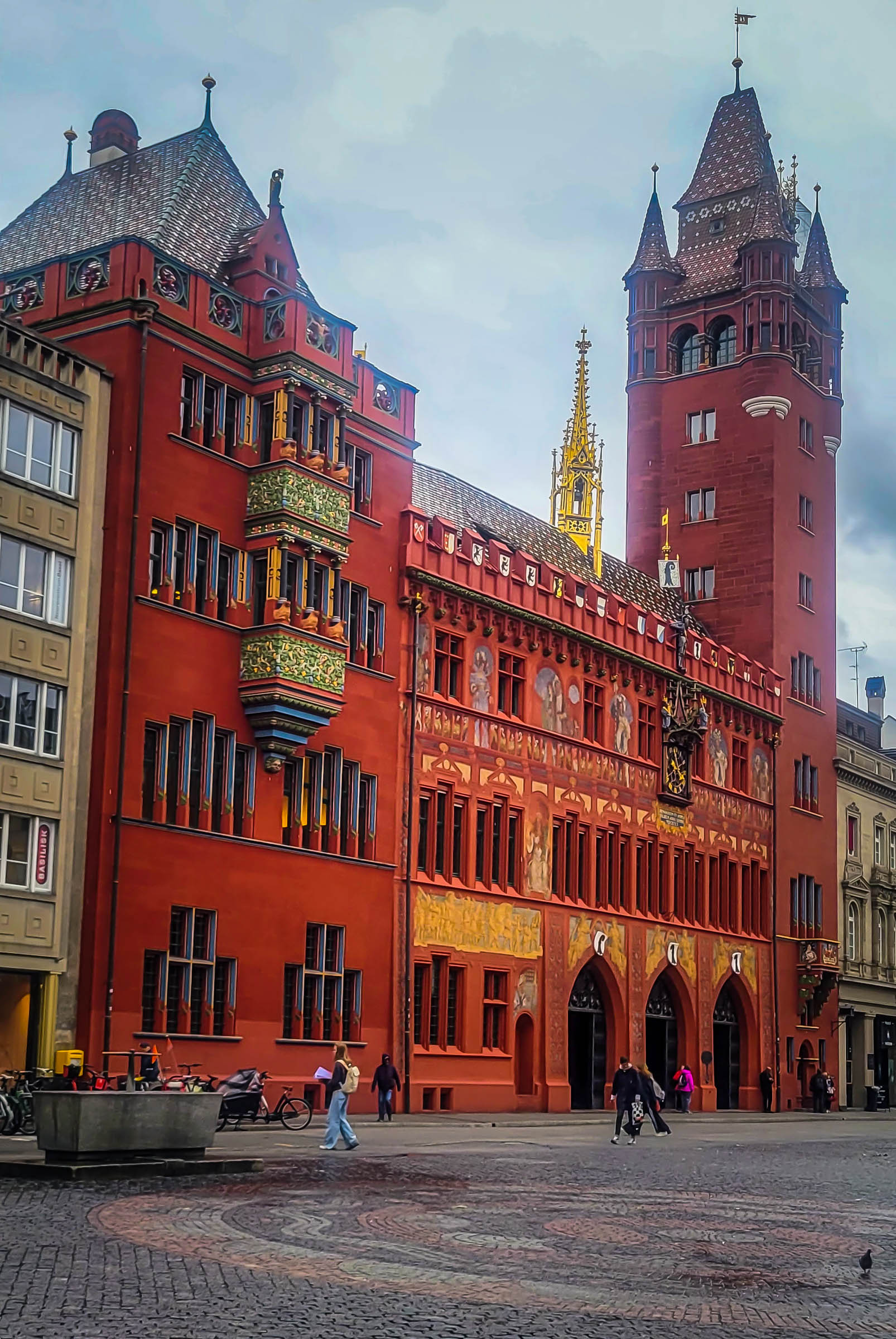
Viking cruises include a tour at every port and ours started with a tour of Basel.
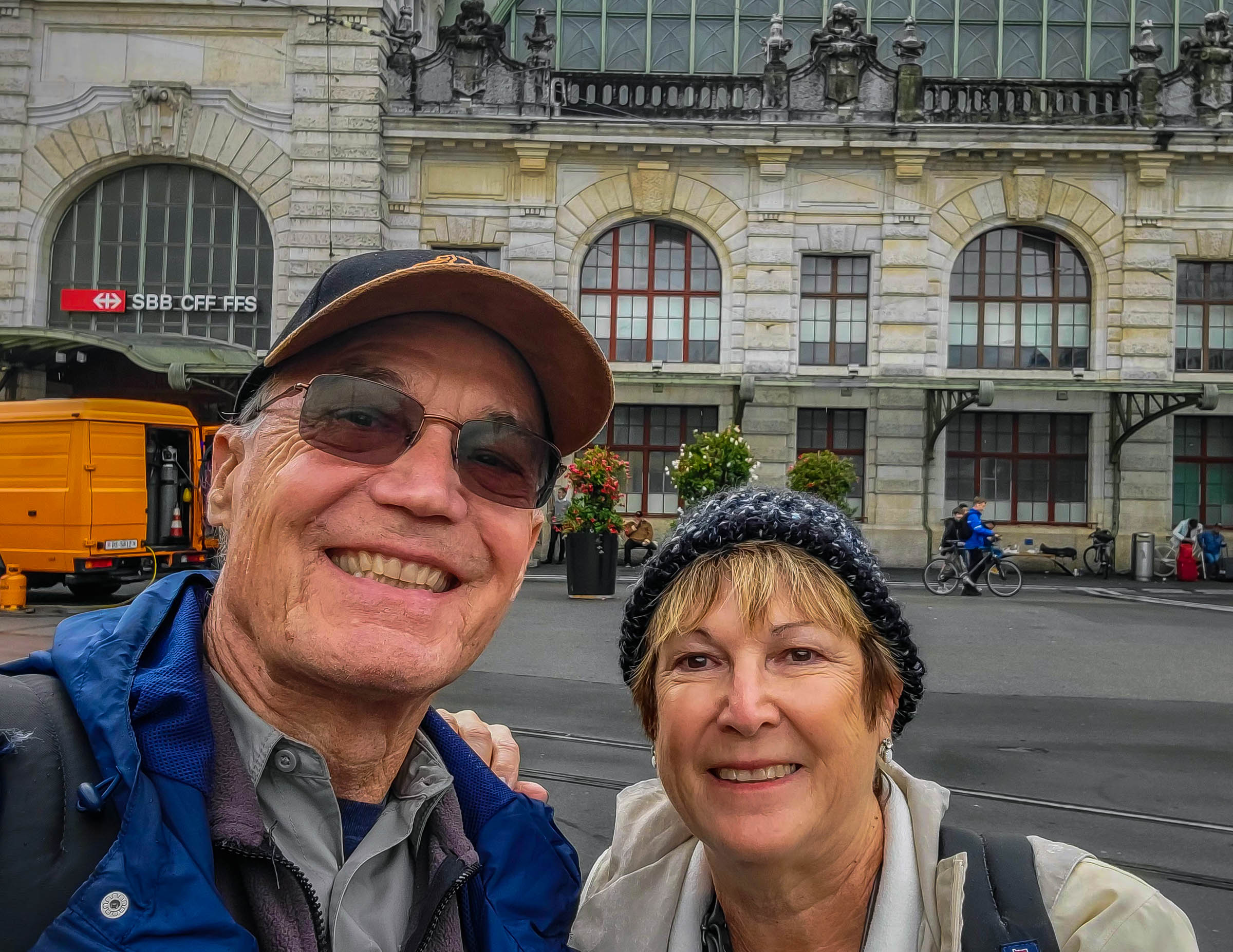
Us arriving at the Basel train station
The mighty Rhine
Basel Cathedral
Basel Rathaus or city hall
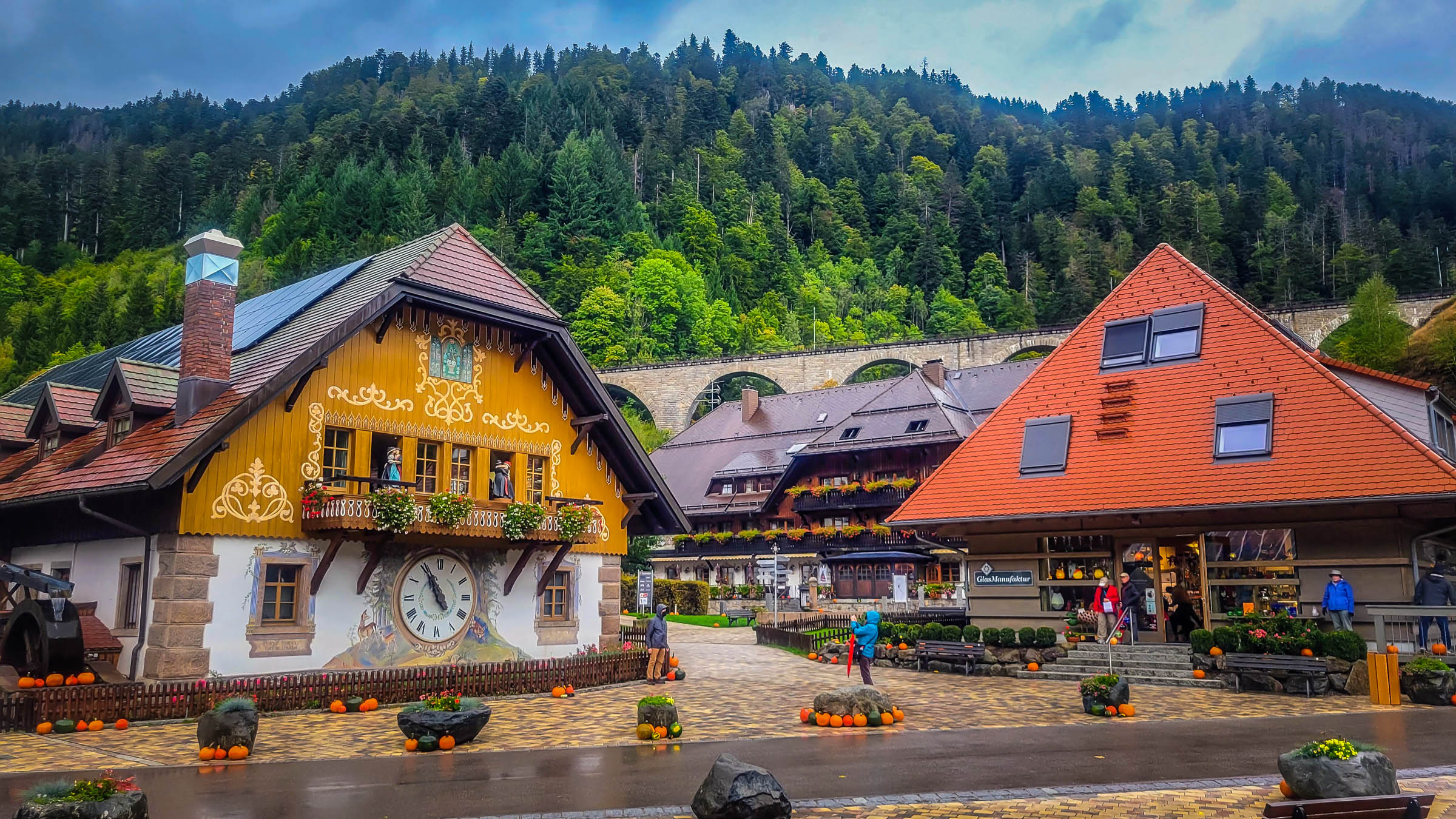
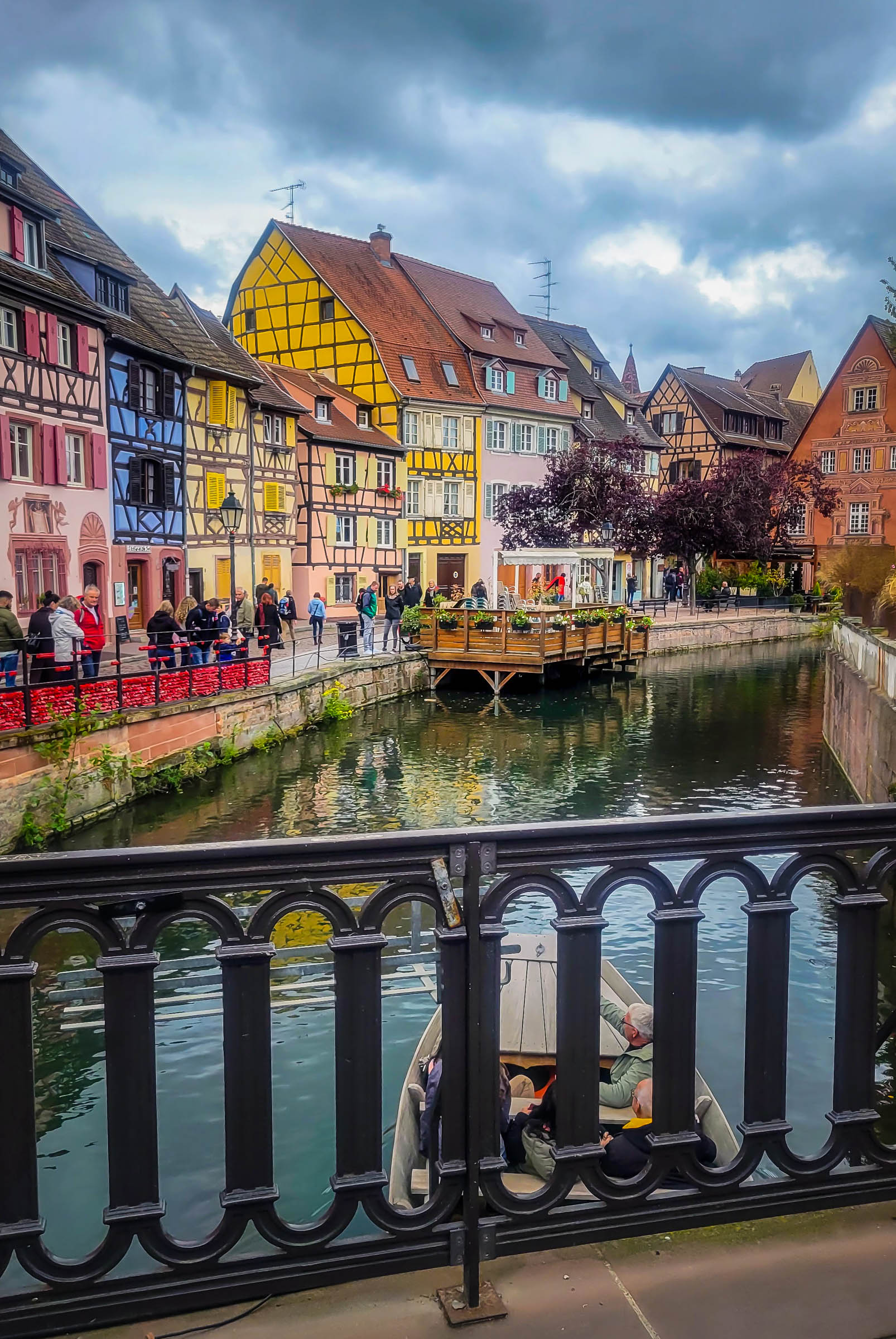
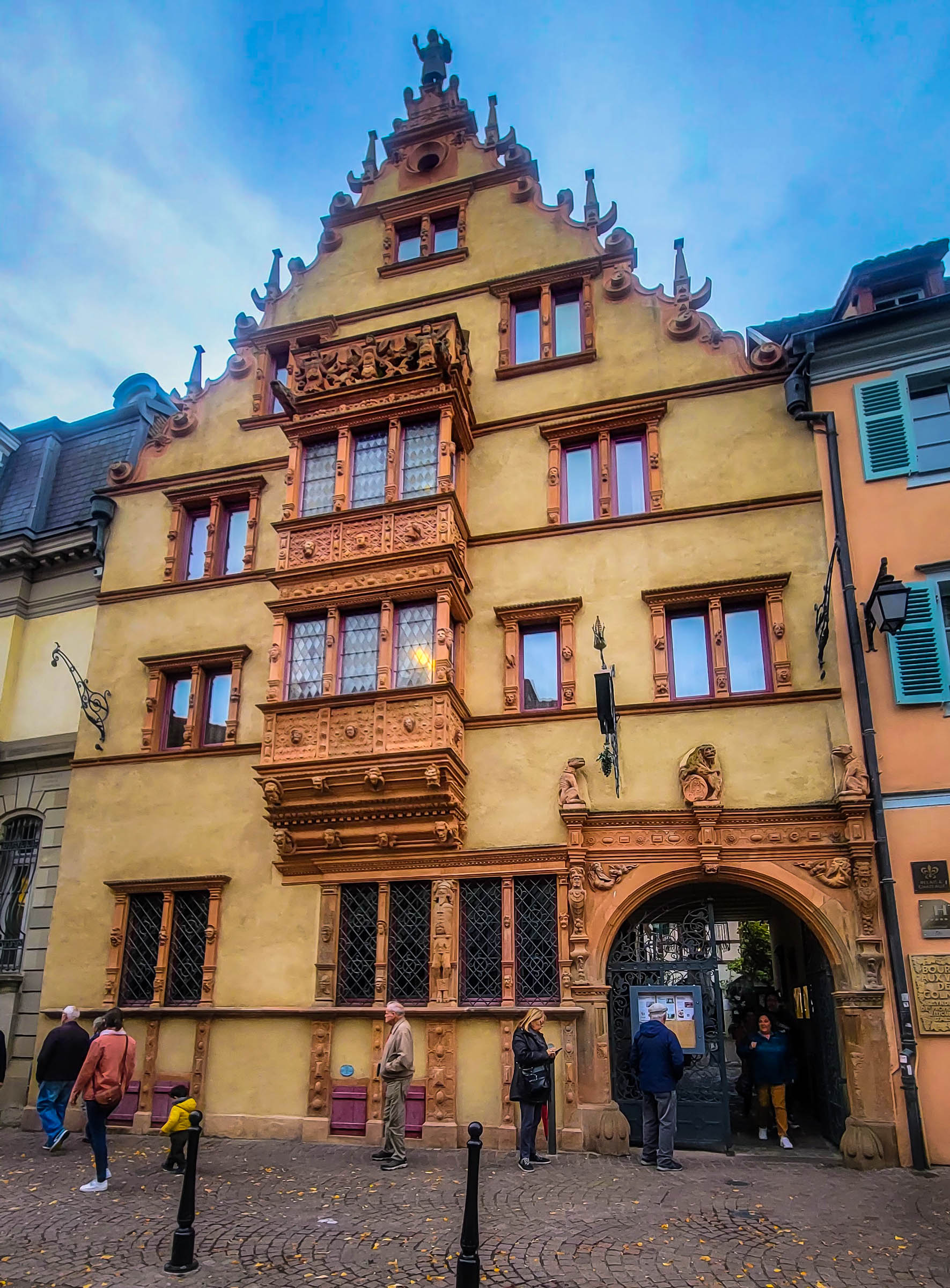
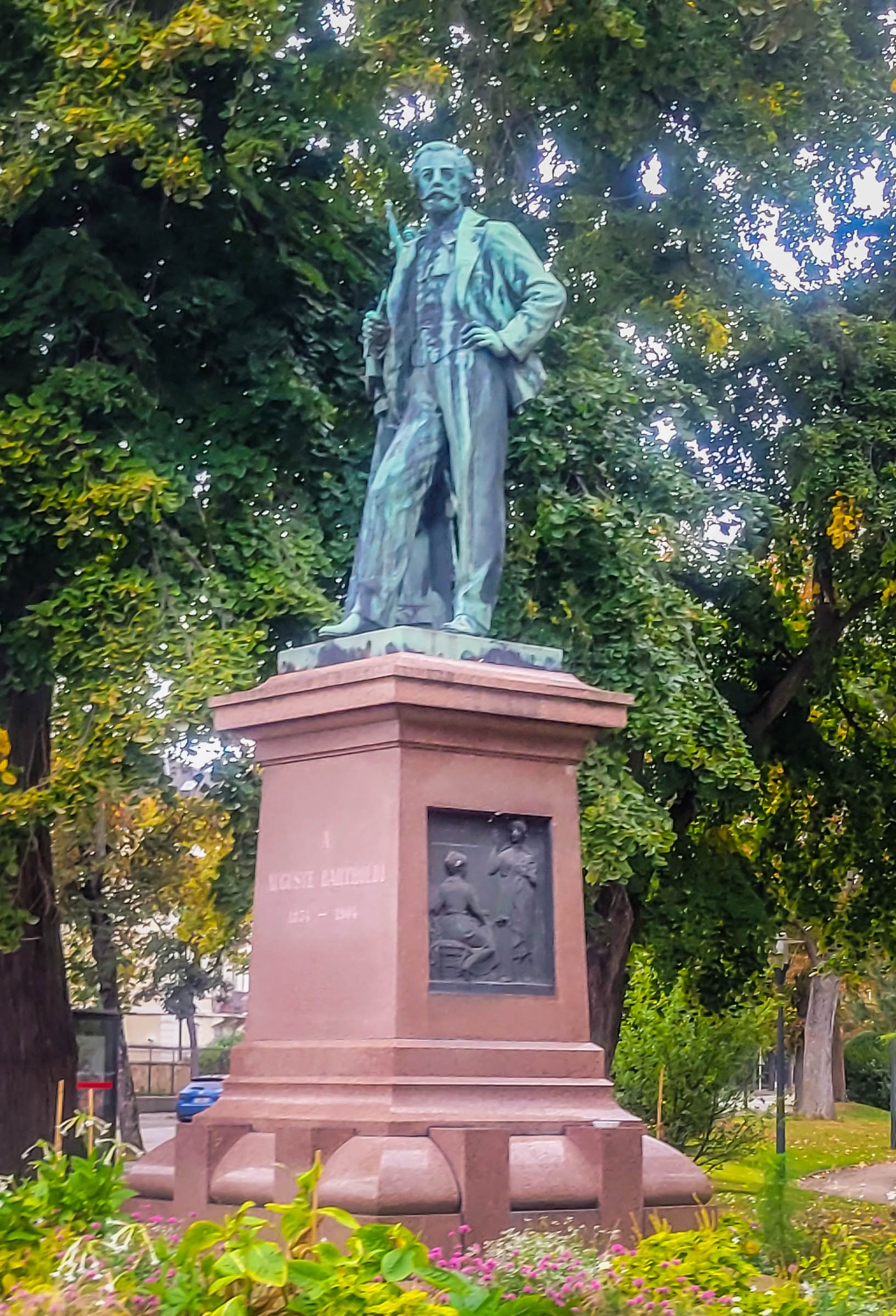
We cruised at night to our next port and traversed several locks which our boat just barely fit into. It was pretty interesting to look out our window at night and see a the concrete wall of a lock. Breisach Germany is the gateway to the Black Forest. The weather was very rainy and cool so hiking was out but we did see a cuckoo clock making demonstration and taste Black Forest cake. The weather was better in the afternoon and we toured Colmar on the French side of the Rhine. We really like this quiet Alsatien town. The medieval Gothic and Renaissance buildings contribute to the storybook character of the place. Turns out the sculptor who built the Statue of Liberty was from Colmar.
Breisach cuckoo clock attraction
Colmar tram tour
Canal scene
Rennaisance building
Bartholdi – Colmar sculptor who built the Statue of Liberty
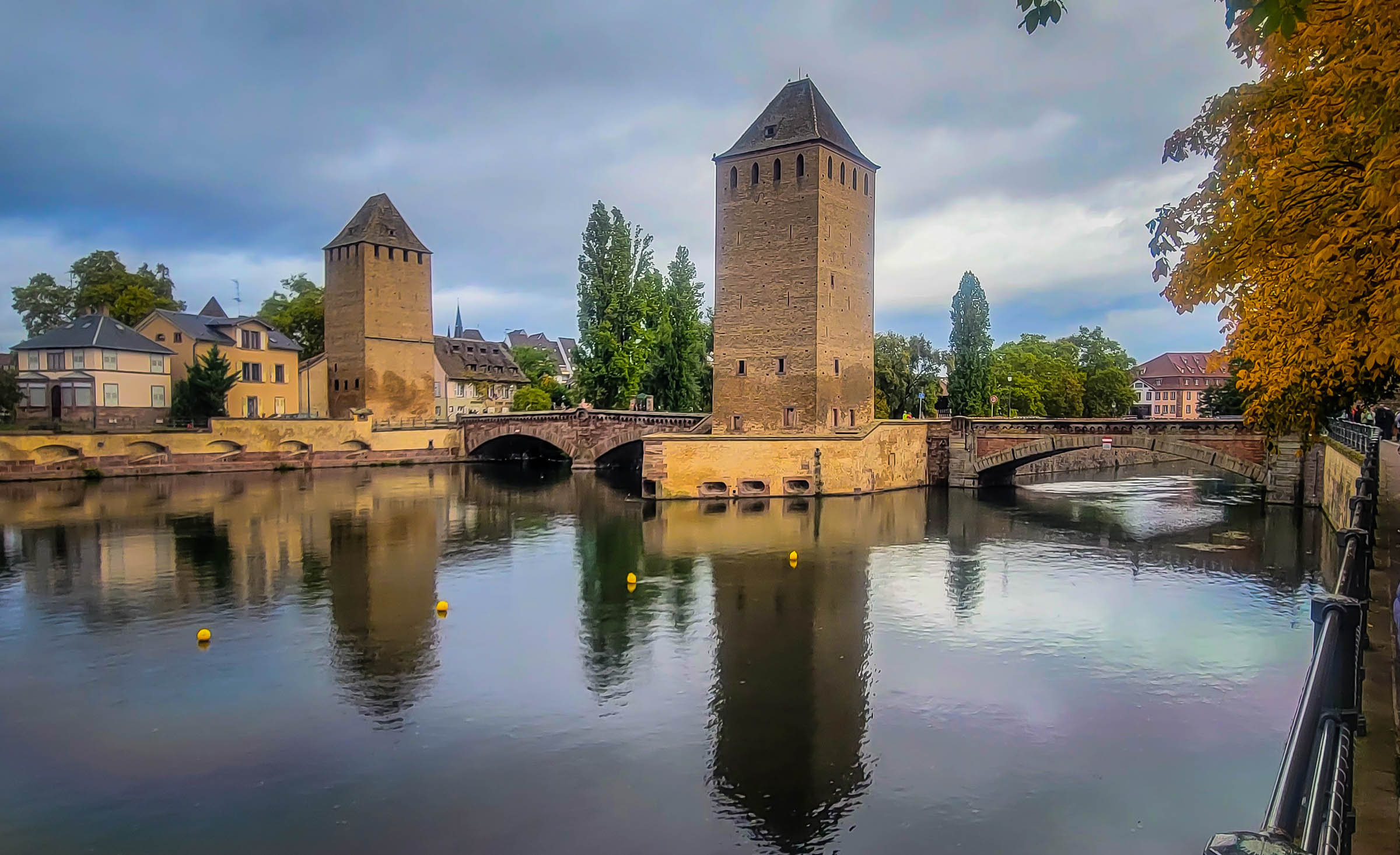
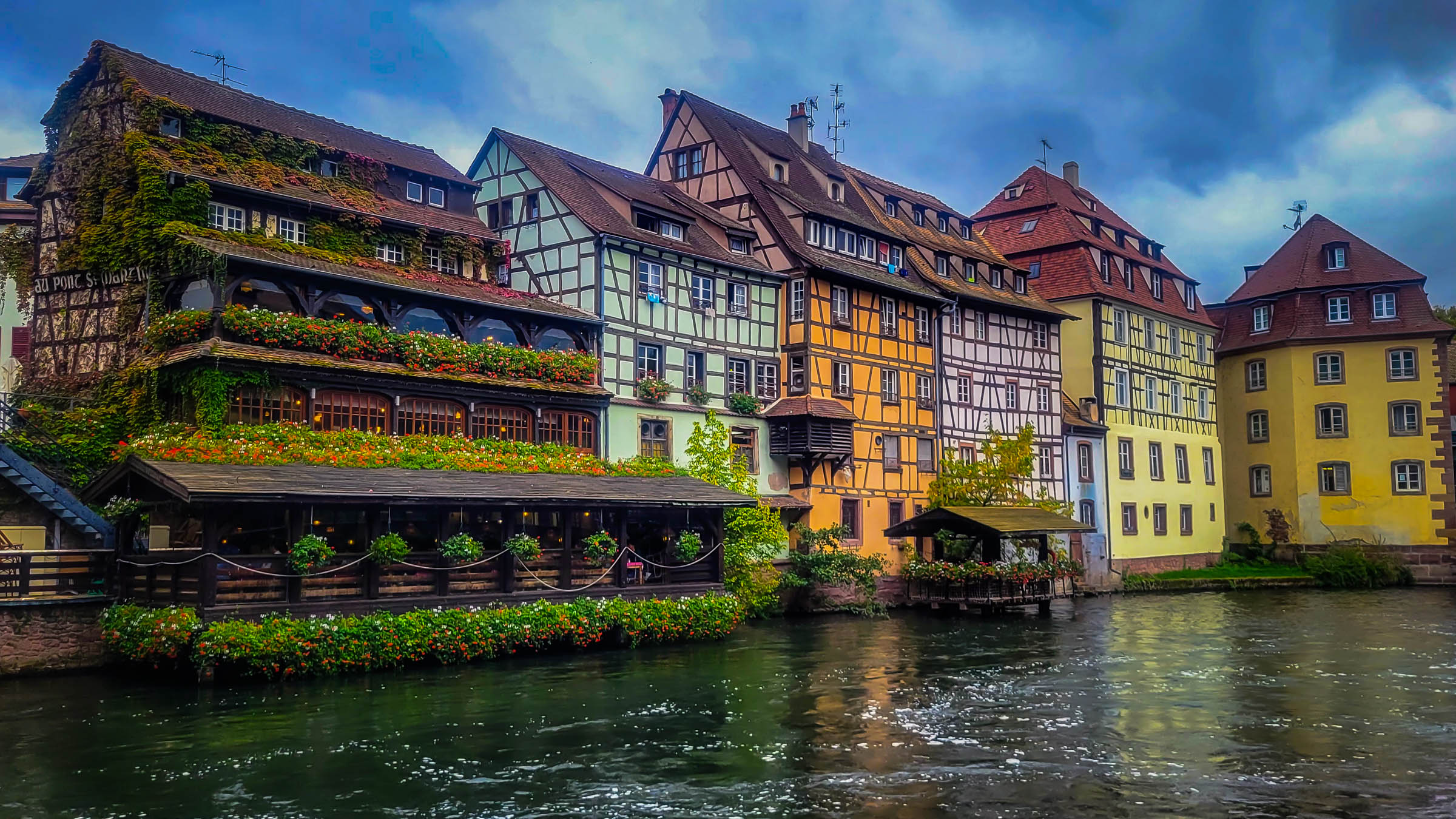
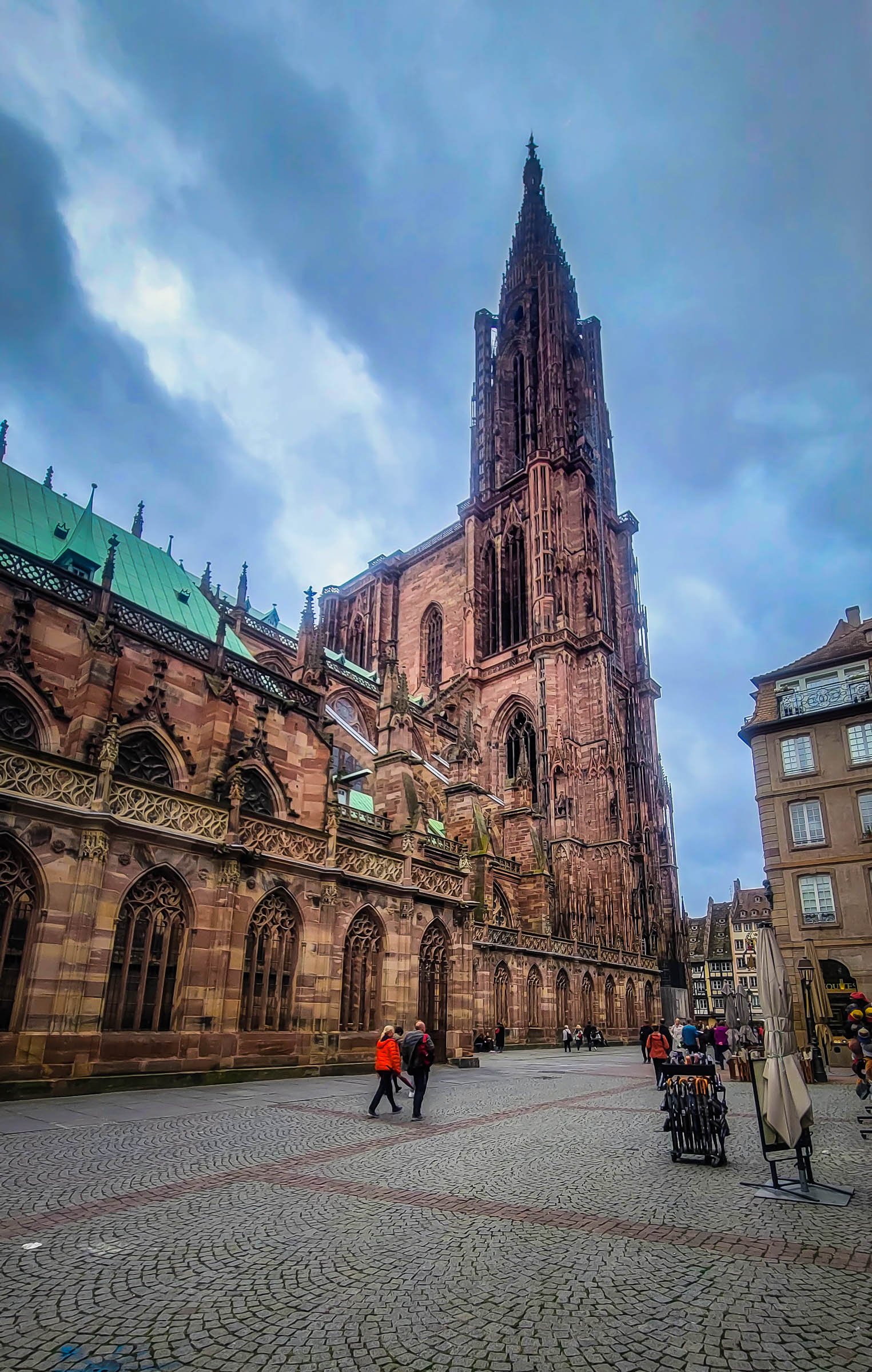
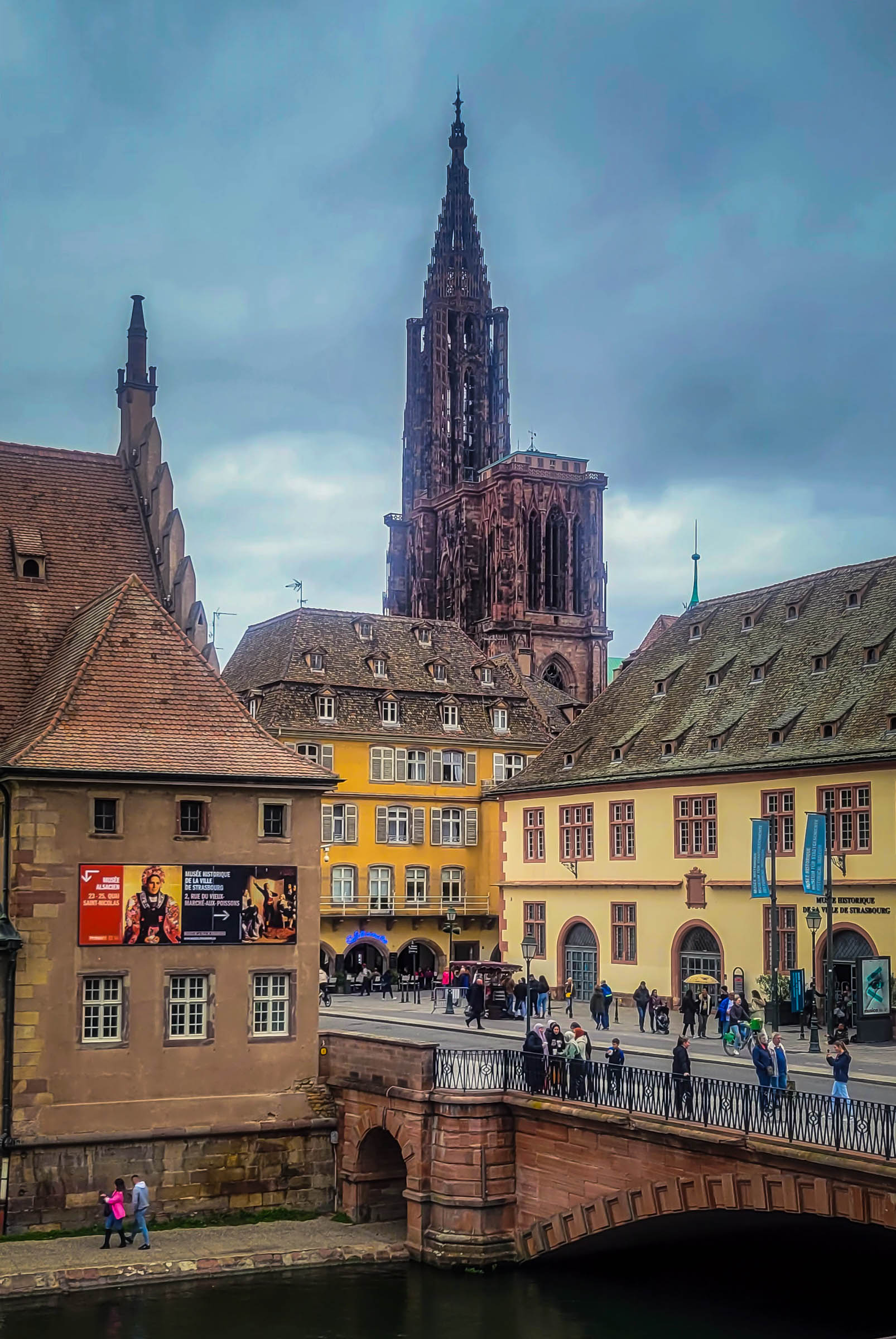
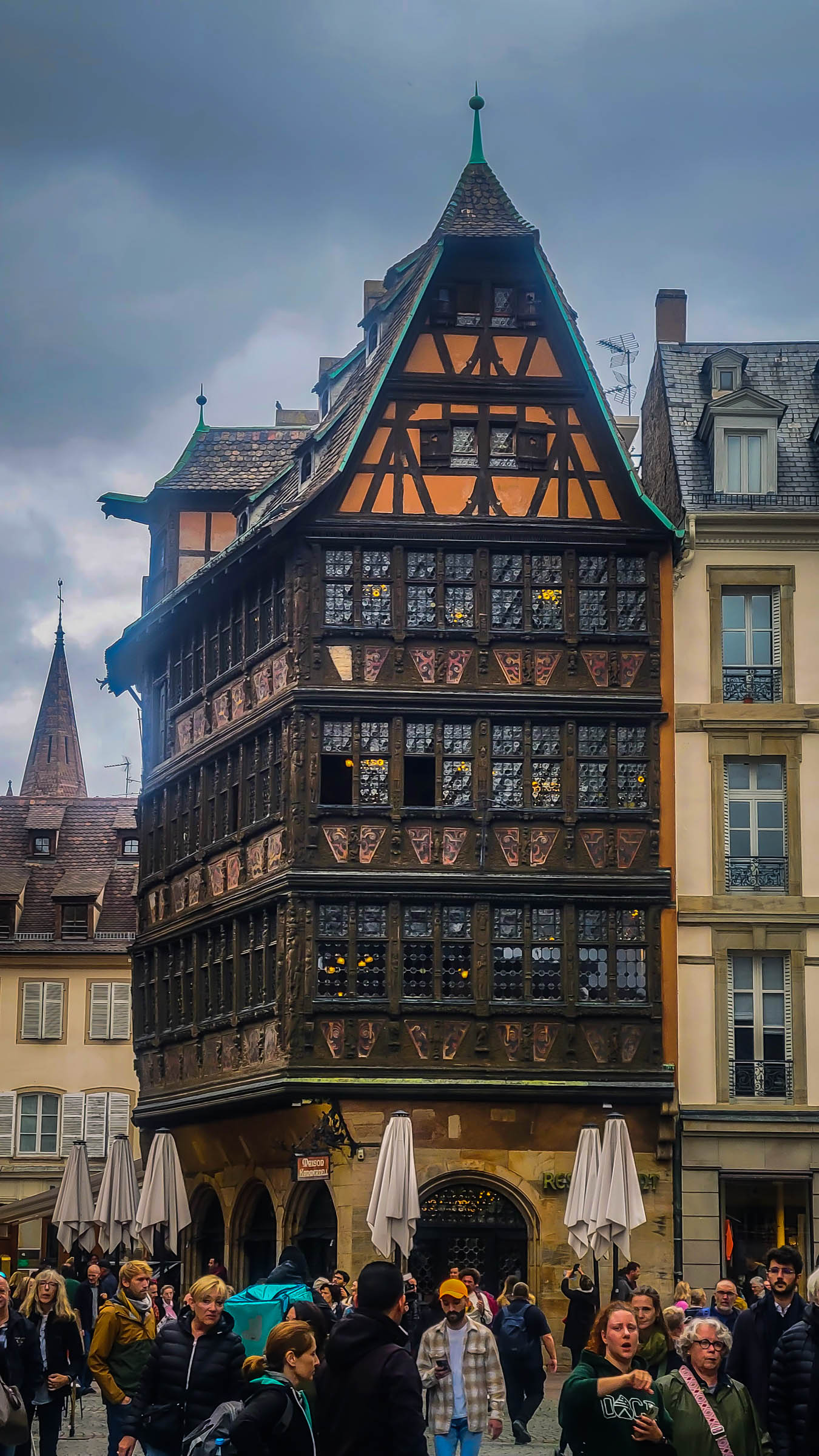
Strasbourg France is home of the European Parliament and a city that has flipped from France to Germany and back again several times. This town presents strong influences from both countries in its food and culture. It is built on many islands in the Ill River, a close tributary to the Rhine. We loved the medieval architecture, the food and coffee. We toured the Alsatien Museum. This is a great city to visit.
Towers entering Strassbourg
Beautiful city on the Ill River
Cathedral
Cathedral from Alsace Museum
Many historic half timber buildings
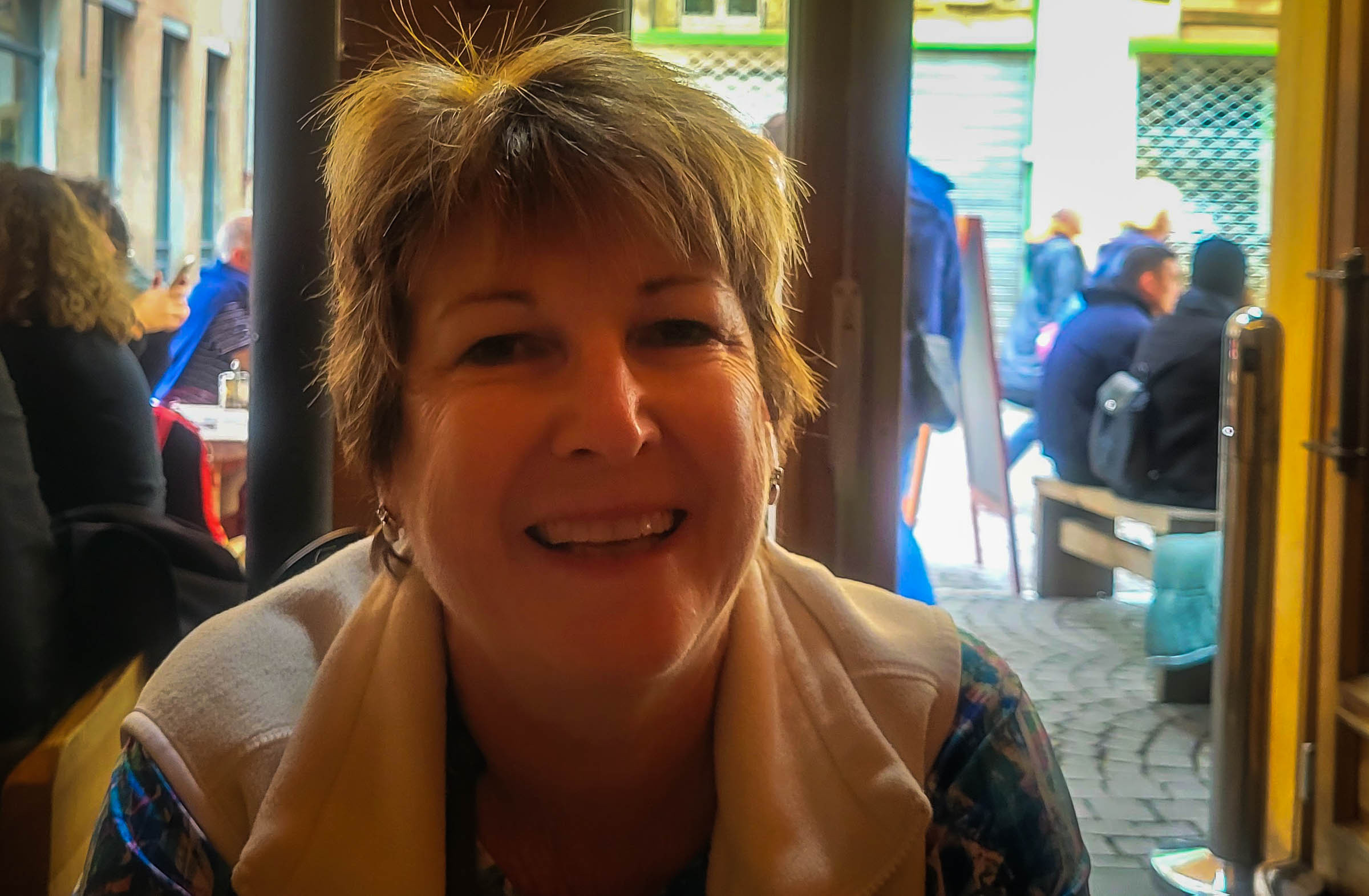
D in a busy cafe
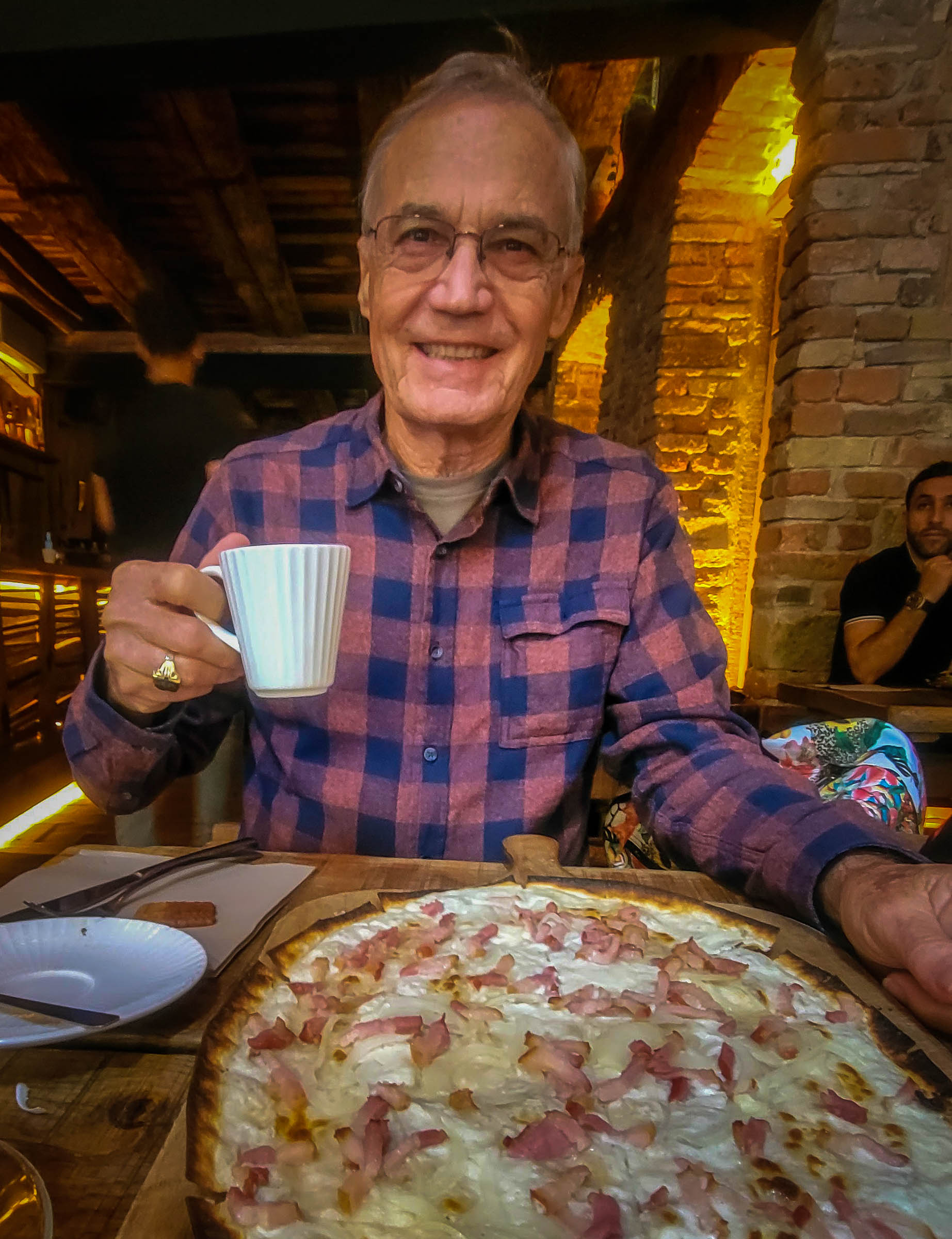
Tarte flambeau and coffee
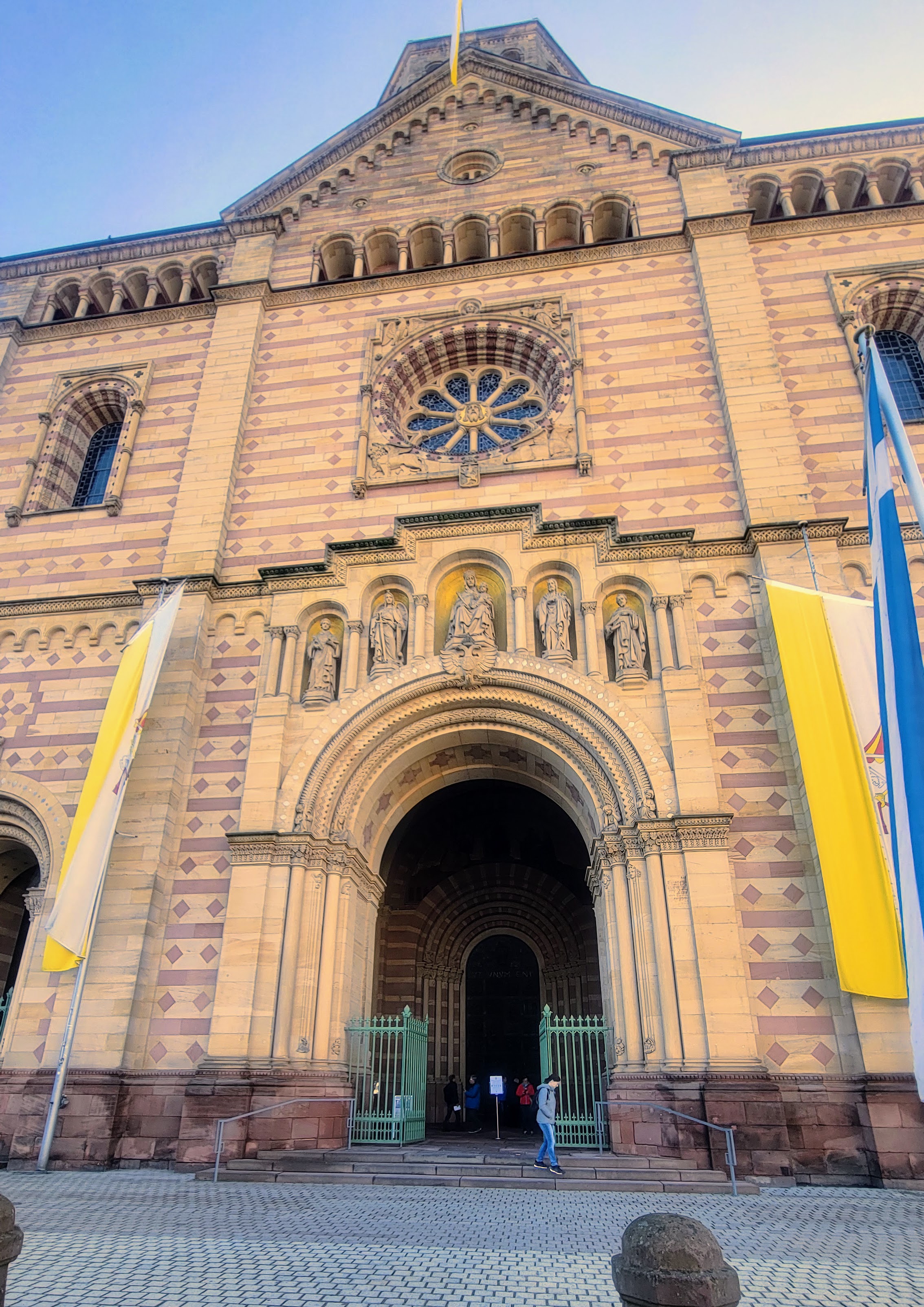
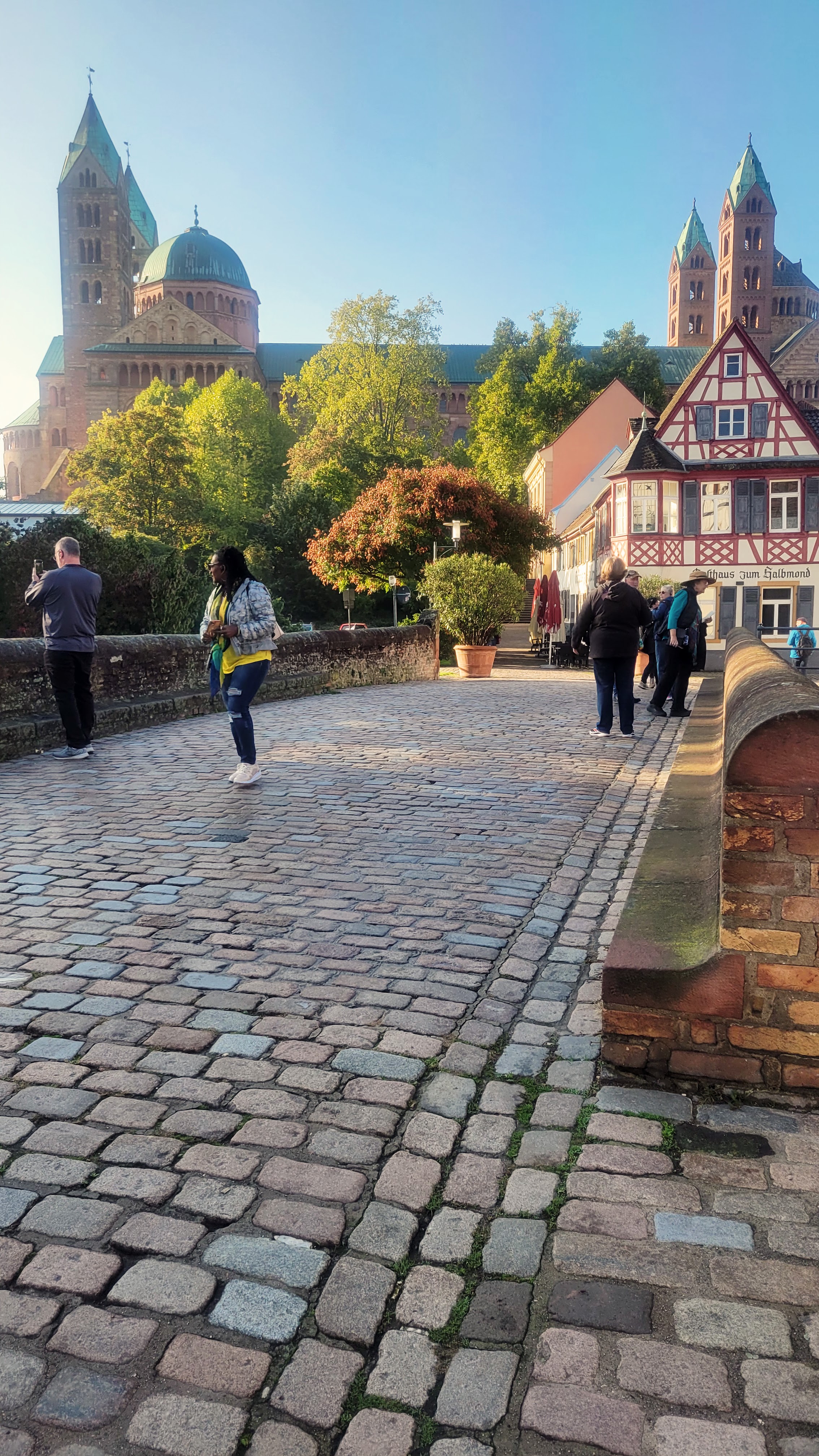
The next day we visited the small city of Speyer Germany. The Romanesque cathedral here is a UNESCO World Heritage site and was the largest in the world until St Peters was built in Rome. Eight German kings are buried here. Later we also visited Rudesheim a town in the heart of Reisling wine country. It was another lovely place to walk and explore.
Speyer Cathedral
Typical old bridge in Speyer
Us in Rudesheim
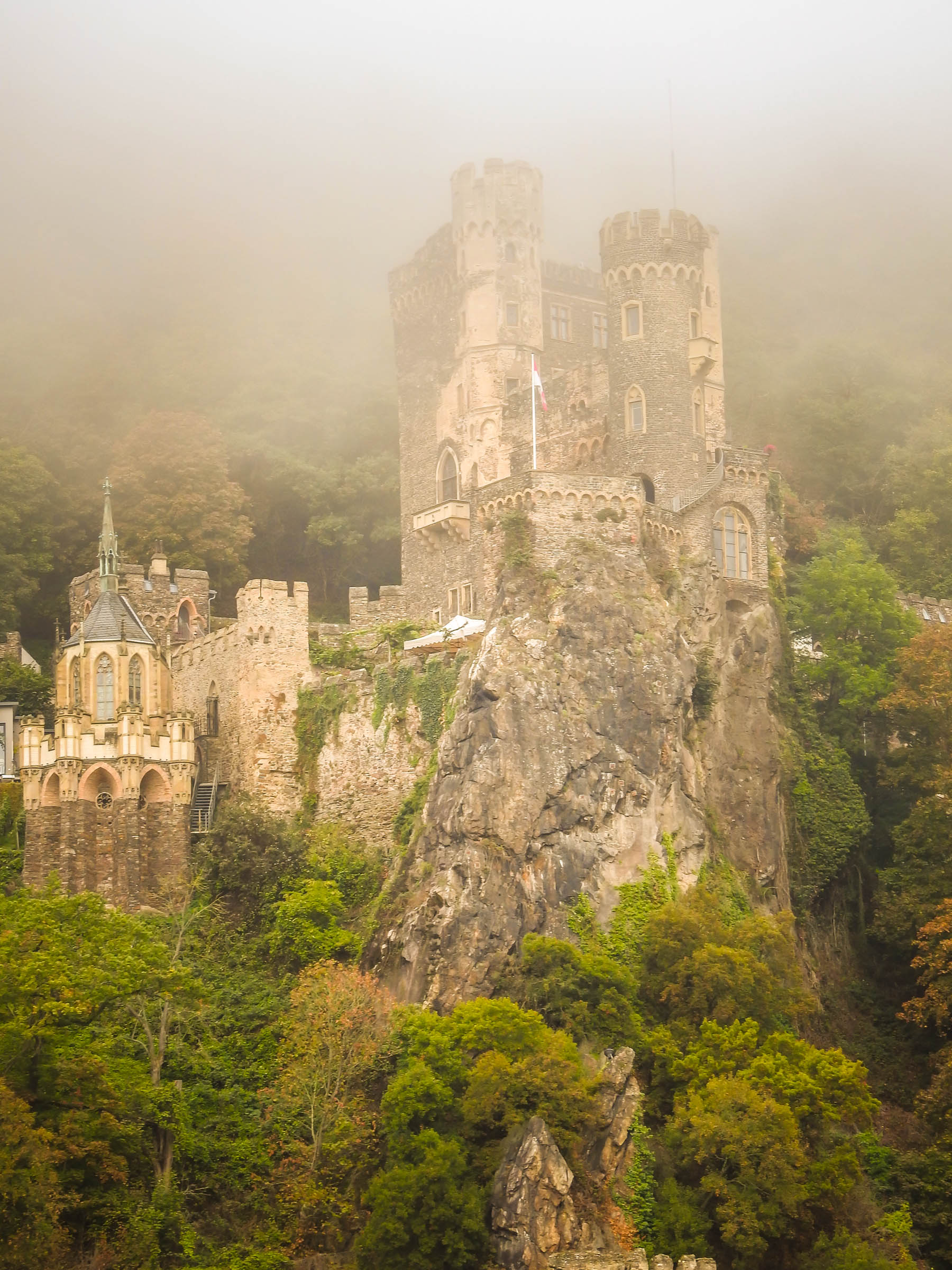
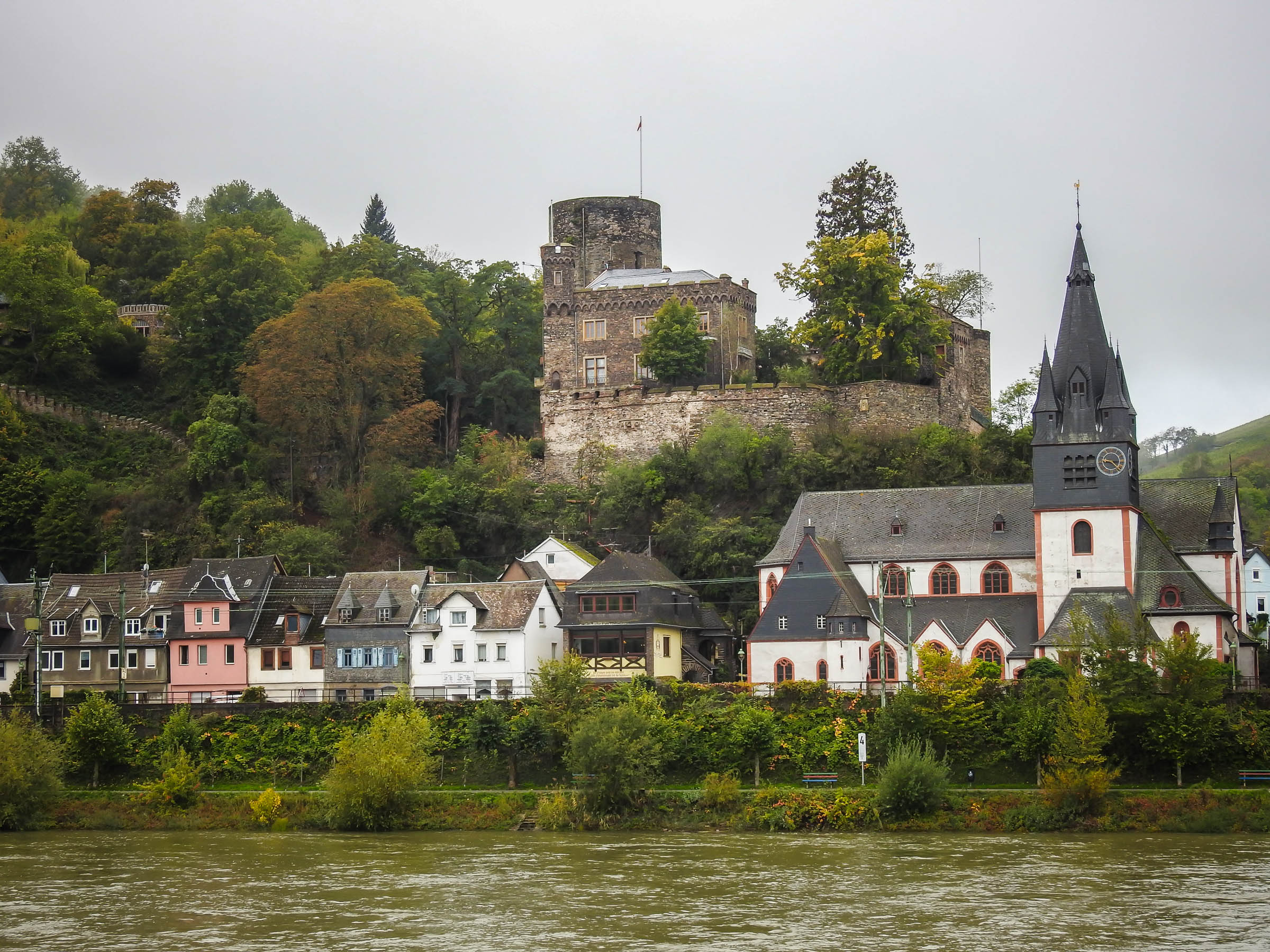
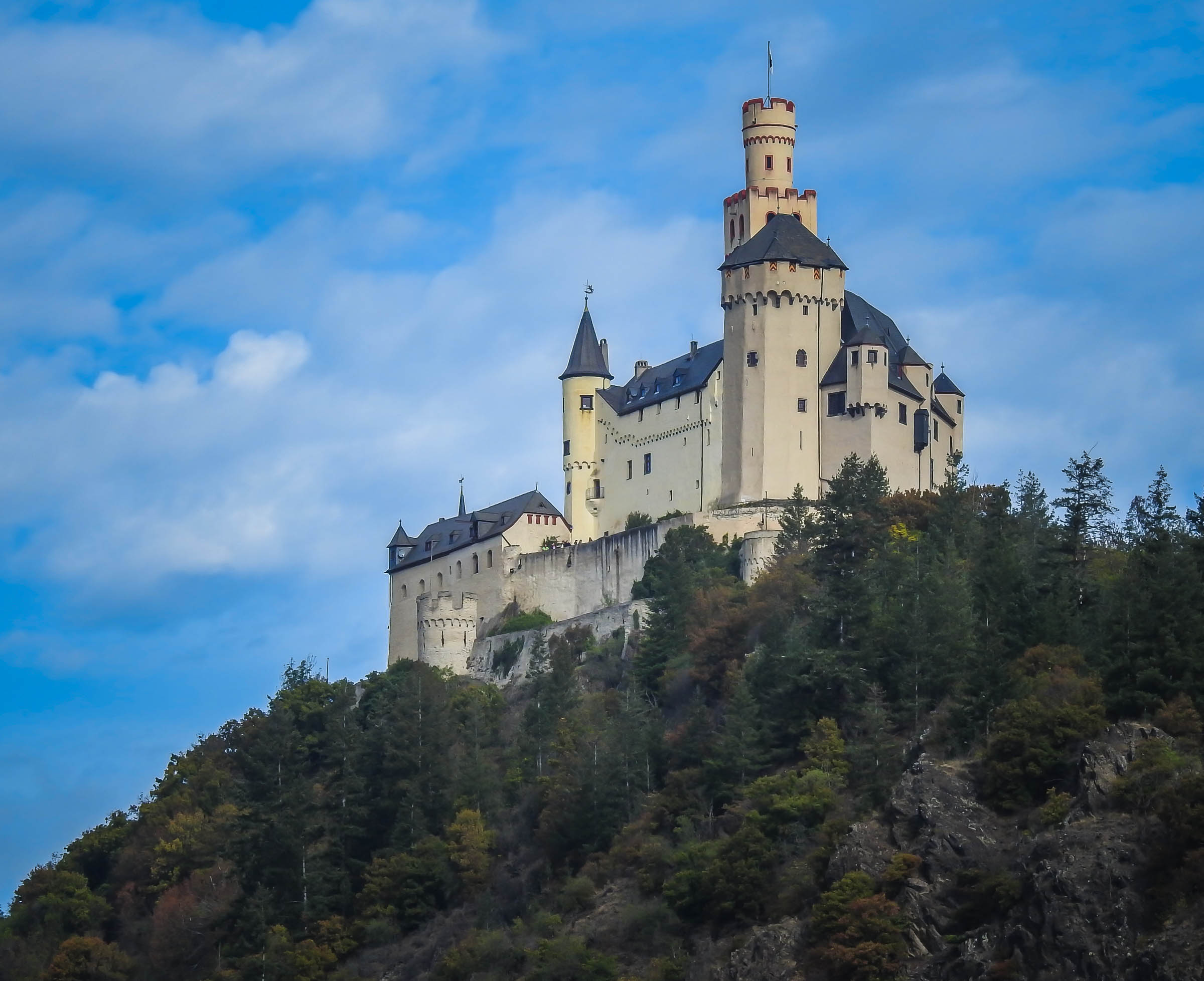
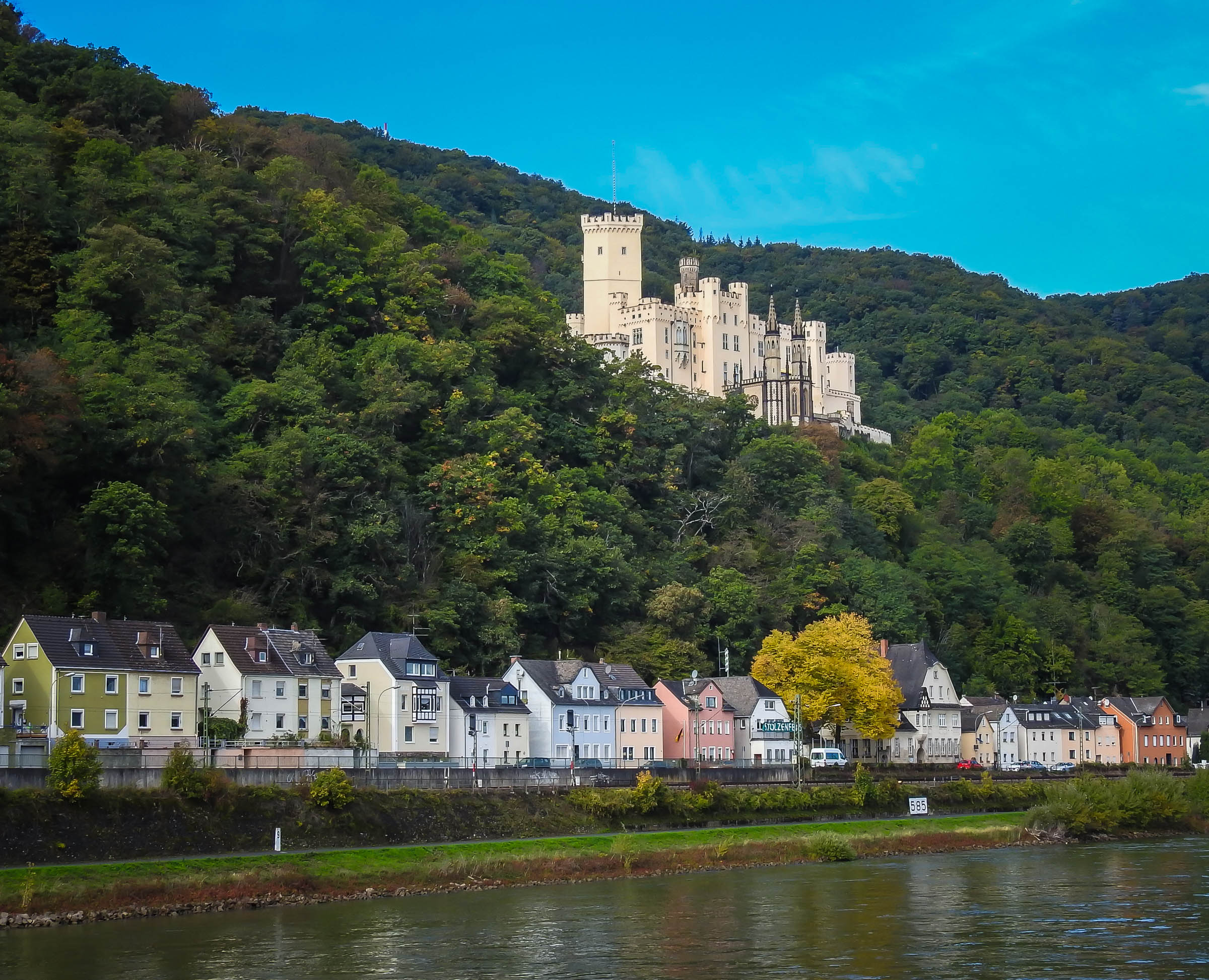
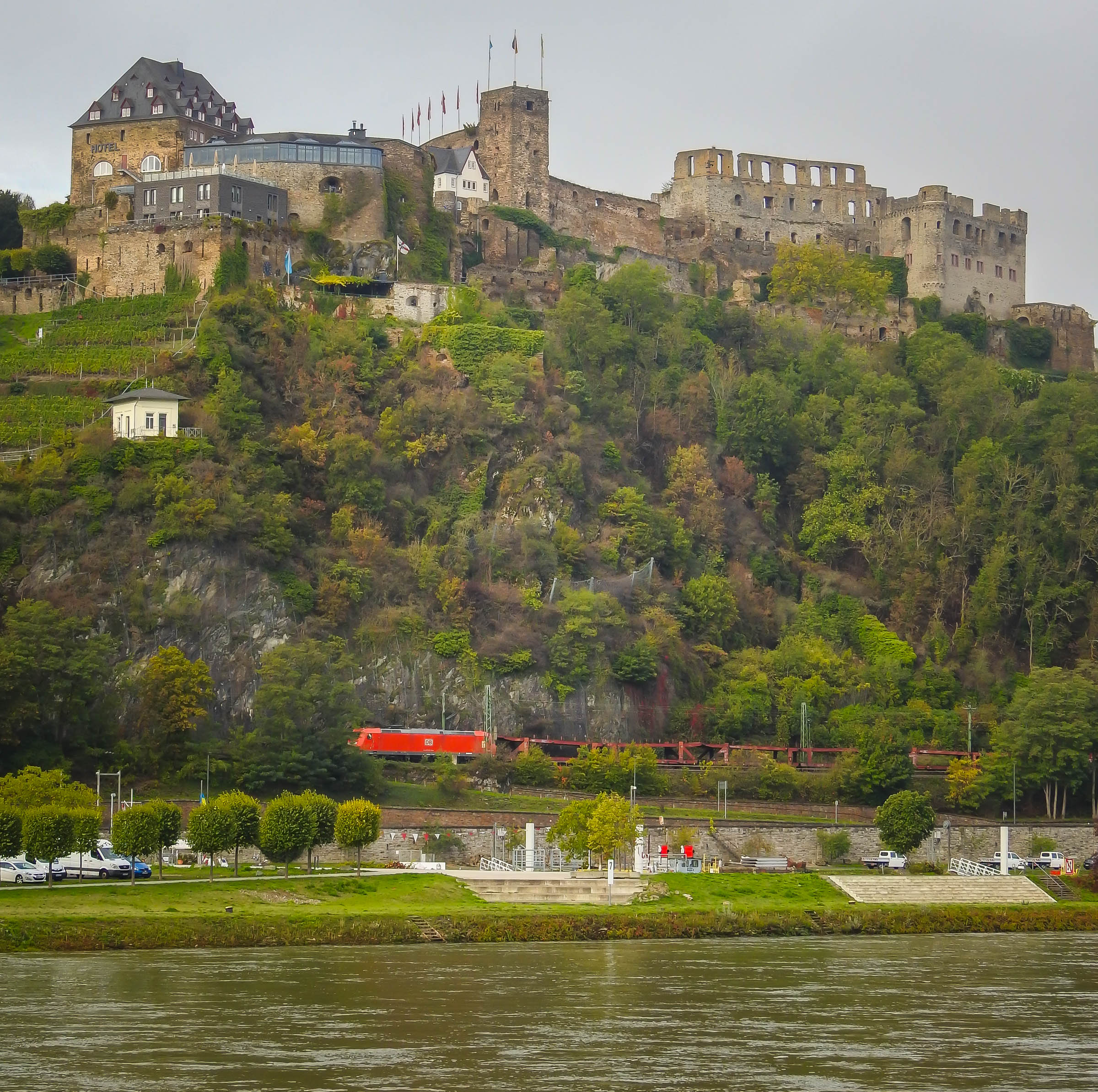
For many the next day’s cruise through the Middle Rhine was the highlight of their cruise. This is another UNESCO World Heritage site known for its turreted castles and fortresses overlooking the Rhine from their steep hillsides. Most of the castles here were built in the 10th to 13th century to collect tolls on the heavily trafficked Rhine. On the steep banks of the Rhine grapes are still harvested by hand for their world renowned wines. Our day started out cold and foggy but turned into a spectacularly clear beautiful day.
Rheinstein Castle
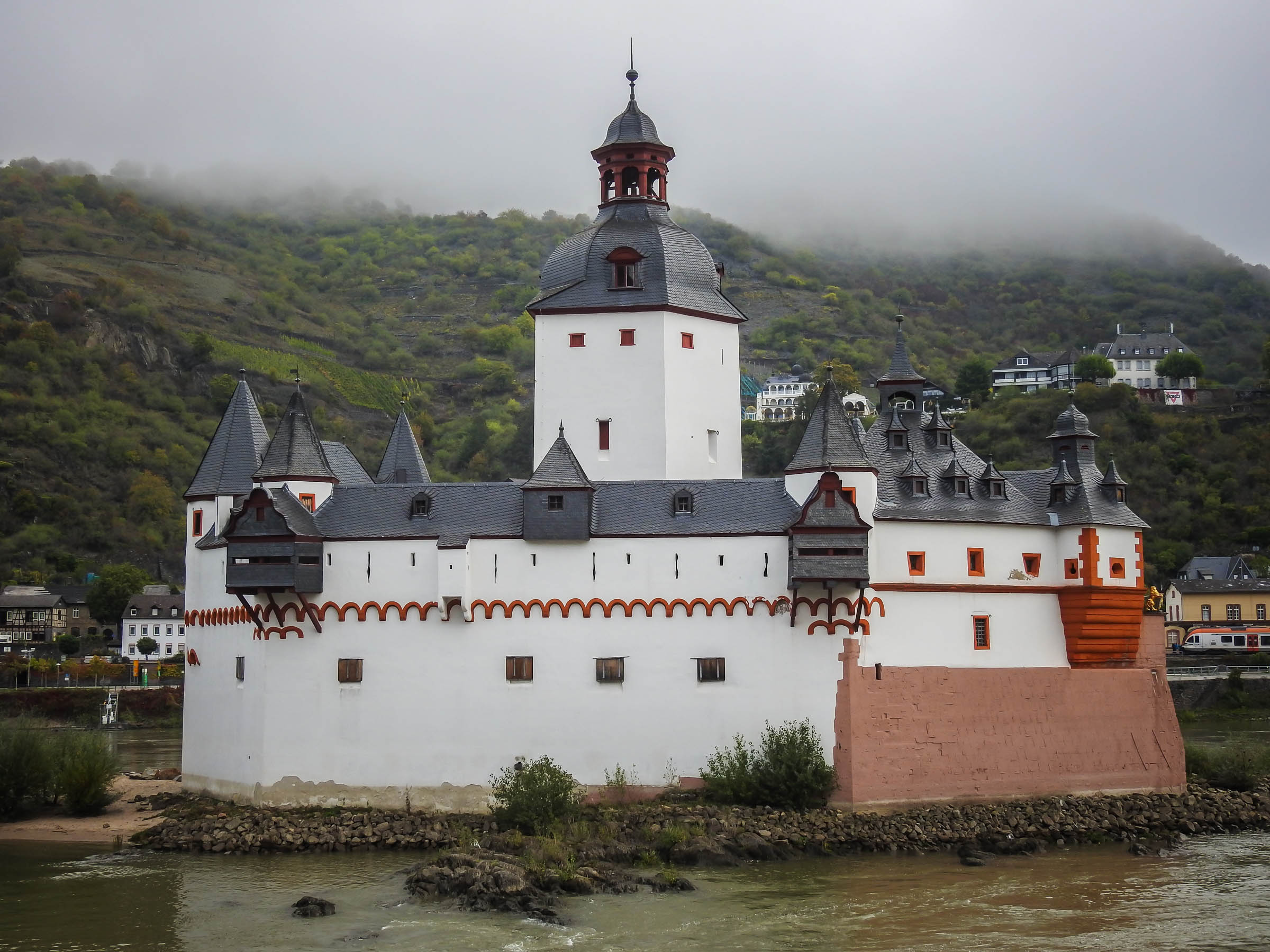
The Pfalz toll station
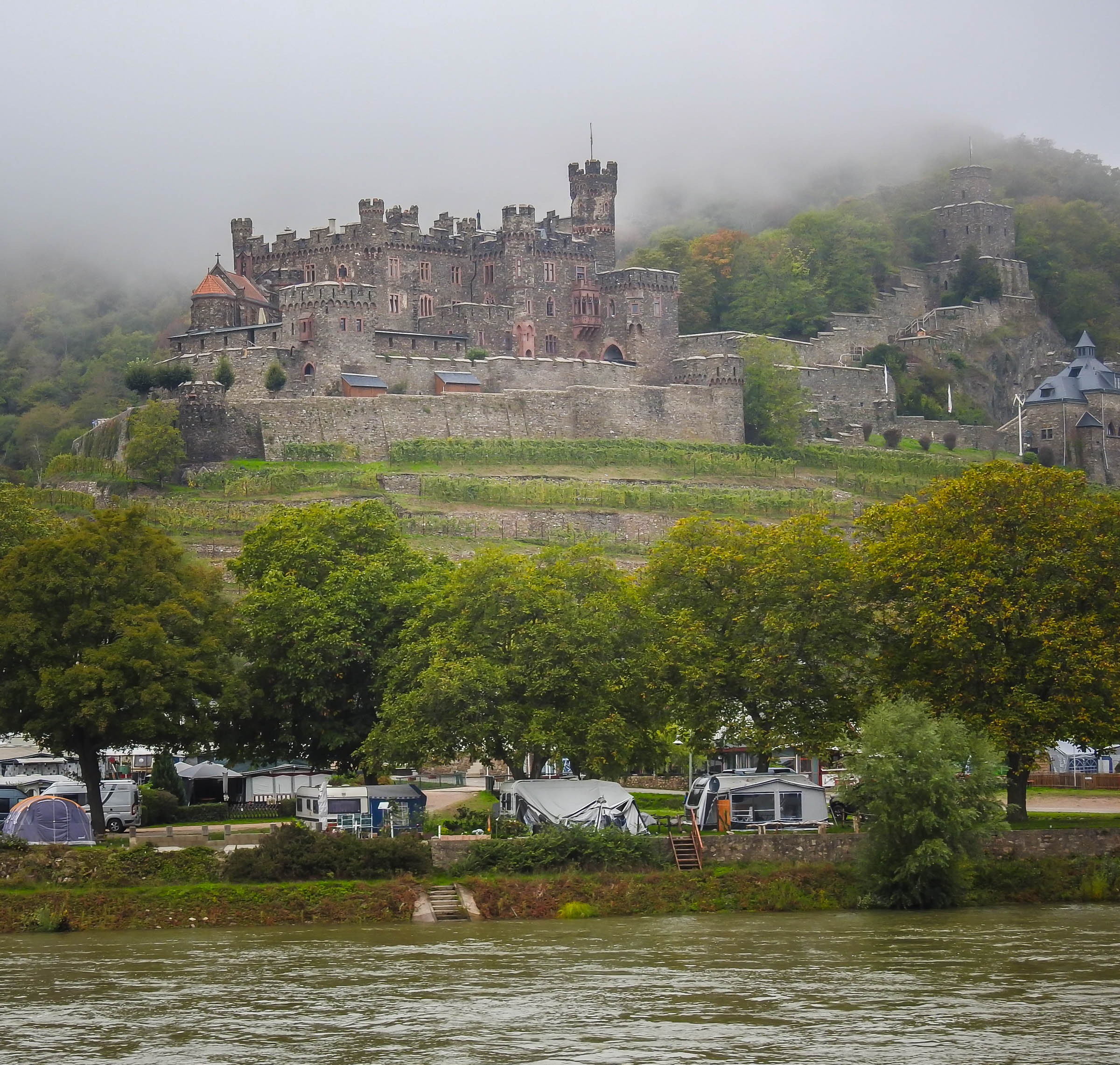
Reichenstein Castle
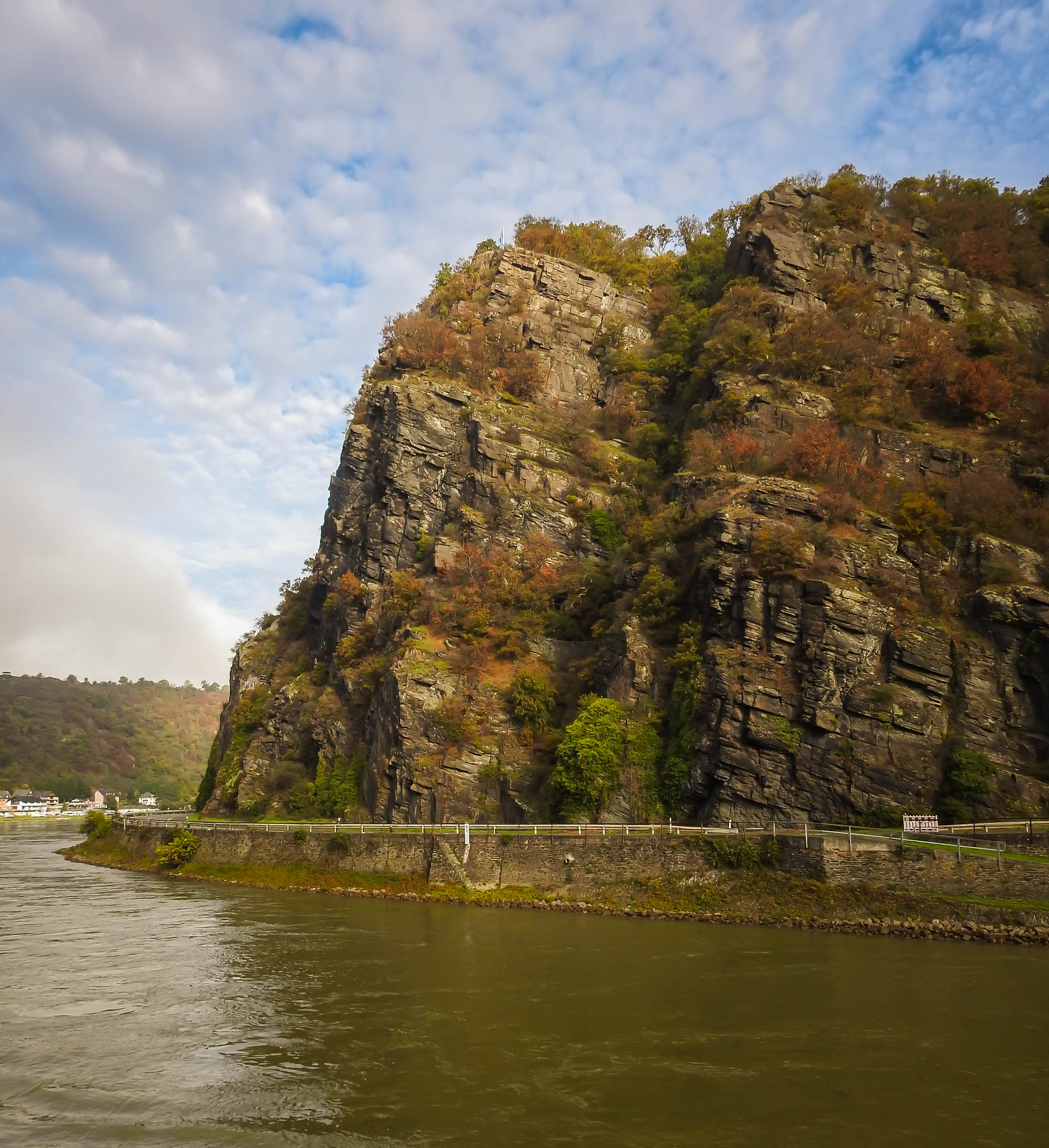
Mid morning we passed Lorelei Rock a narrow and deep part of the Rhine where legend has it a maiden betrayed by her lover committed suicide and became a siren luring sailors to their death.
Lorelei Rock
Marksburg Castle
Stolzenfels Castle
Rheinfels Castle
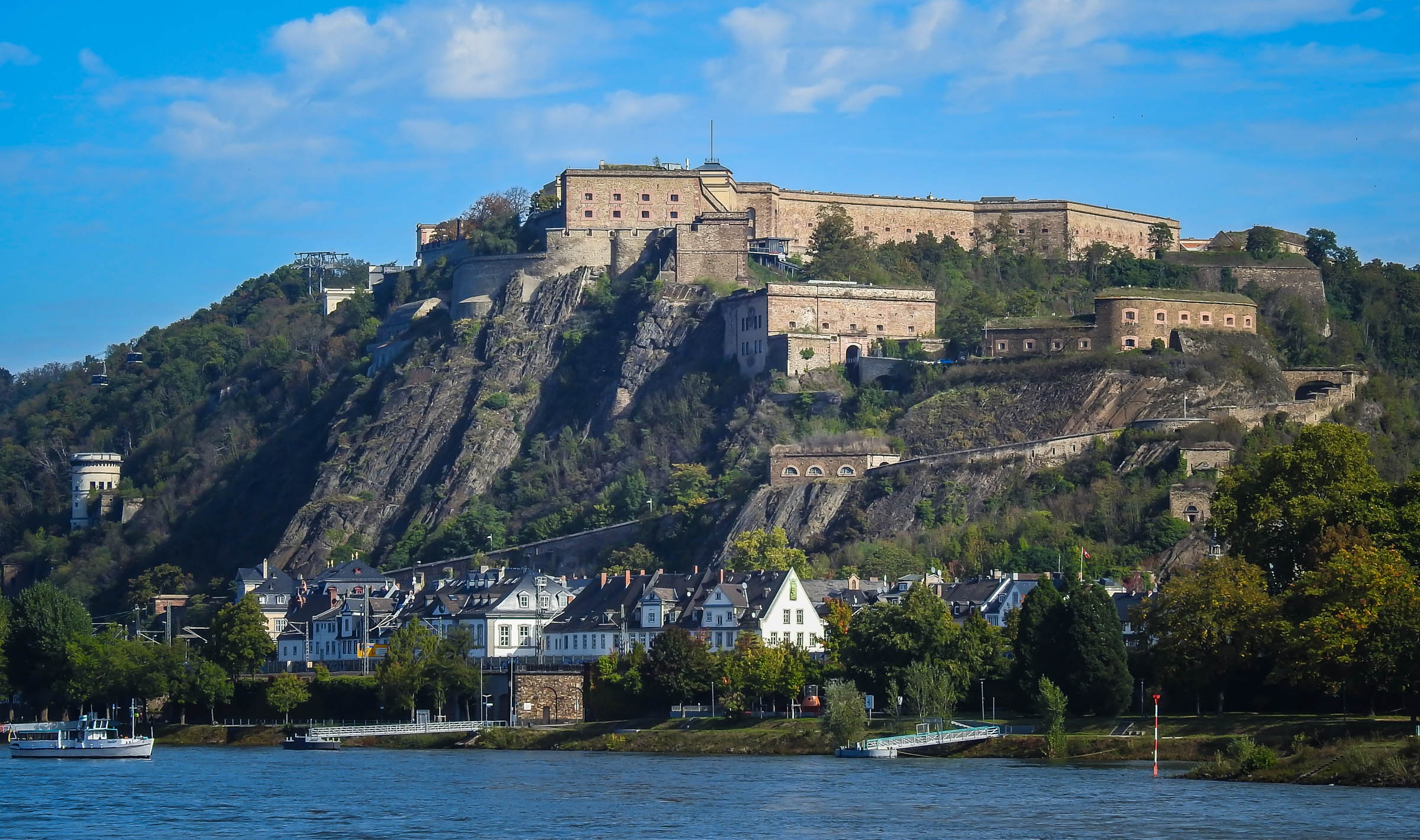
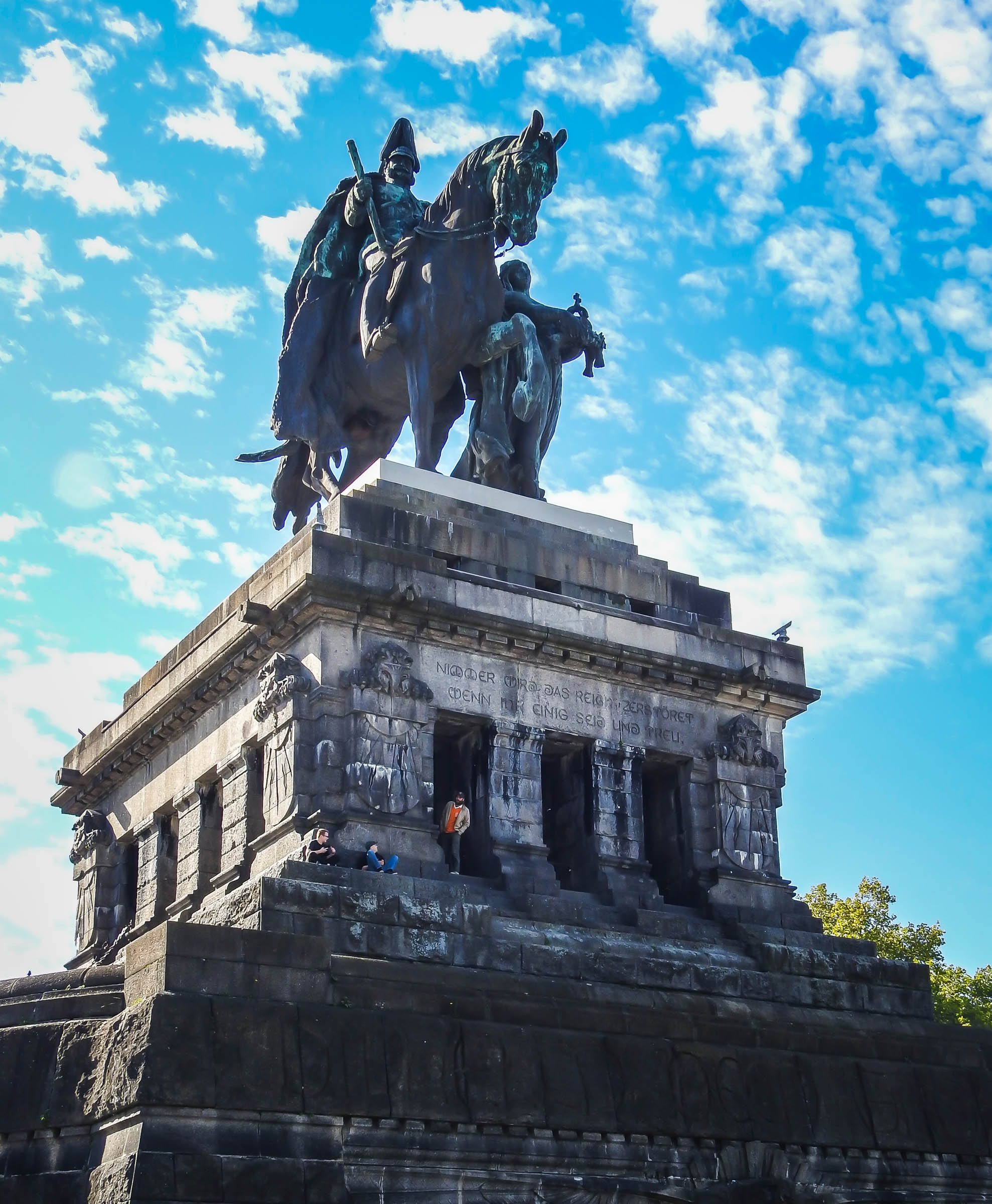
Koblenz Germany was our next stop the same afternoon. There we had an excellent tour from a young man who really shared a personal story of his town and country. Koblenz is a beautiful city built at the confluence of the Rhine and Moselle Rivers where the 1871 unification of Germany is celebrated at the German Corner with a huge statue of Wilhelm I. Later we took a cable car over our ship and the Rhine to the Ehrenbreitstein Fortress towering above the city. The fortress is the largest in Europe where construction began in the year 1100 on the hill where Romans had a fort in 400 AD. There has been a settlement here since the 4th century BC. Another great place to visit.
Ehrenbreitstein Fortress
Kaiser Wilhelm I
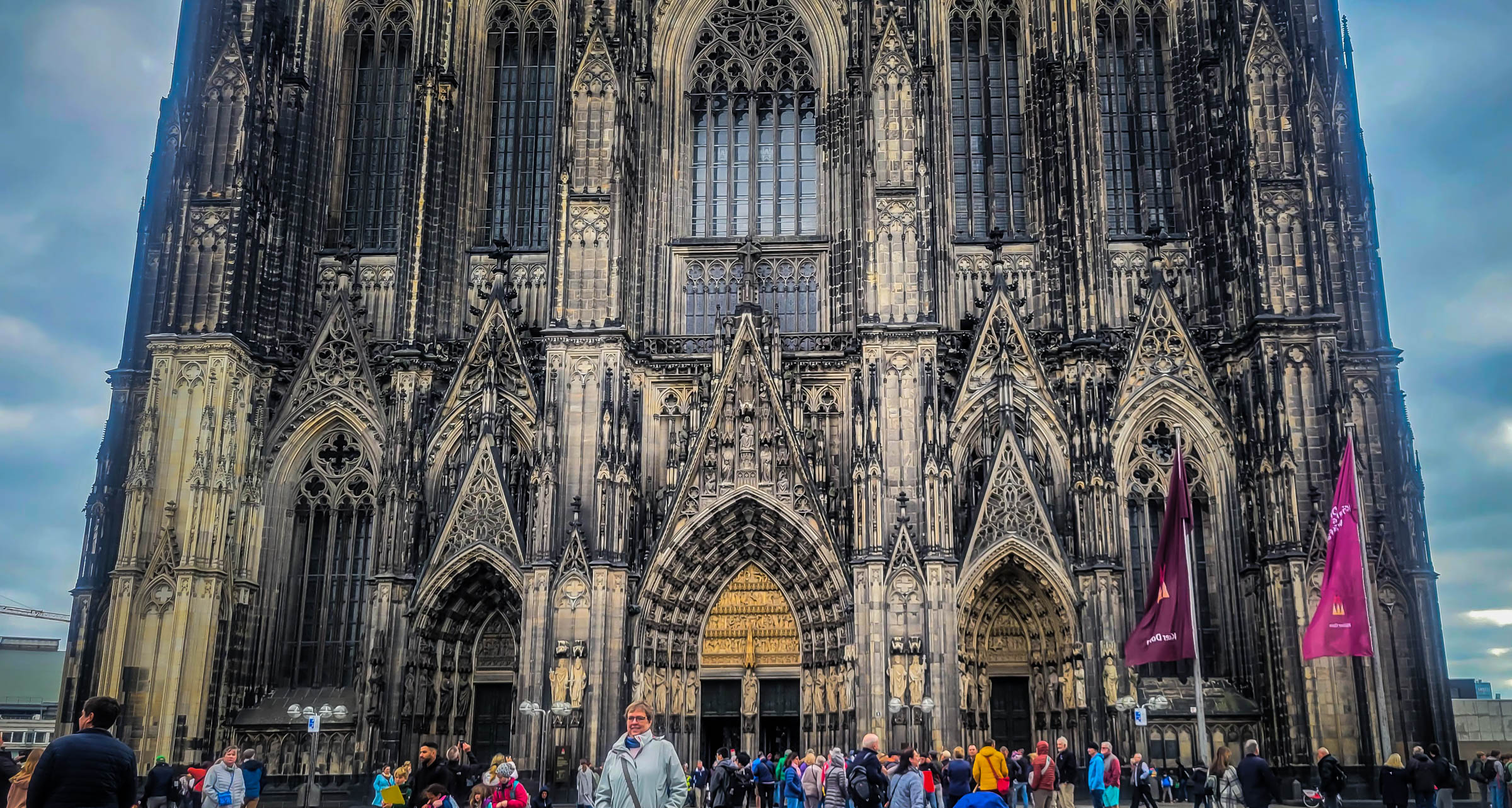
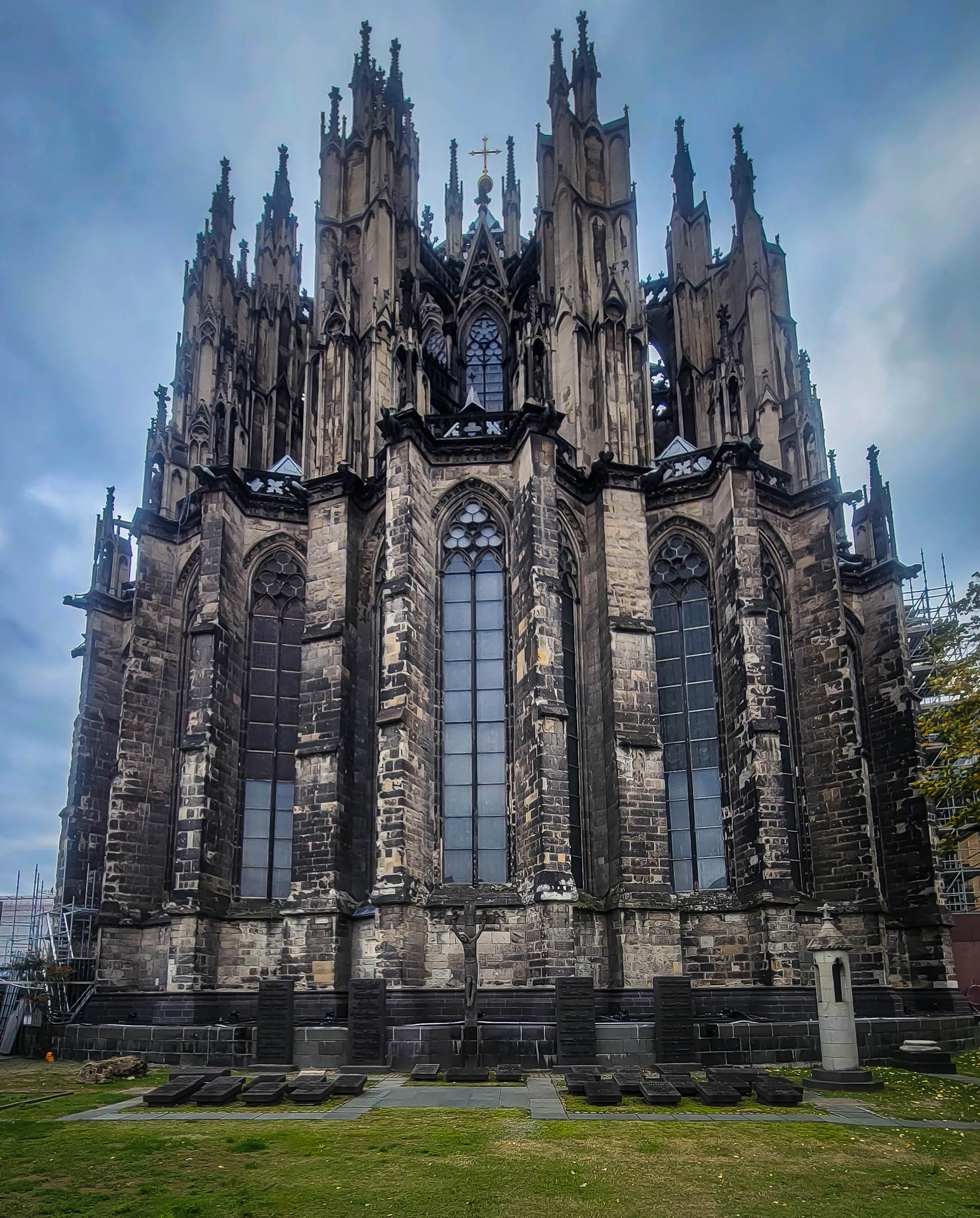
Our last stop in Germany was Cologne known for its spectacular 14th century Gothic cathedral. Now a UNESCO World Heritage site the cathedral survived World War Two while 95% of the city was destroyed. Viking had the finest dock location in the heart of the city. Our guided tour showed us many highlights of the city and we were able to see the inside of the cathedral on our own. We enjoyed a virtual reality tour of 1926 Cologne. This was one night we had dinner on our own with street food in a plaza. Later we enjoyed the sun deck of our boat at dusk when thousands of green parakeets came screaming in to roost nearby.
Cologne Cathedral
Back of cathedral
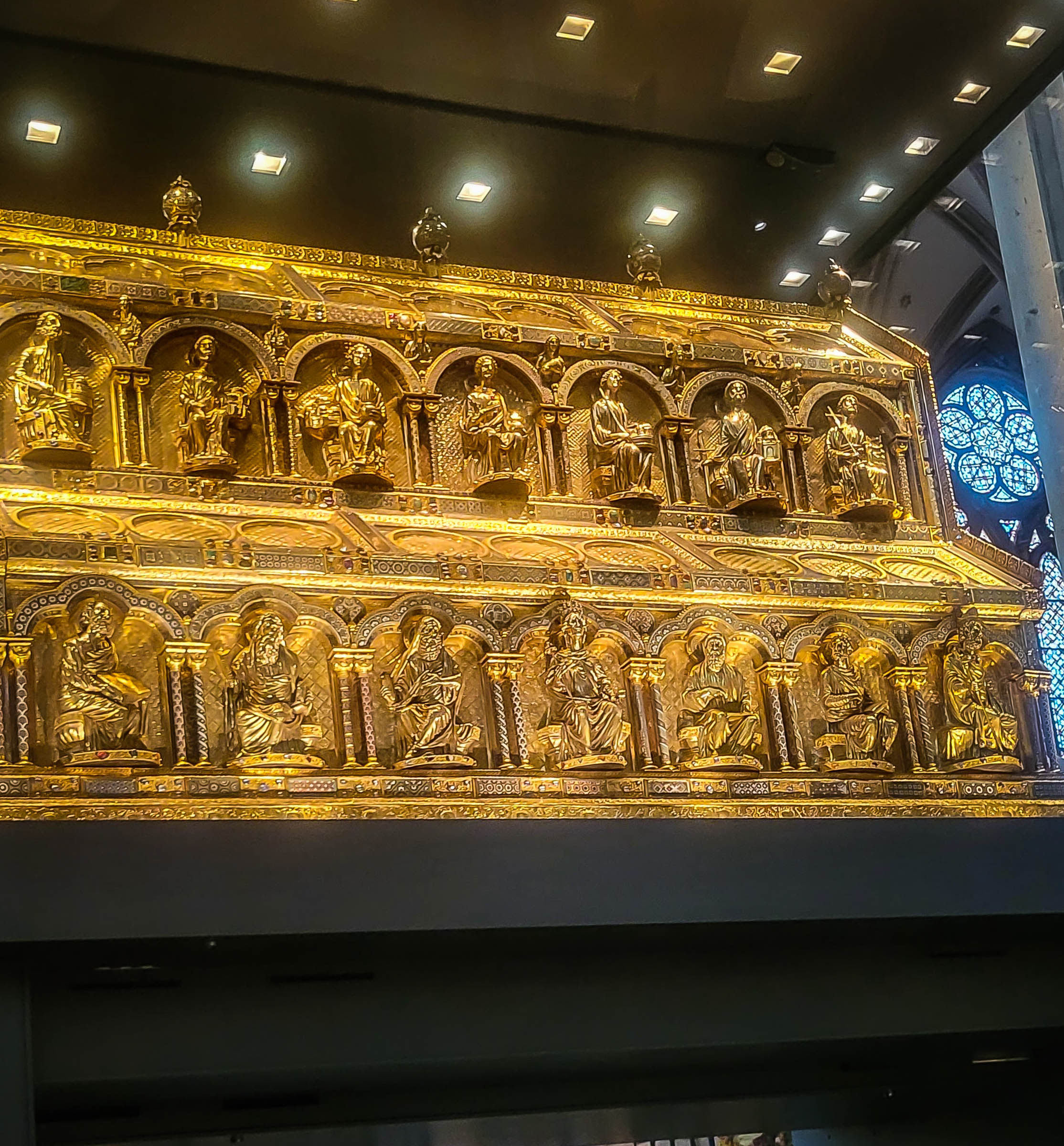
Reliquary said to hold the bones of the three wise men
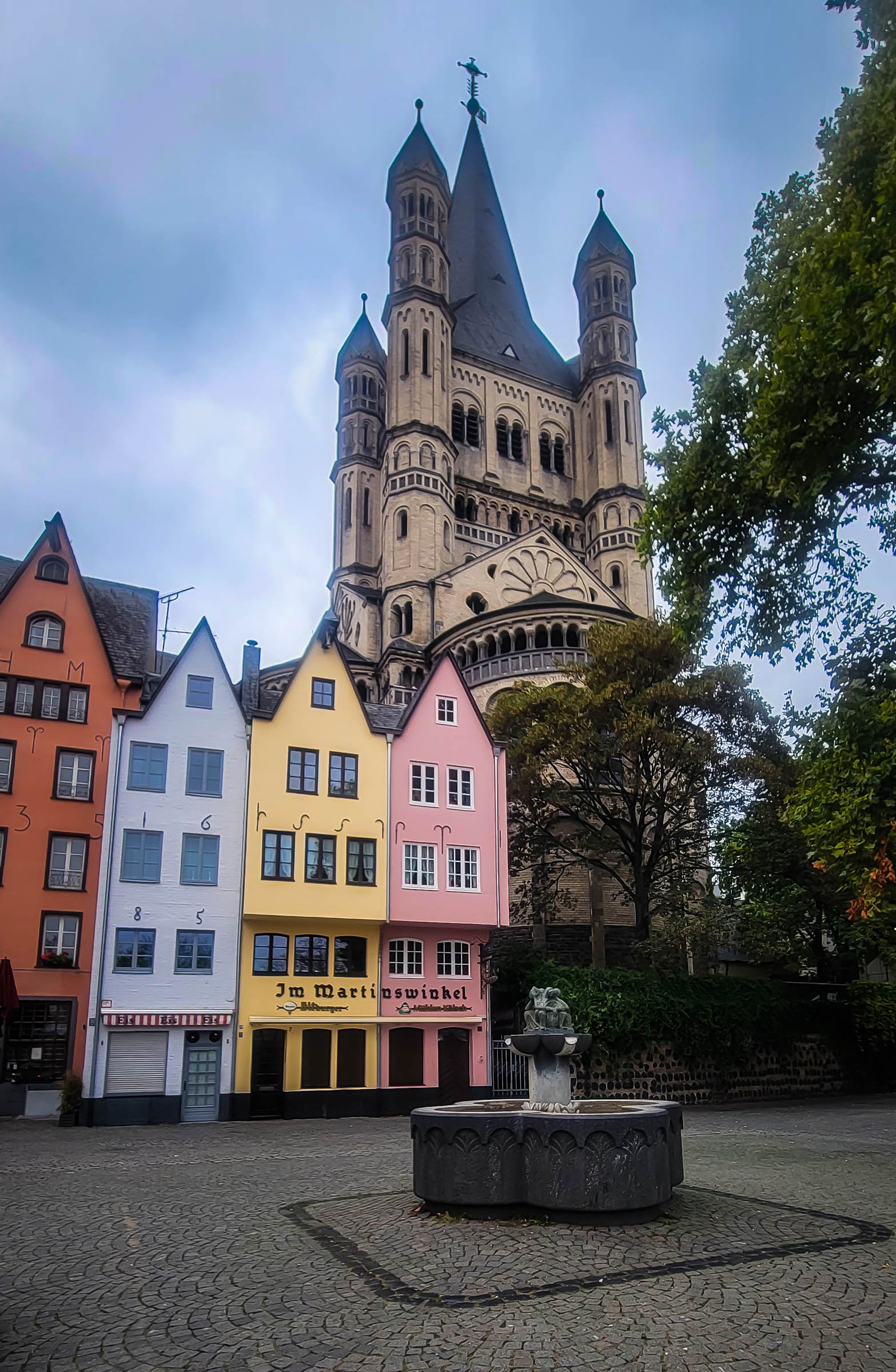
St Martin church one of 360 churches in Cologne
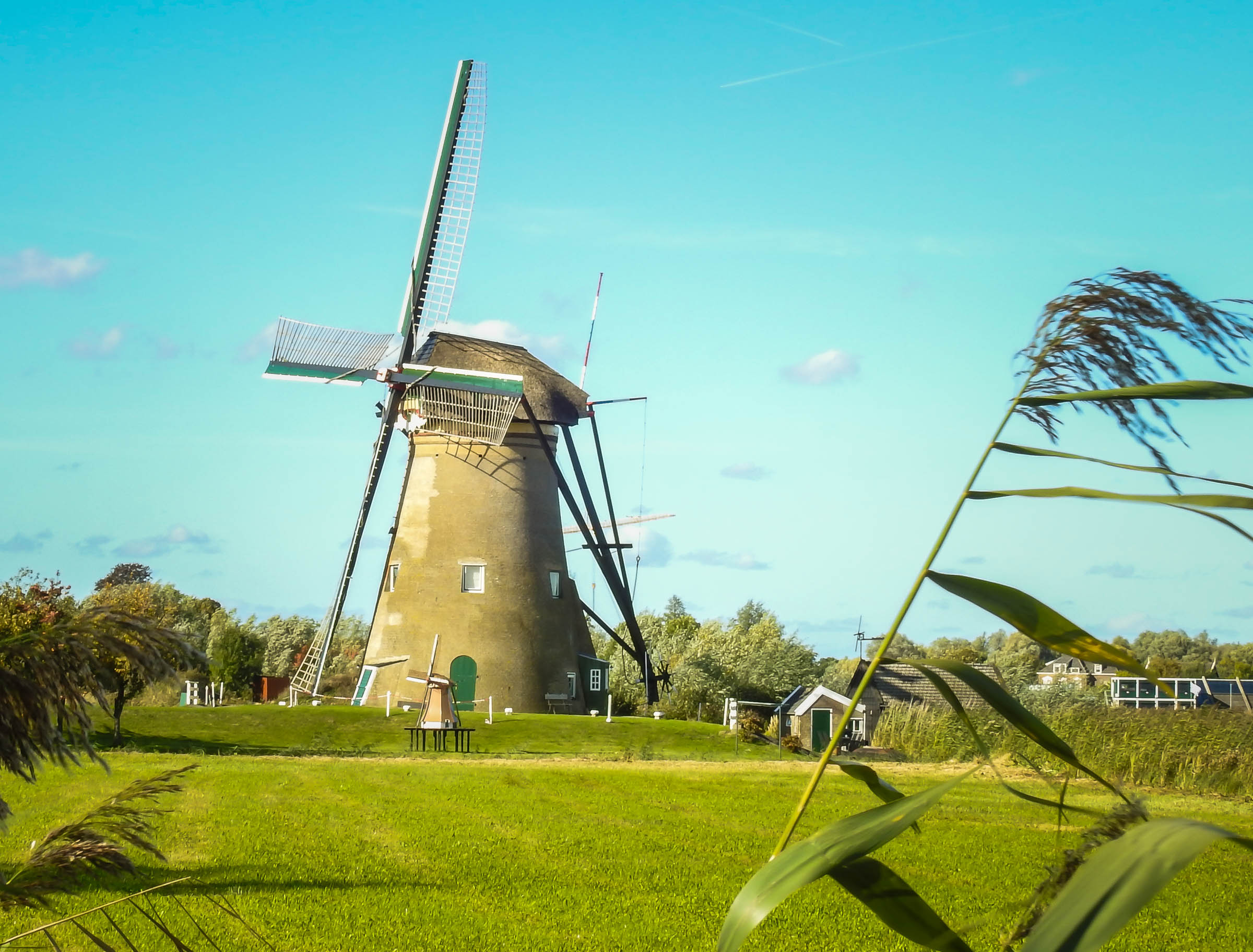
Kinderdijk Netherlands was our last port of our river cruise. Its another UNESCO World Heritage site celebrating the windmills that keep the Netherlands from flooding. We enjoyed a tour of a traditional operating windmill and toured an electric pumping station. By now we are in the flatlands of the Rhine delta on our way to Amsterdam.
Viking does an excellent job on their river cruises. Our boat held a maximum 190 passengers and the restaurant dinner is the only option. Dinners take 2 hours every day and all tables seat at least 6 so it is a very social cruise. The included tours are very good quality and while we only opted for one optional (extra charge) tour it was excellent as well. We met many interesting people.






































































 Kings on the Road